


Updated:
Readtime: 5 min
Every product is carefully selected by our editors and experts. If you buy from a link, we may earn a commission. Learn more. For more information on how we test products, click here.
Plenty of Australians wear an Apple Watch every day. For most of them, closing rings is the daily ritual. But the device has grown well beyond counting steps and flights of stairs. It now tracks heart rate changes, monitors sleep, and nudges people toward medical follow-ups with alerts that they actually pay attention to. Now it’s watching for something more serious: long-term signs of high blood pressure.
Apple has rolled out its hypertension notifications feature in Australia following approval from the Therapeutic Goods Administration (TGA), bringing a tool that has already launched overseas to local wrists. The feature is designed to alert users if their watch detects consistent signs of possible hypertension over time.
Unlike a traditional blood pressure cuff found at your local GP, the Apple Watch isn’t taking a reading on the spot. Instead, it uses data from its optical heart sensor to look at how blood vessels respond to each heartbeat, reviewing patterns in the background over 30-day periods. Only when those signals line up consistently does the watch send a notification.
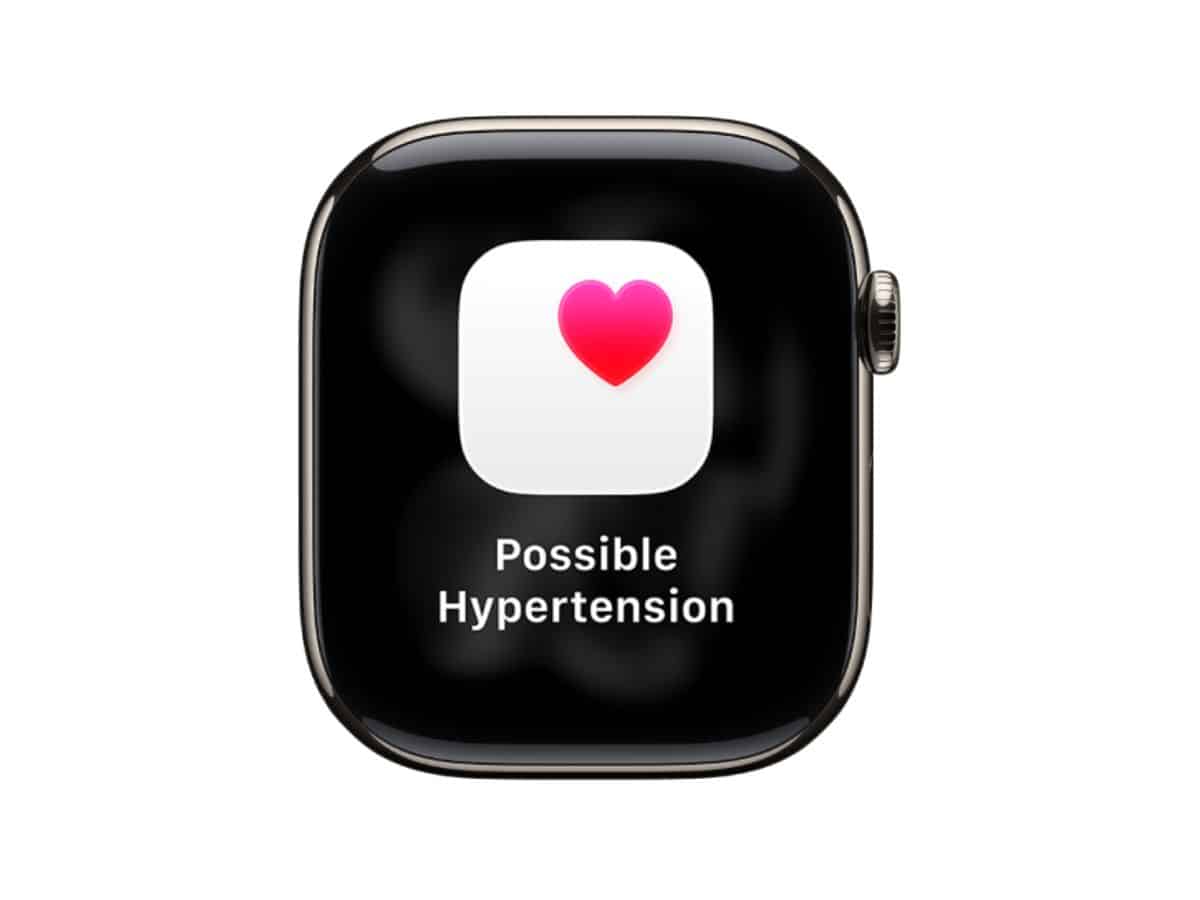
Doctors have broadly welcomed the feature, with the Royal Australian College of General Practitioners (RACGP) expecting more patients to book GP appointments after receiving notifications. But they’re also clear about its limits.
RACGP Vice President Dr Ramya Raman emphasised that a notification does not equal a diagnosis. “It’s a useful, very practical and accessible starting point for many,” she told newsGP.
Apple’s own clinical validation reflects those limits. In testing involving around 2,000 participants, the system identified 41 per cent of overall hypertension cases. It also works the other way around, too. Among people with normal blood pressure, it correctly avoided false alerts 95 per cent of the time.
That still means the occasional false positive, but getting checked by a GP is rarely a bad outcome, especially if it ends with an all-clear.
The feature is designed to prompt follow-up, not replace proper testing or medical advice. Even Apple is clear that hypertension can still be present without a notification.
If your watch flags something, the next step isn’t guesswork. It’s a conversation with your GP.
So, who should use Apple Watch’s blood pressure feature?
If you wear your Apple Watch most days, already track health metrics, and are willing to follow through with a GP visit if prompted, then you’ve probably started using this feature the moment it launched. It’s particularly relevant for people over 40, those with a family history of high blood pressure, or anyone who hasn’t had their own checked by a GP in a while.
It’s less useful if you wear your watch on and off, as the system relies on consistent, long-term data to identify patterns. And if you already have a hypertension diagnosis, this feature isn’t designed to add much value.
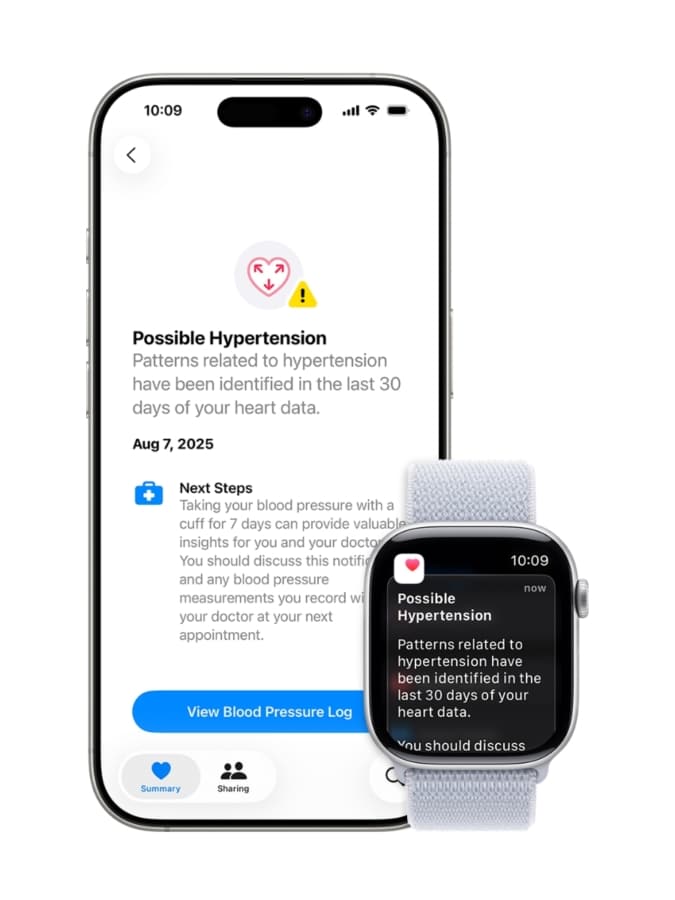
How do I turn this on?
If your Apple Watch supports it, hypertension notifications aren’t switched on by default. You’ll need to enable them through the Health app on your iPhone.
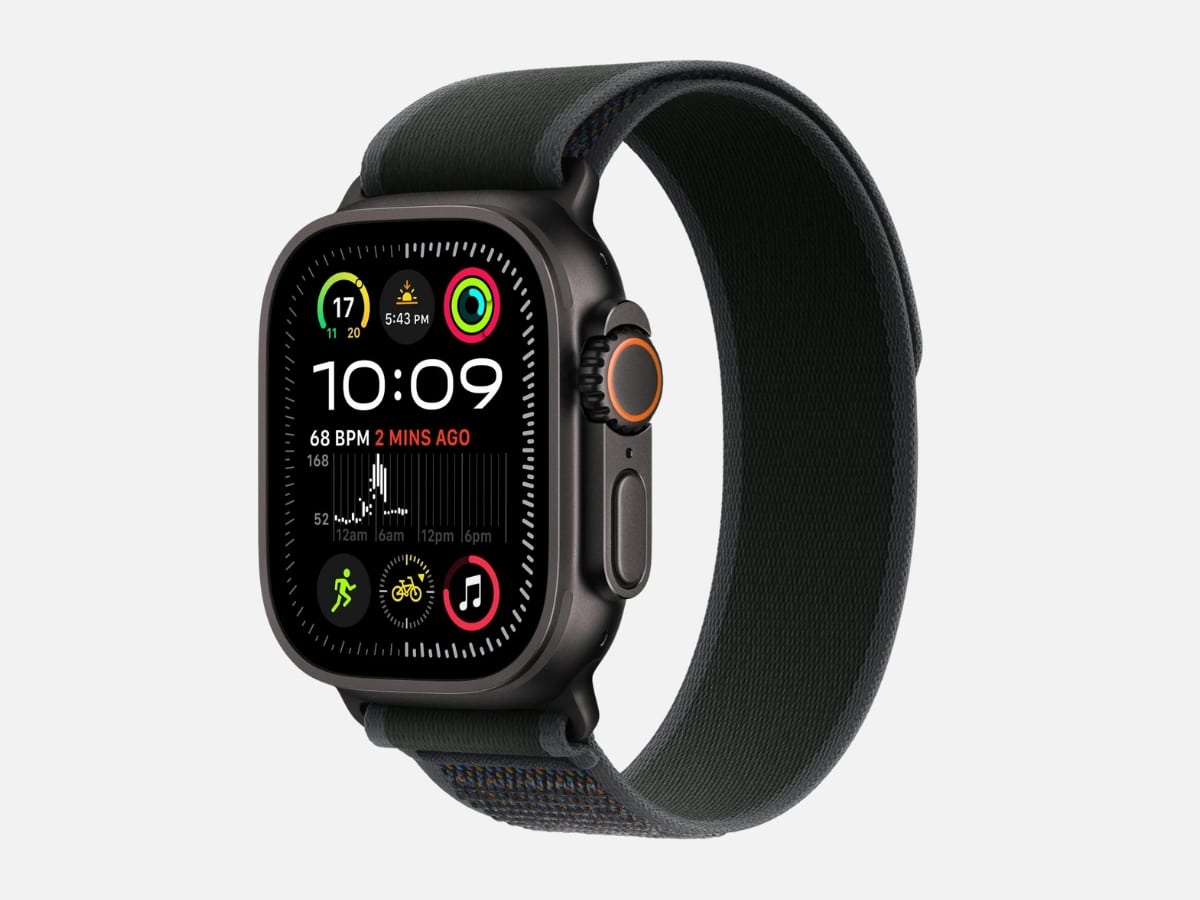
Before you start, make sure you tick the basics. You’ll need an Apple Watch Series 9 or later (not available with Apple Watch SE), or an Apple Watch Ultra 2 or later, running the latest version of watchOS. Your iPhone needs to be an iPhone 11 or newer with the latest version of iOS, and Wrist Detection must be turned on.
There are also a few user limits to be aware of. You need to be 22 or older, not pregnant, and not previously diagnosed with hypertension.
How to turn on Apple’s blood pressure notifications
- Open the Health app on your iPhone
- Tap your profile icon in the top corner
- Under Features, tap Health Checklist
- Select Hypertension Notifications
- Confirm your age and whether you’ve been diagnosed with hypertension
- Follow the on-screen prompts, then tap Done
Once enabled, your Apple Watch will begin reviewing heart data in the background, starting from the day you turn the feature on.
What it doesn’t do
Hypertension notifications are designed as a screening prompt, not a diagnostic or management tool. If you already have a hypertension diagnosis, the feature isn’t built to track or treat the condition, and relying on notifications could be misleading. Ongoing care requires regular blood pressure readings using a cuff and medical guidance, which is why Apple limits the feature to people without a prior diagnosis.
Not everyone with hypertension will receive a notification, and the absence of an alert doesn’t mean everything is fine.
The feature also can’t detect heart attacks or other medical emergencies. If you ever experience chest pain, pressure, tightness, or symptoms that feel serious, seek emergency medical care immediately.
What do I do if I receive hypertension notification?
If you do receive a hypertension notification, the advice is straightforward. Don’t panic. Apple recommends logging your blood pressure for seven days using a third-party cuff, then sharing those results with your GP. That approach aligns with current clinical guidelines and gives doctors something concrete to work from, rather than a single reading taken in isolation.
The Apple Watch hasn’t suddenly turned into a certified medical device, and it won’t replace regular check-ups. But it does help the average person notice when something might be off.
In a country where many people’s hypertension awareness is “far too low”, that quiet nudge could be enough to start a conversation that otherwise never happens.

























Comments
We love hearing from you. or to leave a comment.