

Updated:
Readtime: 15 min
Every product is carefully selected by our editors and experts. If you buy from a link, we may earn a commission. Learn more. For more information on how we test products, click here.
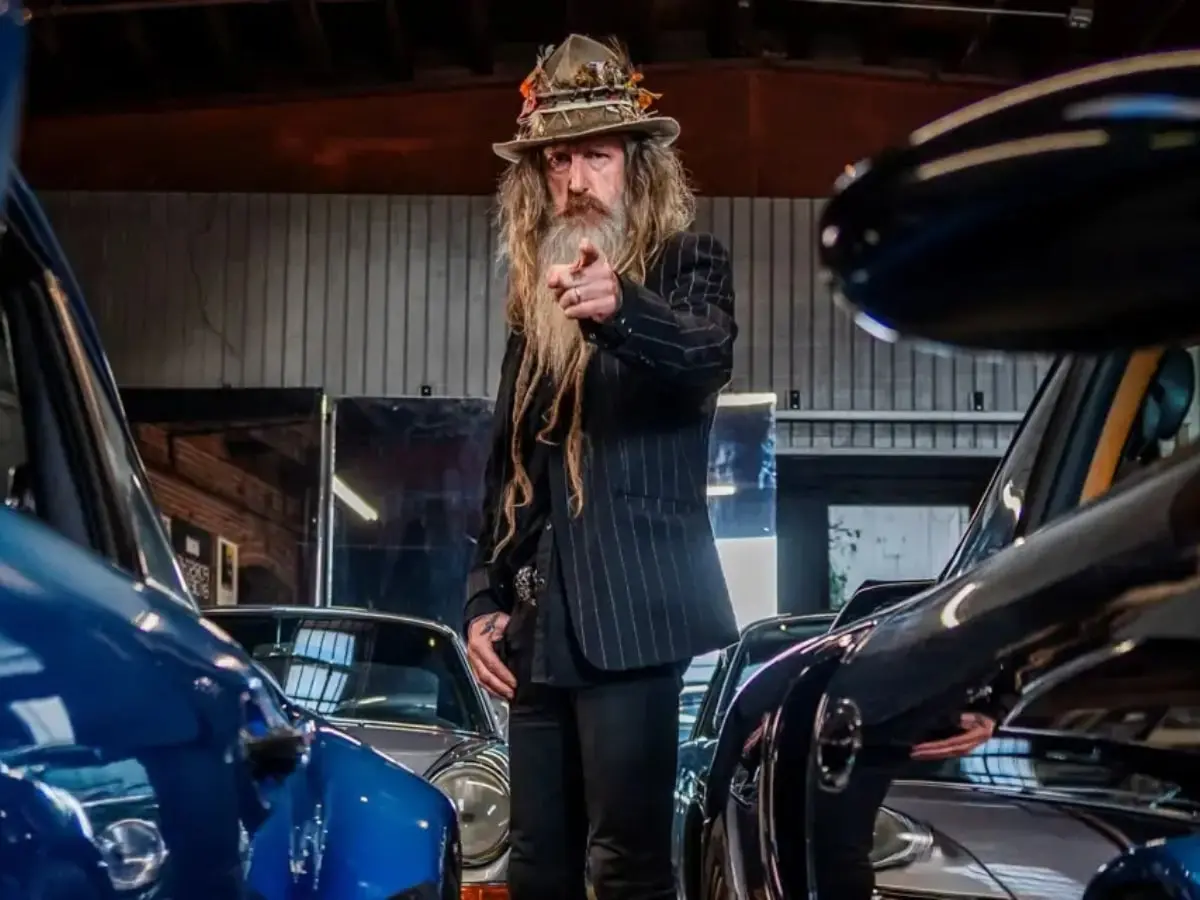
Magnus Walker is letting go of something that has defined him for decades. The Sheffield-born, LA-based Porsche collector is auctioning 18 cars from his personal collection through RM Sotheby’s, with bidding running from 18 to 25 March. He’s described it as “shedding my skin,” which says more about the moment than any estimate ever could.
This isn’t a small release. 160 lots are going under the hammer as part of Magnus Walker: The Outlaw Collection, spanning cars, engines, parts and memorabilia, all offered without reserve.
It might look like a fire sale. But really, he just wants more room in his garage for even more Porsches.
Who Is Magnus Walker? The Urban Outlaw Story
Magnus Walker’s story starts in Sheffield before shifting to Los Angeles, where everything else takes shape. His connection to Porsche began at age 10, when he saw a 911 Turbo at the 1977 Earl’s Court Motor Show and never really let it go.
He bought his first Porsche at 25. From there, the pattern was simple. Find cars, drive them, change them, then do it again. Not to restore them back to factory condition, but to make them his own.
That approach is what built the “Urban Outlaw” identity. The 2012 documentary turned him into a global figure in Porsche circles, but the thinking was already there long before that. His LA warehouse became part garage, part workspace, filled with cars that were meant to be used rather than preserved.
That’s the difference. For Walker, collecting has never been about perfection. It’s about how the car feels once you’re behind the wheel.
Why Magnus Walker Is Selling – ‘Shedding My Skin’
This sale comes as Magnus Walker approaches 60, and it reflects a shift in how he sees the collection he’s built. He’s selling 18 cars while holding onto around 13 of his most important builds, including the ‘277’ 911 T. The rest are moving on.
“I reached a point where this out-of-control hobby had come to define who I am… it feels like shedding my skin.”
He’s also described the collection as becoming “heavy instead of fun.” That’s the real shift. Too many cars to use properly. Too much tied up in something that started as instinct.
That’s what this sale resets. Not the passion, just the scale of it. The cars aren’t being abandoned. They’re moving on to people who will actually drive them.
The RM Sotheby’s Auction – What You Need to Know:
- Auction: RM Sotheby’s – Magnus Walker: The Outlaw Collection
- Format: Online
- Bidding Opens: 18 March 2026
- Bidding Closes: 25 March 2026
- Total Vehicles: 18
- Additional Lots: 140+ (engines, parts, memorabilia)
- Estimate Range: ~$10,000 to $250,000
- Total Estimated Value: ~$2 million+
- Key Detail: All vehicles offered without reserve
The sale is being handled by RM Sotheby’s as a fully online auction, with bidding open from 18 March through to 25 March 2026. There’s no showroom floor or single-day hammer drop. It runs across a week, giving buyers time to sit with each car and decide what it’s worth.
Every vehicle is offered without reserve, which is where things shift. No safety net means each car will sell to the highest bidder, regardless of where the number lands. Estimates range from around $10,000 to $250,000, with the full group expected to clear more than $2 million.
Beyond the 18 cars, the auction includes over 140 additional lots. It feels less like a curated sale and more like opening the doors to a working garage and letting everything go at once.
Every Car in the Auction: The Full Lineup
This lineup reflects how Magnus Walker actually builds a collection over time. Early 911s sit alongside later builds, with a few left-field projects in between.
Some cars carry real weight. Others feel more like experiments or stepping stones.
Each one tells a slightly different story, but together they show how Walker approaches a 911, and why this collection looks the way it does.
1976 Porsche 911 Carrera 2.7 MFI – The Top Lot
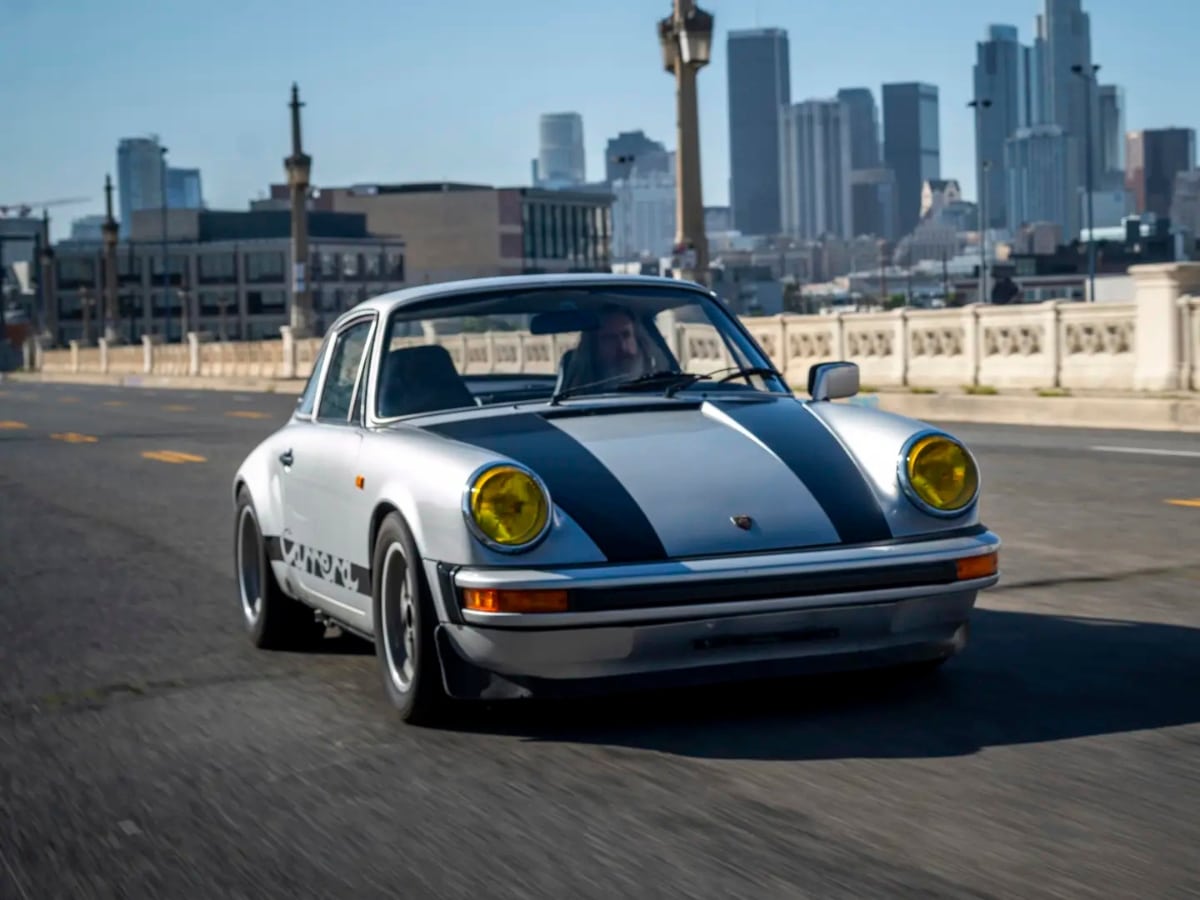
At a glance, this one doesn’t really give much away. It looks like a fairly standard mid-’70s 911, which is exactly why it slipped under the radar. Walker wasn’t even looking for it at the time. He was chasing an early ’64 when someone sent through a handful of rough photos of a ’76 instead. In one of them, something didn’t quite add up.
“This car should be a CIS, but in the pictures were the MFI induction system… so that piqued my interest.”
From there, it turned into detective work. The VIN didn’t line up, which led him to realise it was one of just 113 homologation cars, built so Porsche could qualify the setup for racing, and one of the last road-going 911s fitted with the RS-derived mechanical fuel injection system.
“This is the exact same 2.7 RS MFI motor… Porsche’s lowest-volume 911 2.7 MFI.”
It’s rare in a way that isn’t obvious, and rare enough that it hasn’t needed much changing. That’s what pushes it to the top of the sale.
Lot 109: 1976 Porsche 911 Carrera 2.7 MFI Specs
- Estimate: $200,000–$250,000
- 1 of 113 ‘Sondermodell’ examples (German market, 1976)
- Final road-going Porsche 911 fitted with mechanical fuel injection
- Numbers-matching 2.7L MFI flat-six (Type 911/83, Carrera RS-derived)
- Approx. 210hp with sharp, mechanical throttle response
- Ducktail spoiler, yellow-tinted headlights, tartan bucket seats
- Originally finished in Silbermetallic with factory-correct provenance
- Acquired by Walker in 2009 after identifying its rare homologation VIN sequence
- Accompanied by Porsche Certificate of Authenticity
Lot 115: 1976 Porsche 911 Turbo (Euro 930)
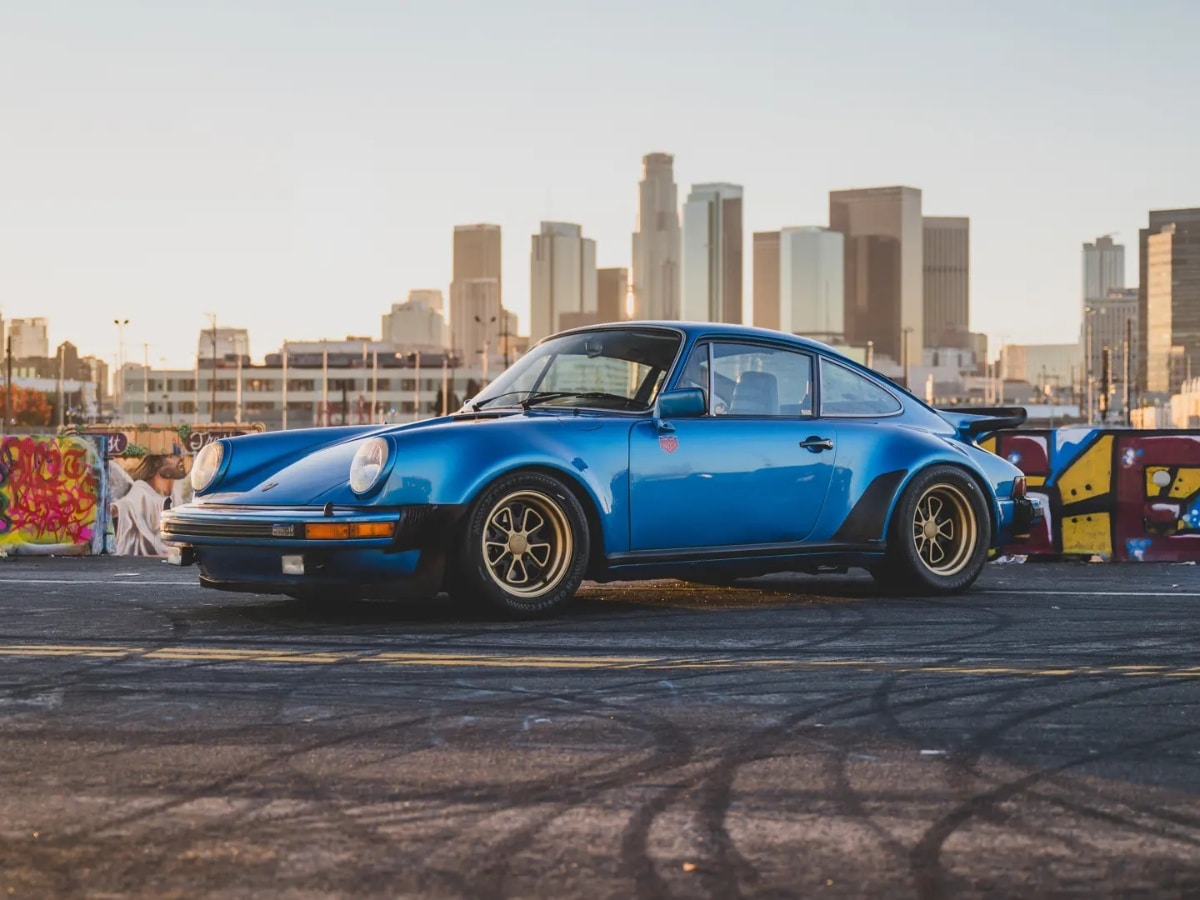
If the Carrera shows what Porsche built, this shows what Walker turns it into. It began as a clean early Euro-spec Turbo, already a strong base with more power than the US cars.
“It’s the car we chose to debut my Outlaw wheel collaboration… the first set of wheels we ever made are on the 930 Turbo.”
From there, the changes are obvious. Lower, wider, louder. The stance tightens up, the arches are filled properly, and the Hooligan exhaust brings the turbo sound forward. Even the blue and gold finish leans into it, which he describes as “my version of a Porsche Subaru.”
1976 Porsche 911 Turbo (Euro 930) Key Specs
- Estimate: $175,000–$200,000
- Swiss-delivered, early production, sunroof-delete example
- Numbers-matching 3.0L turbocharged flat-six (Euro-spec, 260hp)
- Four-speed manual transmission
- Refinished in a variation of Minerva Blue
- First-ever Fifteen52 Outlaw wheels
- Lowered stance with wide fitment and Hoosier rubber
- Custom interior with blue leather and corduroy elements
- Momo Mod.7 steering wheel
- RarlyL8 “Hooligan” exhaust
- Acquired by Walker in 2013
Lot 106: 1965 Porsche 911
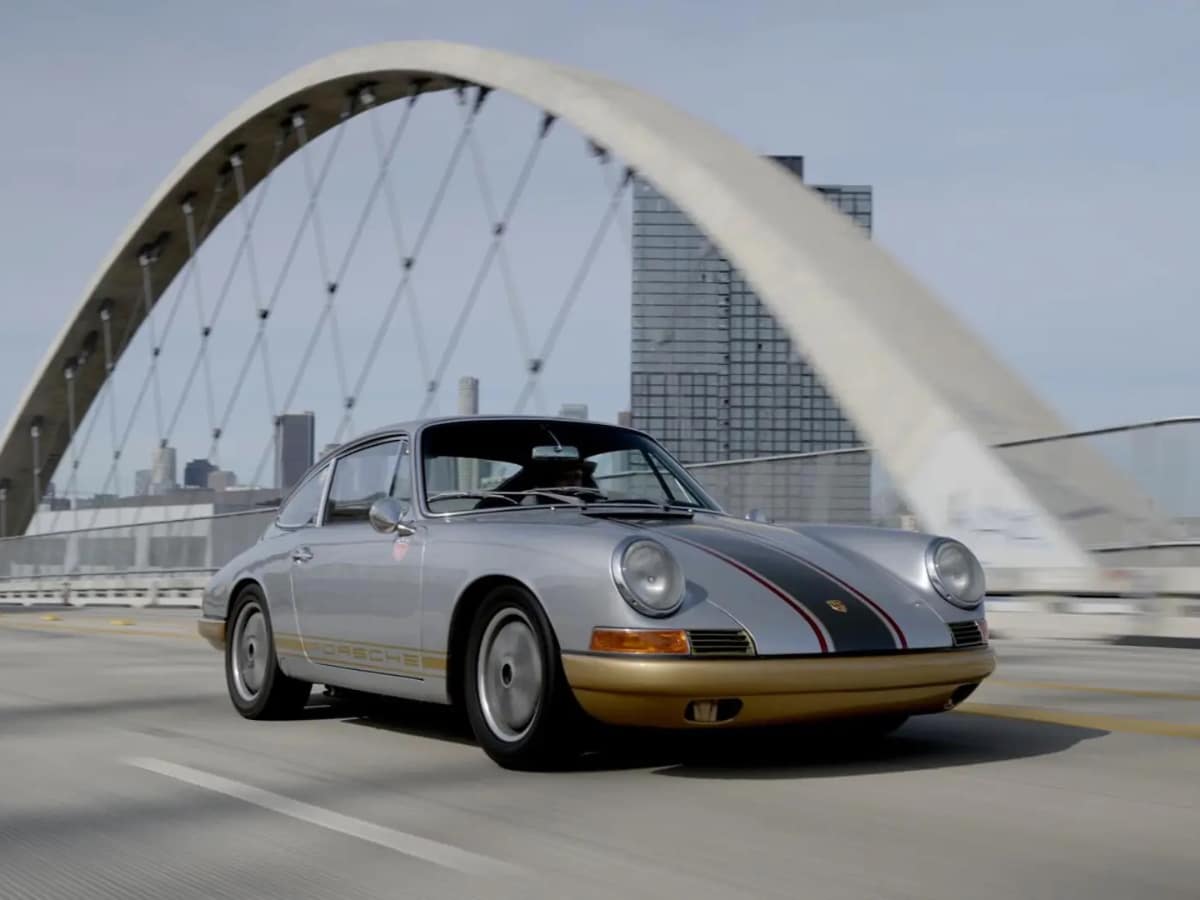
After that, things go back to the beginning. This is the 310th 911 ever made, delivered through Brumos in Florida when Porsche was still establishing itself in the US.
“My 1965 911 is a pretty rare and special car… one of the first half-dozen 911s that Brumos imported into the country.”
It also reflects how Walker collects. This wasn’t a quick purchase.
“You’ve got to be patient when someone’s thinking of selling a car… that deal took about nine months.”
That patience shows in how the car sits now, finished in Walker’s silver, burgundy and bronze-gold “Gentleman’s Racer” look.
1965 Porsche 911 Key Specs
- Estimate: $150,000–$200,000
- 310th Porsche 911 ever produced
- One of the first half-dozen 911s imported to the US via Brumos Porsche
- Originally completed in 1964, delivered in early 1965
- Fitted with a 2.0L flat-six (1966 replacement engine)
- Acquired by Walker in 2009 after a 9-month negotiation
- “Gentleman’s Racer” livery
- 15×6 Fuchs wheels and vintage Scheel bucket seats
- Kardex copy and Porsche Certificate of Authenticity
Lot 113: 1967 Porsche 911 S
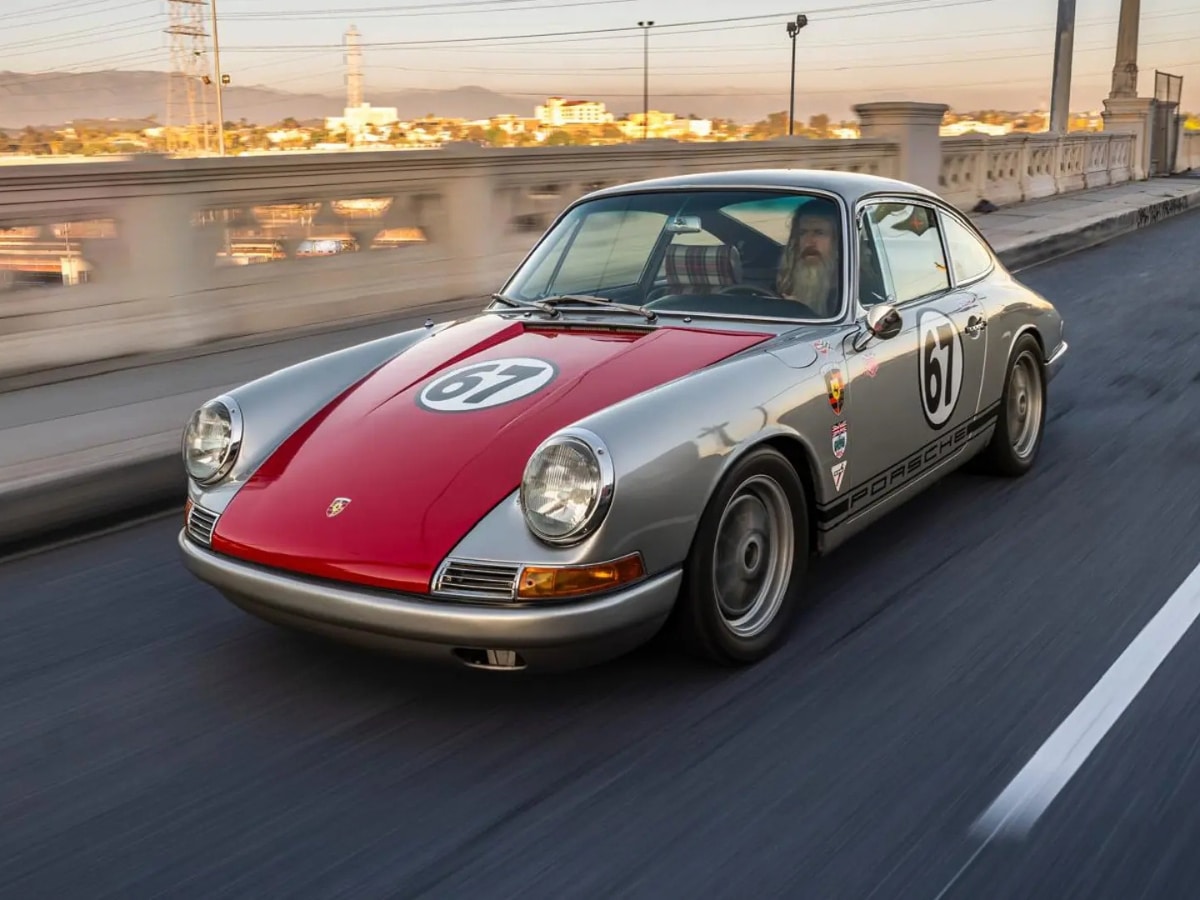
Then it gets personal. This is Walker’s birth-year car, which gives it more weight from the start.
“I’ve got a soft spot for anything that’s 1967… especially the 911 S.”
When he found it, the car had already been pushed in the wrong direction, with turbo flares grafted onto a shape that didn’t suit it.
“Short-wheelbase cars just don’t wear wide bodies well… it’s like a waif as opposed to a voluptuous pinup girl.”
So he reversed it. De-flared, corrected, and rebuilt around the original proportions. What’s left is lighter and more responsive, with a 2.3-litre engine and short gearing that make more sense on tight roads than on a freeway.
1967 Porsche 911 S Key Specs
- Estimate: $150,000–$200,000
- Genuine 1967 Porsche 911 S (birth-year car)
- Numbers-matching flat-six enlarged to 2.3L
- Short-ratio “airport” gearing
- Approx. top speed: 120 mph
- Fifteen52 Outlaw wheels (15×7)
- Ultra Shield bucket seats with red tartan inserts
- Period-correct 902/02 gearbox
- Part of Walker’s collection since 2009
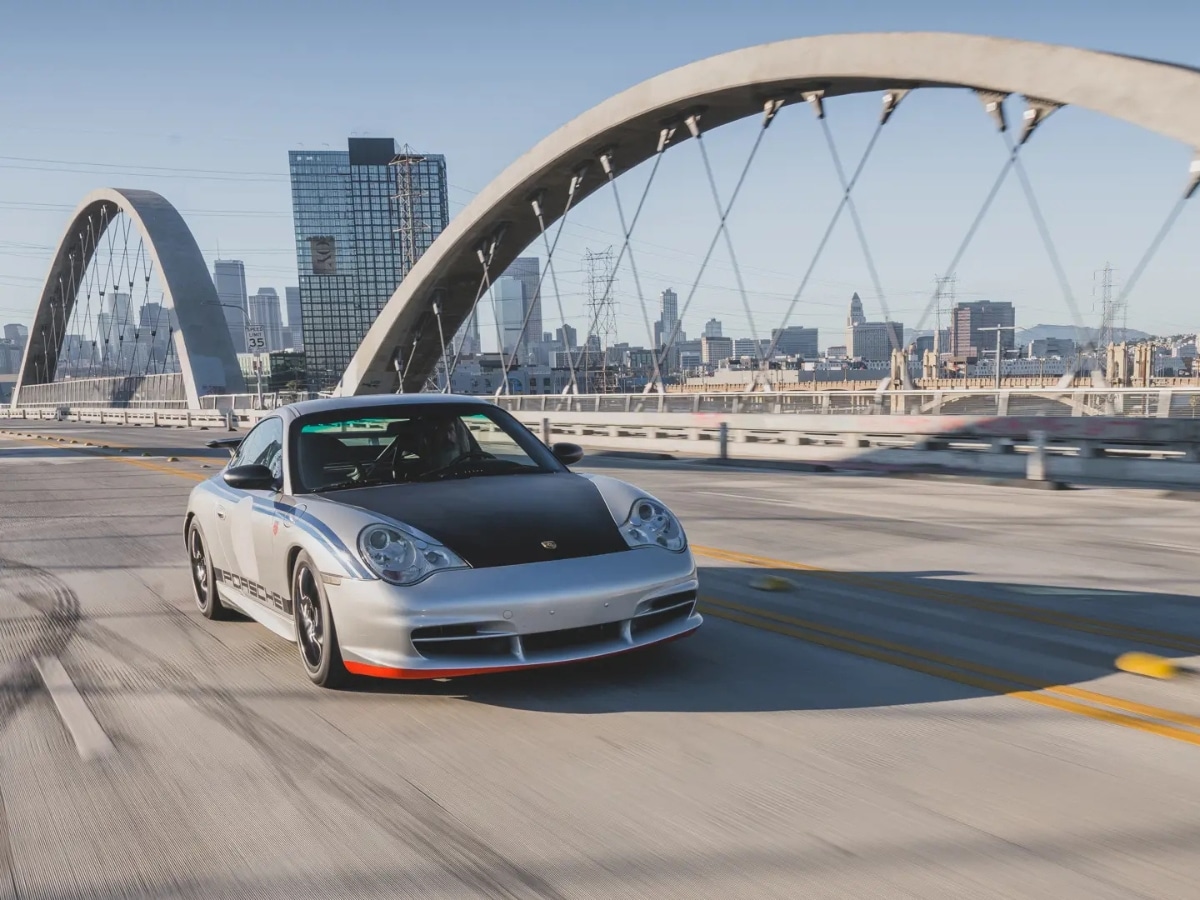 2004 Porsche 911 GT3 (996.2) with custom livery | Image: RM Sotheby’s
2004 Porsche 911 GT3 (996.2)
This is where things move forward a bit.
“That was the first time I had a water-cooled 911 in the garage… in a sea of air-cooled sport-purpose 911s.”
He bought it in Northern California, drove it home, and made it his straight away. Black hood, orange lip, blue stripes. You’d spot it from a block away.
“It’s nimble, it’s balanced, it’s really direct… You really feel connected and engaged to the car.”
It’s been driven, not stored, and still delivers exactly what a GT3 should.
2004 Porsche 911 GT3 (996.2) Key Specs
- Estimate: $100,000–$125,000
- First US-market 996.2 GT3
- 3.6L “Mezger” flat-six
- Arctic Silver, approx. 66,753 miles
- Black hood, blue stripes, orange accents
- Factory buckets and roll cage
- Acquired by Walker in 2016
Tier 2: The Supporting Cars
Just below that are the cars that fill in the picture. Less headline-grabbing, but more revealing once you spend a bit of time with them. From unfinished ideas to cars left exactly as they are, this is where the range really shows.
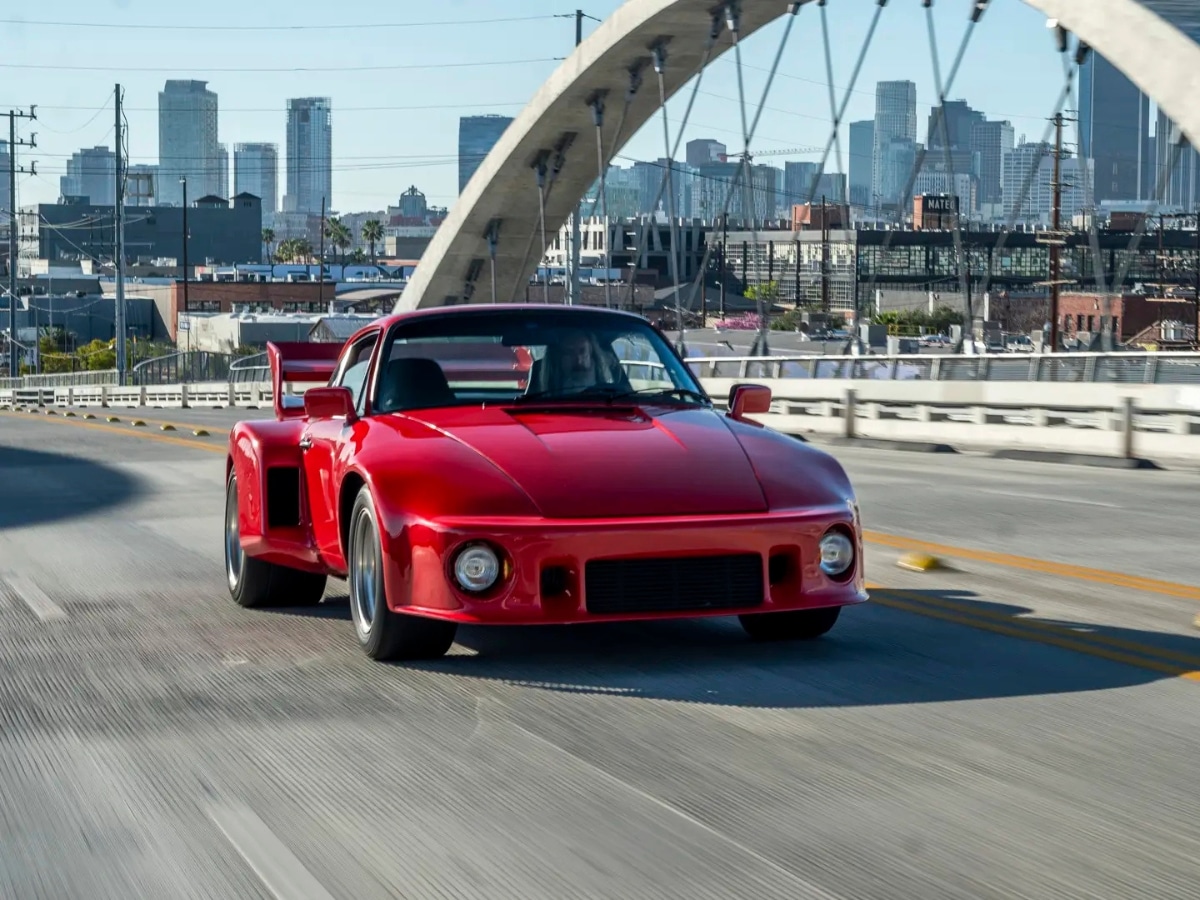
1974 Porsche 911 Carrera Flat-Nose Widebody
This one feels like a project that never quite got finished, and that’s exactly the appeal.
It started as a ’74 Carrera before picking up an A.I.R. 935-style flat-nose widebody kit in the ’80s. Since then, it’s become more of a platform than a finished build.
“It really needs a 500- to 600-horsepower big-turbo monster motor… I kind of halted the project.”
Walker originally bought it chasing the look of his first Porsche, and later found out who built it decades earlier. As it sits, this is the one car here that still needs to be completed.
1974 Porsche 911 Carrera Flat-Nose Widebody Key Specs
- Estimate: $75,000–$100,000
- Originally a US-spec 1974 911 Carrera 2.7 coupe
- A.I.R. 935-inspired fibreglass flat-nose widebody conversion (1980s)
- Homage to Walker’s first Porsche (1992 slant-nose build)
- Fitted with a 2.7 RS-spec MFI flat-six (built on 1973 911 E case)
- Non-original engine configuration, heavily modified platform
- Known builder identified decades later, adding provenance to the car
- Considered an ideal base for further modification
- Requires a 500–600hp turbo build to fully realise its potential
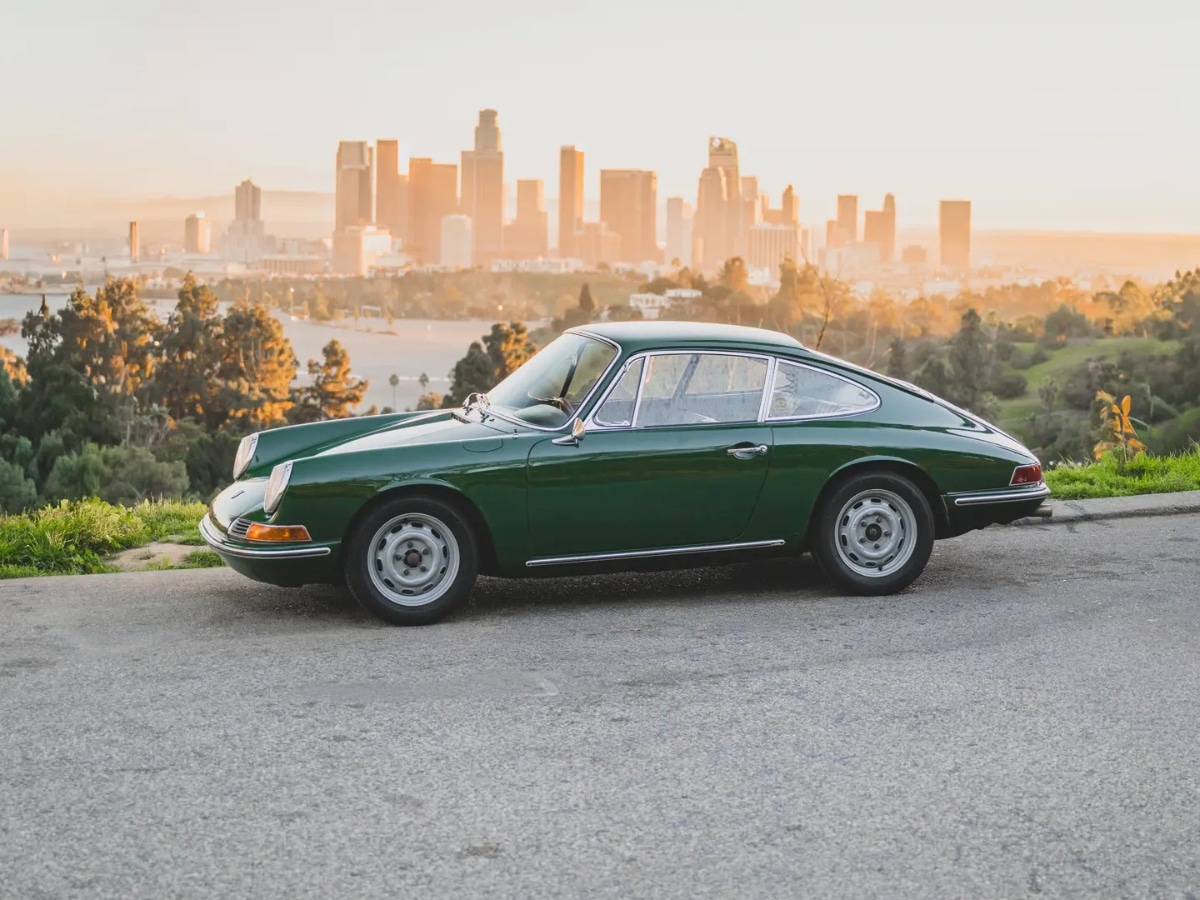
1966 Porsche 911
At the other end of the spectrum is an early 911 that’s been left alone. The worn steering wheel, original carpets and the way it moves all come from age, not modification.
“It hadn’t been butchered, hadn’t been modified, hadn’t been improved… It’s just got the right amount of patina and character.”
For Walker, it’s a reminder of what these cars felt like before anything was added.
1966 Porsche 911 Key Specs
- Estimate: $100,000–$150,000
- Numbers-matching flat-six engine
- Factory Irish Green (repainted in the correct colour)
- Original interior and carpets with natural patina
- Early short-wheelbase 911, California delivery
- Acquired by Walker in 2009
- Fitted with steel wheels (period-style, non-original finish)
- Retains original character, described as “simple and elegant”
The Rest of the Lineup
Not every car here needs a deep dive. This part of the lineup rounds things out across different eras, platforms and price points. It’s where the broader shape of the collection comes into view.
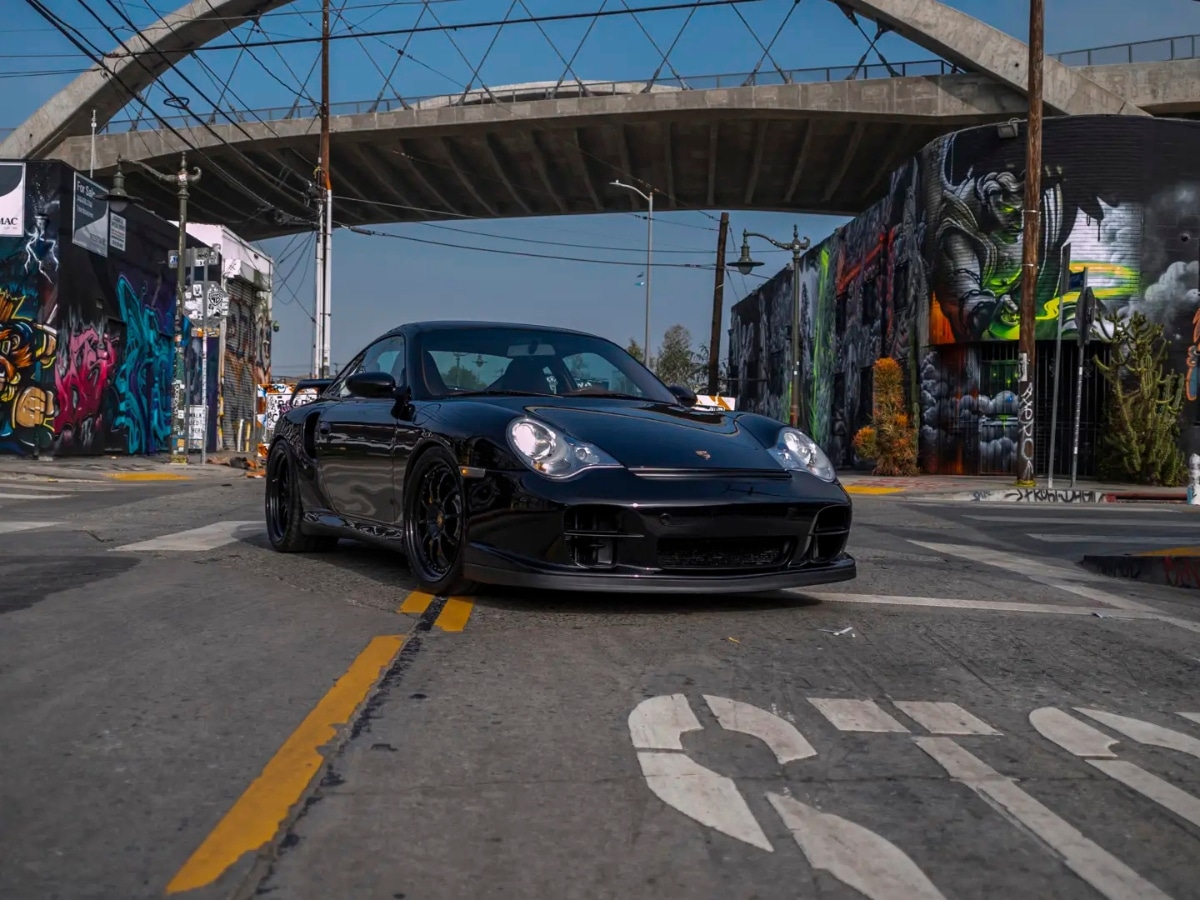
- 2002 Porsche 911 GT2, Est. $125,000–$150,000
- The more serious, turbocharged version of the GT3. Faster, sharper, and a lot less forgiving if you get it wrong.
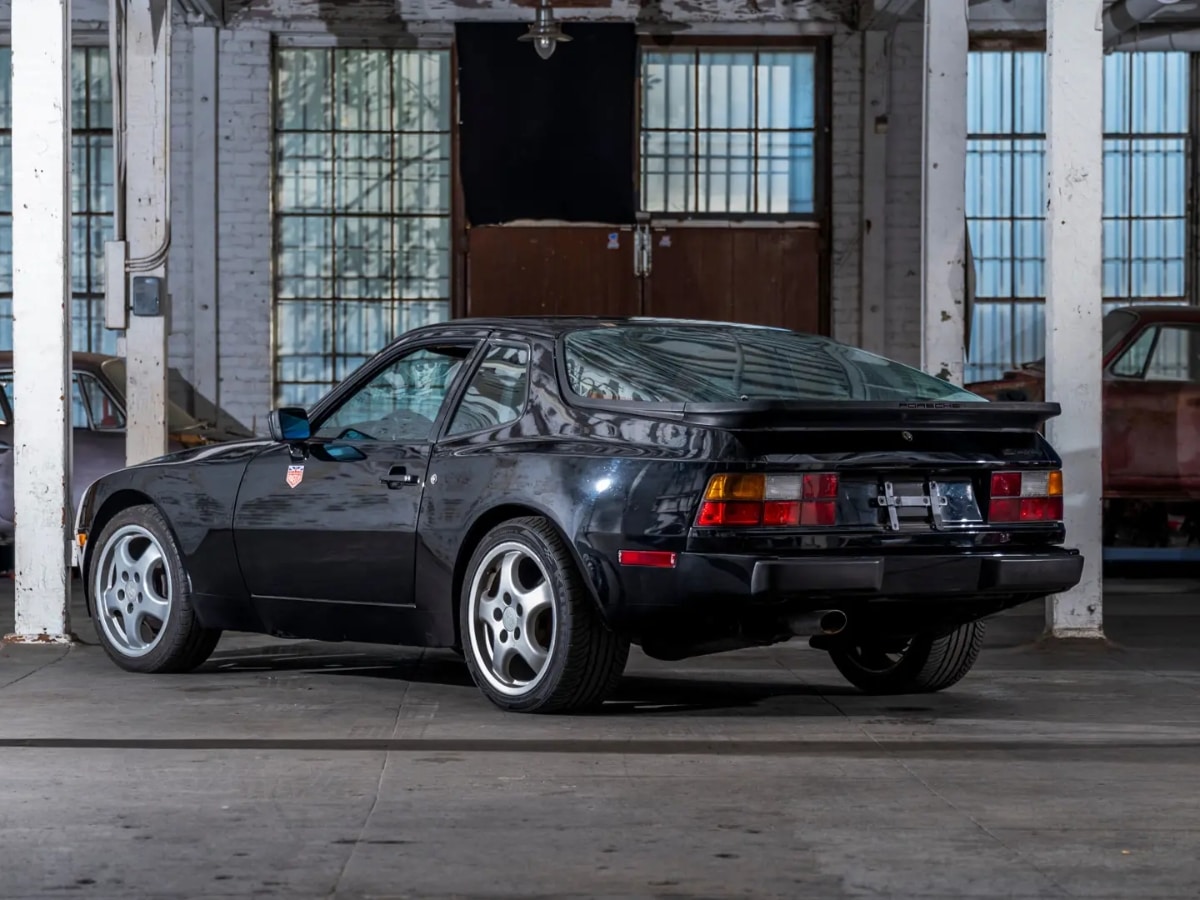
- 1988 Porsche 944 Turbo, Est. $25,000–$30,000
- One of those cars that just works. Balanced, usable, and still quick enough to feel properly alive.
- 1995 Porsche 968, Est. $25,000–$30,000
- The most complete version of this platform. Everything feels sorted, like Porsche had finally figured it out.
- 1992 Porsche 968, Est. $20,000–$25,000
- Same idea, just a bit earlier. A simpler way into the same driving experience without overthinking it.
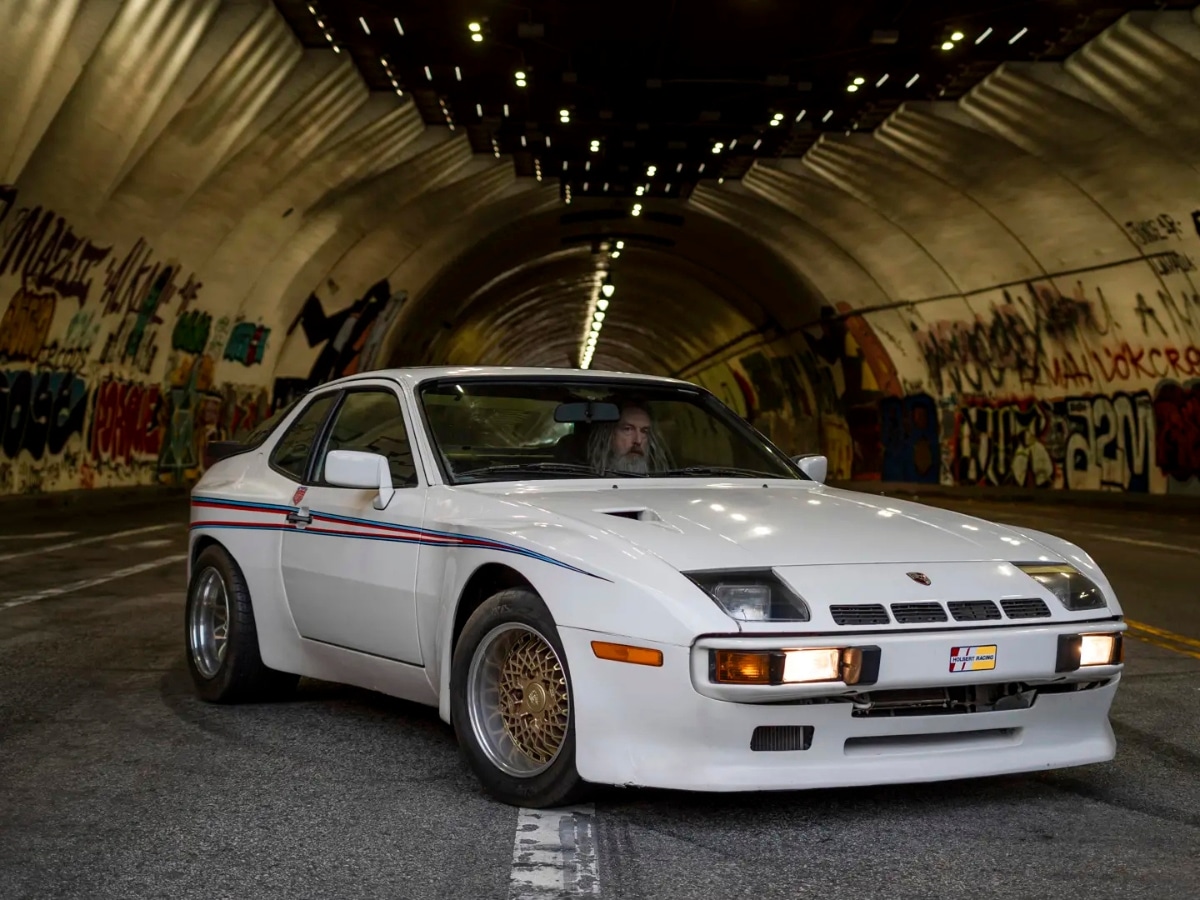
- 1980 Porsche 924 Turbo’ Holbert Racing’ Widebody, Est. $45,000–$50,000
- A race-inspired widebody that leans into Porsche’s left-field transaxle era. Not what most people picture, which is exactly why it stands out.
- 1980 Porsche 924 Turbo, Est. $20,000–$25,000
- Part of Porsche trying something different. Not perfect, but interesting because of it.
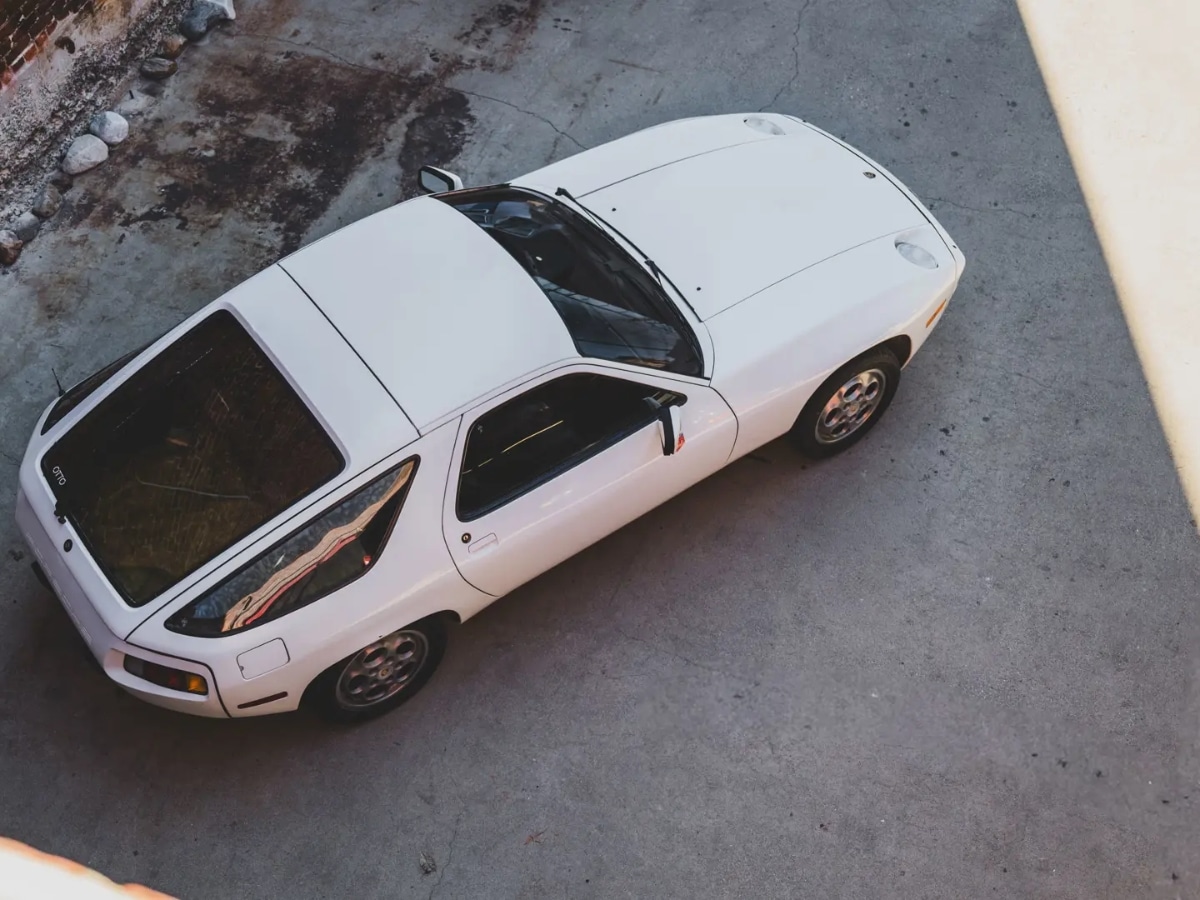
- 1978 Porsche 928, Est. $20,000–$25,000
- A V8 grand tourer that shows how far Porsche was willing to push away from the 911.
- 1979 Porsche 928, Est. $10,000–$15,000
- A cheaper way into that same long-distance GT feel. Less polish, same idea.
- 1987 Porsche 944, Est. $10,000–$15,000
- One of the easiest entry points here. Simple, balanced, and still a proper driver’s car.
- 1965 Porsche 912 Coupe Project (Karmann), Est. $10,000–$15,000
- A full project. The kind of car you take on if you want to build something from the ground up.
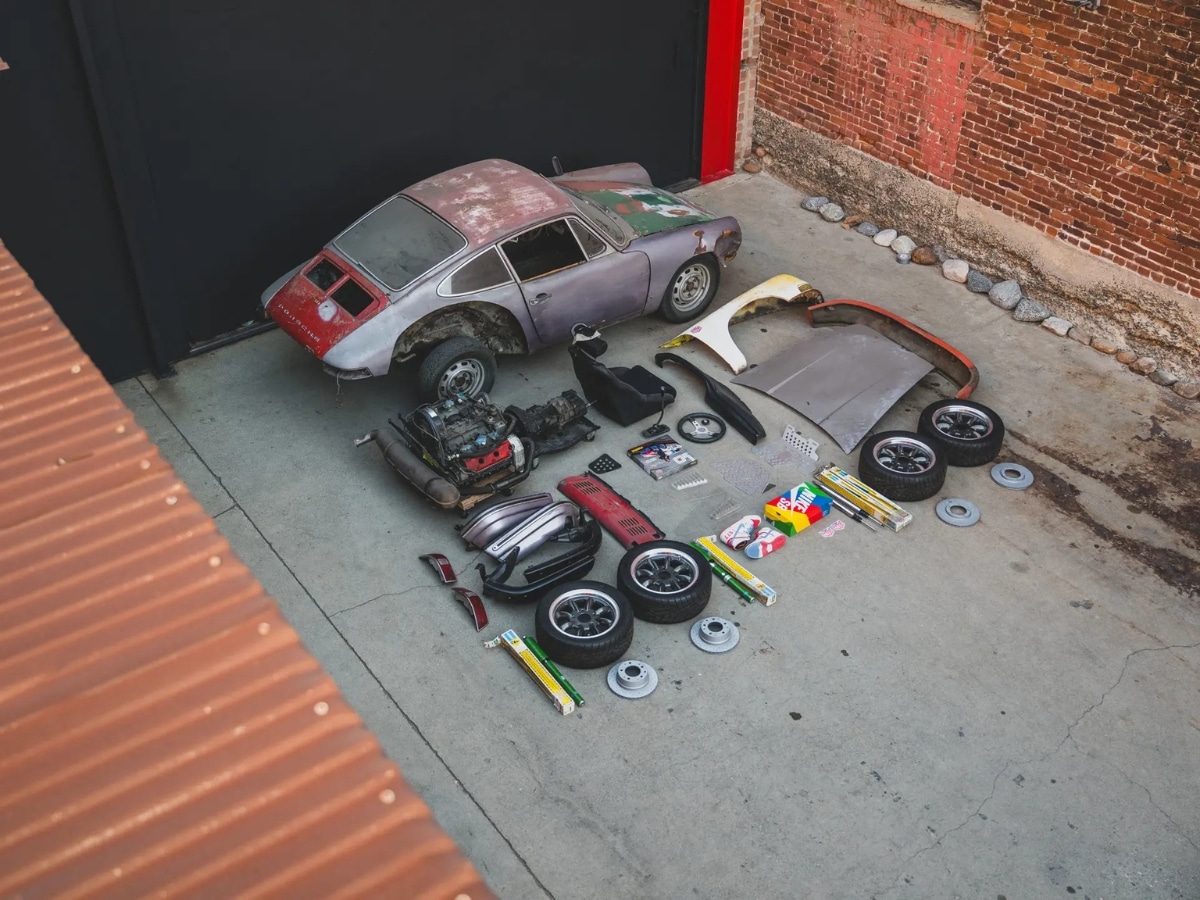
The ‘Urban Outlaw Starter Kit’
“This has got to be my favourite lot… the build-it-yourself Outlaw Starter Kit.”
It’s probably the clearest expression of how Walker sees these cars. Not as finished objects, but as something you build over time.
At its core is a 1968 911 L, but it comes as a collection of parts rather than a complete car. Engine, gearbox, panels and interior pieces are all there, just not assembled.
It’s a project, but more than that, it’s the idea behind everything else in this collection. You don’t buy the finished car. You build it yourself.
1968 911 L Key Specs
- No reserve, no floor estimate
- 1968 Porsche 911 L coupe (donor car)
- 2.0L 911 S long block (901/10)
- Early 901/02 five-speed transmission
- Minilite wheels, Bilstein shocks, brake components
- Scheel seat, replacement dash, body panels and extras
- MOMO Prototipo steering wheel (Walker edition)
- Nike SB Dunk “277” sneakers, hat and stickers
- Requires full assembly and additional components
Beyond the Cars – Parts, Engines & Memorabilia
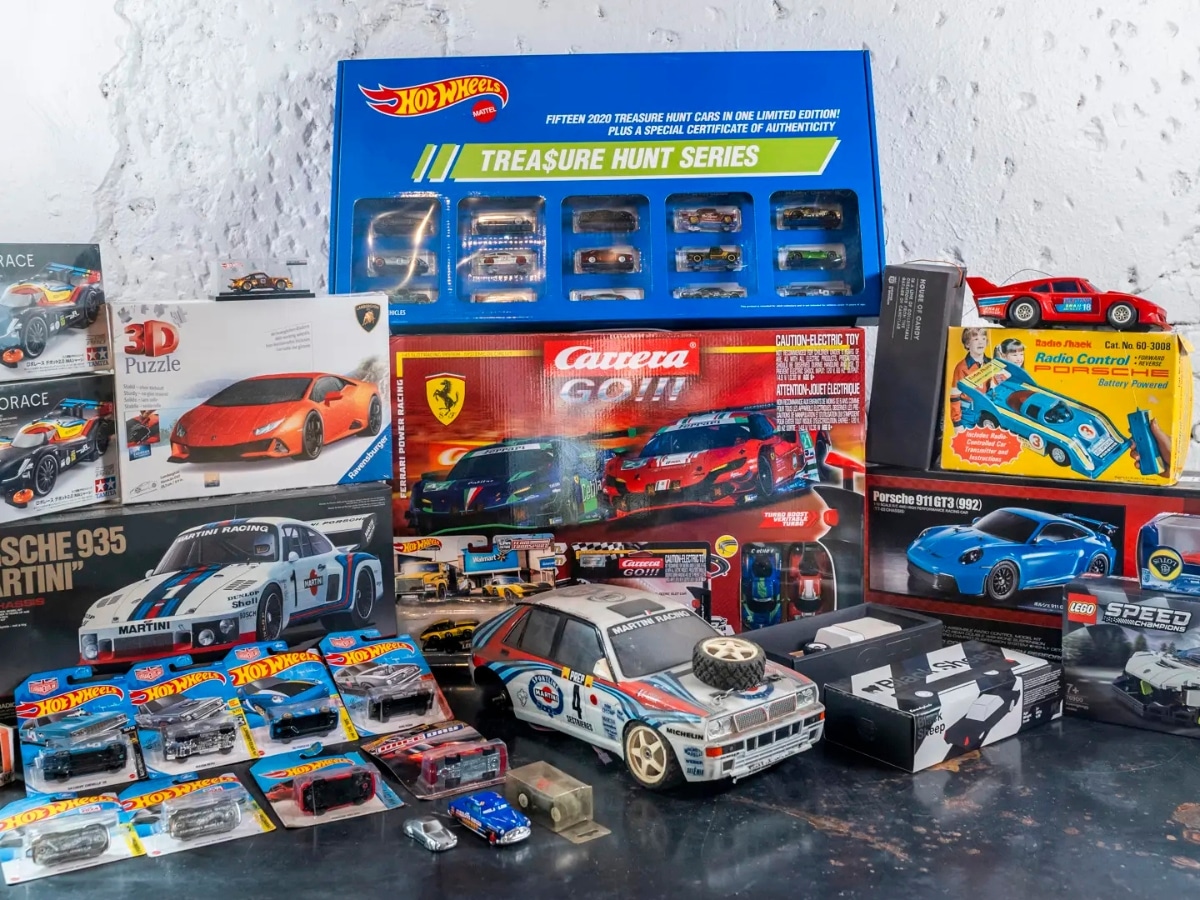
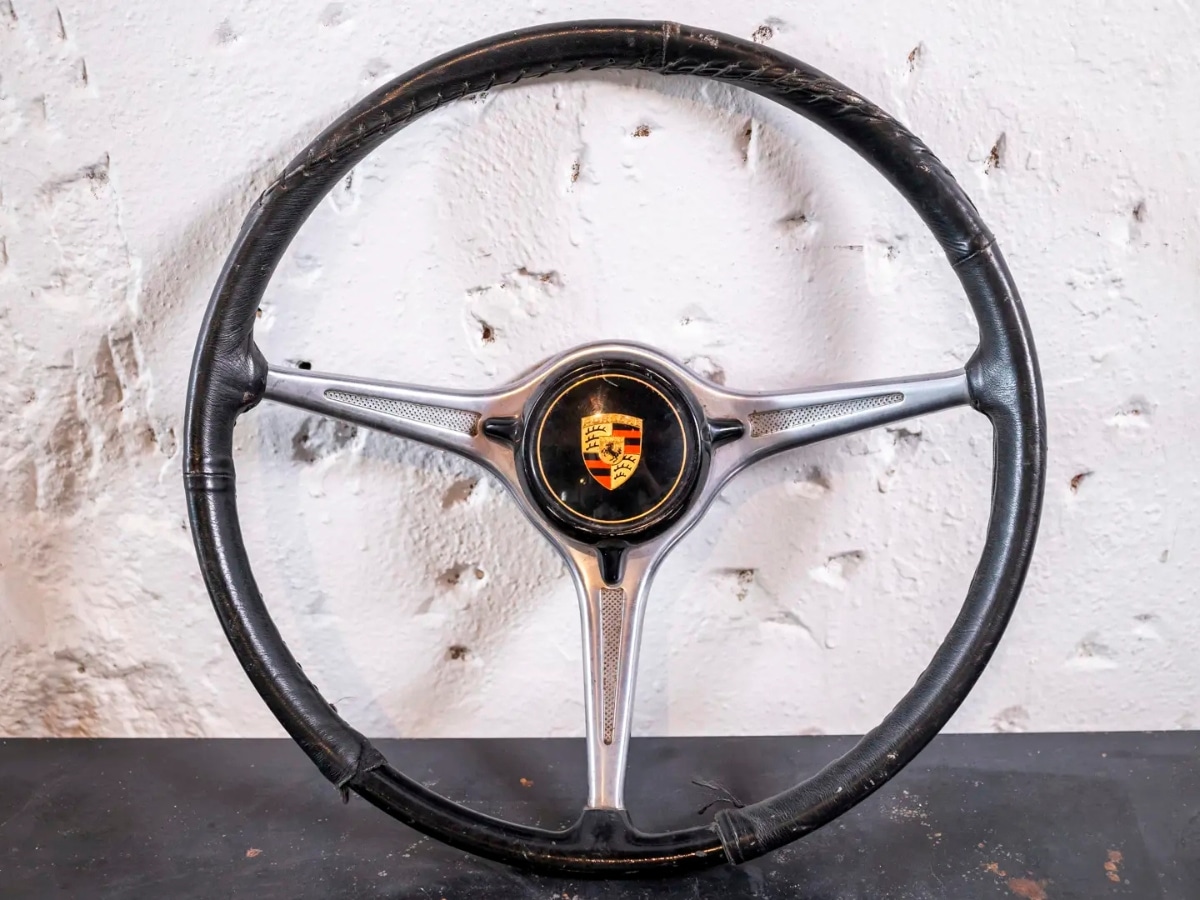
It’s not just the cars going under the hammer. There are 142 additional lots, ranging from spare engines and carburettors to pistons, wheels, seats and workshop tools built up over decades.
There’s also the culture around it. Posters, Porsche brochures, Hot Wheels collectibles and even a signed LEGO Technic 911 GT3 RS kit. Some pieces feel like garage leftovers, others like snapshots of the scene around the cars.
Taken together, it shows a collection that’s always been in motion. Parts were bought, swapped, stored and reused, with nothing treated as too precious to use.
What Magnus Walker Is Keeping
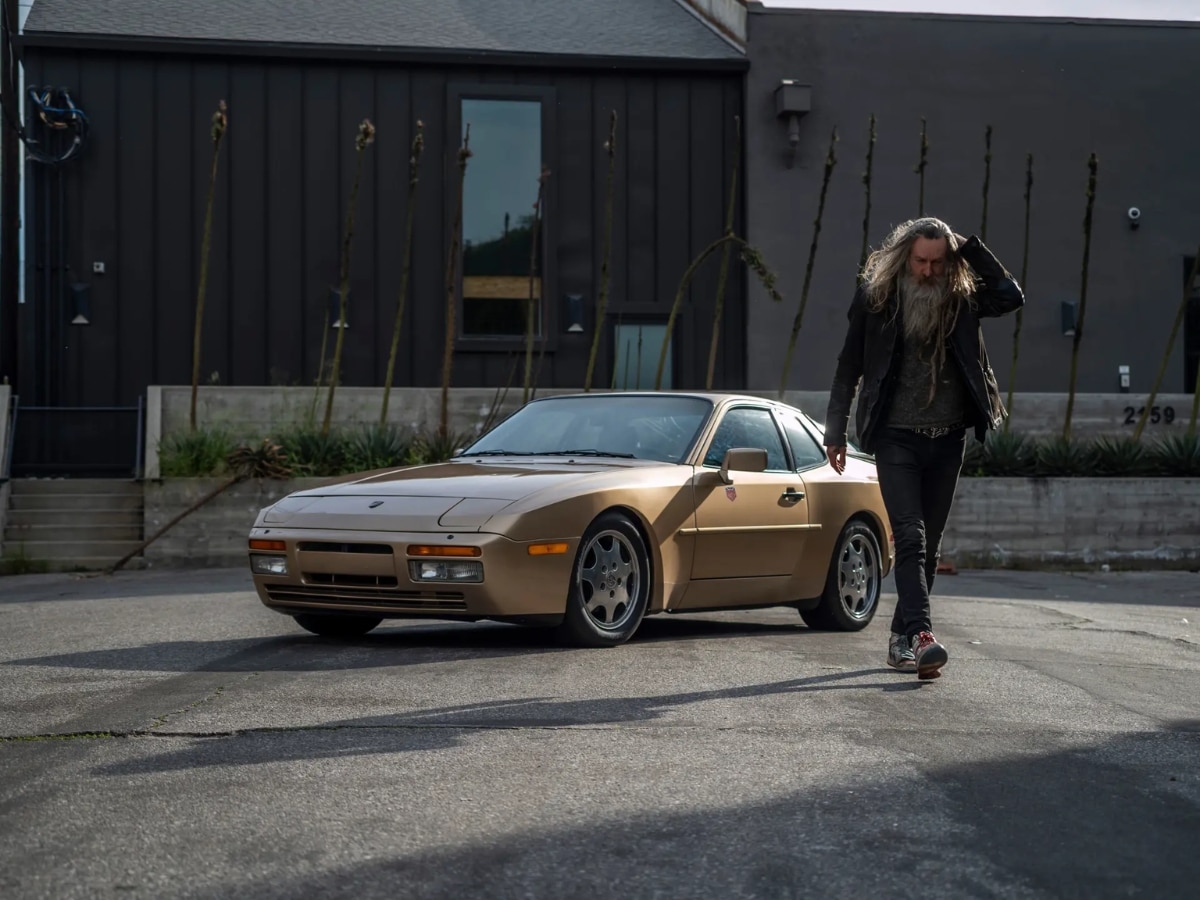
Not everything is leaving the garage. Walker is holding onto 13 of his most important cars, including the one he’s most closely associated with, the ‘277’ 1971 911 T.
That car has taken on a life of its own, reproduced as a Hot Wheels model and recognised well beyond Porsche circles. It’s less a build now and more a signature.
More broadly, this isn’t a full clear-out. Walker is still very much part of the Porsche world. This just marks a shift in focus.
A Rare Chance To Own Porsche History
With every car offered without reserve, this is a rare chance to buy into one of the most recognisable Porsche collections in the world.
Bidding is now live through RM Sotheby’s, running until 25 March, with all lots available to view online.
For Walker, the cars have already done their job. They’ve been driven, changed and lived with. Now they move on.
Collecting was never just about owning them. It was about knowing when to let them go.

















Comments
We love hearing from you. or to leave a comment.