


Updated:
Readtime: 29 min
Every product is carefully selected by our editors and experts. If you buy from a link, we may earn a commission. Learn more. For more information on how we test products, click here.
Classic cars are no longer viewed only as machinery or weekend toys for enthusiast collectors. The upper echelons of the car market are all about historic significance and engineering heritage where prices dip into eye-watering territory. However, it’s not all about passion. Data from Hagerty’s Blue Chip Index shows that high-end post-war collector cars actually outperformed the S&P 500 stock index for 17 consecutive years between 2007 and 2024. While Wall Street has since pulled ahead and the broader classic market has settled into a cooler, post-boom phase, 2026 market reports confirm that the very top end remains remarkably resilient.
Ultra-rare cars with verified provenance continue to serve as tangible safe havens for high-net-worth collectors, even after accounting for ongoing storage, insurance, and maintenance overheads. The list below touches on post-war Silver Arrows to modern factory prototypes, as auction record books have been completely rewritten in recent years. Leading the charge is the historic €135,000,000 (approx. USD143million/AUD217.7 million) sale of the 1955 Mercedes-Benz 300 SLR Uhlenhaut Coupé, setting a benchmark that seemed unthinkable just a decade ago.
Below, we detail the absolute peak of automotive valuations, exploring the race-bred provenance behind the most expensive cars ever sold at public auction.
Most Expensive Cars Ever Sold at a Glance
Highlights from our list include the following:
- Most expensive car ever sold: 1955 Mercedes-Benz 300 SLR Uhlenhaut Coupe – €135,000,000
- Most expensive Ferrari: 1962 Ferrari 330 LM / 250 GTO by Scaglietti – USD$51,705,000
- Most expensive modern car: 2026 Ferrari Luce ‘Tailor Made’ (Chassis 0) – USD$40,000,000
Now you’ve read about our favourites, let’s check out the complete list.
 1/9
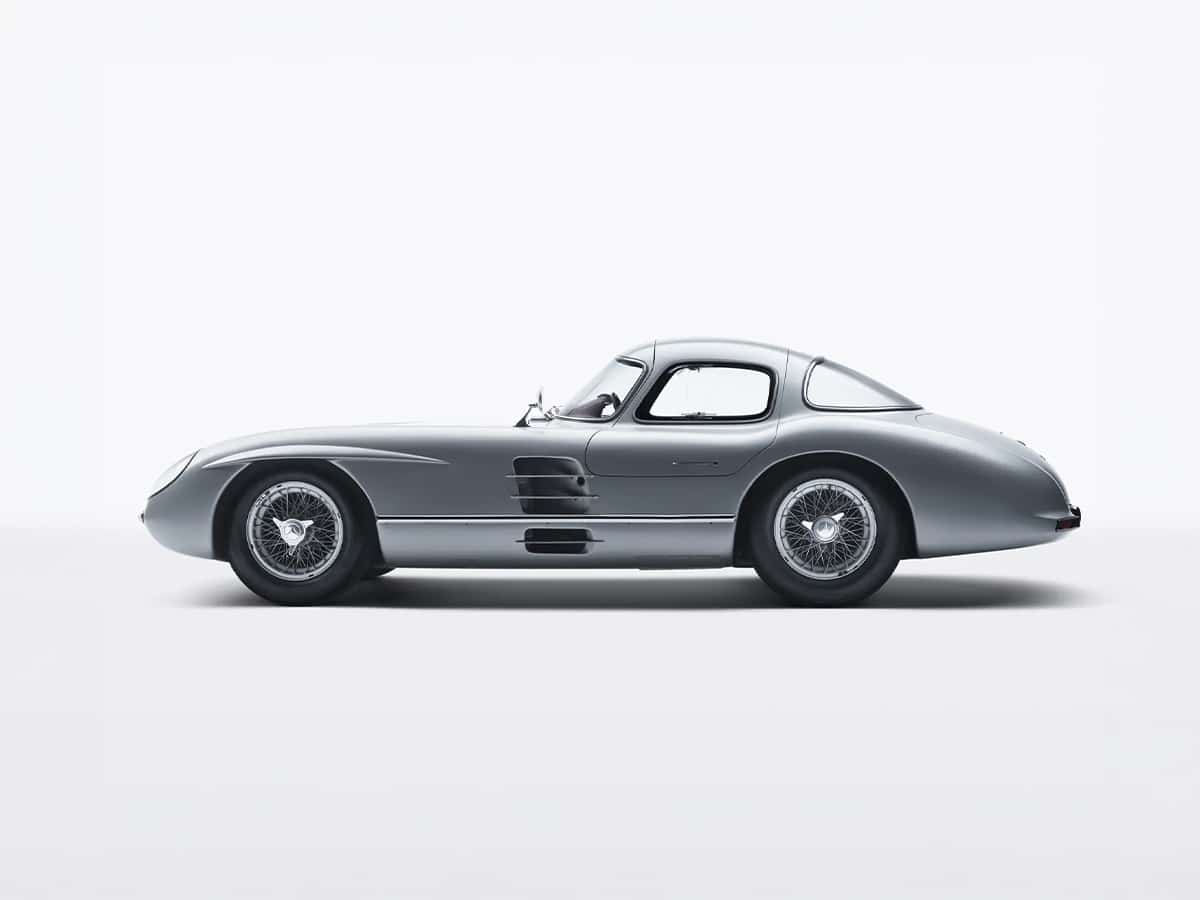
1/91. 1955 Mercedes-Benz 300 SLR Uhlenhaut Coupe – €135,000,000
Sale price (2022): €135 million (~USD$143 million / ~AUD$217.7 million)
Brokered in secret by RM Sotheby’s at the Mercedes-Benz Museum in Stuttgart in May 2022, the €135,000,000 (approx. USD$143 million, AUD$217.7 million) sale of this 300 SLR Uhlenhaut Coupe shattered the previous world record for an auctioned car by over USD$90 million. To put this figure in perspective, this single hammer price equates to more than the total combined value of the second and third most expensive cars on this list. Rumoured to be owned by Sir James Arthur Ratcliffe, the British billionaire of INEOS fame, the vehicle’s extreme value stems from its total unobtainability and legendary motorsport heritage.
Built as a road going adaptation of the W196 Grand Prix car that secured consecutive Formula 1 World Championships for Juan Manuel Fangio, the 300 SLR was originally designed to win long distance endurance events like the Carrera Panamericana. Post the tragic 1955 Le Mans crash, Mercedes-Benz abruptly withdrew from top flight racing. Chief engineer Rudolf Uhlenhaut took the two remaining hardtop chassis prototypes and converted them into street legal machines. Only two were ever constructed. With the sister car (Chassis 00007/55) remaining permanently on display in the Mercedes-Benz Museum, Chassis 00008/55 represented the first and likely last opportunity in human history for a private collector to own one.
The engineering specifications remain staggering even by modern standards. Clothed in ultra lightweight Elektron magnesium alloy bodywork, the coupe tipped the scales at a mere 998 kilograms. Its front mounted 3.0-litre straight-eight engine featured desmodromic valves and pushed the car to a top speed of 290 km/h, making it comfortably the fastest road going vehicle in the world when new.
Driving it is said to be an intense and visceral experience. Occupants had to remove the quick release steering wheel just to climb past the massive central drivetrain tunnel, while the accelerator pedal was wrapped in leather to prevent foot slippage. Side exiting exhaust pipes roared so loudly right outside the cabin that Uhlenhaut reportedly suffered hearing loss in later life. That deafening noise didn’t stop him from using it as his daily company car. Legend says that, when running late for a meeting, Uhlenhaut used the autobahn to cover the 230 km distance between Stuttgart and Munich in under an hour.
Maintained directly by Mercedes-Benz from new, the car underwent a comprehensive restoration by renowned specialist Tony Merrick in 1986 before embarking on decades of high profile demonstration drives at Goodwood, Hockenheim, and Pebble Beach. The historic €135 million hammer price was used entirely for philanthropic good. Mercedes-Benz donated 100 per cent of the proceeds to establish the Mercedes-Benz Fund, a global scholarship programme dedicated to supporting young people in environmental science, technology, and decarbonisation research.
- Brand: Mercedes-Benz
- Model: 1955 Mercedes-Benz 300 SLR Uhlenhaut Coupe
- Chassis Number: 196.110-00008/55 (One of only two prototypes)
- Engine: 3.0L straight-eight with desmodromic valves (302 hp)
- Auction Details: RM Sotheby’s (Stuttgart, 2022)
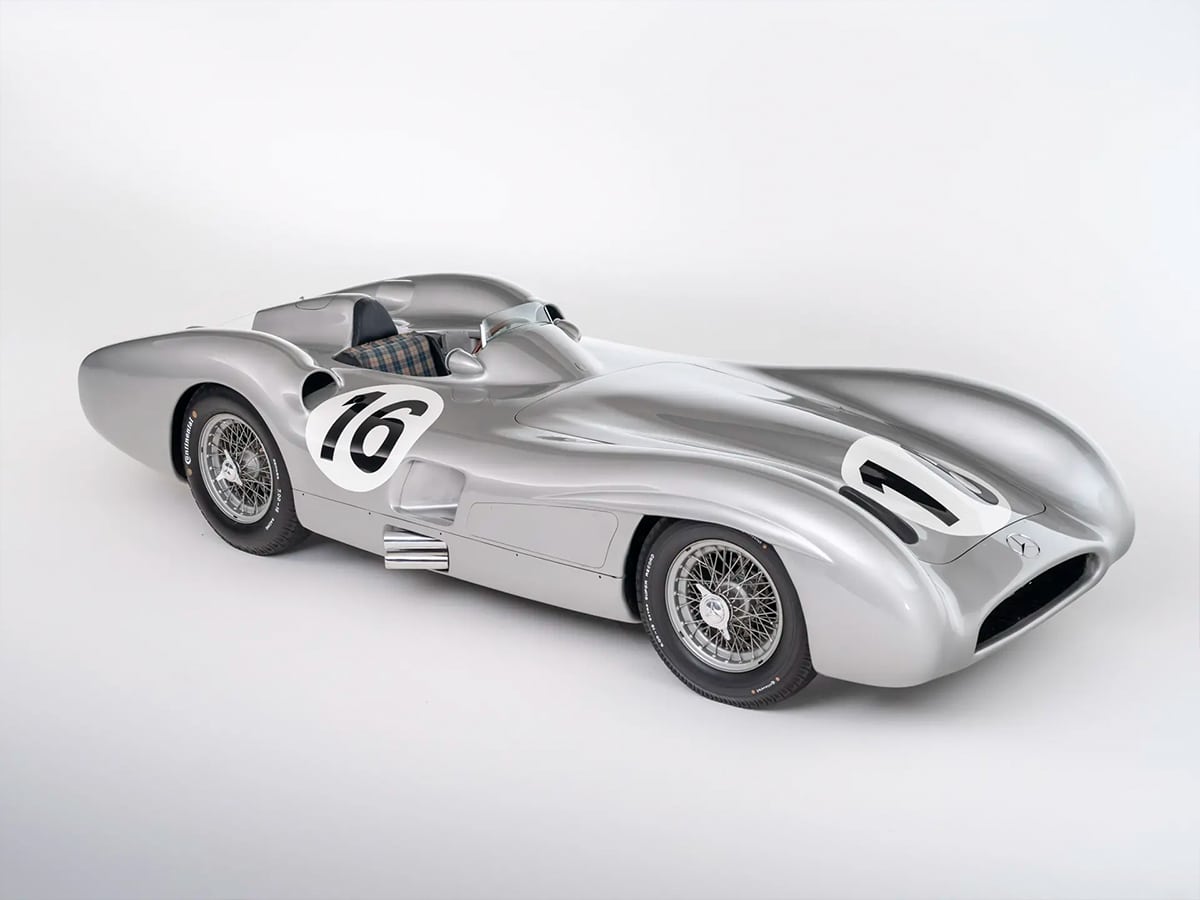
2. 1954 Mercedes-Benz W 196 R Stromlinienwagen – €51,155,000
Sale price (2025): €51,155,000 (~USD$52.5 million / ~AUD$85 million)
Like the 1955 Mercedes-Benz 300 SLR Uhlenhaut Coupe above, the 1954 Mercedes-Benz W 196 R Stromlinienwagen was sold by RM Sotheby’s in February 2025 at the Mercedes-Benz Museum in Stuttgart. Chassis 00009/54 fetched a remarkable €51,155,000 (approx. USD$53,917,370, AUD$81.5 million) result and established itself as the second most expensive car ever sold at public auction and the most valuable Formula 1 racing car in history.
Donated by Daimler-Benz AG to the Indianapolis Motor Speedway Museum in 1965, the vehicle was offered to fund the museum’s major expansion and long term endowment. It stands as the only streamlined W 196 R out of four built to ever enter private hands.
Designed concurrently with its open wheel siblings under the direction of Rudolf Uhlenhaut, the W 196 R Stromlinienwagen (“Streamliner”) was built to dominate high speed circuits like Monza and Reims. The aerodynamic bodywork was crafted from Elektron magnesium alloy, keeping the shell weight down to 40 kilograms (88 pounds). The aerodynamic silhouette allowed the Silver Arrows to cut through the air on long straights. It was powered by a 2.5-litre straight-eight engine featuring desmodromic valves and direct fuel injection that produced 290 horsepower and pushed top speed beyond 300 km/h.
Its racing pedigree is tied to the greatest drivers of motorsport’s golden era. Chassis 00009/54 was campaigned by five time Formula 1 World Champion Juan Manuel Fangio during his dominant 1955 season, taking an outright victory at the 1955 Buenos Aires Grand Prix. Later that year at the Italian Grand Prix in Monza, British racing icon Sir Stirling Moss took the wheel of this exact chassis, setting the fastest lap of the race at an average speed of 215.7 km/h before retiring with engine trouble.
Stepping into the cockpit meant straddling a central driveshaft with pedals split on either side, squeezed into an ultra narrow aluminium bucket surrounded by exposed mechanical linkages. Drivers didn’t have the luxury of modern safety gear or creature comforts, relying on raw muscle to control the car through sweeping banked corners. The sheer noise of the high revving straight-eight echoing off the magnesium body shell created a sensory experience that few drivers forgot. Preserved in untouched factory condition for nearly six decades by the Indianapolis Motor Speedway Museum, the car arrived on the block as an unrepeatable artifact of post war German engineering. Its sale marked only the second time a factory Silver Arrows Grand Prix car had ever been offered at public auction, easily driving bids past the USD$50 million milestone.
- Brand: Mercedes-Benz
- Model: W 196 R Stromlinienwagen
- Chassis number: 00009/54
- Engine: 2.5L straight-eight with desmodromic valves and direct fuel injection
- Horsepower: ~290 hp
- Notable achievements:
- Fastest lap: 1955 Italian Grand Prix (Stirling Moss)
- 1st place: 1955 Argentine Grand Prix (Juan Manuel Fangio, Stirling Moss)
- 1st, 2nd place: 1955 Belgian Grand Prix (Juan Manuel Fangio, Stirling Moss)
- 1st, 2nd place: 1955 Dutch Grand Prix (Juan Manuel Fangio, Stirling Moss)
- Other drivers: Karl Kling
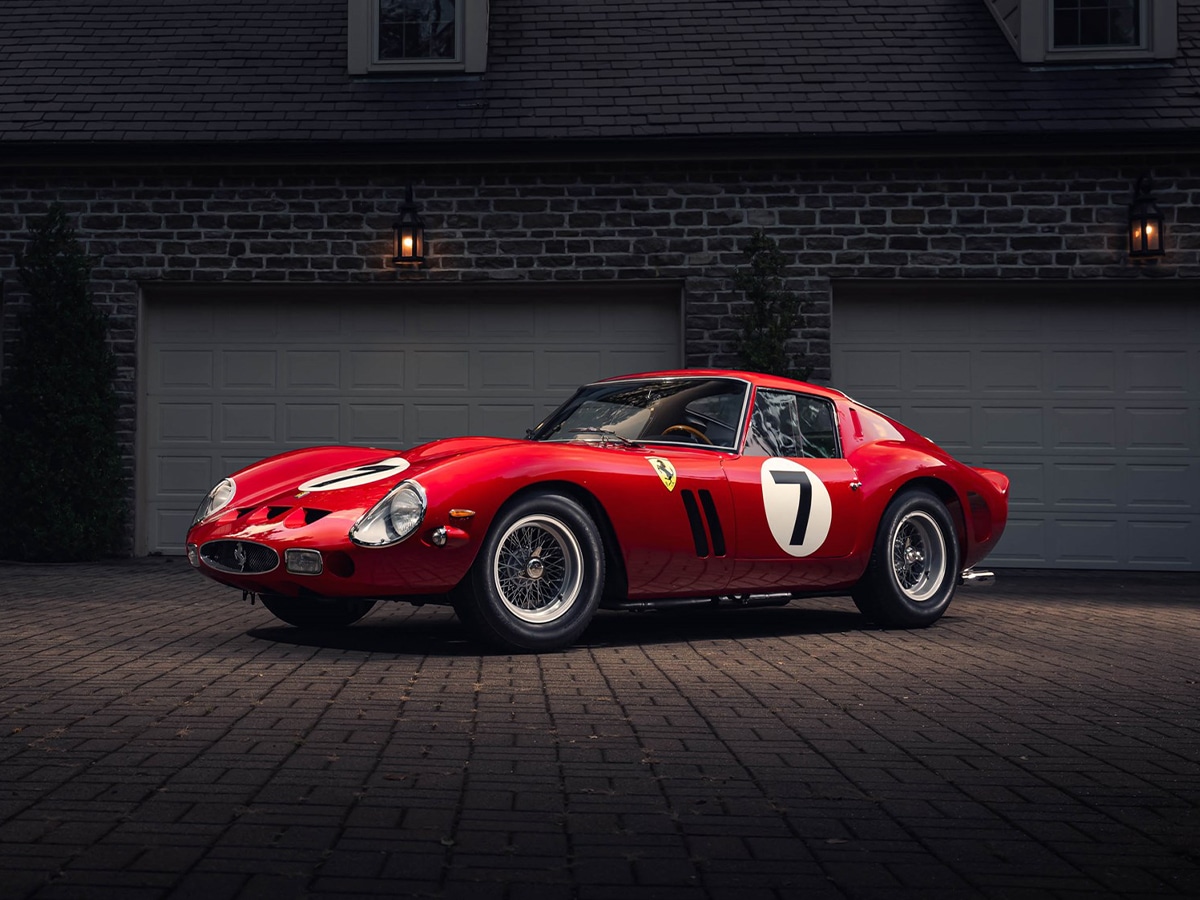
3. 1962 Ferrari 330 LM / 250 GTO by Scaglietti – USD$51,705,000
Sale price (2023): USD$51.7 million (~€47.4 million / ~AUD$79.1 million)
Holding the official record as the most expensive Ferrari ever sold at auction, chassis 3765 LM hammered for USD$51,705,000 (approx. €47.4 million, AUD$79.1 million) at RM Sotheby’s New York sale in November 2023. It represents a singular anomaly within the legendary 250 GTO lineage. While standard GTOs were fitted with 3.0-litre Colombo V12 engines, this car was built from scratch by the factory to 330 LM specifications to exploit revised FIA displacement rules. This makes it the only Series I GTO ever factory equipped with a 4.0-litre V12.
Scuderia Ferrari built the car specifically to spearhead its 1962 endurance racing campaign. At the 1,000 KM of Nurburgring, works drivers Mike Parkes and Lorenzo Bandini piloted chassis 3765 LM to a second place overall finish and a commanding class victory. Later that summer, the factory entered the car into the 24 Hours of Le Mans. Parkes qualified it on the front row alongside the sports prototypes, though an engine overheat meant it didn’t finish the race.
Under the long aluminium hood sat a dry sump 4.0-litre V12 breathing through six two barrel Weber carburettors, pushing power output to 390 HP. The extra torque completely transformed the car’s dynamic profile compared to standard GTOs, requiring floor mounted cooling scoops and an elongated nose to manage engine temperatures at 280 km/h. Driving it on the limit demanded finesse and muscle, as the engine bias put heavy loads on the rear beam axle under hard acceleration.
Following its factory racing career, Maranello converted the car back to standard 3.0-litre GTO specifications so it could be sold to privateer racers.
It eventually ended up with Ferdinando Latteri, who campaigned it to multiple victories in the Italian GT Championship. In 1985, it was acquired by Jim Jaeger, a prominent Ohio collector who maintained the car for nearly four decades. Jaeger commissioned a comprehensive restoration that returned the chassis to its exact 1962 Nurburgring competition specification, where it subsequently picked up Best of Show honours at Amelia Island and second in class at Pebble Beach.
- Brand: Ferrari
- Model: 1962 Ferrari 330 LM / 250 GTO by Scaglietti
- Chassis number: 3765 LM
- Engine: 4.0L V12, 3.0L (128LM/63 specification engine) in the car today
- Horsepower: ~390 hp in 4.0-litre specification
- Notable achievements:
- 1st place: 1965 Coppa FISA, Monza
- 2nd place: 1962 1000 km Nürburgring (Willy Mairesse/Mike Parkes)
- 3rd place: 1965 Mugello Grand Prix
- 4th place: 1965 Coppa Inter-Europa, Monza
- DNF: 1962 24 Hours of Le Mans (Mike Parkes/Lorenzo Bandini)
- Drivers: Mike Parkes, Lorenzo Bandini
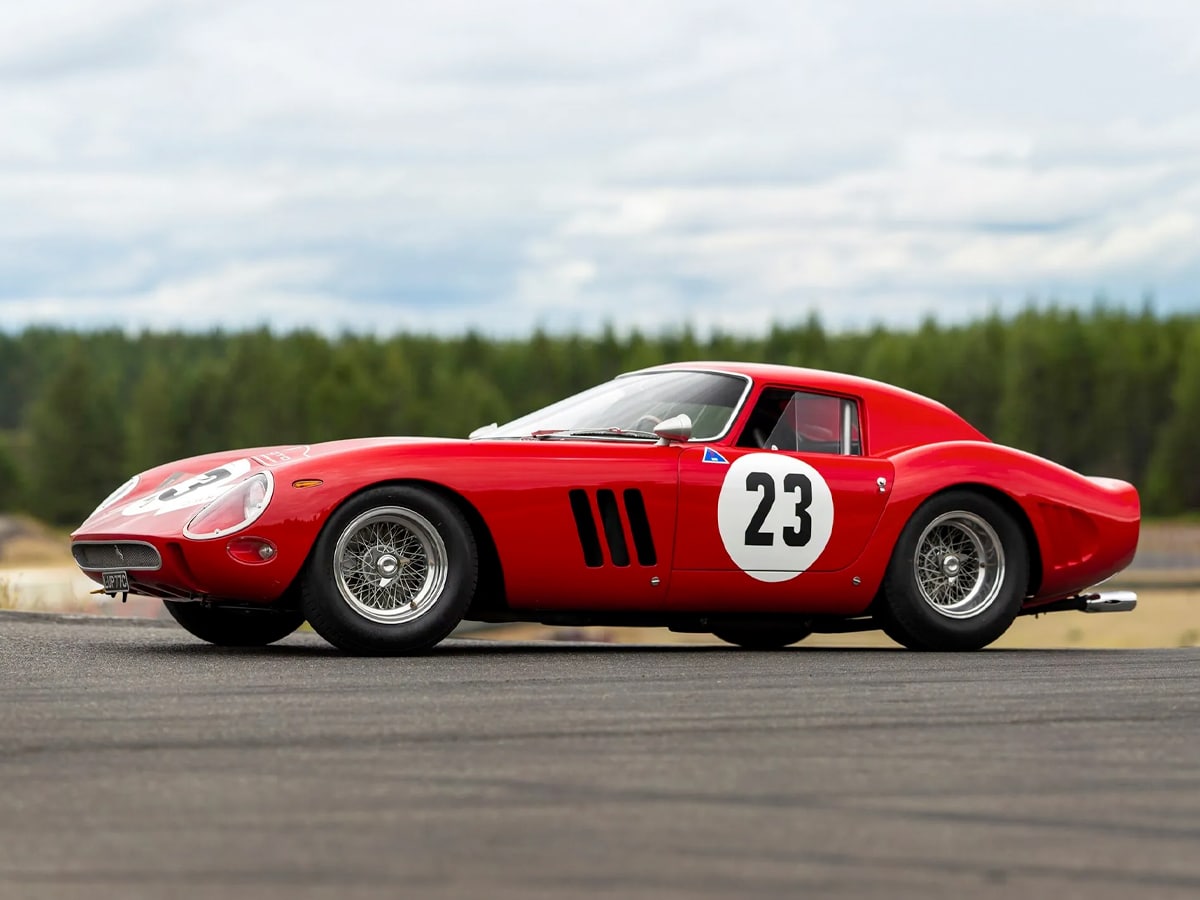
4. 1962 Ferrari 250 GTO by Scaglietti – $48,405,000
Sale price (2018): USD$48.4 million (~€44.4 million / ~AUD$73.8 million)
When chassis 3413 GT crossed the stage at RM Sotheby’s Monterey auction in August 2018, it fetched USD$48,405,000 (approx. €44.4 million, AUD$73.8 million). Consigned by former Microsoft Chief Software Architect Greg Whitten, the car’s widely regarded by marque historians as one of the purest, most battle-tested 250 GTOs left on earth. It’s the third of only 36 GTOs assembled by Ferrari, with an unbroken history of competitive success without a single major accident.
The car began its life as a Series I body, serving as a factory test chassis for Formula 1 World Champion Phil Hill during practice for the 1962 Targa Florio. It was then sold to its first owner, Edoardo Lualdi-Gabardi, an Italian hillclimb specialist who drove it to 10 outright victories in 1962 to claim the Italian GT Championship. By 1964, its second owner sent the car back to Scaglietti to receive the updated Series II coachwork, making it one of just four original GTOs re-bodied in period by the factory. The Series II bodywork dramatically enhanced the car’s high-speed aerodynamics. Designers lowered the bonnet line, widened the track, and introduced a steeper windscreen angle to cut drag down long straights.
Beneath the metal, the 3.0-litre Colombo V12 produced 300 horsepower at 7,500 rpm, paired with a gated five-speed manual transmission. Remarkably, chassis 3413 GT competed in over 20 races across Europe between 1962 and 1965, securing class victories at the 1963 and 1964 Targa Florio races. Through all those years of wheel-to-wheel combat, the car never suffered a mechanical DNF or body damage, retaining its original matching-numbers engine, gearbox, and rear axle to this day.
Following Whitten’s stewardship, during which he regularly drove the car on vintage rallies and track events, its sale set a high watermark for classic car values. The combination of early factory testing history, period Scaglietti Series II coachwork, and an immaculate crash-free race record made it a definitive benchmark for collector cars, and the fourth most expensive car ever sold at auction.
- Brand: Ferrari
- Model: 1962 Ferrari 250 GTO by Scaglietti
- Chassis number: 3413 GT
- Engine: 3.0L V12
- Horsepower: ~300 hp
- Notable achievements:
- Winner of the 1962 Italian GT Championship (Edoardo Lualdi-Gabardi)
- 1st in class in 1963 and 1964 Targa Florio
- Over 15 class and overall wins (1962–1965)
- Drivers: Edoardo Lualdi-Gabardi, Gianni Bulgari, Maurizio Grana
 1/7
1/75. 1964 Shelby Cobra Daytona Coupe – USD$42,905,000
Sale Price (2026): USD$42.9 million (approx. AUD$64.8 million)
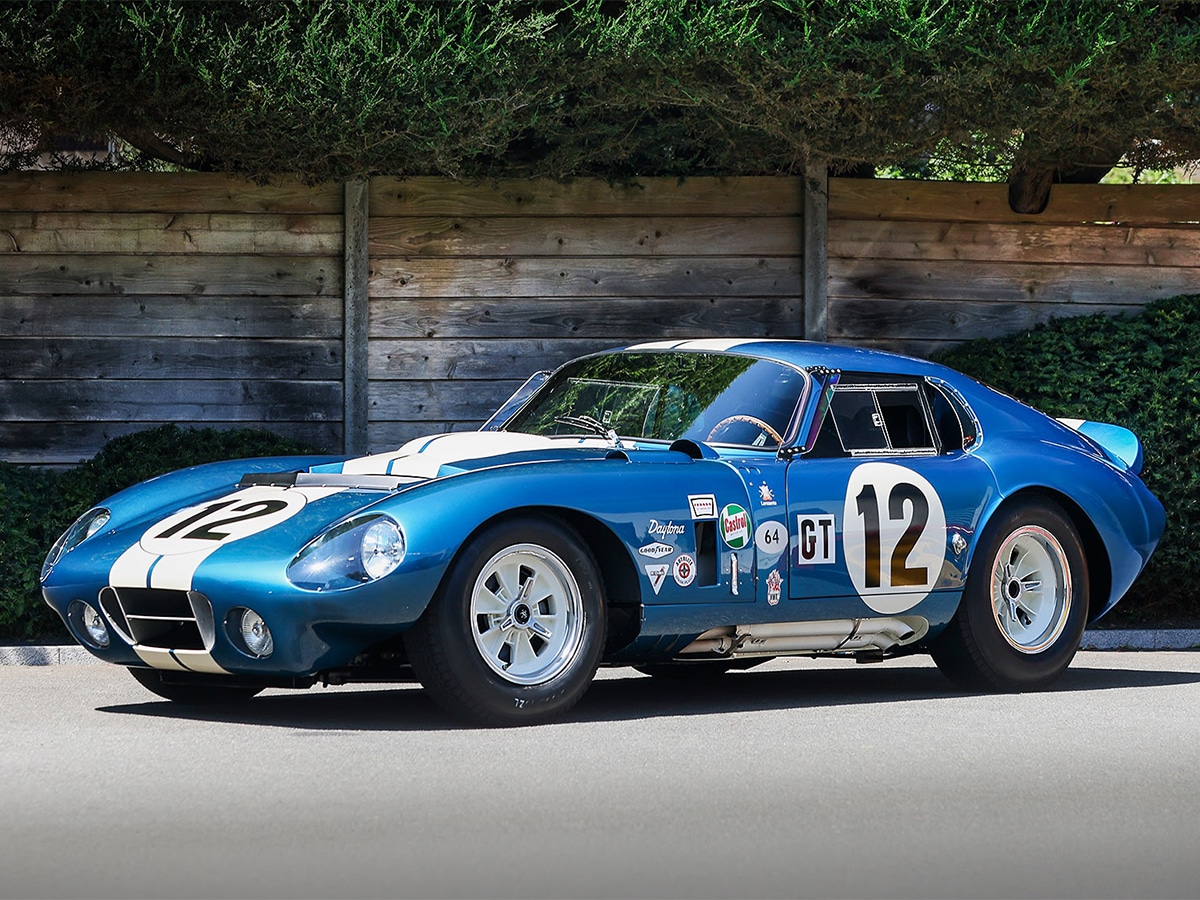
The 1964 Shelby Cobra Daytona Coupe shattered expectations at Gooding Christie’s Monterey sale in August 2026. Chassis CSX2300 hammered for USD$42,905,000 (approx. AUD$64.8 million), making it the most expensive American automobile ever sold at public auction.
Designed specifically to beat Ferrari on its home turf in the World Sportscar Championship, only six Cobra Daytona Coupes were ever constructed by Shelby American. The Daytona Coupe was born out of pure frustration. Carroll Shelby realised his open-top Cobra roadsters were aerodynamically draggy, losing massive ground to the Ferrari 250 GTOs on the 5 km Mulsanne Straight at Le Mans. Shelby tasked young designer Peter Brock with creating a closed-cockpit body. Brock utilised a truncated “Kamm tail” rear end, an aerodynamic innovation that reduced drag and lifted top speed from 250 km/h to over 300 km/h without needing extra horsepower from the 289 cubic-inch Ford V8.
Chassis CSX2300 carries provenance that no other Daytona Coupe can match, as it was the only example retained personally by Carroll Shelby after its racing career ended. Before entering Shelby’s private collection, it competed at the 1965 12 Hours of Sebring under the Shelby American Works team, driven by Bob Johnson and Tom Yeager to a third place finish in the GT class. That effort helped Ford and Shelby secure the 1965 International Championship for GT Manufacturers.
When we look inside the cabin, it’s pure race car spartan. Drivers sat low in basic bucket seats surrounded by uninsulated aluminium panels, exposed wiring, and a wood-rimmed steering wheel. The cabin got notoriously hot during long endurance stints, with heat radiating off the four-barrel Weber carburettors and headers directly into the footwell. Of course, its 390 HP Ford V8 delivered violent acceleration that made it a weapon on track.
Offered directly with historical documentation proving Shelby’s long-term personal ownership, the car was presented in its iconic Guardsman Blue paint with white racing stripes and number 12 roundels. If anything, this sale proved that American racing icons can stand shoulder-to-shoulder with Europe’s finest exotics at the very top of the market these days.
 1/10
1/106. 2026 Ferrari Luce ‘Tailor Made’ (Chassis 0) – USD$40,000,000
Sale Price (2026): USD$40.0 million (approx. AUD$60.4 million)
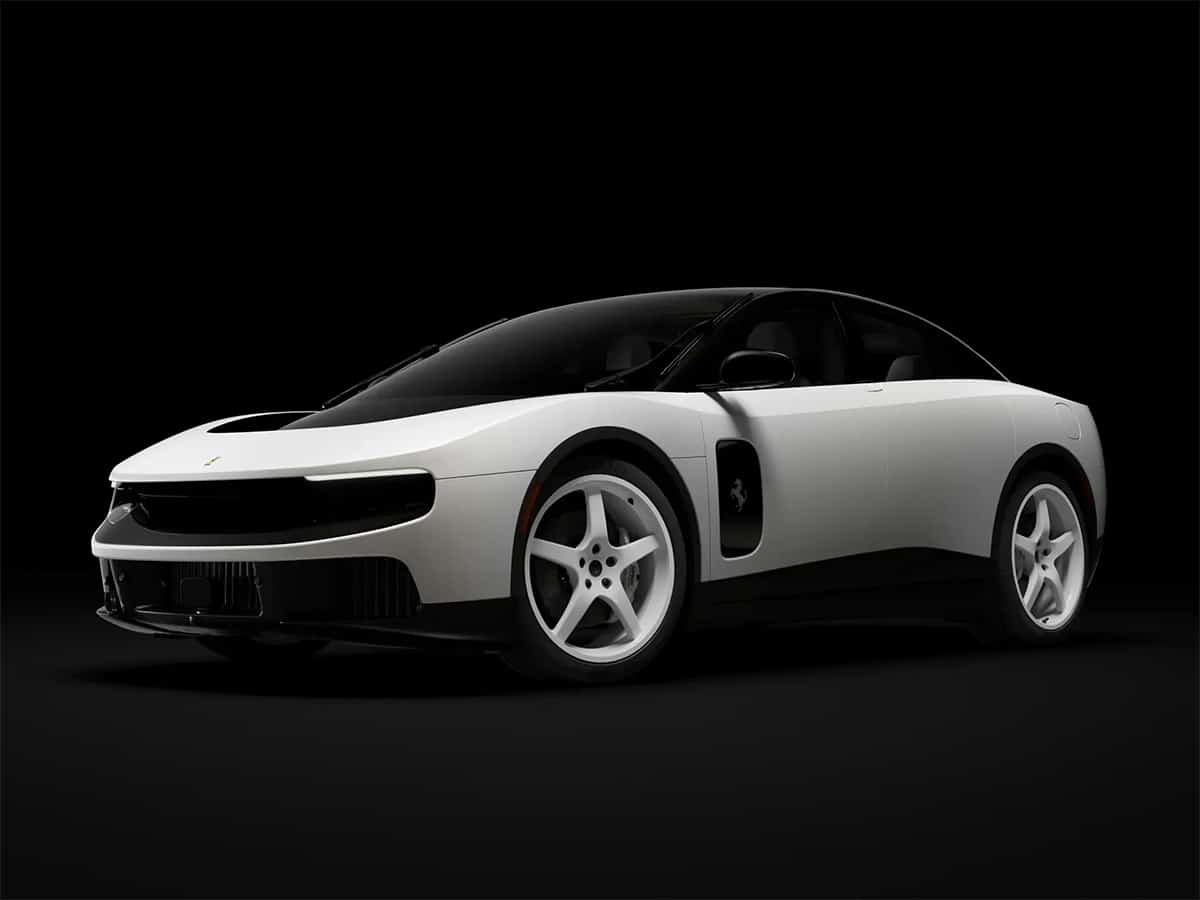
The 2026 Ferrari Luce ‘Tailor Made’ (Chassis 0) fetched USD$40,000,000 (approx. AUD$60.4 million) at RM Sotheby’s Monterey auction in August 2026. The staggering hammer price made it the most expensive new production car ever sold, shattering the previous USD$26 million record set by a Tailor Made Daytona SP3 the year prior. Standing as the very first production chassis of Maranello’s inaugural electric vehicle programme, RM Sotheby’s waived all buyer’s premiums so 100 per cent of the proceeds were directed to The Ferrari Foundation to fund global educational initiatives.
Chassis 0 was customised through Ferrari’s elite Tailor Made programme, featuring a one-off specification created in partnership with Sir Jony Ive’s LoveFrom design collective. The exterior design revolved around the theme of light, finished in Madreperla Semi-Gloss paint. It’s an exclusive mother-of-pearl shade featuring dedicated pigments that shift between green and violet depending on ambient lighting. Staggered “optical-white” forged wheels, customised brake calipers, and a prancing horse set against an optical-white background distinguish it from standard production models.
Like the exterior, LoveFrom designed custom switchgear on the inside, crafted from solid anodised aluminium, doing away with digital touchscreens for primary driving functions. Seats are covered in Le Mans metallic leather in Perla, sourced from selected Swiss tanneries, while secondary cabin accents were finished in Grigio Corvara to replace traditional black elements for the first time. Underneath the bespoke bodywork sits an 800V EV architecture powered by a 122 kWh battery pack. Four independent electric motors deliver 1,036 HP and 990 Nm of torque, propelling the five-seat GT from 0 to 100 km/h in just 2.5 seconds.
With buyer’s premiums waived and tax relief options available for the charitable donation, the sale captured global headlines as Maranello officially entered its electric era. Bidders didn’t hesitate to push the hammer to 62.5 times the car’s standard starting price. Ouch!
- Brand: Ferrari
- Model: 2026 Ferrari Luce ‘Tailor Made’
- Chassis Number: ZFF21BUA8T0338000 (“Chassis 0”)
- Powertrain: Quad-Motor All-Electric (1,036 HP / 990 Nm)
- Notable Achievements:
- Most expensive new production car ever sold at auction
- Most expensive electric vehicle ever sold
- 100 per cent of hammer price donated to The Ferrari Foundation
- First production chassis of Ferrari’s first electric vehicle programme
 1/10
1/107. 1962 Ferrari 250 GTO – $38,115,000
Sale price (2014): USD$38,115,000 (~€22.8 million / ~AUD$62.2 million)
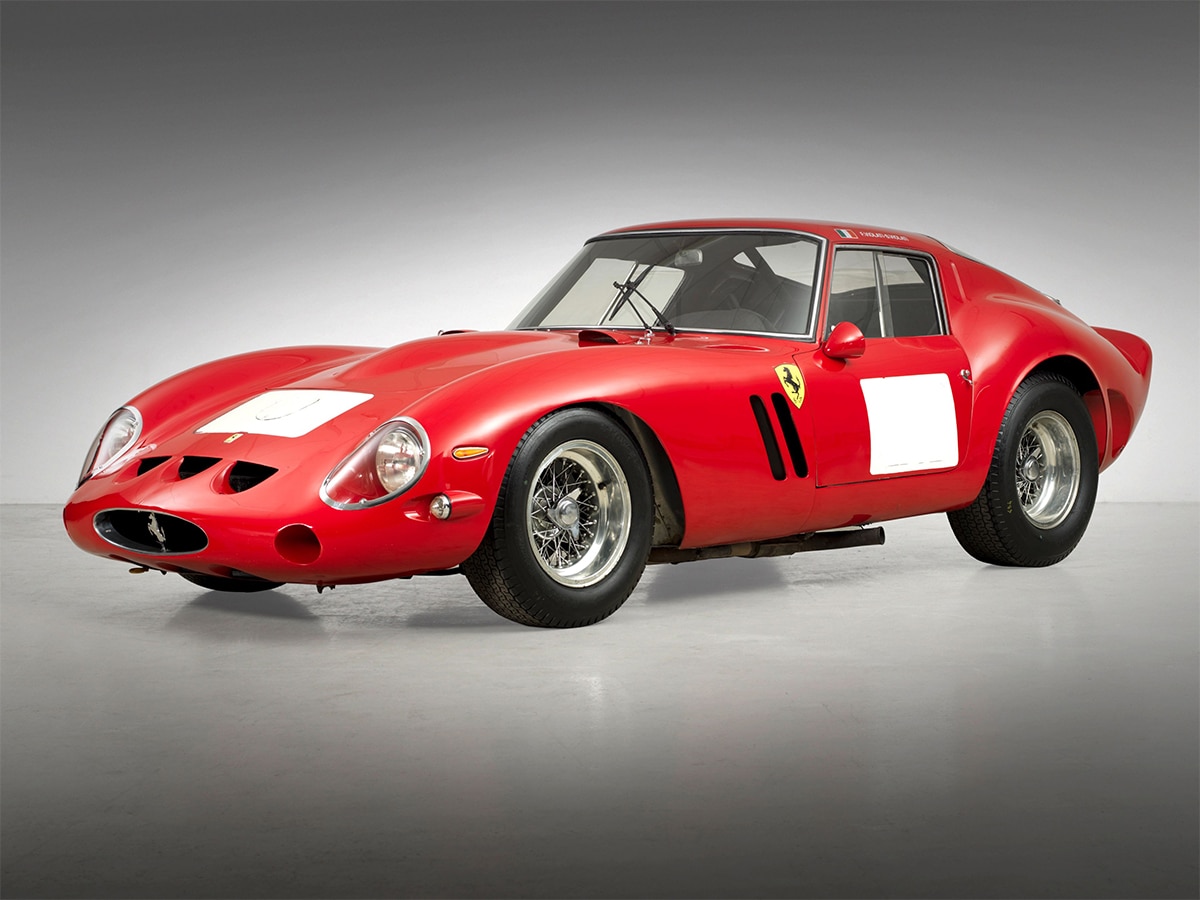
When this 1962 Ferrari 250 GTO crossed the auction block at the Quail Lodge Auction in 2014 it set the outright world record for any motor car sold at public auction. It would be fair to say that it was a little ahead of its time, kicking off a decade of growth across the entire classic car market. Completed at Maranello on 11 September 1962, it was the 19th 250 GTO constructed by Ferrari and was delivered new to French racing driver Jo Schlesser. Schlesser co-drove the car with French ski champion Henri Oreiller in the grueling 1962 Tour de France Automobile, securing a second place overall finish across 5,500 kilometres of road racing.
Tragically, Oreiller was killed behind the wheel during a subsequent outing at the Montlhéry circuit just south of Paris. The heavily damaged chassis was returned to Maranello, where Scuderia Ferrari performed a full factory rebuild to return the car to pristine race-ready condition before selling it to Italian gentleman driver Paolo Colombo.
Colombo and its subsequent owner, Ernesto Prinoth, campaigned chassis 3851 GT across mountain hillclimbs and circuit races. When Prinoth considered dismantling the car for its V12 engine in 1965, young Roman enthusiast Fabrizio Violati stepped in to buy it, saving it from being scrapped. Violati famously kept the purchase secret from his family for months, sneaking out late at night to exercise the GTO on quiet Italian country roads. He went on to race the car extensively in historic motorsport events for decades, eventually making it the centerpiece of his famous Maranello Rosso Museum in San Marino, where it remained for 49 years until his passing.
Beneath the bonnet sits Ferrari’s legendary 3.0-litre Colombo V12 fed by six twin-choke Weber carburettors to deliver 300 HP at 7,500 rpm. Power reaches the rear wheels through a gated five-speed manual transmission. The lightweight aluminium bodywork, combined with a rigid tubular spaceframe and double-wishbone front suspension, provided great dynamic balance.
Offered directly from nearly half a century of continuous single-family ownership, chassis 3851 GT arrived on the auction block as a beautifully maintained, unrepeatable piece of Maranello history. Its record sale proved that genuine 250 GTOs with early factory provenance could become blue-chip financial assets.
- Brand: Ferrari
- Model: 1962 Ferrari 250 GTO
- Chassis number: 3851 GT
- Engine: 3.0L V12
- Horsepower: Approximately 300 hp
- Notable achievements:
- Raced in the 1962 Tour de France Automobile, finishing second overall
- Competed in various races during the 1962 and 1963 seasons
- Drivers: Jo Schlesser, Henri Oreiller
 1/10
1/108. 1964 Ferrari 250 LM by Scaglietti
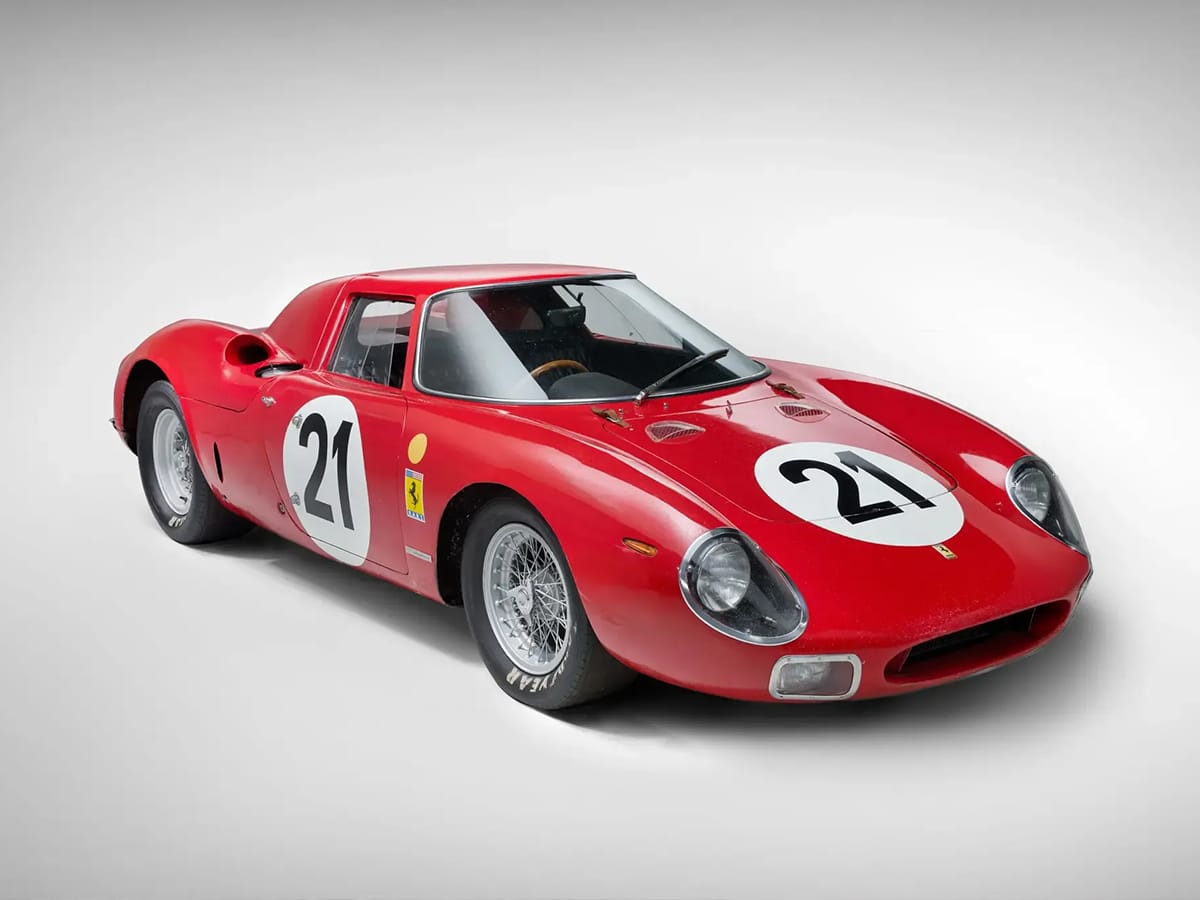
Sold by RM Sotheby’s at its Paris Rétromobile sale in February 2025, 1964 Ferrari 250 LM by Scaglietti chassis 5893 fetched USD$36,344,960 (approx. €34.88 million, AUD$54.9 million). Consigned by the Indianapolis Motor Speedway Museum after residing in its collection for 54 years, the car stands as the outright winner of the 1965 24 Hours of Le Mans. Its historic sale established a new benchmark as the most expensive Le Mans winning car ever sold at auction.
The 250 LM was designed by Ferrari to replace the front-engine 250 GTO, placing a 3.3-litre V12 mid-ship behind the cockpit for superior weight distribution and balance. However, FIA officials refused to homologate the car as a GT entry because Ferrari failed to build the mandatory 100 production examples. It was then forced to compete in the prototype class against much faster, purpose-built machinery from rival manufacturers, and the 250 LM was considered an underdog entering the 1965 Le Mans race.
Campaigned by Luigi Chinetti’s North American Racing Team, drivers Jochen Rindt and Masten Gregory drove chassis 5893 relentlessly through the night. With the faster factory prototypes from Ford and Ferrari suffering catastrophic mechanical failures, the privateer entry took the lead. It covered 4,677 kilometres at an average speed of 194.9 km/h to capture an astonishing overall victory. That win stood as Ferrari’s final overall Le Mans victory for nearly six decades until Maranello returned to win the event in 2023.
Post its Le Mans success, chassis 5893 competed in five more 24-hour endurance races across Le Mans and Daytona before being acquired directly by the Indianapolis Motor Speedway Museum in 1970. The museum preserved the car, keeping its original matching-numbers 320-horsepower V12 engine, transaxle, and aluminium Scaglietti bodywork intact while occasionally running it on track for demonstration laps. Offered to fund the museum’s major renovation project, the car represented an exceptionally rare chance to purchase an outright Le Mans winner with continuous history.
- Brand: Ferrari
- Model: 1964 Ferrari 250 LM by Scaglietti
- Chassis Number: 5893
- Engine: 3.3L V12 (approx. 320 hp)
- Notable Achievements:
- Overall Winner: 1965 24 Hours of Le Mans (Jochen Rindt, Masten Gregory)
- Campaigned by Luigi Chinetti’s North American Racing Team
- Retained by the Indianapolis Motor Speedway Museum for 54 years
- Competed in six 24-hour endurance races
- Auction Details: RM Sotheby’s (Paris, 2025)
 1/10
1/109. 1957 Ferrari 335 Sport Scaglietti – €32,075,200
Sale price (2016): €32,075,200 (approx. USD$35,730,510 / AUD$53.8 million)
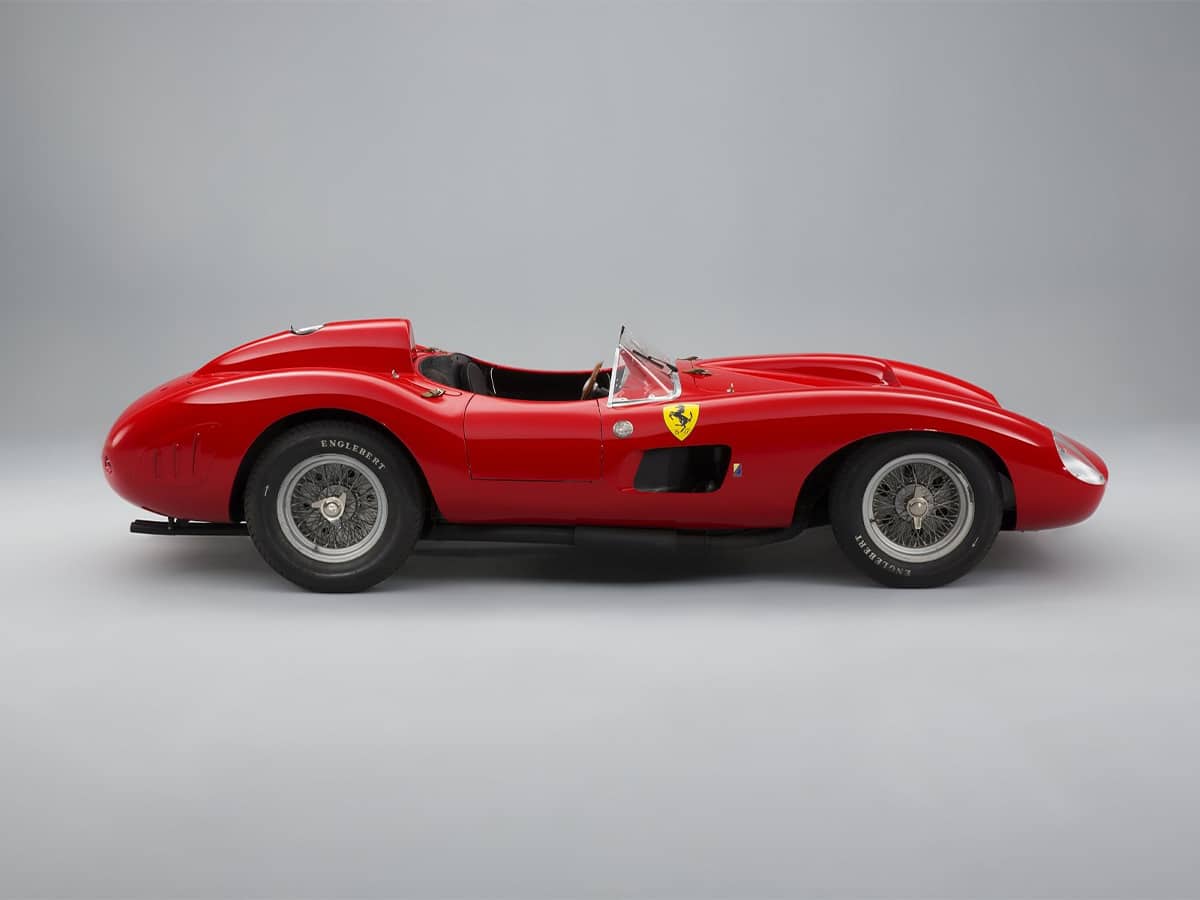
Crossing the block at Artcurial’s Paris Retromobile auction back in February 2016, Ferrari 335 Sport Scaglietti chassis 0674 sold for €32,075,200 (approx. USD$35,730,510, AUD$53.8 million) after emerging from 40 years of careful preservation in the legendary Pierre Bardinon collection.
It stands as one of the most powerful and heavily campaigned Scuderia Ferrari Works racers of the 1950s. Built to reclaim dominance from Maserati and Aston Martin in the World Sportscar Championship, the 335 Sport didn’t hold back on performance. Powered by a 4.1-litre Tipo 140 quad-cam V12 engine fed by multiple twin-choke carburettors, it produces nearly 400 HP, and was capable of reaching speeds of 300 km/h. Hand crafted by Scaglietti, its bodywork featured deep front air intakes and pontoon style fenders designed to scoop air into the radiators while cooling the large drum brakes.
Peter Collins and Maurice Trintignant raced it at the 1957 Sebring 12 Hours, finishing sixth. Wolfgang von Trips drove it to a hard fought second place overall finish at the fateful 1957 Mille Miglia. Then, at the 24 Hours of Le Mans, Mike Hawthorn set the race’s first ever lap record at an average speed of over 200 km/h before retiring with mechanical trouble. To cap off an incredible run, Sir Stirling Moss drove it to outright victory at the 1958 Cuban Grand Prix. This was all despite a heavy clutch, unassisted steering, and huge low end torque that meant drivers had to constantly wrestle the car through corners. The sound of the 4.1-litre quad-cam V12 at full throttle was described by period racers as deafening, filling the open cockpit with intense heat and exhaust fumes.
Retaining its original matching numbers engine and chassis structure, the car arrived on the block as a preserved survivor of Ferrari’s golden era.
- Brand: Ferrari
- Model: 1957 Ferrari 335 Sport Scaglietti
- Chassis number: 0626, 0656, and 0674
- Engine: 4.1L V12
- Horsepower: Approximately 400 hp
- Notable achievements:
- Outright Winner: 1958 Cuban Grand Prix (Stirling Moss, Masten Gregory)
- 2nd place overall: 1957 Mille Miglia (Wolfgang von Trips)
- First lap record over 200 km/h at the 24 Hours of Le Mans (Mike Hawthorn)
- Held in the Pierre Bardinon collection for 40 years
- Drivers: Peter Collins, Maurice Trintignant, Wolfgang von Trips, Mike Hawthorn, Sir Stirling Moss.
 1/10
1/1010. 1996 McLaren F1 GTR ‘Pop Art F1’ – USD$34,655,000
Sale Price (2026): USD$34.65 million (approx. AUD$52.3 million)
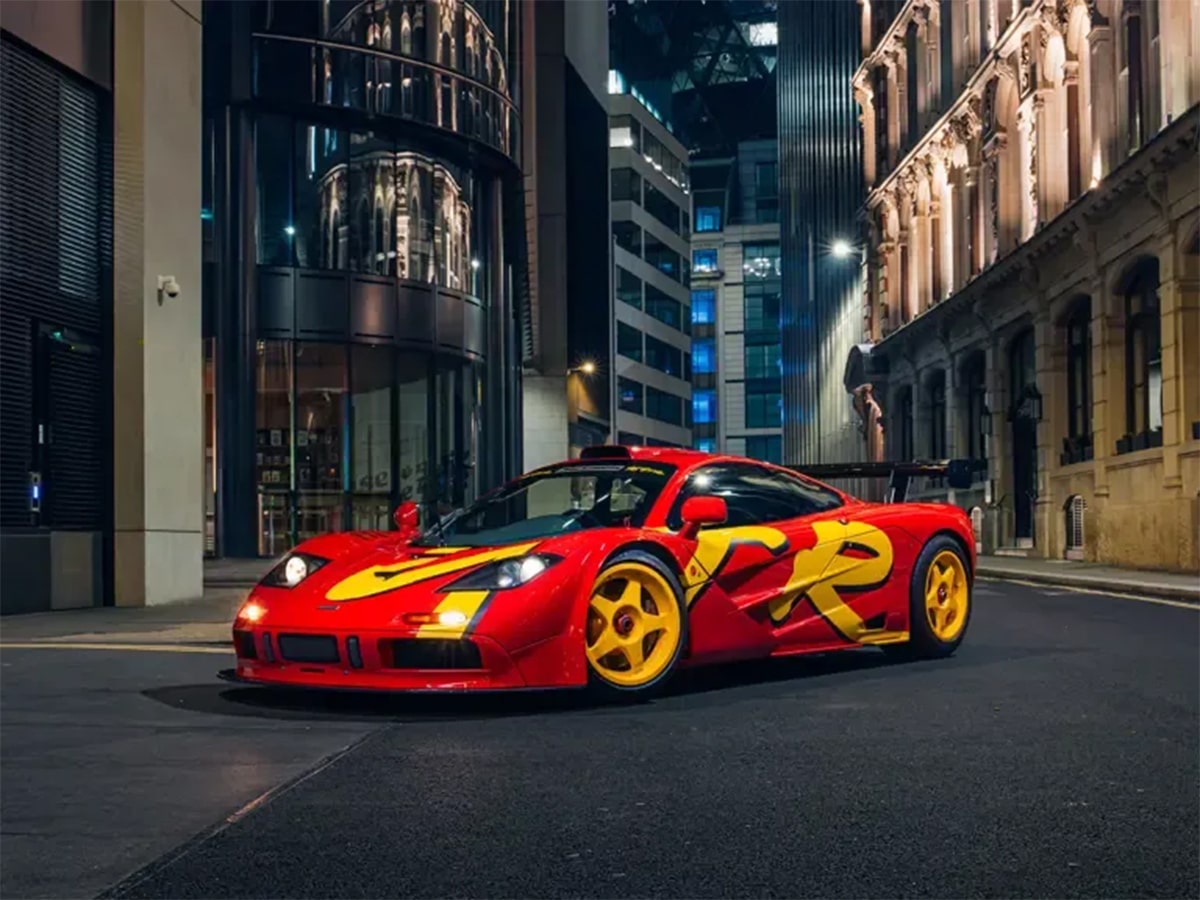
Closing out the list of the most expensive cars ever sold at auction, 1996 McLaren F1 GTR chassis 10R sold for USD$34,655,000 (approx. AUD$52.3 million) at RM Sotheby’s Monterey auction in August 2026. The sale made it the most expensive McLaren and the most valuable British car ever sold at public auction. It stands as the very first McLaren F1 GTR built to the revised 1996 “long-tail” aerodynamic specification.
Designed by Gordon Murray, chassis 10R featured extended front splitters and a lengthened rear bodywork tail to initialise higher downforce and enhance high-speed stability at Le Mans. Retained by McLaren as an official factory development prototype, Murray personally designed its distinctive Blood Red and yellow graphic livery, which quickly earned the chassis its famous “Pop Art” moniker.
Back in 1999, Pink Floyd drummer and noted car collector Nick Mason acquired chassis 10R directly from McLaren. Mason kept and maintained the car for a quarter-century, regularly exercising it at events like the Goodwood Festival of Speed while keeping it fully road-registered and track-ready.
Powering chassis 10R is a 6.0-litre BMW Motorsport S70/2 V12 engine producing roughly 600 HP, paired with a six-speed manual transmission. The central driving position places the driver in the middle of the carbon-fibre monocoque, flanked by exposed carbon composite bulkheads and an engine bay lined with gold leaf heat shielding.
Offered directly from Mason’s collection with complete factory documentation, chassis 10R represented a unique crossover between modern hypercar design and 1990s GT racing history. Intense bidding sent the hammer price past USD$34 million, cementing the McLaren F1 GTR’s place alongside classic 1960s Ferraris at the apex of the global collector market, and one of the hottest models in the blue chip car market today.
- Brand: McLaren
- Model: 1996 McLaren F1 GTR ‘Pop Art F1’
- Chassis Number: 10R
- Engine: 6.0L BMW Motorsport S70/2 V12 (approx. 600 hp)
- Notable Achievements:
- First McLaren F1 GTR built to 1996 long-tail specification
- Official factory development prototype tested by McLaren
- Unique factory Blood Red and yellow “Pop Art” livery by Gordon Murray
- 25-year single-owner provenance in Nick Mason’s collection
- Auction Details: RM Sotheby’s (Monterey, 2026)
Frequently Asked Questions
While public auction records are fully verified, private sales don’t always publish official documentation. However, a 1963 Ferrari 250 GTO (chassis 4153 GT) reportedly sold privately in 2018 to WeatherTech founder David MacNeil for an estimated USD$70 million (approx. AUD$100 million), making it the highest rumoured private automotive transaction on record.
Ferrari only constructed 36 examples of the 250 GTO between 1962 and 1964. Beyond extreme scarcity, the GTO represents the peak of 1960s front-engine GT racing. It delivered immediate motorsport dominance, timeless Scaglietti styling, and dual-purpose engineering that allowed owners to compete on track and drive home on public roads.
No, the €135,000,000 (approx. USD$143 million) sale of the 300 SLR Uhlenhaut Coupe was an official invitation-only auction hosted by RM Sotheby’s at the Mercedes-Benz Museum. Even when considering unverified private transactions, it remains the highest price ever recorded for any motor car in history.
First-production vehicles like Chassis 0 of the 2026 Ferrari Luce ‘Tailor Made’ carry historical significance as milestone zero for a manufacturer’s new chapter. Furthermore, high-profile charity auctions often feature waived buyer’s premiums and tax incentive benefits, driving collectors to bid aggressively for philanthropic causes.
A car’s competition record, original matching-numbers components, and undamaged chassis directly influence collector appetite. Provenance proving that legendary drivers like Juan Manuel Fangio or Sir Stirling Moss piloted the vehicle on track creates an unrepeatable history that collectors will pay a heavy premium to secure.












Comments
We love hearing from you. or to leave a comment.