

Updated:
Readtime: 6 min
Every product is carefully selected by our editors and experts. If you buy from a link, we may earn a commission. Learn more. For more information on how we test products, click here.
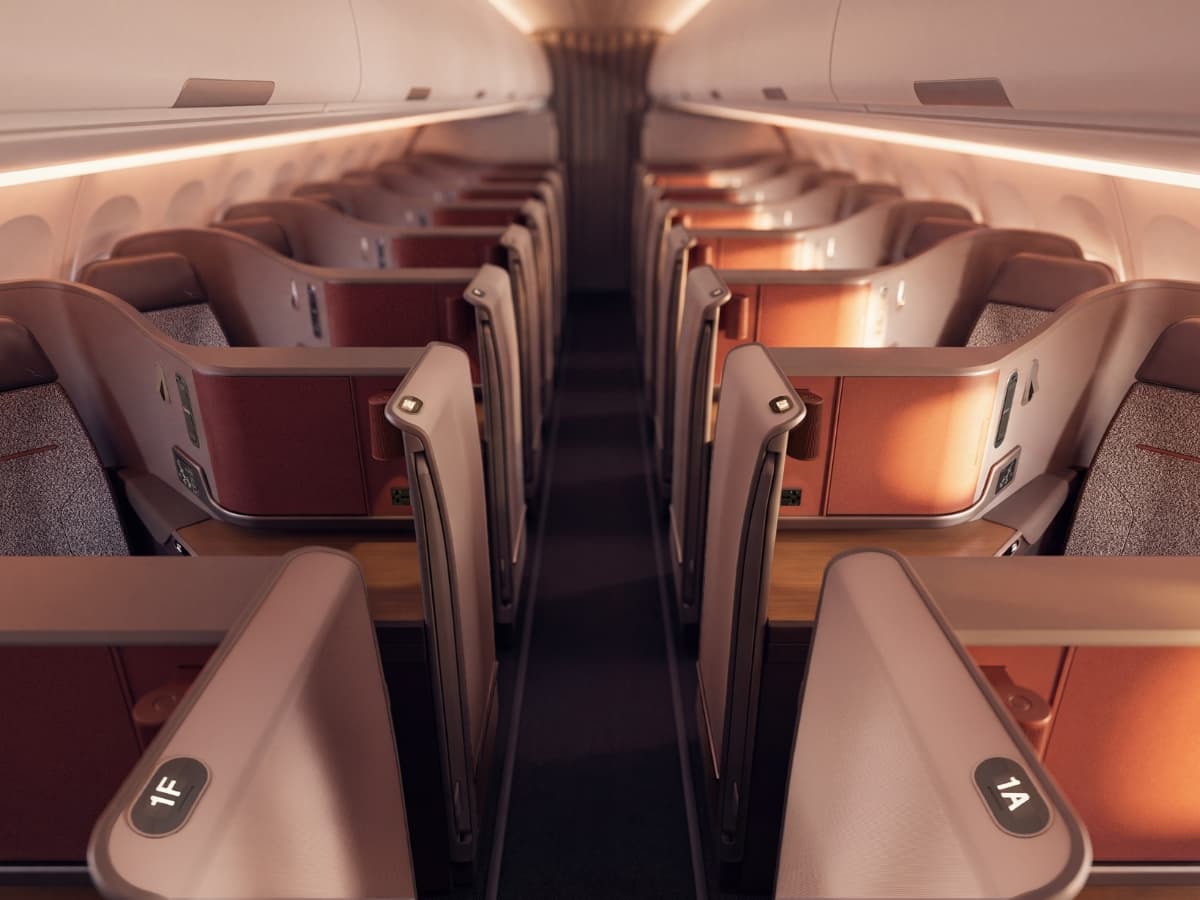
- Qantas has revealed a new Business Suite for 16 Airbus A321XLRs arriving from 2028, marking its first lie-flat Business seat on a single-aisle aircraft.
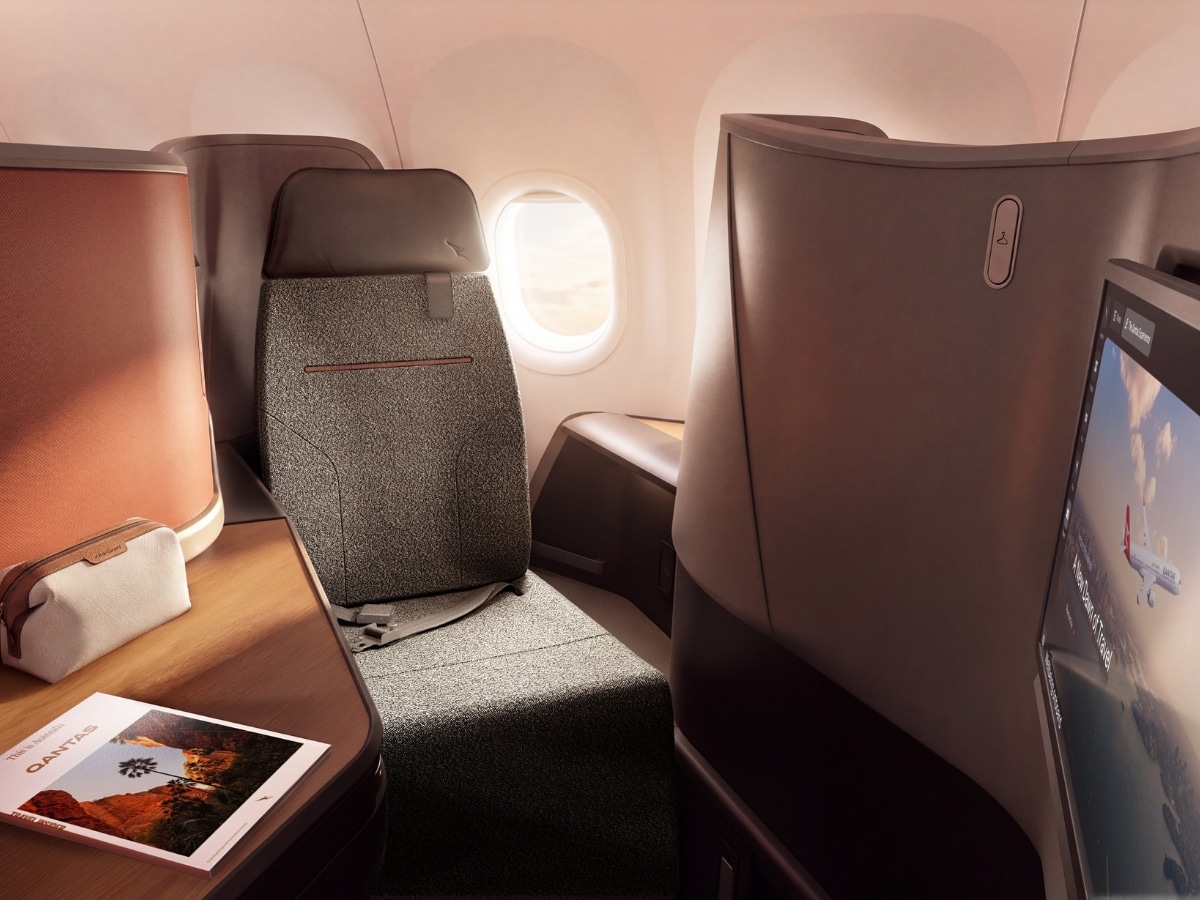
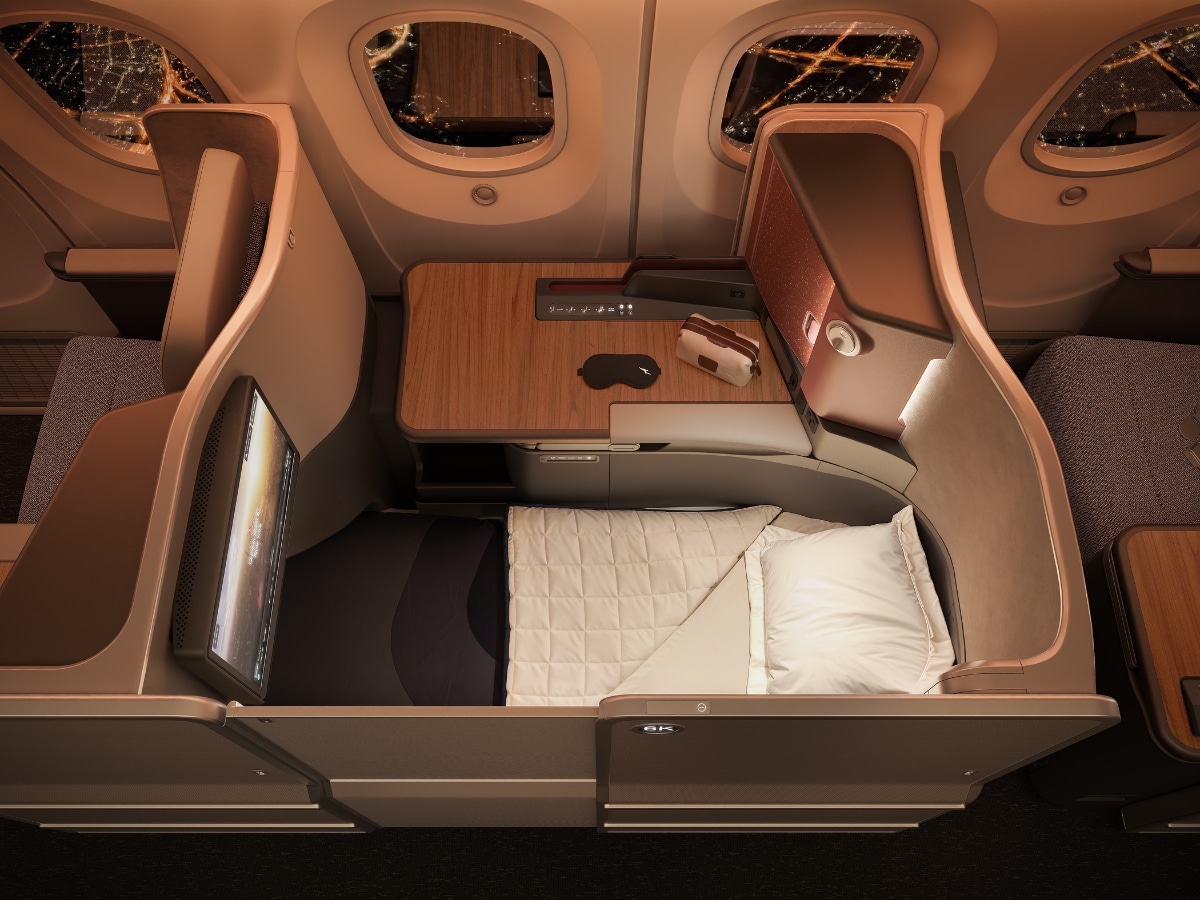
- Each suite gets direct aisle access, a sliding privacy door, a 19-inch screen, wireless and USB-C charging, free Wi-Fi and personal storage.
- The 16 aircraft form a separate, premium-focused batch within Qantas’ wider A321XLR fleet, intended for longer transcontinental and international routes.
A fully lie-flat bed, sliding privacy door and direct aisle access are exactly the kind of features one would expect to find in a modern long-haul Business Class cabin. Less so when the aircraft only has one aisle.
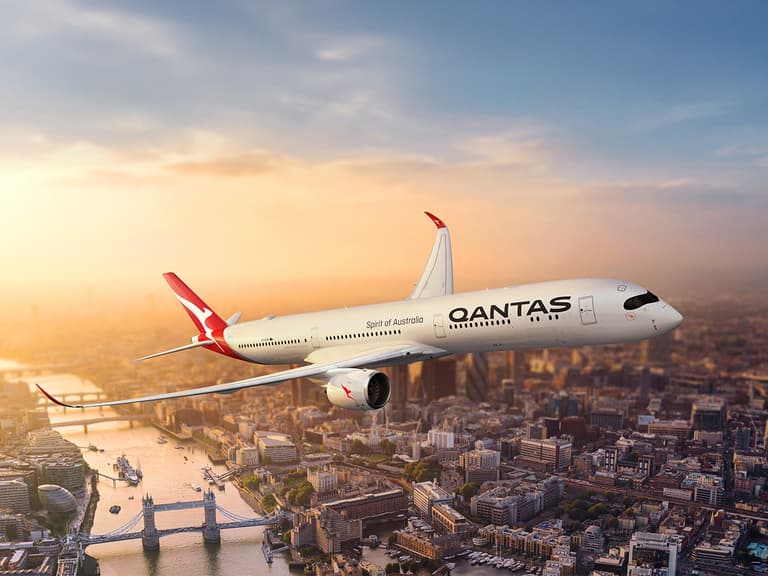
Yet that’s exactly what Qantas has planned for 16 of its incoming Airbus A321XLRs from 2028, giving the flying kangaroo its first proper lie-flat Business Suite on a single-aisle jet.
And this isn’t just Qantas stuffing its fanciest seat into a smaller plane for its own sake. These particular A321XLRs are earmarked for longer transcontinental and international flights, where those standard domestic-style recliners start to feel pretty ordinary after several hours in the air.
Inside the New Qantas A321XLR Business Suite
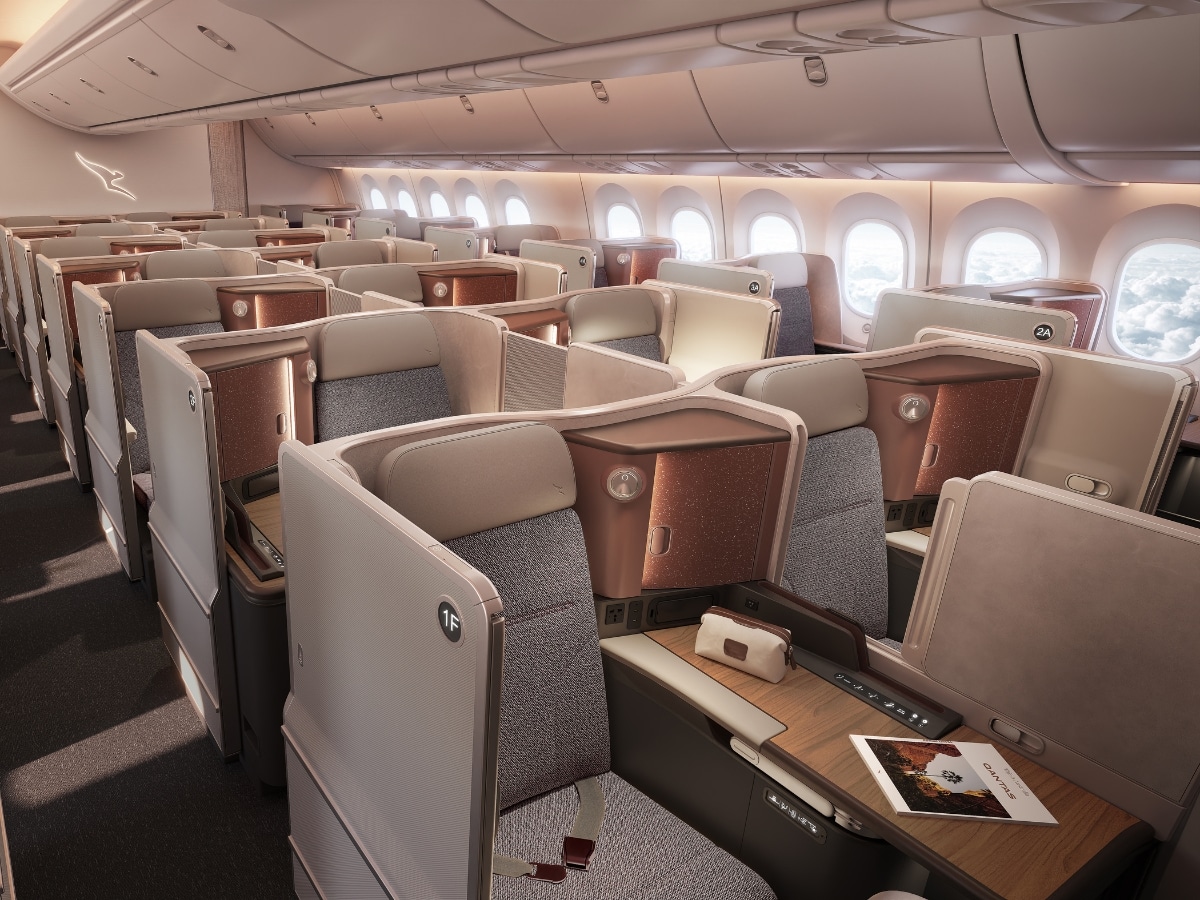
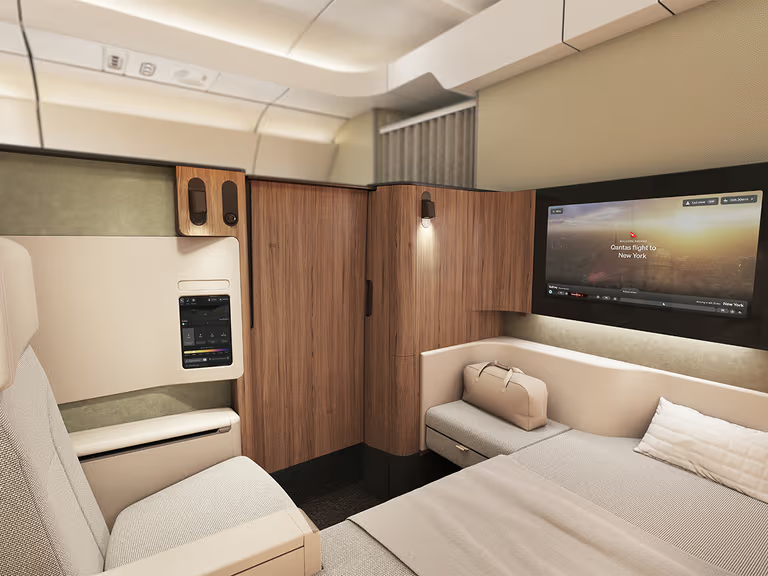
The new cabin uses a 1-1 angled herringbone layout, meaning every Business passenger gets direct aisle access, a fully lie-flat bed, and a sliding privacy door.
That alone makes it look much closer to the pointy end of a long-haul widebody than the front few rows of a conventional narrowbody. Each suite also gets a 19-inch entertainment screen, wireless and USB-C charging, fast and free Wi-Fi, plus enough personal storage to keep a laptop and any smaller bits and pieces within reach.
The privacy door, enclosed layout and extra personal space make each seat feel more like its own little room in the sky. It’s an idea Qantas is already taking much further with Project Sunrise, where its A350-1000ULR cabins have been designed around what it actually means to spend up to 22 hours onboard. Different aircraft and very different flight times, but the same basic approach: give passengers more space to actually live in while they’re up there.
After recently flying Qantas Business Class on an A380 to Kentucky, USA, for my Wild Turkey trip, I came away from both flights with a real appreciation for how comfortable Qantas Business can be. At 6’2″ tall, the foot space at the end of the fully flat bed made a noticeable difference, so the idea of getting something closer to that long-haul experience on a single-aisle jet is very welcome news for my long legs.
That’s exactly why these new planes make sense. With a range of up to 8,700km, Qantas can push the aircraft well beyond the sort of flying we normally associate with its Boeing 737s, including longer transcontinental services to and from Perth and short- to medium-haul international routes. I can already hear the boarding announcement for flights to Bali.
Premium Pitch: A Two-Tier Fleet Strategy
Qantas isn’t randomly giving some A321XLRs the fancy cabin and leaving the rest to suffer.
The 16 lie-flat aircraft make up a separate, premium-focused batch within a much larger A321XLR order. Qantas has already ordered 32 with more conventional recliner business-class seats, with seven delivered as of June. As for the 16 lie-flat versions, they won’t be arriving until 2028.
So Qantas is effectively giving the same aircraft family two different jobs. The broader fleet is geared towards domestic and shorter international flying, while these 16 are being set up for routes where extra range and a much better Business cabin can earn their keep.
And the A321XLR has plenty of work ahead of it. Qantas still had 79 Boeing 737-800s in its fleet at the end of June, so we’re nowhere near an overnight swap from one narrowbody to another. Instead, the wider A321XLR fleet can gradually take over more of the 737’s existing work while stretching into routes the older jet couldn’t realistically serve.
How the A321XLR Fits Into Qantas’ Fleet Overhaul
Zoom out a little, and these 16 aircraft are only one part of a much bigger overhaul. Qantas Group says it still has more than 160 next-generation aircraft to be delivered, covering everything from A220s and A321XLRs through to the new 787s and the A350s being lined up for its longest flights.
Seventeen new aircraft arrived during FY26 alone, and Qantas expects up to another 31 in the year ahead. That’s a lot of new metal, but the airline isn’t spending billions simply because newer planes are nice to look at.
Its own fleet plan points to the practical benefits: lower fuel burn, longer range, more point-to-point flying and, importantly, more premium seats. That last one isn’t difficult to explain. Qantas says international premium-cabin revenue grew 15 per cent in FY26, twice the rate of Economy.
Put those together, and the A321XLR starts looking like a particularly handy tool. It can fly further than the 737s it’s replacing without jumping all the way up to a twin-aisle jet, while these 16 versions give Qantas a proper international-style Business cabin to sell along the way. That’s a useful middle ground for routes where a bigger widebody would be overkill.
The same premium push is happening on the bigger aircraft. Qantas is updating the Business Suite on its incoming Boeing 787-9 Dreamliners, adding sliding privacy doors, wider footwells and 19-inch screens to an evolved version of its existing long-haul seat. Those additional Dreamliners are due to begin arriving from FY28, putting both cabin upgrades into the fleet around the same period.
Then there are the aircraft heading the other way. Qantas plans to begin gradually retiring its A380 fleet from 2028 as newer A350s and 787s take over more of the international network. So while a Business Suite inside a single-aisle A321 might initially look like a curious bit of luxury, it fits neatly into what Qantas is building: aircraft that fly further, cost less to operate and give it more ways to sell the seats passengers are increasingly willing to pay for.
For passengers, though, the more interesting change is happening on the smaller jet. From 2028, one Qantas A321XLR could mean a conventional recliner up front. Another could mean shutting the door, lying flat and getting some proper sleep. Here’s hoping for the latter.
























Comments
We love hearing from you. or to leave a comment.