

Updated:
Readtime: 8 min
Every product is carefully selected by our editors and experts. If you buy from a link, we may earn a commission. Learn more. For more information on how we test products, click here.
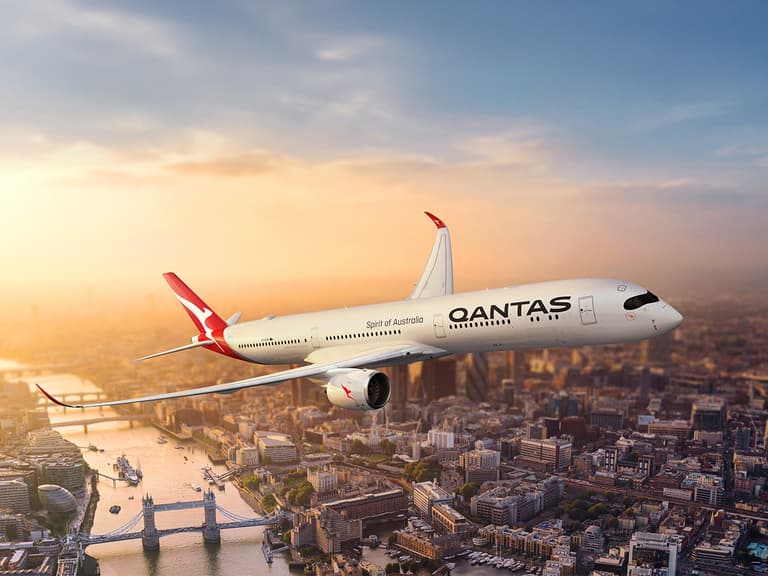
Take it from us, having spent 17.5 hours on board a Qantas flight from Perth to Paris, when you’re spending upwards of 22 hours in the sky, the aircraft cabin is no longer just a seat but a living space. When it comes to Project Sunrise, Qantas has entirely reimagined the onboard experience for its bespoke Airbus A350-1000ULR fleet, ensuring that the new levels of aviation engineering are matched by intensely human-centric design.
Slashing the total seat count down to just 238, the flying kangaroo is prioritising passenger wellness and physical space over sheer capacity, and setting a new benchmark for ultra-long-haul comfort in the process. To do so, Qantas collaborated with industry leaders such as Caon Design, culinary expert Neil Perry, and the University of Sydney’s Charles Perkins Centre to create an environment that systematically combats jet lag. From custom lighting scenes that sync with your circadian rhythm to a digital journey planner that maps out your exact sleep windows, every inch of the cabin has a purpose biologically.
It’s a departure from the dense, endurance-test flights of the past, but the luxury is what really steals the show for us. With more than 40% of the aircraft dedicated to premium seating across First, Business, and Premium Economy, this A350 has blurred the line between commercial aviation and a boutique hotel more than ever before (if you were locked in your room that is). Whether you’re kicking back in an enclosed suite or stretching your legs in the world’s first purpose-built inflight Wellbeing Zone, Qantas has ensured that arriving on the other side of the planet feels less like a marathon and more like a retreat. Let’s take a closer look at the cabins!
First Class Enclosed Suites
| First Class Specification | Dimension & Detail |
| Total Suites & Layout | 6 Suites in a 1-1-1 configuration |
| Suite Enclosure | 57-inch high walls with a sliding door |
| Sleep & Seating | 80-inch flat bed and a separate 22-inch armchair |
| Primary Display | 32-inch HD touchscreen with Bluetooth |
| Digital Control | 10-inch touchscreen suite controller |
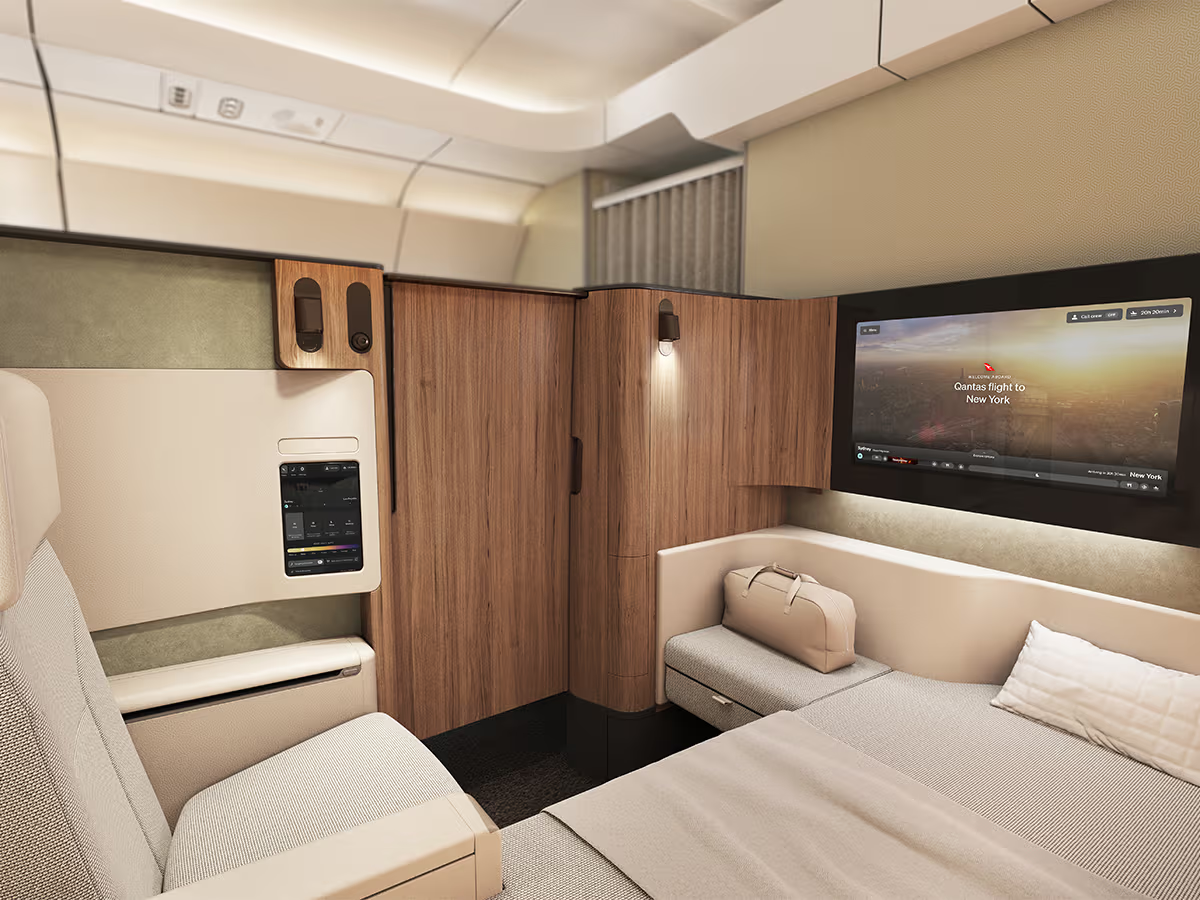
The pinnacle of the Project Sunrise configuration is the First Class cabin, offering 50% more suite space compared to the existing A380 suites.
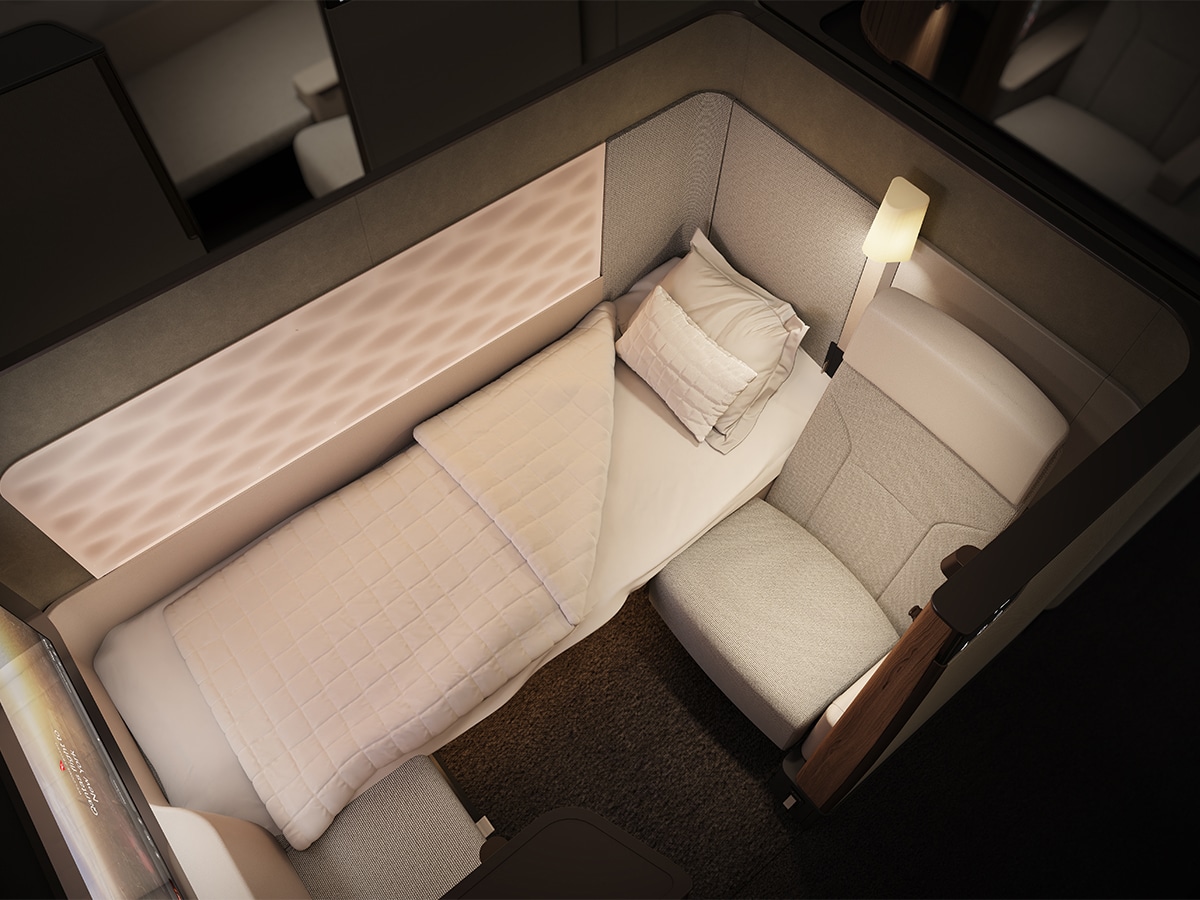
Laid out in an ultra-exclusive 1-1-1 configuration, the six enclosed suites are bound by 57-inch high walls and a sliding door, turning your seat into a private sanctuary. Inside, passengers are treated to an 80-inch (2-metre) long flat bed alongside a completely separate 22-inch wide reclining armchair. The luxury detailing is relentless, with each suite including a full-length wardrobe, a flexible work-and-dining space large enough for two, and an adjustable bed backrest designed for eating breakfast in bed.
On the digital front, First Class passengers have access to a massive 32-inch HD entertainment touchscreen (14 inches larger than the A380 equivalent) and a dedicated 10-inch digital suite controller that manages seat positioning, mood lighting, and dining preferences.
Last but not least, to balance ultimate privacy with attentive service, the suite’s exterior features a discreet indicator panel so the crew can assist without unnecessary interruptions.
Business Class is World-Leading
| Business Class Specification | Dimension & Detail |
| Total Suites & Layout | 52 Suites in a 1-2-1 configuration |
| Suite Enclosure | 42-inch wide suite with 47-inch privacy walls |
| Bed Dimensions | 80-inch length by 25-inch width |
| Primary Display | 18-inch touchscreen with Bluetooth |
| Storage Additions | Leather ottoman, mirror compartment, glove box |
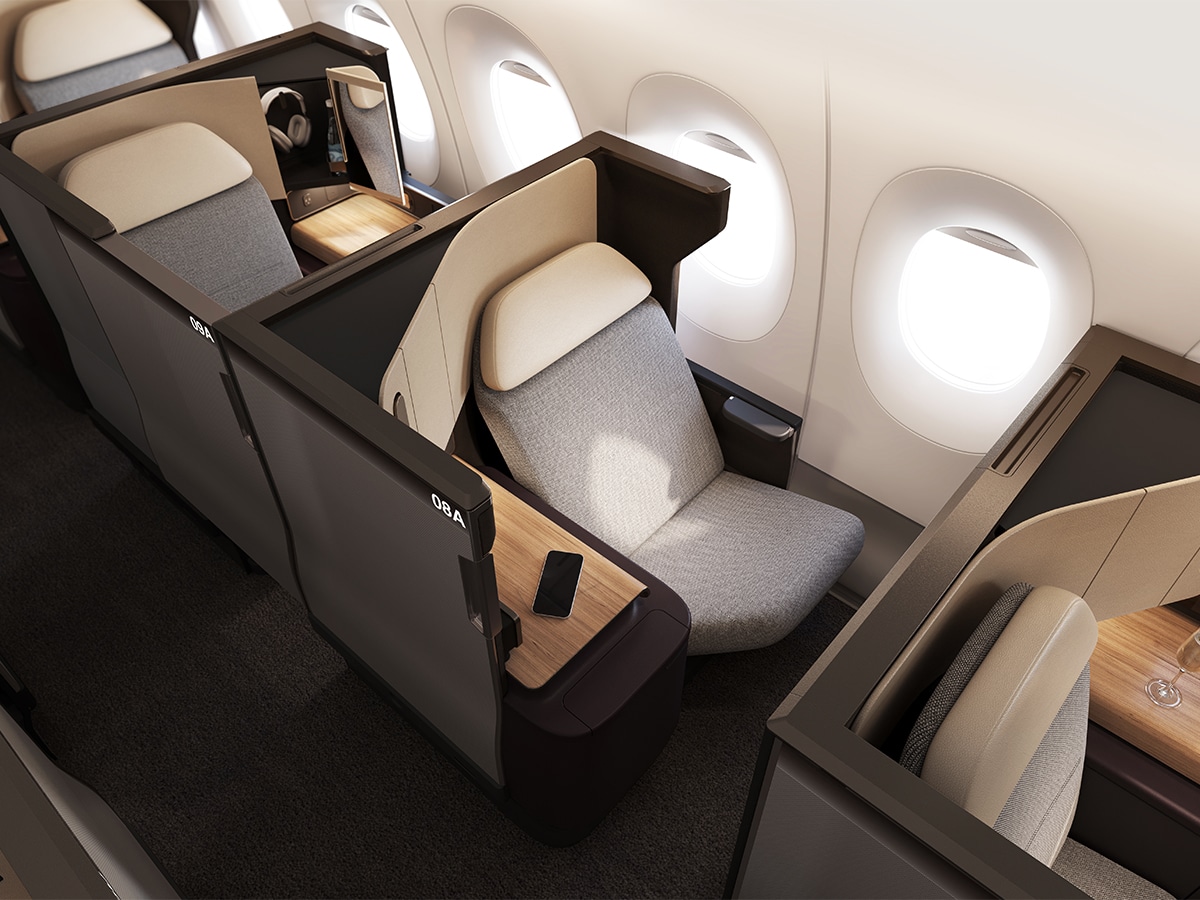
Stepping back into the 52-seat Business Class cabin, Qantas has introduced a 1-2-1 configuration that brings sliding doors to its Business suites for the very first time.
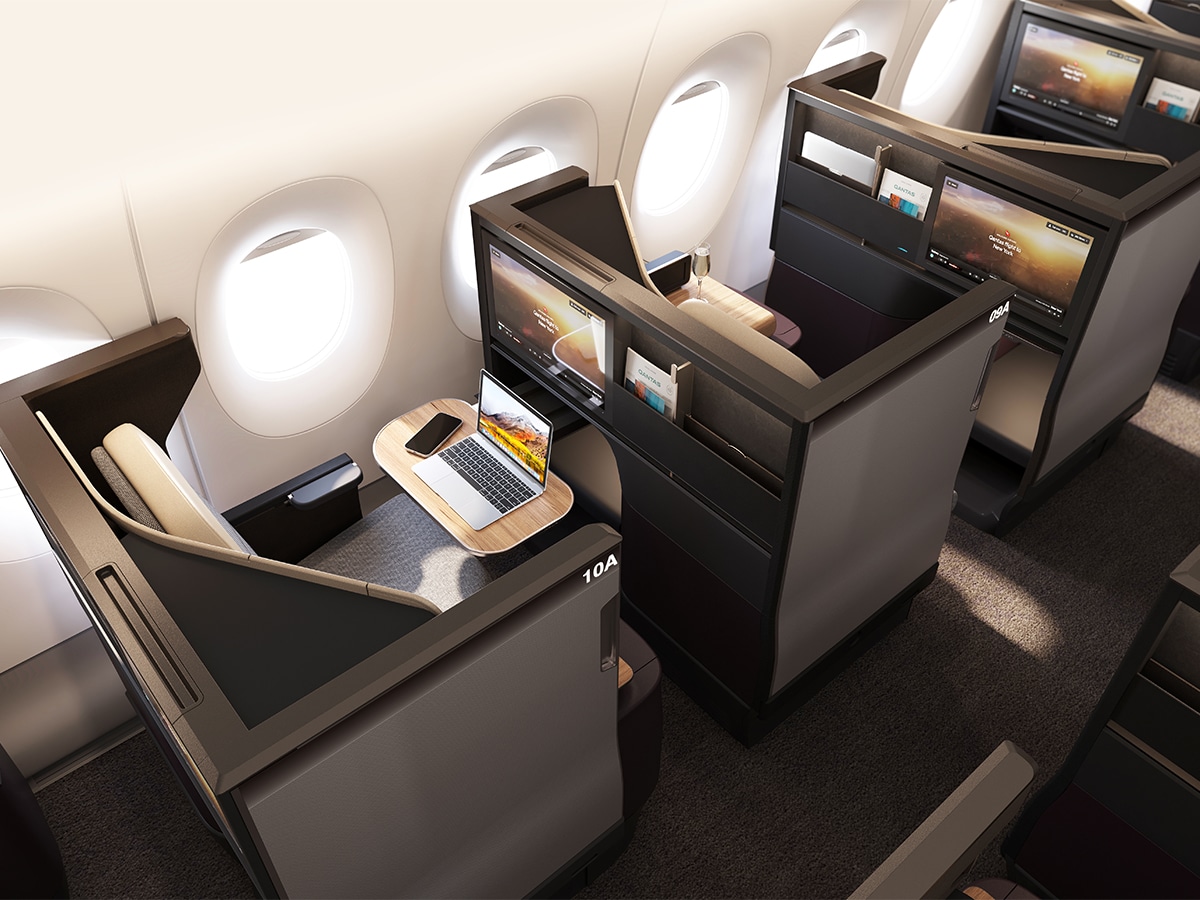
The 42-inch-wide suites are wrapped in 47-inch-high privacy walls and feature an adjustable divider between alternating centre seats for those travelling together. Meanwhile, the flat bed stretches to 80 inches long and 25 inches wide, making it a full inch longer than the legacy A380 First Class bed and an inch wider than standard A380 Business seats.
Travellers also gain a cushioned leather ottoman that lifts for increased storage, an architectural feature light, a personal storage compartment with a built-in mirror, and an upholstered glove box. The entertainment gets a solid bump too, featuring an 18-inch touchscreen that is two inches larger than the displays found on the current A380 and Boeing 787 fleets.
Premium Economy and Economy Cabins Upgraded
| Economy Tier Specification | Premium Economy | Standard Economy |
| Total Seats & Layout | 40 seats in a 2-4-2 configuration | 140 seats in a 3-3-3 configuration |
| Seat Pitch | 40 inches | 33 inches |
| Primary Display | 13.3-inch touchscreen | 13.3-inch touchscreen |
| Support Features | 8-inch winged headrest, calf rest | 6-way headrest, extra device shelf |
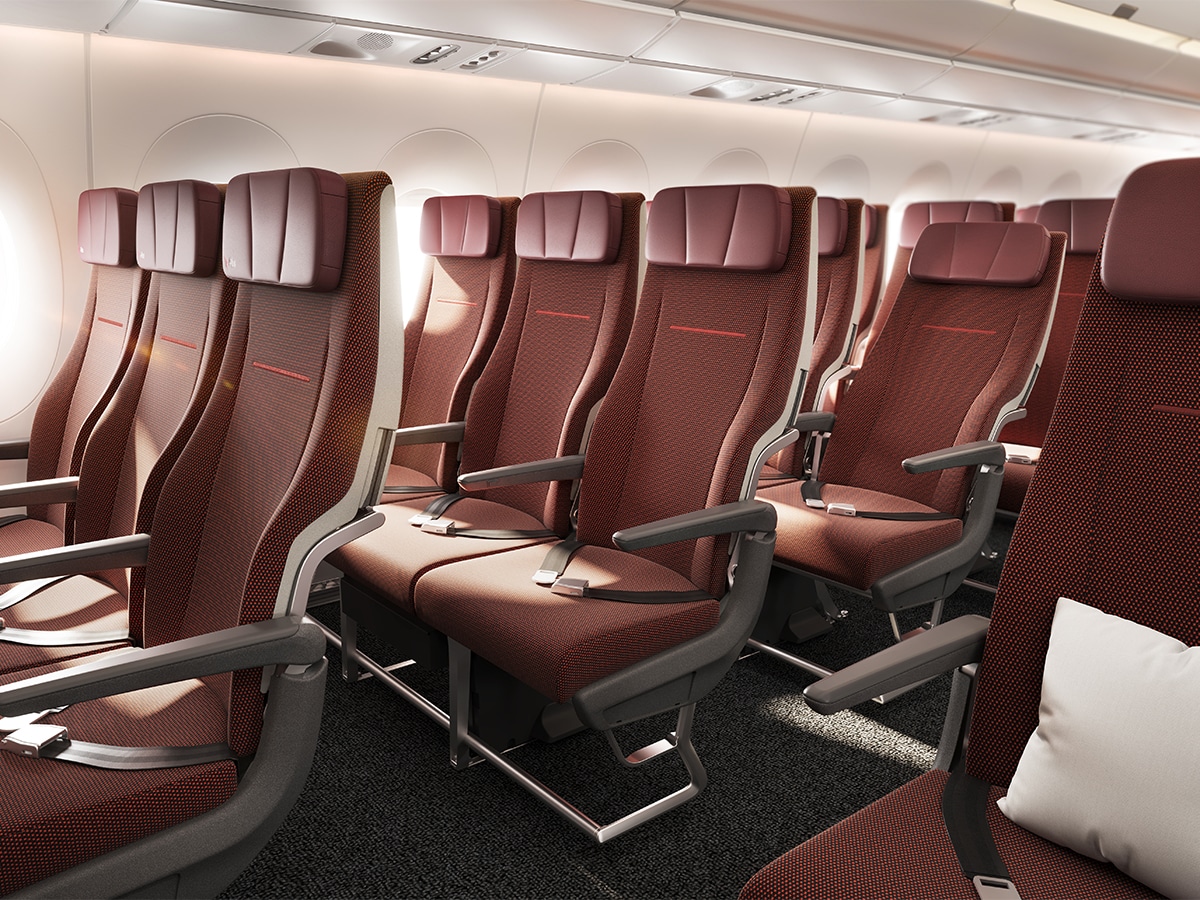
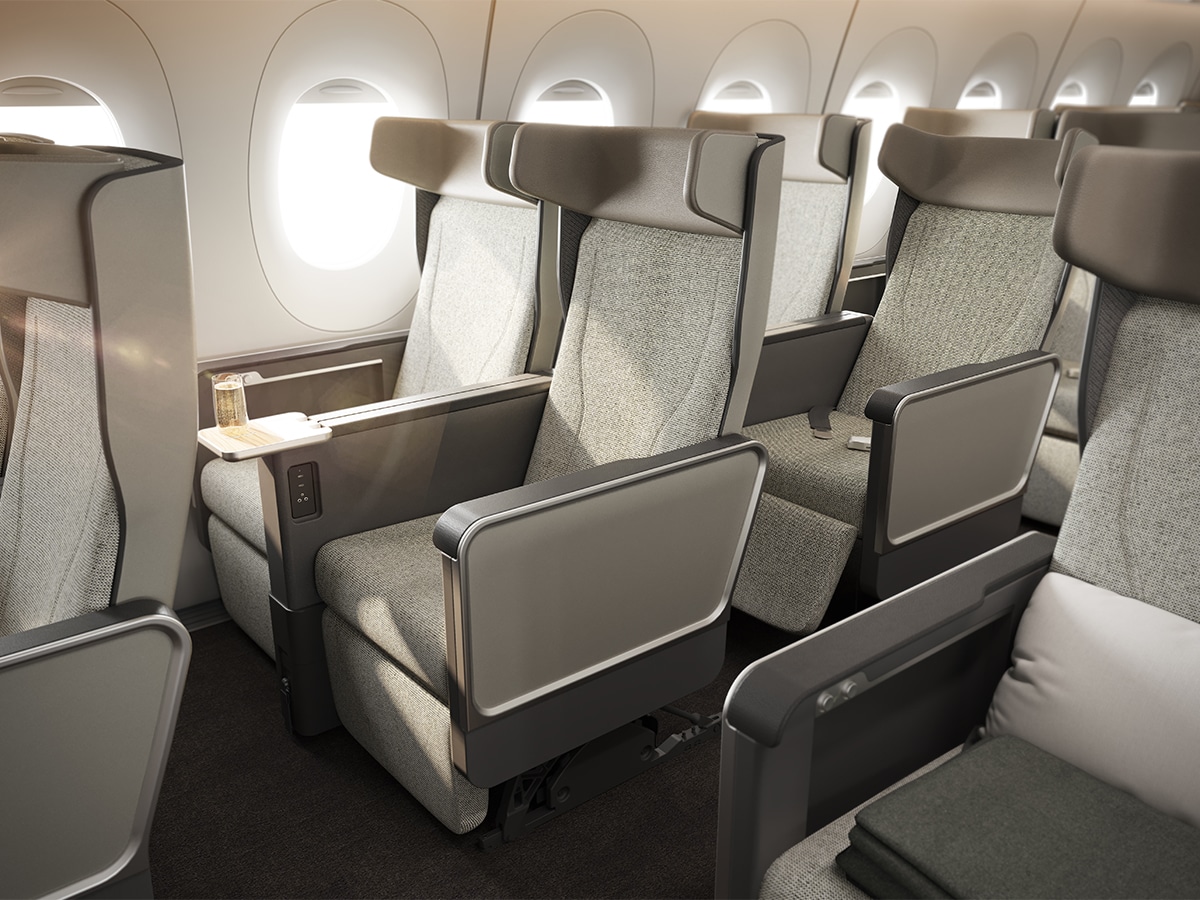
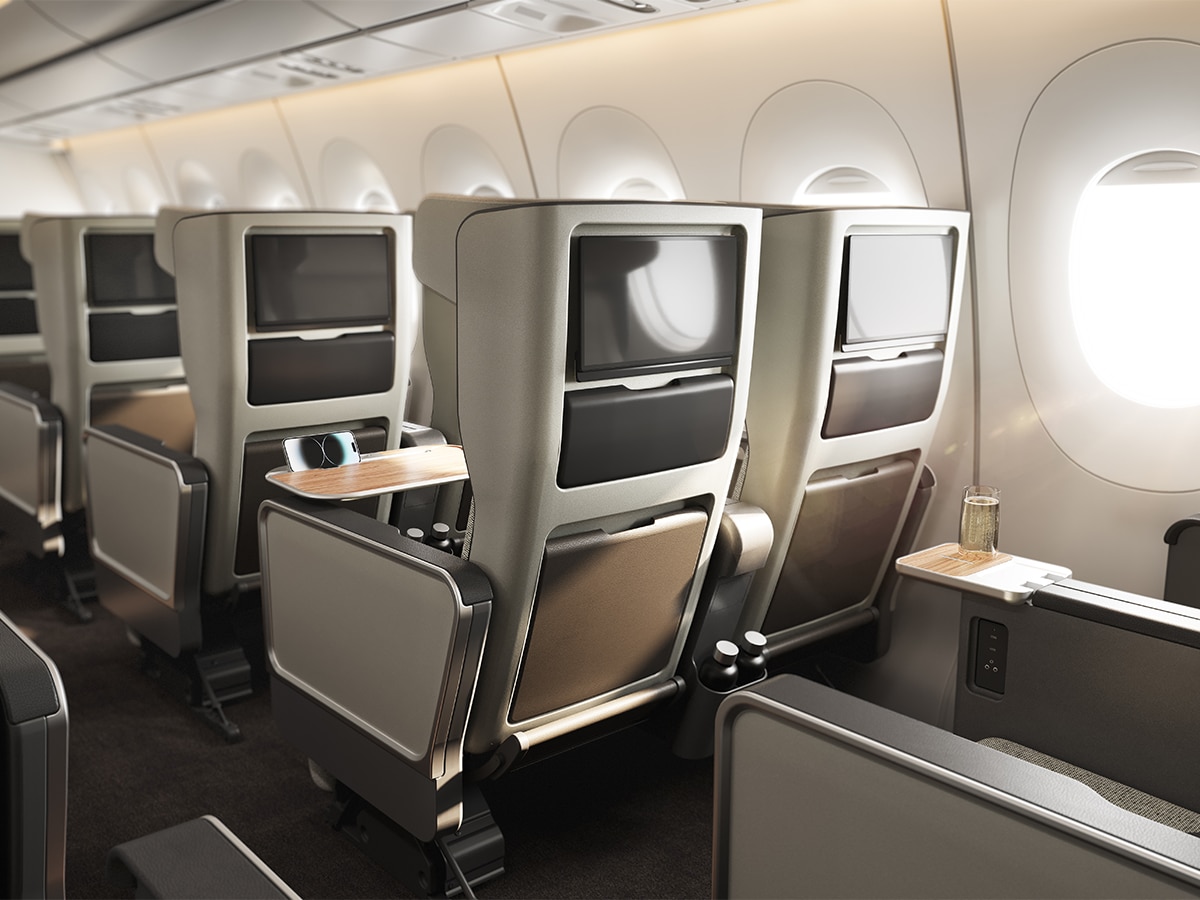
For the 40-seat Premium Economy cabin, arranged in a 2-4-2 configuration, Qantas designed the seats from the ground up to feature their most spacious seat pitch yet at 40 inches.
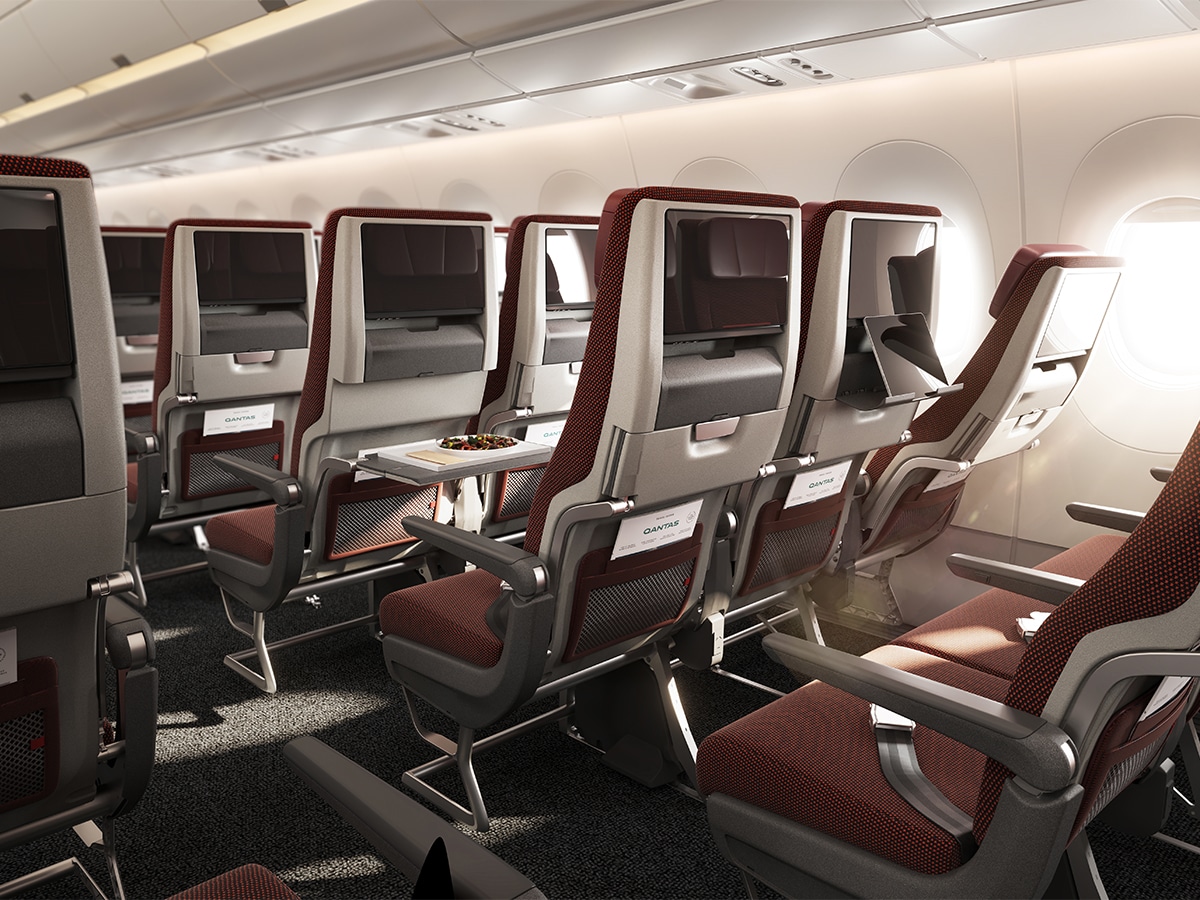
Every seat incorporates an ergonomic calf rest allowing for full leg cradling, alongside a unique 8-inch winged privacy headrest that provides physical support without isolating passengers from their travel companions. Each traveller gets three dedicated amenity pockets, two fast-charging USB-C outlets, and a 13.3-inch entertainment touchscreen.
Finally, the rather roomy 140-seat Economy cabin is laid out in a 3-3-3 configuration, delivering a highly competitive 33-inch seat pitch. Passengers in the back of the plane still benefit from the massive technological upgrades, enjoying their own 13.3-inch entertainment touchscreens with Bluetooth audio connectivity, a six-way adjustable headrest, a multi-use seatback table, and an extra dedicated shelf for personal devices. Like Premium Economy, every Economy seat is hardwired with dual fast-charging USB-C outlets.
Dedicated Wellbeing Zone
Perhaps the most important addition to the A350-1000ULR is the world’s first in-flight Wellbeing Zone, located right between the Economy and Premium Economy cabins.
Born out of scientific research into circadian rhythms and immobility, this dedicated space gives every passenger on board a physical destination to stretch and rehydrate.
The area is framed by sculpted walls featuring integrated stretch handles, while onboard monitors broadcast specially curated guided movement programs. It’s entirely self-serve, stocked with premium refreshments and healthy snacks designed to optimise passenger wellness throughout the marathon journey.
Digitally Connected Ecosystem
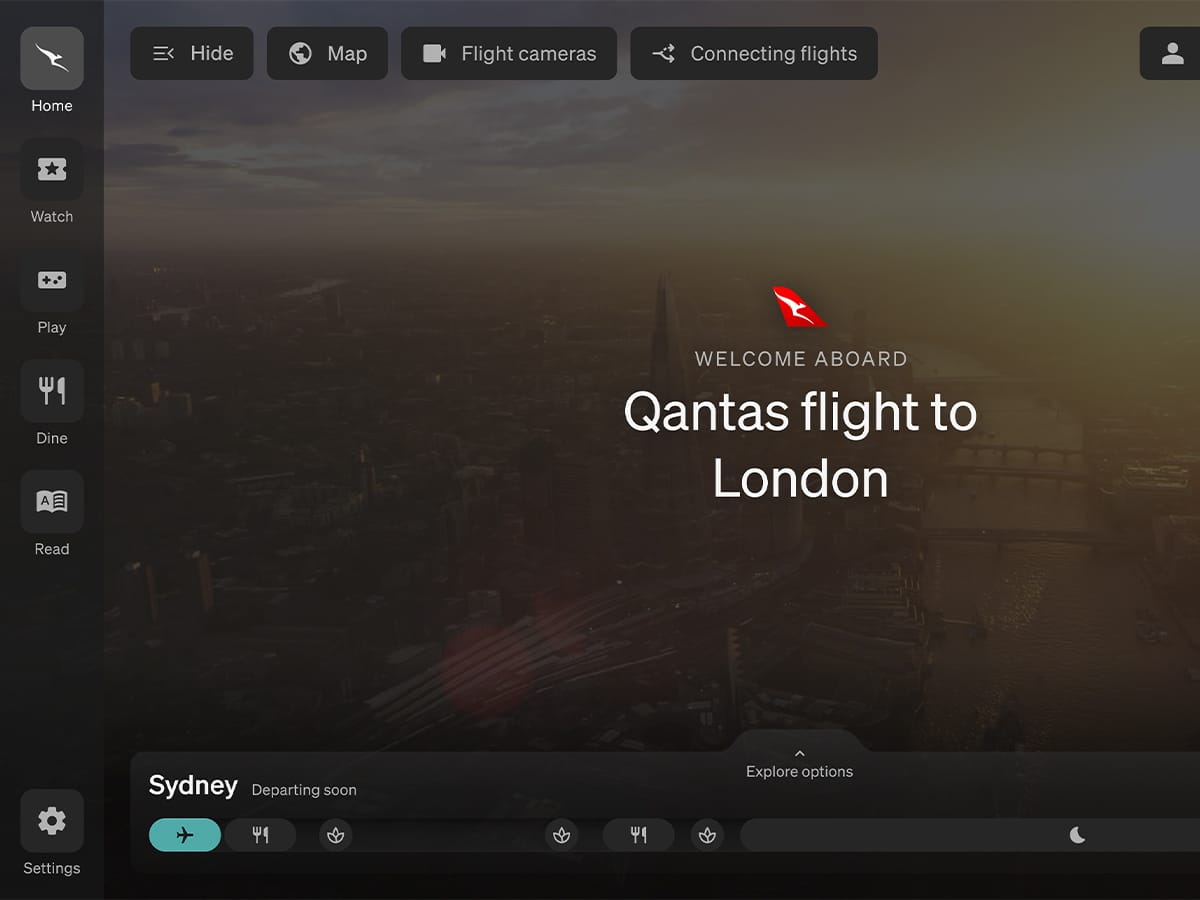
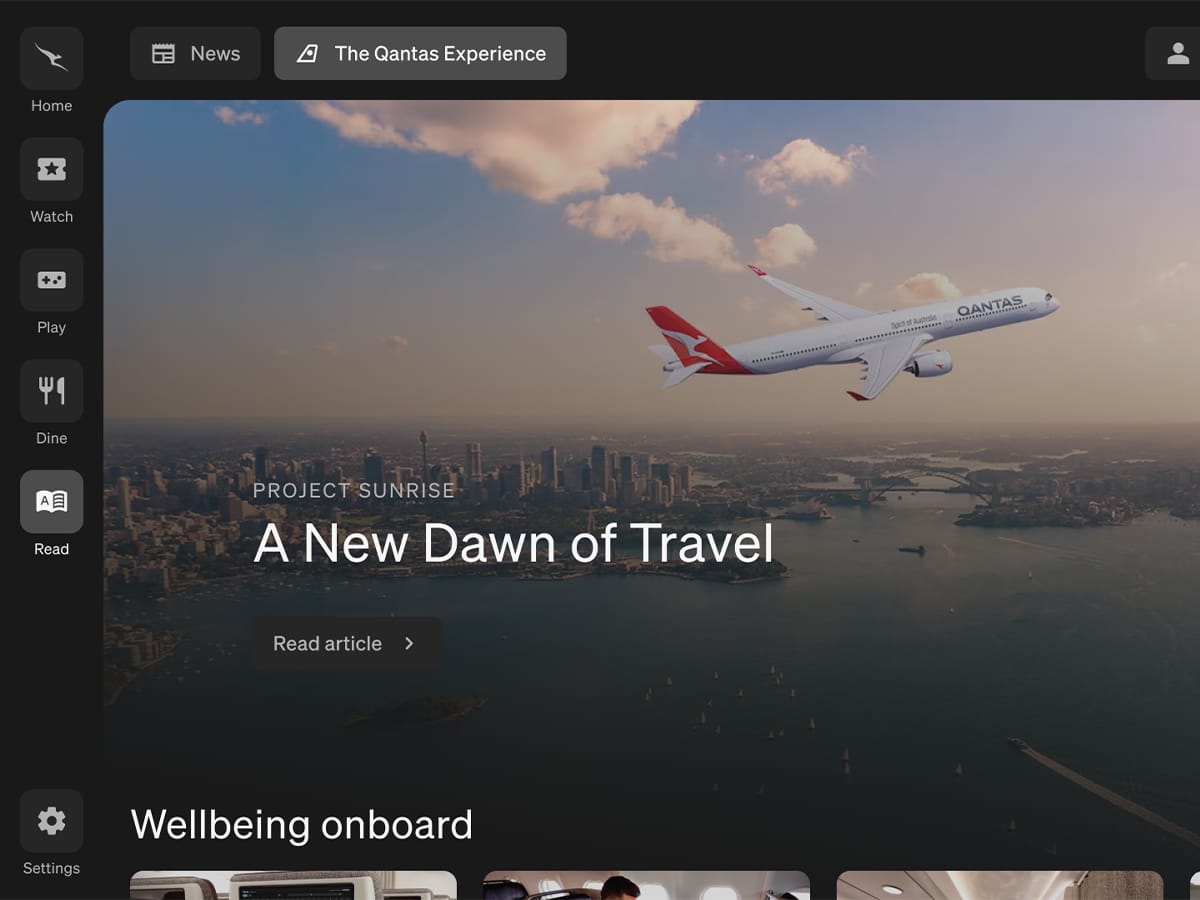
When you are stuck in a flying metal tube for an entire day, digital connectivity is a make-or-break feature. Qantas completely scrapped its old in-flight entertainment framework, delivering a digitally connected cabin with fast and free Wi-Fi across every class. Every seat allows passengers to pair their personal wireless headphones via Bluetooth with the latest-generation HD screens.
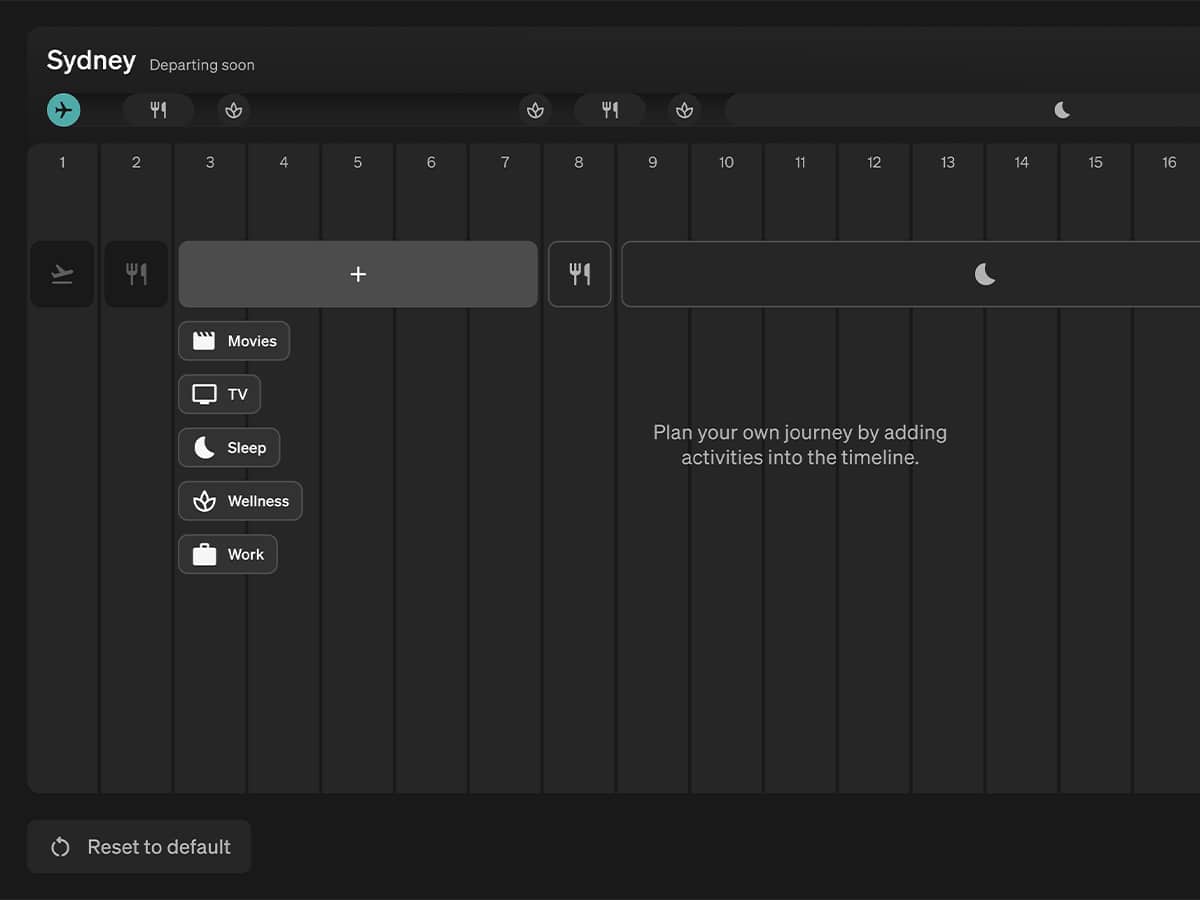
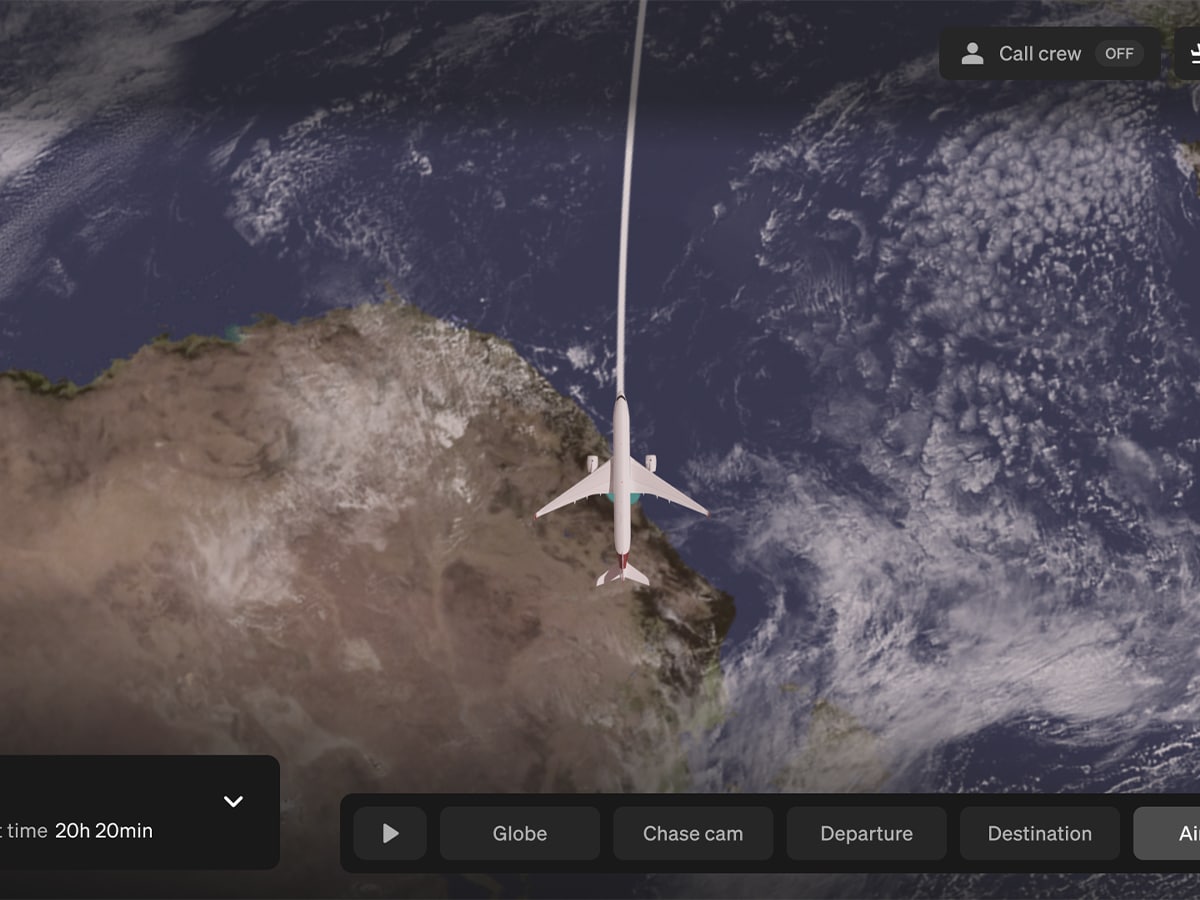
The user interface itself is a big leap forward, with a new in-flight journey planner that aligns perfectly with the cabin’s 12 custom lighting scenarios and displays upcoming service milestones so you know exactly when to eat, watch a movie, or get some shut-eye. The system includes full digital dining menus, a 3D flight map, real-time connecting-flight information, and even wellness reminders that prompt you to hydrate and practice mindfulness.
If you’re travelling with a group, the “Watch Together” feature lets you sync a film with up to three other customers. Furthermore, to protect the resting environment during those crucial sleep windows, the software features a dark-first interface that drastically minimises screen glare and light spill across the cabin.

Setting a New Standard for Cabins On-Board
Ultimately, the custom-built Airbus A350-1000ULR cabin layout demonstrates that Qantas is working to perfect the 22-hour nonstop flight in order to cut angst for fliers and get them on board the ultra-long-haul route, literally.
By reducing the passenger count to a spacious 238 seats and dedicating over 40% of the cabin footprint to premium options, the airline has created a commercial aircraft where space, light, and technology serve as biological tools.
When these game-changing cabins finally take to the skies for their inaugural flight in October 2027, the days of stepping off a long-haul flight feeling completely battered by jet lag will officially be a thing of the past. It’s a massive, multimillion-dollar gamble on ultra-long-haul luxury, but for anyone who has ever dreaded a mid-trip layover, the promise of stepping off an 18- to 22-hour flight feeling completely refreshed will change the global travel landscape forever.





















Comments
We love hearing from you. or to leave a comment.