


Updated:
Readtime: 4 min
Every product is carefully selected by our editors and experts. If you buy from a link, we may earn a commission. Learn more. For more information on how we test products, click here.
- The adidas Agravic Speed Ultra Evo weighs roughly 250g, around five per cent less than the Agravic Speed Ultra 2.
- Its new dual ENERGYRIM system lets each side of the shoe move independently across uneven terrain.
- Adidas wants USD$500 (AUD$696) for the shoe, with very limited availability around UTMB Mont Blanc before further releases later this year.
Earlier this year, adidas took its road-racing obsession to the extreme with the 97g Adizero Adios Pro Evo 3, a USD$500 (AUD$696) super shoe built around tiny efficiency gains and one very simple goal: run as fast as possible.
Now adidas is taking part of that thinking off the tarmac.
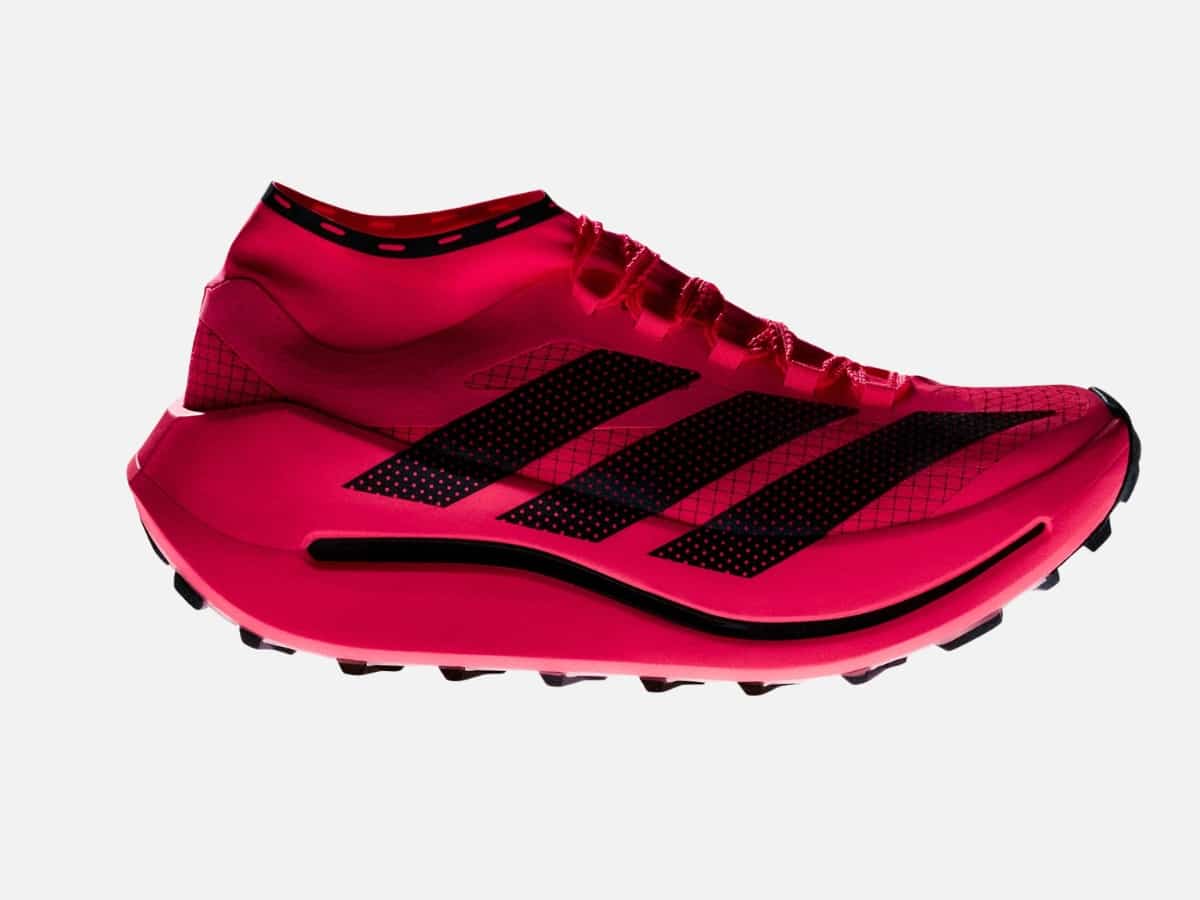
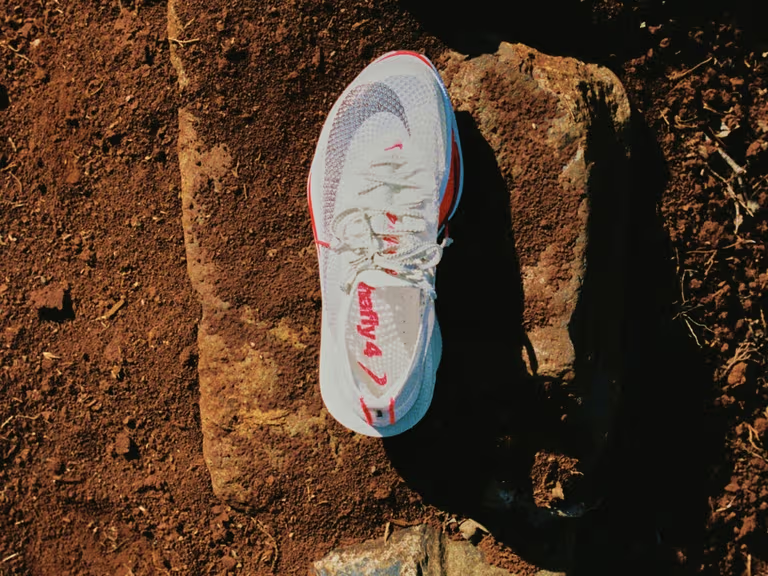
The new Agravic Speed Ultra Evo is a 250g trail racer inspired by the Adios Pro Evo 3, but the difficult part for adidas wasn’t simply making its road-running super shoe work in the dirt. On a trail, one side of your foot might land on a rock while the other could hit some loose soil. So what’s a shoe brand to do? Build a platform that can react differently on either side of your foot.
Adidas Agravic Speed Ultra Evo – Key Specs
- Weight: 250g average (UK 8.5)
- Midsole: Moulded LIGHTSTRIKE PRO
- Propulsion: Dual ENERGYRIM
- Upper: One-way stretch woven upper with integrated debris collar
- Claimed Gain: 10% greater energy return vs. Agravic Speed Ultra 2
- Price: USD$500 / €500 (roughly AUD$696)
 1/9
1/9Adidas Takes Its ENERGYRIM Off-Road
That’s where the new dual ENERGYRIM comes into play. Borrowing a few of the same basic ideas introduced on adidas’ road racers, the Agravic version splits the construction so each side of the shoe can move independently. That should help the shoe adapt when the terrain under either side of your foot changes, with adidas claiming the system delivers 10 per cent greater energy return than the Agravic Speed Ultra 2.
The rest of the shoe has been reworked to maintain a similar balance between speed and control. A moulded LIGHTSTRIKE PRO midsole allows more deformation without sacrificing stability underfoot. The woven upper then uses a one-way stretch fabric, paired with minimal stitching and an integrated debris collar to keep rocks and dirt out.
Altogether, adidas puts the average weight at 250g, making it around five per cent lighter than the previous version, and what the brand says is its fastest trail-running shoe yet.
And all power to them. Adidas has spent multiple years developing the shoe with 13 athletes, moving prototypes between the lab and actual races before settling on the final design.
“Trail running asks so much more of a shoe,” says adidas Senior Manager Korbinian Lehner. “Our challenge was finding the balance between speed, stability and confidence, and that’s exactly what the Agravic Speed Ultra Evo was built to deliver.”
Is a 250g Adidas Trail Runner Worth USD$500?
It’s lightweight, heavily engineered and very expensive. Oh, and adidas isn’t making many of them available. So if you want first dibs, you’ll need to be around UTMB Mont Blanc in Chamonix, where Snell Sports, Ravanel and the UTMB Village have received a very limited number of pairs.
If that’s a little too much effort, adidas says additional pairs will appear at select events later in 2026. But they haven’t revealed Australian pricing or a local release date yet.
At this price, and with availability this tight, it’s hard to imagine many pairs being bought for casual weekend kilometres. Because just like the 97g road racer it borrows from, adidas is clearly treating the Agravic Speed Ultra Evo as a race-day weapon rather than an everyday trail shoe.























Comments
We love hearing from you. or to leave a comment.