

Updated:
Readtime: 7 min
Every product is carefully selected by our editors and experts. If you buy from a link, we may earn a commission. Learn more. For more information on how we test products, click here.
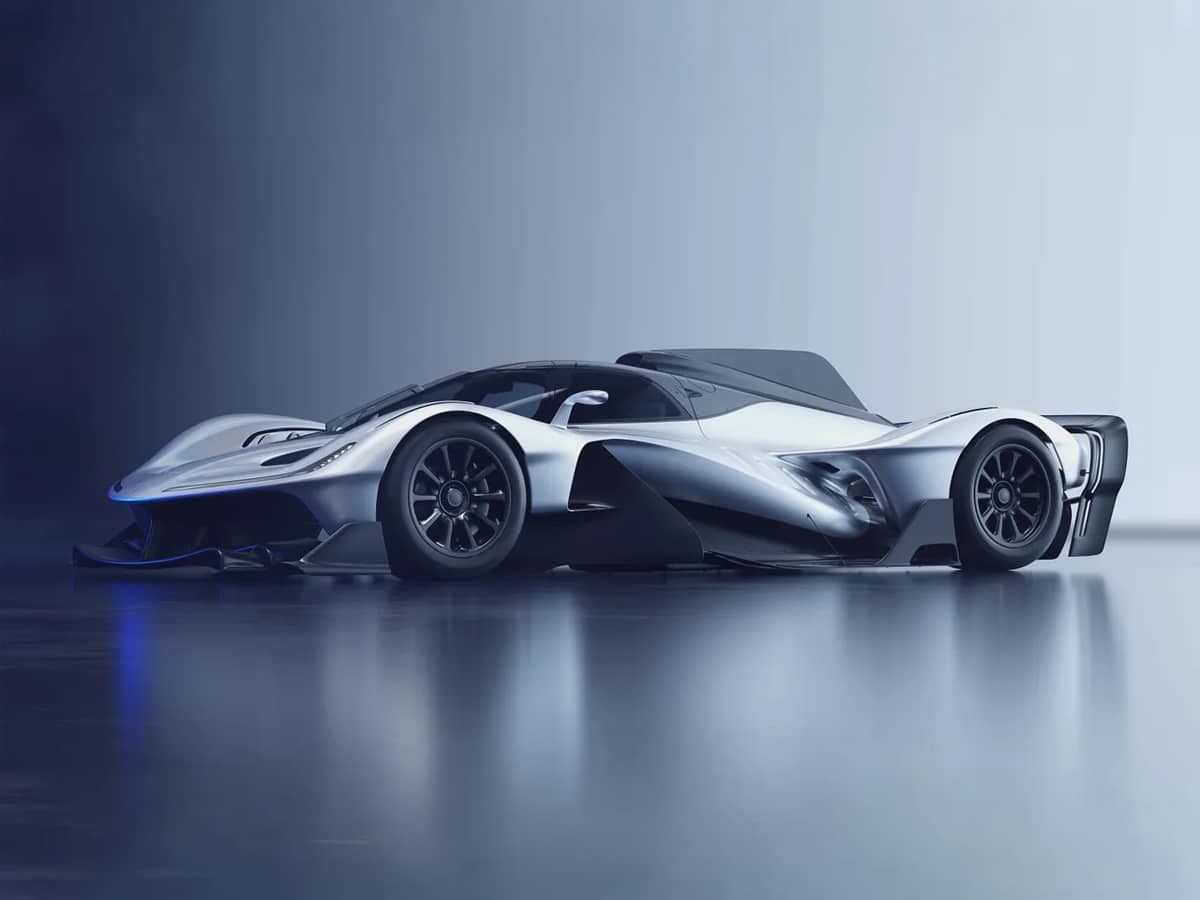
As electric vehicles commoditise horsepower – allowing everyday family sedans to outpace traditional supercars – raw speed has lost its exclusivity. With the new RB17 about to be unveiled, armed with a V10 engine delivering 1,200+ HP, ultra-wealthy collectors are abandoning digital perfection in favour of visceral engagement. It’s not just about a manual stick, but the snap of a sequential box, the vibration of a V10, and the refusal to let an algorithm have the final say in the driving experience.
The great gonzo journalist Hunter S. Thompson wanted a discreet gravestone that epitomised his core philosophy (instead, his ashes were fired from a cannon by Johnny Depp). That gravestone would read “It Never Got Fast Enough For Me,” a pithy defiance that life is too short for bad wine and slow cars.
If that’s true, we live in fast times, very fast times. Nowhere is that need for speed better demonstrated than in the incredible development of hypercars. Vehicular beasts that are built for one thing: ungodly performance on humanly constructed surfaces. It’s a niche in the automotive enthusiast world where money meets adrenaline, and technology and engineering interlace with raw nerves. How else to describe someone spending millions on the world’s most expensive and fastest cars, just to risk their own lives driving at such speeds and cornering in ways that could end in sudden death?
“The purpose of a hypercar is not just speed. It’s about delivering an experience that makes you feel alive every time you drive it,” states Christian von Koenigsegg, founder of what many people believe is the king of hypercars, Swedish brand Koenigsegg. “If you’re a car enthusiast, you want to talk to the beast… You want to have a dialogue.”
Breaking The 1,000 HP Barrier
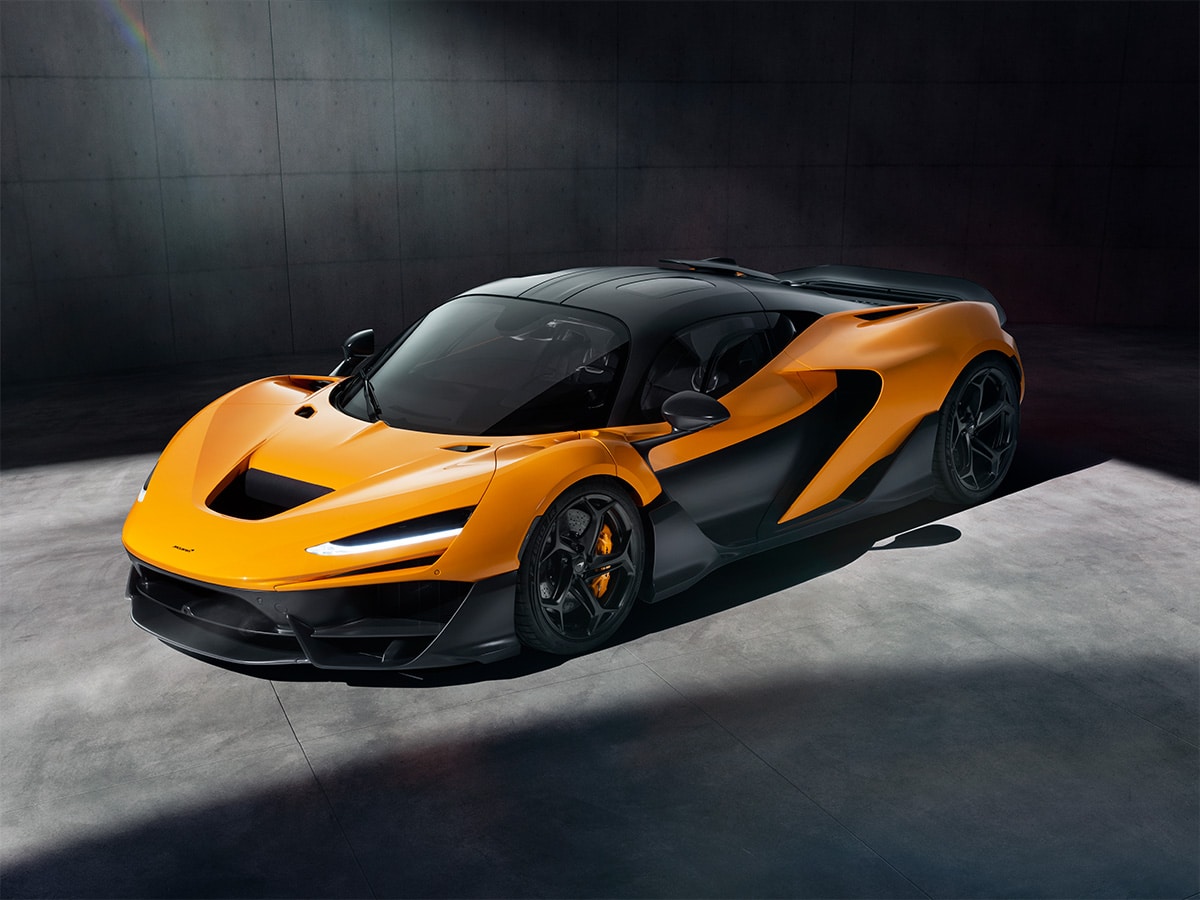
We caught up briefly with Jay Leno at the SEMA show in Las Vegas. He was there to chat with guests, fresh off his recent acquisition of the McLaren W1 (1,250+ HP, €2.1M). Between a scrum of autographs, he laughed about the endless arms race. “Oh, the cars are great, we keep breaking past horsepower limits, and I have to buy new cars,” he said.
“But it’s remarkable, totally incredible what both the EVs and the ICE engines can achieve. I like them both and love them in different ways. But I came from a generation of naturally aspirated engines, and yeah, that connects to what my psyche says a great car is.”
That attempt to push through boundaries, to show what engineering and great innovation can do, has been through a furious cycle of performance that’s almost unique in the history of cars. Horsepower is the simplest way to explain this to the public. Starting in the early 2000s, many mused that peak horsepower was being attained with cars like the Ferrari F40 or the Lamborghini Diablo and that, nearing 500 HP, a certain barrier would be reached that would only be incrementally exceeded.
But that was soon exceeded by cars such as the Pagani Zonda and the McLaren F1, both producing more than 600 HP. By mid-2005, the Bugatti Veyron 16.4 reached 1,000 HP, and by 2015, the Bugatti Veyron Super Sport hit 1,200 HP (which is why this era is often called the Veyron era). Barriers were to be broken. Then the explosion occurred, both in internal combustion motors and the latest introduction to horsepower – electrification.
Hypercar Electrification Era and the Future of Horsepower
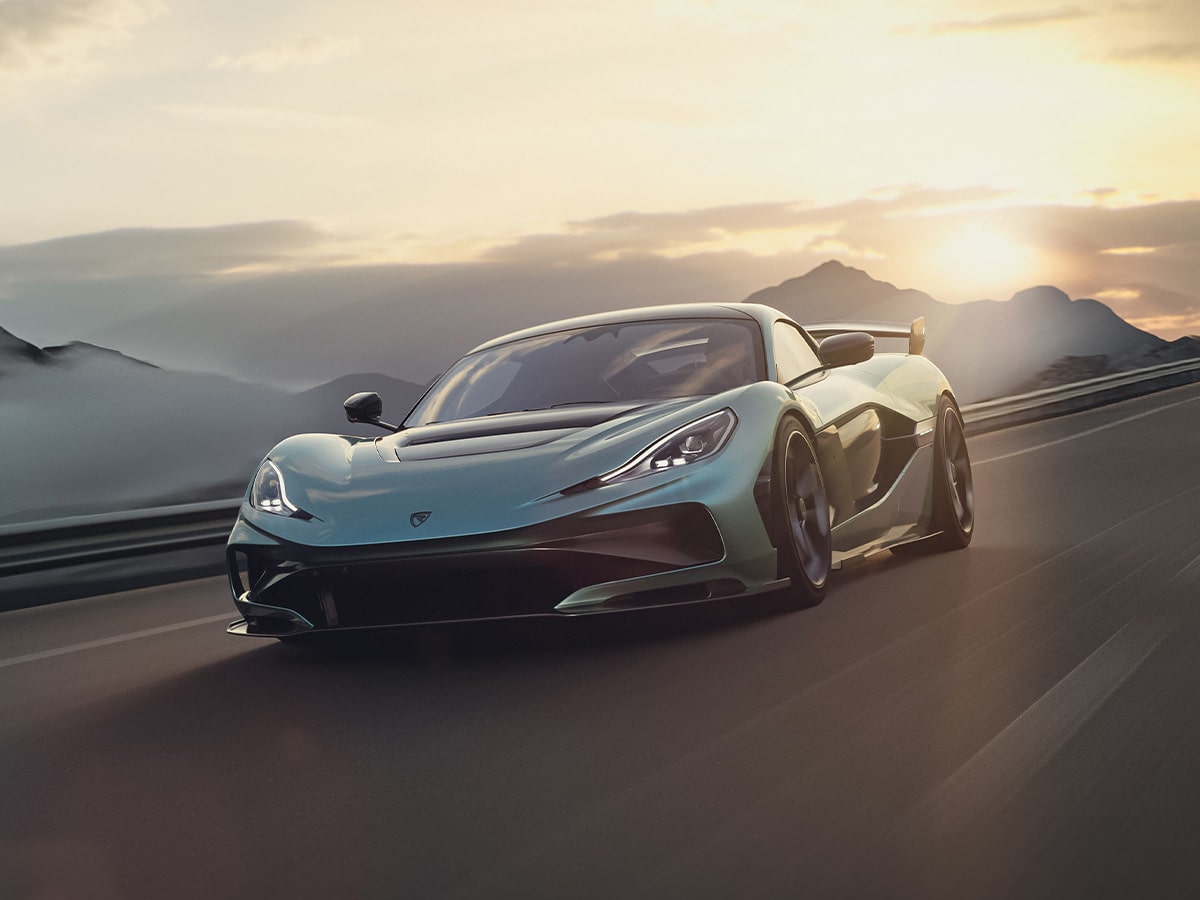
Hypercars like the Koenigsegg Jesko Absolut, with a 5.0-litre twin-turbo V8, and the Bugatti Mistral 8.0-litre quad-turbo W16 produce a world-turning 1,600+ HP. But what really caught the automotive world’s attention was the all-electric Rimac Nevera, a beast that pushed out an incredible 1,914 HP and pure speed, a feat that now sets the benchmark of what is possible in a hypercar.
What’s more, that doubling occurred in less than a decade, something that hadn’t happened since cars were first invented.
“When we started the company, people told us electric cars couldn’t be exciting. Now we have a car with nearly two thousand horsepower that breaks records everywhere,” said Mate Rimac, founder of Bugatti Rimac.
Still, a shift has begun that is moving beyond power, a conversation about the upper limits of grip physics, aerodynamics, and other factors that limit speed. It’s a realisation that naturally aspirated engines, tactile hydraulic steering, manual transmissions and aero have become the ultimate luxury flex. It’s a story about a shifting market where the new ultimate status symbol isn’t going the fastest – it’s preserving the endangered, mechanical soul of driving in an automated world.
“I’m not interested in chasing power figures. The real challenge in car design is reducing weight, improving efficiency and creating a car that communicates with the driver. You can always add more horsepower, but that doesn’t necessarily make a better car,” said Gordon Murray, the famous designer of the McLaren F1, flatly, drawing attention to the fact that the latest hypercars coming out this year have other aspects elevated.
RedBull’s RB17 and Its 1,200 HP Hybrid Powertrain
The perfect visionary of that post-2,000-HP paradigm is a man many regard as one of the greatest hypercar designers of all time, both on the F1 level and for track enthusiasts and street-legal drivers.
RB17 Key specs:
- Drivetrain: Rear-mid-engine, Rear-wheel drive / 6-speed carbon fibre sequential gearbox
- Power: 895 kW (1,200+ hp combined)
- Torque: 1,100 Nm (combined estimate)
- Acceleration (0–100 km/h): Under 2.3 seconds (estimated)
- Engine: 4.5-liter naturally aspirated V10 (15,000 rpm redline)
- Weight: Under 900 kg (Curb weight)
- Downforce: 1,700 kg at 241 km/h (150 mph)
- Top Speed: Over 350 km/h (217+ mph)
- Price: €7,150,000 / $AUD11,800,000 (approx. based on current rates)
Brit Adrian Newey – engineer, aerodynamicist, automotive designer, and motorsport executive – has seen his star rise to new levels as he left a four-time champion team in Red Bull F1 racing and found himself the team principal of Aston Martin for the 2026 season.
Ironically, he’s also designed two of the fastest of the hypercars for the consumer market: The Valkyrie, a 1,139 HP carbon fibre chassis car with no rear window, cameras for mirrors, and a tight two-seat cabin requiring racing-style harnesses. And soon, Newey’s incredible final project for Red Bull Racing Technologies, the highly anticipated RB17.
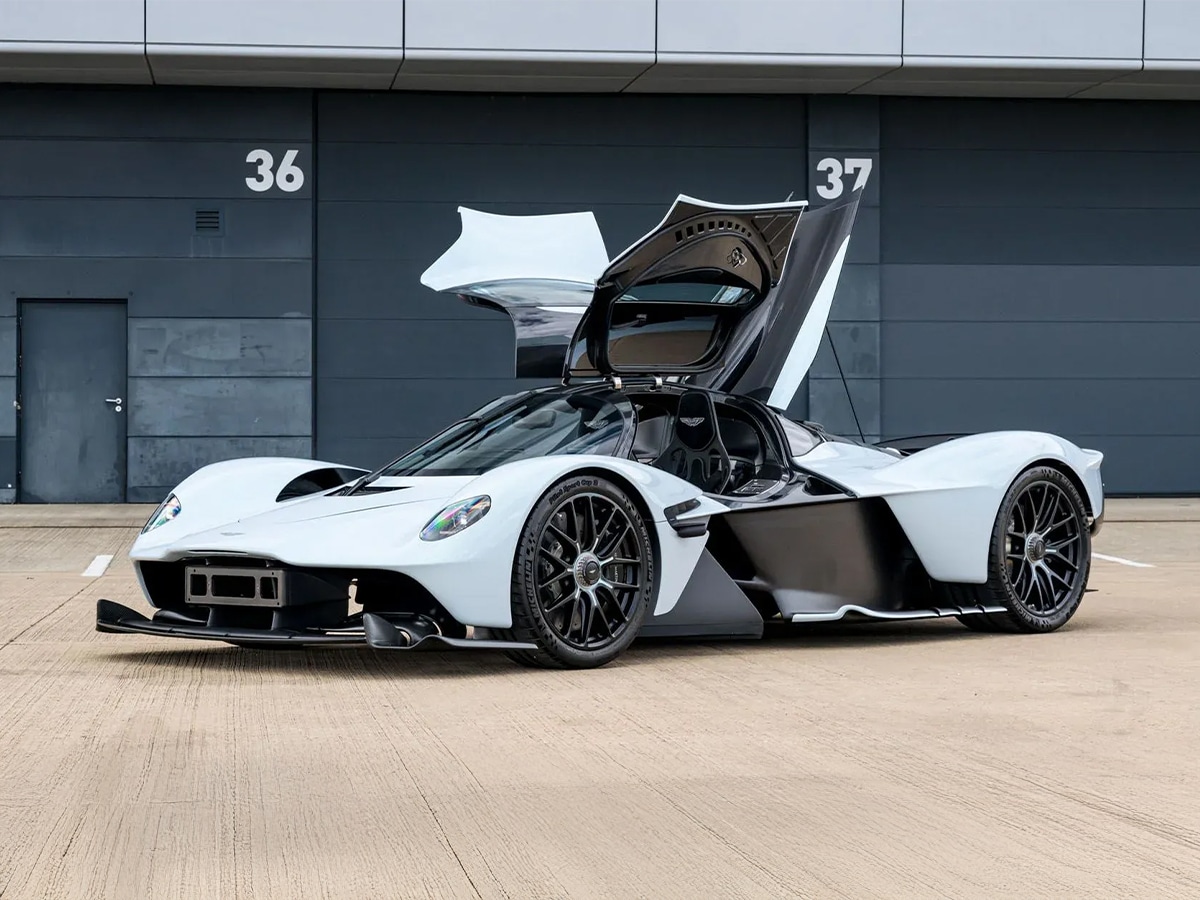
It’s the perfect representation of how those other aspects of the hypercar have taken centre stage, above the pursuit of power as the primary premise.
“The fascinating thing is how close modern road cars are getting to racing car levels of performance,” Newey declares.
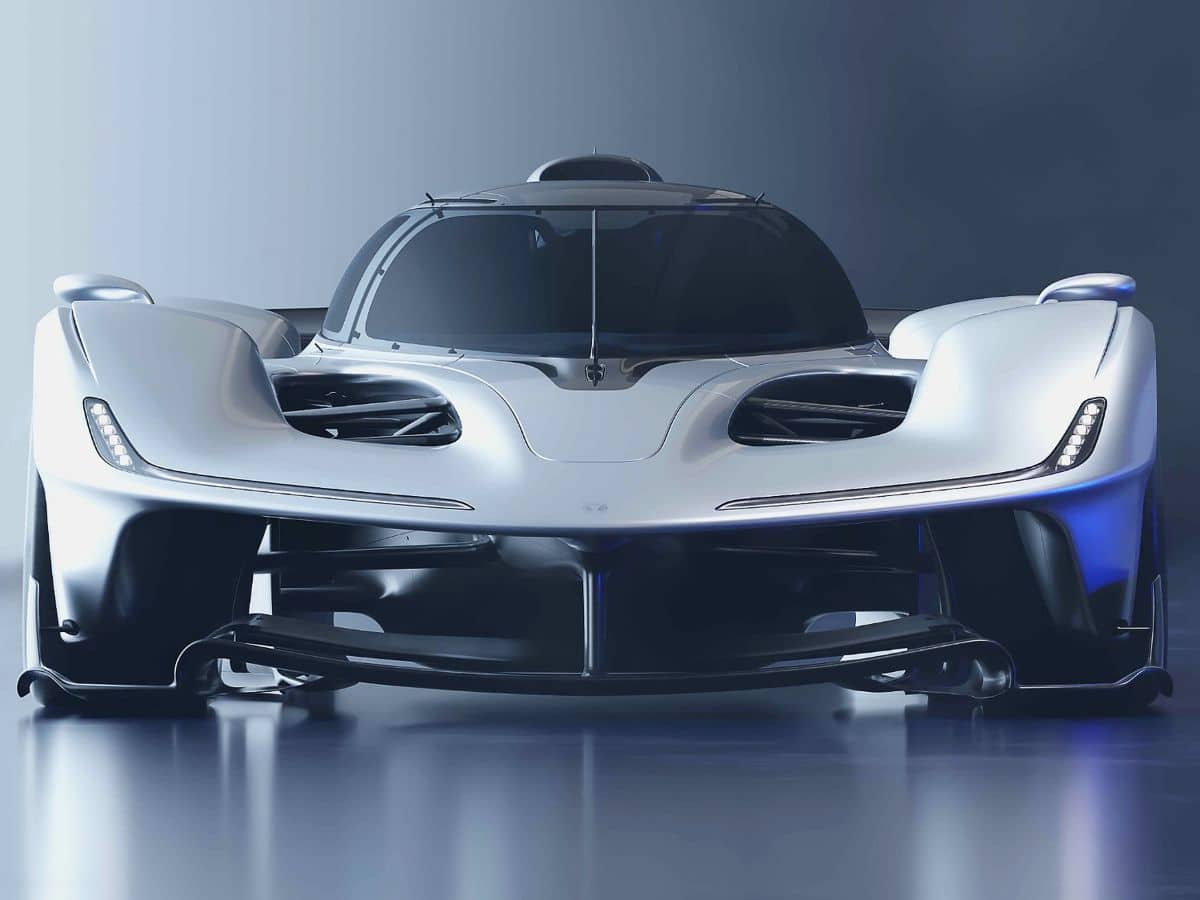
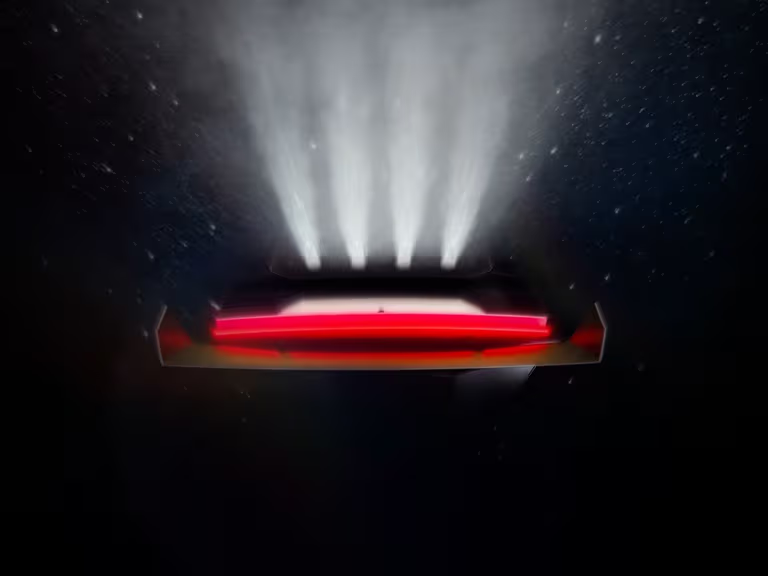
The RB17 is powered by a bespoke hybrid powertrain centred around a 4.5-litre V10 developed by Cosworth, designed to rev to 15,000rpm. The bodywork reflects a strong emphasis on aerodynamic efficiency, with hockey-stick-style LED headlamps, reworked cooling channels and a pronounced fin integrated into the engine cover.
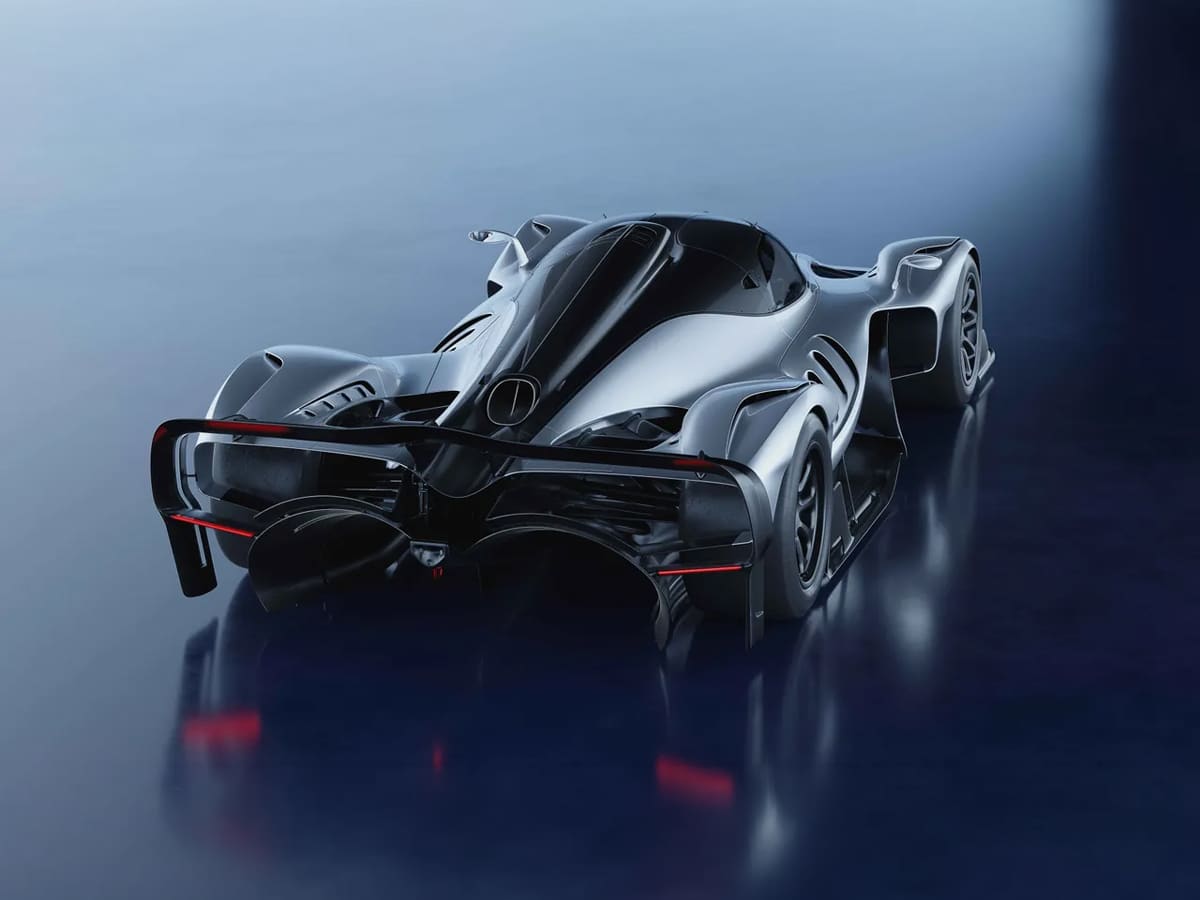
A notable design revision places the exhaust outlet along the spine of the engine cover, a change intended to optimise packaging and airflow. Though Newey has left the project and now serves only as a consultant, many see the RB17 as the next stage in the great hypercar race.
“Each generation of high-performance cars resets the limits of what engineers once thought possible,” explains Karl Ludvigsen, an automotive historian who went on to say that what we’re really witnessing is the blurring of the line between the highest level of motoring performance – Formula 1 – and a car that you can actually own.
That car, the RB17, will set you back €7M ($AUD11.5m), limited to only 50 customers whose RB17s are scheduled to begin production in spring 2027.























Comments
We love hearing from you. or to leave a comment.