

Updated:
Readtime: 12 min
Every product is carefully selected by our editors and experts. If you buy from a link, we may earn a commission. Learn more. For more information on how we test products, click here.
There is no denying that the Dyson CameraJet is an incredible feat of engineering. It’s an electric toothbrush that does interdental cleaning (flossing) while you brush, with the aid of a camera.
But, given this is Dyson’s first foray into oral health, and this device is the first of its kind, the question is: Could Dyson possibly nail a camera toothbrush that flosses on its first attempt?
Dyson CameraJet First Impressions
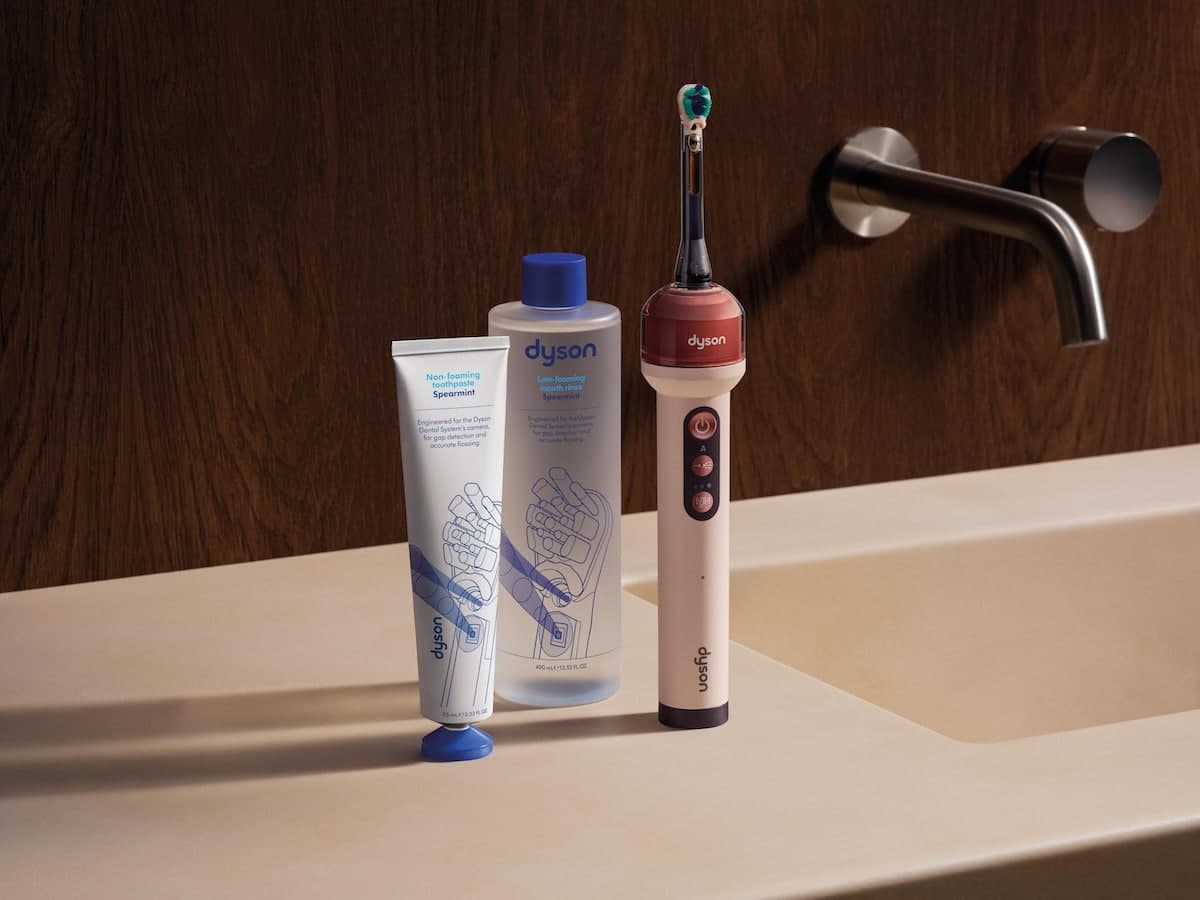
The first thing I noticed taking my brush out of the box is that the charging stand is massive. It has a big reservoir for mouth wash (or mouth rinse, as Dyson calls it) to refill the brush’s tank, and a built-in USB-C cable, for which you have to provide your own wall plug. In the box, there are two brush heads, the toothbrush body, a charging cable, and assorted documentation. Bundled with my brush were full size containers of Dyson’s own non-foaming toothpaste and non-foaming mouth rinse (spearmint flavour, Ginger Mint is coming later).
The biggest issue I had off the bat was getting the brush in and out of the stand, because it’s quite a tight fit, so the hoses can line up to impart the mouth rinse. That means that it can be difficult to manipulate when half asleep, as I usually am when I brush my teeth. I’ve gotten better at it over the last week of use, but I think it’ll still be at least another month before it stops feeling overly complicated.
The Dyson CameraJet Brush
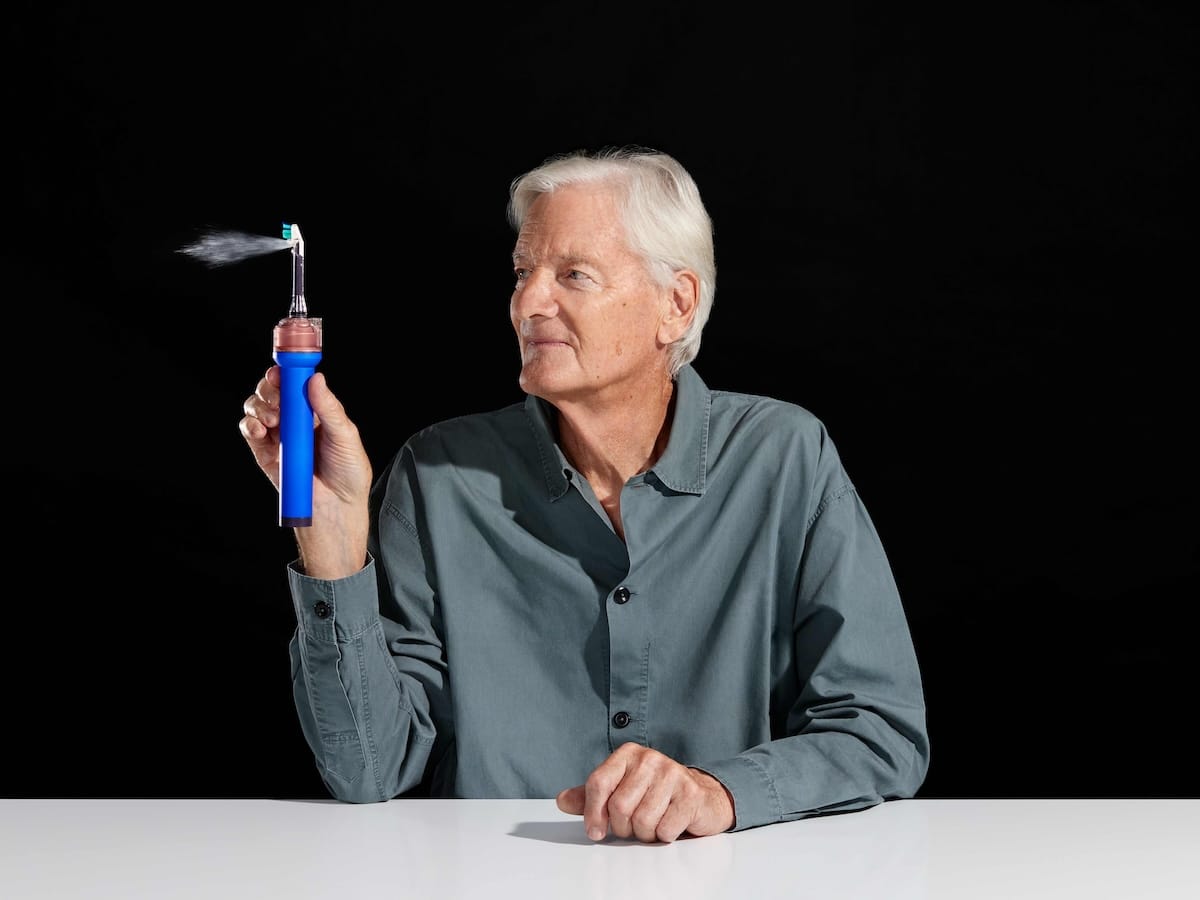
To paraphrase an old saying: the first brush is the hardest. The first time I brushed with the CameraJet, I had to brace my entire body and soul every time I heard the sound that meant the mouth rinse was about to fire. It needs to have a high velocity to get the plaque off, but that also means that it ricochets everywhere. I had my wife film the first time I brushed, and she was laughing so hard that she started to have difficulty holding the camera. I was covered in toothpaste. The mirror was covered in toothpaste. My wife was covered in toothpaste. It was a complete horror show. A lot of people are going to be put off by that first clean.
However, as the days have gone on, I’ve adjusted more to how it works and what’s going to happen. I no longer flinch when the mouth rinse comes, and I really appreciate the feedback when I brush too hard. Brushing too hard is a serious problem and can damage enamel, and most other electric toothbrushes that give pressure warnings just have an easily ignored light. The Dyson CameraJet pauses and gives haptic feedback to let you know you’re doing it wrong so you can adjust. It doesn’t give you an option not to.
The actual brushing part is excellent, because the oscillation of the brush head combined with the vibration seems to do a significantly better job of brushing my teeth than the Philips Sonicare Diamond Clean and Move Fresh 20 Vision. The clean is roughly on par with the Oral-B iO10 (which is my everyday brush).
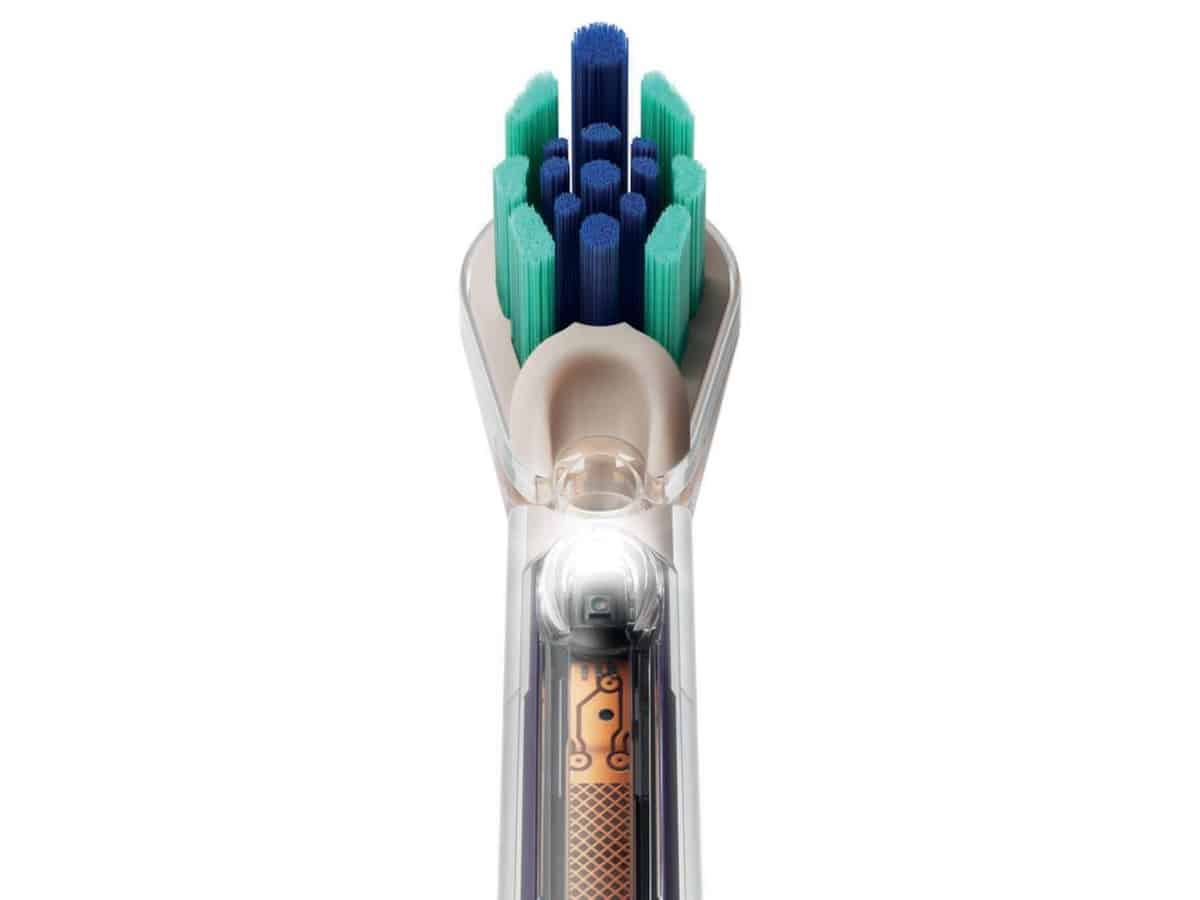
Unfortunately, it’s not a perfect experience. For starters, the brush head is really small to make room for the mouth rinse jet, so I notice that I have to brush longer and much more mindfully to cover the same surface area.
The other, bigger issue is that it’s a brush designed for people who are too busy (or lazy) to floss, and yet it requires people to retrain muscle memories that they likely locked in during kindergarten, and requires more maintenance.
You can’t just hold it the same way you would an Oral-B iO brush, or a manual toothbrush. It has to be held evenly and horizontally to ensure the jets of mouth rinse hit between your teeth instead of your tongue or (on one memorable occasion) my chin. You also have to hold your mouth differently, smiling like the Cheshire Cat to keep your mouth open enough so the camera has room to see and the brush bristles don’t get squished. Not only does that feel super awkward for the first however many brushes (and has barely felt less awkward over a week), it ensures maximum splatter all over the bathroom as the mouth rinse ricochets out of my mouth. RIP my bathroom mirror.
Plus, you have to ensure you breathe through your nose so you don’t fog up the camera, which is rough during hayfever season. Not to mention this brush is much louder than a regular brush, which will be tough for people who brush their teeth in an ensuite while their partner sleeps.
And, for reasons I’ll cover in the camera section, the brush requires different cleaning and maintenance, which doesn’t fit the goal of reducing the number of things that must be done each time someone cleans their teeth. It just changes which item you’re manually prodding after brushing from being your teeth to the camera bubble.
The Dyson CameraJet Camera
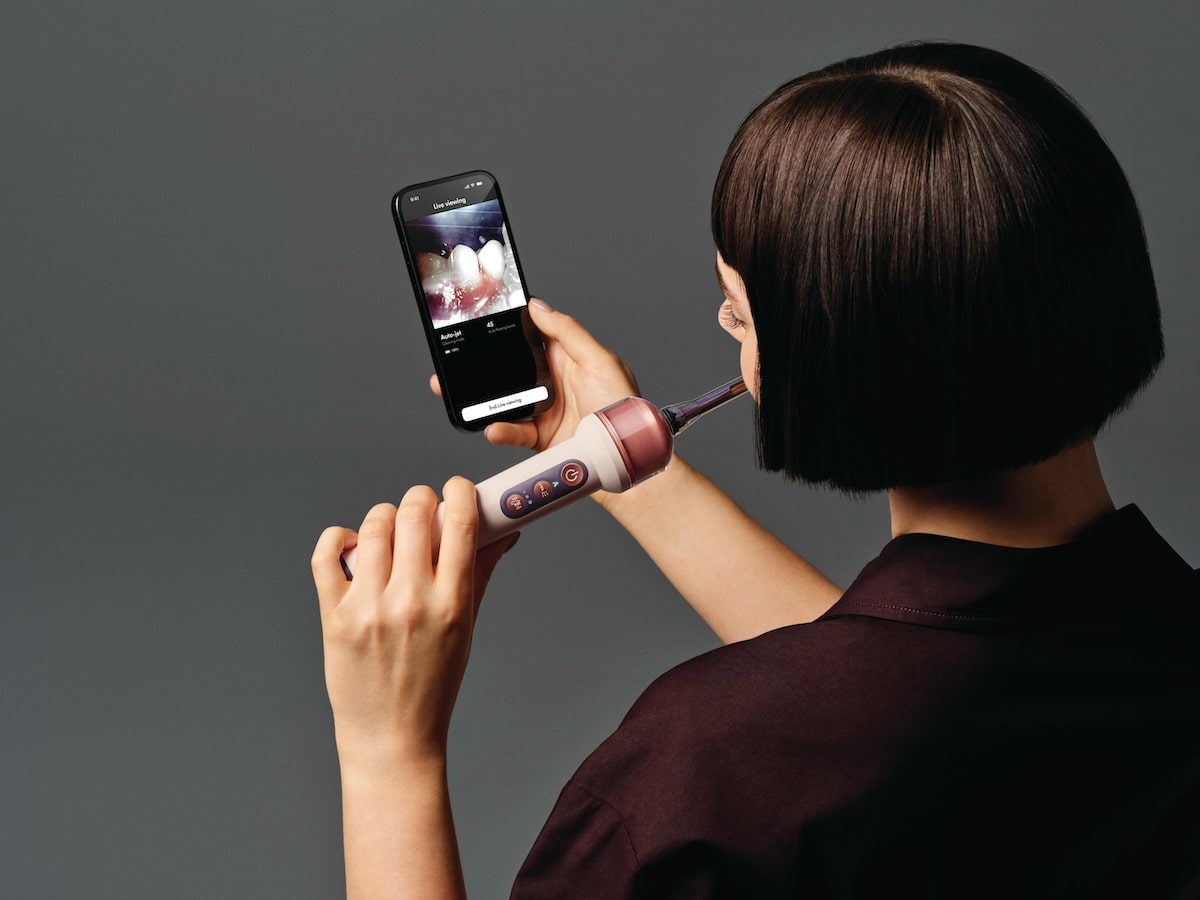
The camera is such a cool thing to put in a toothbrush. Almost no one is going to watch the livestream more than once or twice, so I think it’s fine that Dyson didn’t include a phone mount in the box. But having the camera in there solves two problems: How does the toothbrush see the gaps to shoot the mouth rinse? And how can users keep an eye on their dental health to look at something if it feels weird?
Unfortunately, if you’re hoping to get a high definition look at the inside of your mouth, you’re going to be disappointed. This is because of a few reasons:
- It’s only a 100K pixel camera. For context, that’s about a third of the resolution of the first Nokia camera phone, the 7650, which had a 0.3 megapixel camera. This isn’t designed to take photos, its for the AI to see your teeth.
- If you breathe through your mouth (like if you have a blocked nose) it fogs up as soon as I put it in my mouth so it can’t see anything and the mouth rinse doesn’t fire properly.
- If you have a humid bathroom (for example, if you bathe at a temperature above an ice plunge) the brush head can develop condensation inside the camera bubble, which is extremely difficult to remove with a cotton bud because of the angles.
For those reasons, I have not yet had a teeth cleaning experience where the mouth rinse managed to get between each tooth. I think my record is maybe 75 per cent of the gaps?
I also had to try two different brush heads. The first one I tried had a small fault with the rubber gasket, which meant the mouth rinse splattered into the camera bubble. This meant that after (and sometimes before) every brush I have to wipe down the inside of the brush head with a cotton bud, carefully manoeuvring it to get into the little camera bubble, which is really difficult. Gotta say, that’s not really something I’m in the mood to do first thing I wake up or last thing before I go to bed.
It did improve once I switched to the other brush in the box, and Dyson has told me that the original brush head was faulty and is taking it back for testing. They handled it quickly and without fuss, which is a good sign. However, the new brush head seems to fog up internally for some unknown reason, even when the humidity in my bathroom is at normal levels.
For those concerned about privacy, the footage doesn’t go anywhere. If you want to watch a livestream of the inside of your mouth, you have to connect your phone to the CameraJet’s wifi network and just watch the livestream. The video isn’t saved to your phone, the brush or the cloud.
The Dyson CameraJet App
The MyDyson app is actually really good. I’m not sure why it’s not capturing all of my brushing sessions. I’m definitely brushing twice a day, sometimes more than that while prepping this review, and yet most days it’s only recorded one session. But for each one it does capture, it records the number of auto-jets and brushing duration, and gives feedback on technique each week to let you know what you did well and what you could improve on. It’s great to have actionable data to work with. It’s really improved my brushing technique and thus my cleaning experience.
The Dyson CameraJet Stand
In theory, I love this stand. I don’t know why more electric toothbrush stands don’t come with domes to protect the brush from bathroom grossness.
But, boy howdy, this thing is huge. Dyson touts it as being a travel case, but it’s so massive it would take up half my backpack for carry on. The size is because of the mouth rinse reservoir, so that the brush can be refilled at the touch of a button, which is really neat and convenient. However, a travel case doesn’t need that feature, and it’s weird to have a brush in this price range that doesn’t come with a proper, portable, slim, charging travel case in the box. That’s something that’s expected above $499. Dyson tells me there will be a smaller travel case accessory that will be available in the coming months.
The biggest thing about the stand, though, is that you have to get over the fear of breaking something. Before you master the technique of putting the base of the brush in and pushing down before putting in the top it can be a bit of a struggle. Toothbrushes are largely being used by tired people who either just woke up or want to go to sleep, please do not give me a puzzle at those times.
But, like most of the things about the Dyson CameraJet, it just takes some adjusting to.
The Dyson CameraJet Toothpaste and Mouse Rinse
Those consumables normally retail for $15.99 for 75g and 400ml respectively, which seems very expensive for toothpaste and mouthwash, but I suppose I’m not in the tax bracket that would casually spend $799 on a toothbrush, so perhaps that’s normal for rich people. The closest in price I could find at Woolies was Oral-B’s 3D White Toothpaste Intensive Whitening Diamond Clean, which was 94g for $20 (or 2 for $28, which changes the maths significantly), but otherwise the Dyson toothpaste is the most expensive per 100g compared to supermarket brands.
They do taste delicious and refreshing. The texture is nice, and when used with the correct amount of toothpaste, there is minimal foam. I only have the spearmint at the moment, and it is a delight.
Studies show that mouthwash isn’t necessary for people with good oral health, which suggests most people would be better off using water instead of the $15.99 mouth rinse. However, another problem is that toothpastes are supposed to leave a paste residue on your teeth so the fluoride can do its job of strengthening enamel. Firing water or mouth rinse between your teeth removes some of that paste residue. Even though the mouth rinse contains fluoride, it doesn’t have the same staying power as a paste, though it is better than water for this situation.
Man of Many’s Verdict
I am really torn about how to sum up this toothbrush, and it’s something I’ve been debating for days. On the one hand, it’s a good brush, and a fantastic concept that I think could revolutionise oral care in a couple of years. On the other hand, I don’t think it serves its target audience (lazy/busy people) well enough because of the added maintenance, the camera is too easily obscured, and the auto-jets haven’t been firing mouth rinse to floss my teeth consistently enough for me to be comfortable recommending it for $799. That might change with updates to the brush heads (to be either easier to clean or harder to get mouth rinse stuck obscuring the camera), and firmware updates adjusting the algorithm to make the auto-jet firing more consistent. Having seen the roll out of other Dyson products, I’m very confident those fixes are coming. They’re just not here yet, and I can only review based on my actual experience.
If the Dyson CameraJet really did consistently floss my teeth while I brushed without adding too much maintenance labour on my part, I could absolutely see myself and thousands of other people being willing to adjust their brushing technique to make the most of it. It’s just not technologically there yet, judging by my experience.
If Dyson released another this toothbrush with a larger brushing head, without the camera, for $199, it would be the easiest thing to recommend, because the actual brushing part is excellent. It’s just the other extras that still need some work.
It should be noted that when I took my concerns to Dyson, they said that they hadn’t heard any other reports of these issues locally and think it might be a defective unit and have requested it back for testing. I have seen other reports on TikTok and Reddit of people having similar issues overseas, but fully accept that this might be a faulty unit and will send it back for testing. I can only review what’s in front of me, but I will update you when I get the replacement CameraJet for further testing in a few weeks.



















Comments
We love hearing from you. or to leave a comment.