


Updated:
Readtime: 8 min
Every product is carefully selected by our editors and experts. If you buy from a link, we may earn a commission. Learn more. For more information on how we test products, click here.
- Dolby Vision 2 is Dolby’s next-generation HDR technology, using new picture processing and expanded metadata to adapt what you see to the content, your TV and viewing environment.
- Select 2026 Hisense TVs are the first devices to receive Dolby Vision 2, with compatible models rolling out the update globally.
- Existing Dolby Vision content can benefit from the new processing, though some features will require content authored for Dolby Vision 2.
Dolby Vision 2 doesn’t want you spending hours in front of your TV fiddling with picture settings. Brightness, contrast, colour temperature, sharpness, motion smoothing and whatever else are often buried three menus deep. Some, like me, will put the time in to get the picture just right, but it’s often a bit too much for those of us who want to turn the TV on and just watch something.
It’s a problem Dolby has been attempting to solve for years, particularly since Dolby Vision IQ arrived in 2020. Now, its next-generation HDR technology is finally rolling out to compatible TVs around the world, beginning with select 2026 Hisense models.
The promise is relatively simple: the TV takes charge of more picture-setting decisions automatically based on what you’re watching. It also takes into account your TV’s capabilities and even the room you’re sitting in. As Hisense puts it, the picture “thinks for itself”.
Now, TVs haven’t exactly been passive in the last few years, with manufacturers increasingly leaning on automatic picture processing, to mixed results. And Dolby Vision has already done plenty behind the scenes, probably more than the average viewer might actually realise.
What has actually changed with Dolby Vision 2? How did Hisense beat everyone else to the new standard, and should the rest of us care about another logo appearing on the box?
What Is Dolby Vision 2?
Before we get into everything new with Dolby Vision 2, it’s worth understanding how we got here and what previous generations were already doing.
Simply put, Dolby Vision is a form of High Dynamic Range (HDR) that uses dynamic metadata, essentially extra information your TV can use to work out how each scene should look, allowing compatible TVs to automatically work out how best to display each scene based on the screen’s capabilities.
That means a darker scene doesn’t necessarily have to be treated the same way as something full of bright highlights.
Think the pitch black of Game of Thrones‘ Battle of Winterfell vs. the bright yellows of the desert in Mad Max: Fury Road.
A Quick Timeline on HDR
HDR standards have been piling up for more than a decade. Dolby Vision arrived in 2014, followed by HDR10 in 2015, while broadcast-friendly HLG was standardised in 2016. HDR10+ added its own dynamic metadata in 2017, before Dolby Vision IQ introduced ambient-light awareness in 2020.
Dolby Vision 2 was first announced in 2025 and finally reached TVs in August 2026, alongside Samsung’s competing HDR10+ Advanced standard.
But First There Was Dolby Vision IQ
Dolby Vision IQ built on that foundation by combining Dolby Vision’s existing metadata with ambient-light sensors inside the TV. It could adjust the picture by figuring out if you’re watching in a dark room or with sunlight pouring through the windows, a common enemy in Australian living rooms and pub beer gardens.
It later added content-type metadata for settings including white point, frame rate, noise reduction and sharpness.
With Dolby Vision 2, that foundation is being built upon, rather than being replaced entirely, with the new Image Engine and Content Intelligence forming the core, while higher-performing Dolby Vision 2 Max TVs get additional features such as Authentic Motion. With that extra information, it automates those fiddly picture settings without you having to lift the remote.
But if Dolby Vision was already helping your TV make smarter HDR decisions, Dolby Vision 2 essentially gives it more information and better tools to decide what happens next.
What’s Actually New in Dolby Vision 2?
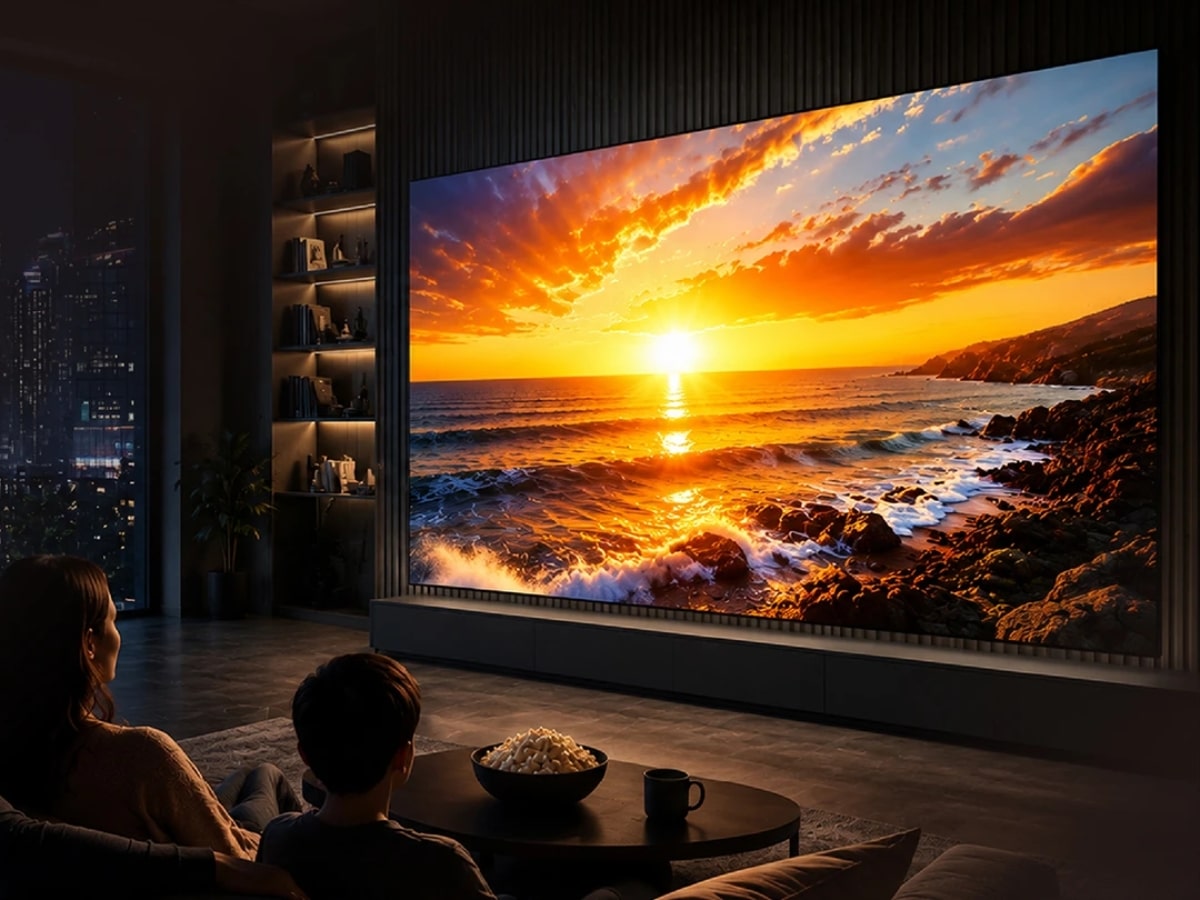
The first big change is the new Image Engine, which Dolby says can make better use of both existing Dolby Vision metadata and all that extra information pouring out of the upgraded Dolby Vision 2. That engine should mean that compatible TVs will have more room to optimise brightness, contrast and colour scene by scene, including on older Dolby Vision content.
Content Intelligence then adds more context to those decisions, like Precision Black, Light Sense and dedicated sports and gaming optimisation. There’s also new bi-directional tone mapping that helps higher-performing TVs make better use of their extra brightness, contrast and colour capabilities. Though all of that is still capped at what the panel can actually handle, so keep that in mind before you start thinking Dolby can artificially extend the life of your TV.
And if you’ve misplaced the remote recently, you’ll need to locate it, because Dolby Vision 2 still has a few buttons for you to press. There’s an intensity slider that lets you adjust how deep or rich the picture looks, while Dolby Vision 2 Max, the premium tier for higher-performing TVs, adds more advanced Pro settings.
It’s the old cake-mix trick: just enough participation for the result to feel like you actually did something, even if the TV is doing most of the work for you.
Dolby Vision 2 vs Dolby Vision 2 Max
There are actually two versions of the new standard. Regular Dolby Vision 2 gets the new Image Engine, Content Intelligence and intensity control, while Dolby Vision 2 Max is reserved for higher-performing TVs.
Max adds features including Light Sense 2, more detailed Pro controls and Authentic Motion, which brings us neatly to arguably the most interesting addition of the lot.
Shot-By-Shot Motion Smoothing
Rather than applying the same motion smoothing across an entire movie or TV show, Authentic Motion allows creators to embed instructions that control the amount of processing on a shot-by-shot basis.
Basically, the idea is to smooth out unwanted judder without giving everything that glossy soap-opera look motion interpolation is famous for. Unfortunately, there’s a bit of Dolby fine print to consider. Authentic Motion will require newly authored Dolby Vision 2 content, so we’ll need to wait before we can really judge how well it works in the wild.
Existing Dolby Vision content gets some of the new processing, but its more ambitious creator-controlled features will only become useful as studios and streamers start producing content specifically for the new standard.
Why Is Hisense First?
Wondering how Hisense beat the likes of LG, Sony and Samsung to Dolby Vision 2? Well, dynamic HDR metadata can be particularly useful on TVs with limited brightness and dynamic range. Dolby Vision works because dynamic metadata gives the screen more information, allowing it to better adapt even the most ambitious HDR master to less capable hardware and make the most of whatever brightness the panel actually has.
There’s an obvious assumption: cheaper TVs can sometimes have more to gain. But that’s not why Hisense got first dibs.
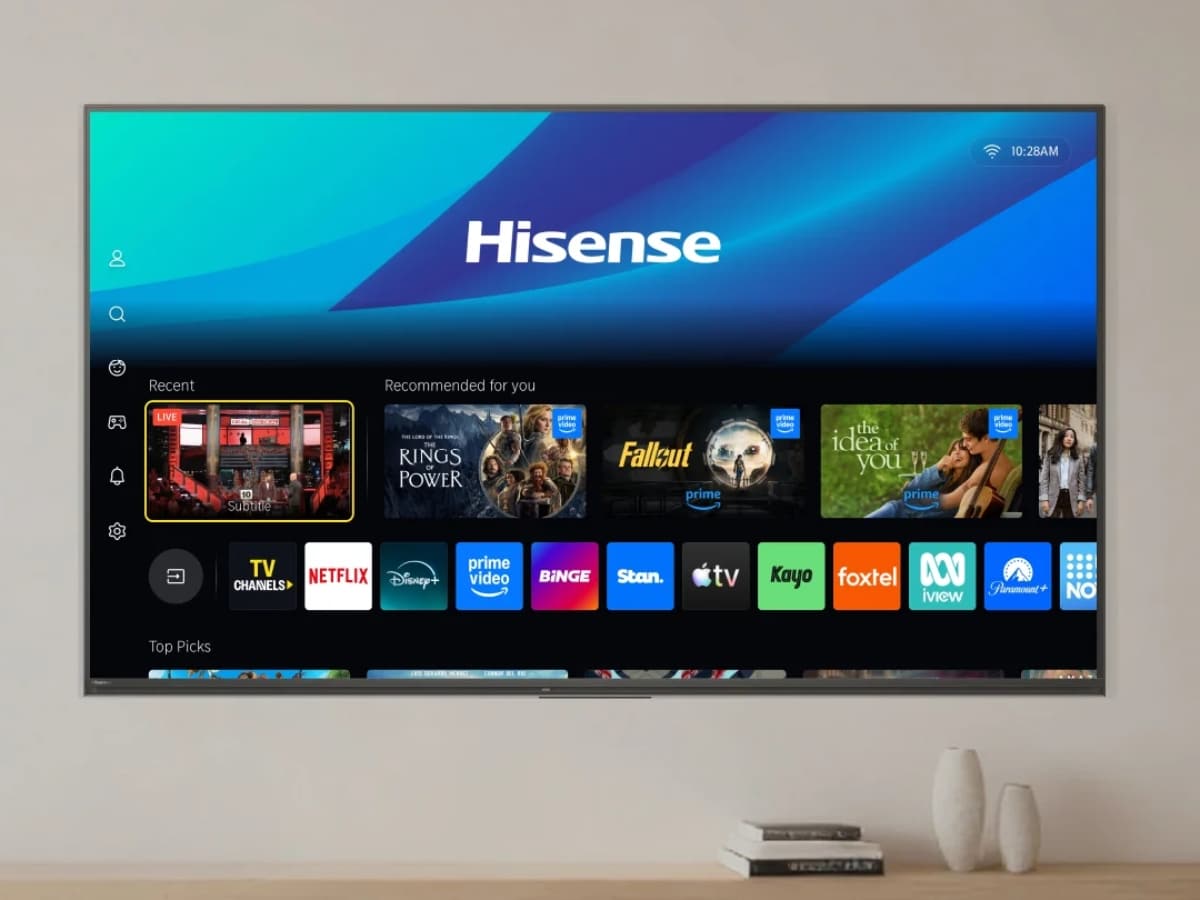
It all comes down to what’s inside the TV. Hisense was the first brand to bring Dolby Vision 2 to market using MediaTek’s Pentonic 800, the first smart TV chipset built to support the new standard. With compatible hardware already inside its 2026 TVs, the current firmware rollout is unlocking capabilities those sets were born to handle.
And they’re not all bargain-bin screens, either. The initial Dolby Vision 2 line-up from Hisense includes its premium UX, UR9 and UR8 RGB MiniLED TVs alongside the U7, with Dolby Vision 2 Max available on those higher-performing displays.
In Australia, Hisense is already advertising Dolby Vision 2 on the UR9S RGB MiniLED range.
Although Hisense was first in, they might not be the best dressed. TCL and Philips have also committed to Dolby Vision 2 on upcoming 2026 TVs, while Sony and LG have yet to announce support. Samsung, on the other hand, remains committed to its competing HDR10+ ecosystem.
What Does Dolby Vision 2 Mean for Your TV?
The good news is that you don’t need to start rebuilding your streaming library. Dolby Vision 2 is backwards-compatible, meaning existing Dolby Vision content will still work, although Dolby reckons its new processing capabilities can improve how that content is displayed on compatible TVs.
Older Dolby Vision TVs aren’t completely left out. You can still play Dolby Vision 2 content; your TV will just ignore the extra metadata it doesn’t understand.
What you can’t do is turn an old Dolby Vision TV into a Dolby Vision 2 model with a software update. The new standard requires specific processing hardware, with MediaTek’s Pentonic 800 the first smart TV chipset built to support it.
So unless your TV was built with the necessary hardware inside, Dolby Vision 2 isn’t coming down the internet to save it, just like you can’t download more RAM from the internet.
Is It Time To Upgrade?
But let’s ease those envious eyes for just a moment. The average viewer shouldn’t rush out to replace their TV with one bearing a shiny new Dolby Vision 2 badge. The rollout is still in its early stages, with Hisense just the beginning of a much wider release.
For those in the market for a new TV, it’s a useful feature to keep in your back pocket, but I wouldn’t put off an otherwise good purchase just to wait for it.
If Dolby Vision 2 works as promised, the biggest upgrade might not be another setting for us to fiddle with, but having fewer reasons to reach for the remote in the first place.
Related reads






















Comments
We love hearing from you. or to leave a comment.