

Updated:
Readtime: 11 min
Every product is carefully selected by our editors and experts. If you buy from a link, we may earn a commission. Learn more. For more information on how we test products, click here.
- BMW M has unveiled the technology for its flagship electric “halo cars.”
- New models will feature quad motors and an 800-volt eDrive system.
- “Superbrain” computers will manage performance, driving dynamics, and efficiency.
- The platform could deliver over 1,000hp and unmatched driving dynamics.
- Electric models won’t replace petrol models at launch.
Now that the global premiere of the BMW M Concept Neue Klasse at the 24 Hours of Le Mans is in the rearview mirror, it’s time to talk about the future of the brand’s high-performance M division.
The biggest revelation across the latest reports is BMW’s shift in line-up strategy. Unlike previous years, when BMW would unveil new technology in model-adjacent “halo” products like the BMW XM, the brand is heading down a single path of truth. With the new release, there will be both an all-electric flagship Neue Klasse halo car and a petrol-powered M3 counterpart that utilises new motorsport-derived technology to keep the internal combustion engine alive in the emissions era without a heavy plug-in hybrid system.
Here’s everything we know so far about the next-generation BMW M3 lineup.
2028 BMW M3 Fast Facts
- Powertrains – An all-electric quad-motor version (ZA0) and a combustion-engine version (G84).
- Engine Tech – New “BMW M Ignite” pre-chamber dual-ignition system for the petrol model.
- Platform – Neue Klasse Gen6 architecture with an 800-volt, >100 kWh battery for the EV.
- Release Date – Next-gen electric M3 arrives next year, followed by the G84 around 2028.
Powertrain Options Confirmed
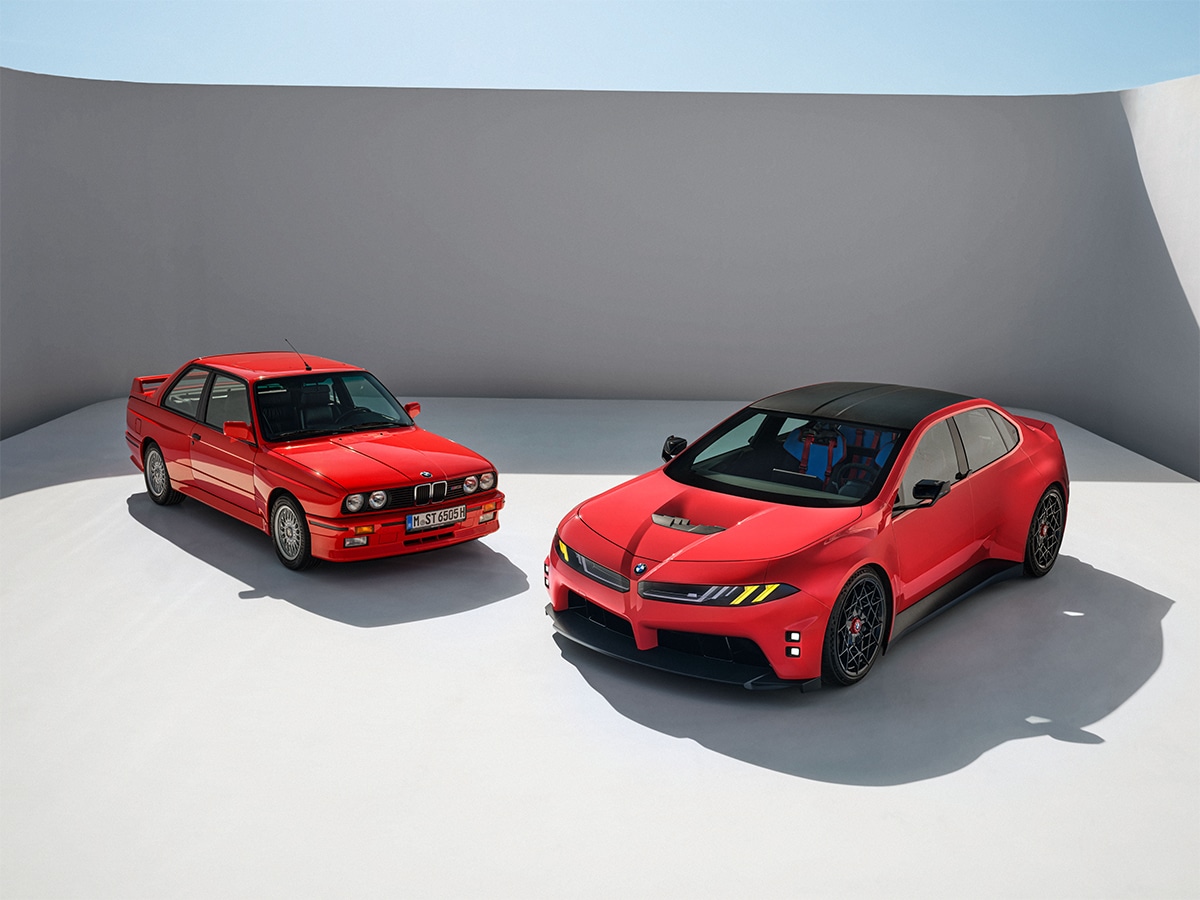
European emissions regulations pushed models like the twin-turbo V8-powered BMW M5 to shift away from a petrol-only architecture and adopt heavy plug-in hybrid (PHEV) technology to survive. Initially, industry speculation pointed to a fully electric M3 to avoid this weight penalty entirely. However, recent developments and changes in consumer demand mean that BMW is taking a two-pronged approach, keeping the pressure on competitors like the Alfa Romeo Giulia Quadrifoglio.
Crucially, the new electric model won’t replace the current petrol-powered M cars at launch. Instead, it will sit above them in the lineup as the ultimate performance halo car.
Petrol-Powered Survivor and BMW M Ignite Tech
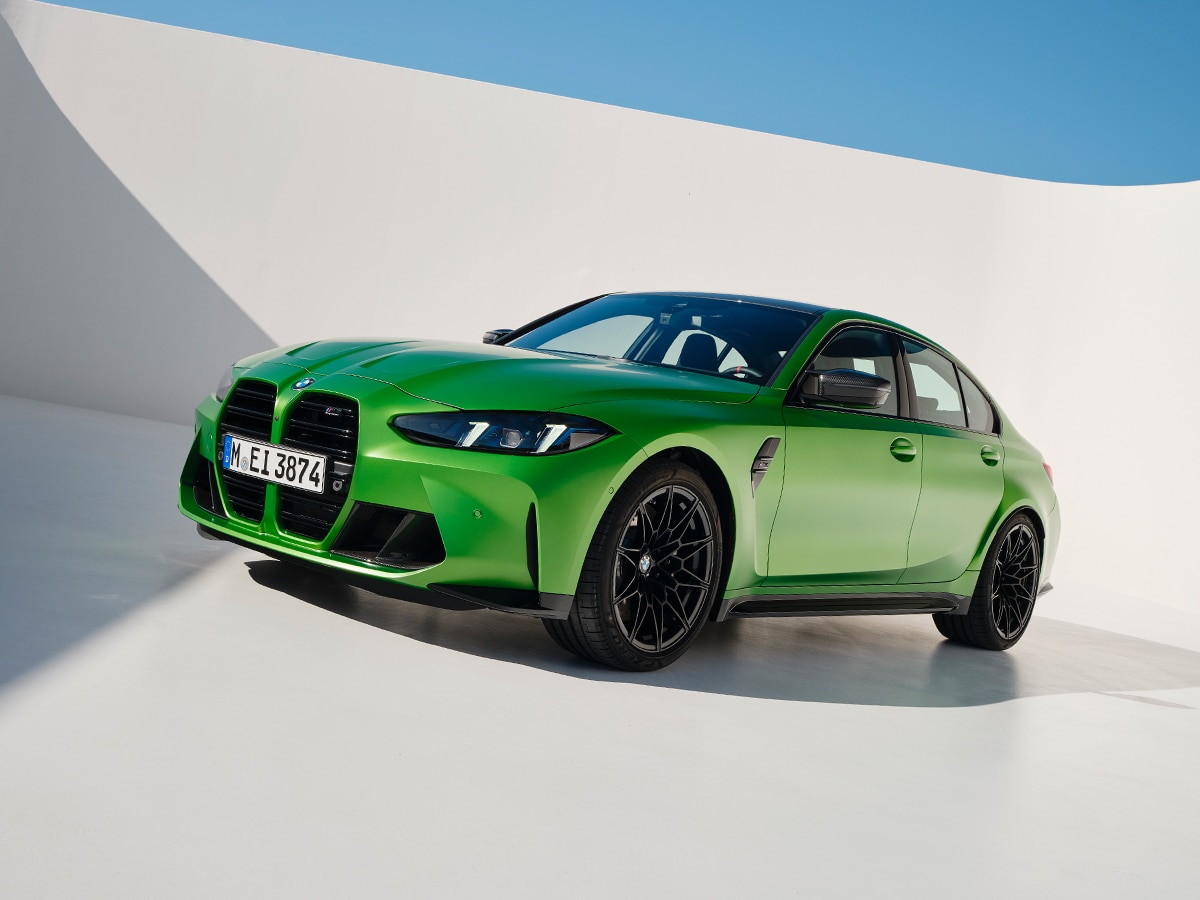
BMW M CEO Frank van Meel has confirmed that the upcoming petrol-powered M3 (G84) won’t be a PHEV. “Here we will go to the extremes, not the in-between,” van Meel noted in a recent interview.
To allow the inline-six engine to meet strict Euro 7 emissions standards (which come into force in November 2026) without adding a battery pack, BMW is introducing a patented system called BMW M Ignite technology. This dual-ignition system will debut in the inline six-cylinder units for the current M3 and M4 starting in July 2026, and the M2 in August 2026, before serving as the backbone for the 2028 G84. It’s likely that the displacement and power outputs of these models won’t change much.
How does it work? Well, the system uses a pre-chamber positioned within the cylinder head, connected to the main combustion chamber by overflow openings. It’s equipped with its own dedicated spark plug and ignition coil, giving the engine two separate ignition systems.
- Low to Medium Revs: During normal driving conditions, the conventional spark plug located in the main combustion chamber fires before the spark plug in the pre-chamber.
- High Revs and Heavy Load: When the engine is under load, the pre-chamber takes priority. A portion of the fuel-air mixture is channelled through overflow openings into the pre-chamber and ignited.
- Supersonic Flame Exit: The flames generated inside the pre-chamber exit through the openings at roughly the speed of sound.
- Simultaneous Ignition: These “ignition jets” ignite the remaining mixture in the main combustion chamber above the piston at multiple points simultaneously.
This process results in a higher combustion speed that counters engine “knocking” and lowers exhaust gas temperatures. Paired with variable turbine geometry (VTG) turbochargers and a higher compression ratio, fuel consumption drops under high loads, allowing for longer stints on the track while meeting Euro 7 standards. We noted the strong power delivery in our BMW M3 Touring review and BMW M4 Competition review, and this technology is designed to retain that character and even enhance it.
Reports indicate the manual transmission won’t be offered, with the G84 expected to be exclusively automatic with xDrive.
What About the AMG Rival and the Return of the V8 C63?
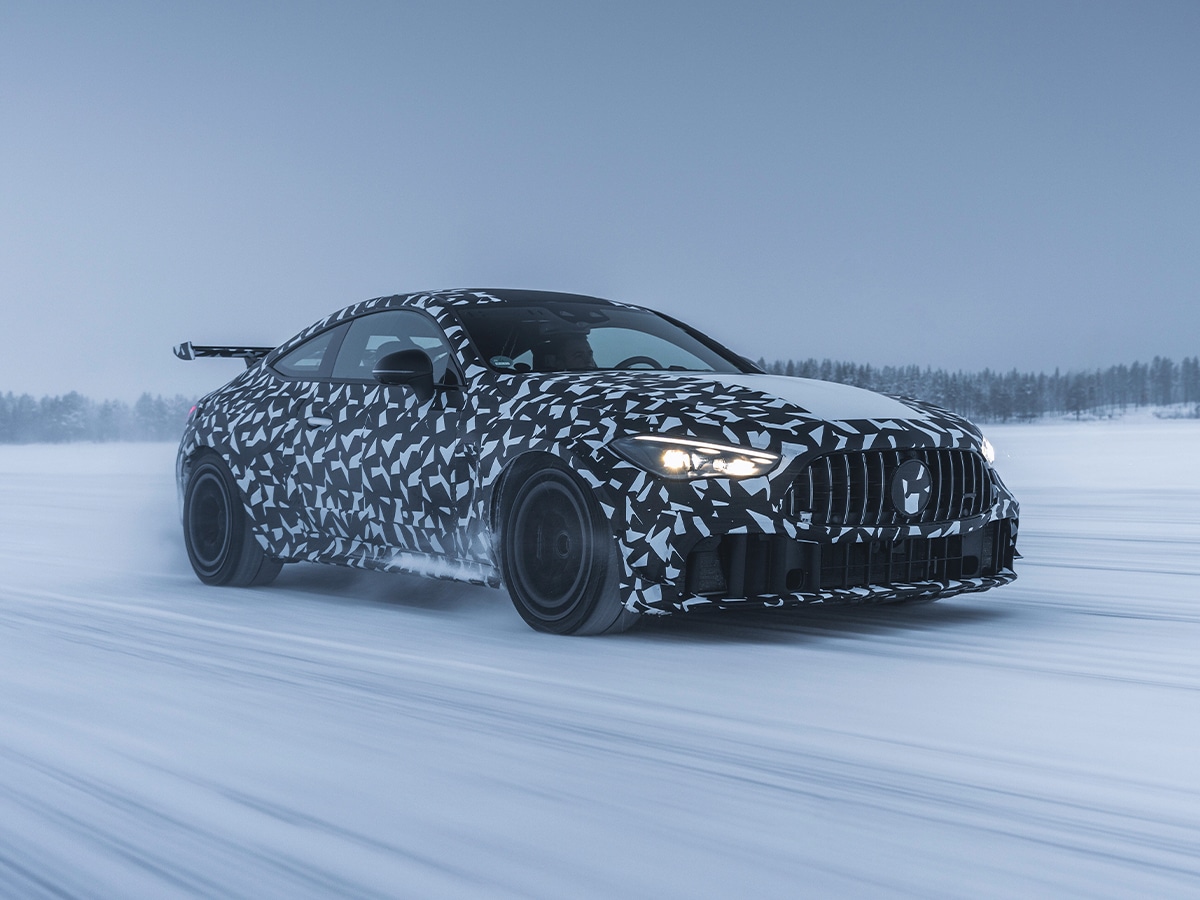
BMW isn’t the only manufacturer walking back its previous strategy. With Mercedes-Benz reverting course on its four-cylinder PHEV decision, the V8 will come back alive in Affalterbach shortly. Mercedes-AMG just unveiled the updated GLE 63 S Coupe and GLS 63, which pack a heavily updated twin-turbocharged 4.0-litre V8.
This engine produces 603 horsepower and 627 pound-feet of torque, featuring a new flat-plane crankshaft to reduce rotating mass and improve throttle response. It’s paired with a 48-volt mild-hybrid system featuring an Integrated Starter Generator (ISG 2.0) that adds up to 23 hp and 151 lb-ft of torque.
Given that Mercedes has reportedly ended production of the four-cylinder C63 due to weak demand, industry sources indicate that the upcoming C63 S could be powered by this exact same flat-plane crank V8 setup, setting the stage for a massive combustion-engine showdown with the G84 M3. However, what makes this rivalry particularly fascinating is that neither brand is chasing the astronomical horsepower figures achieved by heavy plug-in hybrids.
If Mercedes adopts the 603-horsepower GLE 63 setup for the C63 S, it’ll actually produce less power than the current 4-cylinder AMG C 63 S E PERFORMANCE, which churns out a staggering 671 horsepower and 752 lb-ft of torque through its heavy PHEV drivetrain.
BMW’s All-Electric Halo Car and Superbrain Technology
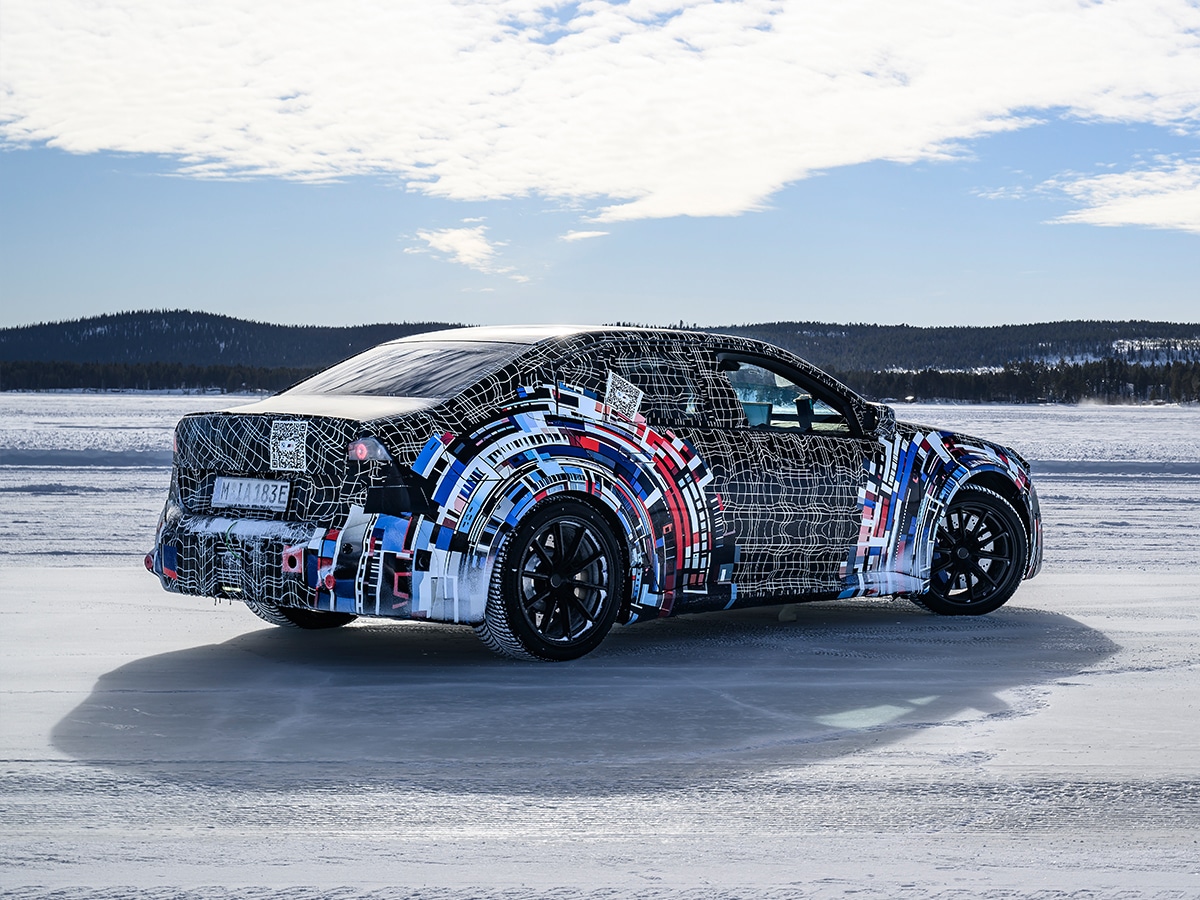
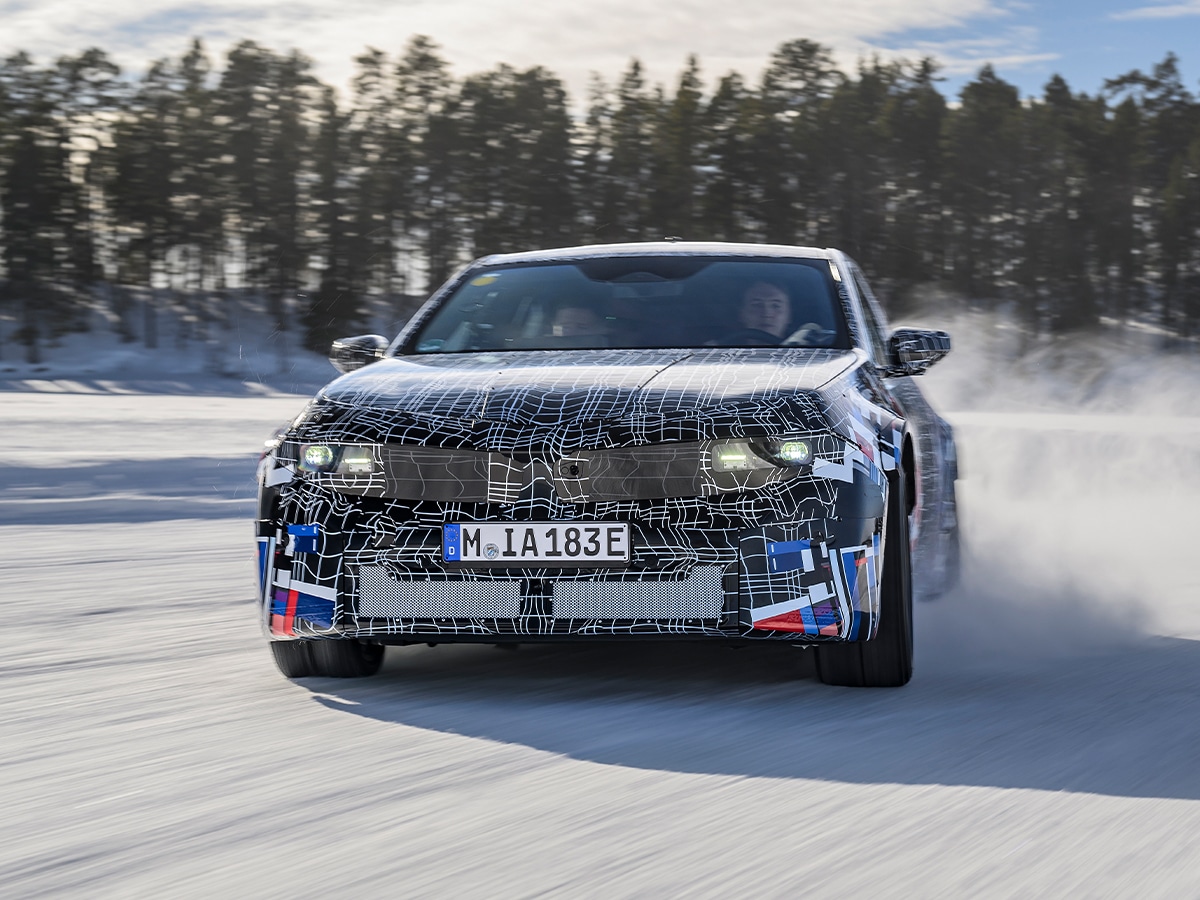
If the petrol M3 is the purist’s survivor, the electric version, which is built on the Neue Klasse’s Gen6 architecture, is the unabashed performance halo car. Expected to deliver over 1,000 HP, it represents a significant departure from the standard 3 Series.
Developed specifically for all-electric M vehicles, the BMW M eDrive system features four independent electric motors, enabling wheel-specific control.
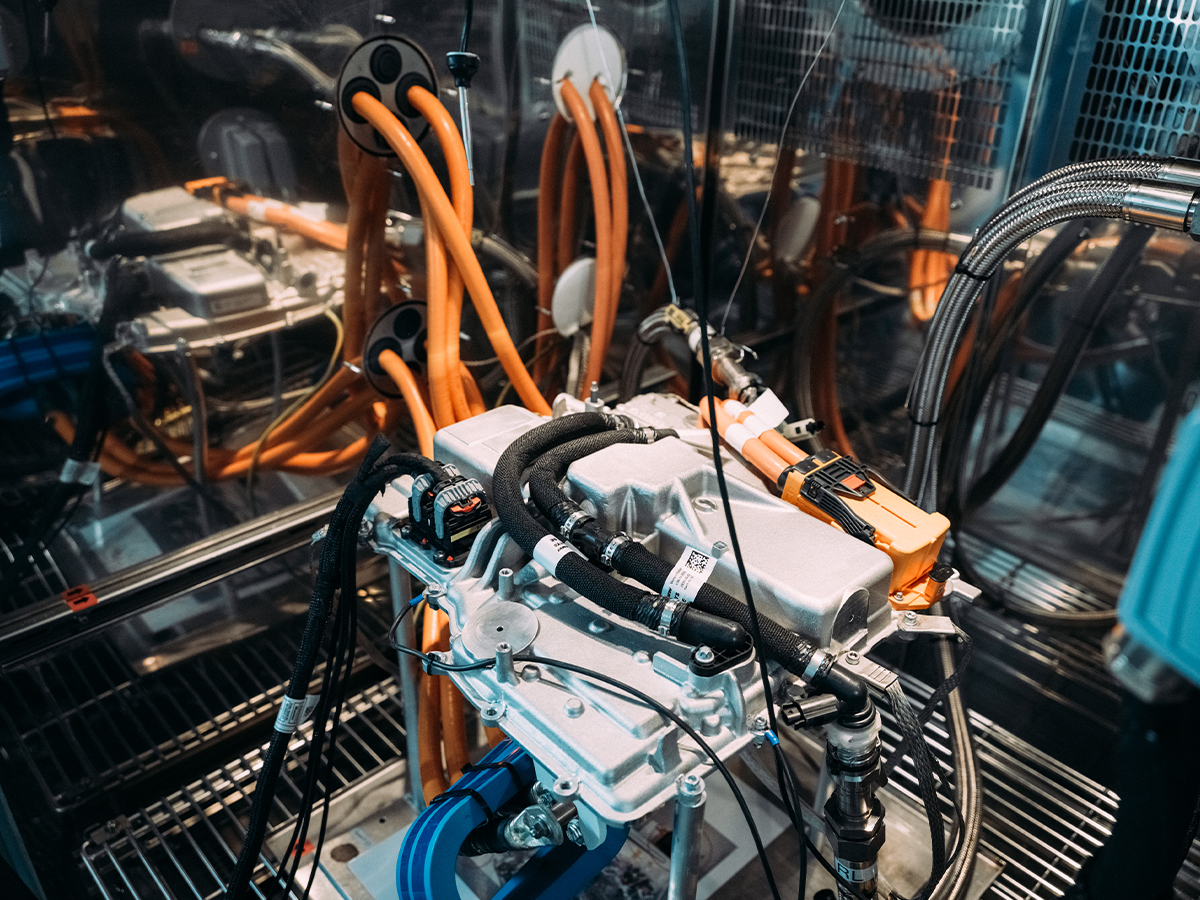
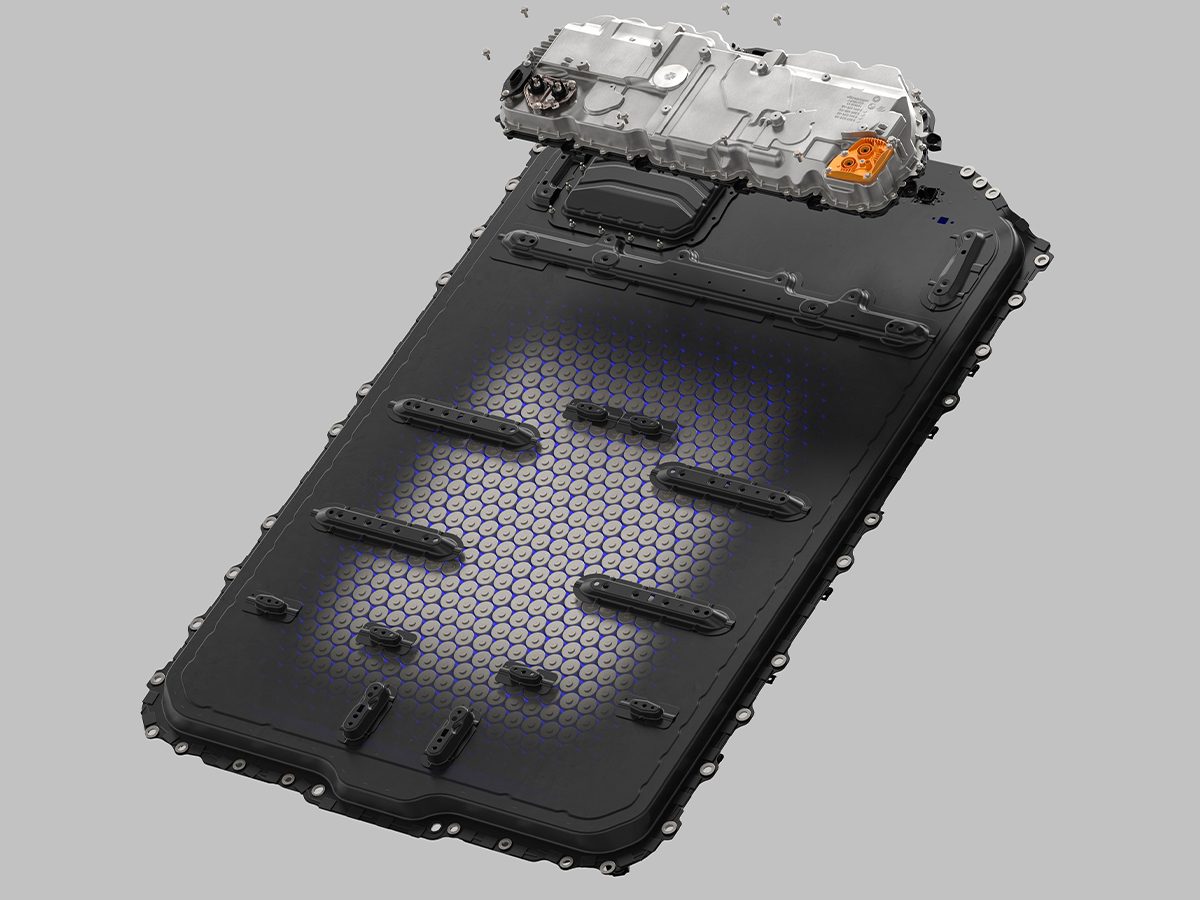
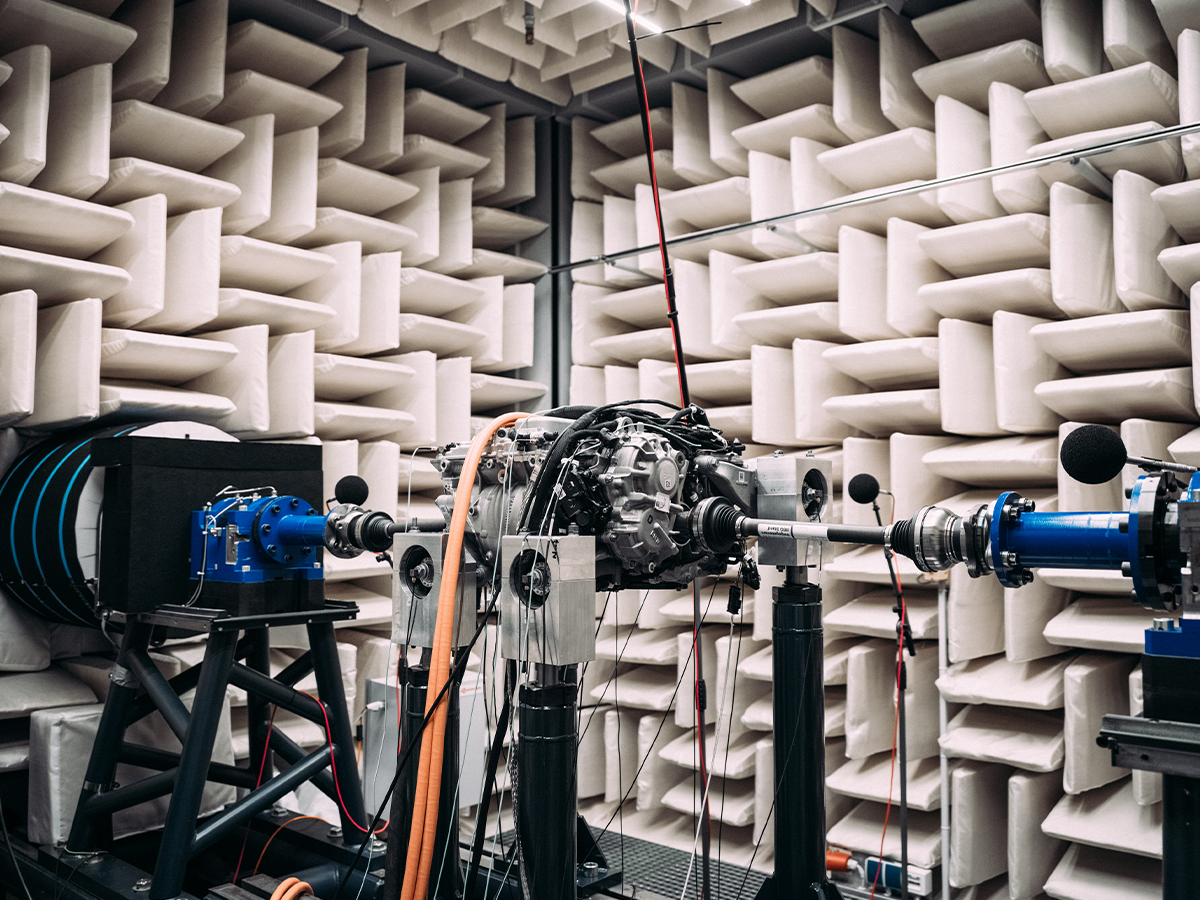
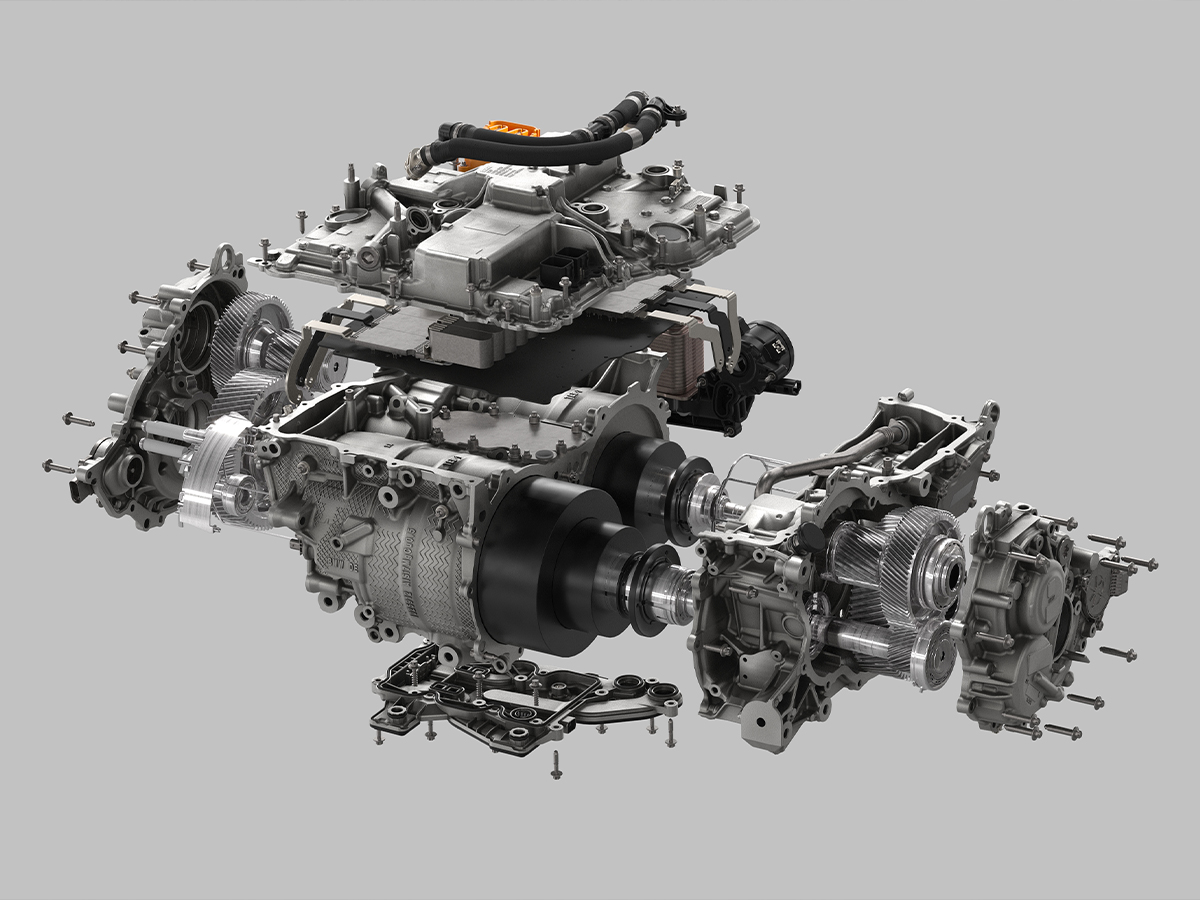
To manage this massive output, BMW relies on high-performance computers known as “Superbrains.” These systems combine computing power for driving dynamics (the “Heart of Joy” element), automated driving, infotainment, and comfort functions. The software integrates the drivetrain and braking systems to manage unmatched driving dynamics, traction, and efficiency. It’s also important to note that the platform utilises 800-volt technology and a high-voltage battery with an energy content of more than 100 kWh, and that means it will have a great range.
To ensure the EV remains emotionally engaging, BMW M is introducing predefined driving modes, simulated gear shifts, and a newly developed soundscape. Much like the Hyundai IONIQ 6 N, this isn’t just a point-and-shoot EV designed for straight-line performance.
 1/6
1/6Design Direction, Cockpit and Ethos
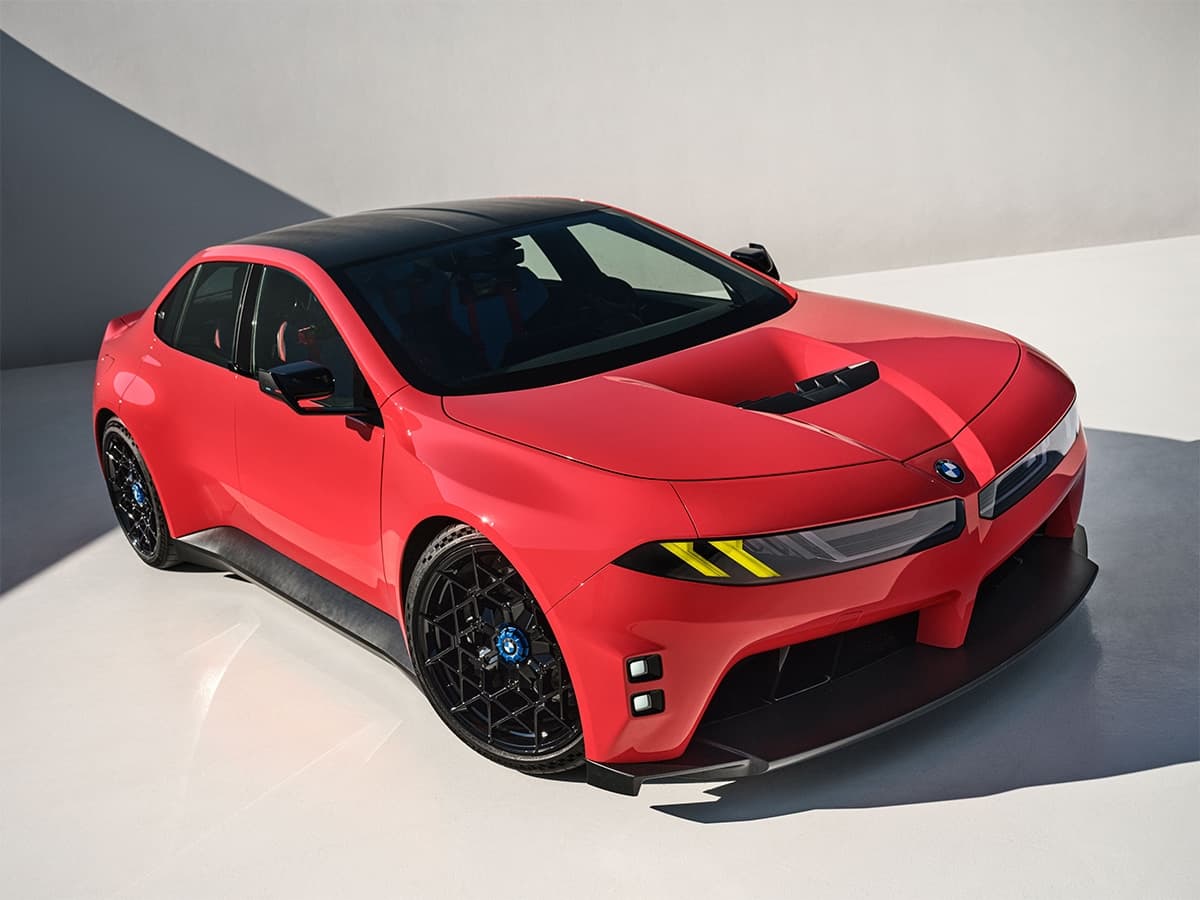
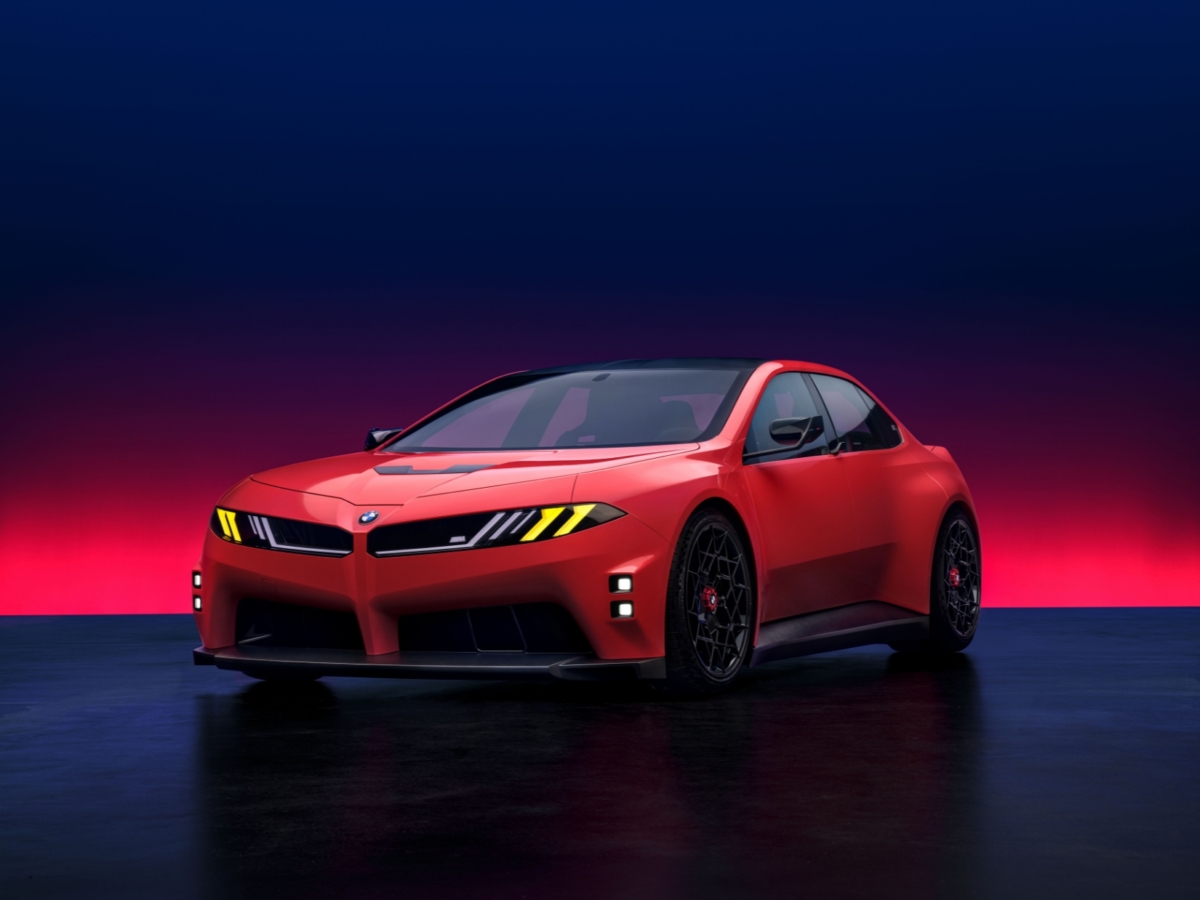
Finished in a newly developed Monza Red metallic paint and sitting on motorsport-derived red-and-blue-coded centre-lock wheels, the exterior design of the upcoming M3 models will heavily reference the BMW M Concept Neue Klasse, as seen throughout this article.
“The new BMW M design language forms the expressive spearhead of the Neue Klasse – determined and purposeful,” says Oliver Heilmer, Head of Design BMW Compact Class, Neue Klasse and BMW M. “At BMW M, form consistently follows function. Every detail serves performance.”
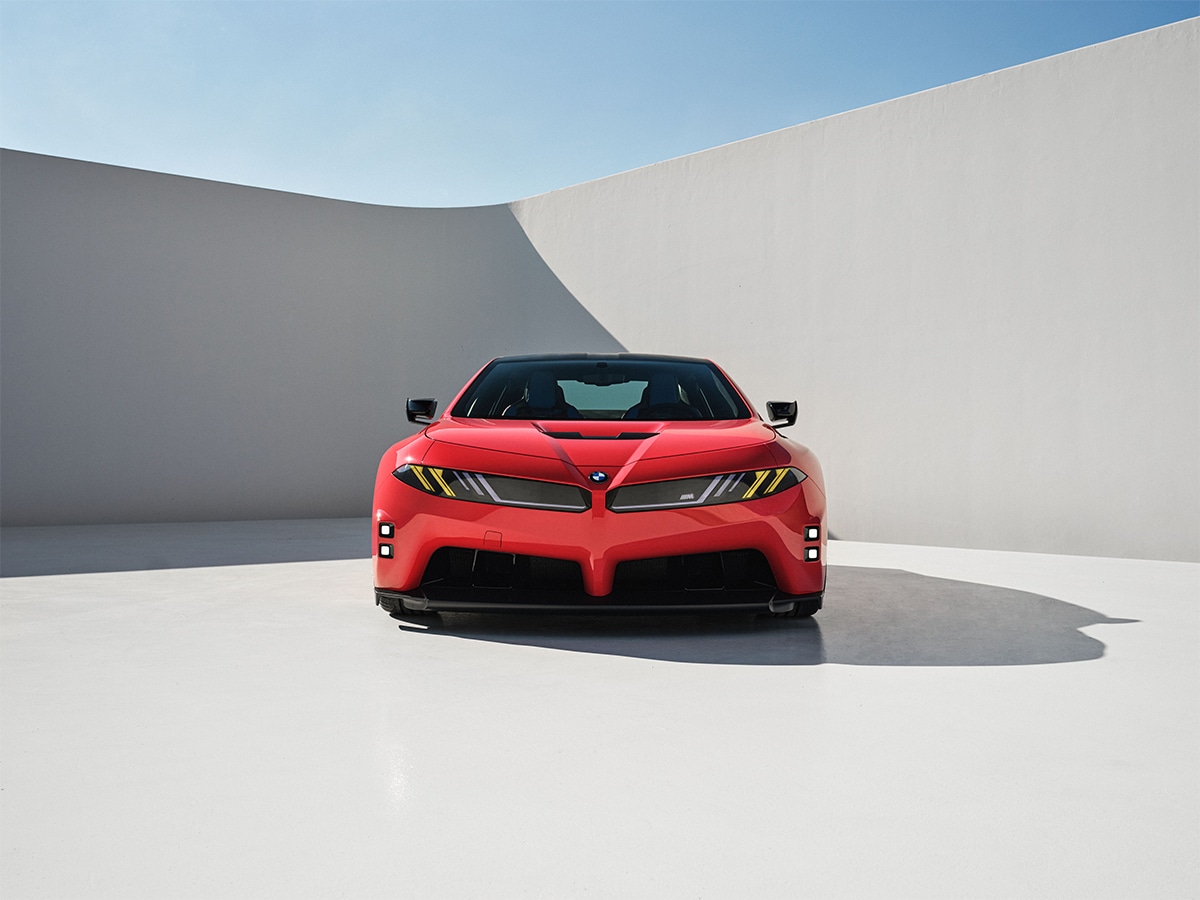
The exterior is defined by a muscular shoulder section and wide wheel arches. The front features a forward-facing “shark nose” and a V-shaped bonnet with a dedicated air outlet to cool the electric drivetrain. Meanwhile, the headlights and kidney grille are integrated into a single unit that features new M Yellow Lights with a depth effect – referencing GT racing cars and the BMW M Hybrid V8.
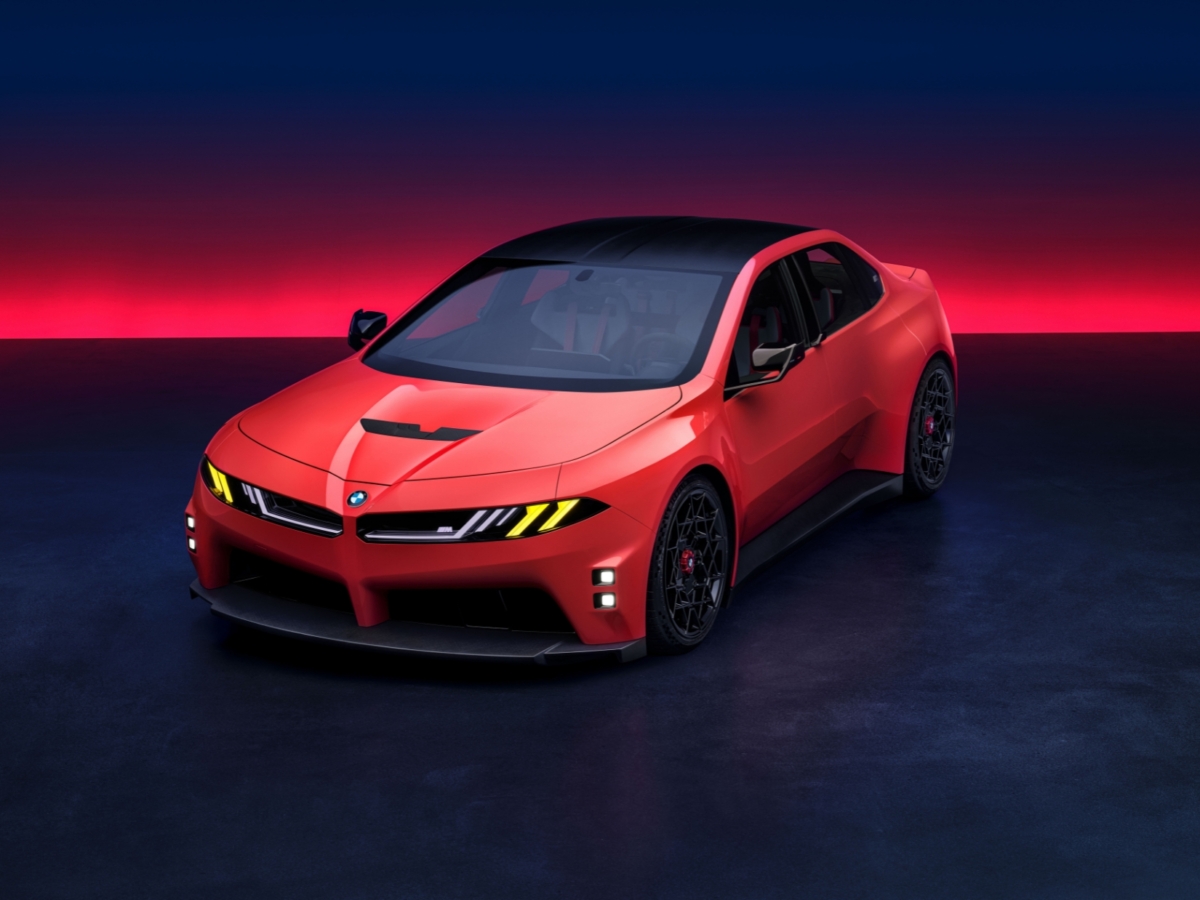
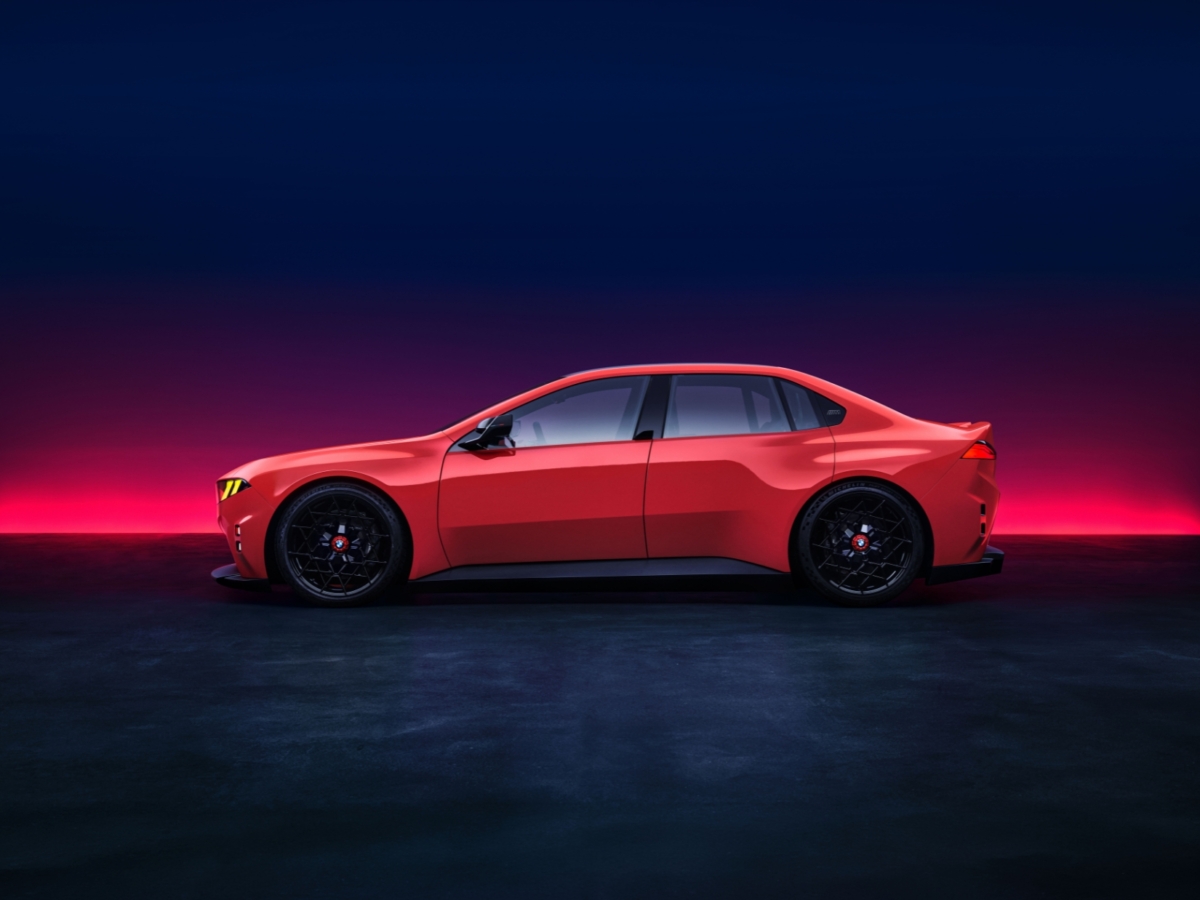
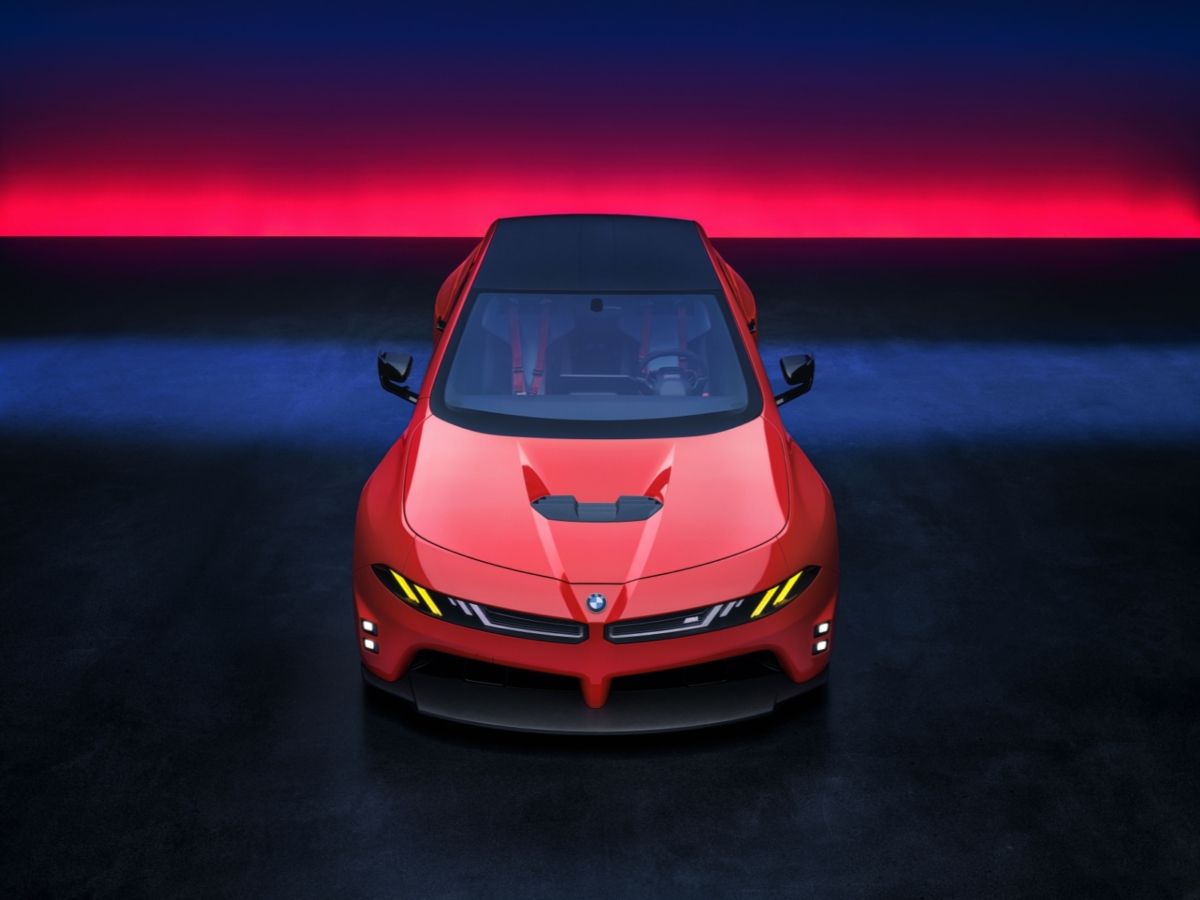
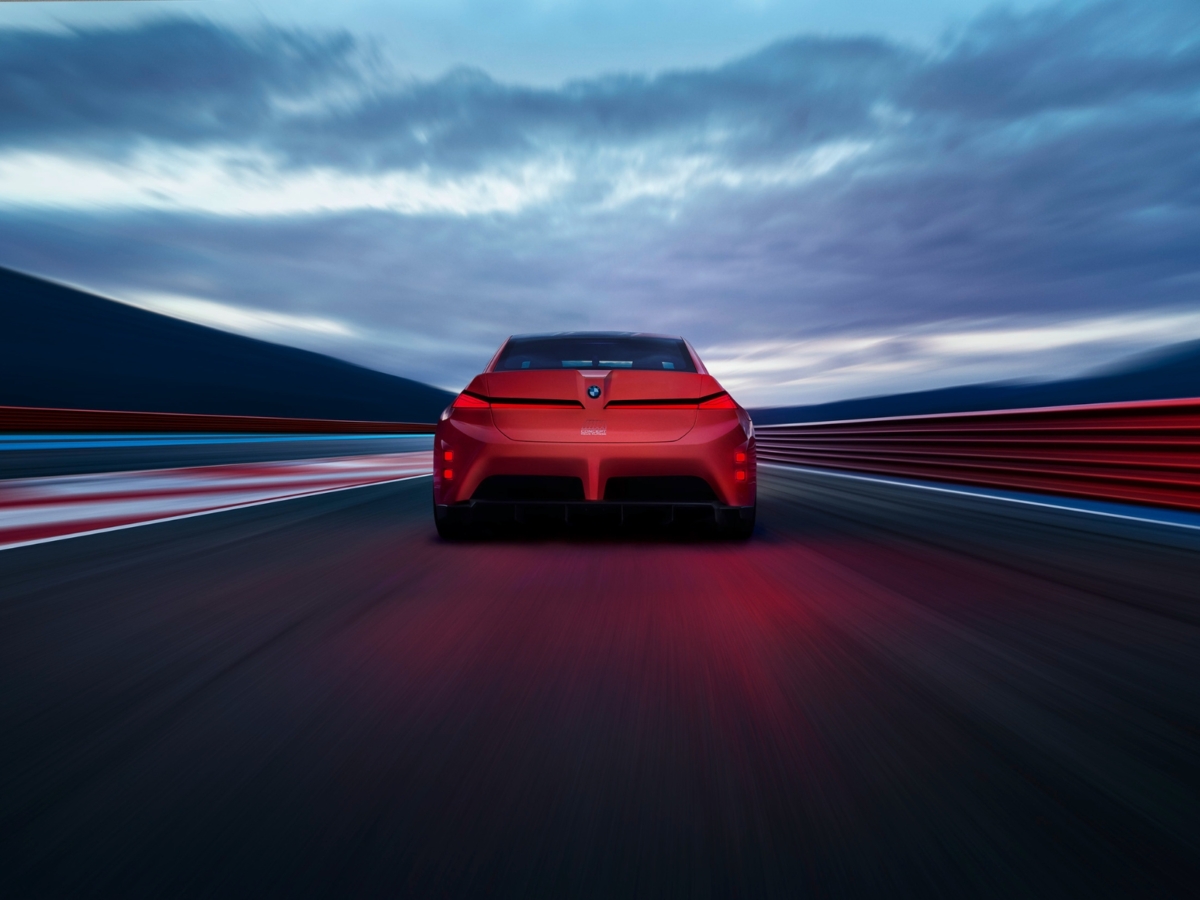
Aerodynamic details include a trimaran-style front bumper inspired by high-speed sailing boats, which provides structural support for the front splitter. Three-dimensional “Track Lights” are positioned in the outer sections of both the front and rear aprons, which have the internet divided, and then at the rear, the Track Lights frame a trimaran element above a floating diffuser, topped with a ducktail spoiler to increase downforce.
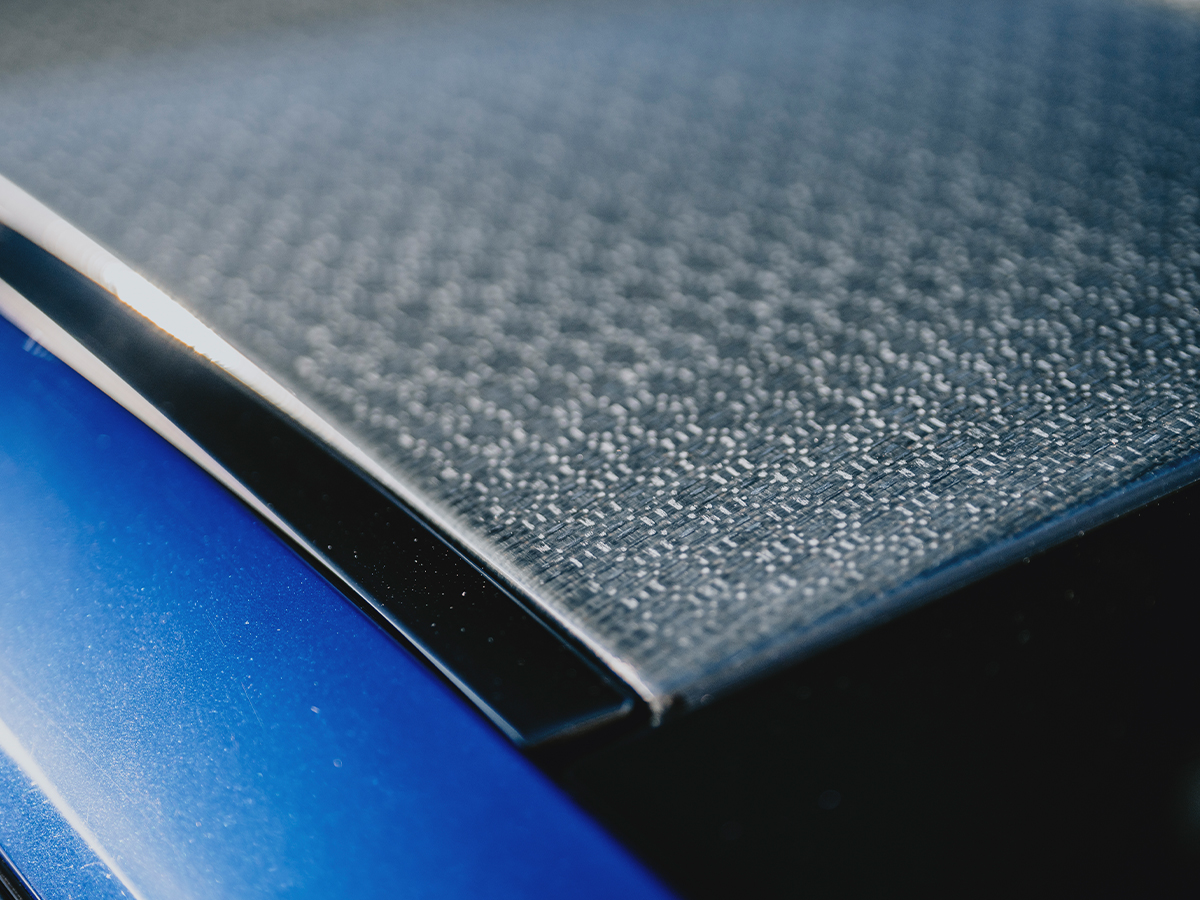
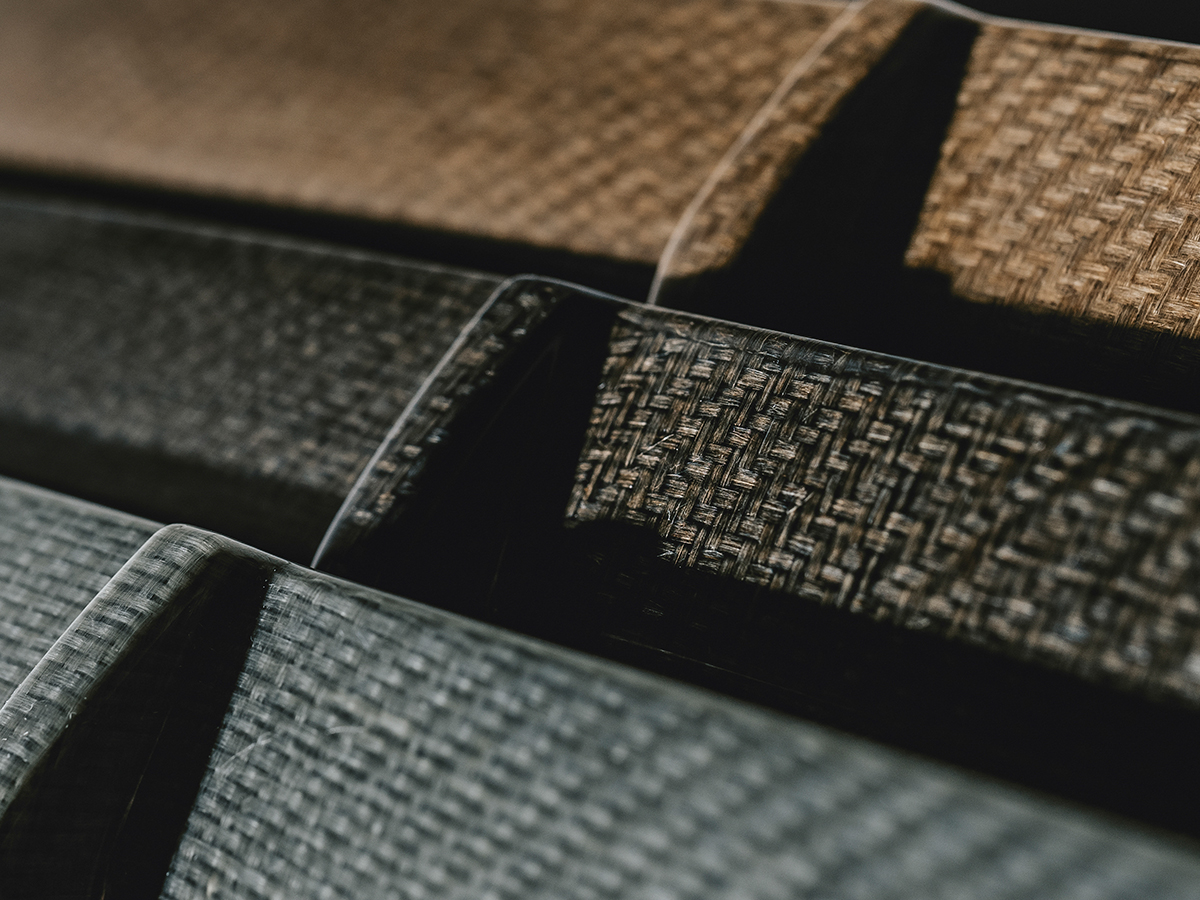
Natural fibre elements are used extensively, forming the front splitter, bonnet air outlet, diffuser, and a roof graphic with M branding. Reinterpreted M aero exterior mirrors in the traditional BMW M colours are also featured.
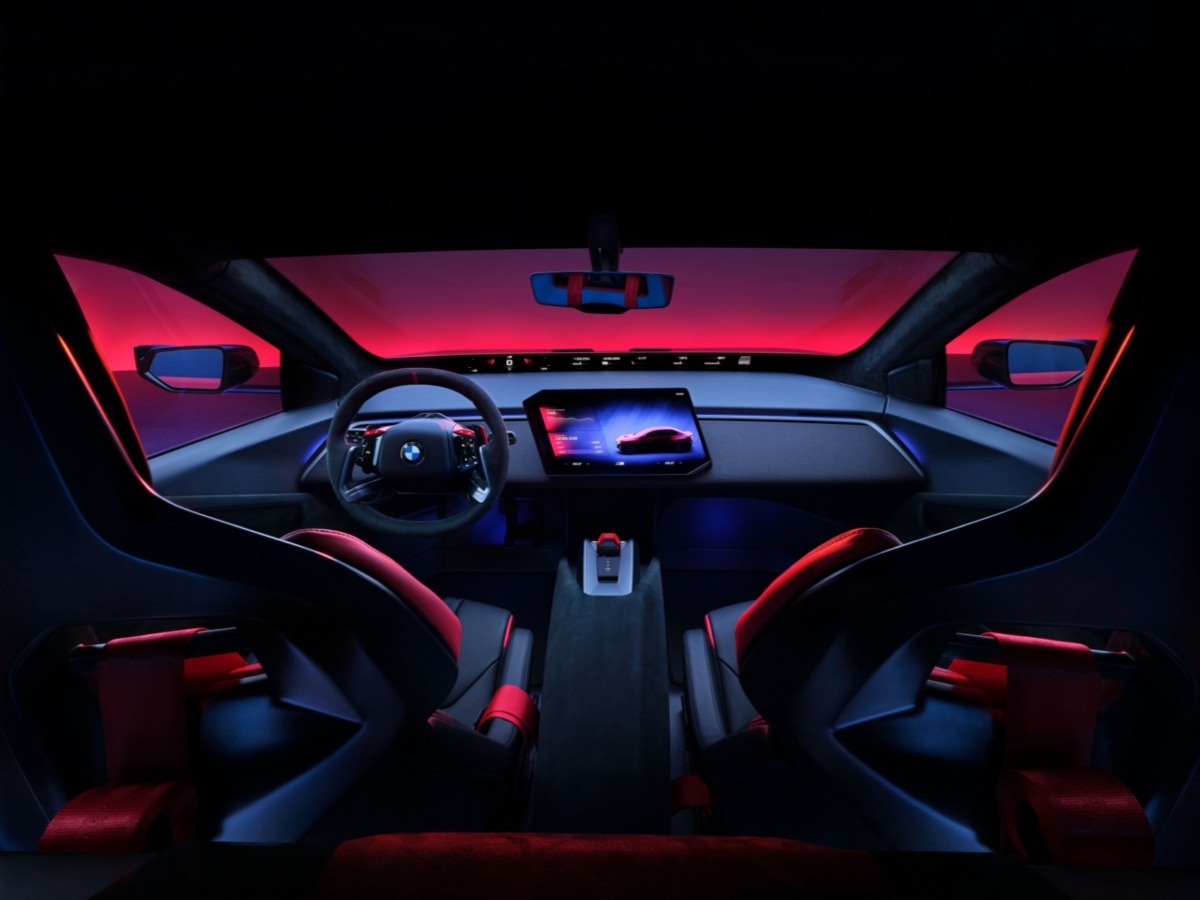
Inside, the cabin is minimal and driver-focused. The layout incorporates four newly developed bucket seats that feature structural elements made from natural fibres. The seats are finished in a Bathurst Blue and Berry Red two-tone Merino leather and equipped with red five-point racing belts. High-quality black nubuck leather covers the steering wheel, door panels, and roll bar, the first time this material has been used in a BMW M vehicle. A floating dashboard utilises a black knit material with M-specific hexagonal backlighting, and red accents are applied to the M gear selector, steering wheel shift paddles, and digital displays.
Summary and Expected Pricing
While BMW has yet to officially confirm pricing for the 2028 M3 lineup, the introduction of both an all-electric halo model and a heavily updated petrol variant means we can make some educated estimates.
Currently, the petrol-powered 2026 BMW M3 Competition xDrive starts at around AUD$186,900 before on-road costs. Given the addition of the complex M Ignite dual-ignition system and standard xDrive across the range, it’s highly likely the upcoming G84 petrol model will push closer to AUD$200,000. As for the all-electric ZA0 quad-motor M3, this model is being positioned as a technological powerhouse and the ultimate performance halo. Given the advanced “Superbrain” computing, 800-volt architecture, and its position above the petrol models in the lineup, expect a significant premium.
We don’t expect you to be able to get behind the wheel of this electric variant for less than AUD$250,000 if and when it arrives Down Under. More information about the BMW M Concept Neue Klasse can be found at the link below.
 1/12
1/12
Frequently Asked Questions
Is the next BMW M3 going to be fully electric?
It’s confirmed that BMW will offer two versions of the next M3. A fully electric quad-motor halo version will arrive first, followed by a petrol-powered counterpart (G84) that retains the inline-six engine.
Will the petrol-powered 2028 BMW M3 be a hybrid?
It isn’t going to be a plug-in hybrid (PHEV). The six-cylinder M3 will utilise the new BMW M Ignite pre-chamber ignition technology to meet strict emissions requirements without the weight of a large battery.
What are the BMW Superbrains?
The Superbrains are BMW’s high-performance central computers. Integrated into the electric M3, they manage the four electric motors, driving dynamics (the Heart of Joy), and braking systems to control unmatched handling and efficiency.
When does the next BMW M3 come out?
The new BMW M Ignite technology will be introduced to the current M3 and M4 in July 2026. The next-generation electric M3 is scheduled to arrive in 2027.















Comments
We love hearing from you. or to leave a comment.