

Updated:
Readtime: 9 min
Every product is carefully selected by our editors and experts. If you buy from a link, we may earn a commission. Learn more. For more information on how we test products, click here.
- Skyrocketing diesel prices make older LPG vehicles financially attractive again.
- Even a thirsty 2014 LPG Falcon could save drivers $50 to $80 weekly.
- Autogas prices remain highly stable, bypassing volatile petrol price cycles.
- The Australian LPG service station network is rapidly shrinking nationwide.
- Australian law requires strict LPG tank safety inspections every 10 years.
The fuel excise might provide short-term relief, but with fuel rationing on the cards, more days of premium unleaded petrol and diesel above $2.80 per litre are likely just around the corner.
It’s a tough reality for tradies and small business owners who made the switch to diesel-powered dual-cab utes a few years ago for efficiency, ditching their LPG Falcons and Commodores when local manufacturing ended. Now, while most of us are wincing at the bowser, a select few Aussie motorists are quietly going about their business, filling up their tanks for less than a buck a litre.
With the daily driver now taking a massive bite out of the weekly budget, plenty of people are tossing up the idea of getting behind the wheel of an old LPG “clunker.” Business owners are unlikely to consider an AUD$80,000 EV van or ute for the jobsite, but they might be interested in tapping into one of the best automotive cost-of-living hacks we’ve come across: hunting down an old-school, “gas-guzzling” Australian legend. Here is why ditching your modern commuter for a 15-year-old LPG “clunker” might be the smartest financial move you make right now.

Can LPG Save You Money During the Fuel Crisis?
There’s a painful disconnect on the boards of petrol stations right now. While we’re shelling out more than $2.80 for premium unleaded or diesel, the LPG pump is sitting completely ignored, often advertising fuel for as little as 89.9c a litre in around the Sydney CBD, and occasionally dipping closer to the 80c mark in Melbourne.
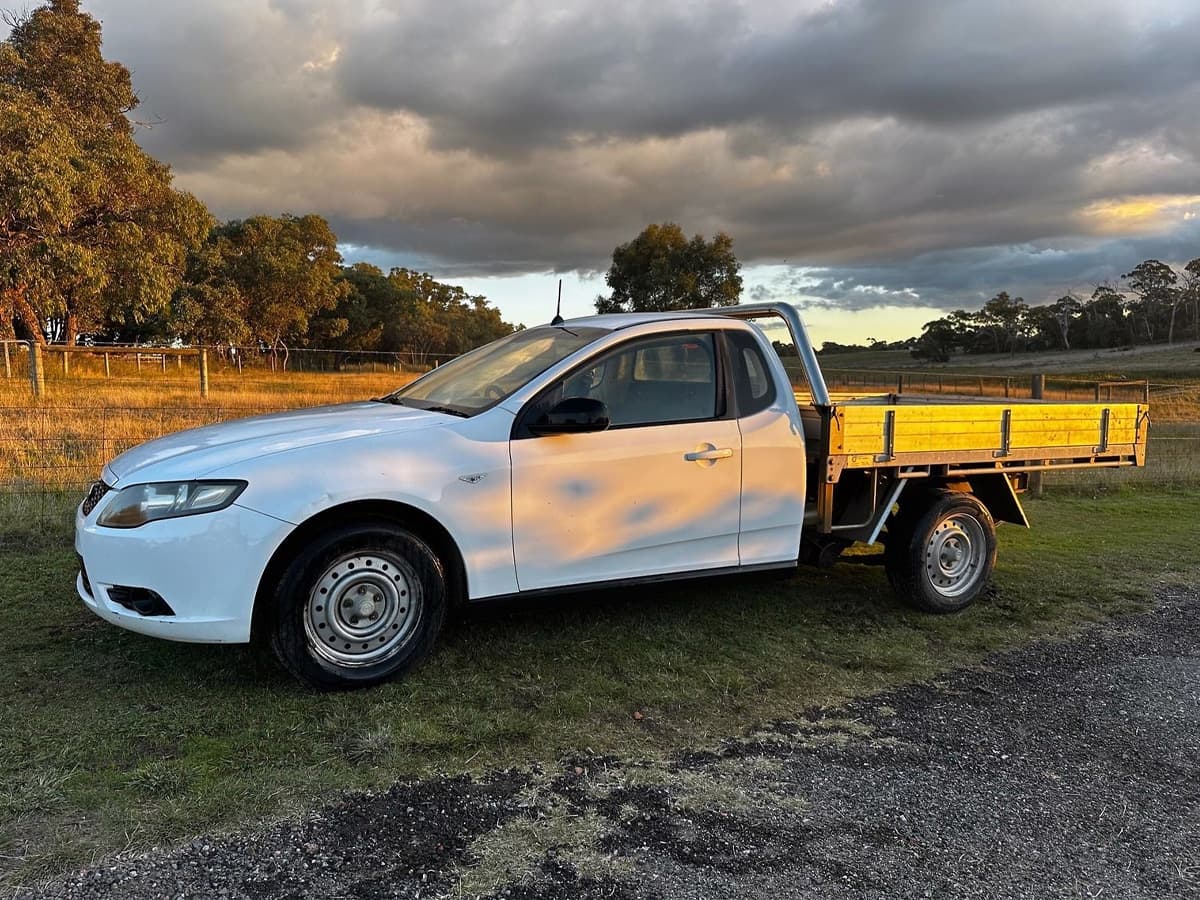
To be fair to the math from the jump, autogas has a lower energy density than petrol. This means an LPG vehicle will typically consume about 20 per cent more fuel to travel the exact same distance. Let’s look at the hard facts by putting two jobsite staples from today and yesteryear head-to-head: a 2014 Ford Falcon Ute (with the factory 4.0-litre EcoLPi gas engine) and a modern 2024 Toyota HiLux Single Cab (with the 2.8-litre turbo-diesel).
On paper, the new HiLux is vastly more efficient, sipping a claimed 7.4L/100km compared to the thirsty Falcon’s 13.9L/100km.
| Metric | 2014 Ford Falcon EcoLPi | 2024 Toyota HiLux Diesel |
| Fuel Efficiency | 13.9L / 100km | 7.4L / 100km |
| Fuel Price (per litre) | $0.899 (LPG) | $2.80 (Diesel) |
| Cost per 100km | $12.50 | $20.72 |
| Estimated Annual Savings | Over $2,000 saved | – |
The Toyota uses almost half the fuel, but the bowser tells a completely different story. Driving 100km in that brand-new HiLux at $2.80 a litre for diesel will cost you $20.72. Driving that exact same 100km in the 10-year-old LPG Falcon at 89.9c a litre costs just $12.50. To travel the same distance that a standard 60-litre tank of diesel gets you in the HiLux, an LPG driver is still pocketing between $50 and $80 in pure savings every single week. Do that over a year of driving, and you’re clawing back over $2,000.
There is another massive, hidden benefit to autogas that goes well beyond the money in your pocket. It’s the mental relief of stepping completely off the petrol price rollercoaster.
We examined official government data from NSW FuelCheck, and the trend lines paint a rather painful picture. While unleaded and premium petrol prices whip around in aggressive, highly volatile weekly or fortnightly cycles (often jumping 40 cents overnight), LPG prices remain essentially flat. That means no “timing the market,” and no sitting in a chaotic line of cars to get a fair price when the Prime Minister announces a fuel security issue, and we resort to rationing.
History of LPG Cars in Australia
Remember when we made cars in Australia? Oh, what a time it was. We really, really hit our stride in the mid-2000s and 2010s, and the local engineers were doing some brilliant things with alternative fuels. Ford was rolling out dedicated E-Gas and EcoLPi Falcons, while Holden was churning out factory dual-fuel Commodores.
We’re not going to dig into the full history lesson here, but the Blue Oval offered two distinct flavours of dedicated gas over the years. You have the legendary “E-Gas” system, the OG taxi workhorse with a famously unkillable LPG system that completely removed the petrol tank. However, it was a bit sluggish, losing noticeable power compared to the standard petrol 4.0-litre inline-six. Not long after, Ford released the EcoLPi (Liquid Phase Injection) in the FG Falcon series that injected liquid LPG directly into the intake manifold. Because autogas has a high octane rating (often over 100 RON), Ford’s engineers were able to tune the engine to produce more power and torque than the standard petrol Falcon. Pushing out a meaty 198kW and 409Nm of torque, it was a genuine sleeper.
Holden initially took a much more pragmatic route. While they eventually developed a dedicated gas system, they are most famous for churning out factory dual-fuel Commodores. They used a sequential vapour injection system bolted to their 3.6-litre Alloytec V6, which kept the standard petrol tank and simply added an LPG cylinder in the boot.
These heavy, large-displacement sedans and utes are the exact opposite of what you’d think of as an “economy car,” but they’re the perfect workhorse. They were heavily over-engineered specifically to clock a million kilometres as Aussie taxis and fleet vehicles.
Crucial Catches to Know Before Buying an Old LPG Car
You’ll Have to Get Past Range Anxiety and a Shrinking Network
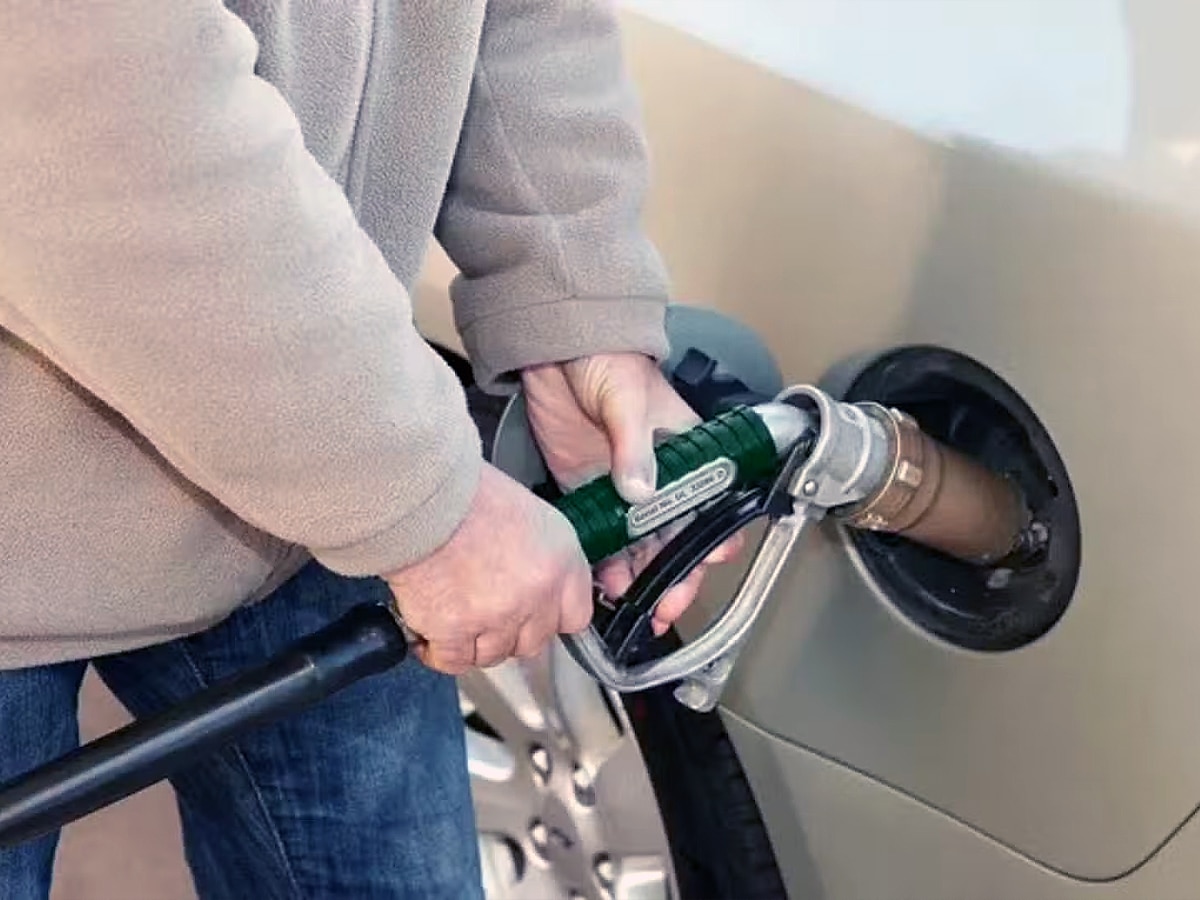
The main reason why every man and his dog isn’t converting their car to LPG right now is that the infrastructure is disappearing. Before you drop any cash on a used LPG car, you need to map out your local area and your daily commute.
With no new LPG cars being manufactured locally and the government withdrawing support years ago, service stations are gradually removing their autogas pumps to make way for EV fast-chargers or extra premium fuel bowsers. The numbers are pretty stark. When we look at Western Australia alone, the number of stations offering LPG has plummeted from over 300 to roughly 50 in the last decade. Here in New South Wales, there are fewer than 200 left.
Navigating the 10-Year Tank Testing Law
Under strict Australian law (AS 1425), automotive LPG tanks must be rigorously inspected and restamped every 10 years to ensure they remain safe to operate and hold pressure.
If you buy a cheap gas car off the internet without checking the compliance plate on the tank, you might be up for a rude shock when you try to get it registered. Testing and restamping will cost you around $200 to $300. But if the tank is corroded, damaged, or fails the safety inspection, you’re staring down a replacement $1,000+ bill. That instantly eats into your fuel savings.
Buying a Cheap Workhorse Online
If you’ve found a car with good tank dates and know your local servo still pumps gas, the used car market is still a goldmine. Here’s a link to the car that we featured at the top of this article, available at Carsales (AUD$7,900).
You can easily pick up a high-mileage, structurally sound LPG Falcon ute or Commodore sedan for anywhere between $6,000 and $10,000. More modern options are available, including a handful of FG Falcon utes, but they’re now more like AUD$30,000, as people know what they’ve got.
Still, if you’re willing to forgo a little luxury, when you factor in the $50 to $80 you are saving every single time you hit the petrol station, the cheaper workhorses nearly pay for themselves within the first year of ownership.

Why Australia is Killing a Fuel the Rest of the World Embraces
The ultimate irony is that Australia is a major natural gas producer, yet we are actively allowing our domestic automotive infrastructure to disappear. Meanwhile, the rest of the world is experiencing an absolute autogas renaissance.
To meet incredibly strict CO2 targets while keeping transport affordable for the everyday driver, European brands like Dacia and Renault are churning out brand-new, factory-fitted LPG vehicles. They are seeing a near-10 per cent year-on-year sales boom, according to market analysts Dataforce, Automotive News reported.
Europe has recognised autogas as a cheap, practical stepping stone to lower emissions. The Australian market, however, has firmly jumped on board with cut-price Chinese EVs.
Frequently Asked LPG Car Questions
Q: Is it still worth buying an LPG car in Australia?
If you have reliable access to an LPG service station on your daily route and can find a mechanically sound used car with an in-date gas tank, absolutely. As long as you do your homework on the local infrastructure and the car’s compliance plate, the daily fuel savings at the pump make it a highly worthwhile financial hack.
Q: How much does it cost to test an LPG tank in Australia?
Testing and restamping a standard LPG tank typically costs around $200 to $300. However, if the tank is heavily corroded or fails the 10-year safety inspection, replacing it entirely can cost upwards of $1,000. To prevent this, check the test date stamped on the tank before handing over cash for a used gas car.
Q: Can I convert my current car to run on LPG?
Yes, but it is an expensive exercise. Retrofitting a standard modern vehicle with a safe, compliant LPG system currently costs between AUD$2,000 and AUD$5,000. Without the government subsidies of the past, it takes significantly longer to recoup those upfront costs through fuel savings than it does to simply buy a cheap, pre-converted used car.





























Comments
We love hearing from you. or to leave a comment.