

Updated:
Readtime: 20 min
Every product is carefully selected by our editors and experts. If you buy from a link, we may earn a commission. Learn more. For more information on how we test products, click here.
With a unique blend of the rugged and the relaxing, the picturesque and the peaceful, the historic and the harmonious, Colorado’s high-altitude byways present a once-in-a-lifetime road-tripping experience.
Exploring the region in the warmer months after the snow has thawed, you’ll discover spectacular vistas of treeless tundra, the immaculate beauty of alpine lakes, and the towering majesty of forests, all punctuated with delights like hot springs, breweries, and windows into history. Taking the byways is a journey where Colorado’s unmatched natural beauty and local curiosities wait around every turn.
Here, in the final of our three road diaries exploring Colorado’s singular charm, Man of Many will guide you through the region’s dramatic landscape, exploring the must-see natural wonders and unmissable attractions that make it a destination both singular and undeniably world-class. Let’s go!
If you’re already sold on discovering Colorado’s adventure at altitude, make sure to visit Intrepid via the link below to book your next holiday.
Silverton
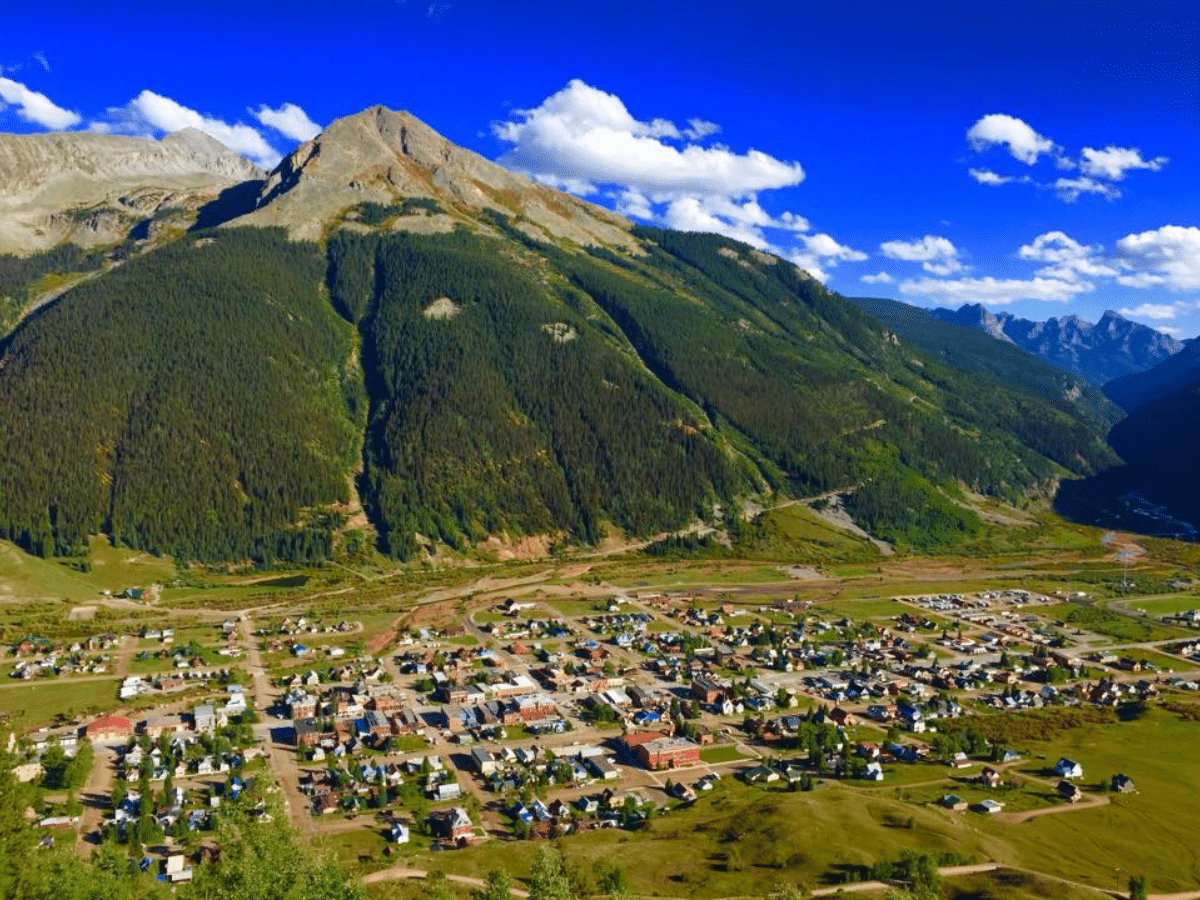
Our expedition begins in Silverton, a former mining boomtown nestled in the heart of the San Juan Mountains. This is the Colorado you came for: a downtown that looks like you time-travelled to the late-19th Century, while surrounded by ridiculously tall, wild mountains on all sides.
Silverton perfectly sets the stage for all that will follow. At an elevation of 2,840 m, it’s considered high altitude, like most of Colorado’s mountain towns. This means lower oxygen levels, so visitors are advised to stay well-rested and hydrated throughout their stay. Do so, and you’re guaranteed a good time.
We only have one night here before we hit the road, so we shack up at The Wyman Hotel, which juxtaposes the rugged mountains that surround it with striking, modern interiors. There’s a real atmosphere to the place, as if the red-stone ex-mercantile structure built in 1902 has been a witness to history.
Hitting the Road
As we depart Silverton in our hire car (a 4×4 is essential on the unpaved roads in these parts), our search for adventure will see us navigating Colorado’s scenic byways through the high country. These roads are scenic and historic in equal measure, guiding us to unique locations that the interstates skip. They’re an ideal way to explore Colorado’s true heart, empowering us to delve into what makes this place special rather than just passing through.
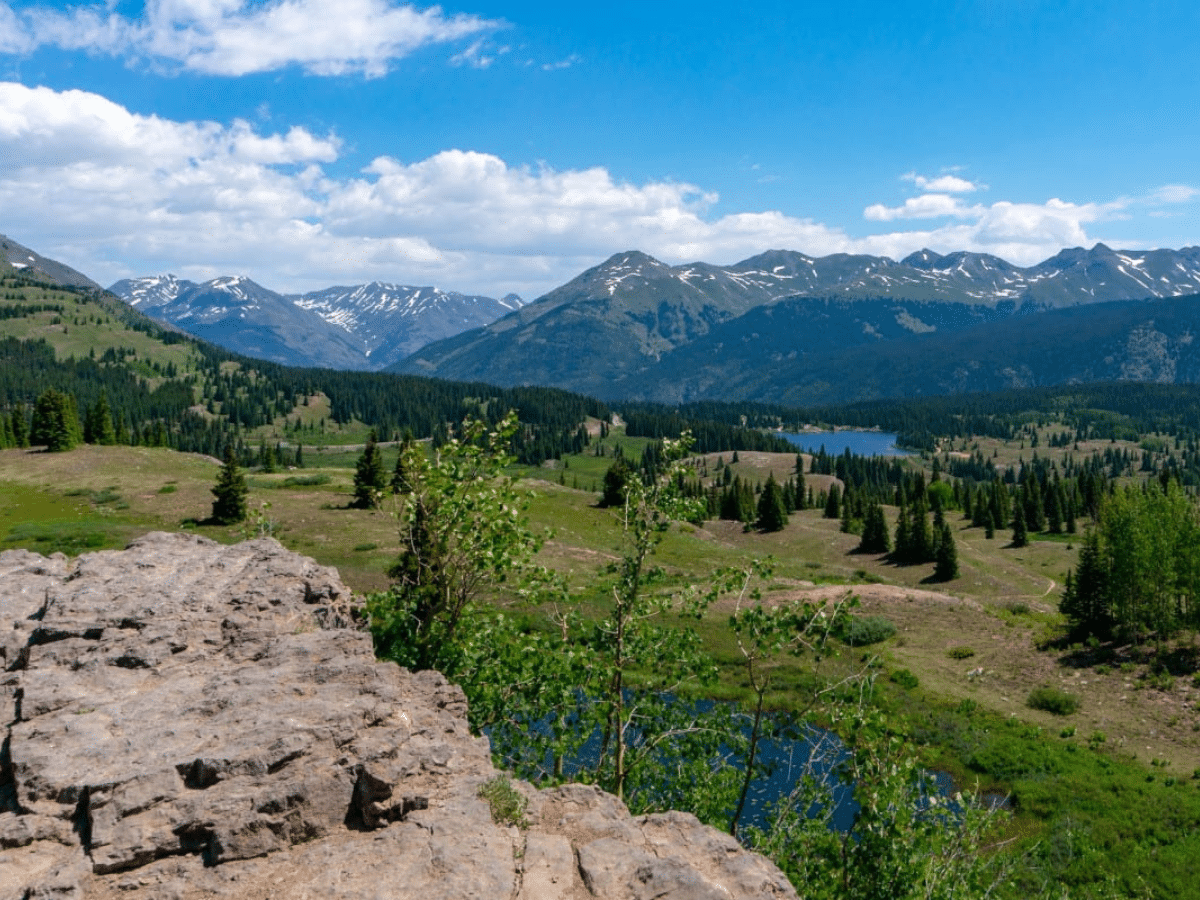
We’ll first cut through the San Juan National Forest, taking Cinnamon Pass to the south on our eastward trajectory to Lake City, before ultimately coming back west to Ouray via the Engineer Pass. This Alpine Loop winds between the summits of the Rockies, and on this southern byway, there are views of some of North America’s tallest mountains, including Handies, Sunshine and Redcloud peaks.
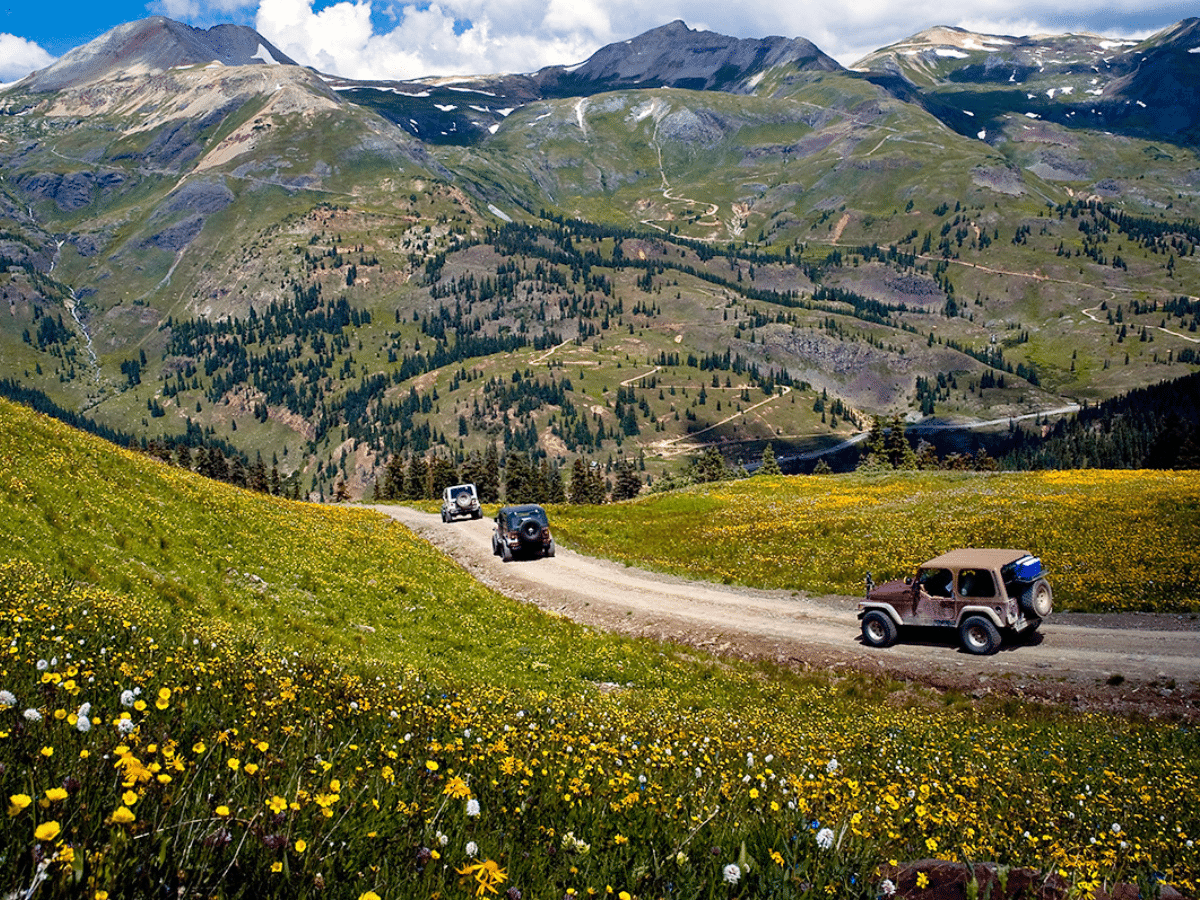
You’ll frequently find yourself coming around a bend and having to pick your jaw up off the floor of your vehicle’s cabin in response to the landscape that surrounds you. You’ll also have the bonus of seeing some of the best displays of wildflowers anywhere in North America when you drive these roads between June and early September.
Cinnamon Pass
We head for Cinnamon Pass with great anticipation of the breathtaking scenery that locals mentioned to us during our stopover in Silverton. They weren’t exaggerating.
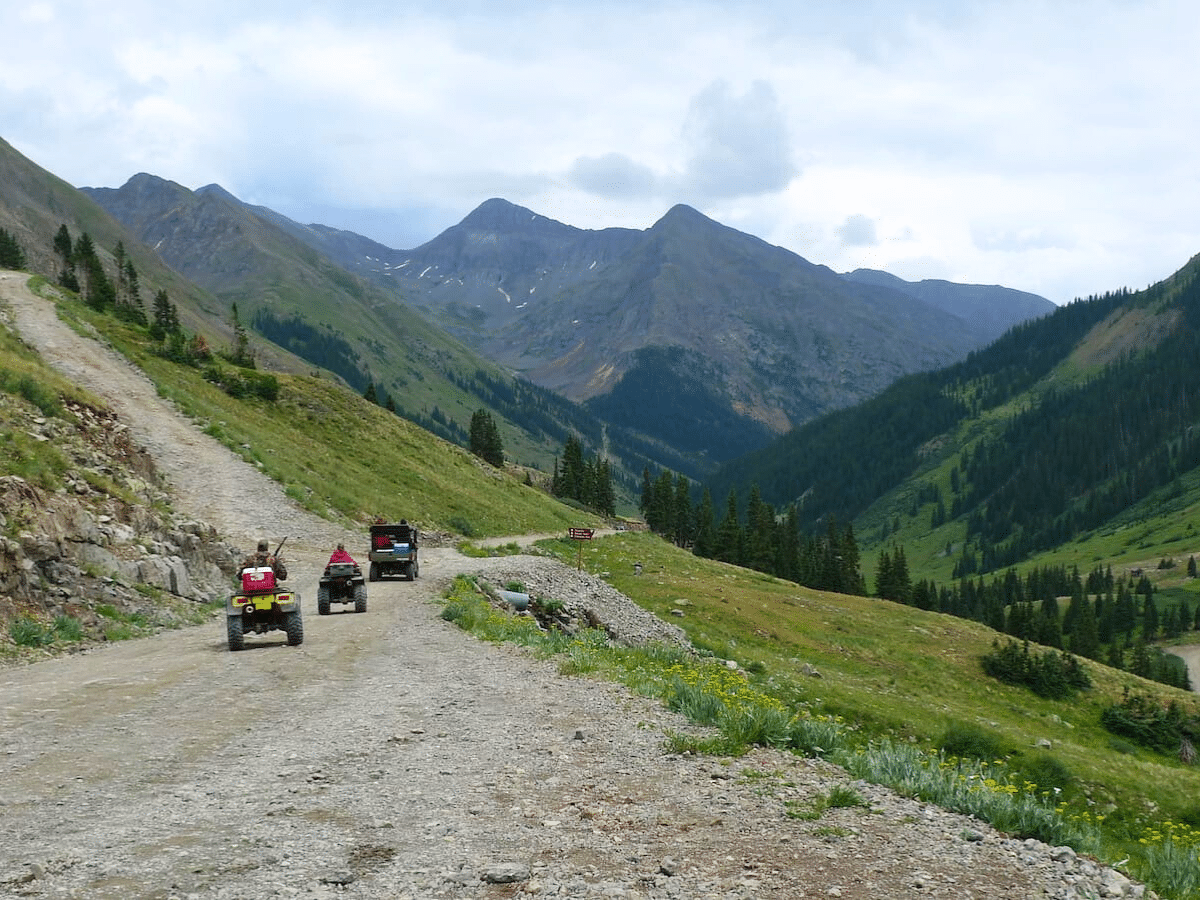
Established in 1877 as a wagon road connecting Lake City to the Animas Valley, Cinnamon Pass remains a very rough-and-ready byway, and you certainly wouldn’t want to tackle it in anything but the most capable 4×4; the road gets extremely steep and rocky in places. We’ve selected the clockwise route because the steepest climbs will be uphill, not downhill, which is safer. The road often hugs the side of the mountain, but it’s only considered moderately challenging.
However, it’s more than worth the hassle. At the summit of Cinnamon Pass is a parking lot that invites you to stop and enjoy the scenery. We strongly suggest that you do. There are endless mountains, scattered mining cabins, and meadows of blooming wildflowers as far as the eye can see.
Lake City
Coming down from the peak and into Lake City, named for its proximity to the spectacular San Cristobal Lake, we find plenty on offer in what happens to be the most remote town in the contiguous U.S, which means they have the fewest kilometres of road per person, and the most land area located far from any road.
Whether you’re looking to engage in sightseeing, shopping, dining, or a wide variety of outdoor pursuits, Lake City has you covered. After checking into the Alpine Village, which looks like it should be inhabited exclusively by lumberjacks, we walk down to the aforementioned San Cristobal Lake, where visitors frequently encounter bigger animals once the weather grows warmer, especially moose and elk. Seeing these creatures in the wild is always a thrill, but keep your distance, especially from moose with babies.
For those who enjoy a little exertion, Slumgullion Pass lies a short, 20-minute drive south-east and features more than 160 km of trails. A must-see while exploring the region is the Slumgullion Earthflow National Natural Landmark. Known locally as the “Slumgullion Slide”, it’s an illuminating example of an active earthflow (i.e. a gigantic landslide), which started around 700 years ago and continues to move up to 6 m per year. But be warned, as we discover, the north side of this pass has the steepest gradient of any continuously paved road in Colorado, so wait until the weather’s good to try it.
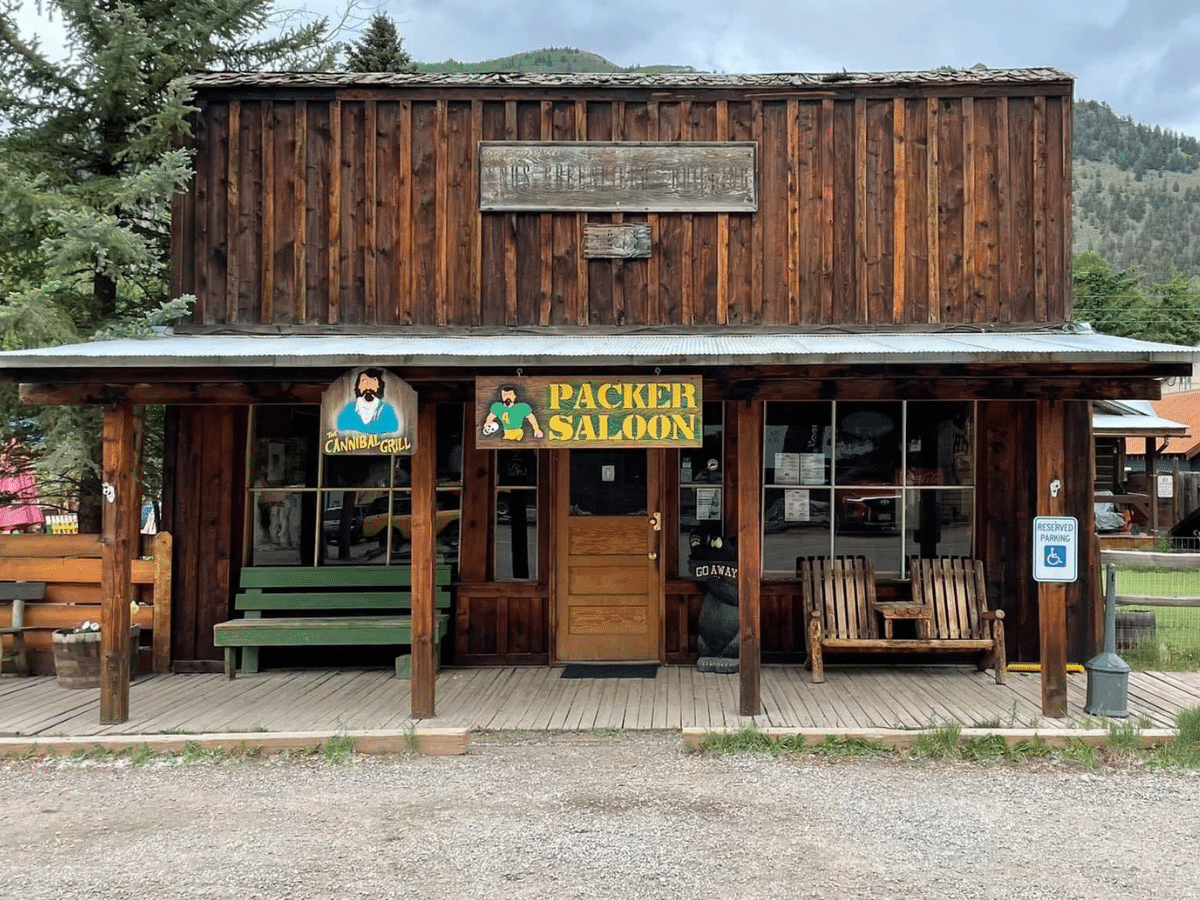
Heading back into town, we swing by the Hinsdale County Museum, which contains a particularly grisly piece of Lake City history. As the story goes, Alfred Packer became Lake City’s most notorious resident when he was jailed in 1874 for killing and eating five fellow gold prospectors when their group became trapped in a blizzard atop Slumgullion Pass. After his release from prison, he allegedly became a vegetarian, but as we learn, you can still view the meal’s skeletal leftovers at the Museum.
Following this particularly ghoulish encounter, we head for a tongue-in-cheek meal at the Packer Saloon & Cannibal Grill in the middle of downtown. There, we fuel up on local bison burgers (they’re only $18!) with a view of the mountains all around. Much to our delight, the outside patio is a great place to sit with locals. We follow this with a self-guided walk (free maps are available at the Visitor Centre) of the town’s historic district, where we stumble across a host of restored buildings from the 1870s and ‘80s.
The next day, we put ourselves to the test by paying a visit to Lake City’s Colorado Climbing Company. After all, this is a state well known for some of the best rock climbing in the world. Colorado Climbing Company offers a wide range of expertly guided climbing classes across a wide range of abilities. As it has been a while since we strapped on a harness, we opt for an Introduction to Rock Climbing full-day class, which consists of eight hours of climbing. It starts with the basics, but things ramp up quickly, and we soon find ourselves hanging from some pretty serious heights, confident the instructor has our back. It’s an experience that’s equal parts nerve-wracking and glee-inducing.
With hands and knees aching (along with everything else), we head back into town for a few drinks and dinner at the Lake City Brewing Company before crashing out at the Alpine Village.
Capitol City Ghost Town
Saying farewell to the extraordinary Lake City and its surroundings, it’s time for us to start making our way back west. Returning to the Alpine Loop, our next stop is the Capitol City Ghost Town.
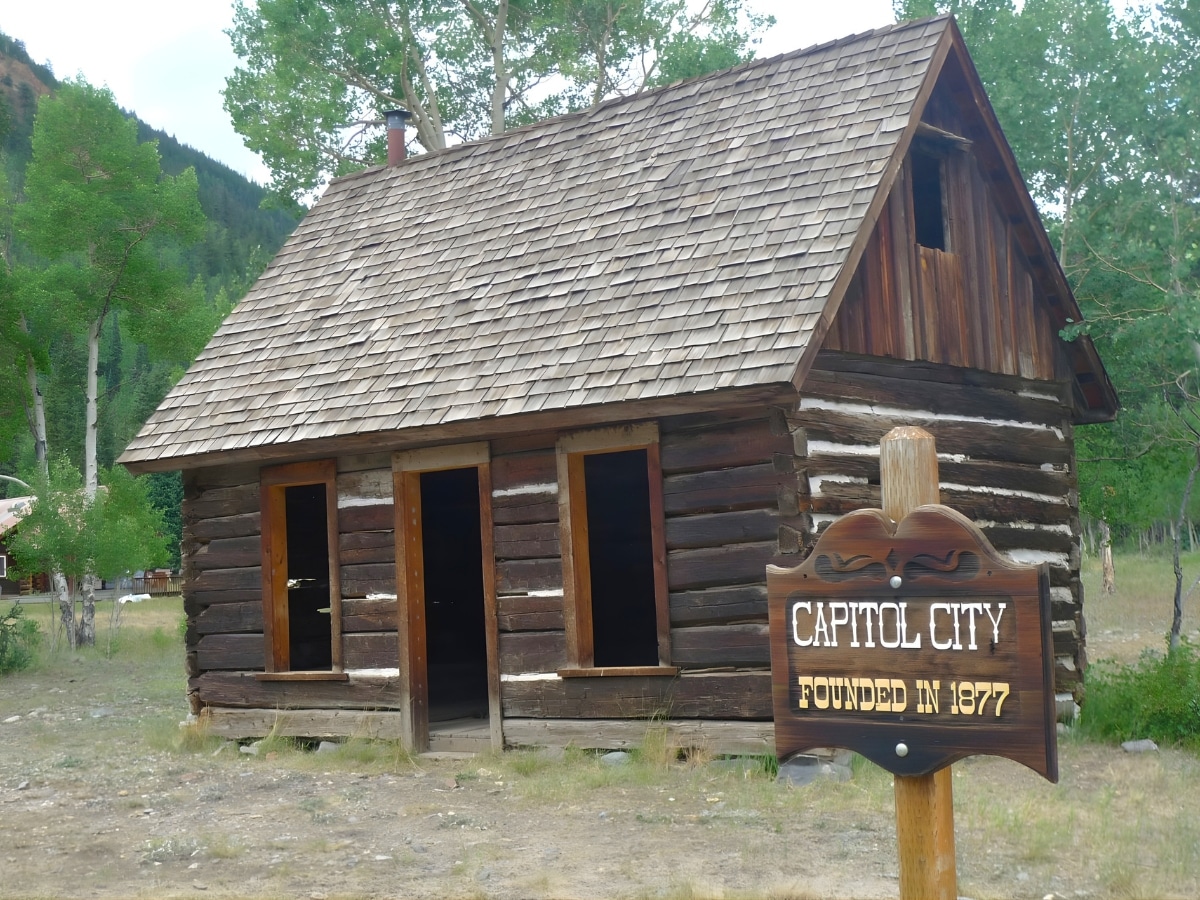
Established in 1877, Capitol City was once home to around 800 people, and, as the name suggests, its founder, George Lee, hoped it would become the state’s capital (and he, the state’s governor). The original 200-acre townsite once featured hotels, restaurants, bars, a post office, a schoolhouse, resident houses, a sawmill, and mining smelters. Now, there are just two original buildings still left in town (the old U.S. Post Office and Lee’s Smelter Stack), but it’s still a wonderfully atmospheric place and certainly worth a visit.
We spend about an hour wandering and taking it all in, which provides a nice little break to stretch our legs. The juxtaposition of these humble buildings and the vast landscape that surrounds them really helps to frame the enormous undertaking shouldered by the region’s early pioneers.
Engineer Pass
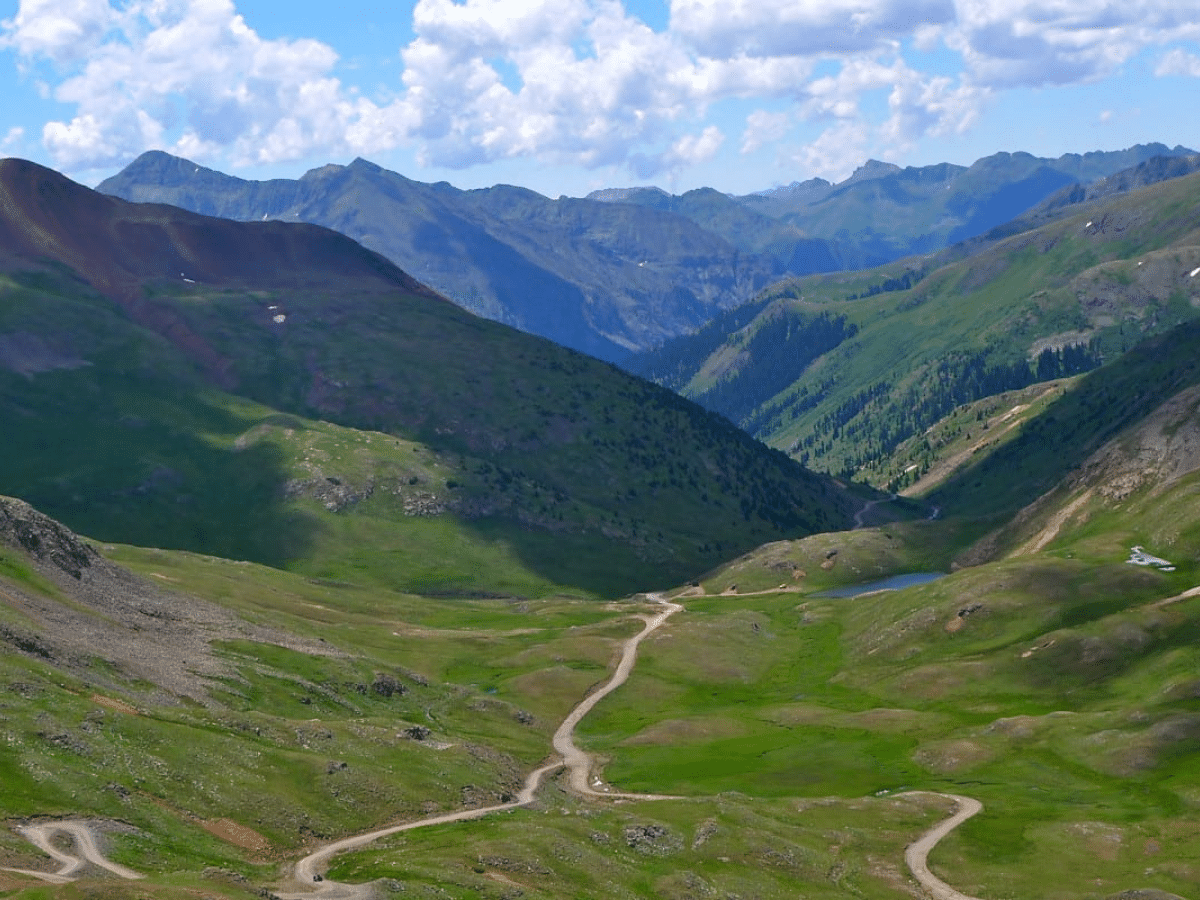
Back aboard our 4×4, making our way towards Ouray brings us along the aforementioned Engineer Pass. Located 3,900 m above sea level, it’s a particularly stunning point along the Alpine Loop, and one that once carried considerable traffic in pioneer times.
Offering gorgeous panoramic views, it’s considered one of the best stops on the whole Alpine Loop. That’s because you’ll feel like you’re on top of the world. The road through it from the east is pretty easy, but it gets more challenging when you head west from here: rocky, narrow and steep. That’s not to say it’s dangerous. Just remember to take it easy, that uphill traffic has right of way, and to watch out for creatures (even rarer animals like marmots) crossing the road. There’s very limited phone service here, too, as you’d imagine.
Ouray
Coming off the Engineer Pass, we turn right and head to Ouray, a town affectionately nicknamed “the Switzerland of America” for its dramatic, steep-walled box canyon setting reminiscent of the Swiss Alps. By the same token, Switzerland doesn’t have the buildings of America’s 19th-century Wild West as Ouray does. These buildings help make Ouray the picturesque small town that it is, one that survived the mining era’s boom-and-bust cycle due to its strengths as a place for relaxation.
After checking into the Beaumont Hotel & Spa, we discover Ouray boasts some excellent rooftop bars and restaurants, which showcase just how stunning the alpine vistas are from the heart of town. Among the best of these is the Imogene Hotel & Rooftop Bar. It’s a former Wild West saloon and brothel that’s been transformed into a fantastic boutique hotel, with the most amazing rooftop aspect of anywhere in the state.
The following day, our to-do list starts with Box Cañon Falls, which is just a 15-minute walk from the centre of town. Once there, a 150 m trail leads us to the dramatic falls, where water plummets 87 m through a narrow quartzite gorge with remarkable power. Marking the point where the local Canyon Creek meets the Uncompahgre River, it’s a spellbinding sight and a fitting welcome to Ouray. We’d heard that the falls here and the canyon that leads to them are considered one of the true natural wonders of Colorado. We were not led astray.
Next, we’re off to the Ouray Hot Springs Pool, where locals and visitors alike congregate to soak in its therapeutic waters. These waters are a major part of the reason Ouray didn’t become a ghost town when the mining industry died off in the region, and we can see why. The famous sulphur-free hot springs are an ideal way to soothe yourself after days spent hiking, driving, and exploring. It’s said that Chief Ouray, the leader of a band of the Ute (the oldest continuous residents of Colorado), and the man after whom the town is named, often visited the pool and held ceremonies in the local vapour cave.
Finally, for visitors who haven’t had their appetite for history satiated, our last stop in Ouray is the Bachelor Syracuse Mine Tours. These offer another illuminating glimpse into the rich history of mining in the San Juan Mountains. Led by insightful guides as you explore the mine’s tunnels, shafts, and equipment, we learn about the daily life and working conditions of miners who operated the mine from the late 1800s until the mid-1900s. It’s an experience that’s simultaneously fascinating and makes you very glad you’re not a miner from that era.
Ridgway
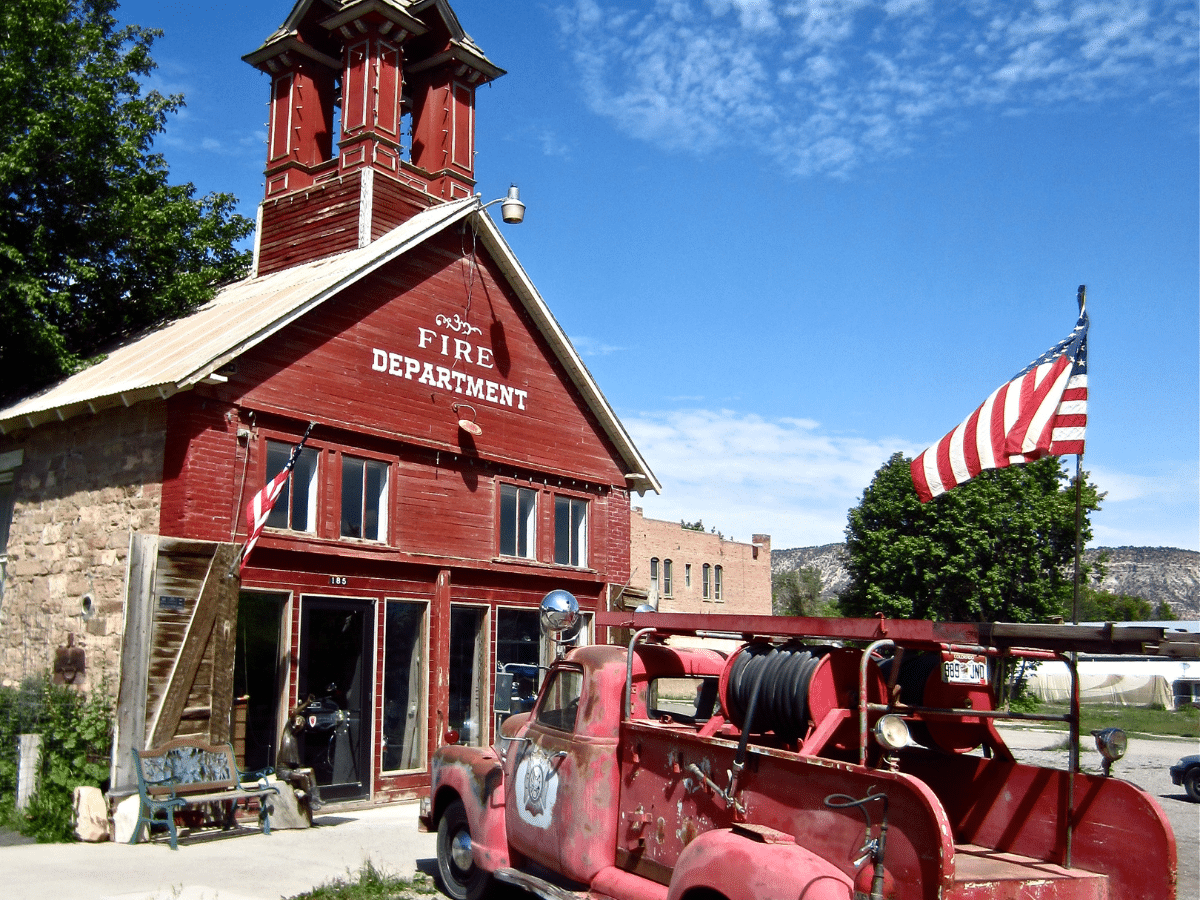
From one charming small town to another, our next stop is Ridgway, which offers sumptuous camping, boating, and fishing opportunities. This is where many of the long-time locals who work either in Telluride or for the ski resort there live, so you’re sure to meet some fun characters. It also served as the setting for John Wayne’s True Grit and features a fun cafe themed around the movie, with a wealth of John Wayne memorabilia.
Departing from our accommodation at Chipeta Lodge Resort + Spa, the first thing on our schedule is a day of fly-fishing with Rigs Guide Service. Whether you’re a seasoned professional or new to the sport, a day out in Colorado’s wilderness catching fish with the very patient and seasoned experts from Rigs will see you not only coming away with an impressive haul, but also some upgraded skills to boot. Going fishing in this region of Colorado means you’ll see some of its wildest parts, which is such a privilege, and the locals know their stuff. Fishing here is as important to them as skiing, and that’s saying something.
Next up, be sure to visit Ridgway State Park, which encompasses a 1,000-acre reservoir off the Uncompahgre River. Whether you’re looking for the ideal location for camping, hiking, boating, or another round of fishing, it’s the perfect place to unleash your inner outdoorsman. We could spend a week or more here, but with limited time, we have to move on after one day of hiking the trails around the lake.
After a couple of hours wading through water in search of fish and working up a sweat in the State Park, we can’t depart Ridgway without stopping by Orvis Hot Springs. This natural springs resort is clothing-optional (for those feeling a little risqué) and offers 10 indoor and outdoor soaking areas with water temperatures ranging from 18 to 44 degrees Celsius. Taking in the fresh mountain air while soaking in the natural lithium-rich water, which is never heated or treated, leaves us feeling entirely rested and rejuvenated.
Following this relaxing dip, our final Ridgway stop has to be the locals’ favourite secret, Thai Paradise. This is, they’ll all tell you, the best Thai west of the Mississippi. The Pad Thai is a local favourite, and the Drunken Noodles are outstanding, but for our money, the Massaman Curry is the true highlight.
We finish our visit at Colorado Boy Brewery. Established in 2008, theirs is an enticing offering of fresh ales, artisan pizzas, and outstanding live music. It’s the ideal place to connect with locals while sampling some delicious bites and beers. We depart with full bellies and a strong sense of affection for the people of Ridgway.
Telluride
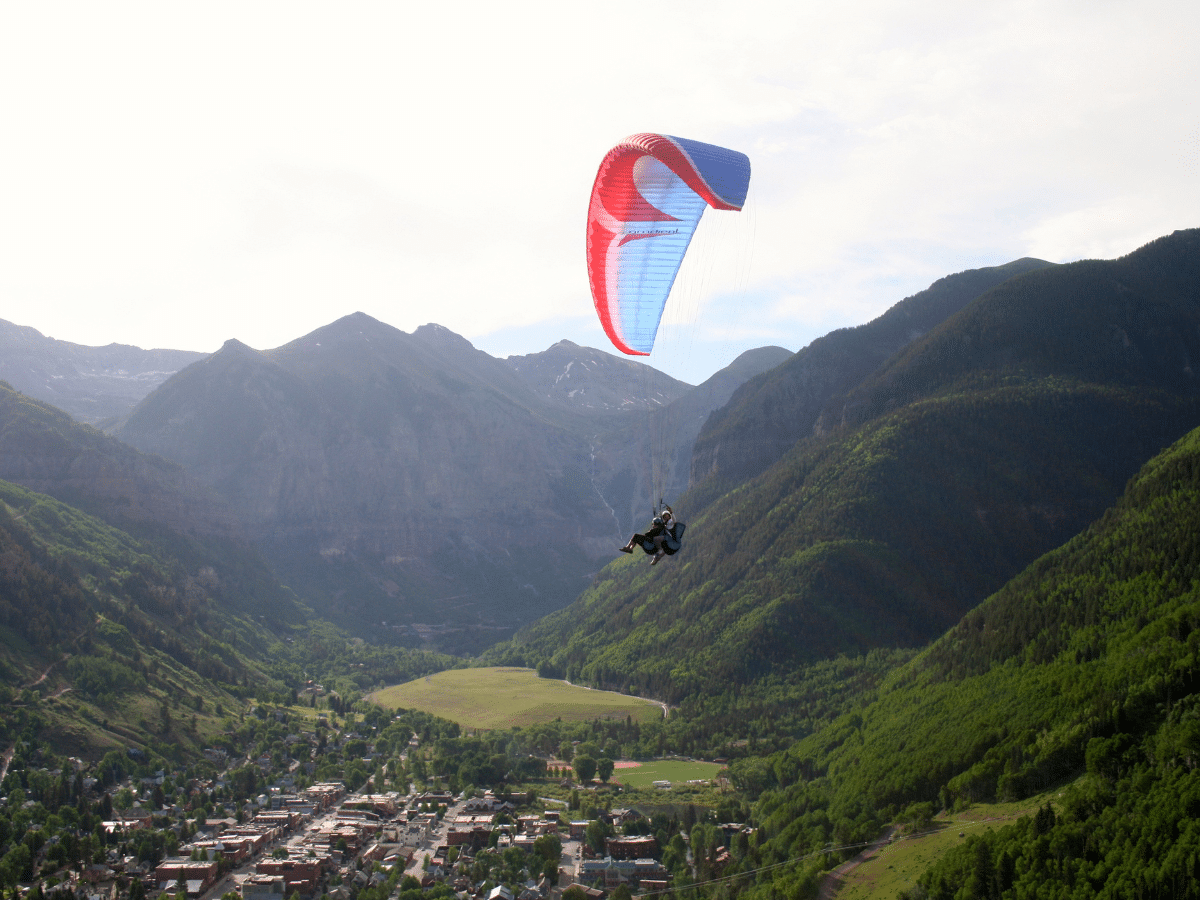
The penultimate stop on our tour of Colorado’s Alpine Loop brings us to Telluride, a little south of Ridgway. Known for its world-class alpine skiing in the winter, its summer offering is equally enticing, with a smorgasbord of cultural events and outdoor activities. This is one of the world’s most beautiful ski towns, but it’s every bit as stunning outside of winter, too.
From the lobby of the New Sheridan Hotel, we discuss what we should do first. We’re tempted to undertake Telluride’s Via Ferrata (a heart-stopping, experts-only rockclimbing experience that will see you suspended on a small iron foothold by a harness at 150 m), but first the collective rev-head inside us wins out, and we opt for one of the RZR tours with Telluride Outfitters. There’s a vast network of trails through the woods, alpine meadows, streams, and more that surround Telluride. Our guide takes us on the perfect route to get a sense of the place and (within reason) satisfy our inner speed demon, too.
Having scratched our adventure itch, a walk through town is essential. Offering colourful Victorian-era homes, clapboard storefronts, and historic buildings mixed with boutiques, art galleries, gourmet restaurants, and a number of luxury hotels, Telluride is charm personified.
There’s even a bank on the main street that Butch Cassidy robbed in 1889. Almost everything from that era still stands. The buildings, mixed with the fact you’re staring up from a box canyon at mountains 4,000 m high on all sides, make for an overwhelming sight. You’ll be overwhelmed just staring at these surroundings. If you don’t, you’re tougher than we are.
We also recommend riding the gondola (it runs year-round, except for short maintenance breaks in April/May and September/October) up to the ski village for the best views of everything. Like us, you should time it so you can ride it back down at sunset. Your reward will be an alpine glow experience that’s as good as anywhere you’d find in the Dolomites or the Swiss Alps.
After taking in this sublime sight, we head to The Sheridan Bar for some drinks. While there, we encounter a local ordering a “Flatliner” and enquire about what that is. Together, he and the bar staff explain that it’s a Telluride twist on the espresso martini, blending vodka, Kahlúa, Baileys Irish Cream, and fresh espresso or cold brew, all shaken hard to create a thick, foamy head. Needless to say, we ordered several rounds of them before calling it a night.
Waking feeling energised, it’s time for us to tackle the formidable Via Ferrata. This newly legal climbing route is not for the faint of heart, and a guide is absolutely essential if you want to tackle it safely. Over the course of approximately five hours, we traverse the east end and south-facing wall of Telluride’s box canyon encountering breathtaking views along the way. It’s hard work, but more than worth it for the stunning outlook; Mother Nature really puts on a show. We’re left feeling both exhilarated and a little relieved when we get our feet back on solid ground.
As a final note, it’s worth being aware that Telluride is also famous for its festivals throughout the summer. There’s one practically every week or weekend, including events such as the Telluride Film Festival, which attracts the world’s biggest movie stars; the quirky Bluegrass Festival; and the Jazz Festival. So if you get your timing right, you can pair your adventure with an extra dose of culture.
Durango
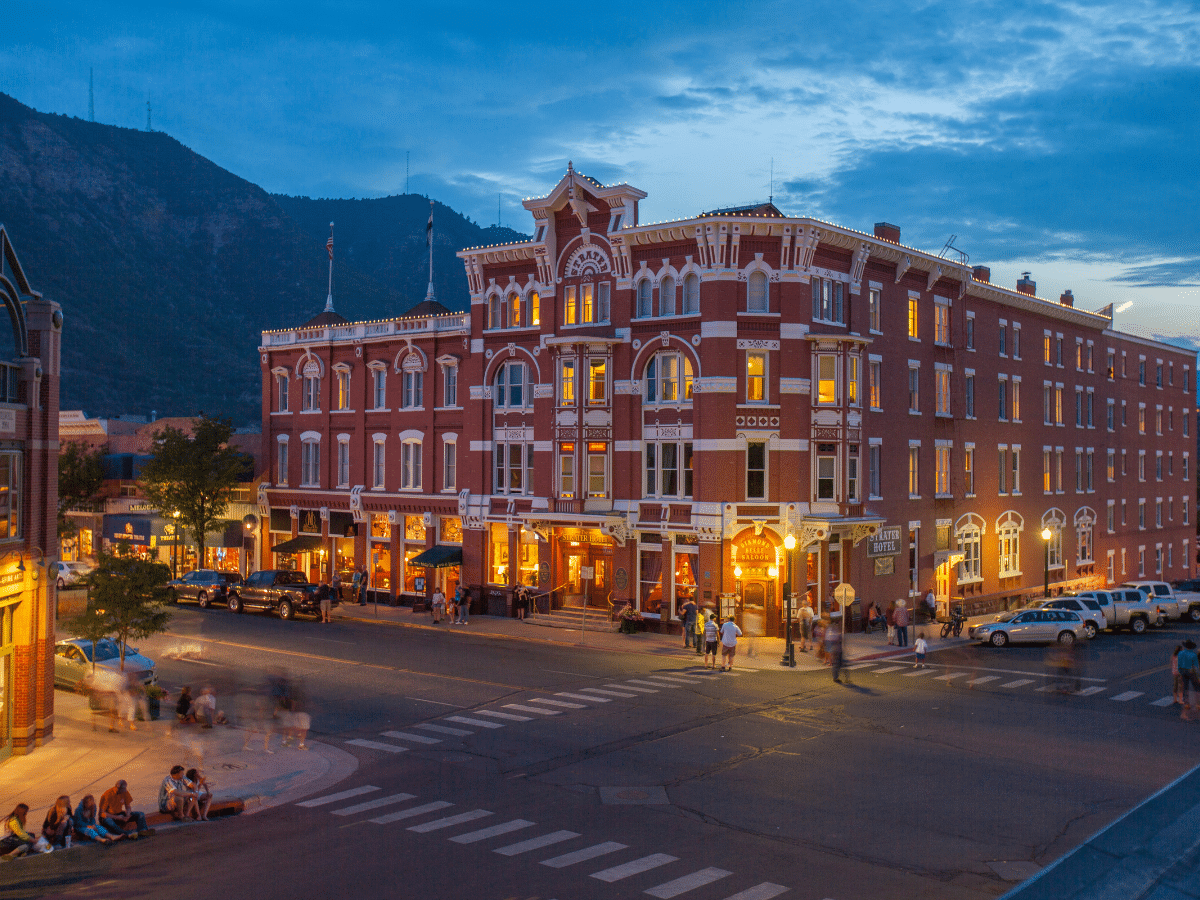
For the final leg of this epic road trip, we make our way further south for around two hours to beautiful Durango. Checking into the O-Bar-O Cabins just outside of town, we soon discover this slice of paradise in south-west Colorado offers one last helping of adventure and captivating history.
For Ancient history aficionados, you’re in for a treat as we’ve saved the best till last. Durango is the undisputed archeological hub of the region. It offers easy access to Mesa Verde National Park, located just over 50 km west of the town, where the Ancestral Puebloan people lived more than 1,400 years ago. It also happens to be our first port of call in Durango.
With more than 5,000 known archaeological sites, including 600 cliff dwellings, a visit to Mesa Verde National Park is nothing short of mind-blowing. If you have any kind of interest in Native American culture, this is essential. Having booked a ranger-led tour, we enjoy unique access to the dwellings and guided insights into how the Ancestral Puebloans lived. It’s the kind of experience that sparks a lifelong fascination, and we can’t recommend it highly enough.
Returning to town after a day of exploring this mesmerising corner of the historical record, we spend the evening visiting Durango’s Sorrel Sky Gallery, which exhibits a blend of contemporary and traditional Native American and Western fine art, sculpture, photography, jewellery, and more. It’s a perfect follow-up to our day of exploring the culture of the Puebloan people.
Enthusiastic to make the most of our final day of the trip, we rise early and head to Durango Adventures, located just 1.5 km west of the town centre, about a 20-minute walk if you want to get your heart warmed up ahead of the activities to follow.
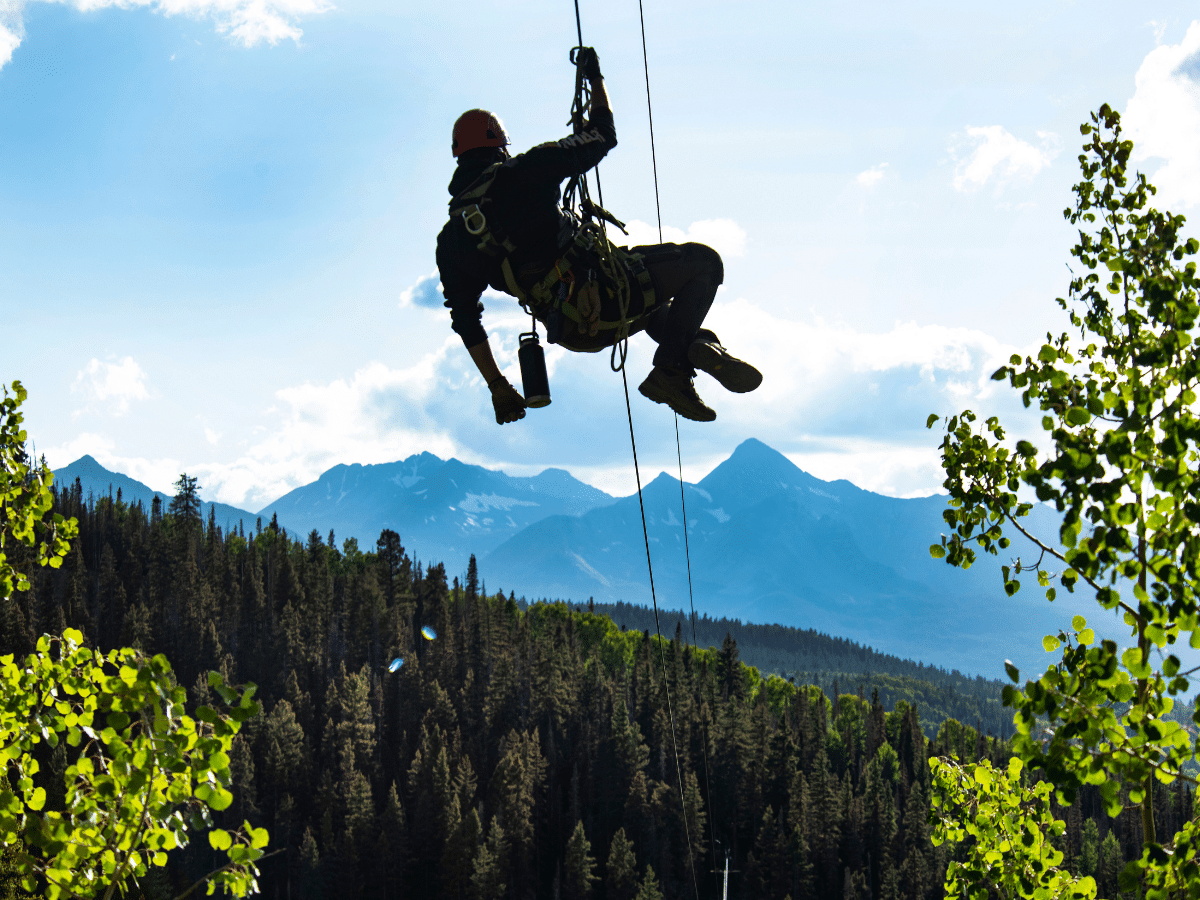
Arriving at the park, we’re ready to take on its 12 ziplines, which are perched high amongst Ponderosa Pines and offer magnificent mountain views every way you look. It’s a thrilling experience as you feel the wind whipping past you, offering a unique pairing of adrenaline and admiration (for the Colorado landscape, that is, which never gets old).
With our need for (ziplining) speed satisfied, we harness up for a final ride to the park’s adventure tower, which ramps up the adrenaline all over again. Standing at 13.7 m tall, it offers a stomach-turning free-falling experience (highly recommended) and four different rope-climbing elements. If that all sounds a bit much, Durango Adventures boasts laser-tag, axe-throwing, mountain-biking, and hiking options as well.
Unstrapping from our harnesses, it’s time for our next-but-last stop in Durango. Offering a pulse-pounding experience of an entirely different kind, after a shower and a change of clothes, we head for Horsefly History’s Ghost Walking Tour. Hosted by local expert Laine Johnson, this fun journey starts with a figurative journey through Durango’s dark underbelly and ends with a literal one. After hearing the stories of some of the notorious figures who’ve lived and died in the area (tragedies abound), the tour climaxes with a visit to a creepy 19th-century tunnel that once connected a saloon with a dance hall and still maintains a distinct sense of menace.
When we’re done, we pay a late visit to Durango Hot Springs Resort & Spa for an evening soak of our muscles that have started aching from all our exploring. There are 32 mineral pools located outside, looking out at all the surrounding mountains. Plus, the grilled shrimp tacos we order with ice-cold local beers right beside the pools are worth the admission alone.
Farewell to Colorado’s High Country
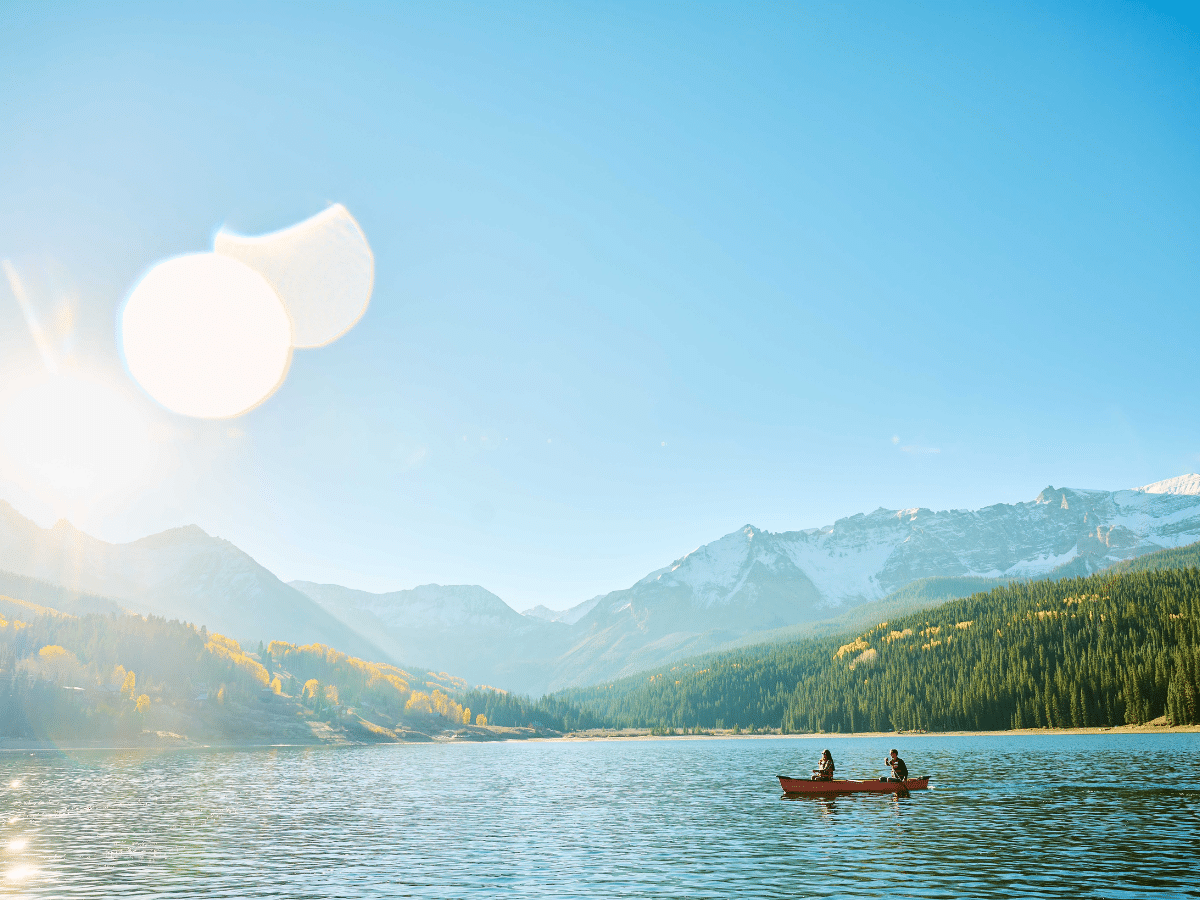
As we close out this final leg of Man of Many’s Colorado adventure, it’s impossible not to ruminate on the incredible landscape, thrilling outdoor adventures, remarkable history, and wonderful people we’ve encountered throughout this journey.
We can confidently say there’s nowhere quite like it in the world. Until next time, Colorado. We will undoubtedly visit you again.
Book With Intrepid
If you’re excited to book a trip through Colorado’s high country, simply visit the link below. From incredible glimpses into history to adrenaline-fuelled adventures, Intrepid will ensure it’s the trip of a lifetime.
Giveaway
To assist you on our Colorado boys’ trip, our friends at Osprey are giving away $1,600+ worth of travel gear. Enter below for your chance to win.
WIN! $1,500 Worth of Osprey Gear for Your Next Colorado Boys’ Trip
























Comments
We love hearing from you. or to leave a comment.