

Updated:
Readtime: 3 min
The Lowdown:
Image: Sydney Metro
Every product is carefully selected by our editors and experts. If you buy from a link, we may earn a commission. Learn more. For more information on how we test products, click here.
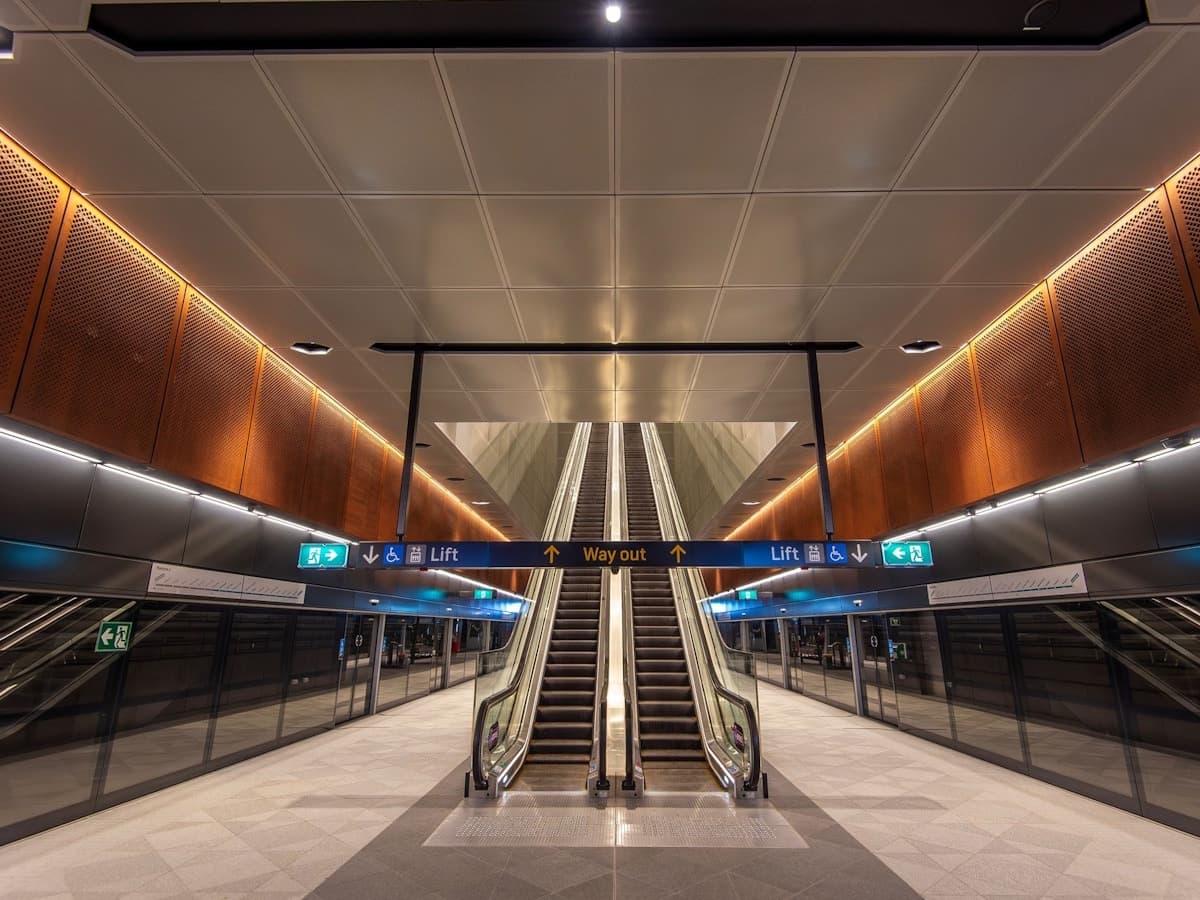
If you’re at all surprised to hear that Crows Nest Station has just picked up a global design award, you’re probably not alone. Train stations are meant to get you from A to B, not feature in international design competitions. But that reaction says more about how little attention most of us pay to the infrastructure we use every day than about the station itself.
Sydney Metro confirmed that Crows Nest Station has been awarded Best Rail or Transit Project at the Engineering News-Record Global Best Projects Awards. And it’s not even Sydney Metro’s first international nod. The city’s new metro stations are being designed with a level of care that still feels unfamiliar to many Sydney commuters. Especially in comparison to our heavy rail stations. Town Hall station on a hot summer’s day, anyone?
Around the world, fancy metro stations are actually fairly commonplace. The grand chandeliers and marble halls of the Moscow Metro remain some of the most famous civic interiors ever built. In New York, parts of the New York City Subway, from City Hall Station to restored historic concourses, show how even hard-working transport networks can carry architectural intent. Stockholm’s metro leans heavily into art and design; it’s often described as the world’s longest gallery. Sydney is not the odd one out here. In 2023, Gadigal Station picked up a Prix Versailles world title for architecture. Now, Crows Nest has followed with its own global recognition.
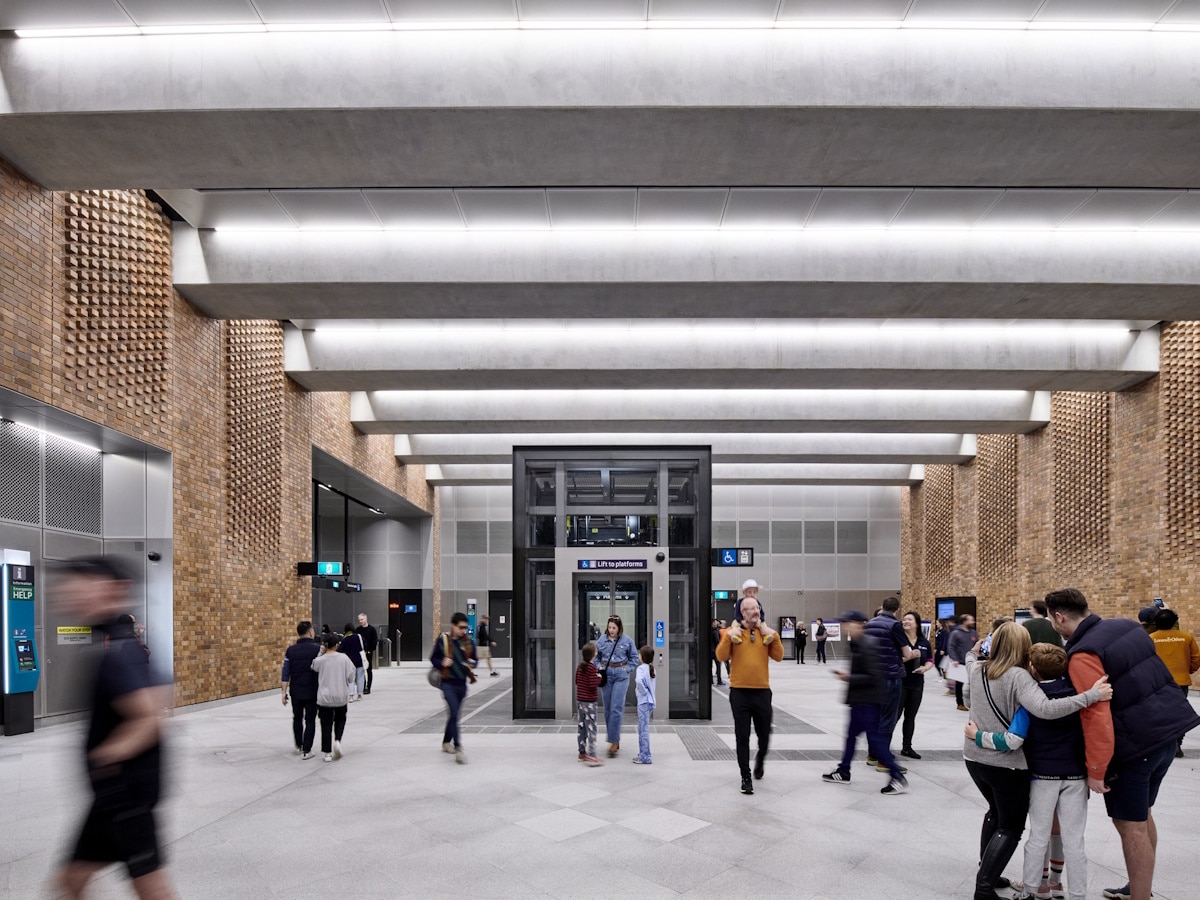
Crows Nest Station, which opened in August 2024, was delivered by the Crows Nest Design Consortium led by SMEC, with architecture by Woods Bagot. Built deep underground on a constrained site, the six-level station uses long-span structural engineering to open up the platform and concourse. Columns are spaced up to 25 metres apart, improving circulation and sightlines.
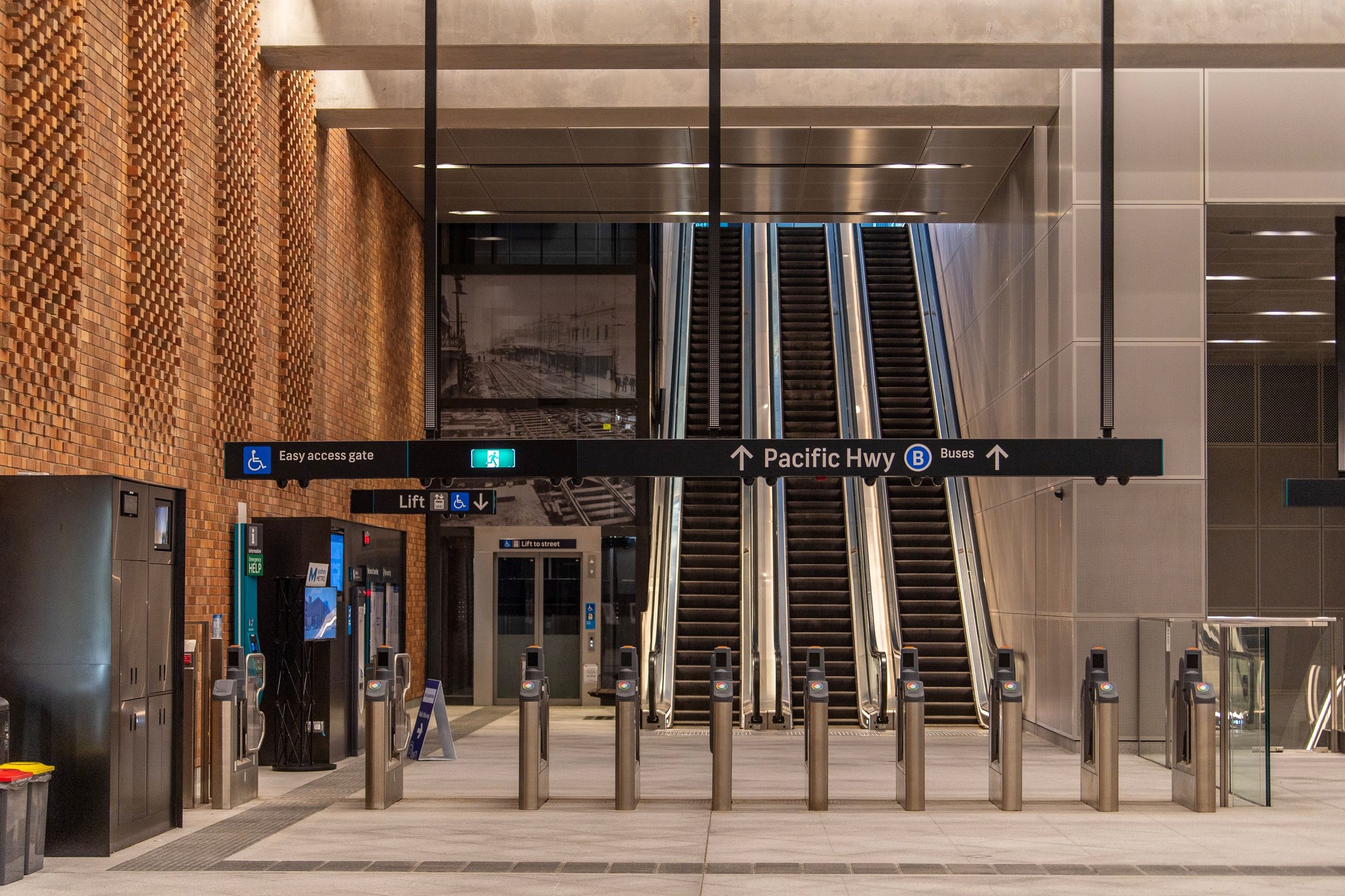
The station’s design draws heavily on its local surroundings, both above and below ground. Platform pavers reference historic materials uncovered during excavation, and were reworked into a contemporary geometric pattern. The brickwork and steel detailing echo the surrounding village streetscape, making the station feel more at home in Crows Nest rather than looking out of place.
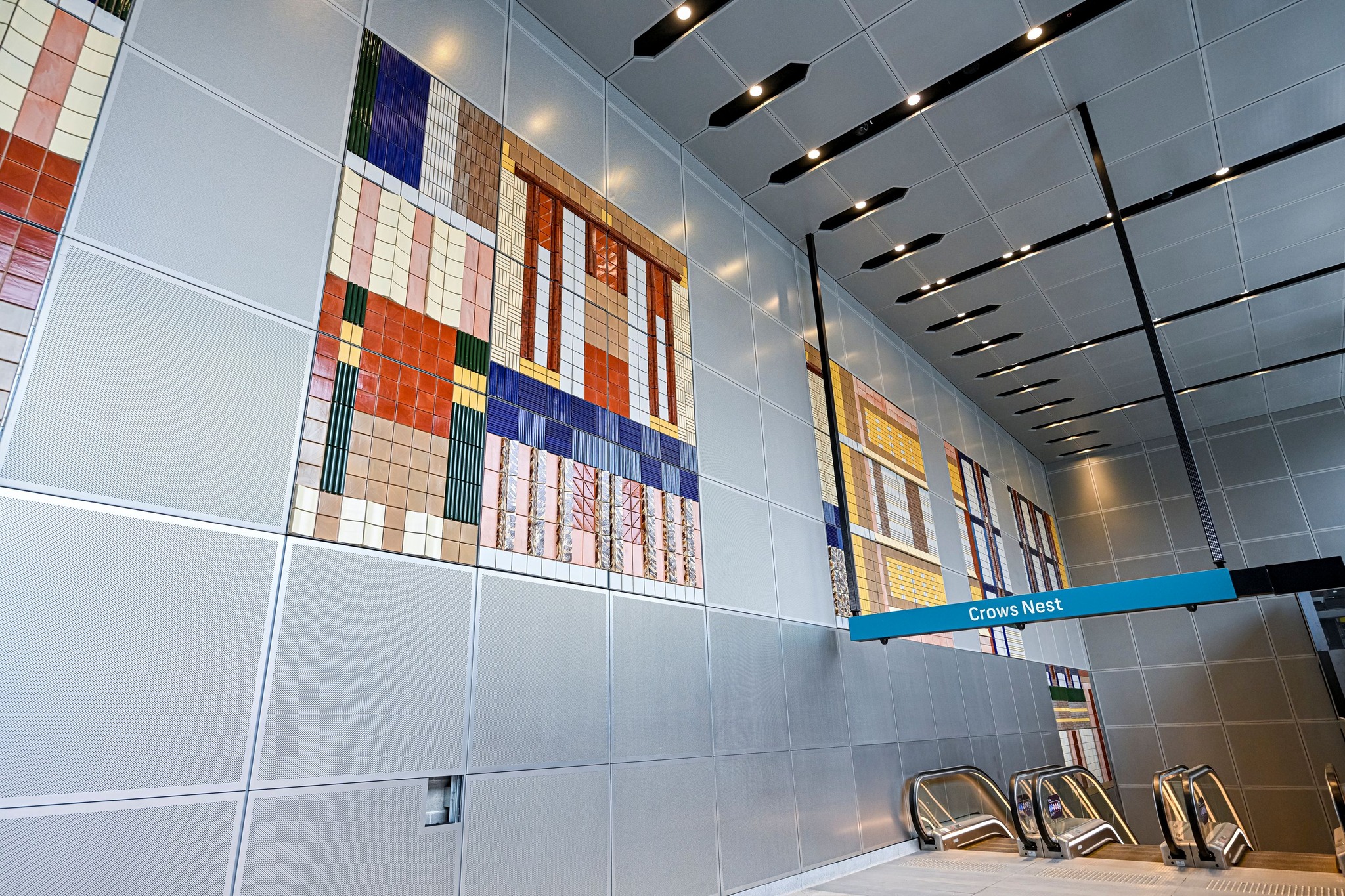
Art plays a role, too. Ceramic Wall Relief, a series of nine tile collage panels by artist Esther Stewart, frames both station entrances with handmade glazed tiles that reference North Sydney’s brick and tile-making past.
Built to last 120 years, with step-free access, generous lifts and wide concourses, around 9,700 passengers pass through Crows Nest Station each weekday, heading to Chatswood in four minutes or Sydenham in under twenty. Most will never know it’s won a global award. Which is fine. Because the best transport design rarely demands attention. It earns trust instead, one commute at a time.






























Comments
We love hearing from you. or to leave a comment.