


Updated:
Readtime: 6 min
Every product is carefully selected by our editors and experts. If you buy from a link, we may earn a commission. Learn more. For more information on how we test products, click here.
- Debuts at Monterey Car Week ahead of a confirmed 2028 production run.
- Features a manual transmission for the first time since the legendary F1.
- Powered by a rear-wheel-drive V8 internal combustion engine.
- Pays direct design homage to Bruce McLaren’s 1969 M6GT road car prototype.
- Built entirely around a super-lightweight carbon-fibre monocoque and bodywork.
The McLaren McL 6GT (P50) arrives as a direct mechanical bridge between the brand’s historic racing roots and its future. Built to honour Bruce McLaren’s original, unfulfilled M6GT road car vision from the late 1960s, the McLaren McL 6GT features bespoke carbon-fibre bodywork, with a super-lightweight monocoque chassis, rear-wheel-drive, V8 internal combustion engine layout. Most importantly, it introduces an real manual transmission to a McLaren road car for the first time since the Gordon Murray-designed F1 debuted in 1992.
Positioned outside of McLaren’s core portfolio, the McL 6GT turns away from modern hybridisation to prioritise pure driver involvement, not unlike the $2.5 Million Hennessey Blackbird that was also unveiled at the show.
Expected to command a seven-figure price tag well above the core McLaren 750S starting price of AUD$585,800, the 2028 production model will establish a new tier of ultra-exclusive McLaren flagships. Reflecting on the significance of the project, McLaren Automotive CEO Nick Collins explained that the vehicle “imagines what our inspirational founder had wished to complete but with six additional decades of innovation,” calling it symbolic of the bold future the brand’s preparing to realise.
McLaren McL 6GT Key Performance Specifications
| Specification | |
| Engine Architecture | V8 |
| Transmission | Manual Gearbox |
| Drivetrain | Rear-Wheel Drive |
| Chassis Structure | Super-Lightweight Carbon-Fibre Monocoque |
| Bodywork | Full Carbon Fibre |
| Steering System | Hydraulic Power Steering |
| Power Output | TBA (Expected 2028) |
| 0–100 km/h (0–62 mph) | TBA (Expected 2028) |
Analogue Mechanicals and V8 Powertrain
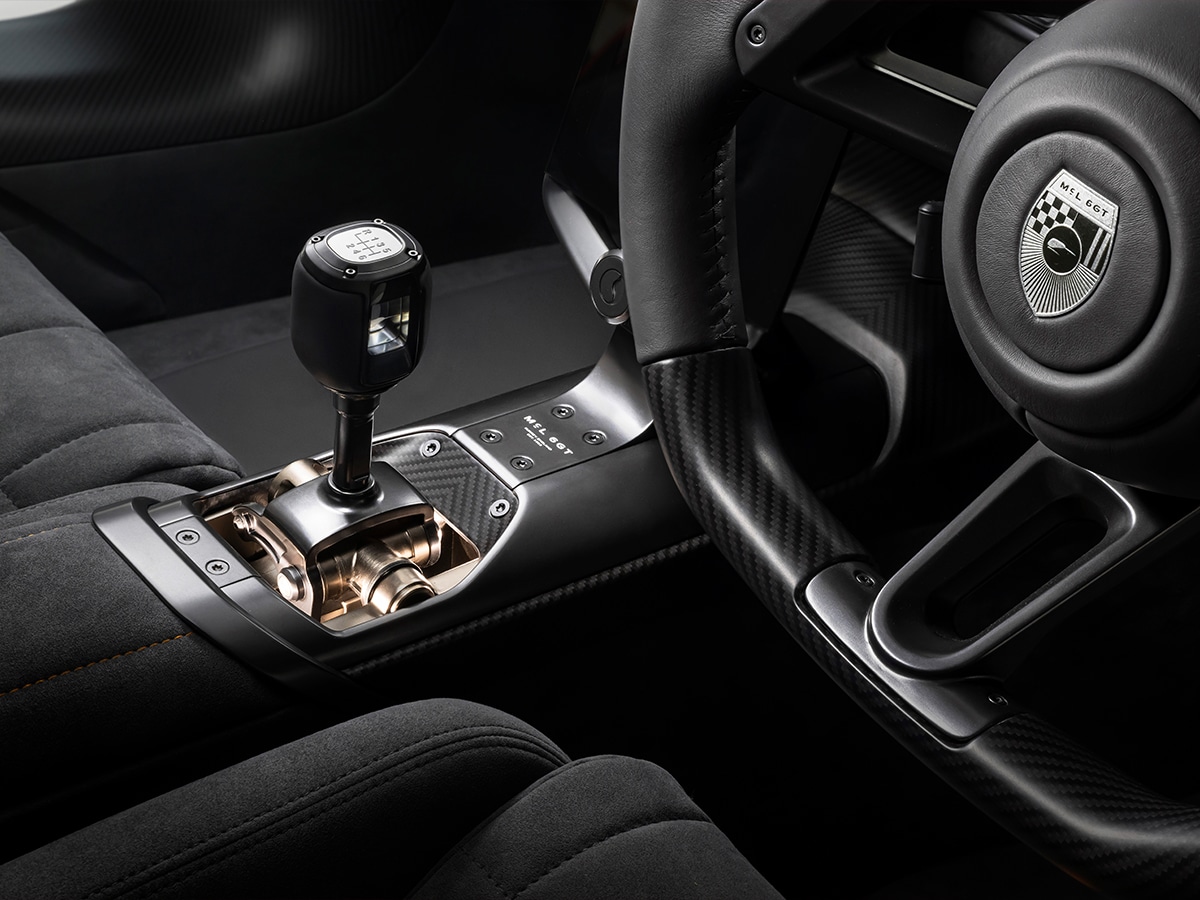
While modern supercars increasingly rely on dual-clutch transmissions and hybrid torque-fill, including McLaren themselves, the McL 6GT strips the formula back to deep mechanical engagement.
Power’s derived from a V8 internal combustion engine sending drive to the rear wheels. However, McLaren has kept exact horsepower figures under wraps, the non-hybrid V8 we drove in our McLaren 750S review produced 740 HP (552 kW / 750 PS), setting a high benchmark for what this manual V8 setup will deliver when production commences. Don’t expect fewer than 750 HP, but we all know that every McLaren produces 800 HP, so take official figures with a grain of salt.
Of course, the defining mechanical characteristic of the McL 6GT is its authentic manual transmission, breaking a 34-year streak of paddle-shift automatics in McLaren road cars dating back to the 1992 F1. The gearstick itself has been engineered for feel and throw, integrating a three-dimensional ‘Speedy Kiwi’ emblem within the upright shaft. To further connect the driver to the road, McLaren has also retained its signature hydraulic steering system rather than shifting to an electric rack.
 1/6
1/61960s Can-Am Styling and Aerodynamic Heritage
The exterior design is an example of how you would apply modern day packaging to the 1960s sports prototypes, which is the original styling that defined the original M6GT, which was itself based on the M6A Can-Am racing chassis. Constructed entirely from carbon fibre, the bodywork reads as a single continuous volume, sitting exceptionally low and wide.
The front end is dominated by a low nose that flows cleanly over the cabin and terminates in a distinctive Kammback tail. To mimic the low-drag aerodynamic conventions of the 1960s, the roofline flows organically into the rear deck and engine cover, making the cabin appear deeply embedded within the chassis.
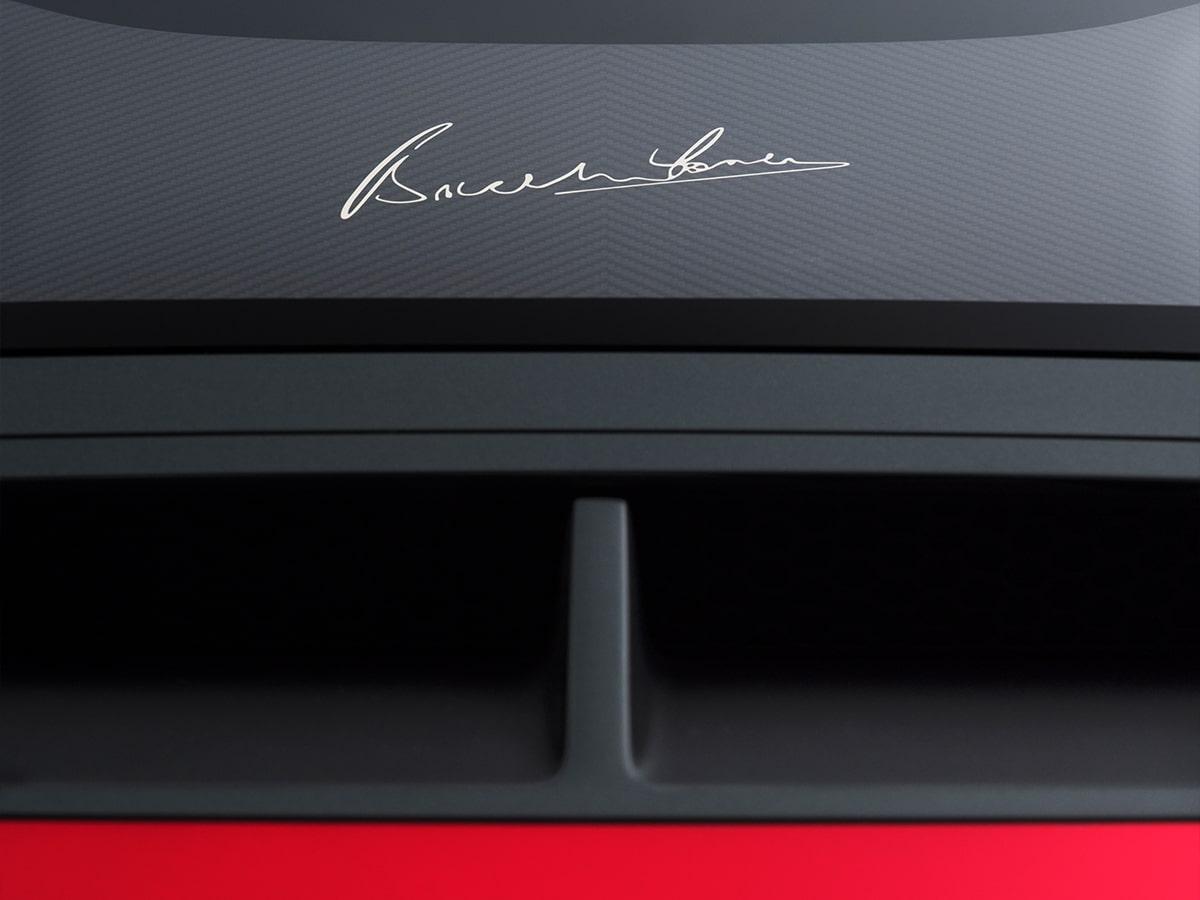
Heritage details are integrated directly into the bodywork. The exterior airflow architecture incorporates a ‘Racing Loop’ motif inspired by the original M6GT’s taillights. Bruce McLaren’s original M6GT number plate is applied as a tone-on-tone graphic, his signature is etched into the engine bay, and the Speedy Kiwi logo is discreetly machined into the fuel filler cap.
 1/4
1/4Tactile Cockpit Architecture and Manual Gearshift Details
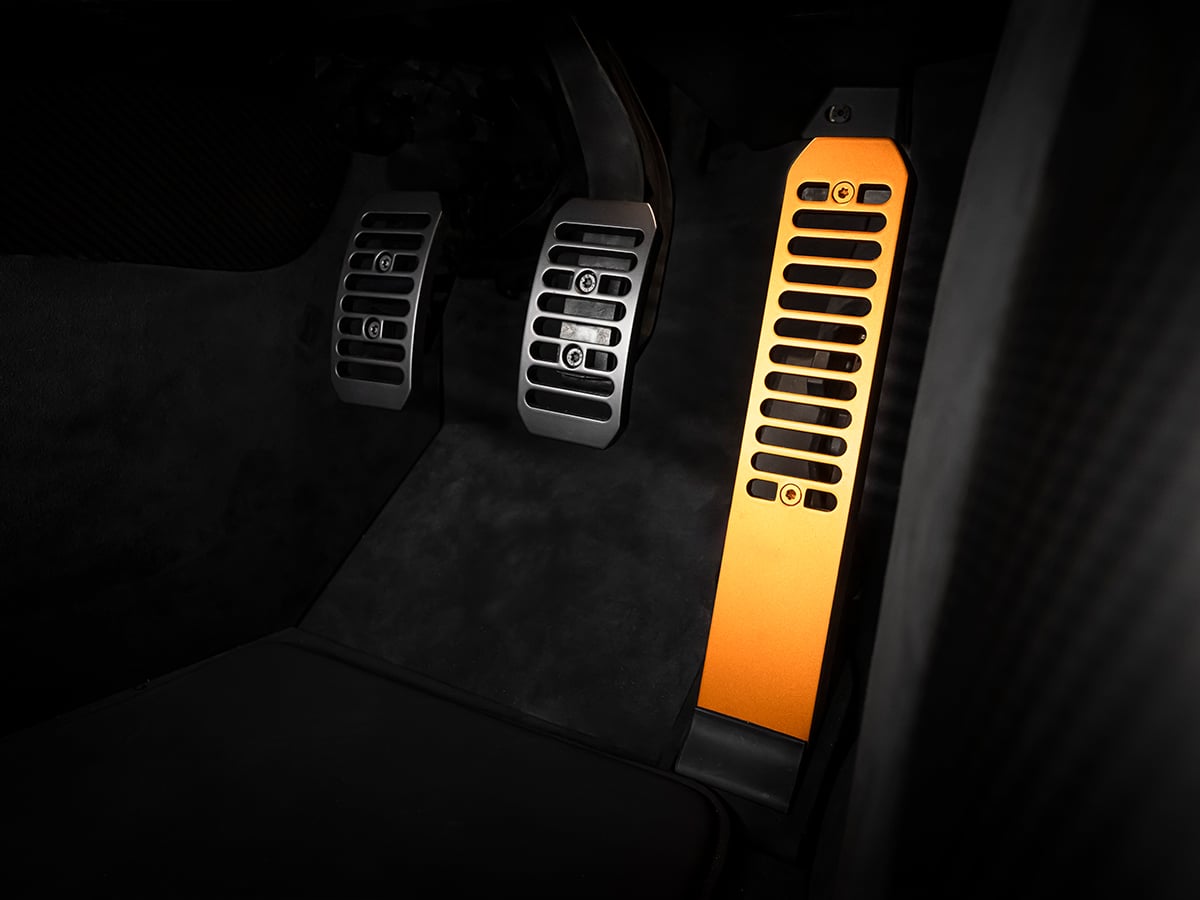
Inside the cabin, the McL 6GT focuses heavily on ergonomics and physical interaction. The brand has utilised exposed gloss carbon fibre across the interior to emphasise the vehicle’s lightweight ethos, referencing the stripped-out nature of prototype racers.
Digital screens have also been minimised in favour of physical, knurled machined aluminium controls designed to reward deliberate driver inputs. Finally, the seating features a modernised interpretation of boxed quilting, while a new digital instrument cluster provides essential telemetry with the visual clarity of analogue gauges. Of course, specific details will be revealed closer to the date.

Price, Production and Availability
Currently presented as a concept, the McLaren McL 6GT will officially enter a highly exclusive production run in 2028.
McLaren Automotive has confirmed that the vehicle establishes a newly positioned tier of supercar that sits deliberately beyond its core portfolio. While flagship hypercars like the 1,275 hp McLaren W1 focus on pushing raw hybrid performance to USD$2.1 million limits, the McL 6GT prioritises pure analogue driving dynamics, and customers should expect to pay for the privaledge.
Official pricing remains unconfirmed, but this positioning indicates the McL 6GT will target the ultra-exclusive collector market. For context, the brand’s core V8 supercar, the 750S, starts at USD$330,000 (approx. $585,800 AUD plus on-roads). Given the bespoke carbon-fibre development, manual gearbox engineering, and limited allocation, expect the 2028 production model to command a seven-figure sum alongside historic Ultimate Series cars like the Elva and Senna. Prospective clients can follow development updates via McLaren Automotive, at the link down below.























Comments
We love hearing from you. or to leave a comment.