

Updated:
Readtime: 5 min
Every product is carefully selected by our editors and experts. If you buy from a link, we may earn a commission. Learn more. For more information on how we test products, click here.
For years, the fight over Sydney’s nightlife was about rules. Lockouts, last drinks, noise complaints, red tape, the nanny state. Whether the city was being strangled by regulation or saved from itself depended on who you asked and what time of night it was.
Now that we’ve finally bid farewell to Sydney’s lockout laws, something else is becoming clear. Nights in NSW didn’t snap back to how they were before. They’ve changed. And not in the way most expected.
According to the inaugural State of the Night report, the state’s night-time economy is worth around $110 billion a year and supports more than a million workers. On paper, that sounds like a full recovery. On the ground, it explains something many people already feel. Nights out are happening again, just more selectively, closer to home, and increasingly built around something other than a bar tab.
What the numbers actually show us
The important thing to understand is what that $110 billion actually represents. The night-time economy covers everything that happens between 6pm and 6am. Bars and gigs, sure, but also supermarkets, late-night retail, healthcare, transport, food delivery, streaming and online shopping. NSW is extremely active after dark. A lot of that activity just isn’t happening on the street.
Key figures from the State of the Night report
- $110 billion, Annual value of NSW’s night-time economy, covering all activity between 6pm and 6am.
- 16.7% of the NSW economy, Almost one in six dollars generated in the state comes in after dark.
- 1.3 million workers, Around three in ten workers in NSW regularly work night-time hours.
- 168,000+ businesses, Operating across hospitality, retail, health, transport and essential services.
- $15.5 billion, In-person night-time spending in FY25, down 6% since FY23.
- $22.9 billion, Online night-time spending in FY25, up 17.8% since FY23.
This is where the shift starts to show up. In-person spending at night has fallen over the past two years, even as overall movement has stayed steady. More people are still travelling after dark, public transport use at night is up sharply, and alcohol-related assaults continue to fall. What’s changed is how much people are willing or able to spend once they’re out.
Movement hasn’t stopped. Spending has shifted.
- Night-time public transport trips rose 23.6% over the past two years.
- Alcohol-related assaults fell 16.6% over the same period.
- In-person night-time spending declined, even as overall movement stayed steady.
- 55% of NSW residents say affordability is the main reason they go out less at night.
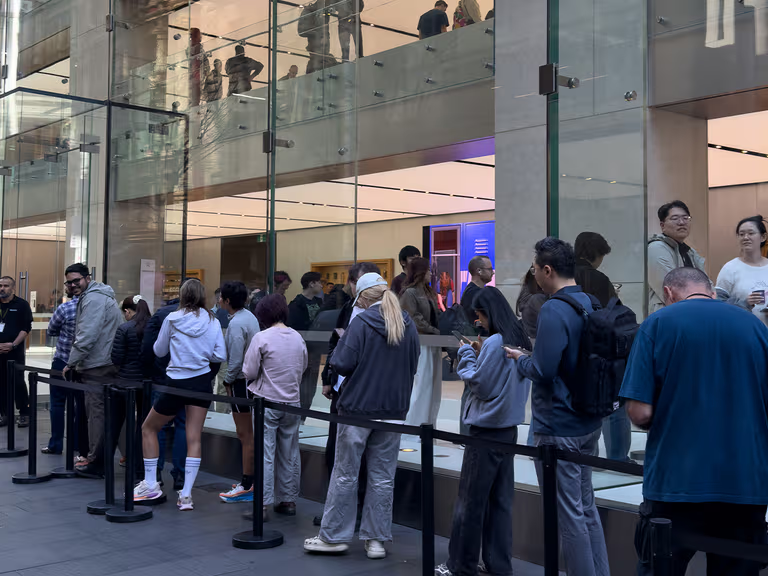
The report helps explain why nights feel shorter now. Night-time public transport use has jumped more than 20% since 2023, but in-person spending has gone the other way. People are still heading out, they’re just doing fewer things once they’re out. Fewer “let’s see where this goes” plans. More nights built around one thing that feels worth the effort. Dinner and a show. A movie. Then home.
What’s growing after dark
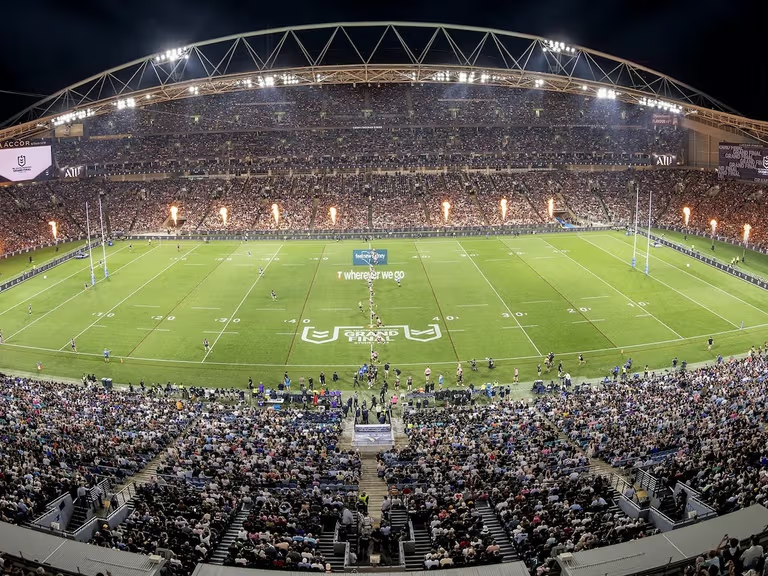
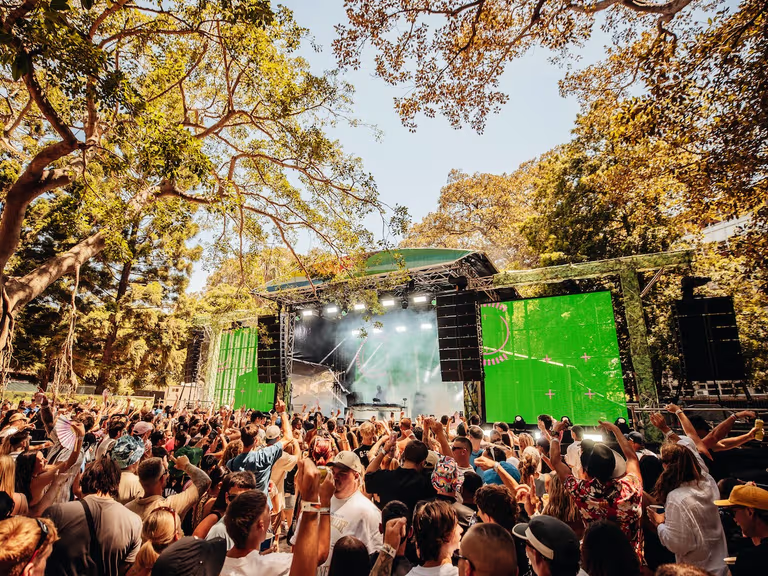
You can see that shift in what’s growing. The strongest gains aren’t in bars or clubs, but in cinemas, museums and sport. Nights are less about staying out as long as possible and more about doing something specific. More mixed crowds. More reasons for being out. Less pressure to turn every night into a big one.
- Cinemas and screen experiences: up 37.2%
- Museums and heritage activities: up 18.2%
- Sport and recreation: up 5.9%
- Takeaway food businesses: up 6.4%
That change is also reshaping where nights happen. The report shows the strongest growth outside the traditional inner-city hubs, particularly across Western Sydney and in centres like Parramatta, Penrith, St Marys, Newcastle and Wollongong. Inner-city venues no longer get automatic foot traffic, and in a city as spread out as Sydney, the trip home matters. Late trains, long gaps in services and expensive rides turn a casual night into a commitment. When there’s something decent nearby, most people don’t bother pushing further.
Safety still shapes how nights end
Another thing the report makes clear is that safety still plays a big role in how people use the night, even as alcohol-related violence continues to fall. Assaults linked to drinking are down again, and by most measures, the city is safer than it was a decade ago. But perceptions haven’t fully caught up with the data.
Where people feel safe matters as much as whether they are safe. The report shows women consistently feel less comfortable going out at night than men, and people are more at ease in local centres than in the CBD. Poor lighting, quiet streets, and long waits for transport still shape decisions, particularly late at night.
It’s not always about what’s happening inside a venue. It’s the trip home. If getting back feels uncertain or inconvenient, calling it early starts to look like the sensible option, regardless of how much later venues are allowed to trade.
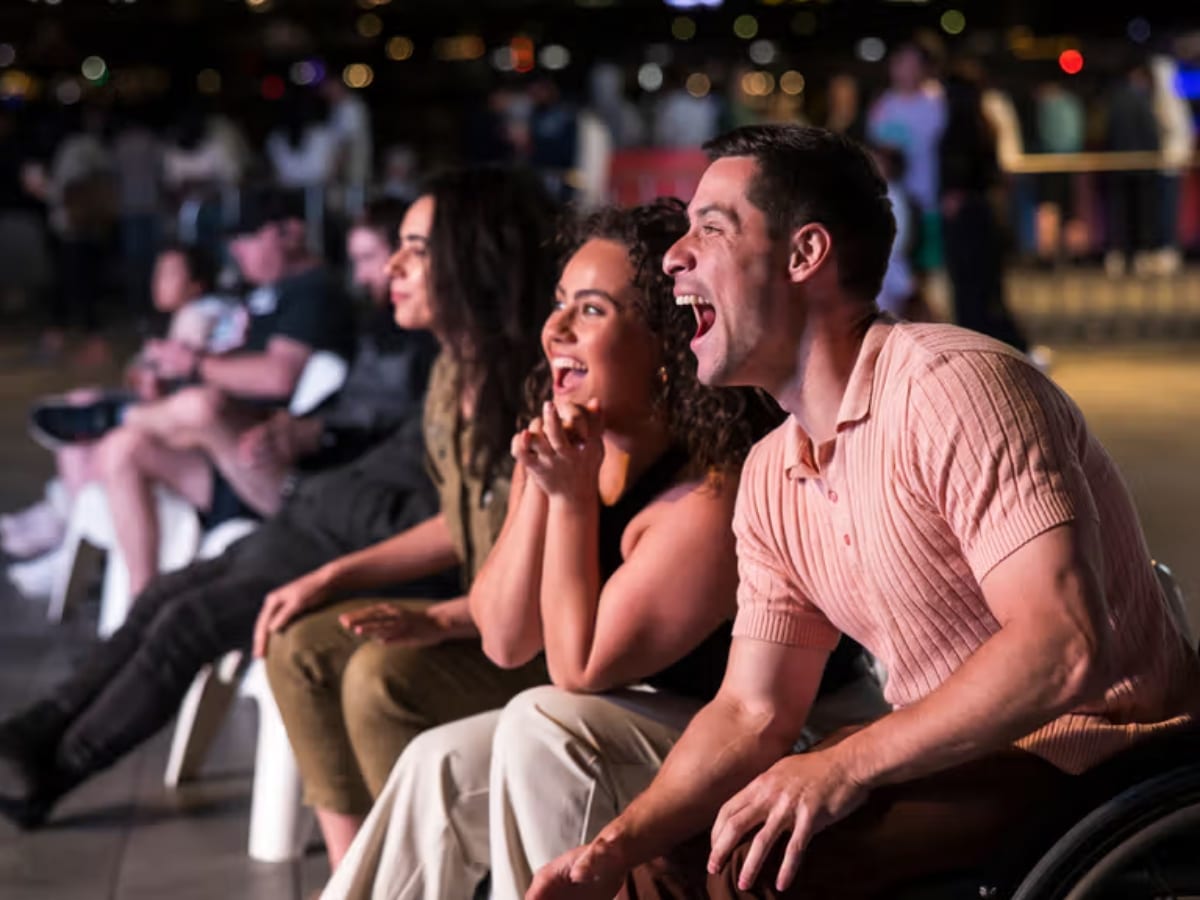
Why people still call it early
Taken as a whole, the State of the Night report reads less like a comeback story and more like a reset. NSW hasn’t returned to the version of going out it had a decade ago, and it probably won’t.
For some people, that’s a win. Nights that start earlier, finish earlier and revolve around something other than drinking are easier to say yes to. If what you loved about Sydney nights was late finishes, packed rooms and the sense that anything could happen after midnight, the report doesn’t really suggest that version has come back yet.
Either way, nights in NSW are open again. Whether you use them now seems to depend less on what you’re allowed to do, and more on whether the night feels worth leaving the house for.















Comments
We love hearing from you. or to leave a comment.