

Updated:
Readtime: 7 min
Every product is carefully selected by our editors and experts. If you buy from a link, we may earn a commission. Learn more. For more information on how we test products, click here.
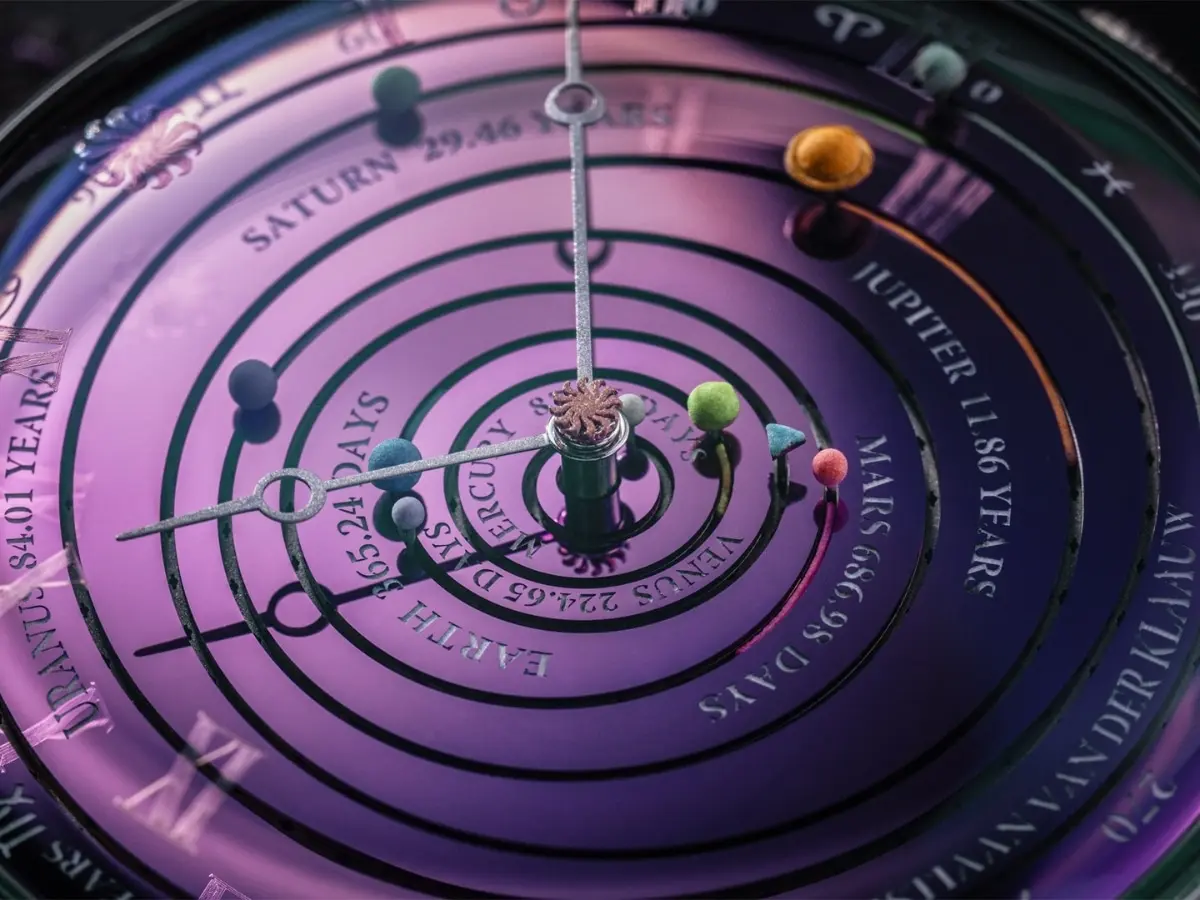
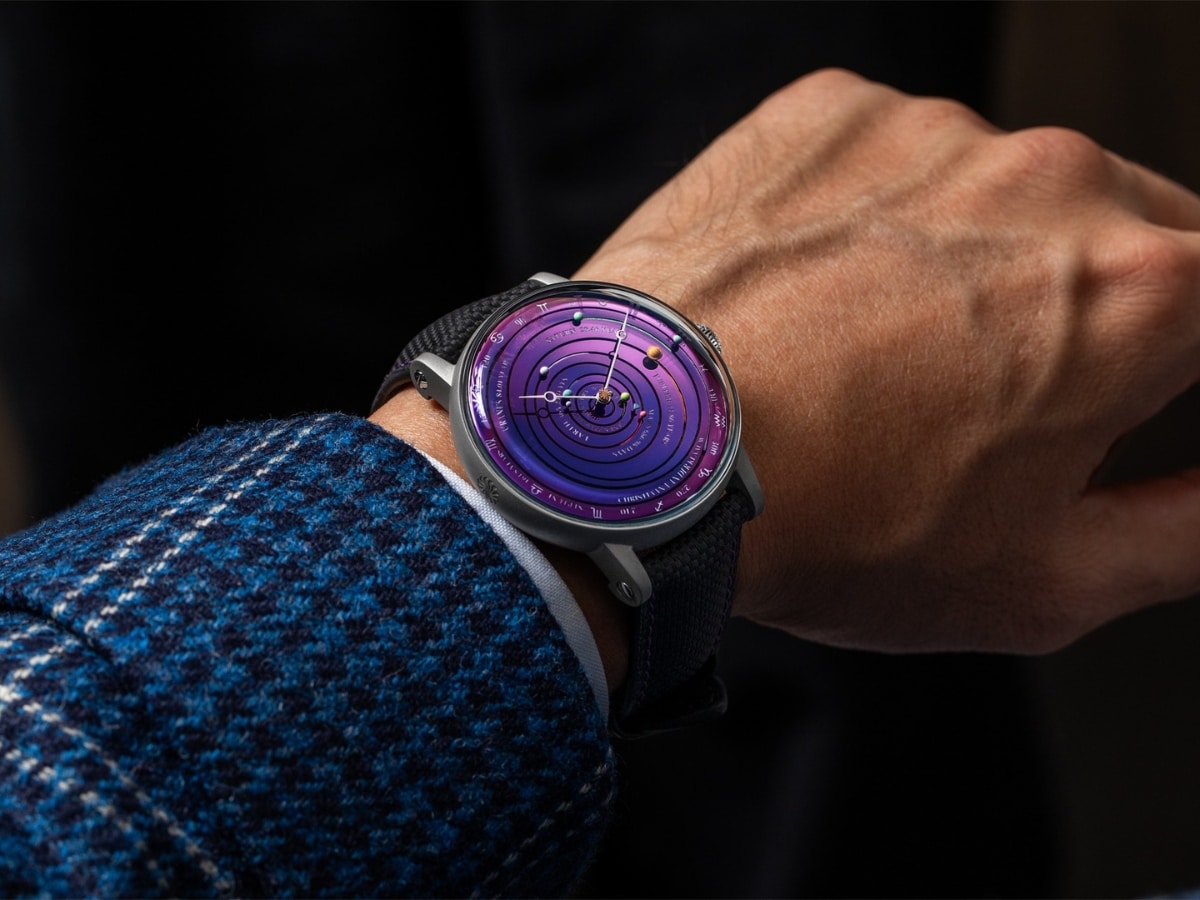
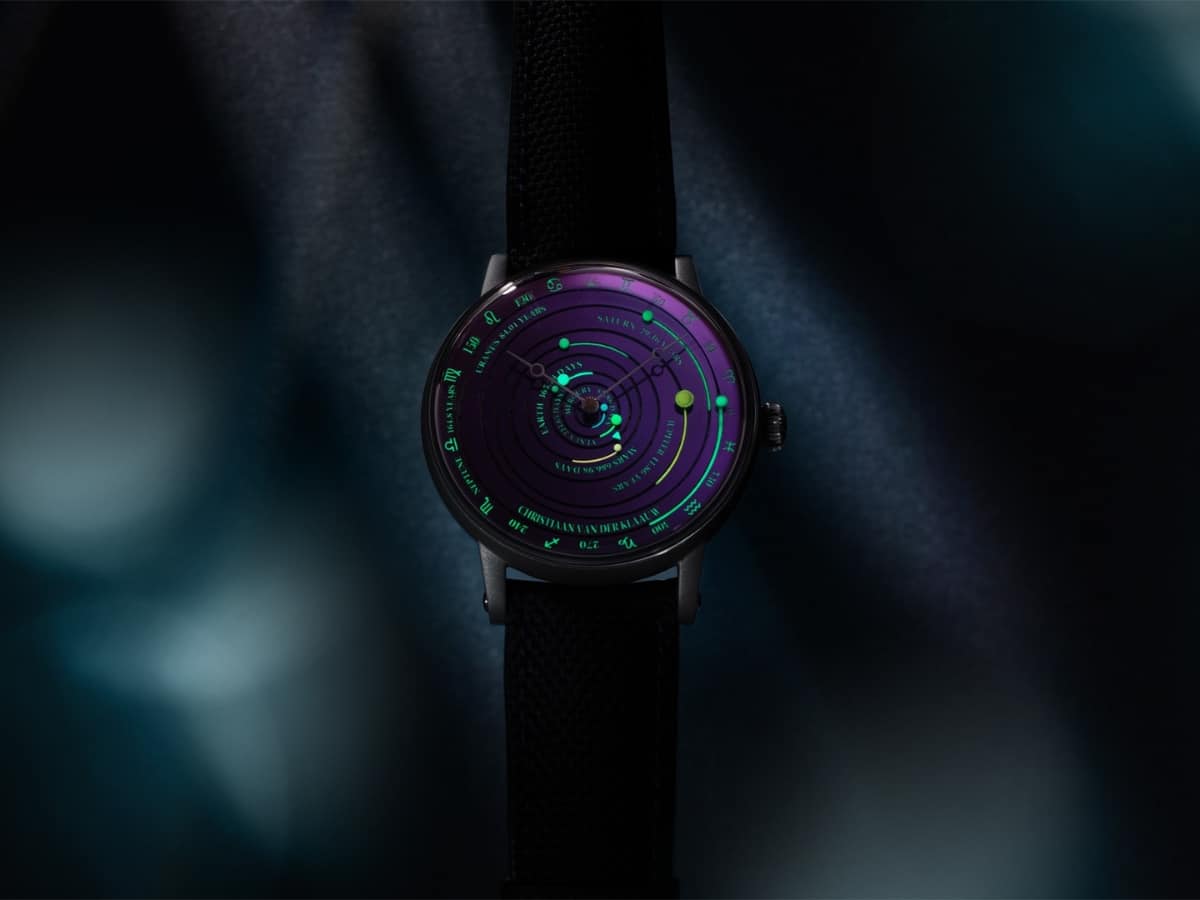
Most watches measure time in hours and minutes. The Grand Planetarium Eccentric Si14 measures it in planets. Created by Dutch watchmaker Christiaan van der Klaauw in collaboration with Revolution, the watch is the mechanical watch most capable of displaying the real-time orbits of all eight planets in our Solar System directly on the dial. Mercury, Venus, Earth, Mars, Jupiter, Saturn, Uranus and Neptune (sorry, Pluto) each move according to their actual astronomical periods, turning the watch into a miniature mechanical model of our local cosmos.
Planetarium watches sit in a fascinating corner of horology. Most watches organise time around human life: hours, minutes and calendars. A planetarium does the opposite. It puts the Solar System on your wrist as you watch the planets run on their own schedule. The result isn’t especially practical, but it is strangely compelling. Instead of tracking your day, the watch quietly tracks the much slower rhythm of the universe around it.
“They capture, within the confines of a watch, a small reflection of the much larger clockwork that governs the heavens.” – Revolution Watch
A Deep Space Dial Made from Oxidised Silicon
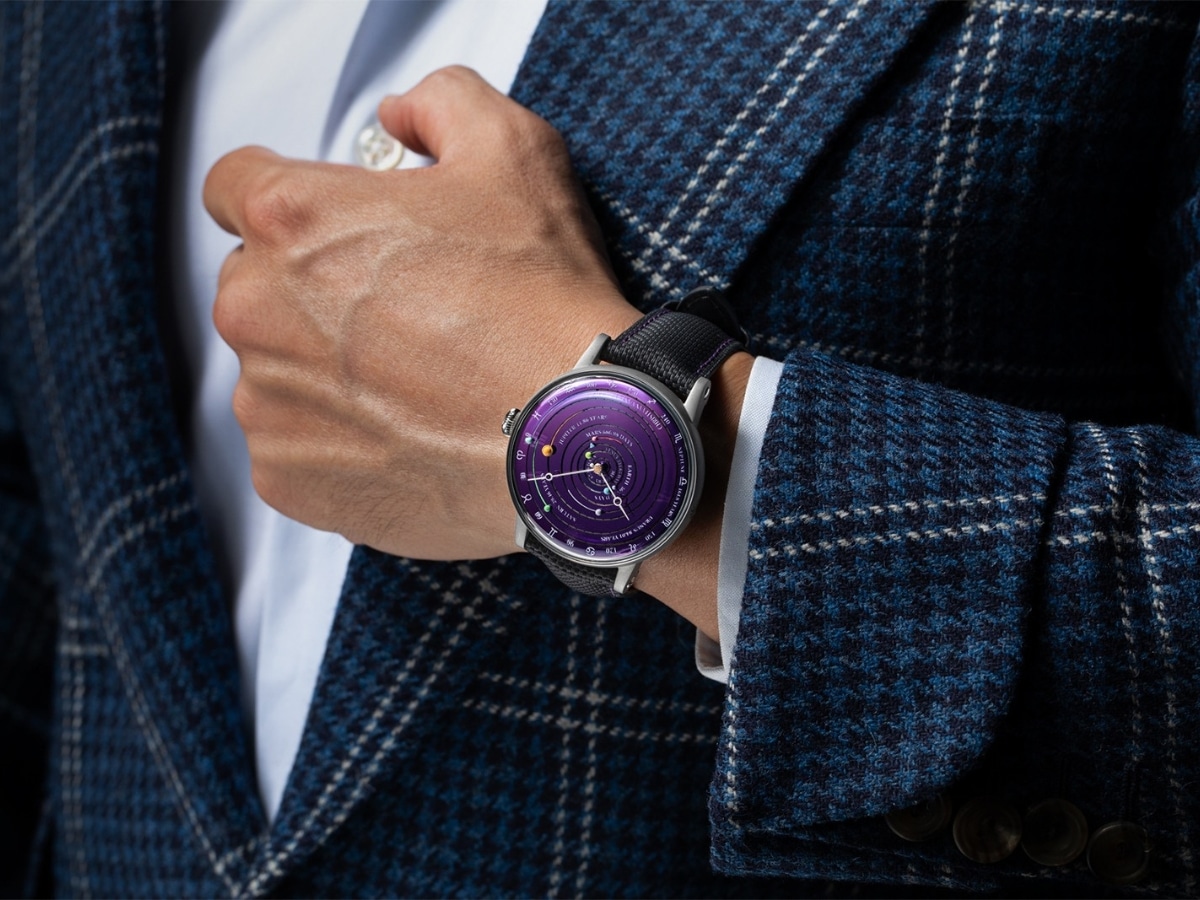
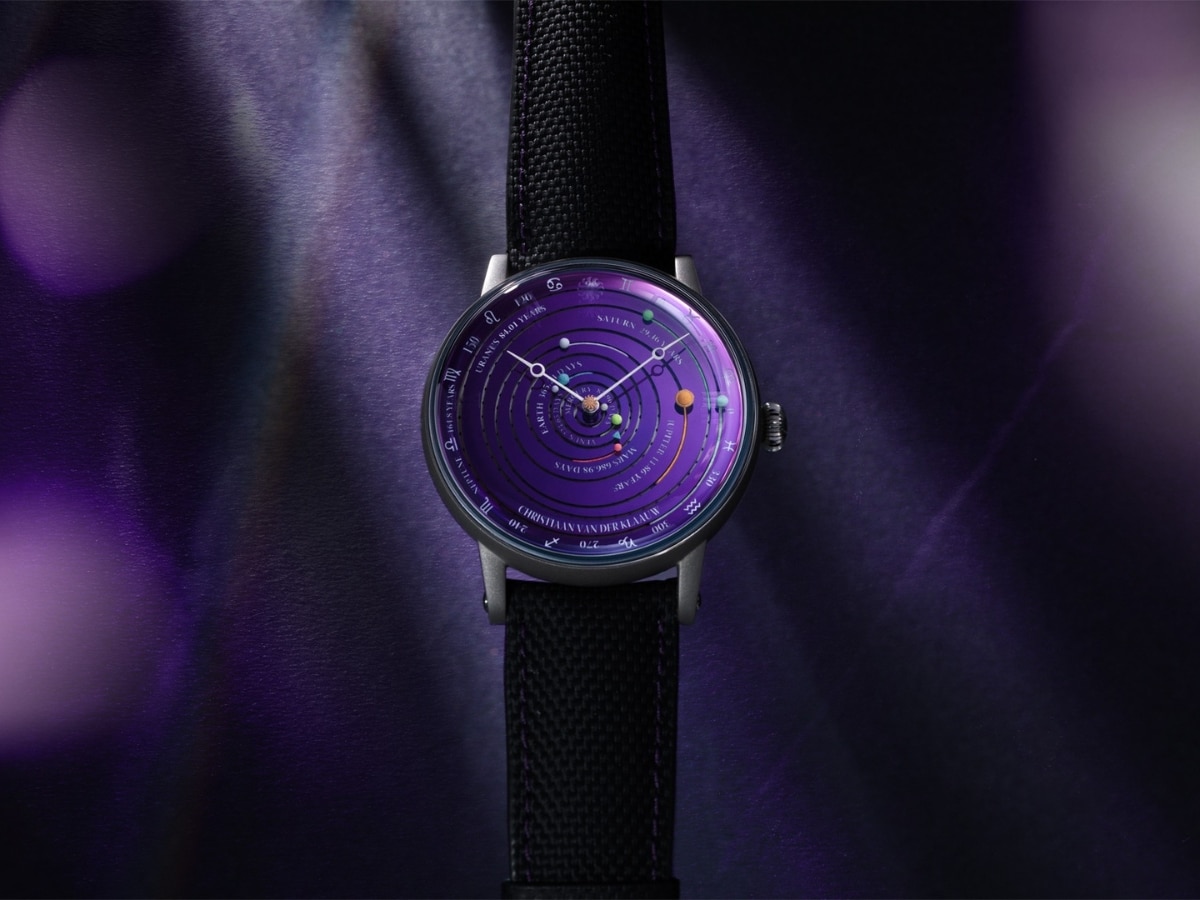
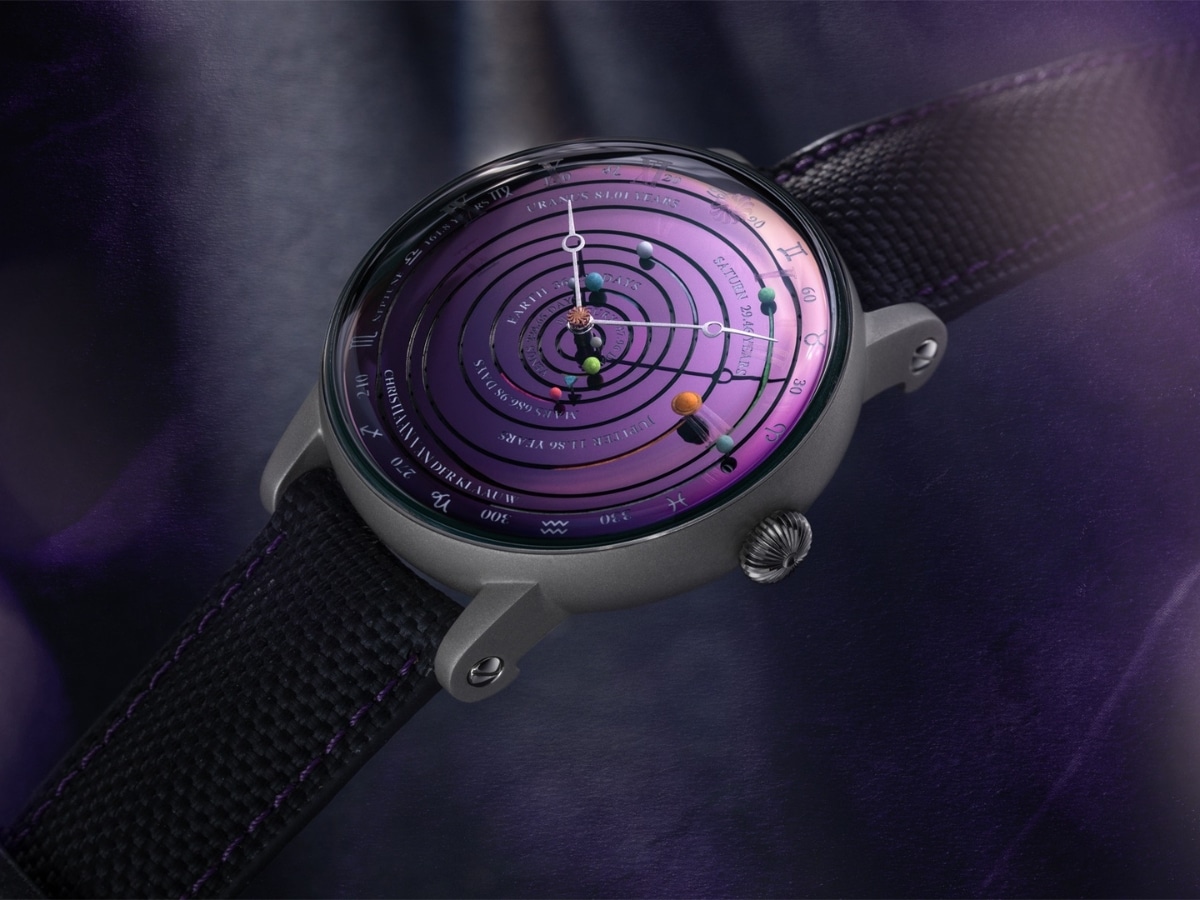
One of the most distinctive features of the watch is its dial, which is made from nine pieces of oxidised silicon rather than traditional metal or enamel.
Through controlled oxidation, the surface develops interference colours that shift with light, moving between deep blue, violet and flashes of green. The result is a dial that constantly changes tone, giving the tiny planets a shifting cosmic backdrop across the Roman numerals engraved directly into the sapphire crystal above the dial.
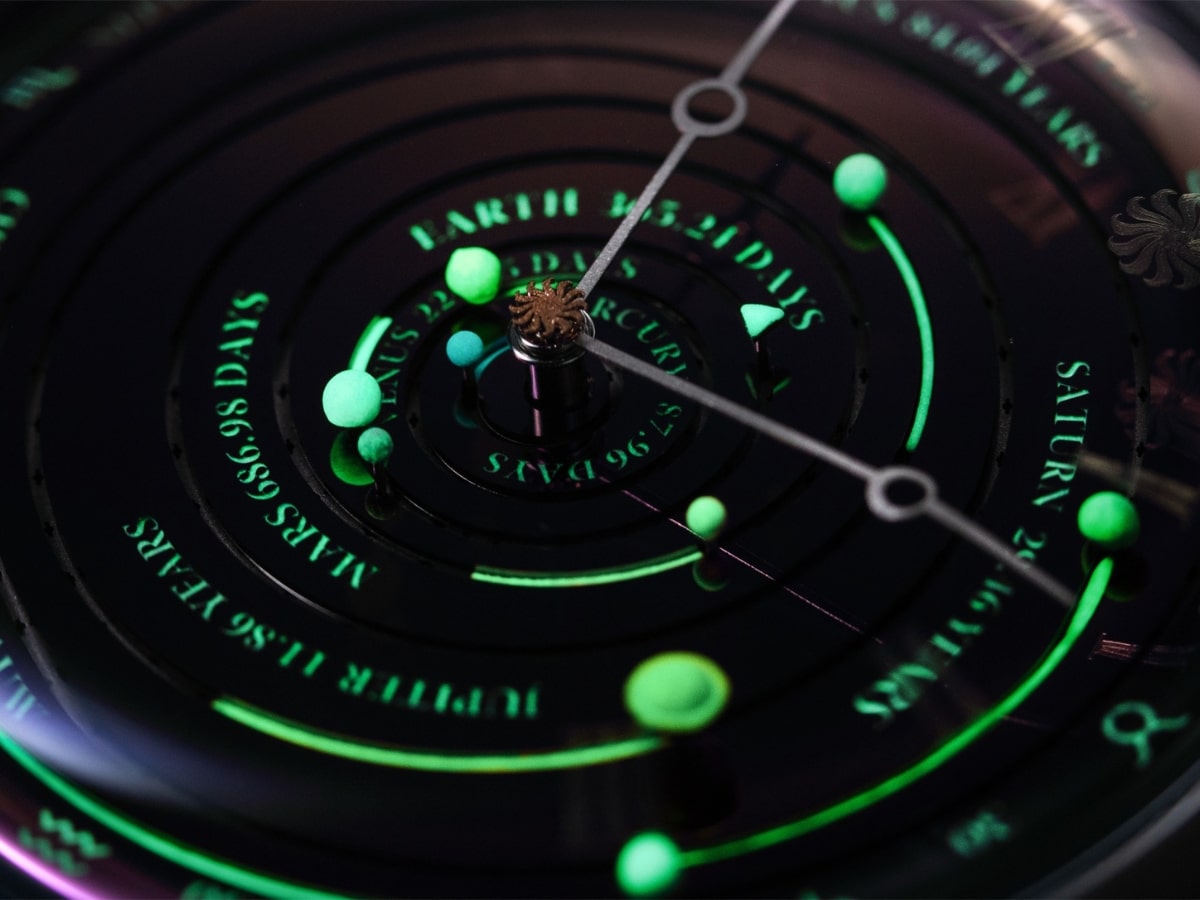
The miniature planets and segments of their orbital paths are painted with Super-LumiNova, allowing the entire solar system to glow in low light. In the dark, the display transforms into a luminous map of planetary motion.
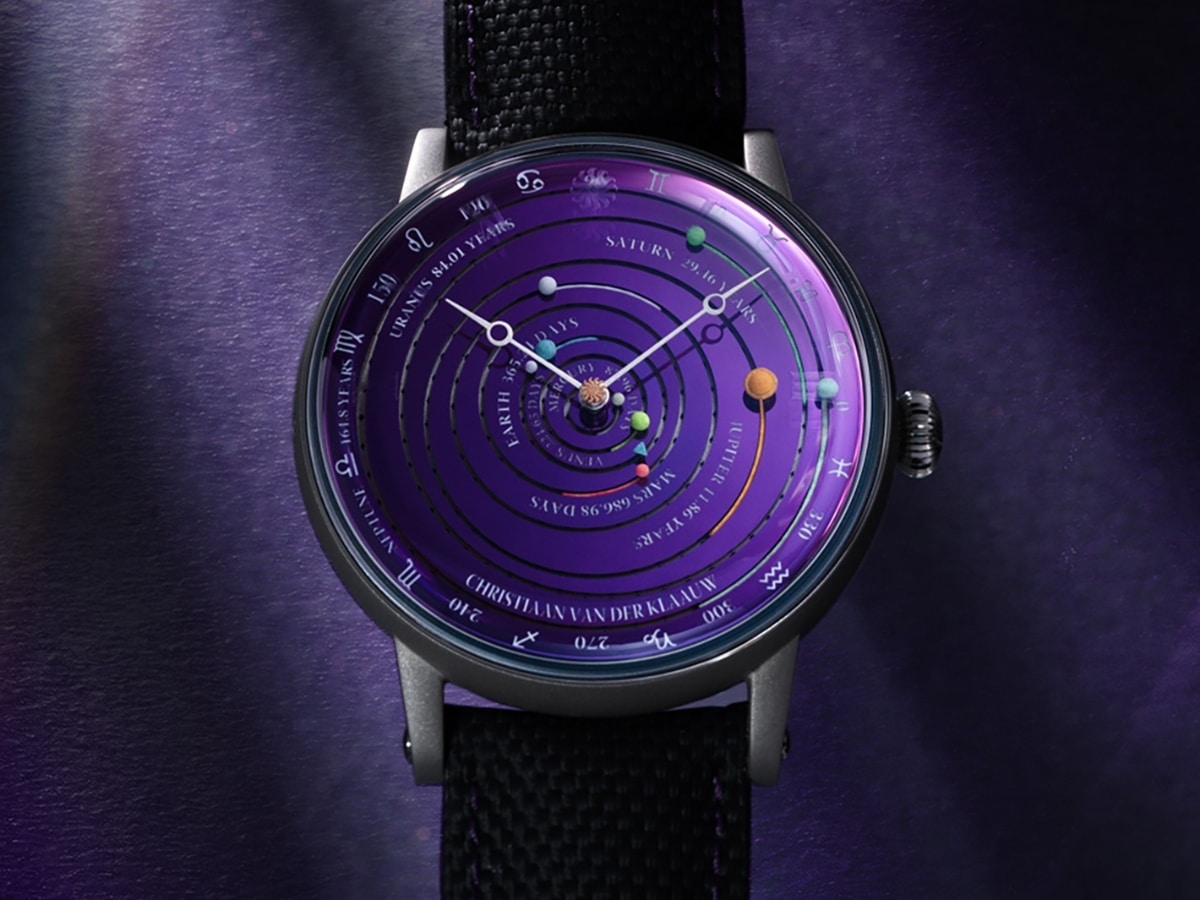
An outer zodiac scale adds another layer. As Earth moves through its orbit, a triangular indicator reveals which region of the zodiac the Sun currently appears in from our perspective. In simple terms, it links the miniature Solar System on the dial to the sky above us. Even the Moon appears beside our blue planet.
A Mechanical Model of the Solar System
Displaying eight planetary orbits in real time requires serious mechanical engineering.
The watch relies on a complex gear train made up of 3,338 gear teeth, each calculated to reproduce the different orbital cycles of the planets. At the centre of the display sits a rotating sun logo that doubles as the seconds hand, while Earth completes a full revolution around the dial every 365.24 days, providing the reference point for the rest of the planetary gearing.

The concept for the mechanism was originally developed by Christiaan van der Klaauw himself. According to the brand, the planetary ratios and wheel layout were first worked out the old-fashioned way, using pencil, compass, and a whole lot of arithmetic, before the design was transferred to CAD to build the final movement.
From there, the mechanism branches outward to drive the other planets. Mercury and Venus move quickly across the dial, while the outer planets orbit far more slowly. Like really slow.
Compared to Mercury, which completes a full orbit in just 87.97 days. Neptune takes 164.8 years. In other words, if you bought this watch today, Neptune wouldn’t finish its trip around the dial until the next century.
Because each planet moves at a different speed, the dial never quite looks the same twice. The inner planets shift position noticeably over months, while the outer planets move so gradually their motion is almost impossible to see from one day to the next.
Hardened Steel Case Built to Take a Knock
The watch is housed in a 44mm stainless steel case that undergoes a low-temperature carbon diffusion treatment. This process increases the surface hardness to roughly 1,200 Vickers, around six times harder than untreated steel.
Then there’s the bead-blasted finish, which gives the steel a matte grey look that reduces reflections and helps hide everyday wear.
At 14.3mm thick, the watch sits firmly in statement-piece territory, though much of that height comes from the astronomical module required to drive the planetarium display.
A Movement Built for the Cosmos
Powering the watch is the automatic Calibre CKM-01, which runs at 21,600 vibrations per hour (3Hz) and delivers a 60-hour power reserve.
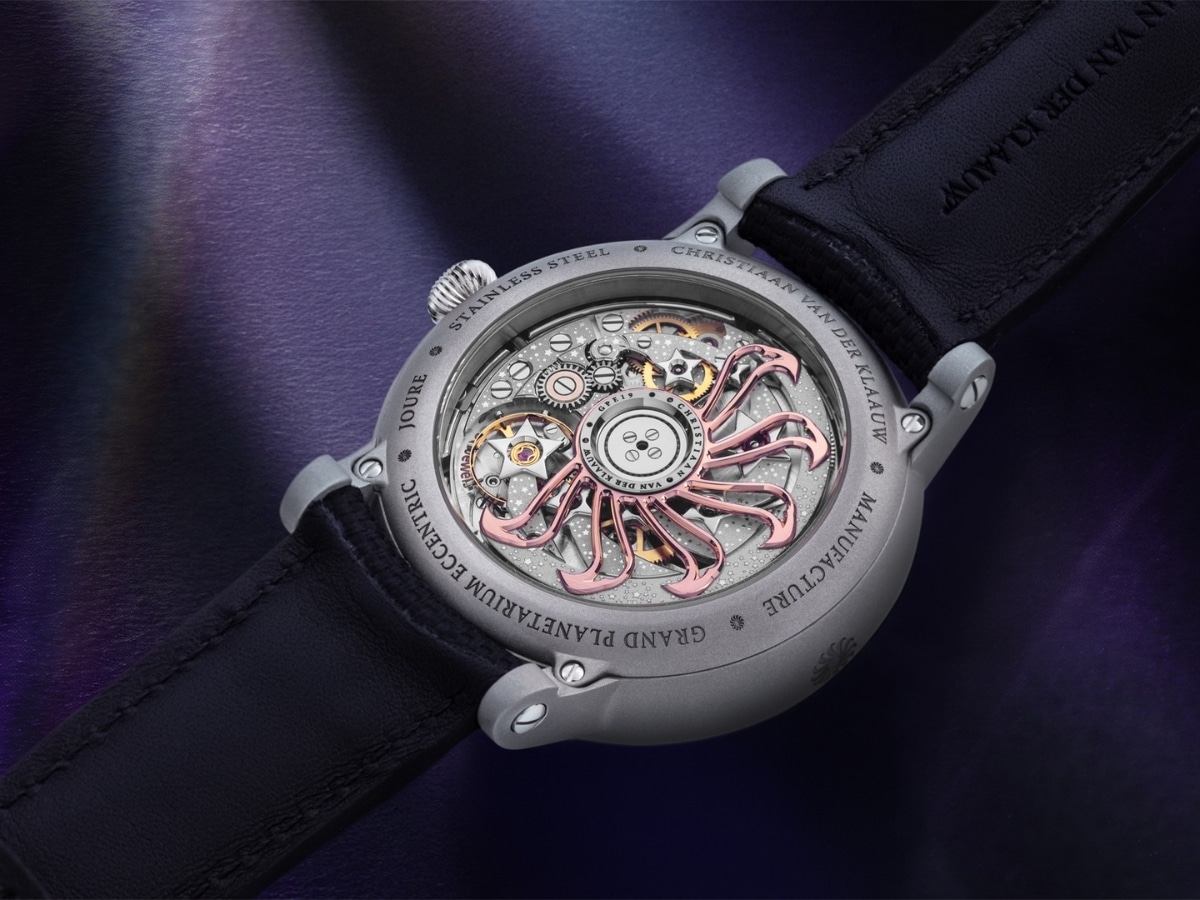
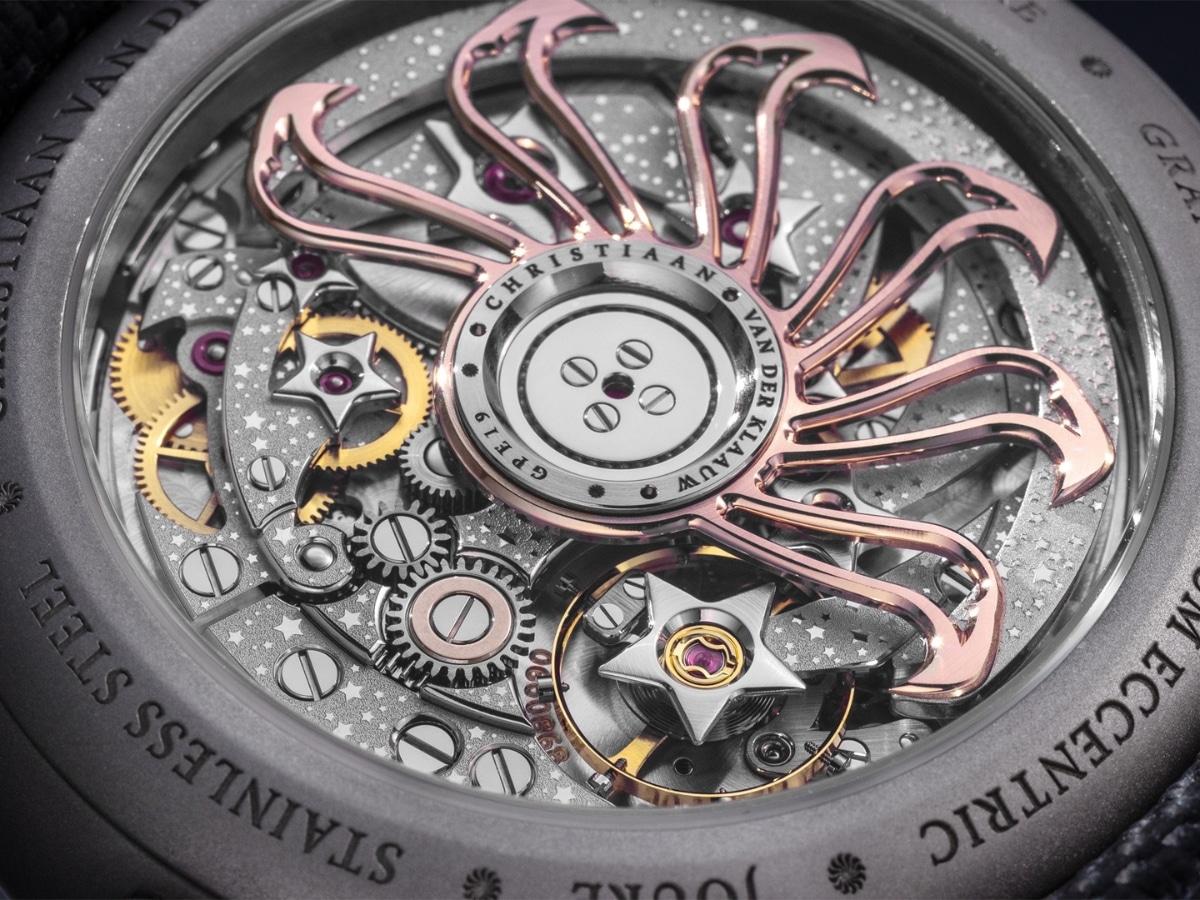
Flip the watch over, and the cosmic theme continues. The movement is decorated with a field of laser-engraved stars across the bridges, while the jewels that hold the gear train in place sit at the centre of star-shaped supports, giving the impression of tiny shooting stars scattered across the movement.
Dominating the view is a large gold rotor shaped like the brand’s logo, which swings back and forth as the watch winds itself.
It’s a fitting detail for a watch designed to model the Solar System. On the front, you see the planets in motion. On the back, the movement itself becomes another small night sky.
Six $260K Watches. That’s It.
The Christiaan van der Klaauw x Revolution Grand Planetarium Eccentric Si14 (Silicium) is priced at AUD $259,230 and limited to just six pieces worldwide.
Given the complexity of modelling the Solar System mechanically, that rarity is unlikely to surprise collectors. Watches that track seconds are easy to find. Ones that quietly track Neptune’s 164-year orbit are another story entirely.
Christiaan van der Klaauw x Revolution Grand Planetarium Eccentric Si14 Key Specs
| Feature | Specification |
| Model | Grand Planetarium Eccentric Si14 (Silicium) |
| Movement | Automatic Calibre CKM-01 |
| Power Reserve | 60 Hours |
| Frequency | 21,600 vph (3Hz) |
| Complications | Hours, Minutes, Central Seconds, Zodiac Indicator, 8-Planet Eccentric Planetarium |
| Case Material | Hardened Stainless Steel (1,200 Vickers) |
| Case Diameter | 44mm |
| Case Thickness | 14.3mm |
| Dial | Multi-piece Oxidised Silicon (Iridescent Finish) |
| Strap | Black Canvas Leather with Purple Contrast Stitching |
| Water Resistance | 30m (3 ATM) |
| Price | AUD $259,230 (approx.) |
| Availability | Limited Edition of 6 Pieces |
Common Questions About Celestial Watches
While often grouped together, they differ in scope. A moon phase specifically tracks the 29.5-day lunar cycle. A celestial complication (or astronomical watch) is much broader; it can track the movement of the stars (sidereal time), the position of the planets, or even the “equation of time,” which is the difference between standard time and the actual position of the sun.
Most standard mechanical watches use a 59-tooth gear to track the moon, which is a slight approximation of the actual 29.53-day lunar cycle. This creates a one-day error roughly every 2.7 years. High-end celestial watches, like those from Christiaan van der Klaauw, use more complex gearing (often with hundreds of teeth) to reach “astronomical” accuracy, requiring adjustment only once every 122 years or, in extreme cases, every 11,000 years.
The Equation of Time is a rare complication that shows the discrepancy between Mean Solar Time (the steady 24-hour clock we live by) and True Solar Time (the actual position of the sun). Because Earth’s orbit is elliptical and tilted, a “true” solar day is rarely exactly 24 hours. This complication tracks that ±15 minute drift, effectively putting a mechanical sundial on your wrist.



























Comments
We love hearing from you. or to leave a comment.