


Updated:
Readtime: 16 min
Every product is carefully selected by our editors and experts. If you buy from a link, we may earn a commission. Learn more. For more information on how we test products, click here.
- Open-ear headphones leave the ear canal completely unobstructed to provide natural situational awareness while running, cycling, or working.
- The technology is split between bone conduction for extreme sports or swimming and air conduction for superior bass and call quality.
- Modern designs have expanded into three distinct form factors: traditional wraparound bands, ergonomic ear hooks, and flexible ear clips.
- Directional audio technology projects sound straight into the ear canal, keeping sound leakage minimal even in quiet environments.
The best open-ear headphones keep your ears unblocked so you stay aware of your surroundings while you run, ride, swim or take a call, and our top pick is the Shokz OpenFit Pro for its sound, comfort and class-leading call quality. Below are our top picks across bone conduction, ear hook and ear clip designs, with a full guide to how each type works further down.
The Best Open-Ear Headphones at a Glance
- Best overall: Shokz OpenFit Pro – the best all-round mix of sound, comfort and call quality
- Best for runners and cyclists: Shokz OpenRun Pro 2 – secure bone-conduction fit with added bass
- Best for swimmers: Shokz OpenSwim Pro – IP68 waterproofing plus 32GB of onboard storage
- Best sound quality: Bose Ultra Open Earbuds – the richest audio of the clip-on designs
- Best soundstage: Beyerdynamic Amiron 200 – a wide, open sound with punchy bass
- Best battery and comfort: Sony LinkBuds Clip – up to 37 hours total and a barely-there fit
Types of Open Ear Headphones, Explained
Open ear headphones come in three main form factors – bone conduction, ear hook, and clip on – utilising two distinct forms of technology: bone conduction or air conduction.
| Category | Best For | Audio Quality | Awareness Level |
| Bone Conduction | Swimmers, Triathletes, Heavy Rain | Average (Bass light) | Maximum (100% open ear canal) |
| Ear Hook | Runners, Cyclists, Daily Calls | Great (DirectPitch tech) | High (Clear balance) |
| Ear Clip | Fashion-forward, Casual users | Good | Moderate (Sits closer to canal) |
Bone Conduction
These are really the OG of open ear headphones. One of the most famous and earliest use-cases is Ludwig van Beethoven, who bit down a rod attached to a piano so he could hear his music despite being partially deaf. In the modern era, these are the headphones of choice for serious runners, triathletes, swimmers, and people with specific forms of hearing loss.
Bone conduction headphones don’t play audio like a traditional speaker up against your ear canal. Instead, bone conduction headphones work by vibrating the bones in your skull to convey sound, bypassing the ear drum. It leaves your ear completely open – even more open than other open ear technologies – though it can take some getting used to.
It used to be that upping the bass on the headphones meant getting a slightly concussive feeling (which can still be true on entry-level options), but some brands like Shokz’ pro range use a combination of bone conduction and air conduction technology, vibrating the high and mid-tones through your skull, and playing the bass from similar speakers to the ear hook design headphones. It strikes a good balance for audio quality. The trade off is that they’re less waterproof.
Best Bone Conduction Open Ear Headphones
1. Shokz OpenRun Pro 2
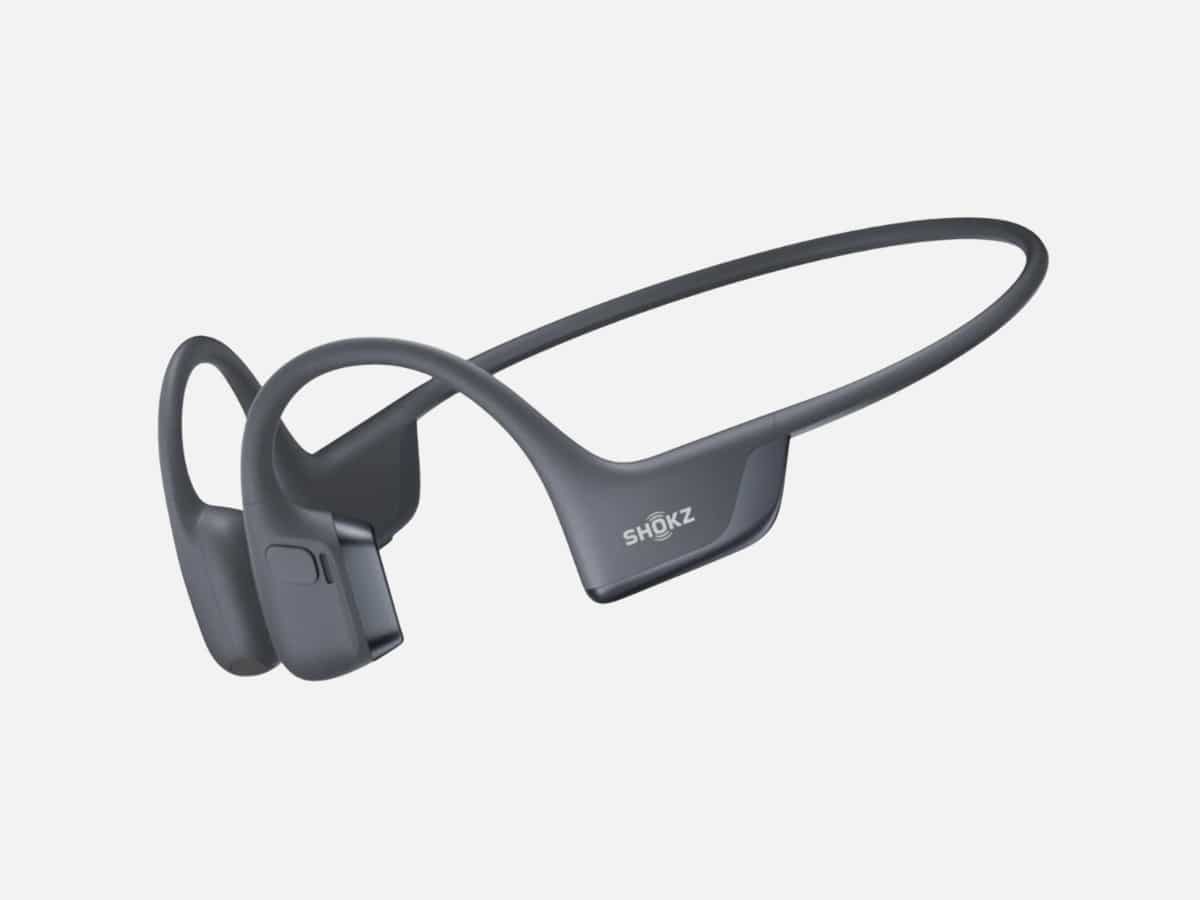
The best brand for bone conduction headphones in Australia is Shokz, which has been the industry leader since Jawbone went under. The Shokz OpenRun Pro 2 are beloved by runners and cyclists everywhere.
Shokz OpenRun Pro 2 Key Specs
- Australian RRP: $319 AUD (frequently found around $304–$318 AUD retail)
- Technology: DualPitch™ technology combining bone-conduction (for mids/highs) and air-conduction (for bass)
- Battery Life: Up to 12 hours of playback; 5-minute quick charge yields 2.5 hours of use
- Water Resistance: IP55 sweat and rainproof rating (features a waterproof USB-C charging port)
- Weight: 30 grams
- Connectivity: Bluetooth 5.3, Multipoint pairing
Pros
- Widely rated the best-sounding bone conduction headphones available
- Lightweight titanium frame praised for a secure run and ride fit
- 12-hour battery, USB-C fast charge and Bluetooth 5.3 multipoint
Cons
- Buttons are hard to tell apart by feel
- Microphone struggles in strong wind
2. Shokz OpenSwim Pro
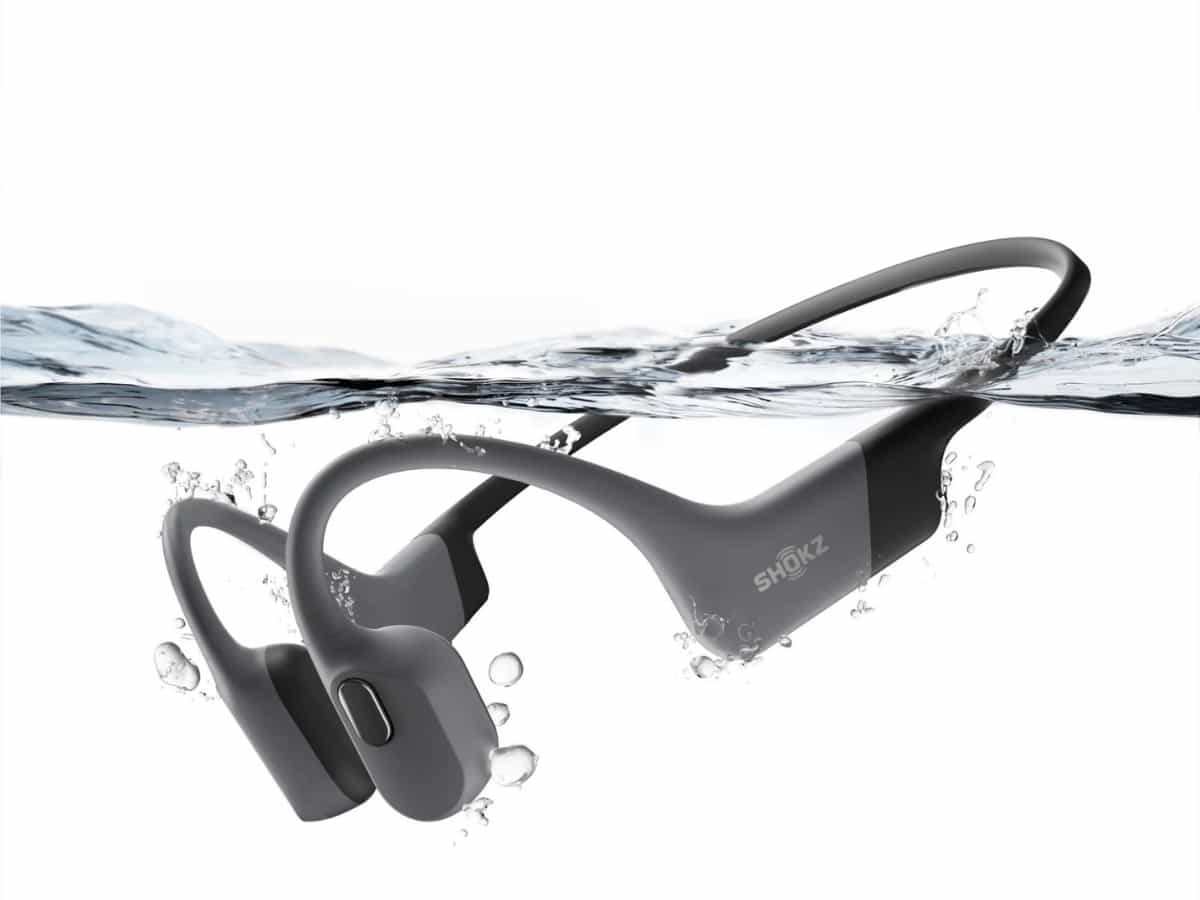
The OpenSwim Pro is perfect for swimmers, triathletes and anyone who gets caught in the rain.
Shokz OpenSwim Pro Key Specs
- Australian RRP: $299 AUD (frequently found around $269–$298 AUD retail)
- Technology: PremiumPitch™ 2.0+ bone conduction
- Storage Capacity: 32GB built-in MP3 storage (holds up to 8,000 songs for phone-free swimming)
- Battery Life: Up to 9 hours in Bluetooth mode; up to 6 hours in MP3 mode
- Water Resistance: IP68 waterproof rating (submersible up to 2 metres for up to 2 hours)
- Connectivity: Bluetooth 5.4 + MP3 dual modes with multipoint pairing
Pros
- Rare combination of IP68 waterproofing, Bluetooth and 32GB onboard storage
- Reviewers call it a genuine step up from the original OpenSwim
- Hydrodynamic frame designed not to drag in the pool
Cons
- Audio leaks in noisy or windy environments
- Sound quality trails in-ear headphones on land

I also really enjoy H2O Audio’s Tri 2 Multi-Sport headphones, which is designed for triathletes, and has more seamless playback for underwater listening.
Ear Hook
Personally, I find these to be the best kind of open ear headphones, requiring the fewest compromises. Most models are very comfortable, and because you’re not trying to stick anything in your ear, it’s generally easier to find a good fit.
Ear hook open ear earphones are similar to regular true wireless headphones, but instead of going in your ear, the speakers on the ear hooks play music near your ear, and some of the higher end pairs can actually sound very good. This is also the the best form of open ear headphones for taking calls, with better quality microphones.
Your ear isn’t as open as it is on the bone conduction headphones, but the audio sounds significantly better, and it doesn’t require as much of an adjustment, because you’re not vibrating music through your skull. In my experience, they also don’t interact with helmet straps as much as the other forms on open ear headphones.
Best Ear Hook Open Ear Headphones
3. Shokz OpenFit Pro
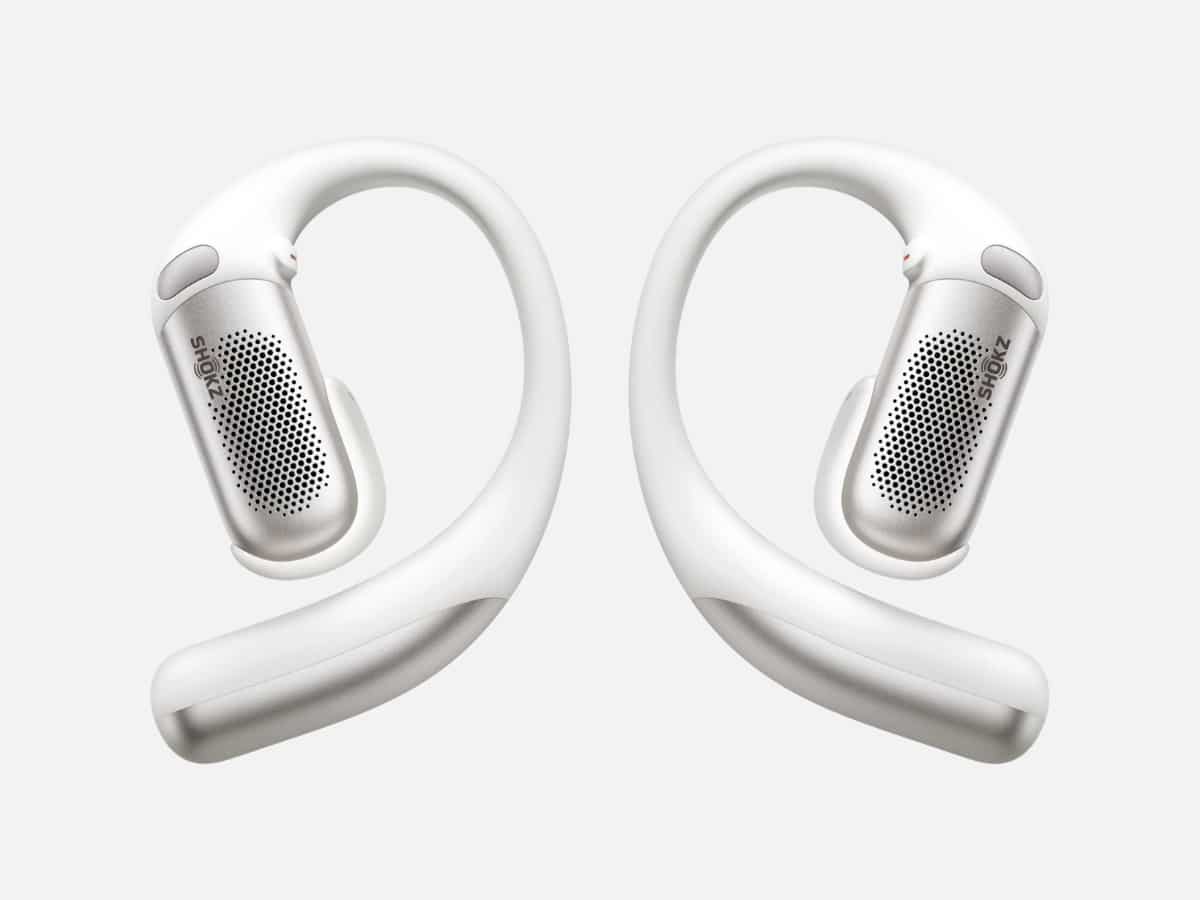
My personal favourite pair of ear hook open ear headphones is the Shokz OpenFit Pro, I have worn them for hundreds of hours this year alone. What makes them special over the many other pairs I’ve tried is the microphone. I can be riding my bike up to 25kmph chatting on the phone to my wife, and she can’t even hear the wind. Meanwhile, she complains when I use my AirPods Max for calls in a quiet room, so she’s a tough critic.
They’re also so comfortable that I frequently forget that I’m wearing them, only realising that I’ve left them on when I get changed for bed, which is a credit to Shokz’ patented Ultra-Soft Silicone. The only drawback is that they’re almost $400. A step down in price, but still very good is the Shokz OpenFit 2+.
Shokz OpenFit Pro Key Specs
- Australian RRP: $399 AUD (street price sits around $371–$378 AUD)
- Technology: Open-ear air conduction featuring Shokz SuperBoost™ ultra-large drivers
- Audio Features: Optimised for Dolby Atmos
- Battery Life: Up to 12 hours (earbuds alone) and up to 50 hours total playback with the charging case (with noise reduction off)
- Microphone: AI-enhanced clear calling with proprietary open-ear wind and noise reduction
- Water Resistance: IP55 sweat and splash resistance
Pros
- Best audio quality of any Shokz product to date, with Dolby Atmos support
- Class-leading 50-hour total battery life
- Open-ear noise reduction is a genuine category first
Cons
- Noise reduction cannot match sealed in-ear ANC in loud places
- Call clarity can suffer in busy environments
4. AMIRON 200 Open-Ear Earphone
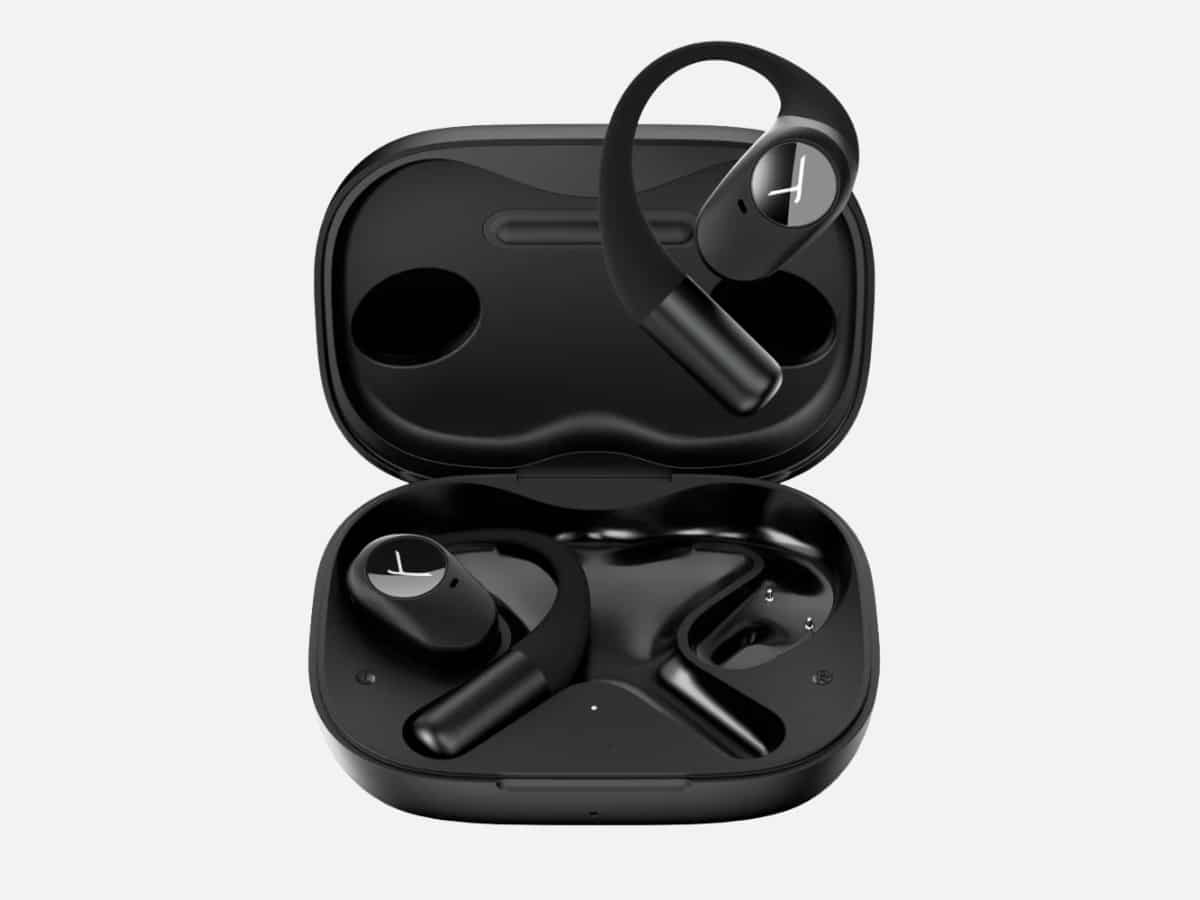
Beyerdynamic’s first open-ear earbuds bring the brand’s audio pedigree to the category, and reviewers single out a wide, open soundstage and punchier bass than most rivals. With up to 36 hours of total battery, IP54 weather resistance and app-based EQ, they suit runners and commuters who care about sound.
Beyerdynamic Amiron 200 Key Specs
- Australian RRP: $299 AUD (retailers regularly discount to $239 AUD)
- Technology: Open-ear true wireless air conduction with an ergonomic ear-hook design
- Battery Life: Up to 11 hours on a single charge; up to 36 hours total playback with the charging case
- Water Resistance: IP54 sweat, dust, and splash certification
- Microphone: High-quality integrated microphone for athletic training sessions and commuting
- Fit: Designed to comfortably accommodate glasses, hats, and jewellery
Pros
- Wide, open soundstage that punches above the category
- Punchy, textured bass for an open-ear design
- 36-hour battery, wireless charging and app EQ
Cons
- No noise isolation by design
- Microphone is the weakest part of the package
Other competitors in the ear hook space include JBL, Belkin, Nothing, BlueAnt, and Audio Technica, with prices ranging from $89-$249 from those brands.
Ear Clip
Ear clips are the most common form of open ear headphones, with the category gaining mainstream popularity in the past year or so. Ear clips are very small earphones that attach the side of your ear, with a little speaker ball going close to your ear canal. It sounds better if you get the headphone into the ear canal, although that defeats the purpose of being open ear. This is the most difficult form of open ear headphones to get a great fit on, and the one where ear shape matters the most.
Personally, I’m less of a fan of these, because I find most of the offerings I’ve tried are somewhat uncomfortable. They interact with my helmet straps and piercings in annoying ways. Other complaints include lower quality sound than the other options listed above, and difficulty with the microphone because it’s so much further from the mouth. Not to mention there just isn’t as much room to put tech in something this small. There’s also almost never any physical controls on the buds, either forcing touch controls (which are clunky on buds that occasionally need to be adjusted, resulting in accidental touches), or just not having onboard controls at all.
That said, the rising popularity means that brands are getting bold and adding interesting touches, like Motorola partnering with Swarovski to bejewel the Moto Buds Loop. There are also bigger brands trying their hand at the format, so we’re likely to see significant improvements faster than the other styles.
Best Ear Clip Open Ear Headphones
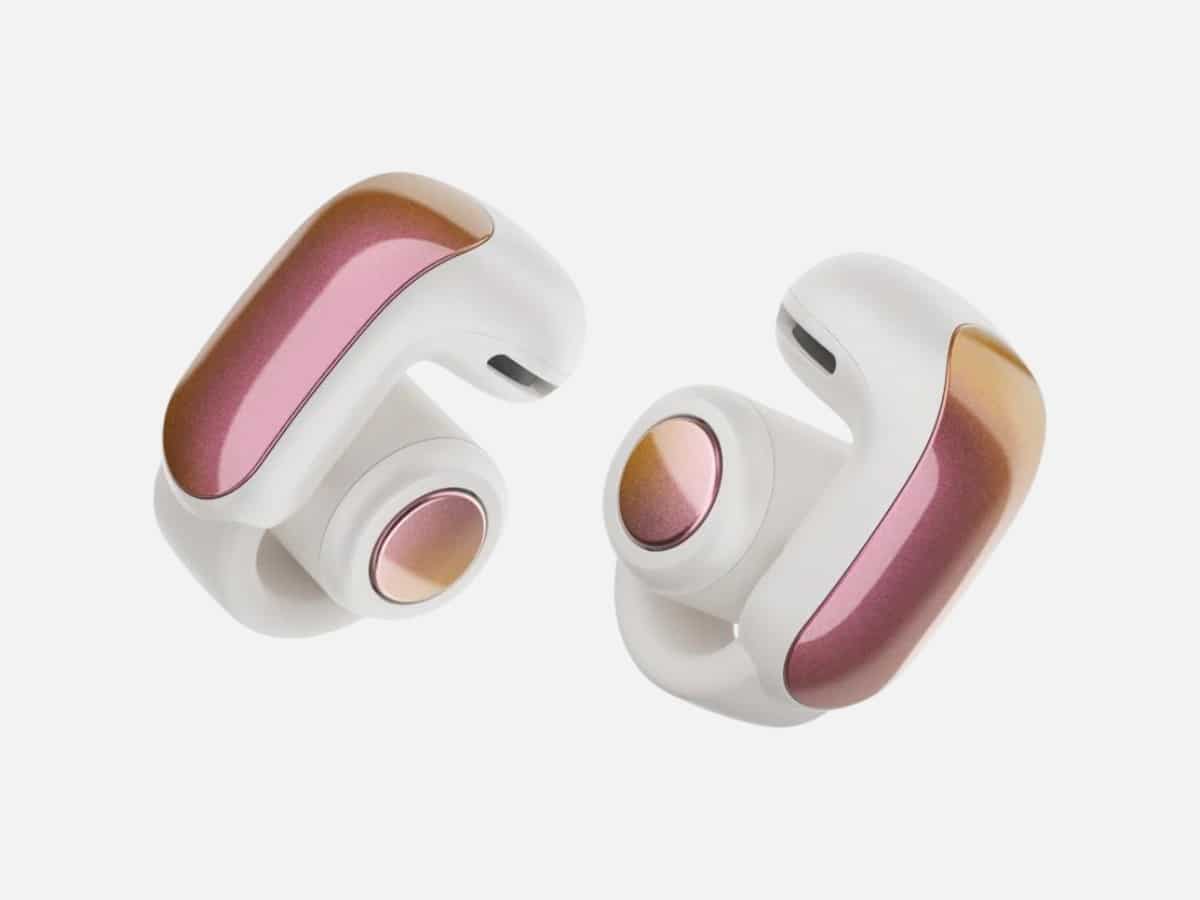
5. Bose Ultra Open Earbuds
Based on sound quality alone and ignoring comfort and special features, my pick in this category is the somewhat unreasonably priced $449 Bose Ultra Open Earbuds.
Bose Ultra Open Earbuds Key Specs
- Australian RRP: $449 AUD (commonly found on sale between $315–$325 AUD)
- Technology: OpenAudio™ air conduction with a flexible cuff-style ear clip
- Audio Features: Bose Immersive Audio (spatial audio technology) and Snapdragon Sound
- Battery Life: Up to 7.5 hours of playback (halves to 4.5 hours with Immersive Audio on); up to 27 hours total with the charging case
- Water Resistance: IPX4 water and sweat resistance
- Controls: Physical button on the barrel of the clip (supports Auto Volume adjustment via the app)
Pros
- Clip-on cuff praised for all-day, barely-there comfort
- Spatialised audio sounds musical with surprising bass
- Battery life regularly beats the stated spec
Cons
- Call quality is mediocre for the price
- No wireless charging and a steep price
6. Sony LinkBuds Clip Wireless Headphones
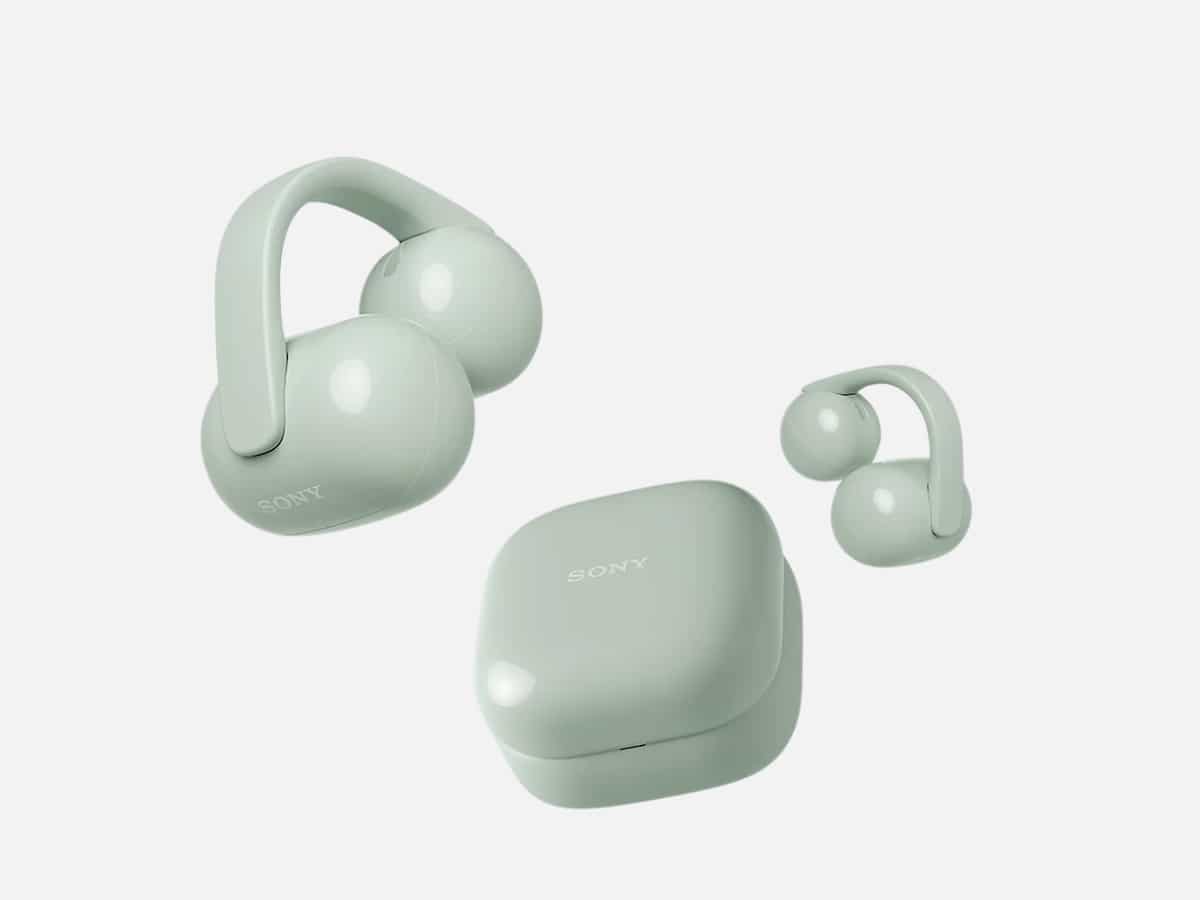
Sony’s clip-on entry leans on comfort and endurance, with a lightweight design and the longest battery in this group at up to 37 hours total. Reviewers rate the call quality among the best of the open-ear clips, though there is no active noise cancellation and sub-bass is light.
Sony LinkBuds Clip Key Specs
- Australian RRP: $330 AUD (street price typically ranges between $245–$267 AUD)
- Technology: Open-ear clip-on true wireless format
- Battery Life: Up to 9 hours (earbuds) and up to 37 hours total playback with the charging case
- Water Resistance: IPX4 water resistance rating for the earbuds (charging case is not water-resistant)
- Key Feature: Designed specifically to leave the ear canal completely unblocked while maintaining a secure grip on the outer ear cartilage
Pros
- Longest battery in this group at up to 37 hours total
- Lightweight clip praised for comfort and stability
- Call quality rated among the best of the clip-ons
Cons
- No active noise cancellation and light sub-bass
- Priced close to the pricier Bose Ultra Open
Other brands in the space include Skullcandy, JBL, JLab, Philips and Soundcore.
What Are Open Ear Headphones, and Who Can Use Them?
There are so many options when it comes to headphones. You can go over-ear, in-ear, on-ear, true wireless, open back, closed back, open-ear, air conduction or bone conduction, just to name a few. That’s not a bad thing. It means there’s a technology for every use-case. Open ear headphones are the ideal choice for people who need to stay aware of their surroundings while they listen to music, and also for people who just don’t like having stuff in their ears.
I’ve been using open ear headphones for running and cycling since 2011, and have tried dozens of pairs over the years. It’s really been only this past year or two, though, that open ear headphones have gone mainstream, with more options than ever and the rise of two new form factors of open ear headphones.
Open ear headphones are headphones that allow you to hear the world around you while you’re listening to music, calls, podcasts etc. While you can do that with transparency mode on some conventional headphones, that relies on external microphones piping in the outside world, which can be compromised if there’s a lot of wind, or other sub-optimal environmental conditions.
Open ear headphones, however, leave your ear canal free to hear the world around you naturally. It’s like having a tiny speaker near your ear, rather than a headphone encasing your ear.
Open ear headphones are designed for a wide variety of use-cases, though their primary purpose is for outdoor exercise when it’s vital to be aware of your surroundings. They’re beloved by cyclists and runners, and are the only headphones allowed at some of the more serious marathons. They’re also good for retail workers, parents walking a pram around the park waiting for their baby to finally fall asleep, office workers, and people who like listening to things but hate having their ears blocked.
And as artificial intelligence takes over more facets of our daily lives, one of the leaders of major open ear headphone company Shokz has suggested that open ear headphones could be good for those who want to stay connected to their AI agent at all times. We’ll have to wait and see on that one, although it’s probably not far away.
When evaluating open ear headphones, you can’t use the same scale of quality you’d use to judge other types of headphone technology. You’re never going to get the same audio clarity that you’d get from Apple’s AirPods Pro 4, for example.
Open ear headphones aren’t for audiophile listening – you’re not going to kick back on a lazy Sunday afternoon and try to make out a song’s ghost notes and little breaths on a pair of bone conduction headphones. That said, the 2026 class of open ear headphones sounds a million times better than they did back in the wired days of 2011 – and they’re a significantly better option than playing music out loud from your phone and making yourself the enemy of everyone in your vicinity.
If you’re someone who thinks you could benefit from using open ear headphones, this guide is for you.
Common Questions About Open Ear Headphones
Generally, no – unless you are in a completely silent room and pumping the volume past 80%. Modern air-conduction models (like ear hooks and clips) use directional acoustic tech that projects sound waves straight into your ear canal, cancelling out sound leakage. While there is a tiny amount of leakage at maximum volume compared to sealed in-ear buds, people standing a metre away in a gym, office, or on a street won’t hear your playlist or podcast.
It entirely depends on your activity:
Choose bone conduction if you are a swimmer, triathlete, or hardcore runner. Because they vibrate your skull bones directly, they leave your ear canal 100% physically unobstructed and can handle heavy water immersion (IP68 ratings).
Choose air conduction (ear hooks and clips) if you want better sound quality. They use miniature speakers directed at your ear canal, offering significantly wider frequency ranges, richer bass, and clearer microphones for phone calls.
Yes, and in some ways, they are safer than traditional earbuds. Because they don’t sit inside your ear canal, they don’t trap moisture or bacteria, drastically lowering the risk of ear infections. However, just like standard headphones, they can still cause noise-induced hearing loss if listened to at excessive volumes for long periods. The real safety benefit is situational: keeping your ears open prevents “auditory masking,” ensuring you hear oncoming traffic, sirens, and hazards while training outside.























Comments
We love hearing from you. or to leave a comment.