

Updated:
Readtime: 4 min
Every product is carefully selected by our editors and experts. If you buy from a link, we may earn a commission. Learn more. For more information on how we test products, click here.
As long as we’ve been able to marvel at our own reflection, we’ve searched for ways to improve it: self-care is as old as the human race. There are combs dating back to 800AD, carved from bone, and often buried alongside their dead owners, gesturing towards the significant place they held in the lives of our ancestors.
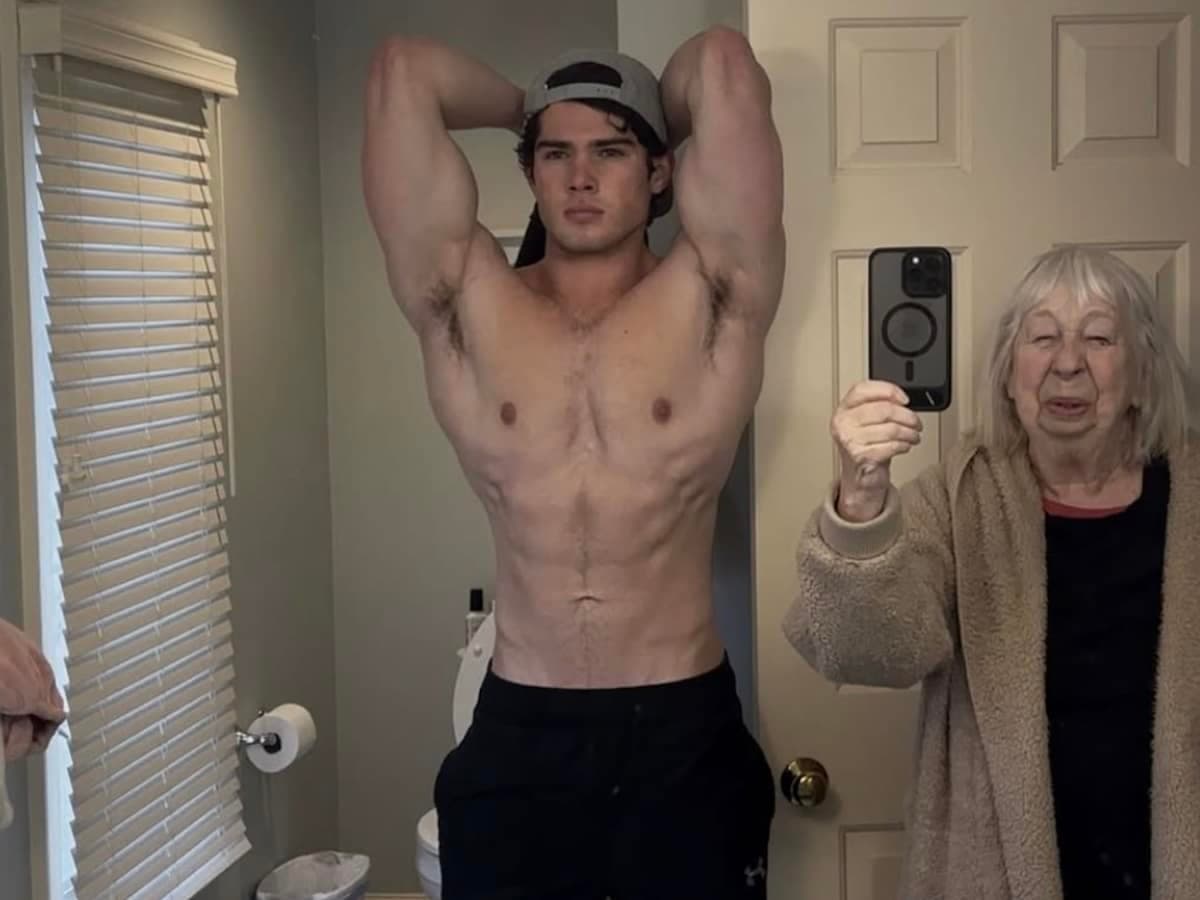
The “maxxing movement” is just one more instalment in this long history of physical self-tinkering, albeit taken to an extreme that’s typical of the age of excess that we live in. A term that started life on incel forums, looksmaxxing has now evolved into an umbrella phrase that covers an increasingly distinct range of sub-categories.
There’s softmaxxing, using gentle interventions into appearance, from skincare to teeth whitening. There’s hardmaxxing, more extreme measures that most notably include breaking bones in order to alter one’s skeletal structure. There’s even healthmaxxing, an approach to overall fitness that involves following crushing viral trends related to everything from sleep to fibre intake.
Though the trend emerged out of the internet’s seedy underbelly, it’s not always harmful in nature. Looking after one’s body has a range of significant improvements, not least of all on mental health, and though some online self-care hubs are rife with misinformation, many are a place of support and solidarity.
At their best, looksmaxxing forums can unite disparate strangers towards the common goal of finding a new relationship with their body and health – and in a worryingly digital age, where so much of our lives are spent in front of a screen, that has profound benefits.
But it’s worth looking at what this fixation on looks says about who we are, and where we’re heading as a society as a result.

Maxxing The Culture of Narcissism
In the late ‘70s, the theorist Christopher Lasch released his magnum opus, The Culture of Narcissism. In it, Lasch laid out a general kind of malaise that had set into modern society. After Watergate, the assassination of JFK, and the petering out of the hippy movement, American culture was increasingly disillusioned with the political sphere at large. Too many widespread social defeats had led the populace to believe that real change was impossible.
And so, according to Lasch, the Western world moved towards a sphere where change could be achieved: the personal sphere. Lasch saw the rise in plastic surgery and optimisation of the body as a symptom of a generalised hopelessness. You might not be able to change the government, but you can change your own face.
The age we’re living in now has seen those twinned forces of self-obsession and nihilism only increase. Younger generations are increasingly apolitical, checked out from a political system that seems guided solely by the interests of old rich dudes.
And so they turn to the optimisation of the body, following the lead of fitness influencers who cast physical perfection as a way to make sense of a senseless world.
Where Does The Middle Ground Lie?
Of course, seeing yourself as distinct and alone will only compound the problems that drove you to that philosophy of life in the first place. As soon as you start seeing community as out of your control, and politics as the domain of other people, that feeling of disillusionment will harden.
This is the threat hidden in looksmaxxing, or any of the maxxing sub-genres. Taken broadly, the trend encourages people to improve their body not because it’ll connect them to the world, but the opposite. Too often, the goal is to turn oneself into a distinct product, that can then be traded in for the perfect partner; the perfect job; the perfect home. It can be a way of casting the world as a kind of dog-eat-dog, essentially cruel place, where extreme efforts must be taken to rise to the top, and best all competitors.
There’s a middle ground to be walked: a way to foreground the human body, without turning it into another product, or an object disconnected from the wider community. Which is where the aforementioned solidarity of these communities comes in.
Focusing on one’s own body and its health need not be a way of turning inwards. Rather, it can be a way of turning outwards towards the world, creating community, rather than resisting it. We can focus on our body not because of what it will get us; but because it reminds us that we exist. In a world of other human bodies. These days, such a reminder is more important than ever.























Comments
We love hearing from you. or to leave a comment.