
Updated:
Readtime: 8 min
Every product is carefully selected by our editors and experts. If you buy from a link, we may earn a commission. Learn more. For more information on how we test products, click here.
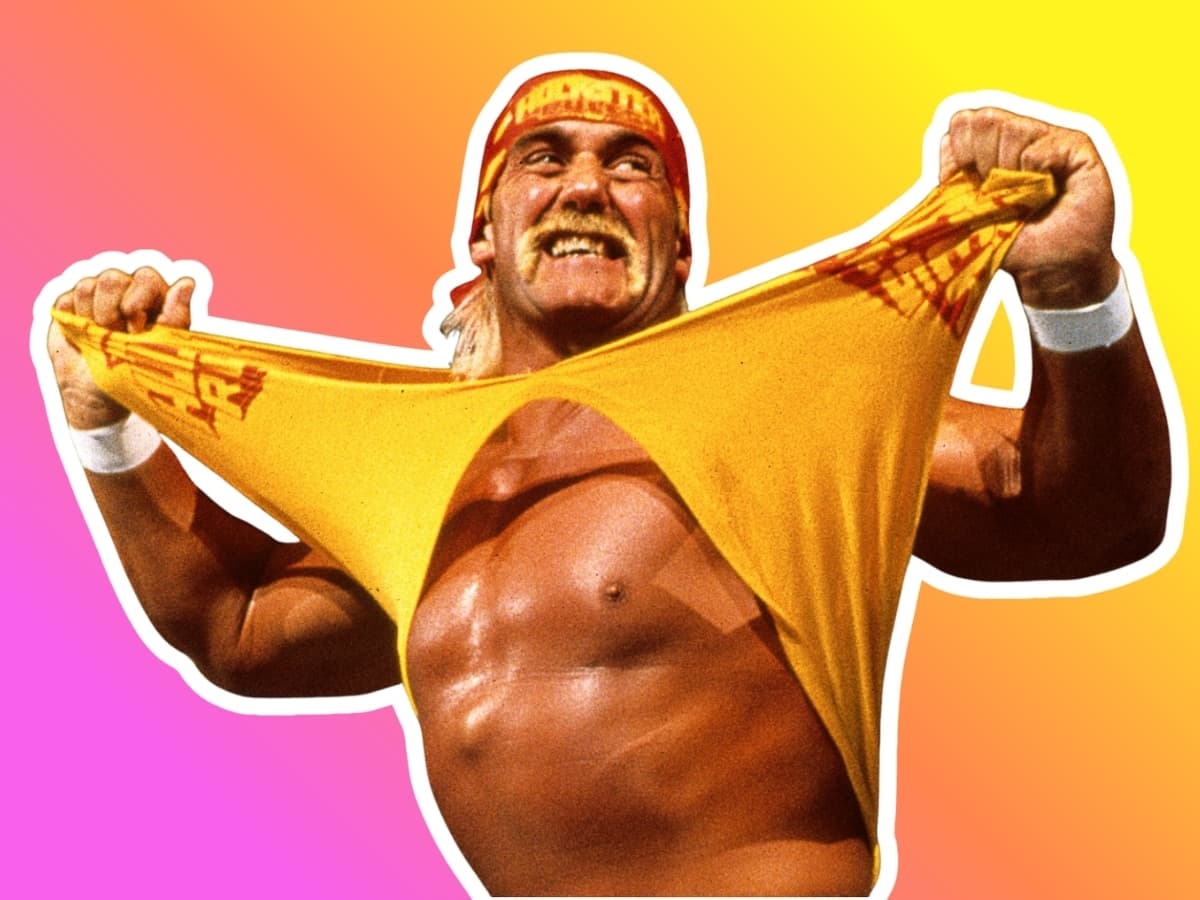
You don’t have to be a wrestling fan to know the name Hulk Hogan. The Hulkster is still the most famous professional wrestler on earth (although Dwayne ‘The Rock’ Johnson might have something to say about that) even a year after his death. But most people only know the red-and-yellow-clad icon of the ring, not the man behind the moustache. Netflix’s Hulk Hogan: Real American aims to change that, telling the story of Hogan’s rise from college dropout to global cultural icon. It would be an inspiring story if it wasn’t such a uniquely American tragedy.
Hulk Hogan: Real American opens at Hogan’s 2025 funeral. A reminder that what we’re about to see are Hogan’s final on-camera appearances before his unexpected death in July 2025. And as with Hogan’s life, this version of the Hulkster – real name Terry Gene Bollea – is full of contradictions. An American hero who spent much of his life in disgrace. A family man with a broken family. A superstar who thrived on the adulation of his fans, being booed out of the building. A prisoner of his own gimmick.
Who was Hulk Hogan, really?
Over four episodes, we’re treated to the story of Hogan’s life, from the ‘territories’ of pre-80s American pro wrestling to the top of the entertainment world. It was on the back of Hogan’s immense popularity that Vince McMahon turned WWE (then the WWF) into a global cultural phenomenon.
In the 80s, Hogan’s face was everywhere, from lunchboxes and vitamin packets to Saturday Night Live, MTV and Rocky III. Together, Hogan and McMahon took pro wrestling out of high school gyms and smoky bingo halls and into arenas, stadiums and screens around the world. But when McMahon decided Hogan’s time was up, Hogan was forced to re-invent himself as a bad guy. This new ‘Hollywood’ Hulk Hogan ushered in a New World Order of wrestling, once again taking the business to new heights.
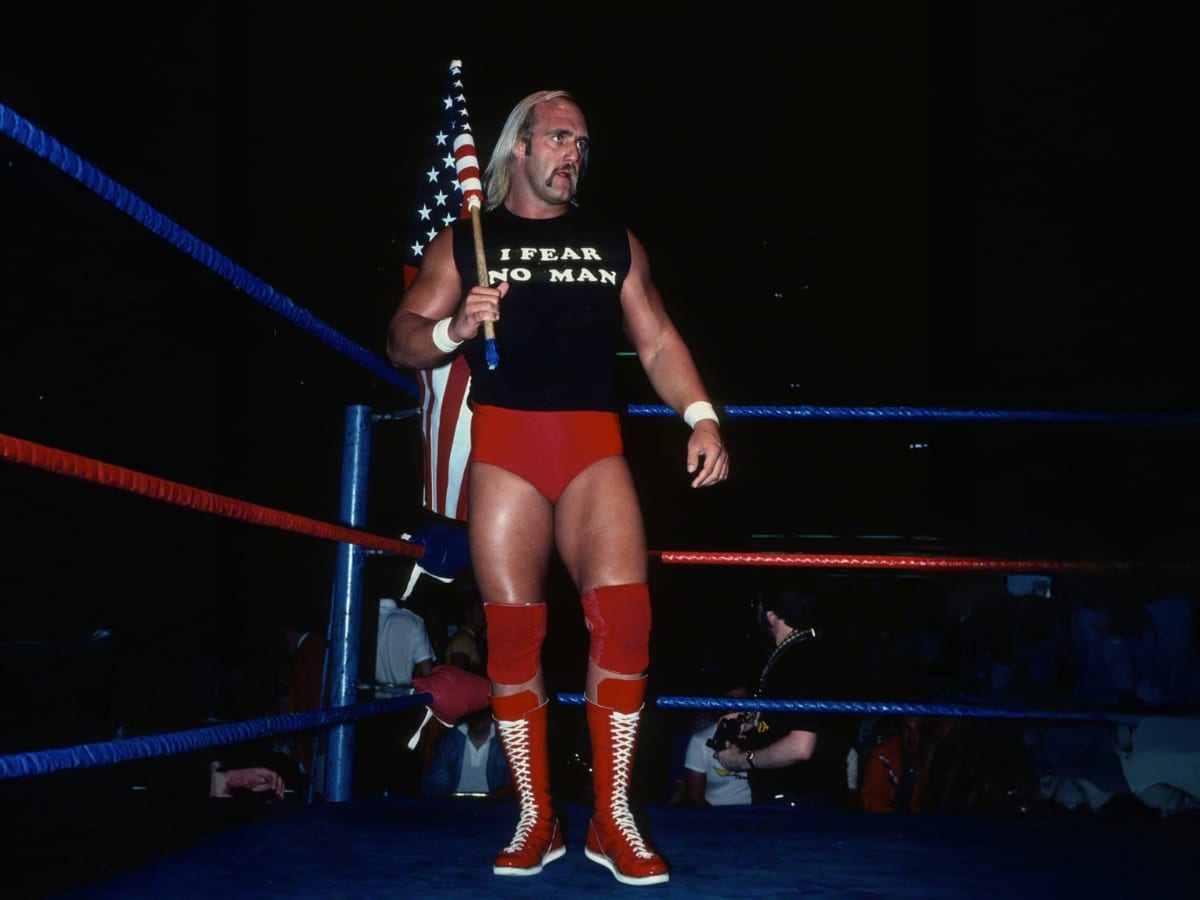
In wrestling, there’s always one guy – The Guy – who is undoubtedly the number one star in the business, who ‘owns’ an era of professional wrestling. ‘Stone Cold’ Steve Austin. The Rock. John Cena. Hulk Hogan is the only guy to do it twice.
If it ended there, it would be a genuine American rags-to-riches epic. From a young kid driving thousands of miles a week to work in smoky small-town armories for next-to-nothing, to a global cultural icon. But in wrestling, if you don’t die a Reagan-era hero, you’ll live long enough to become a Trump-era villain.
Hogan’s story can’t end on the immortal moments – bodyslamming Andre The Giant at Wrestlemania III, going face-to-face with The Rock at Wrestlemania 18 – because Hogan has always been a lens through which to view America’s cultural zeitgeist. He emerged in Reagan’s America, all patriotism and muscles, waving the flag, praising troops, and fighting off dastardly Iranian and Russian villains.
In the late 90s, Hogan’s cartoonish good guy act had gone stale, so the ultimate good guy turned heel just as America was losing the last shreds of its innocence in the Monica Lewinsky scandal. In a post-9/11 world, the old Hulk returned, clad in red-and-yellow, to take us all back to a more innocent time.
A Prisoner of His Own Gimmick
Like any great American pop-cultural icon, Hogan’s personal life overshadowed his character’s on-screen exploits. An acrimonious divorce from his first wife, Linda – who brings her own unique flavour to Hulk Hogan: Real American – drugs, money troubles, and an infamous sex tape. Hogan won a landmark lawsuit against the edgy US culture website, Gawker, putting it out of business. But the legal process unearthed footage of Hogan using racial slurs and expressing openly anti-black views. The All-American hero was a racist; he was (temporarily) erased from WWE history. His life and career amounting to little more than tabloid fodder.
Hogan has always reflected America’s best and worst qualities – the values of hard-work, honesty and faith, mixed with racism, avarice, myth-making and ego. The guy who told us to train, say our prayers and take our vitamins was also the guy caught on tape using racial slurs after having sex with his friend’s wife, in his friend’s bed.
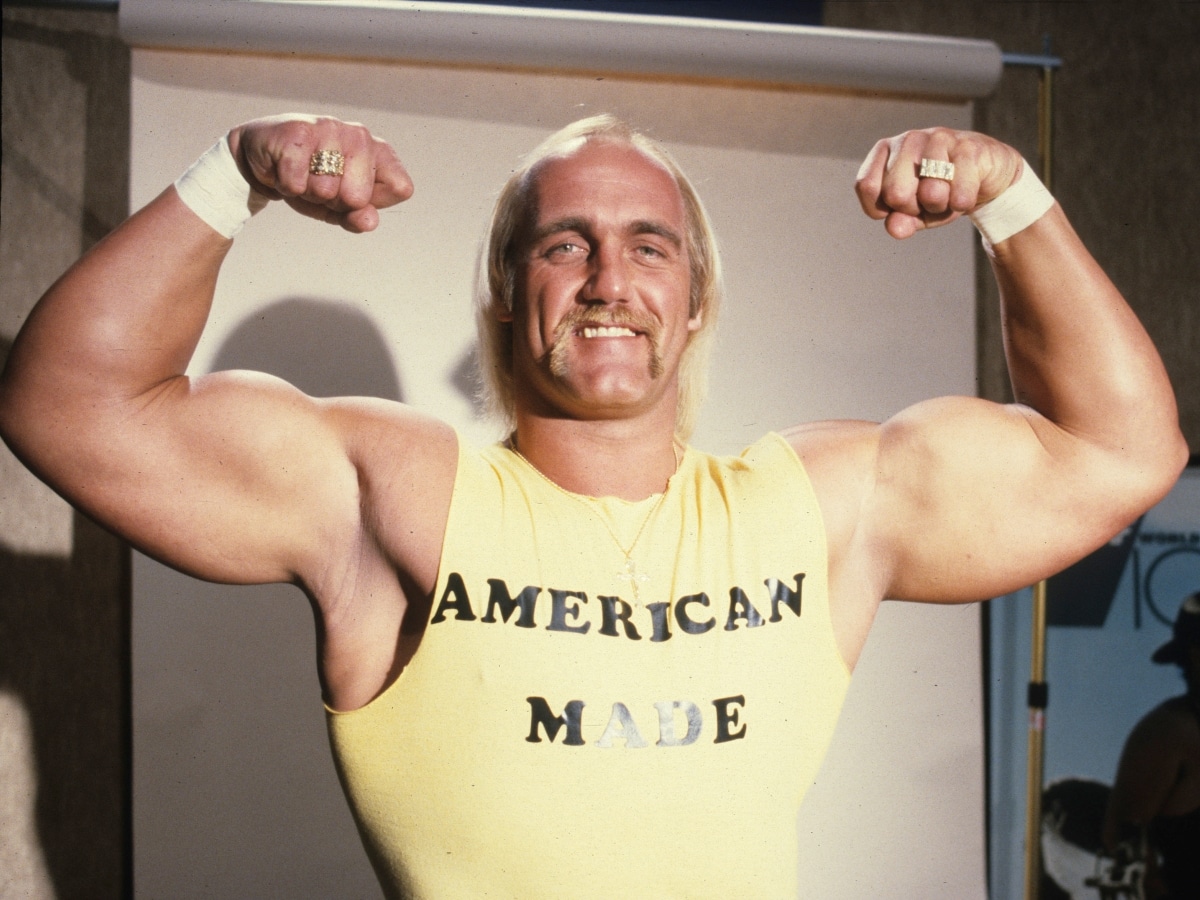
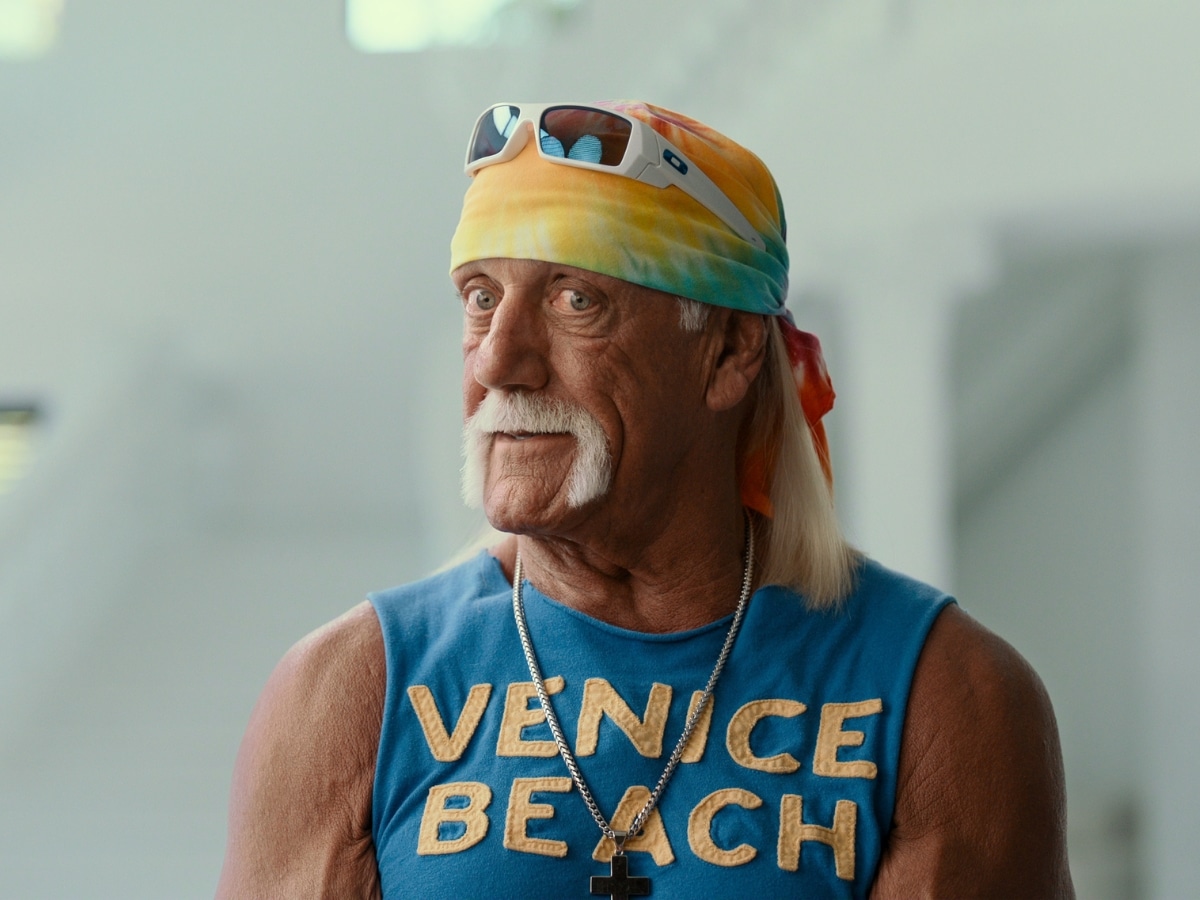
Wrestling fans know that the true beauty of the artform lies in the liminal space between truth and fiction. It’s a space that Hulk Hogan and Terry Bollea have both occupied for the best part of 40 years. The version of Hulk Hogan presented in Netflix’s Real American is one we haven’t seen before – older, more frail. Still wearing a bandana and sporting his signature bleach blonde moustache. Still Hulk Hogan, but with a pot-belly and walking stick. Years of dropping his famous finisher – the dreaded leg drop – led to at least 25 surgeries on Hogan’s back, knees and hips.
And through it all is Donald Trump, the man who took a pro wrestler’s sense of showmanship to the White House, and who actually took time out of his schedule for a sit-down interview for the documentary. It’s striking how much Trump figures in Hogan’s life – from hosting Wrestlemanias IV and V at Trump plaza, to the 2024 Republican National Convention, where Hogan found salvation in the MAGA movement – the final chapter of his public life.
It speaks volumes to the breadth of Hogan’s appeal that not only did producers manage to secure Trump, they also spoke to acclaimed German filmmaker Werner Herzog. Who else could bridge the gap between Trump’s muscular view of American heroism and Herzog’s bleak, existential curiosity.
Also appearing in Real American is a treat for anyone who grew up watching old-school WWF, with a handful of 80s wrestling superstars like Jake ‘The Snake’ Roberts, Bret ‘The Hitman’ Hart (still one of wrestling great real-life haters), and ‘Hacksaw’ Jim Duggan making appearances.
Hogan’s sad final chapter
Right to the end, Hogan could walk into any room and electrify the crowd with a “let me tell you something, brother”. Not everyone can get 80,000 people on their feet just by holding their hand to their ear. Hogan did it for decades. But over those decades, the Hulk Hogan character and the real-life Terry Bollea blended into one person, driven by ego and a self-mythology bordering on narcissism.
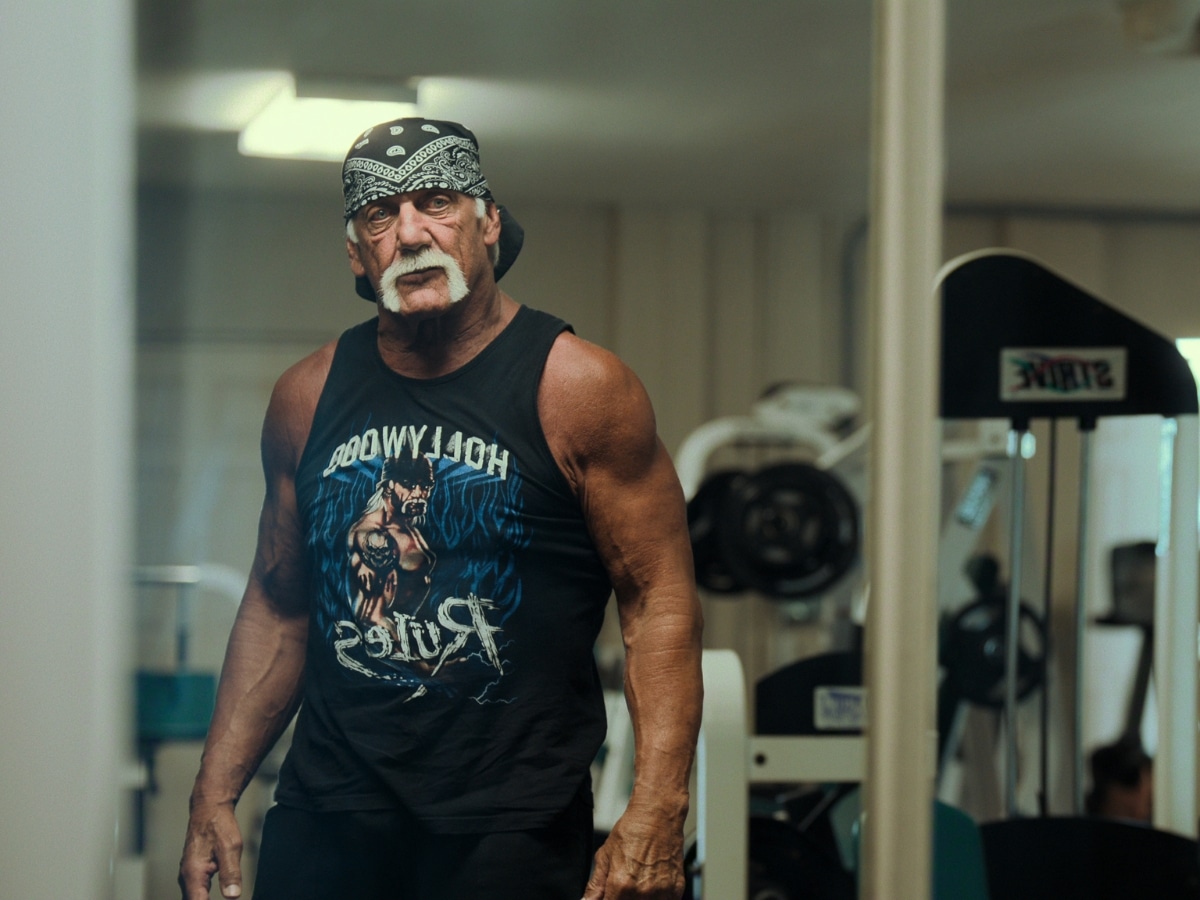
Many of those who worked with Hogan (including some who appear in Real American) say that he stayed on top of the business by abusing his clout and holding down younger talents. Hogan would no doubt point to the scoreboard. Wrestling isn’t a sport, it’s a business, and the “best” guy in the business is the one who makes the most money. That was Hogan, whose ability to sell tickets, pay-per-view events, TV rights and merchandise remains second-to-none in the history of pro wrestling.
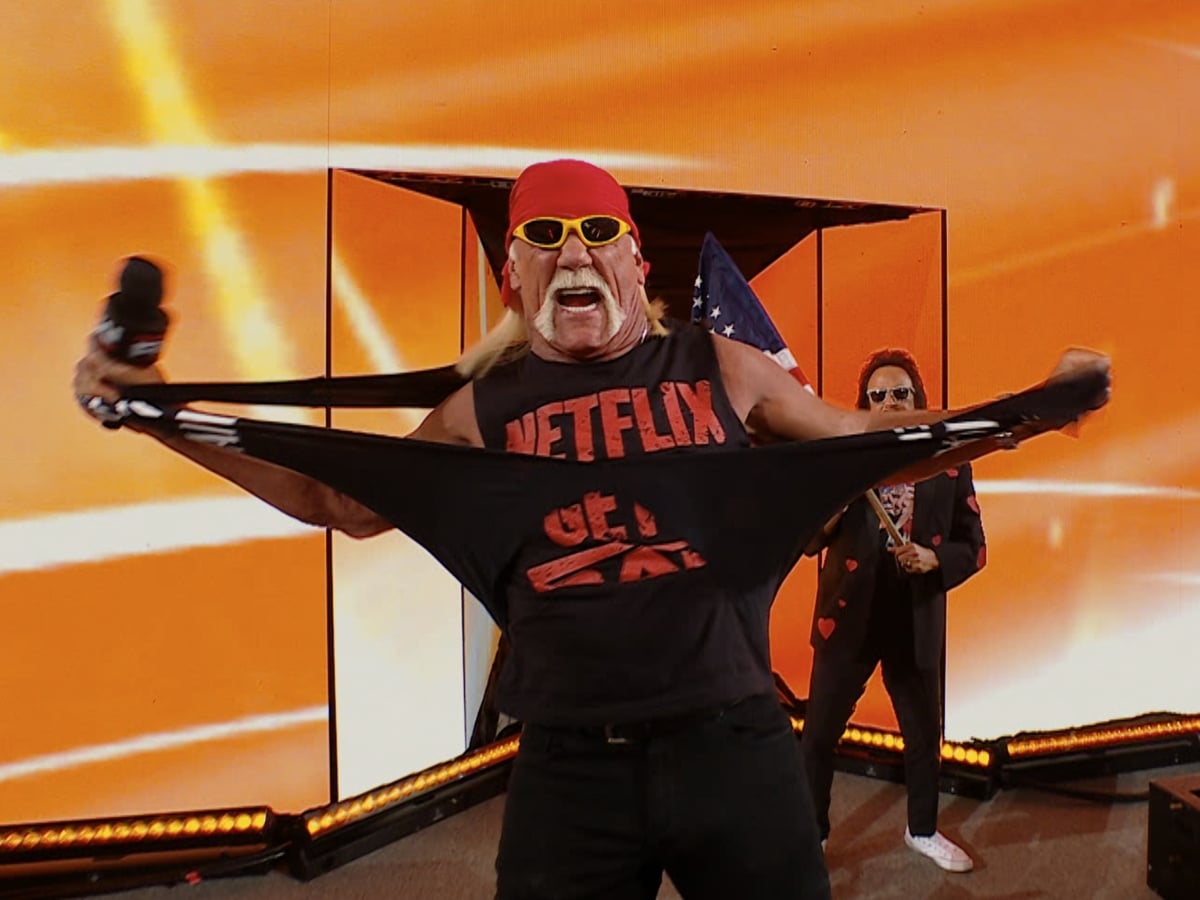
But every time Hogan returned to the WWE (and there were many), the pop he received from the crowd was a little less unanimous. As the years wore on, wrestling fans got to know the man behind the moustache, and they didn’t like what they saw. In wrestling, you’re only as good as your last match. When Hogan made his final appearance for the WWE in early 2025 for the first episode of Raw under WWE’s new USD $5billion rights deal with Netflix, the LA crowd heavily booed him. A sad final rejection.
Throughout Netflix’s Hulk Hogan: Real American, Terry Bollea insists that all the ups and downs were worth it for the adulation of the fans; In Terry Bollea’s version, the story of Hulk Hogan was one in which he was a beloved hero to millions, and that’s what he would be remembered for. Real American does plenty to revive this version of Hulk. It’s a sympathetic look at Hogan that sometimes leans heavily into Hogan’s own mythos about himself. But fundamentally, it’s a cautionary tale about chasing the American dream.













Comments
We love hearing from you. or to leave a comment.