
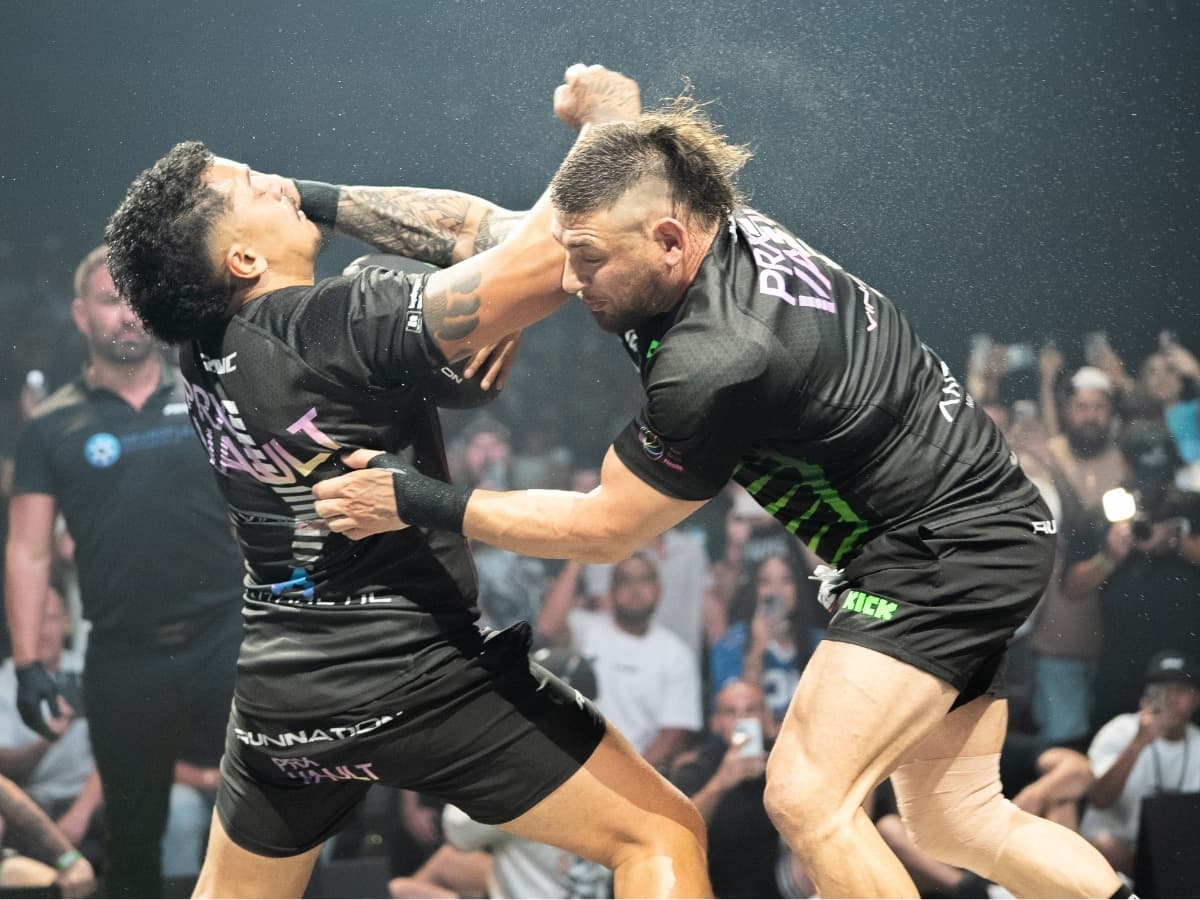

In front of a sold-out crowd at Sydney’s Hordern Pavilion, two men – “modern-day gladiators” – emerge one at a time through a tunnel with music blaring, lights flashing, and fans screaming. The men line up at opposite ends of a track and wait for their signal before charging at full speed towards each other. At the last minute, one of the athletes drops his shoulder. The collision is sickening, and it’s clear that his opponent is unconscious before he hits the ground. The crowd goes wild.
It’s not an accident. It’s entirely the point. This is Run Nation, a new form of ‘collision sport’ that’s attempting to make its way out of backyards, off social media, and into the mainstream.
To its proponents, Run Nation is a “collision sport built around speed, power and competitive intensity” – an answer to modern sport’s attempts to protect players from the well-documented long-term risks of repetitive head injury.
‘Medical washing’ and Deadly Risk
While the NRL and AFL go ‘soft’ by banning shoulder charges and increasing penalties for headshots, Run Nation is headed in the other direction. The collisions are the whole point. To Run Nation’s detractors, it’s a disaster waiting to happen.
“When I see this footage, I think this is not a natural human activity, to run at each other full-pelt and collide,” says Dr Rowena Mobbs, a Sydney-based neurologist specialising in cognitive disorders including dementia and Chronic Traumatic Encephalopathy (CTE).
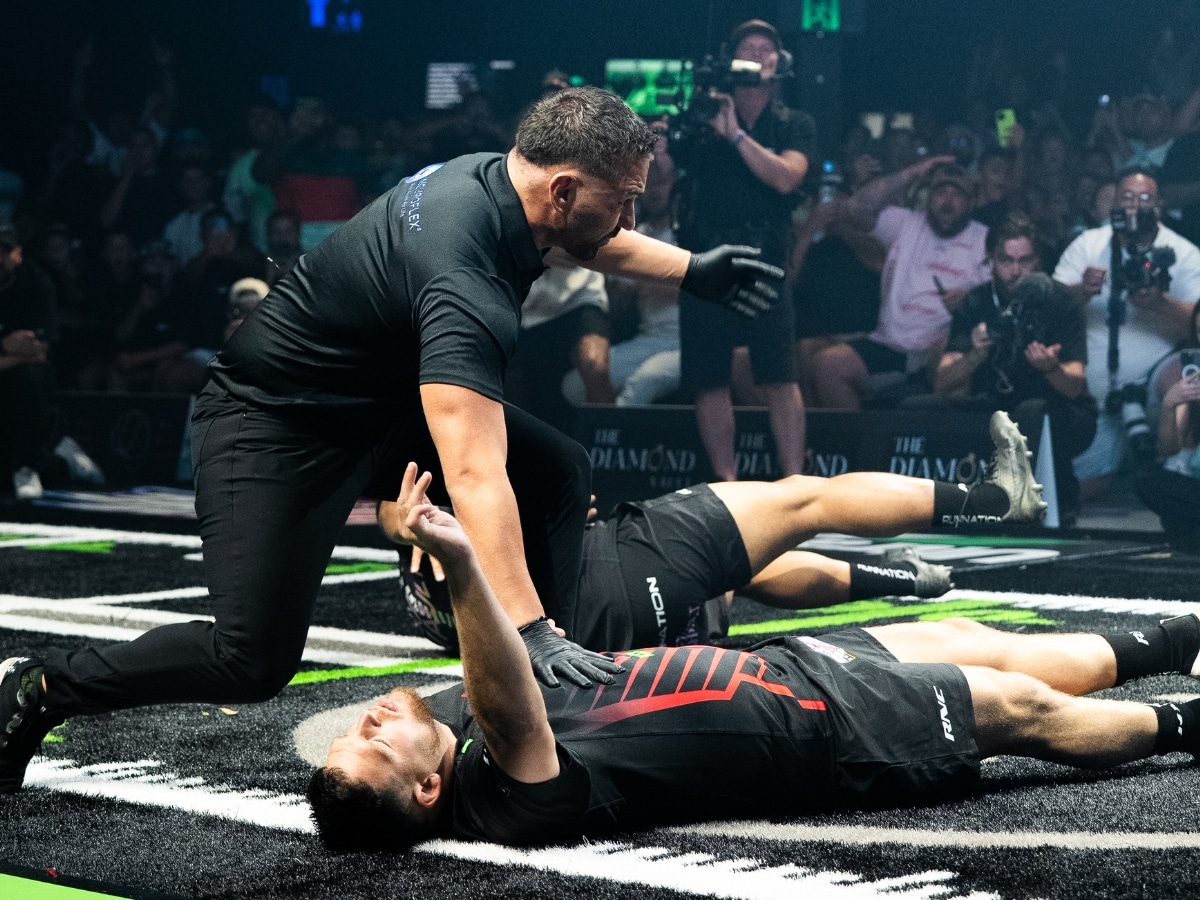
For Dr Mobbs, the risks of participating in an activity like Run Nation are clear and may not take years to manifest (as is often the case with CTE). The most immediate risk is death.
“If you clashed hard enough, you could tear the blood vessels, or you could have a fracture of the bone. It could kill you,” Dr Mobbs told Man of Many. “Or you might end up with permanent brain damage. A cognitive step down, loss of intelligence, affecting your whole life.”
That risk isn’t theoretical. Last year, 19-year-old New Zealander Ryan Satterthwaite died after participating in the viral ‘Run it Straight’ challenge, a social media precursor to Run Nation’s more polished presentation.
From Backyard to Global Stage
Run Nation’s co-founder and CEO, Tremaine Fernandez, is spearheading the charge to take collision sport away from the viral videos of its roots and into legitimate arenas and screens around the world. He is well aware of the perceptions of his emerging sport and is quick to defend the safety measures in place.
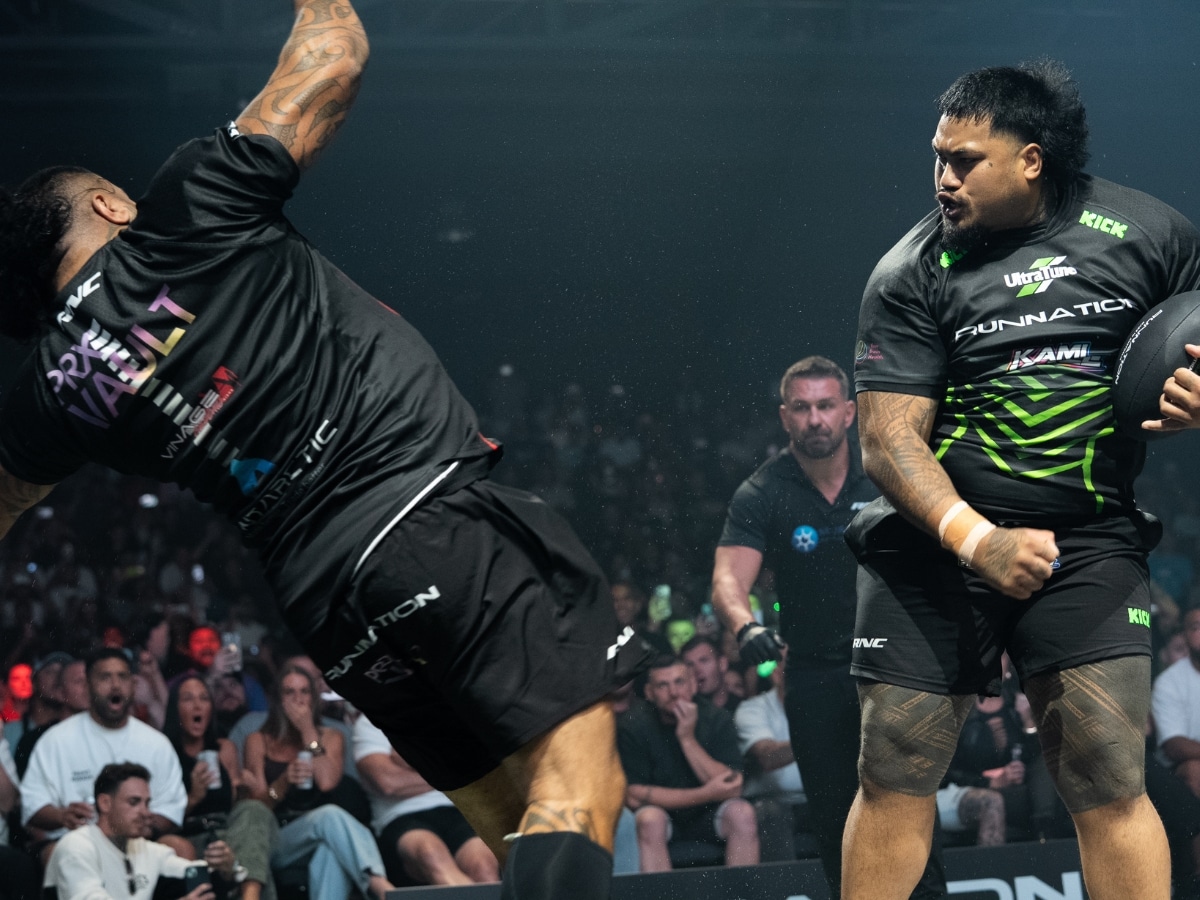
“Run Nation is built around elite ball runners and elite hitters. It’s raw, it’s fast, it’s intense, but it’s also structured. It’s been built with governance, with medical oversight and clear rule structures,” Fernandez said in an interview with Man of Many. “When you watch it online, you may just see two humans running at each other without actually understanding there’s a lot more that goes behind the scenes.”
Run Nation worked with an external company, Your Brain Health, to build its protocols. Among those structures is a ‘combine’ where athletes are assessed not just on how fast they run and how hard they hit – but on their ‘neck strength’ and susceptibility to concussion.
“Run Nation sought out the services of Your Brain Health to assist with the implementation of protocols aligned with the Australian Institute of Sport Position Statement on Concussion (2023) and the International Consensus Statement on Concussion in Sport (2022),” a spokesperson for Your Brain Health told Man of Many.
“We have also supported pre-event baseline screening using a multidomain approach to brain health. This includes collecting data across areas such as past history, sleep, symptoms, reaction time, oculomotor and vestibulo-ocular performance. This data supports clinician decision-making following a suspected injury.”
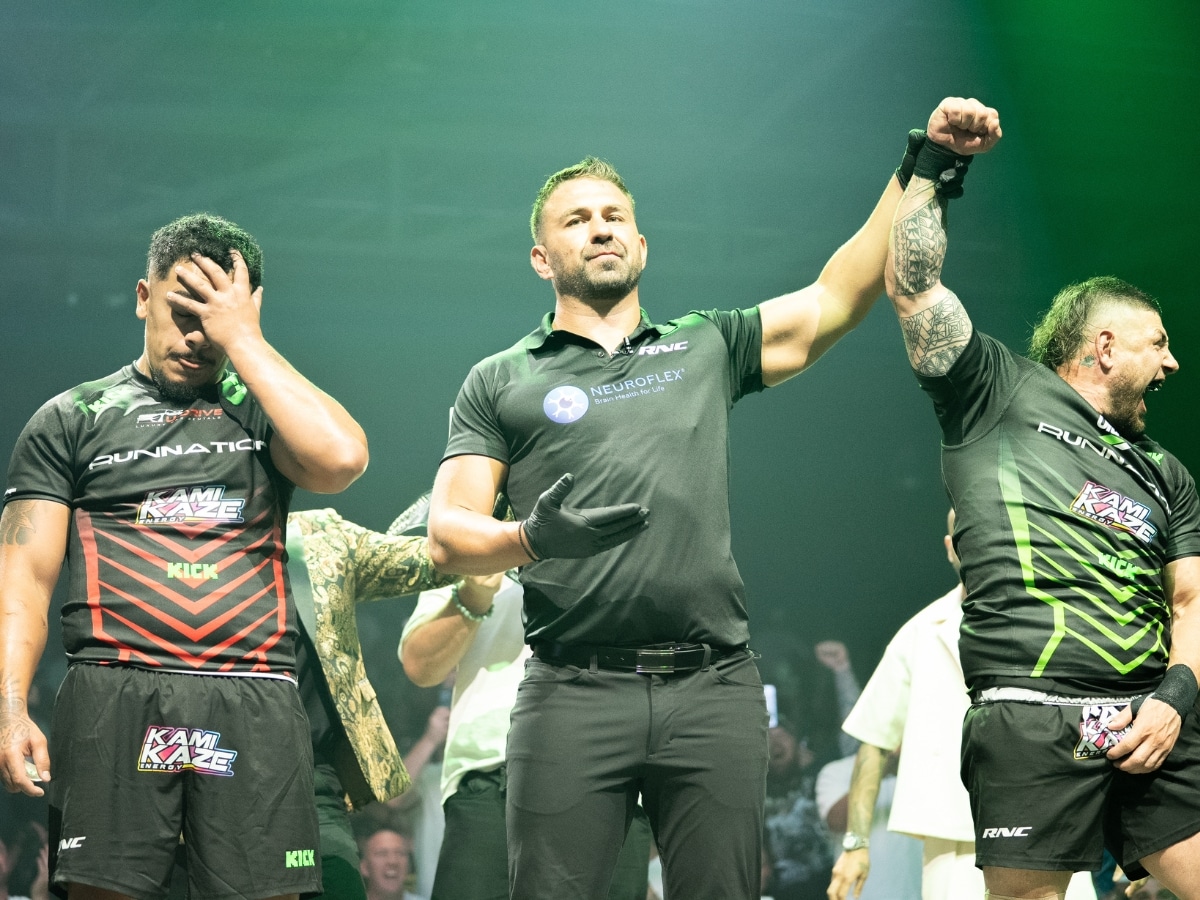
At ringside, doctors and paramedics are on hand for diagnosis and treatment, and rules are in place to encourage side-on contact. Players who exhibit signs of concussion are forced to stay on the sidelines for three weeks.
Run Nation mimics the structures of legitimate sports in other ways, including a leaderboard, structured rounds with points, and professional judges. But to Dr. Mobbs, this governance is little more than ‘medical washing’ – a clinical-sounding shield for an activity that is fundamentally dangerous at its core. Post-concussion care doesn’t prevent a concussion in the first place, she points out.
“Having medical staff is a good thing, but it is still an activity where you have a high risk of brain injury. It is not going to prevent that. I almost call it medical washing – to have a sense that you are giving significant protection against brain injury just by having medical staff on site. It’s not far from false reassurance.”
Fernandez emphasises the athleticism of Run Nation participants, saying the league offers a second chance to its athletes, many of whom had dreams of stardom in Rugby League or Union, but never quite made it to the top. It’s not violence, he insists. It’s an athletic spectacle.
“Violence is uncontrolled aggression. Run Nation is skilled timing, speed, technique and courage under pressure… Speed versus speed is going to make a really ugly outcome. That’s exactly why we have now reviewed our field and rules and taken that speed out, because it’s too fast right now,” he acknowledges.

How Much Risk is Too Much?
Fernandez insists that knockdowns – not knockouts – are the point of the sport, but a quick look at Run Nation’s YouTube page shows a heavy emphasis on knockouts as central to the sport’s image.
Fernandez says that “only” four of the twenty athletes at last month’s RNC2 event at the Hordern suffered concussions. The Run Nation CEO bristles slightly when we point out that by his own measure, RNC2 had a 20% concussion rate – a number that would be an existential crisis for the NRL or AFL in 2026.
It’s a baseline hopes to improve on, Fernandez insists. But at what percentage does a sport stop being a competition and start being a liability?
“Even the crowd gets a bit about a knockout,” he insists. “A knockdown is where a guy gets back on his feet straight away, looks at the other guy and says, ‘Good hit, let’s go again.’ That’s the spectacle of the sport that we want to grow. We don’t want to grow the knockouts.”
While Fernandez points to a lack of head-high contact as a safety win, Dr. Mobbs notes that the ‘slosh’ effect – where the brain rotates and slams against the interior of the skull due to sheer momentum – happens regardless of where the shoulder hits. You don’t need to impact the head in order to damage the brain.
Run Nation’s Global Ambitions
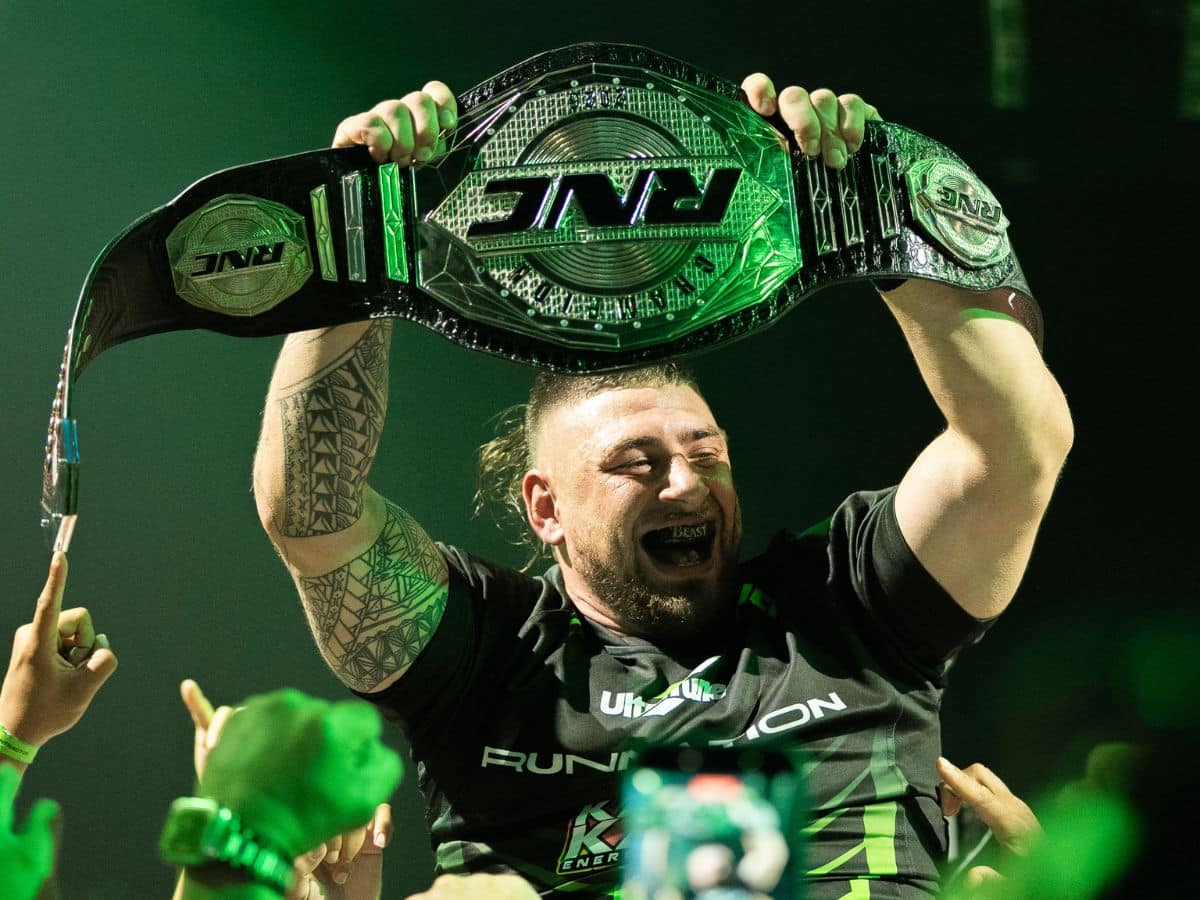
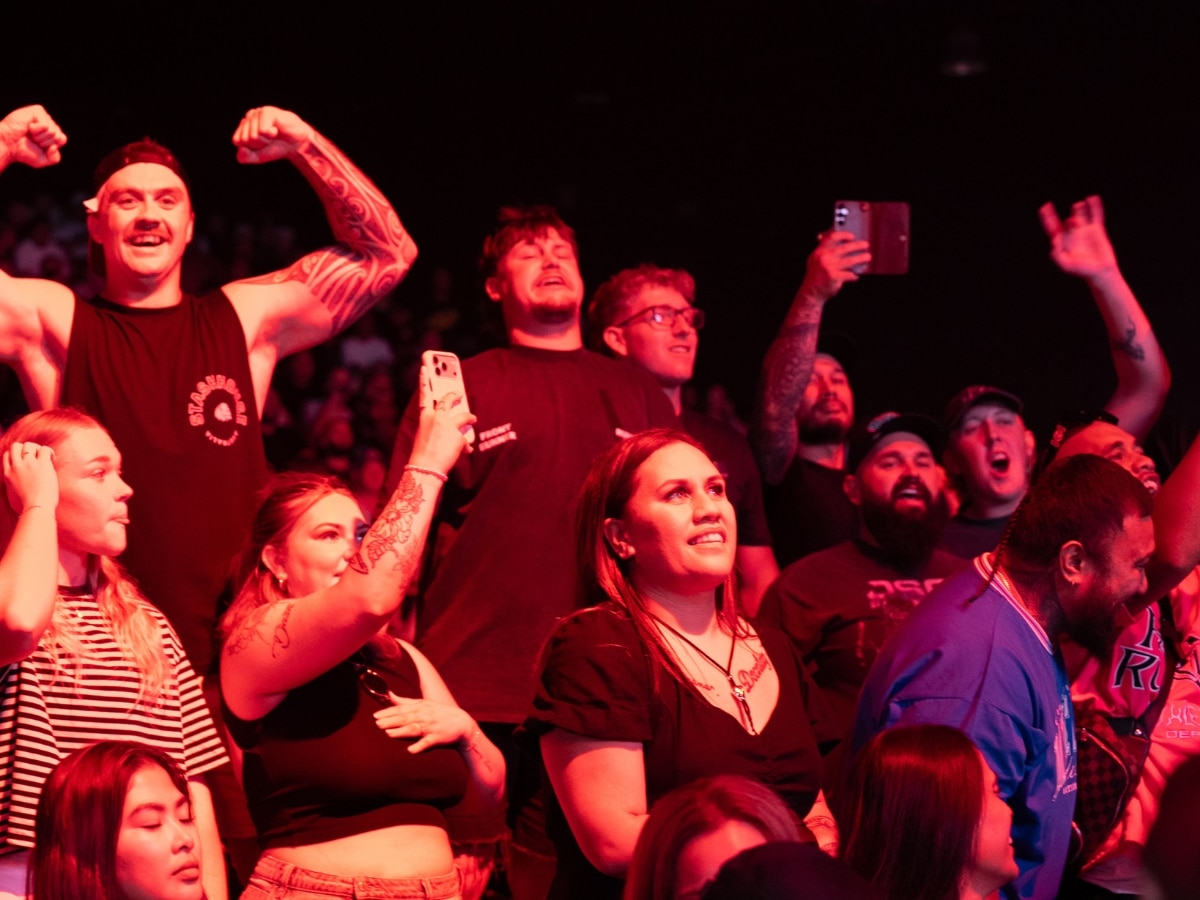
Undoubtedly, Run Nation offers an athletic spectacle. RNC2 highlighted a presentation style more in line with WWE or UFC than Australian footy codes. Think smoke machines and bright lights, hype reels, and even a championship belt. An announcer makes every combatant sound like a superhero. Breakdancers keep the crowd warm between bouts.
Despite the sport’s critics, Fernandez has huge ambitions for the sport. He claims Run Nation recently signed a deal with a “major network” to produce a documentary in the lead-up to a planned future event in Vegas, with expansion plans focused on the US and UK, and rugby-loving nations like Argentina, South Africa and France.
“I firmly believe this will be the next global sport. It’ll be taken up in many, many countries,” Fernandez insists.
But can a sport built on knockouts, concussions and viral hits – both figurative and literal – thrive and grow without them? Fernandez insists it can.
“With how fast the sport is right now, it is millimetres away from something terrible happening,” he admits, while insisting Run Nation still has a bright future. “I think there is always going to be an element of knockouts. We just don’t want it to be happening at a rate of 20%.”
For Dr Mobbs, the risks of participating in a sport like this are simply too high.
“Concussion means you have symptoms,” she explains. “Not everyone will realise their symptoms if they are brain injured… it might be 50, 70, 80, 90 per cent or 100 per cent through the competition.”
In Dr. Mobbs’ view, there are no winners in the Run Nation cauldron – only athletes whose long-term damage isn’t immediately visible. For Run Nation, the game may just be beginning, but for the athletes, the true cost may not be known for years.


















Comments
We love hearing from you. or to leave a comment.