

Updated:
Readtime: 14 min
Every product is carefully selected by our editors and experts. If you buy from a link, we may earn a commission. Learn more. For more information on how we test products, click here.
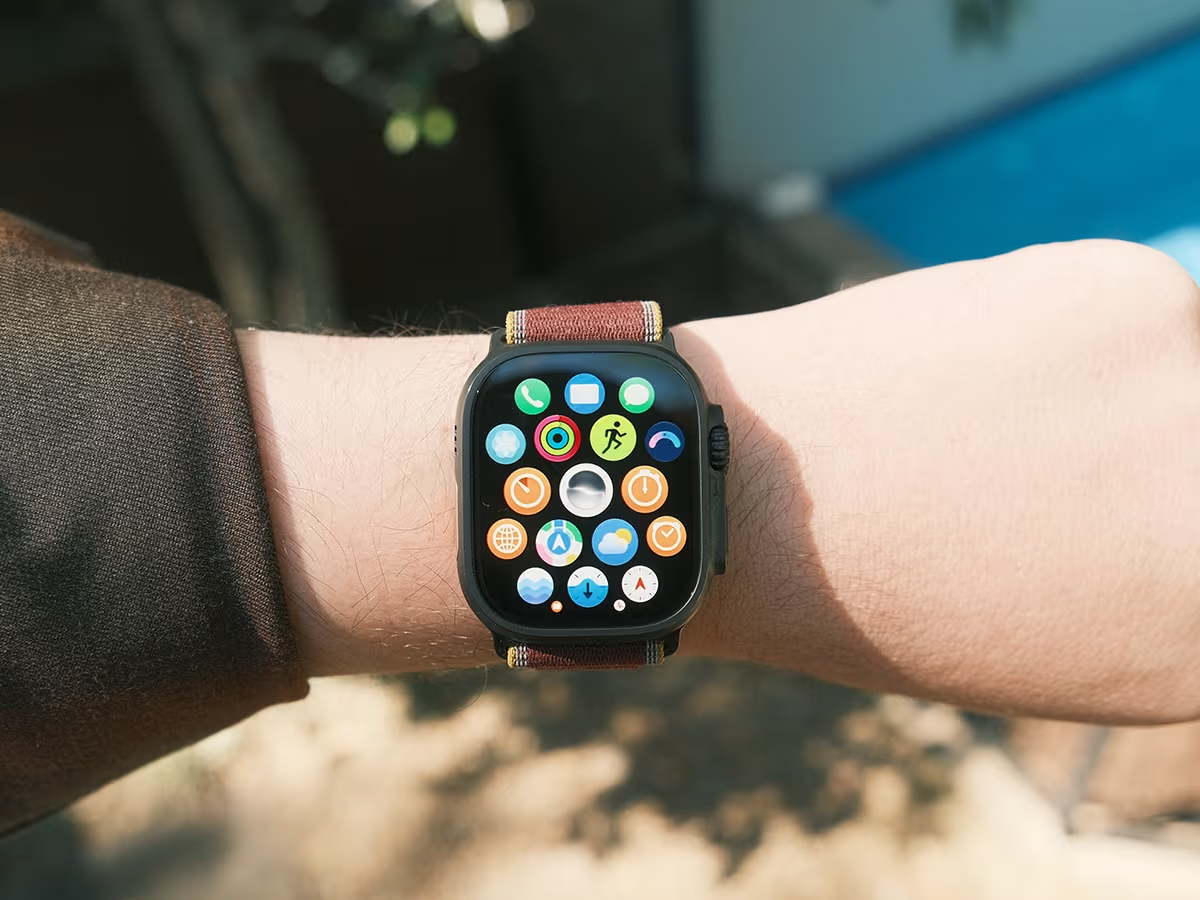
There’s a subtle but undeniable shift happening within Apple’s wearable lineup, and it quickly becomes apparent the moment you strap on the new Apple Watch Ultra 4. The Cupertino-based company faced industry criticism for years for a highly cautious, conservative approach to artificial intelligence, focusing strictly on privacy and ecosystem integration rather than basic automation. I can say that after spending time at Apple Park for the brand’s September event, we’re no longer looking at incremental updates tailored for elite endurance athletes, because this release formally ends that cautious era by pushing the flagship deep into the world of ambient generative AI.
Over the past week, I’ve pushed this new hardware beyond standard workout tracking to see exactly what the revamped internal architecture can handle. My focus has been squarely on testing the all-new Health Sensing System, the 50-hour standard battery life, and the A20 Pro-derived S11 silicon. When you compare the sheer volume of high-frequency data being processed here to dedicated fitness competitors like the Garmin Forerunner 970 or the Oura Ring 5, it’s clear that Apple has taken a giant leap forward, prioritising continuous, highly granular recovery metrics.
However, the most impressive upgrades to the Ultra 4 are the ones between extreme sports and everyday productivity, effectively laying the groundwork for the watch to become an ambient digital assistant. With the introduction of the Readiness app and upcoming conversation-summarising tools like Siri Recap, the device is trying to manage both your physical fatigue and your daily digital overload simultaneously. While I’m still waiting for enough consecutive days of data to test the long-term baseline for Readiness and for the Audio Intelligence features to officially launch later this year, the real question is whether this hardware foundation justifies dropping over a grand today. Let’s get into the review!
The 30-Second Apple Watch Ultra 4 Verdict
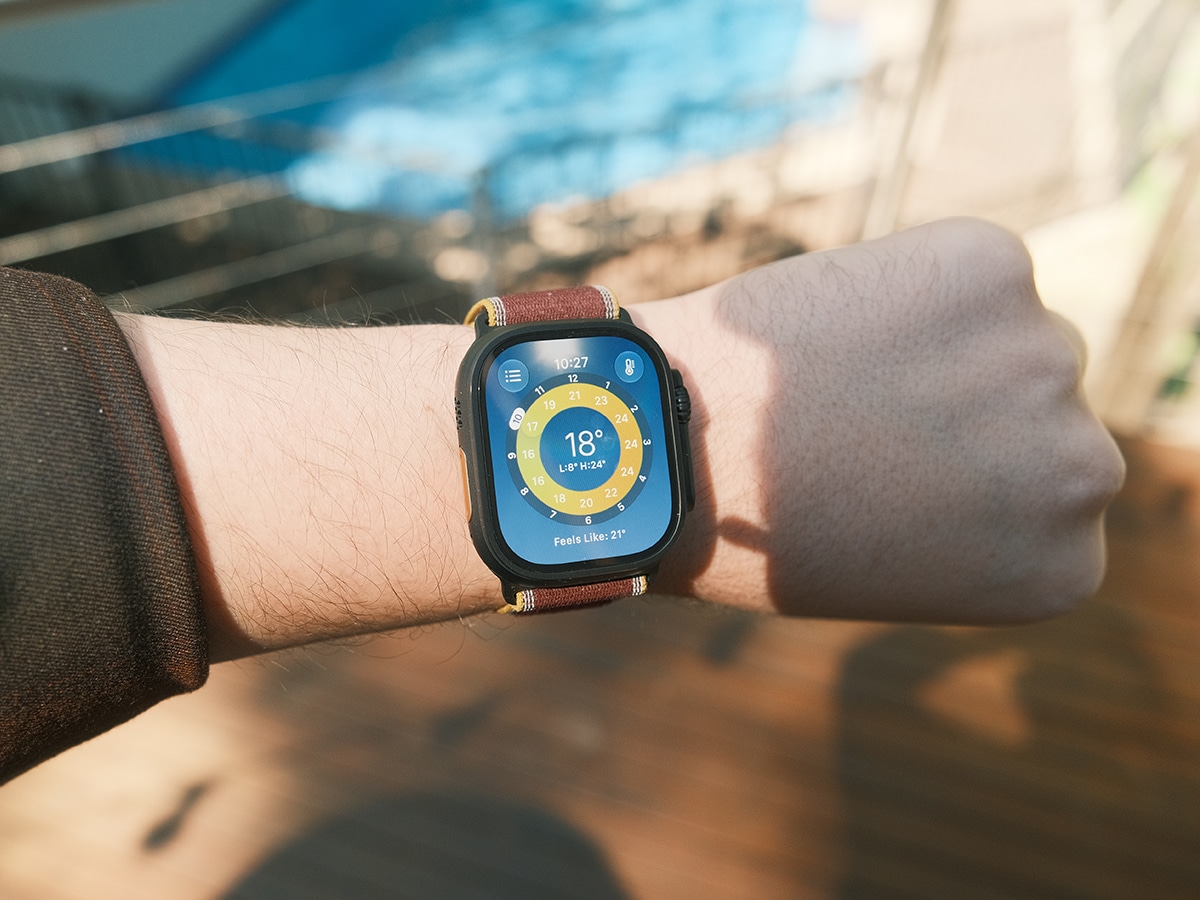
It looks familiar on the outside, but the Apple Watch Ultra 4 delivers a serious technical upgrade by pairing an entirely redesigned Health Sensing System with the highly capable S11 chip, all in preparation for Audio Intelligence and Readiness.
Pros:
- New Health Sensing System reads heart rate every five seconds in the background.
- S11 chip features a Secure Exclave built to process future Audio Intelligence features on-device.
- Standard battery life up to 50 hours, with fast charging providing 18 hours in just 15 minutes.
- Features a completely redesigned machine-learning pedometer model for superior step accuracy.
- Case is constructed using 100 per cent recycled titanium.
Cons:
- Headline Audio Intelligence features like Siri Recap and Live Rewind are not available at launch.
- Audio Intelligence capabilities require a paired Apple Intelligence-enabled iPhone 16 or later.
- Server-side Apple Intelligence features carry dynamic daily usage limits.
Should You Buy the Apple Watch Ultra 4? Yes. If you are upgrading from an older generation or want the absolute best battery life Apple offers, the combination of five-second heart rate intervals and the powerful S11 silicon makes the Ultra 4 an excellent upgrade for athletes and power users who want a future-proof wearable.
Apple Watch Ultra 4 Technical Specifications
| Specifications | |
| SoC / Silicon | S11 Chip (A20 Pro derived CPU/GPU, Quad-core Neural Engine, Secure Exclave) |
| Health Sensors | Redesigned photodiodes, larger green LEDs, increased electrode surface area |
| Heart Rate Tracking | Background sampling every 5 seconds (60x more frequent than Ultra 3) |
| Future Audio Intelligence | Live Rewind, Siri Recap, Sound Recognition (arriving late 2026) |
| Battery Life (Standard) | Up to 50 hours |
| Battery Life (Low Power) | Up to 84 hours |
| Fast Charging | 15 minutes yields up to 18 hours of additional battery life |
| Connectivity | Precision dual-frequency GPS (L1 and L5), Cellular, Bluetooth |
| Materials | 100 per cent recycled titanium case, 45 per cent recycled material overall |
| Operating System | watchOS 27 |
Price and Availability
The entry price for the Apple Watch Ultra 4 is AUD$1,399. Buyers can choose between two premium hardware finishes at launch: Black and Natural titanium.
Here is a full list of pricing and band options for the new Apple Watch Ultra 4:
- Apple Watch Ultra 4 (Natural Titanium): AUD$1,399
- Apple Watch Ultra 4 (Black Titanium): AUD$1,399
Apple has also expanded the band ecosystem. The device can be paired with the returning Alpine Loop, Trail Loop, and Ocean Band, all of which feature colour-matched titanium hardware. Brand new for this generation is the Titanium Milanese Loop, designed to be lightweight enough for daily wear but secure enough for scuba diving. For those seeking luxury, the exclusive Hermès Grand H Titane band features an integrated extension system that expands up to 10mm to fit over a wetsuit.
Local buyers in Australia can secure the Apple Watch Ultra 4 through pre-orders now, with general retail availability commencing on Friday, September 18.
Design, Ergonomics, and Sustainable Materials
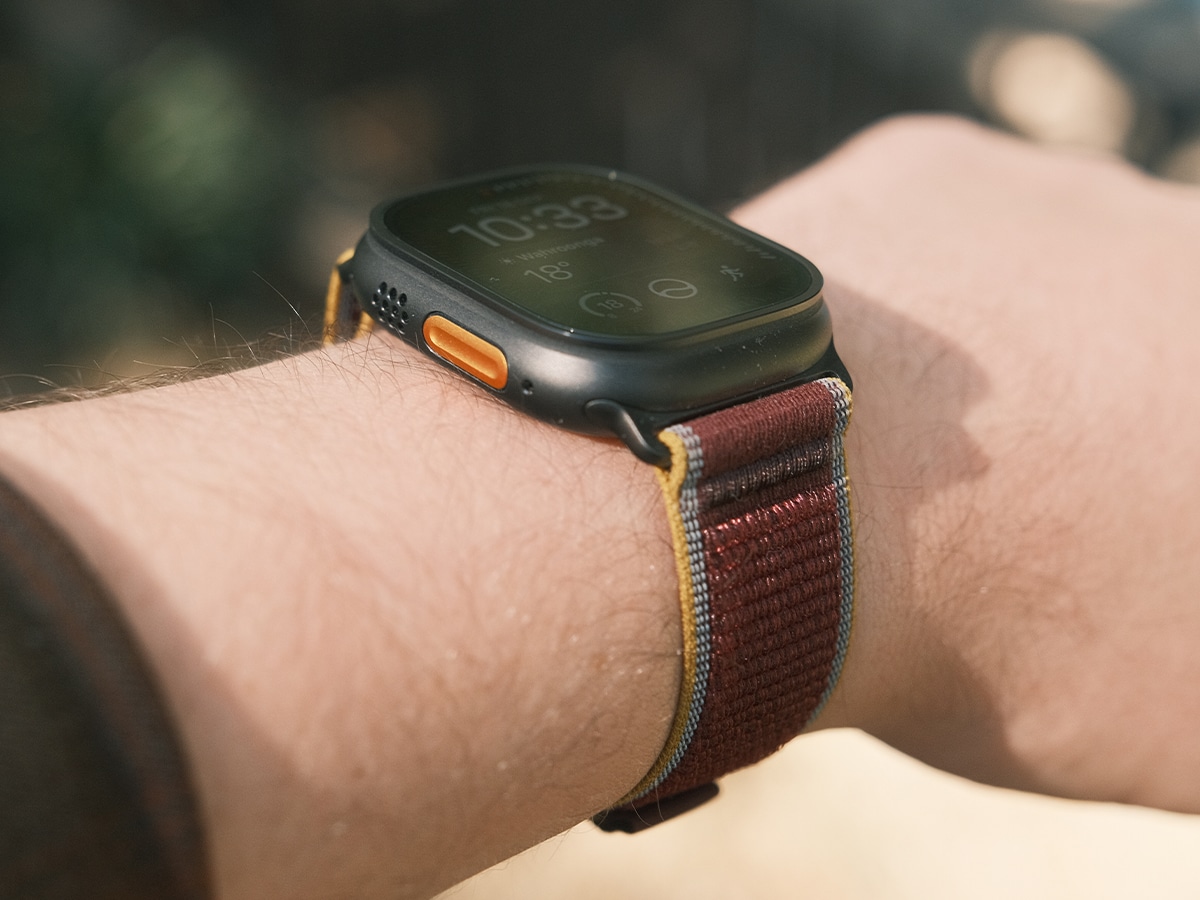
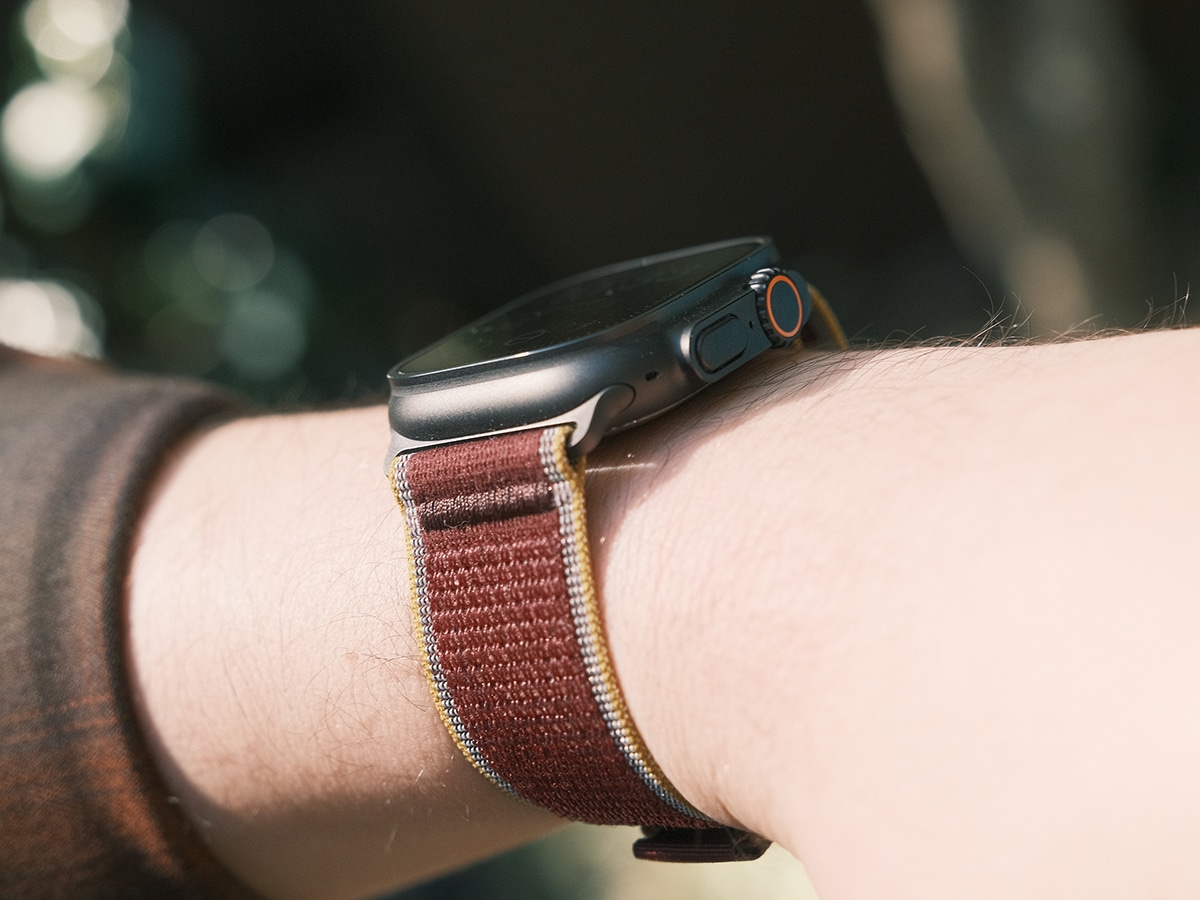
I’ll note right away that the external silhouette of the Ultra 4 remains largely unchanged from previous generations. It retains the rugged 49 mm titanium case that debuted on the original Ultra.
The refinements this year are largely internal and environmental. The case itself is now 3D-printed using 100 per cent recycled titanium, while the battery utilises 100 per cent recycled cobalt. Overall, the Apple Watch Ultra 4 is made with 45 per cent recycled material by weight. Manufacturing is powered entirely by renewable electricity across the supply chain, and the product ships in 100 per cent fibre-based packaging.
On the wrist, ergonomics also remain identical to previous generations, meaning comfort depends heavily on your wrist size. The 49 mm titanium case is undeniably large and substantial, so if you have smaller wrists, it can still feel a bit top-heavy during high-intensity workouts or while sleeping. While Apple has expanded its range of bands to accommodate a better fit, the sheer physical footprint of the Ultra 4 still leaves many women and those with smaller wrists out of the loop when it comes to finding a discreet, low-profile daily-wear watch.
All-New Health Sensing System and Readiness App
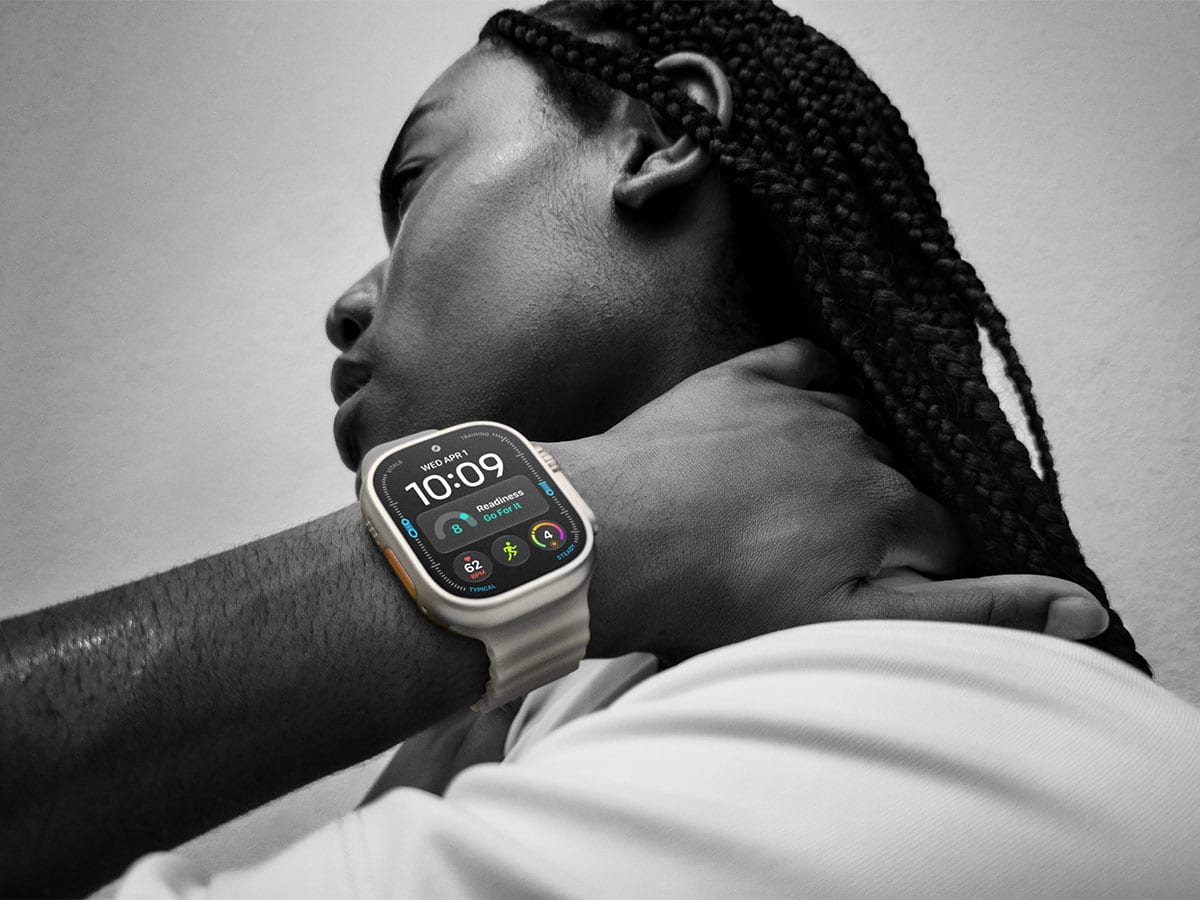
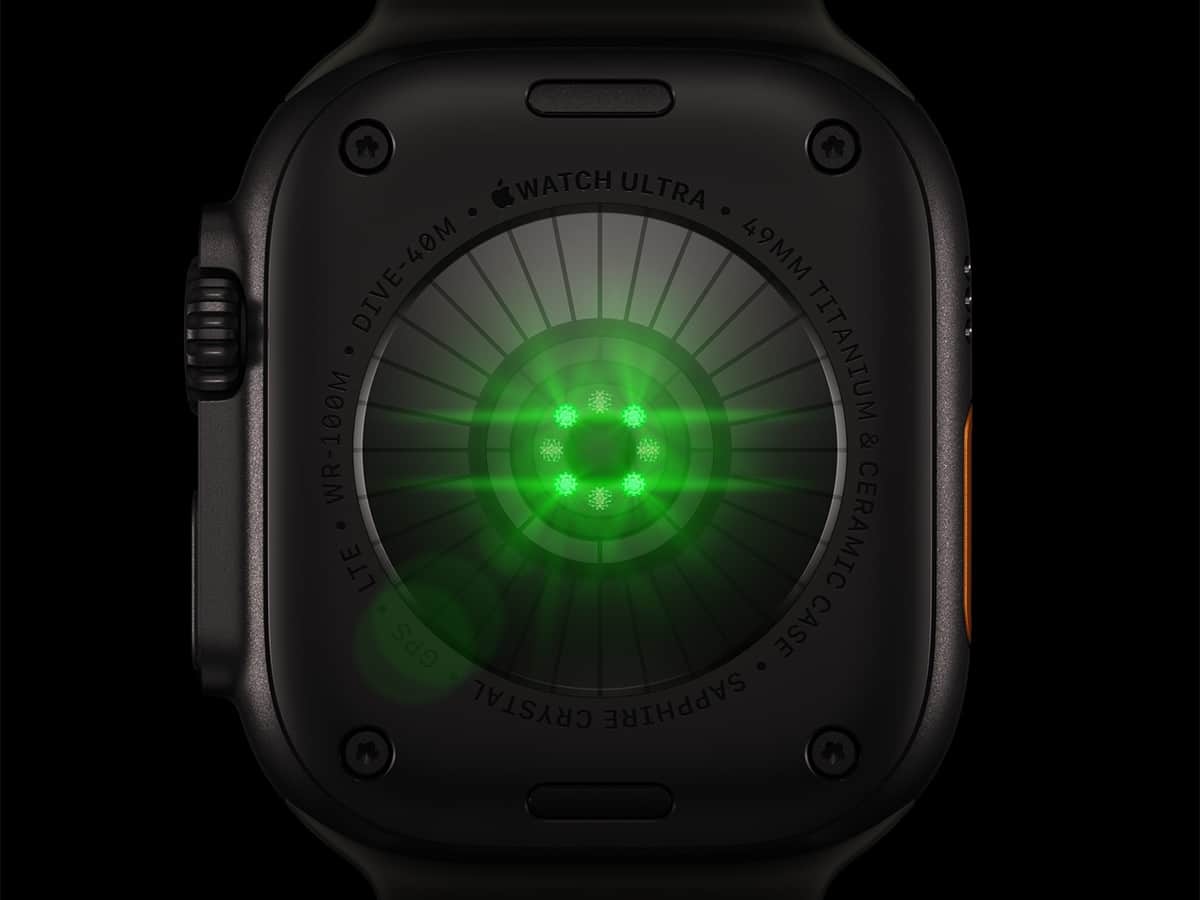
The main reason you might consider upgrading to the Ultra 4 is its completely overhauled Health Sensing System. It’s built on a brand-new hardware architecture, in which the brand has increased the electrode surface area for better skin contact during ECG readings, redesigned the photodiodes into a ring to capture light more efficiently, and implemented larger, more power-efficient green LEDs.
This new hardware enables high-frequency background heart rate tracking. Previously on the Ultra 3, the watch attempted to calculate your background heart rate every five minutes while you were stationary. The Ultra 4 updates this by sharing a reading every five seconds, all day long, even when you are moving. This 60x increase in frequency dramatically improves the accuracy of your daily calorie estimates, particularly for non-traditional exercise like moving boxes or heavy lifting.
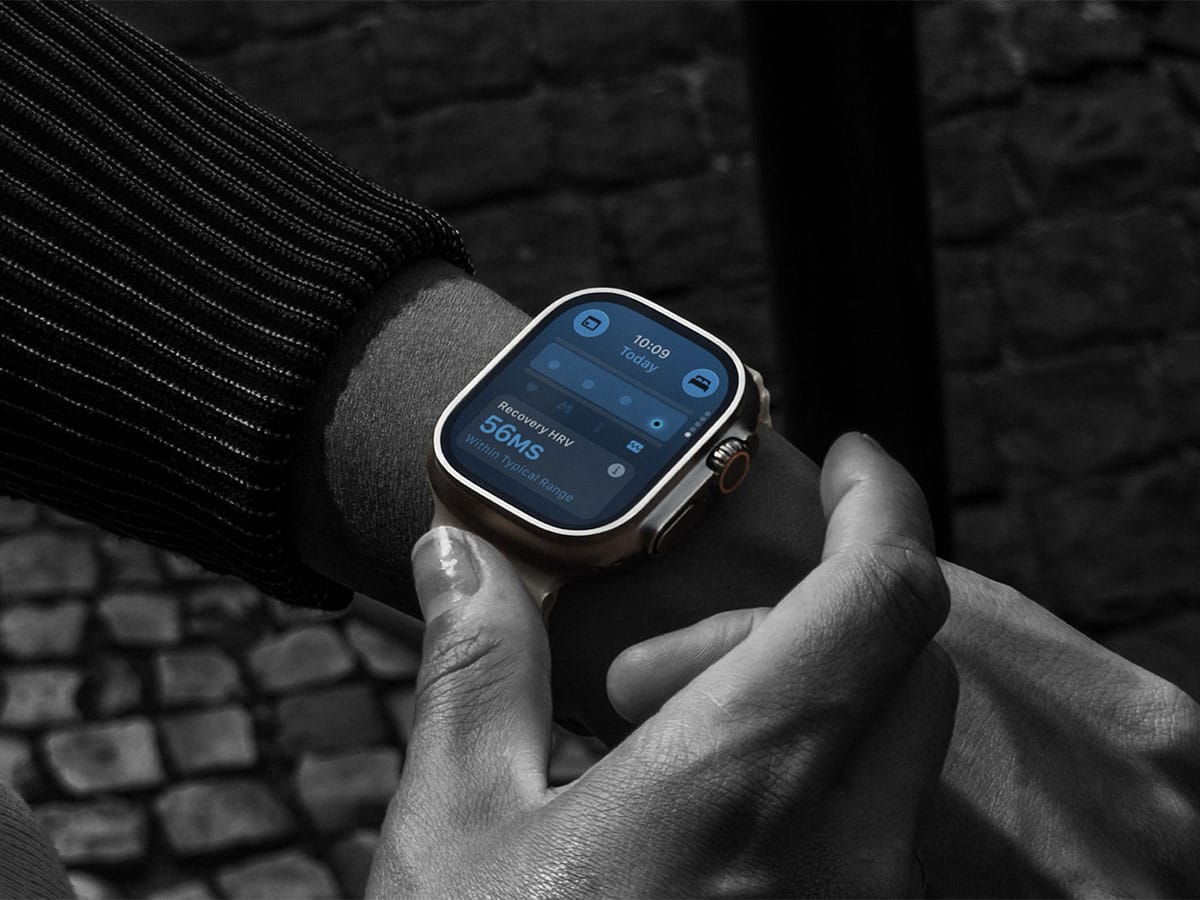
The Health Sensing System also tracks Heart Rate Variability much more frequently. You now get Recovery HRV and overall HRV measurements every five minutes while at rest.
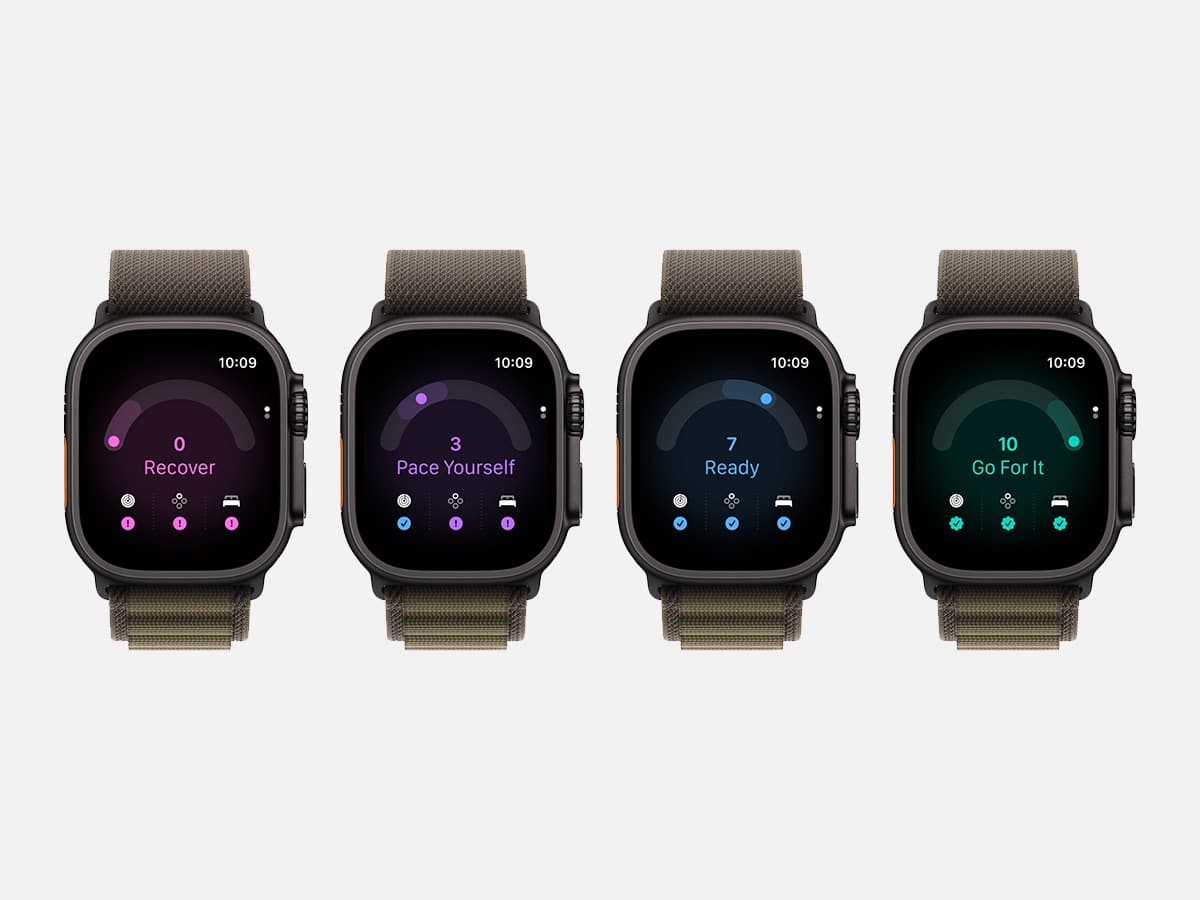
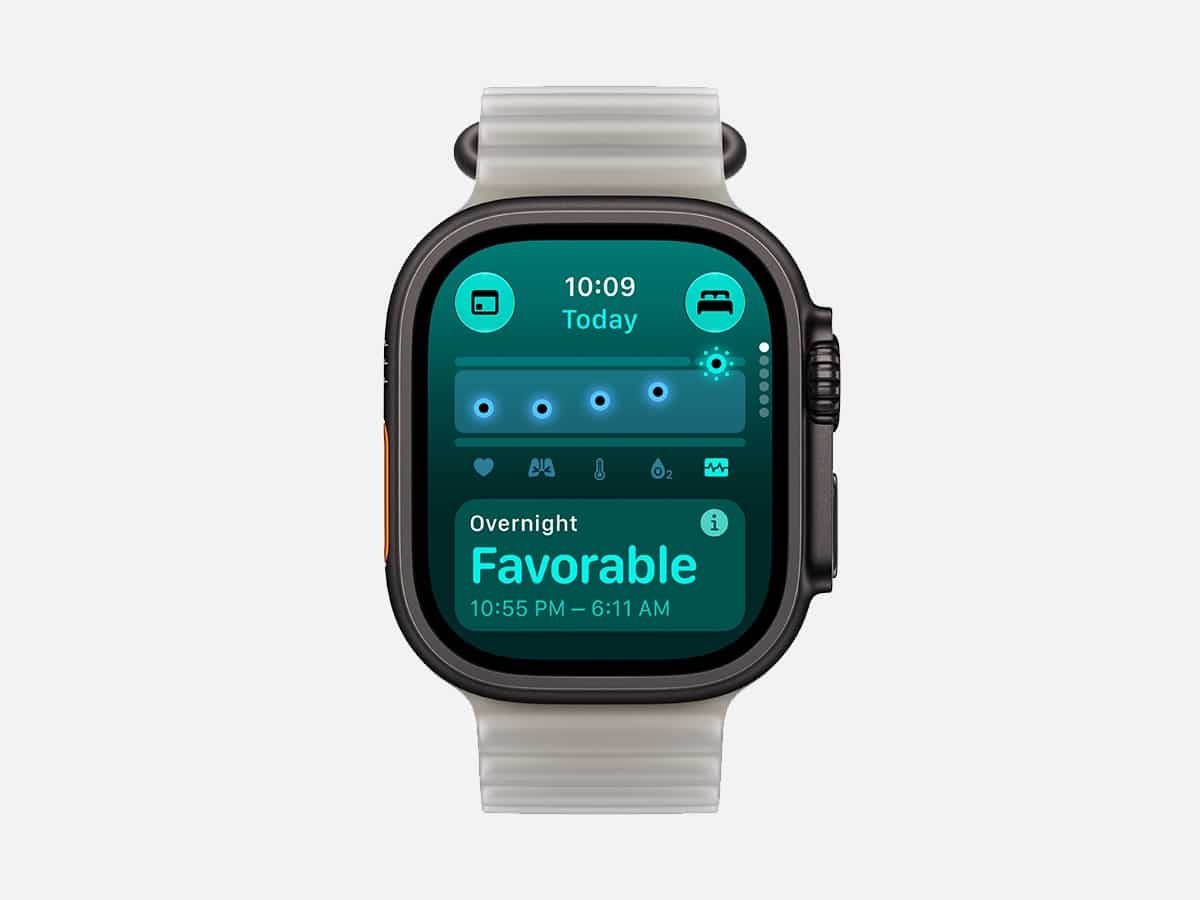
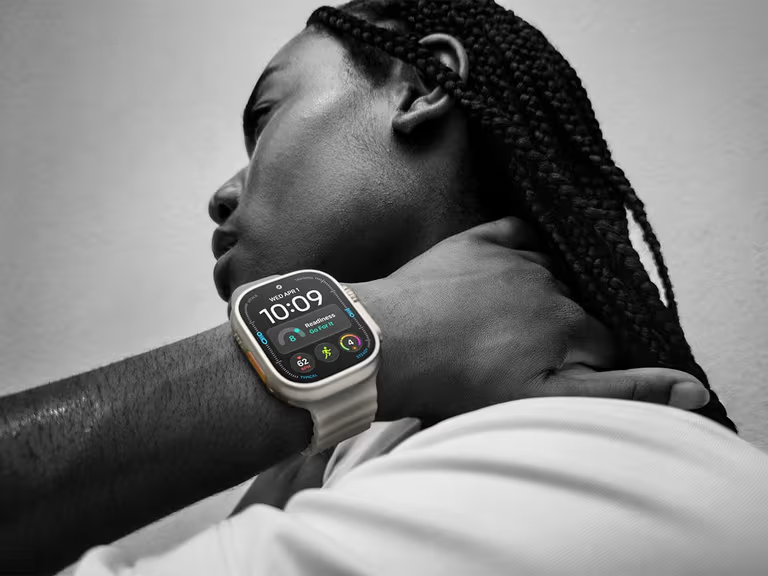
This data feeds directly into the brand-new Readiness app. By analysing your recent activity, sleep score, and overnight vitals, the app promises to give you a simple score from 0 to 10, along with a classification ranging from “Recover” to “Go For It”. I also really liked the new Daytime Vitals view. While overnight vitals feed into Readiness, this new Daytime Vitals view provides an up-to-date assessment during the day, classifying your health status as notably off, slightly off, typical, or favourable.
However, because this system requires multiple nights of continuous sleep and activity data to establish an accurate personal baseline, I haven’t been able to fully test Readiness during my review period. I will do a complete deep dive into this feature at a later date, once the algorithm builds out my profile.
S11 Silicon, Siri AI, and Audio Intelligence
Powering all of this is the new S11 chip, which is Apple’s most powerful wearable processor to date. Derived from the A20 Pro chip found in the iPhone 16 series, the S11 features a faster CPU with two efficiency cores, a boosted single-core GPU, and a quad-core Neural Engine.
But if there’s one thing you should take away from this review, it’s the fact that the S11 chip includes a new always-on processor with a Secure Exclave.
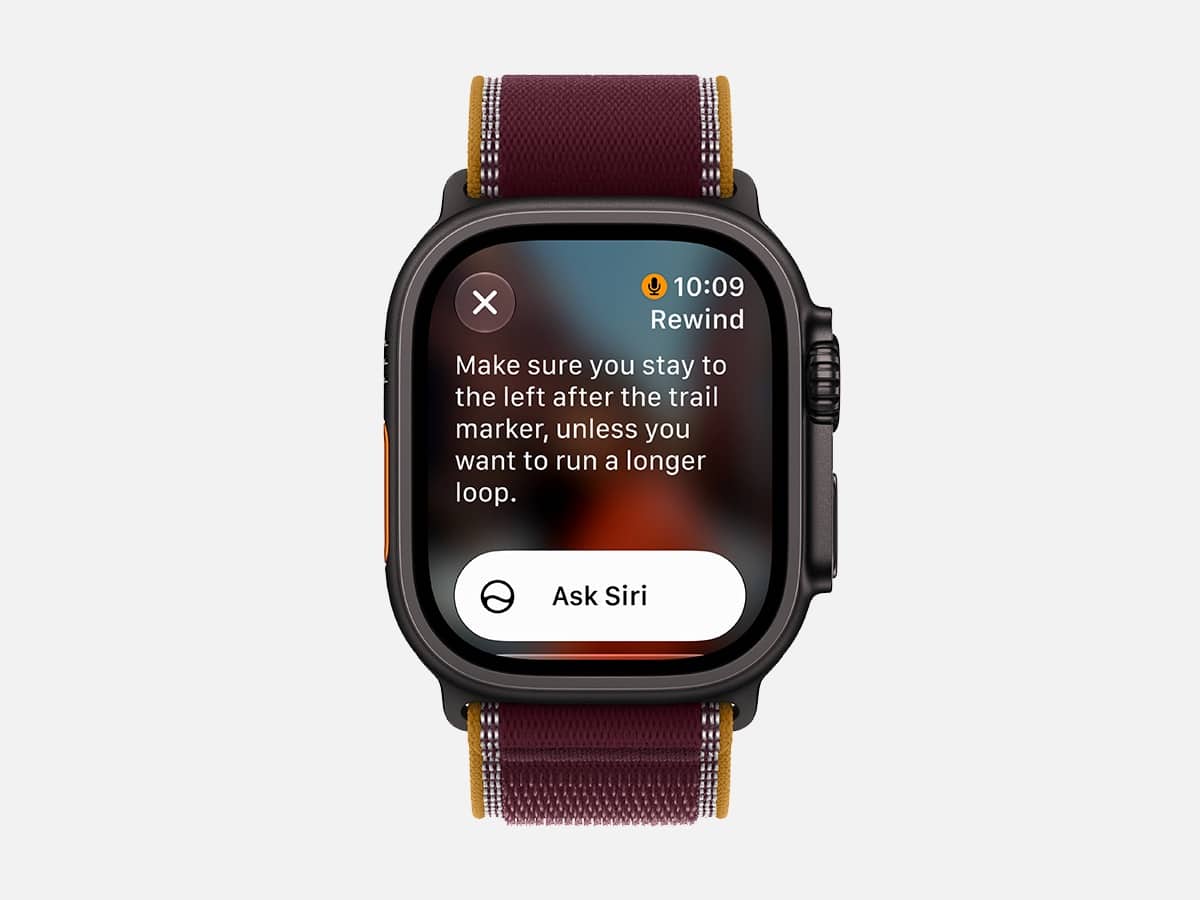
This hardware-isolated compartment processes conversational audio in real time and is completely separate from the rest of the operating system. It serves as the foundation for Audio Intelligence, which will eventually move Apple from a background player in machine learning to a provider of ambient, always-on generative AI. While the S11 chip is ready to go, Siri Recap and Live Rewind are not yet available. The brand has noted that these features will launch in beta late in 2026, meaning I could not test or include them in this initial review.
When they do arrive, Live Rewind will allow you to double-click the Digital Crown to recall what was said in the past 15 seconds, accompanied by a mandatory audible chime and a full-screen animation to alert those nearby.
Siri Recap will create Apple Intelligence-generated summaries of your real-world conversations throughout the day without generating full transcripts or identifying specific speakers. Once the raw audio is processed within the Secure Exclave, it’s immediately deleted and never transmitted to Apple servers. It’s also worth noting that these features will require a paired Apple Intelligence-enabled iPhone 16 or later, are limited to English, and will not initially be available in the EU.
Battery Life and Fast Charging Performance
Driven by the efficiency of the S11 chip and the new Health Sensing System, the Apple Watch Ultra 4’s battery life sets a new benchmark.
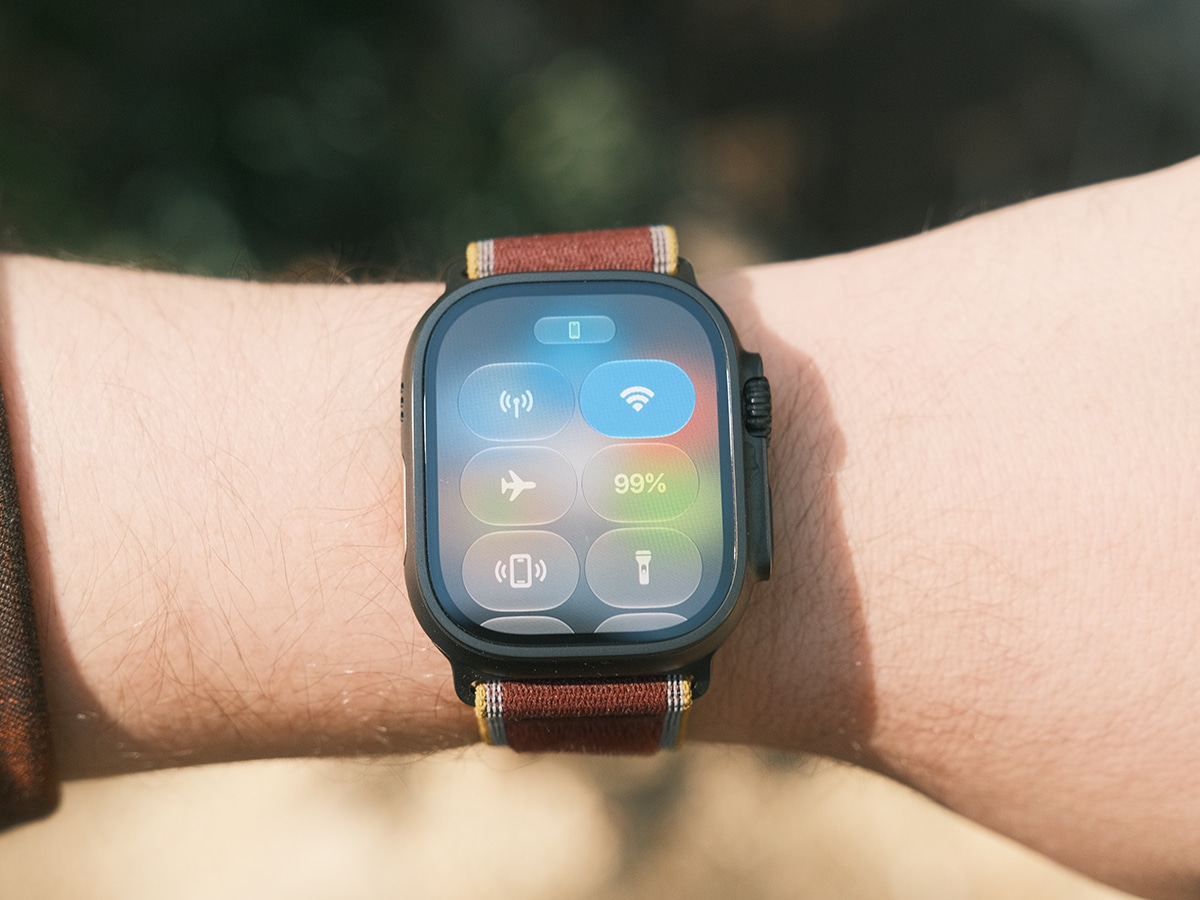
The device delivers up to 50 hours of standard normal use, including sleep and workout tracking and connectivity to your iPhone. If you switch on Low Power Mode, that number extends to an impressive 84 hours. For endurance athletes, the watch provides up to 18 hours of continuous outdoor workout tracking with the heart rate sensor active.
Fast charging speeds have also seen a substantial upgrade. With a compatible USB-C power adapter, a 15-minute charge yields up to 18 hours of additional battery life, making it incredibly easy to top up the device while you shower before you start the day.

Ultimate Sports Watch and Carry-Over Features
While health and AI capabilities are the focus this year, the Ultra 4 carries over the sports-tracking foundation established by previous generations.
Precision dual-frequency GPS returns, utilising both L1 and L5 bands alongside custom positioning algorithms to provide highly accurate route maps even in dense urban environments or heavy tree cover. The customisable Action button also makes a return, allowing you to instantly start workouts, mark segments during track runs, or transition between triathlon legs.
Given the popularity of running right now, it is also worth a passing mention that the Ultra 4 offers advanced running metrics. The guide highlights features like Running Power, Vertical Oscillation, Pacer, and Race Route. These deeper metrics could be highly valuable for anyone wanting to fine-tune their form on the pavement.
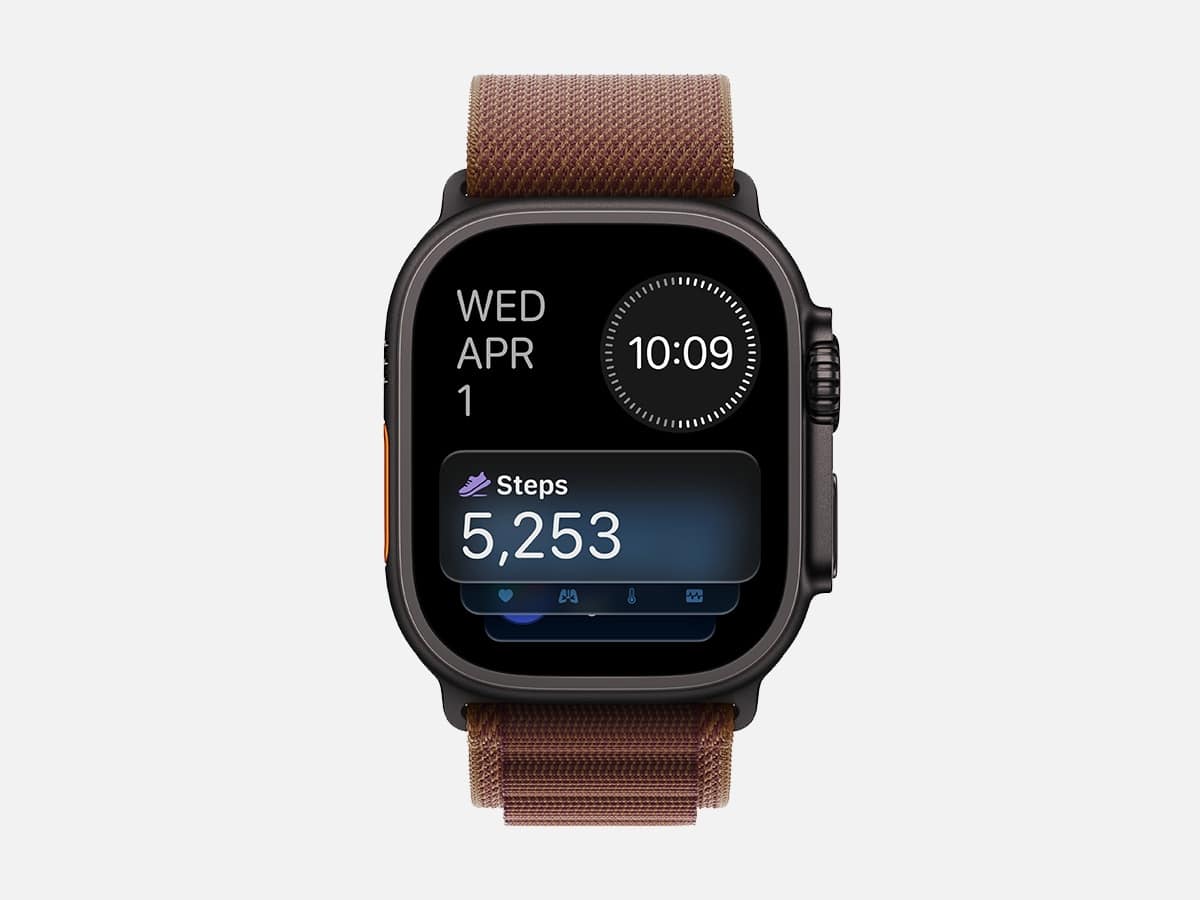
Step tracking has received a new upgrade. The Ultra 4 features a completely redesigned pedometer model powered by new machine learning algorithms running on the S11 chip. This improves accuracy when your arms are stationary, such as when pushing a stroller or gripping backpack straps, and pairs with a new real-time Steps complication for the watch face. No more adding steps to your daily count by knitting! Not that I’m one to complain about a few extra steps.
watchOS 27 and Safety Capabilities
Running on watchOS 27, the headline software feature available today is Siri AI. This expanded assistant understands your personal context, allowing you to ask open-ended questions right from your wrist. In the last few days, I’ve asked Siri AI for my driver’s license number and to share flight details for an upcoming trip. It’s worked flawlessly, if not a little slow to find the information, but it’s a watch at the end of the day.
Health tracking in watchOS 27 also introduces perimenopause and menopause support within the Cycle Tracking app.
For peace of mind, the robust suite of safety features carries over from previous generations. This includes Fall Detection, Crash Detection, Emergency SOS, and Compass Backtrack. The Ultra 4 also maintains built-in satellite communications, allowing you to text emergency services, message family, and share your location while completely off the grid without cellular or Wi-Fi coverage.
Man of Many’s Verdict on the Apple Watch Ultra 4
Beyond the impressive 50-hour battery life, the most transformative upgrades on the Apple Watch Ultra 4 are the ones working quietly in the background.
The shift to five-second heart rate intervals and detailed HRV tracking finally gives everyday users and athletes a highly accurate foundation for their fitness. This is the main reason I would consider upgrading from a previous generation.
While we will have to wait a little longer to see the full potential of the Readiness app and the incoming Audio Intelligence features, the device Apple has built here is ready for the future, and I look forward to updating this story with my findings in the coming days and weeks.
Ultimately, Apple set out to make a watch that serves both extreme explorers and busy professionals. With the Ultra 4 hardware and S11 silicon, they have succeeded in building a wearable that manages the demands of your entire day, and with Siri Recap and Rewind, that will only improve.

Frequently Asked Questions
The Apple Watch Ultra 4 delivers up to 50 hours of normal use and up to 84 hours with Low Power Mode enabled.
Live Rewind is an upcoming Audio Intelligence feature arriving late in 2026 that lets you double-click the Digital Crown to recall what was just said in the last 15 seconds. It processes audio securely on-device and does not save recordings.
Yes, a 15-minute charge on the Apple Watch Ultra 4 provides up to 18 hours of additional battery life.

















Comments
We love hearing from you. or to leave a comment.