

Updated:
Readtime: 6 min
Every product is carefully selected by our editors and experts. If you buy from a link, we may earn a commission. Learn more. For more information on how we test products, click here.
- Apple refreshed the Mac mini with 2nm M6 and M5 Pro silicon.
- Prices start at AUD$1,449 for M6 and AUD$2,699 for M5 Pro.
- The ultracompact desktop is built for always-on, local, AI agentic workflows.
- M6 features Apple’s first Dual 16-core Neural Engine for local compute.
- Pre-orders are now open across Australia, ahead of September 22 availability.
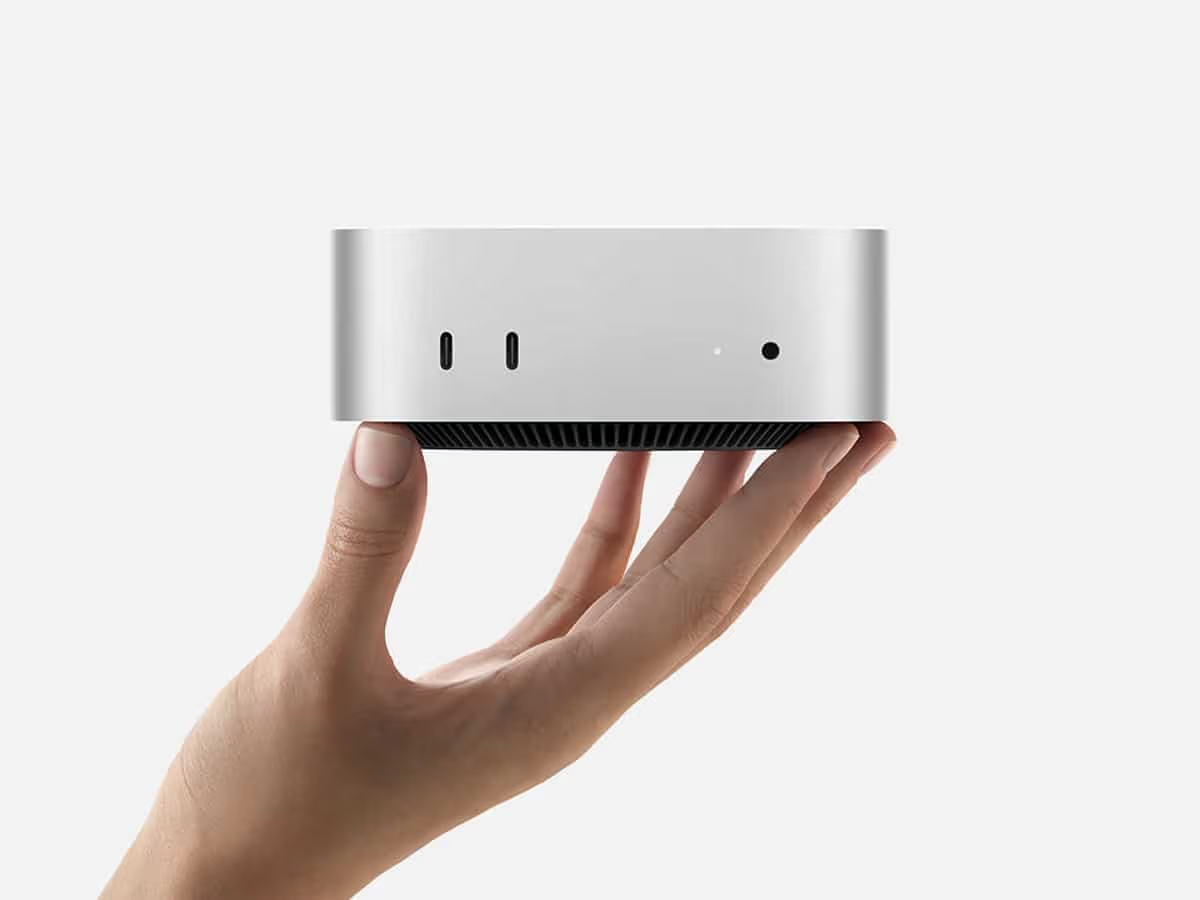
Ahh, I can see the Claude bros lined up around the corner already. When the news came through this morning that Apple refreshed their ultracompact Mac Mini desktop with a state-of-the-art 2nm M6 and high-performance M5 Pro silicon, I couldn’t help but think of all the millions of dollars that were waiting for me after buying it and launching my drop-shipping company run by 12.5 AI Agents.
The launch arrives after immense demand and component shortages wiped out availability on Apple’s online store earlier in the year, and it’s likely that this launch will follow suit, even if the base price has risen to nearly AUD$1,500. Long considered the quiet favourite among developers and software engineers, once the artificial intelligence crowd got a hold of local Claude agents and LLM helpers, the small aluminium desktop flew off shelves. Now, it delivers up to 4x faster AI performance and doubles the graphics speed compared to previous models.
Under the hood, the baseline M6 chip introduces a 12-core CPU alongside a 12-core GPU featuring Neural Accelerators integrated into every graphics core. Working together with Apple’s first Dual 16-core Neural Engine and up to 170GB/s of memory bandwidth, the system allows power users to execute local LLM prompts, run agentic coding scripts, and process complex automated tasks completely on device without relying on expensive cloud tokens. The base Apple Mac mini with M6 starts at RRP AUD$1,449, while the M5 Pro model begins at RRP AUD$2,699, with education discounts available from RRP AUD$1,289. Australian pre-orders are open across retail channels today, with store deliveries and official availability starting on September 22, 2026.

Next Generation 2nm M6 Silicon and Local Agentic AI
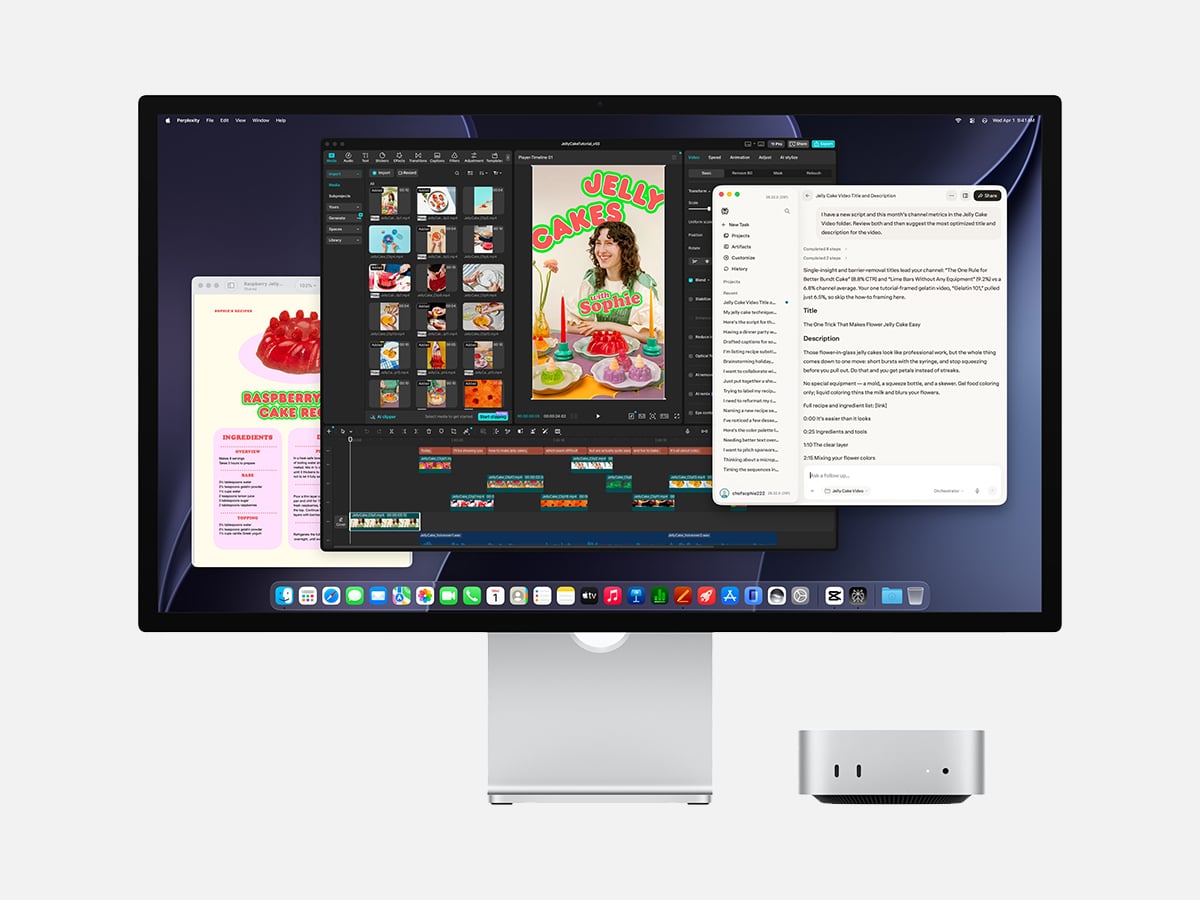
The transition to this cutting-edge 2-nanometer manufacturing makes the M6 chip Apple’s most efficient desktop processor. It features two super cores, four performance cores and six efficiency cores. The CPU complex handles single-threaded tasks faster than prior generations while maintaining high energy efficiency. For developers building always-on AI agents or executing local prompt pipelines, LM Studio prompt processing operates up to 13.5x faster than M1 and up to 4.8x faster than M4 systems.
Beyond raw language model computation, the GPU architecture incorporates dedicated Neural Accelerators into each core to speed up matrix multiplication.
Meanwhile, daily productivity and gaming also receive a boost, with Microsoft Excel spreadsheet calculations running up to 2.3x faster than M1 models and ray-traced gaming in Cyberpunk 2077 Ultimate Edition running 2x faster than M4 machines. Storage architecture is twice as fast, enabling quicker file transfers when loading custom datasets.
 1/5
1/5M5 Pro Workstation Power, Benchmark Gains, and Multi-System Clustering
When engineering teams need maximum desktop performance, the M5 Pro configuration turns things up a notch, making the compact chassis a bit of a workstation powerhouse. You can configure with a 15-core CPU or an 18-core CPU option paired with up to a 20-core GPU. On a memory front, the M5 Pro supports up to 64GB of unified memory with 307GB/s of bandwidth.
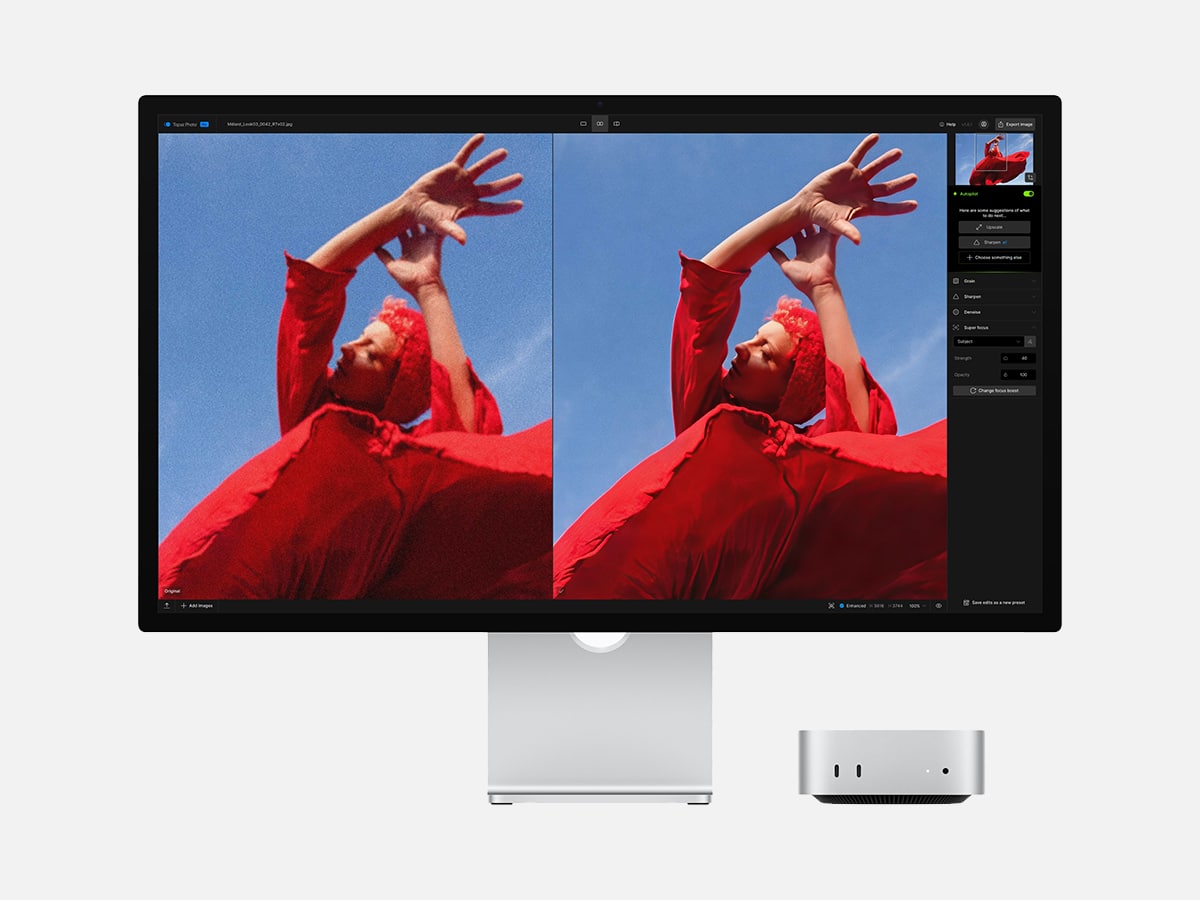
This expanded memory ceiling lets developers run gigantic local diffusion models if they please, but most will use it to edit ProRes RAW video streams and handle high-resolution 3D renders in Blender up to 4.5x faster than M2 Pro builds.
Benchmark testing by the brand highlights its substantial performance upgrades across professional software tools. LM Studio prompt processing on M5 Pro runs up to 8.5x faster than M2 Pro and 4x faster than M4 Pro, while Affinity image processing sees a 2.1x speed boost. AI Software frameworks like Core AI and open-source MLX allow developers to deploy local models directly in Xcode. But what really excites us is the inclusion of rear Thunderbolt 5 ports on M5 Pro models that support Remote Direct Memory Access RDMA, enabling developers to cluster multiple Mac mini units into a shared memory pool that delivers up to 3x faster inference speeds.
Connectivity Upgrades, macOS 27, and Environmental Standards
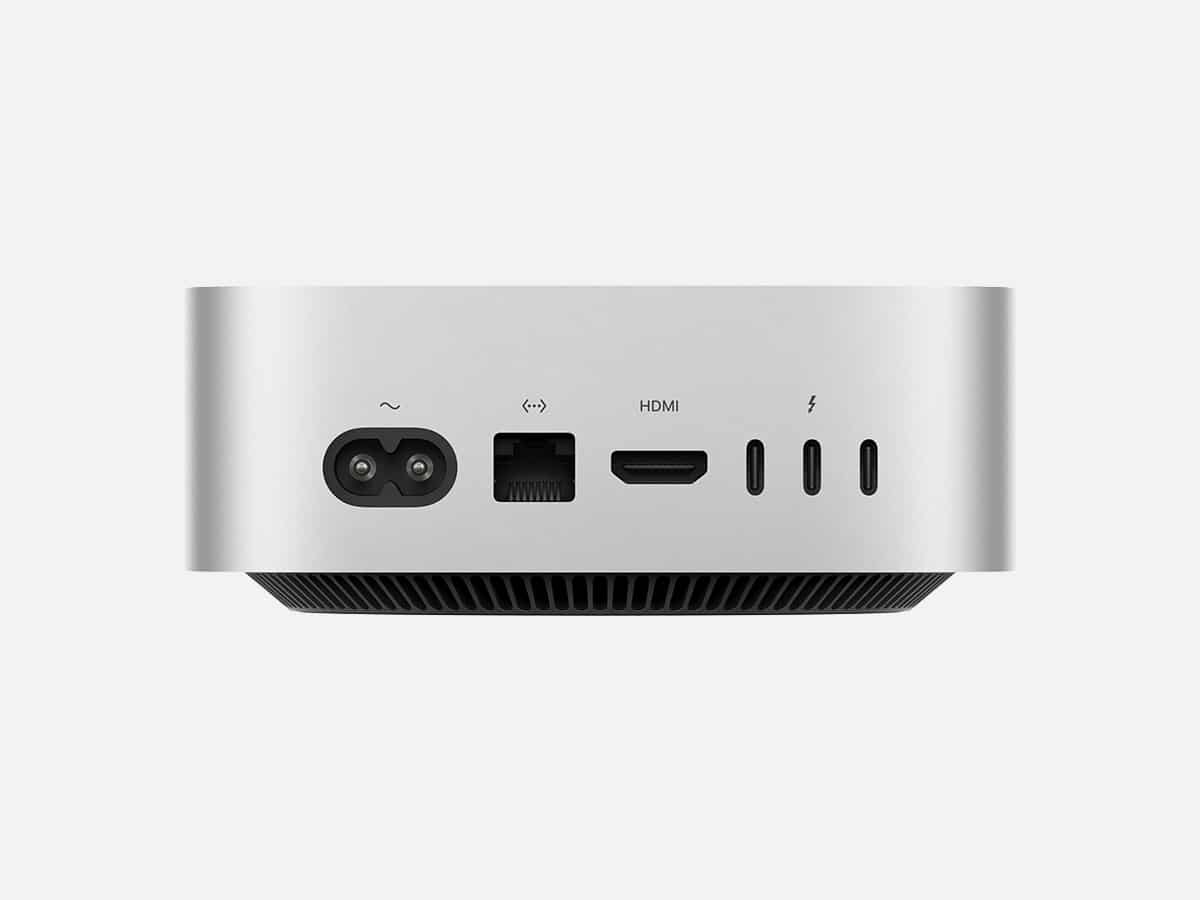
Physical connectivity includes two USB-C ports and a high-impedance headphone jack on the front panel. Rear connectivity features three Thunderbolt 4 ports on M6 builds, while M5 Pro models include three Thunderbolt 5 ports offering transfer speeds up to 120Gb/s alongside HDMI and an upgraded 2.5Gb Ethernet port as standard, with a 10Gb option available.
Wireless networking upgrades to Wi-Fi 7 and Bluetooth 6 via the N1 chip, while genlock over USB-C enables precise display and camera synchronisation for capture setups such as the iPhone 17 Pro.
The system ships with macOS 27 Golden Gate, incorporating Siri AI across Spotlight and system context menus, as well as Visual Intelligence screen context shortcuts. On the sustainability front, the Mac mini contains 50 per cent recycled content overall, featuring 100 per cent recycled aluminium in the enclosure and 100 per cent recycled rare earth elements in magnets. Manufacturing relies entirely on renewable energy sources and is supported by 100 per cent fibre packaging.
Pre-orders are open across Australia today at the link down below, with official retail store availability and home deliveries starting September 22, 2026. Buyers can also access Apple Trade In credits, year-round education discounts, and coverage through AppleCare Plus or AppleCare One plans.
Related reads






























Comments
We love hearing from you. or to leave a comment.