

Updated:
Readtime: 6 min
Every product is carefully selected by our editors and experts. If you buy from a link, we may earn a commission. Learn more. For more information on how we test products, click here.
- This modified Rolex Datejust Ref. 16220 achieved $551,200 at a recent auction.
- Famed horologist George Daniels customised the watch with a co-axial escapement.
- The total price reflects a six per cent buyer’s premium over the hammer.
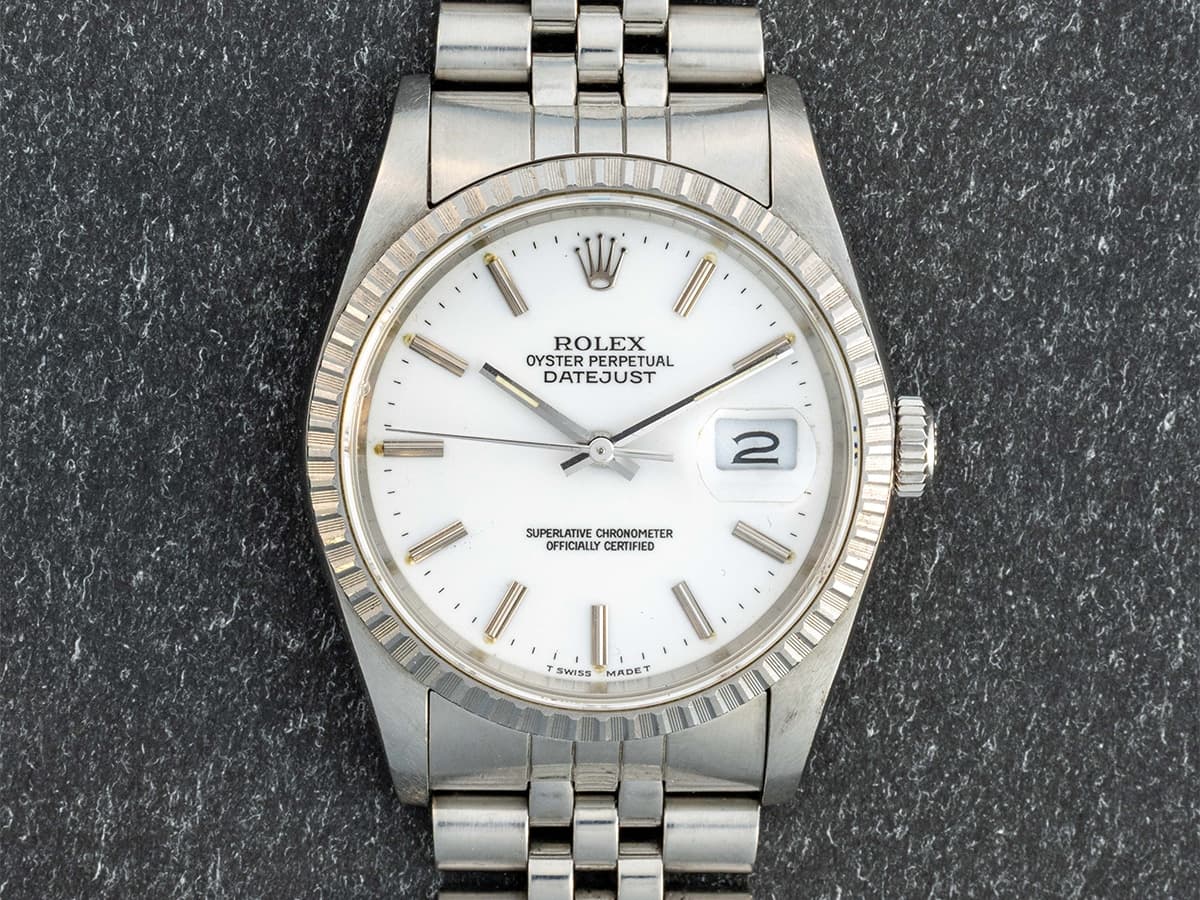
- It features a stainless steel case, a white Tritium dial, and a Jubilee bracelet.
- Result bridges commercial Rolex production and the history of ultra-rare masterpieces.
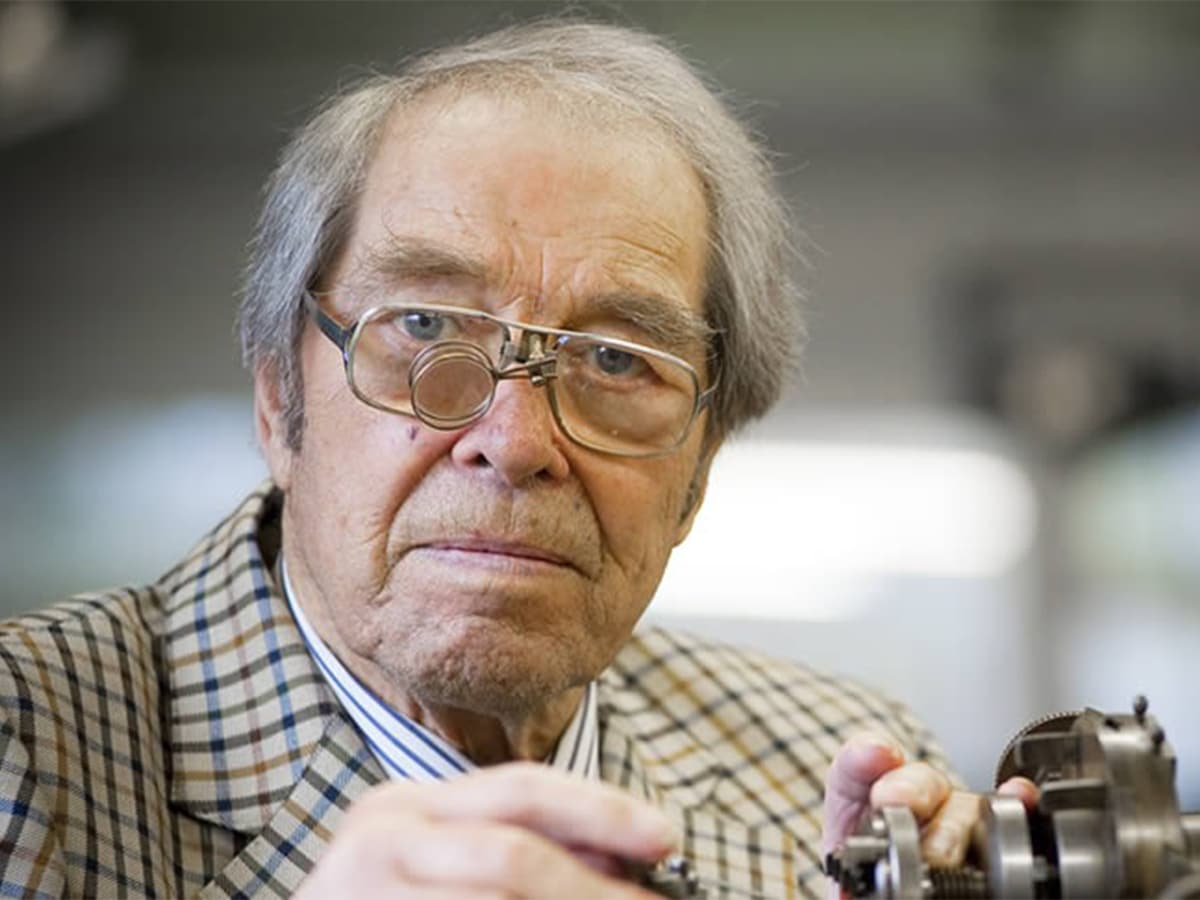
There’s rarely a valuable intersection of mainstream production watchmaking and elite independent horology, let alone one that produces genuine artifacts. Often, opening the caseback of a Rolex devalues the piece, but not in this case. If we look back to the late twentieth century, when the mechanical watch industry faced intense pressure from quartz technology and forced traditional manufacturers to reconsider movement efficiency, a legendary British watchmaker made his name. His name was George Daniels, and he sought to modernise the industry by introducing his low-friction co-axial escapement.
While mainstream brands initially resisted the change, Daniels set out to prove that his invention could seamlessly integrate into mass-produced calibres. This watch here is a prominent manifestation of this experiment, a modified from circa 1988, which recently achieved a staggering hammer price of USD$520,000 at a FutureGrail auction. When accounting for the standard six per cent buyer’s premium, the total realised price reached USD$551,200, a figure that vastly exceeded the initial pre-sale estimates of $100,000 to $200,000.
Unlike a standard production piece or a common competitor like the Rolex Submariner or the Omega Speedmaster, this stainless steel watch features a uniquely modified Calibre 3135 movement. Daniels personally machined and fit a slim variation of his coaxial escapement directly into the heart of the Rolex engine. The result is an extraordinary piece of horological history. It bridges the gap between traditional Rolex engineering and the mechanical legacy that eventually defined modern Omega timepieces. This watch represents the physical proof that changed the minds of Swiss executives and collectors.
| Detail | |
| Brand | Rolex (Modified by George Daniels) |
| Model/Reference | Datejust Ref. 16220 |
| Movement | Modified Rolex Calibre 3135 with slim Co-Axial escapement |
| Power Reserve | approx. 48 hours |
| Case Material | Stainless Steel |
| Diameter | 36 mm |
| Thickness | approx. 12 mm |
| Strap/Bracelet | Stainless steel Rolex Jubilee bracelet |
| Water Resistance | 100 metres (originally) |
| Price | $551,200 USD (after buyer’s premium) |
Case Architecture and Heritage
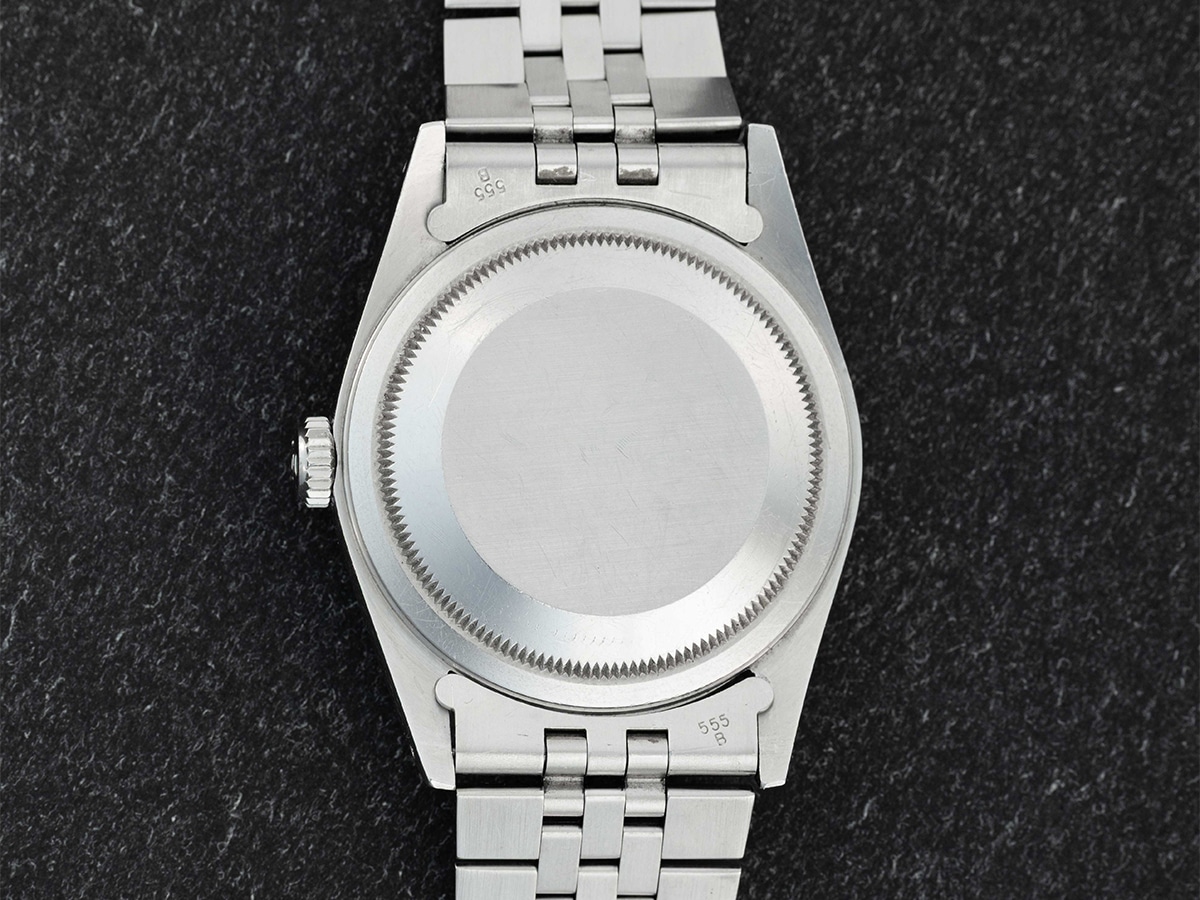
On the surface, this timepiece retains the classic lines of a standard vintage Rolex Datejust from the late 1980s. The stainless steel Oyster case measures a traditional 36 mm in diameter. It features a milled or fluted engine-turned bezel that catches the light in a distinct fashion. The watch is paired with a matching stainless-steel Jubilee bracelet featuring a classic folding clasp to preserve the era’s everyday luxury aesthetic.
The dial layout presents a pristine white surface contrasted by applied steel baton numerals. You’ll find a standard date aperture at the traditional three o’clock position under the cyclops magnification lens. Crucially, the dial utilises original Tritium luminous material, noted by the classic designations flanking the six o’clock marker. The simple baton-style hands glide over the white surface without revealing any visual hint of the mechanical complexity ticking underneath.
The historical inspiration behind this watch stems from a specific moment between George Daniels and the Swiss watch establishment. In 1984, Daniels visited Rolex in Geneva to pitch his co-axial mechanism. According to historical accounts, the brand kept him waiting for seventeen minutes, an action he viewed as corporate arrogance. To counter scepticism from major brands, Daniels modified a handful of production watches to prove that his escapement worked flawlessly at scale. This specific piece served as one of the six watches displayed at the Basel Fair to demonstrate his mechanism to the world. It’s a piece of horological history, and the realised price says that.
Engineering the Modified Calibre 3135
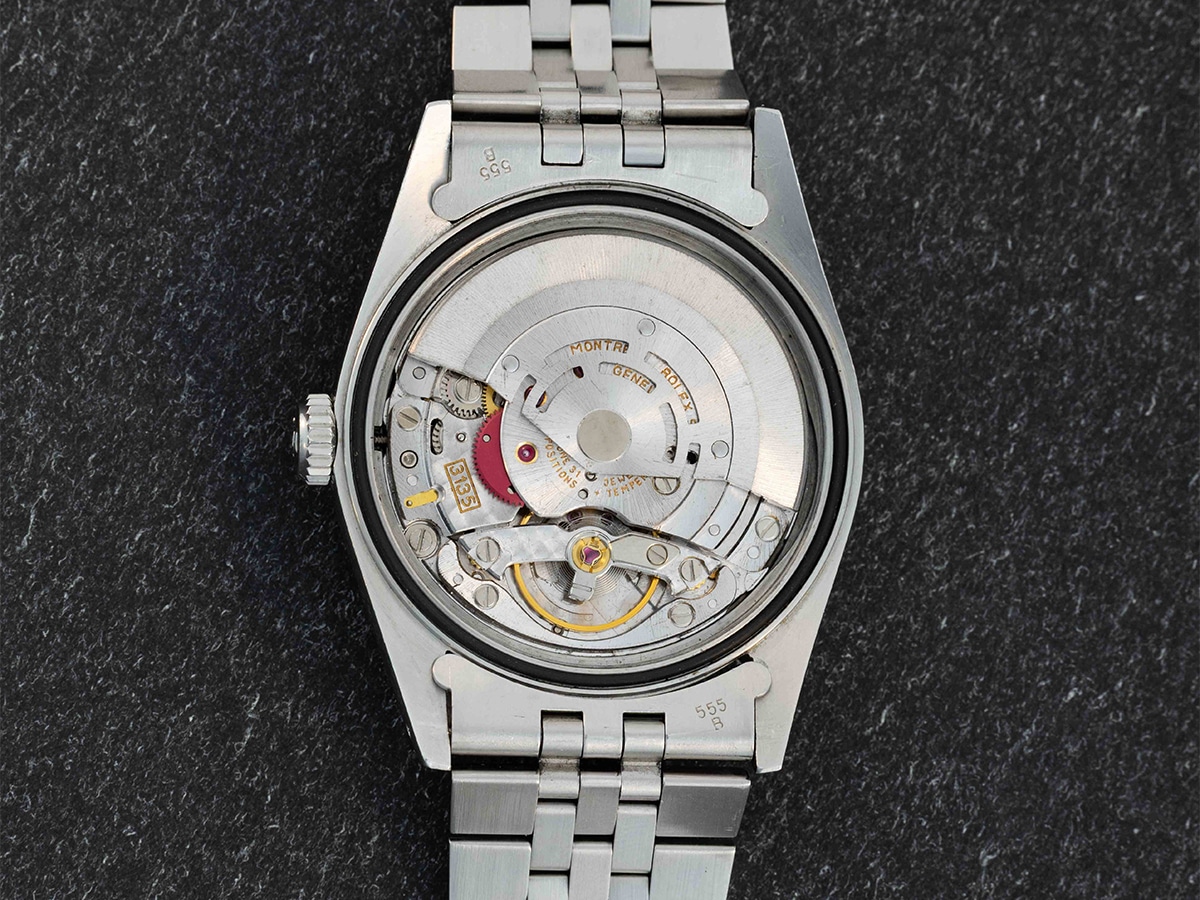
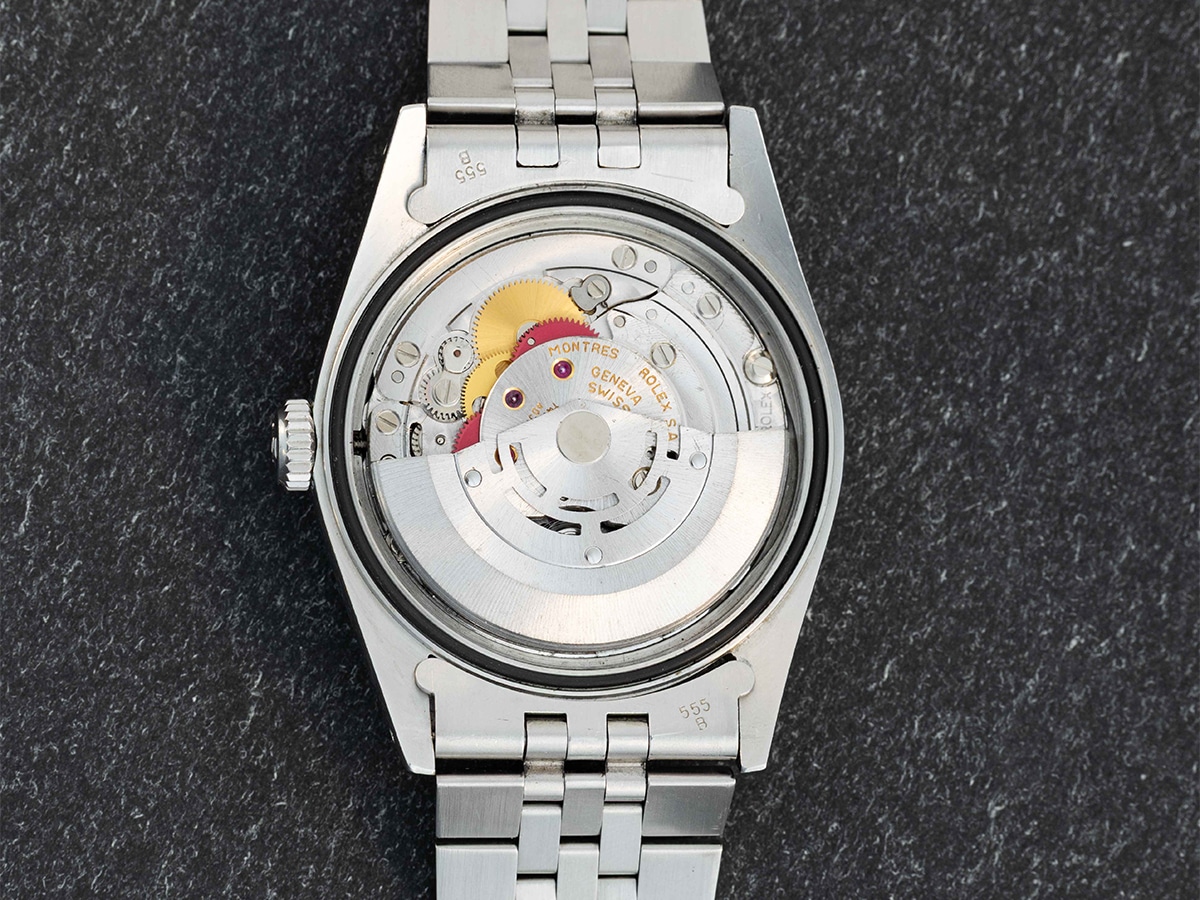
The true significance of this Datejust rests entirely beneath the screw-down case back. The base movement is a nickel-finished Rolex Calibre 3135, which operates with an automatic winding system and a mono-metallic balance. Under normal circumstances, this movement relies on a traditional Swiss lever escapement. However, Daniels altered the kinetic structure by integrating his custom-made, slim coaxial escapement directly into the gear train.
Daniel’s co-axial escapement utilises a system of three pallets that separate the locking function from the impulse mechanism. This configuration replaces the sliding friction of the Swiss lever escapement with a more efficient pushing motion.
By drastically lowering sliding friction, the requirement for heavy oil lubrication on the pallet stones is largely eliminated. This mechanical shift enhances the calibre’s long-term rate stability and extends the necessary service intervals for the wearer.
The Editor’s Take
This specific auction result marks a monumental shift in how the market values industrial prototypes and independent horology. Historically, collectors categorised the Rolex Datejust as a versatile, everyday luxury choice, often overshadowed by sports icons such as the Royal Oak and the Patek Philippe Nautilus. This piece flips that dynamic entirely. It turns a standard 36 mm steel watch into one of the most important historical artifacts of twentieth-century watchmaking.
The performance at the FutureGrail auction proves that historical significance far outweighs mere material scarcity or precious-metal composition. Compared with the standard mass-produced Datejust models of the late 1980s, this watch stands completely alone. It possesses the provenance and technical brilliance of a George Daniels piece wrapped in the indestructible wrapper of an Oyster case that’s stood the test of time.
It represents a physical rebuke to the Swiss manufacturers who originally dismissed the coaxial design before Omega capitalised on it a decade later.
George Daniels’ Market Footprint and Legacy
The watch was offered at the FutureGrail May 2026 online auction, but to fully appreciate this USD$551,200 valuation, collectors must look beyond mass production to the wider, ultra-exclusive catalogue of George Daniels timepieces.
Daniels famously hand-assembled only 23 pocket watches and two wristwatches from scratch during his lifetime, as well as the later Millennium and Anniversary production series, which he managed alongside his protégé, Roger W. Smith.
While industrial modifications like this altered Datejust occupy a highly specific niche, his entirely bespoke independent creations exist in an elite, multimillion-dollar stratosphere. Masterpieces such as the George Daniels Space Traveller pocket watches, his legendary tourbillons, or the unique Grand Complication routinely fetch between $1.5 million and over $4 million at major international sales. The $551,200 result for this steel Datejust underscores a fierce, global appetite for his engineering DNA.


























Comments
We love hearing from you. or to leave a comment.