


Updated:
Readtime: 4 min
Every product is carefully selected by our editors and experts. If you buy from a link, we may earn a commission. Learn more. For more information on how we test products, click here.
There’s a striking disconnect between how men see themselves and how the women in their lives perceive them, according to the inaugural Male Confidence Index from Man of Many.
The Male Confidence Index, a scientific study conducted by Man of Many in conjunction with Fifth Quadrant research, surveyed 2001 Australians aged 18-64 about their confidence in five key areas; finance and career, health and wellbeing, relationships and belonging, identity and societal role, and self-perception and life direction.
The results were stark, showing a national baseline confidence score of 63/100, but significant fluctuations across age and gender groupings.
Crucially, the Index didn’t just speak to Aussie men, but also to the women in their lives, to gain a deeper understanding of the values and beliefs that are important to both men and women, and where those qualities demerge.
Women are significantly more likely than men to define masculinity in terms of vulnerability (20%, compared 7% of men) and empathy (28%, compared to 17% of men), while men are far more likely to identify strength as its defining trait (29% of men and only 18% of women). These differences represent the largest gaps in how masculinity is perceived across the measures tested.
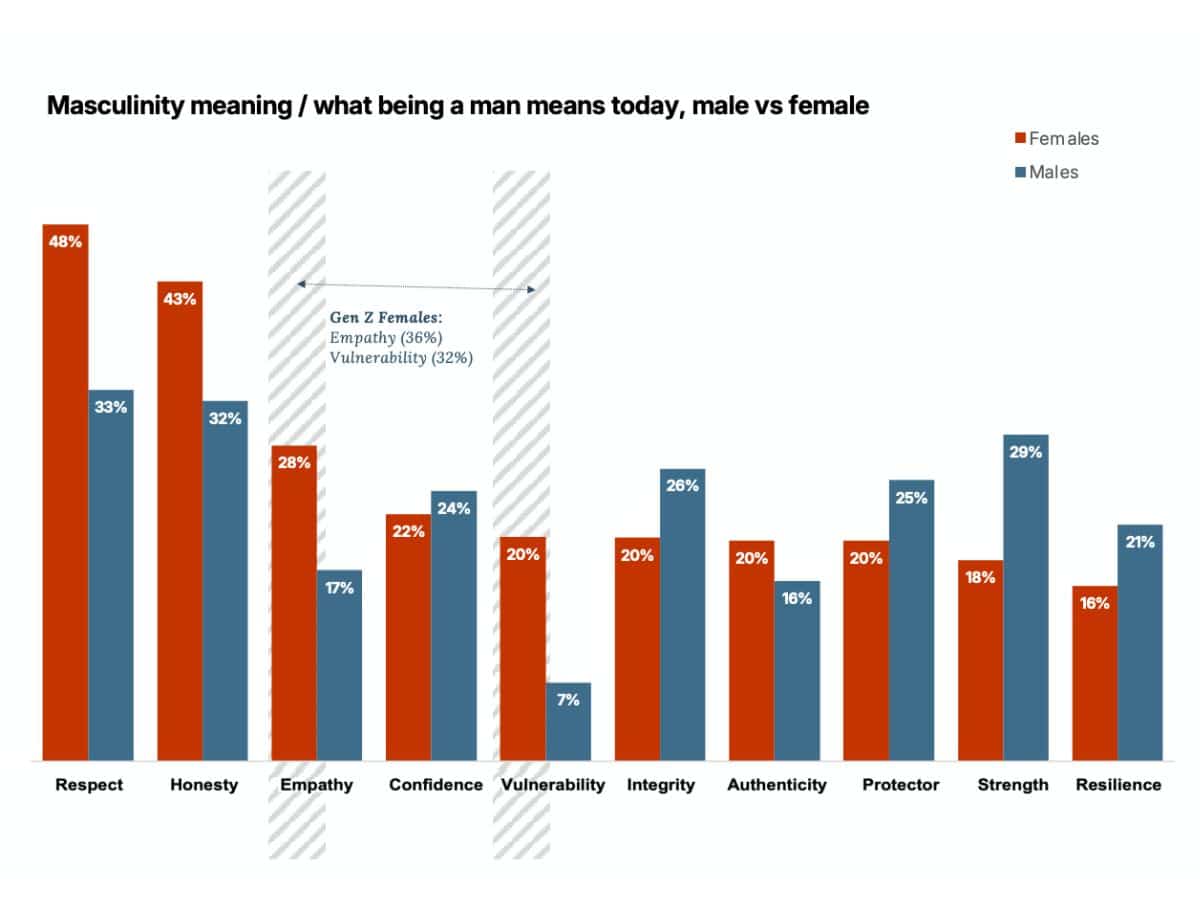
Psychologist Carly Dober from Enriching Lives Psychology says these numbers point to a significant gap between traditional masculine expectations and what modern relationships actually require for health and longevity.
“I found it sad how a lot of men still feel, for so many different reasons, that they have to be that strong, masculine traditional archetype, when often women would like to see something different in men,” Dober told Man of Many.
The disconnect around perceptions of masculinity is fuelling a larger gap between how men are feeling within themselves, and how the women in their lives perceive them.
Ninety-two per cent of women say confidence is vital in a partner, yet only 62% describe their partner as “highly confident”, and 83% of women believe men feel pressure to appear in control, even when they’re drowning.
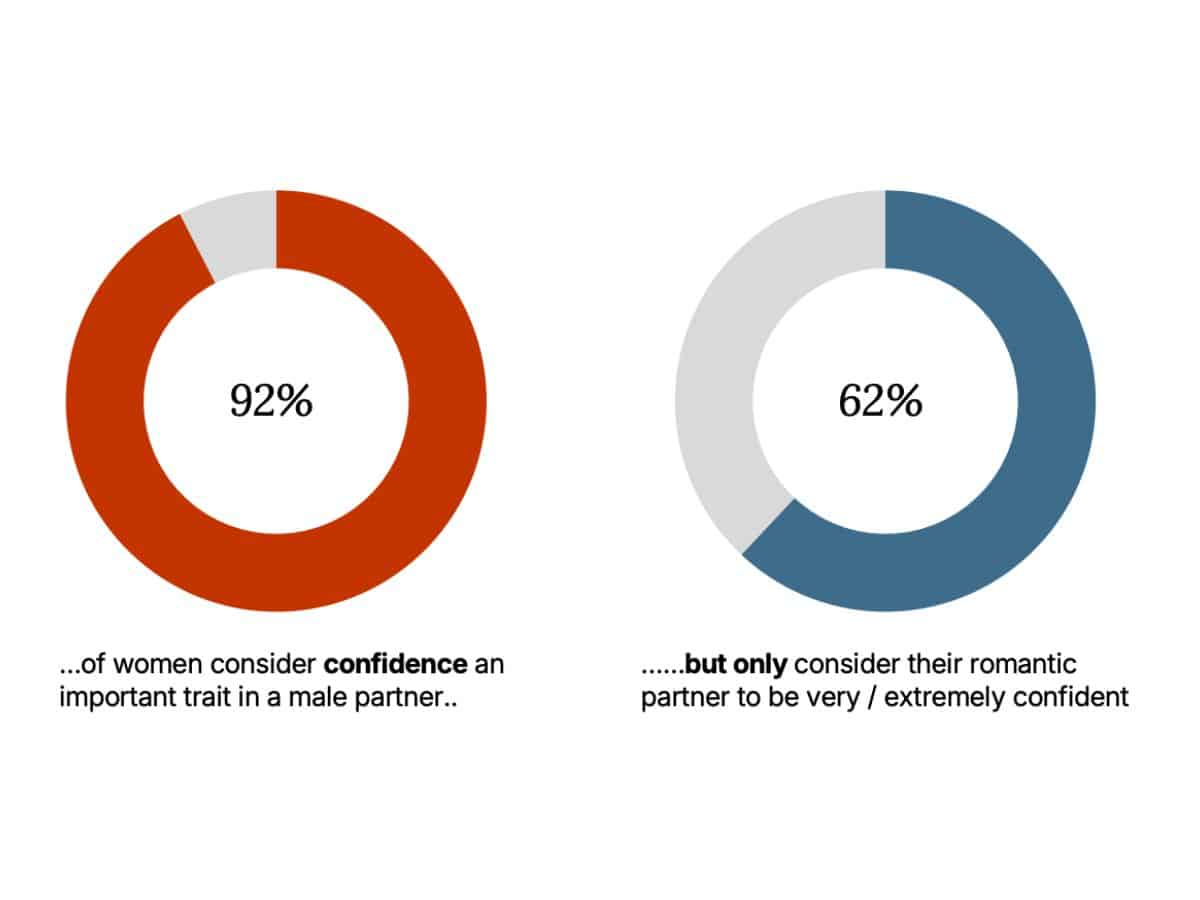
According to Dober, this suggests women are seeing a ‘performance’ of confidence, rather than the real thing.
“That means that men will often struggle to find a partner or to date effectively, and to have rich experiences both romantically and sexually, and even just friendships with the opposite sex.”
Gen Z and the ‘manosphere’
Despite reporting the highest overall confidence, Gen Z and Millennial men also report the highest levels of anxiety affecting their day-to-day lives. Sixty-two per cent of Gen Z men say feelings of anxiety regularly affect their confidence in everyday situations, compared to 39% of Baby Boomers.
Thirty seven per cent of Gen Z men spend over two hours daily on social media and 55% of these heavy users say it boosts their day-to-day confidence. However, these same users are significantly more likely to compare themselves to others (66% vs 47% of light users), feel body image insecurity (58% vs 72%) and worry about being ‘cancelled’ (55% vs 48%).
Dober says Gen Z and younger Millennials face complex challenges, but are often offered simple solutions online, especially by the so-called ‘manosphere’ of hyper-masculine podcasters and YouTubers.
“More often than not, if they are believing and living this kind of regressive message, it’s causing real social harm. Which leads to male loneliness, which leads to disenfranchisement with the notion of romantic and healthy relationships.
“It’s a real shame because the bedrock of healthy relationships: there’s nothing feminine about it: it’s just respect and trust, and good communication.”
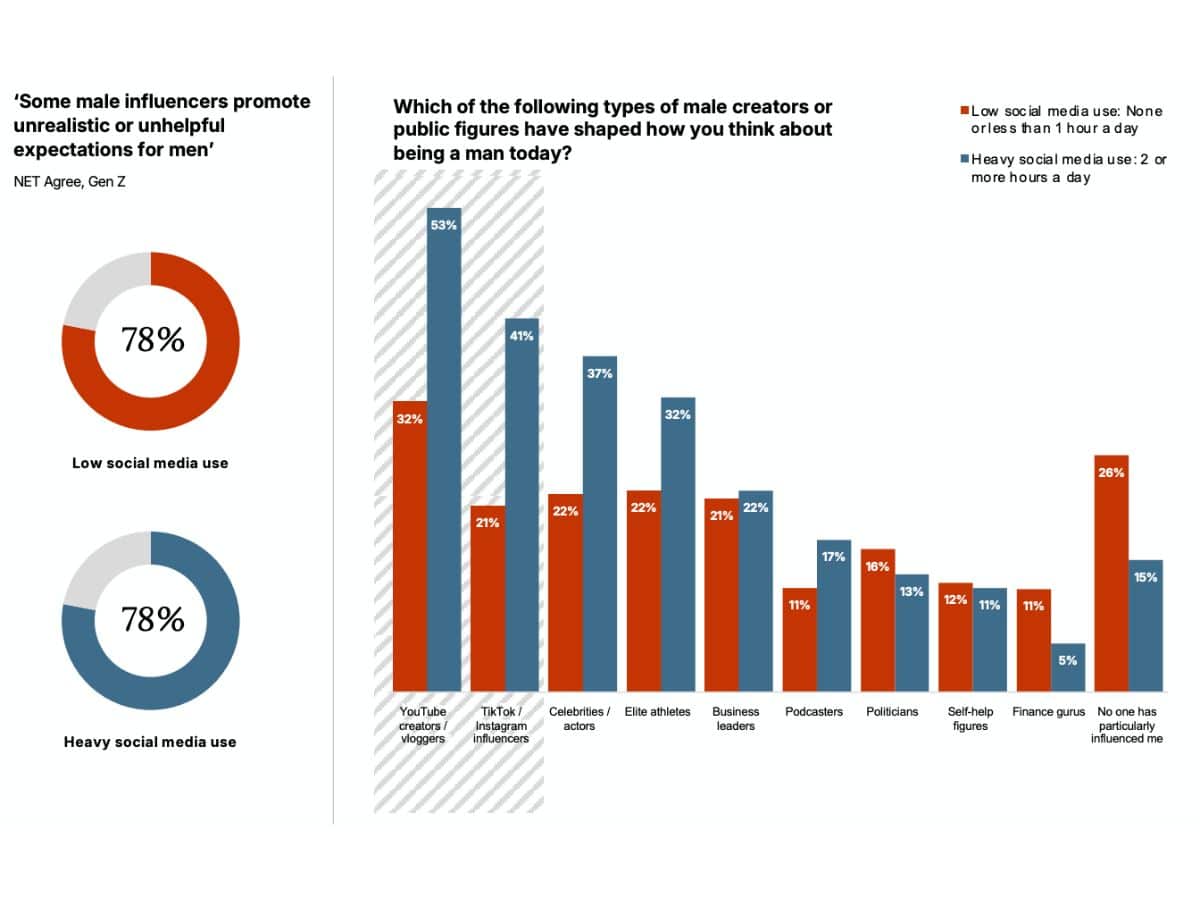
Dober says these disconnects between the ways men and women see themselves and their relationships have the potential to act as a barrier to intimacy and healthy relationships.
“If your online content is radicalising you or making you think that half of the population aren’t as important to you… that is going to impact how you engage with all women.”
Dober offers two pieces of advice for men who wish to form deeper connections with the people around them, male or female: Get offline and seek feedback.
“If men are worried about their relationships with women, what I encourage people to do is seek feedback from close, trusted women in their lives. Maybe their mum, or sister, or cousin, or friend. Because, sometimes the women in your life will give you some feedback about how you could improve your dating life or what women are really looking for.
“And we know that it’s less taxing for the brain to see people face-to-face. We know that you get a whole lot of really important brain-boosting chemicals when we do see our loved ones face-to-face or we do something fun and exciting.”




























Comments
We love hearing from you. or to leave a comment.