


Updated:
Readtime: 13 min
Every product is carefully selected by our editors and experts. If you buy from a link, we may earn a commission. Learn more. For more information on how we test products, click here.
My post-workout recovery routine has evolved significantly over the past 12 months. What started as a foam roller and some half-hearted stretching has grown into a full tech stack: Oura Ring 4 on my finger, Eight Sleep Pod 4 regulating my sleep temperature, and Macrofactor logging every meal.
So when Megelin offered me the chance to test their SlimCore Toning Belt as part of my Hyrox preparation, I was curious. A belt that combines EMS, vibration, heat, and multi-wavelength LED therapy sounded either genuinely useful or wildly overpromising.
After several weeks of daily use following my F45 sessions, I can say it sits somewhere in between, and that’s actually fine.
Megelin SlimCore Review: The TL;DR
- Price: US$229 (regularly US$459)
- What it does: Combines EMS muscle stimulation, 6-level vibration (530 to 1,540 RPM), gentle heat (38 to 42 degrees Celsius), and 5-wavelength LED therapy in a single wireless belt
- FDA status: FDA-cleared for temporary relief of muscle pain and enhancement of muscle performance
- Battery: 2,000mAh rechargeable, lasting 1 to 4 hours depending on settings. Charges in roughly 3.5 to 4 hours
- Best for: Post-workout abdominal recovery, reducing muscle soreness, and light body contouring as a supplement to actual training
- Not a replacement for: Proper nutrition, consistent training, or professional physiotherapy
Why I Added the SlimCore to My Recovery Routine
Context matters here. I’m 37, training at F45 Darlinghurst three to five times a week, and preparing for my first Hyrox event on 5 July 2026. Over the past year, I’ve dropped from 82kg to around 72kg, bringing my body fat from 25 per cent down to the high teens. The training load is real, and so is the soreness.
Hyrox combines running with functional fitness stations: sled pushes, burpee broad jumps, wall balls, farmer’s carries. My core takes a beating. On heavy days, my abdominals are wrecked for 24 to 48 hours. I was already using a massage gun on my legs and shoulders, cold water immersion twice a week, and an infrared sauna when I can get to it. But I didn’t have anything targeting abdominal recovery specifically. That’s the gap the SlimCore was meant to fill.
How LED Wavelength Therapy Works for Recovery
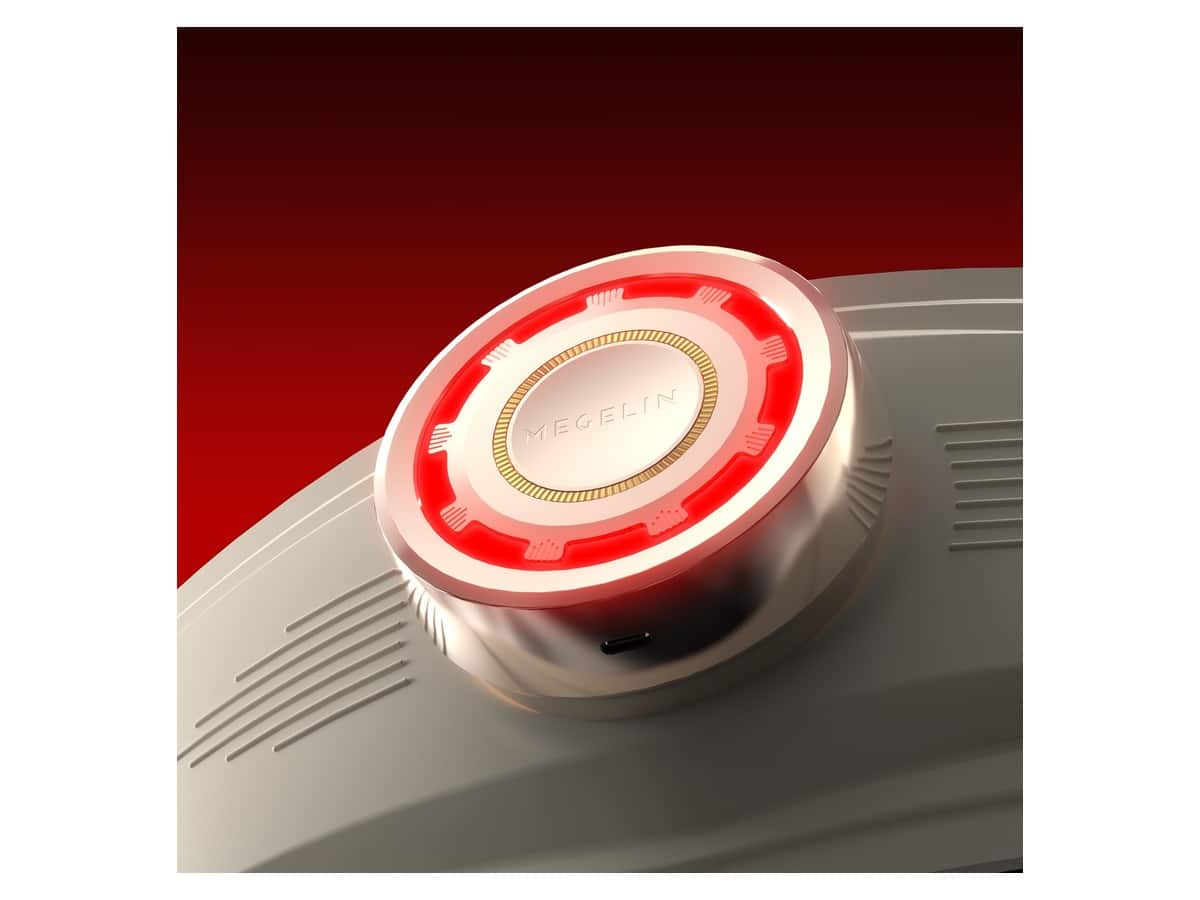
The SlimCore uses what Megelin calls 4-in-1 LED technology, which actually delivers five distinct wavelengths. Each targets different biological processes, and while the evidence base varies by wavelength, the broad category of photobiomodulation (light therapy) does have legitimate clinical backing.
Red light (625nm): The most researched wavelength in this belt. Red light at this range penetrates several millimetres into tissue, where it stimulates cytochrome c oxidase in your mitochondria. In plain English, it helps your cells produce more ATP (energy). A controlled study published in the Journal of Athletic Training found that red light therapy reduced delayed-onset muscle soreness by 47 per cent at the 48-hour mark compared to placebo. It works by accelerating the clearance of inflammatory markers and restoring energy to damaged muscle fibres.
Green light (525nm): Less studied than red, but emerging research suggests green light may have analgesic properties. A study from the University of Arizona exposed subjects to green LED light and observed meaningful reductions in pain sensitivity. The mechanism is still being explored, but it appears to modulate pain signalling pathways rather than acting on tissue directly.
Yellow light (590nm): Primarily targeted at skin health. This wavelength is used in dermatological settings for reducing redness and improving skin tone. In the context of a recovery belt, it’s more of a bonus than a primary function.
Blue light (465nm): Has established antibacterial properties and is used clinically for acne treatment. In a recovery belt, its role is modest, but it may contribute to reducing surface-level skin inflammation after sweaty workouts.
Purple light (400nm): Combines properties of red and blue wavelengths. Used in some clinical settings for wound healing and skin rejuvenation, though the evidence at this wavelength is thinner than for red or near-infrared light.
The honest assessment: the strongest clinical evidence for light therapy centres on red (630 to 660nm) and near-infrared (810 to 850nm) wavelengths. The SlimCore’s 625nm red sits close to the optimal range. The other wavelengths are supported by thinner evidence, but they’re not pseudoscience either. They’re emerging areas of research being applied in a consumer device.
What Using the SlimCore Belt Actually Feels Like
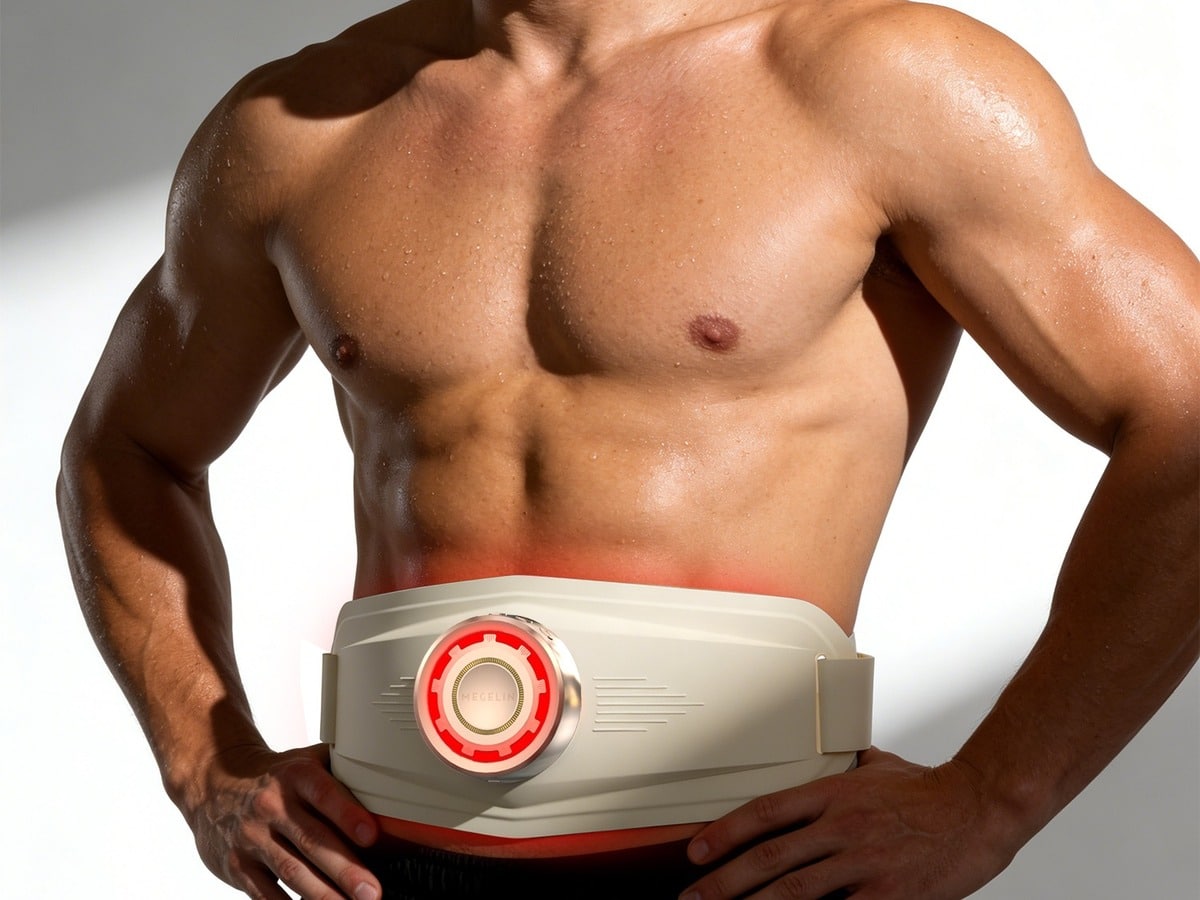
The belt wraps around your midsection with an adjustable strap. It’s comfortable enough to wear at my desk or on the couch, which is exactly how I used it: 20 to 30 minutes after getting home from F45, usually while catching up on emails.
When you power it on, the heat kicks in immediately at a gentle 38 to 42 degrees Celsius, comparable to a warm towel rather than anything aggressive. The vibration starts at level one and cycles through six levels via the power button. At levels one and two, it’s a subtle hum. By five and six, you genuinely feel it working through the abdominal wall, ranging from 530 RPM to 1,540 RPM.
The EMS component operates across a 0 to 300Hz frequency range, delivering gentle electrical pulses that contract your abdominal muscles involuntarily. If you’ve used a TENS unit before, this is milder. It’s not a jolting contraction but more of a persistent tightening sensation.
The LED lights are visible through the belt’s inner surface, cycling through all five wavelengths. You can’t feel them doing anything, which is exactly how photobiomodulation works: it operates below your sensory threshold.
My typical session: power on, set vibration to level three or four, leave it for 20 minutes. The belt is wireless and voice-controlled, which sounds gimmicky but proved useful when my hands were occupied. I got about two to three sessions per charge at moderate settings.
Results and Observations After Four Weeks
I want to be careful here because I was using the SlimCore alongside everything else in my recovery stack, not in isolation. Attributing specific results to a single device when you’re also training hard, eating well, cold plunging, and sleeping on a temperature-regulated mattress would be misleading.
That said, here’s what I noticed:
Reduced abdominal soreness: On days when I used the belt within an hour of training, I felt noticeably less tight the following morning. This was most apparent after core-heavy sessions like F45’s Hollywood or Romans workouts. Without the belt, I’d typically feel a deep ache in my obliques and lower abs for 36 to 48 hours. With it, that window compressed to 12 to 24 hours.
Better relaxation: The heat and vibration combination is genuinely relaxing. It became part of my wind-down routine. My Oura Ring data showed marginally better HRV on days I used the belt before bed, though I’d need months of data to call that a trend rather than noise.
Body contouring claims: Megelin markets the SlimCore for body contouring and toning. After four weeks, I didn’t observe any visible changes to my midsection that I couldn’t attribute to the 10kg I’d already lost through diet and exercise. If there’s a contouring effect, it’s extremely subtle and impossible to isolate from the calorie deficit I was running.
Skin condition: My abdominal skin does look slightly more even in tone, which could be the yellow and blue wavelengths doing their thing, or it could be the natural result of losing visceral fat. I genuinely can’t tell.
Limitations
No device review is complete without the downsides, and the SlimCore has a few.
It only targets your core. If you’re sore all over after a full-body session, the belt helps your abs but does nothing for your quads, hamstrings, or shoulders. A massage gun remains more versatile for whole-body recovery.
The LED wavelengths don’t include near-infrared (850nm). Most clinical studies showing the strongest muscle recovery benefits use 850nm near-infrared light, which penetrates deeper into tissue. The SlimCore’s 625nm red is beneficial but doesn’t reach as deep. Megelin does sell separate red light therapy belts with 660nm and 850nm if deeper penetration is your priority.
Charging takes a while. At 3.5 to 4 hours for a full charge from the 2,000mAh battery, you need to plan ahead. Forgetting to charge it after a session meant I occasionally couldn’t use it the next day.
The body contouring claims are overstated. While EMS can stimulate muscle contractions, the idea that wearing a belt passively will sculpt your abs is optimistic at best. It’s a recovery and comfort device first. Any contouring is a distant secondary benefit that requires consistent use alongside real training and nutrition.
No app or data tracking. In 2026, a US$229 wellness device without a companion app feels like a missed opportunity. I would have loved to track session duration, intensity settings, and correlate usage with recovery metrics from my Oura Ring.
Megelin SlimCore vs Alternatives
Here’s how the SlimCore stacks up against the recovery tools I already own or have tested.
Versus massage guns: A Theragun or Hyperice is more versatile. You can target any muscle group, and percussive therapy has stronger evidence for deep tissue recovery. The SlimCore wins on convenience for core-specific recovery: strap it on, forget about it. They’re complementary rather than competing products.
Versus TENS/EMS units: Dedicated TENS units are cheaper (often under $100) and offer more granular control over frequency and pulse width. The SlimCore’s advantage is combining EMS with heat, vibration, and LED therapy in a single wearable. If you only want electrical stimulation, a standalone unit is more cost-effective.
Versus traditional heat packs: A $15 wheat bag does the heat component just as well. But it doesn’t vibrate, doesn’t deliver EMS, and provides no LED therapy. The SlimCore is a meaningful upgrade if you value the multi-modal approach.
Versus dedicated red light panels: Panels from brands like EMR-Tek or Joovv deliver more concentrated light at the optimal 660nm and 850nm wavelengths. The SlimCore’s LED component is supplementary, not a replacement for a dedicated panel.
Versus ice baths: Different modality entirely. Cold exposure works systemically on inflammation and nervous system regulation. The SlimCore works locally with heat. They serve different purposes and can be used together.
Who Should Buy the Megelin SlimCore
The SlimCore makes sense if you train regularly, experience consistent core soreness, and want a passive recovery tool you can use while doing other things. It’s particularly suited to people doing HIIT, functional fitness, or combat sports where the core takes repeated punishment.
It also works as a gateway device if you’re curious about EMS, heat therapy, and LED photobiomodulation but don’t want to buy three separate products.
Who Should Skip It
If you’re looking for a primary weight loss or body contouring solution, this isn’t it. No belt replaces calorie management and resistance training. If you already own dedicated EMS units and red light panels, the SlimCore won’t add much. And if your recovery needs are more about legs and upper body than core, a versatile recovery tool will serve you better.
Megelin SlimCore Toning Belt: Tech Specs
Specification: Detail
Price: US$229 (RRP US$459)
Technologies: EMS, vibration, heat, multi-wavelength LED
LED Wavelengths: 625nm (red), 525nm (green), 590nm (yellow), 465nm (blue), 400nm (purple)
EMS Frequency Range: 0 to 300Hz
Vibration Levels: 6 levels (530 to 1,540 RPM)
Heat Range: 38 to 42 degrees Celsius
Battery: 2,000mAh rechargeable lithium
Battery Life: 1 to 4 hours (depending on mode)
Charging Time: 3.5 to 4 hours
Connectivity: Wireless, voice-controlled
FDA Status: FDA-cleared for temporary muscle pain relief and muscle performance enhancement
Verdict
The Megelin SlimCore Toning Belt is a genuinely useful addition to a post-workout recovery routine, with some caveats. The combination of heat, vibration, and EMS provides real, tangible relief for core muscle soreness. The LED therapy component is the most speculative part: the red 625nm wavelength has clinical backing, while the other four wavelengths are supported by emerging but less conclusive research.
At US$229, it sits in an interesting price bracket. It’s cheaper than a decent massage gun, offers more functionality than a standalone EMS unit, and combines four modalities that would cost significantly more to purchase separately. You just need to approach it with realistic expectations. It’s a recovery and comfort tool. It won’t give you abs. Training at Hyrox prep intensity and eating in a calorie deficit will give you abs. The SlimCore helps you recover faster so you can train again sooner, and that’s a genuinely valuable proposition.
This is a paid partnership with Megelin. Scott received the SlimCore Toning Belt and was compensated for this review. All opinions are his own. This article does not constitute medical advice. Consult your healthcare provider before beginning any new recovery or therapy protocol.
Yes. The Megelin SlimCore is FDA-cleared for the temporary relief of muscle pain and enhancement of muscle performance. This means it has met FDA safety and effectiveness standards for those specific claims, but it is not FDA-approved as a medical device for treating conditions.
Megelin recommends sessions of 20 to 30 minutes. I found this timeframe comfortable and effective for post-workout recovery. The belt can run for one to four hours on a single charge depending on which modes you activate, so multiple sessions per charge are possible at moderate settings.
The SlimCore is primarily a recovery and muscle stimulation device. While Megelin markets body contouring benefits, any visible changes to your midsection will come from consistent training and proper nutrition, not from wearing a belt. The EMS, heat, and vibration may support muscle activation and circulation, but they are not substitutes for a calorie deficit and exercise.
Yes. The belt is wireless and designed to be worn during everyday activities. I regularly wore it while answering emails or sitting on the couch after training. At lower vibration levels (one to three), it is subtle enough that you can comfortably work or read without distraction.
Dedicated red light panels typically use 660nm and 850nm wavelengths, which have the strongest clinical evidence for deep tissue recovery and muscle repair. The SlimCore uses 625nm red light, which is beneficial but does not penetrate as deeply as 850nm near-infrared. The SlimCore compensates by combining LED with EMS, vibration, and heat in a wearable format, making it more convenient for targeted core recovery.
The belt is designed for use at rest, not during active training. Wearing it while exercising would be impractical due to the bulk and the fact that the EMS and vibration modes could interfere with voluntary muscle contractions. Use it before or after your workout, not during.
A standalone TENS unit is typically cheaper and offers more precise control over electrical stimulation frequency and intensity. The SlimCore’s advantage is its multi-modal approach, combining EMS with heat, vibration, and five-wavelength LED therapy in a single device. If electrical muscle stimulation is your only goal, a dedicated TENS unit offers better value. If you want a combined recovery experience, the SlimCore is more convenient.


















Comments
We love hearing from you. or to leave a comment.