
Updated:
Readtime: 10 min
The Lowdown:
The office is everywhere now, and dressing for it has never been more complicated. Here's how to navigate the new rules.
Every product is carefully selected by our editors and experts. If you buy from a link, we may earn a commission. Learn more. For more information on how we test products, click here.
You’re in the office Monday, a coworking space Tuesday, back-to-back Zooms Wednesday, a client lunch Thursday, and working from a café Friday. The working week has never been more flexible, and the old rules of how to dress for it have never been less useful. So, if you’re looking for a guide on how to dress as a man who works everywhere and nowhere, this is it.
Key takeways
- The universal office dress code is dead. Instead, get good at reading the room.
- Not sure what to wear? Go slightly up. You can always take a blazer off (you can’t magic one from thin air).
- An unstructured blazer is the single best thing you can add to your wardrobe.
- Fit is everything. A well-fitting t-shirt and chinos will beat an ill-fitting suit every single time.
- You don’t need to spend a fortune to get this right. Uniqlo and COS cover the basics brilliantly, Reiss and Rodd and Gunn handle the mid-range, and if you’re going to splurge anywhere, make it from RM Williams or Kloke.
Stop Trying to Follow a Dress Code, and Start Reading the Room
The single most useful thing to know when it comes to modern office dressing is that no universal rule exists anymore. Instead, you should start paying attention to what the decision-makers in your office are wearing, or to the energy of the room you’re walking into.
This sounds obvious until you’re the guy in a full suit at a startup all-hands, or the guy in trackies at a client pitch – both avoidable faux pas, and both the result of failure to read the room.
The trickier situation is when you can’t read the room because you haven’t been in it yet (new job, new client, unfamiliar industry). Or, if you’re the decision-maker who has to set the tone. In that case, err slightly up. It’s easy to take a blazer off or ditch a tie when you realise the room is more casual than expected. It’s a lot harder to conjure one from nowhere when you’ve underdressed. And if you’re really unsure, just ask. Emailing the HR contact or the person organising the meeting to ask about the dress code shows you’re forward-thinking and care about how you present yourself.
The TL;DR version is that most Australian workplaces in 2026 have settled between smart casual and business casual, with more formal attire reserved for specific occasions. The suit hasn’t disappeared entirely, though. A sharp one remains essential for presentations, interviews, and important meetings, so definitely keep one in your capsule wardrobe. The rest of the time, looking intentional will take you a lot further than looking formal.

Dressing for the Screen (and the Couch)
What about if your meetings happen mostly on a laptop screen? Dressing for a camera is a slightly different ball game from dressing for a room. The main rule to remember is to keep it simple. Avoid stripes and patterns, and instead opt for solid, dark colours. Shirts in mid-blue, olive or charcoal work on most skin tones and are flattering on camera.
Beyond that, even if you’re just working on the couch, there’s a reasonable case for dressing well even when nobody’s watching. Putting on a structured knit or a collared shirt when you’re working from home helps signal to your own brain that the work day has started. While you don’t need a blazer at your kitchen table, staying in your pyjamas until 2pm is doing you no favours either.
What Does “Smart Casual” Really Mean?
Smart casual is responsible for more wardrobe anxiety than any other dress code in history, and the confusion is valid; it means something different in a law firm than it does in a creative agency (which is exactly what makes it so difficult to pin down). But there are a few principles that hold almost everywhere, and once you understand them, dressing for work becomes a heck of a lot easier.
The core idea is that your outfit needs at least one element that shows a deliberate choice. Well-fitting trousers with a clean t-shirt reads smart casual, but the same t-shirt with trackpants doesn’t come close.
Related read: Smart Casual Men’s Dress Code Guide
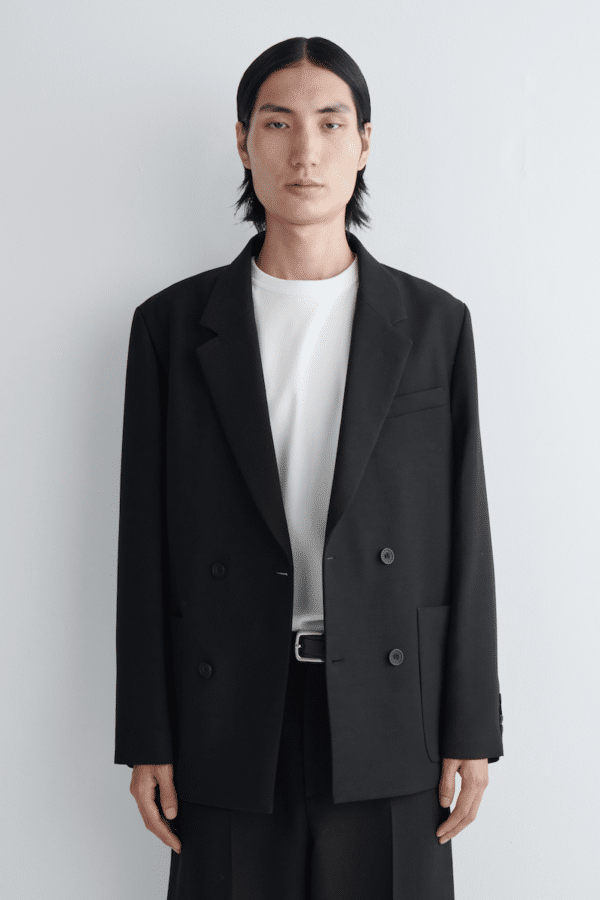
When in doubt, reach for a blazer. A blazer over almost anything lifts it immediately, which is why it remains the single most useful piece in a modern man’s work wardrobe. An unstructured blazer, specifically, is the one most men are still sleeping on (it looks considered without feeling overly formal, and works over a t-shirt as naturally as it does over a shirt).
The other principle worth remembering is that fit will always beat formality. A well-fitting t-shirt and chinos will look sharper than an ill-fitting button-down and dress trousers every single time. Clothes that fit your body (not the size the tag says, not the body you had five years ago) are the baseline for looking stylish and professional.
Related read: A Fashion Expert’s Guide to Dressing Better
The New Office Dressing Hierarchy
Where the old system had formal, business formal, business casual, and casual, the modern version is more fluid. Here’s a little cheat sheet to help:
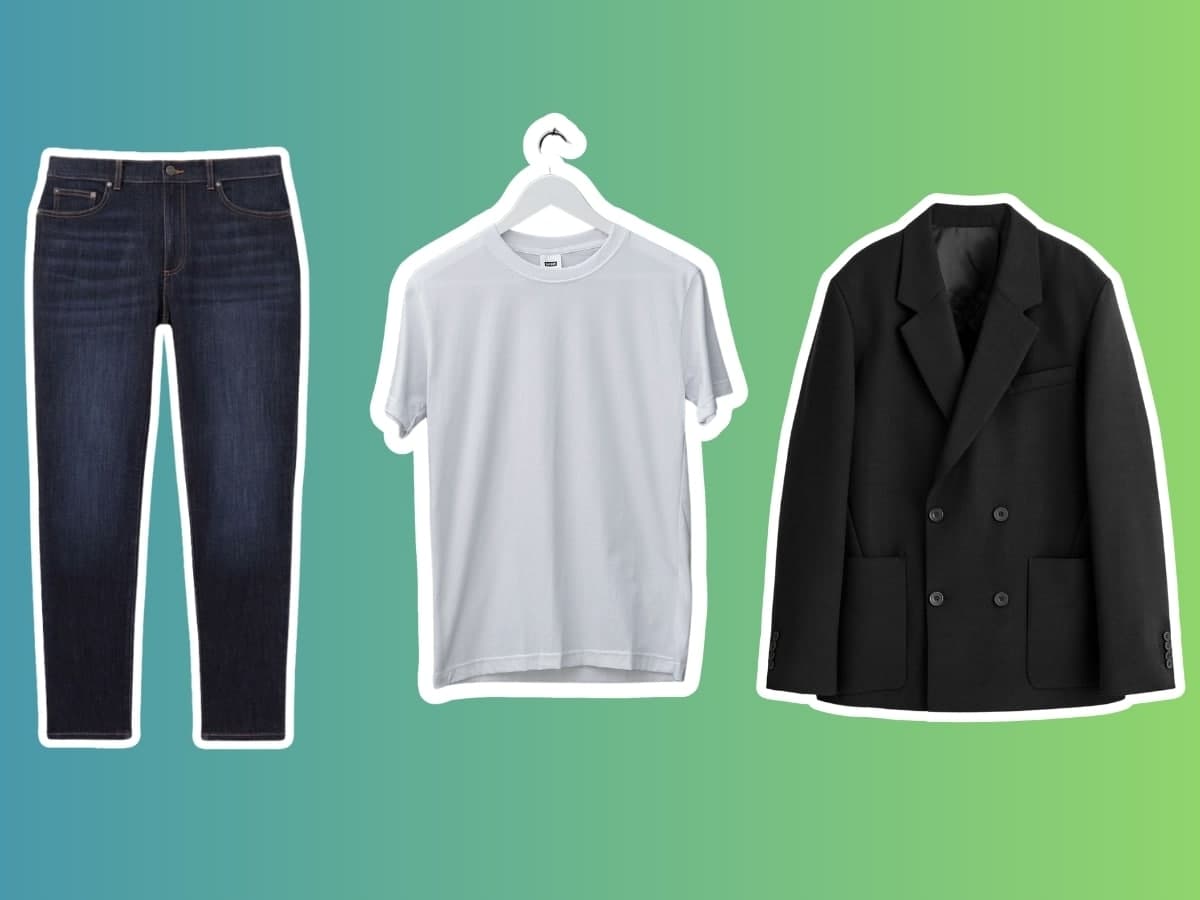
- Elevated casual: Clean t-shirt or fine knit, well-fitting trousers or dark denim, leather sneakers or loafers. Works for most modern workplaces on most days, provided everything fits and nothing is visibly worn out.
- Smart casual: The above, plus a layer. An unstructured blazer, an overshirt, a quality jacket. This handles client-facing situations, meetings, and any day where you want to signal you want to be taken seriously without putting a full suit on.
- Business casual: A shirt that doesn’t need to be tucked, tailored trousers or well-cut chinos, leather shoes or loafers. The dress code for professional services, client lunches, and anything where the other person might arrive in a suit.
- Business formal: The suit. Still relevant, still the clearest professional signal in any wardrobe. Navy and charcoal are still the most versatile, letting you style the suit formally with a shirt and tie, or dressed down with a knit top.
The fastest way to nail what to wear on any given day is also the least complicated: master the blazer-on, blazer-off principle and you’ve effectively solved most of modern office dressing. It sounds reductive until you try it.
The same trousers and t-shirt that look like you’re between errands become a lot more intentional the moment a well-cut blazer enters the picture. One piece of clothing, worn or removed, and the whole read of an outfit changes.
The Most Versatile Pieces to Add to Your Wardrobe
Alright, so what do you actually need in your wardrobe? Luckily, you don’t need a full closet overhaul; just a few pieces that pull consistent weight across whatever your week throws at you.
- The unstructured blazer. This is the single piece most likely to change how your outfits land. Navy and stone are the most versatile colourways, and the direction in 2026 is toward looser, more relaxed silhouettes.
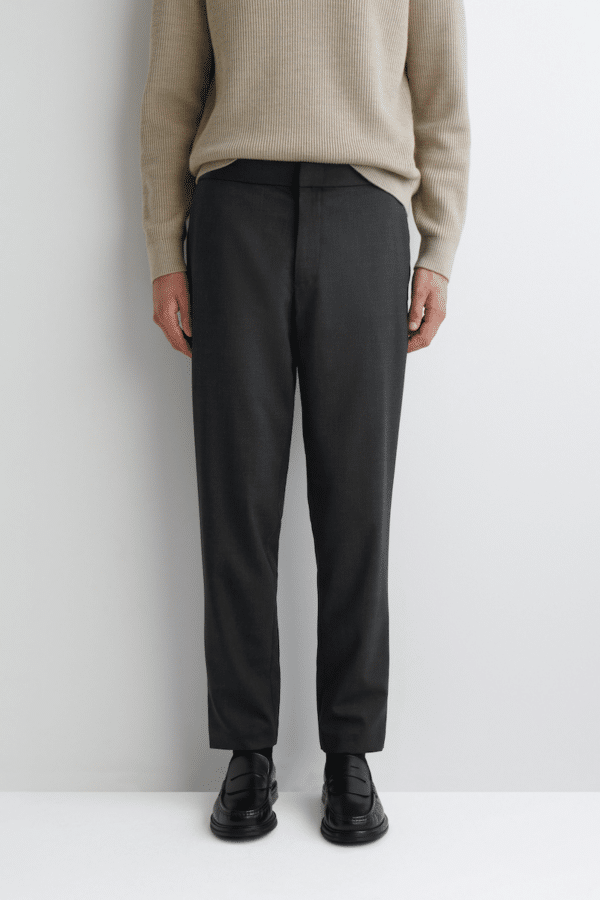
- Tailored trousers. And to be clear, not suit trousers worn without the jacket — that always looks like you forgot half an outfit. What you want are trousers specifically cut to be worn as a separate, in a wool blend or heavy cotton, with enough structure to hold their shape. Wide-leg and pleated styles are firmly mainstream now; they’re modern, genuinely comfortable, and they work across most environments outside the strictly corporate.
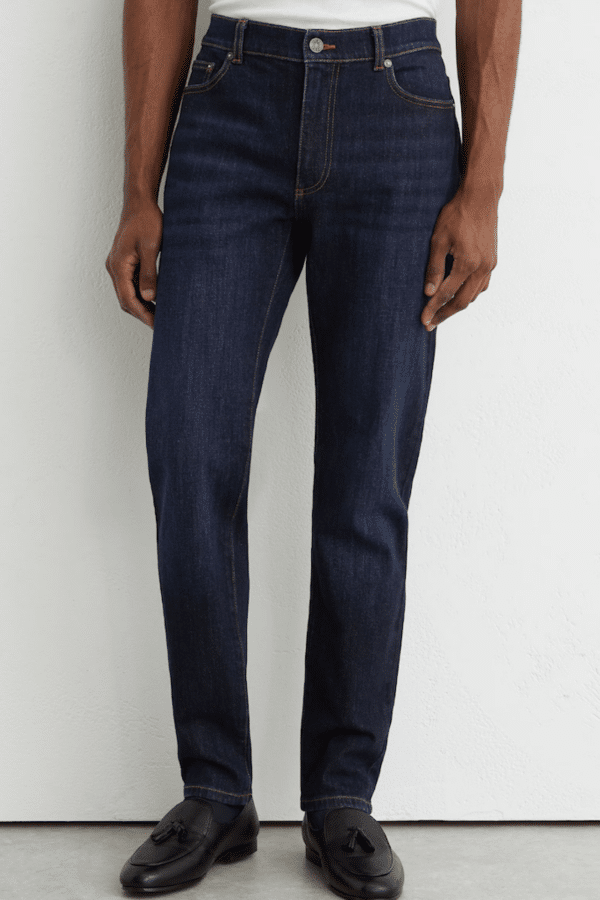
- Dark denim. Raw or dark wash, no distressing, and a perfect fit. Dark denim is a legitimate workwear piece in 2026 across most industries.
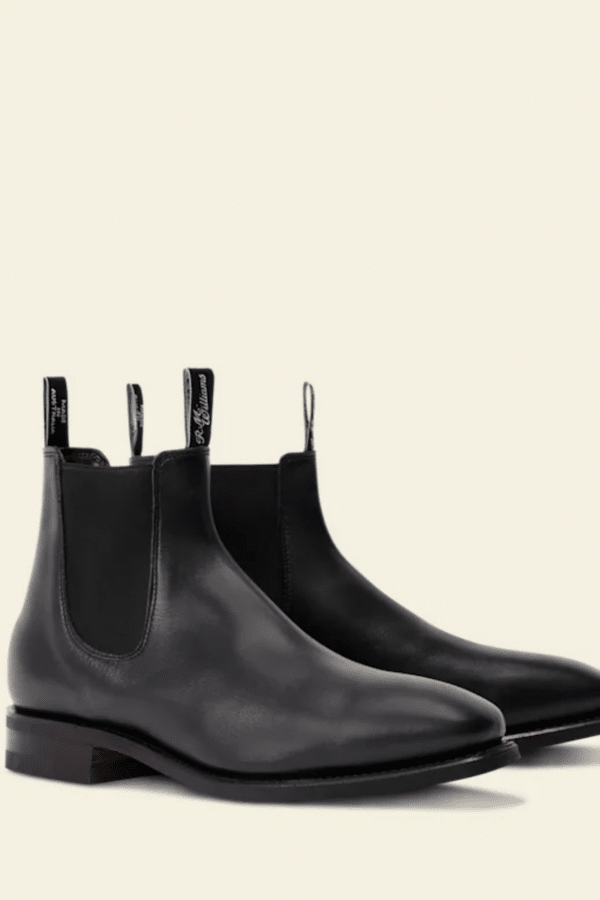
- Quality footwear. Nothing undermines a great outfit faster than bad shoes. Leather loafers and Chelsea boots cover most situations. Clean leather sneakers are widely accepted in tech and creative industries (but the emphasis is firmly on leather and clean). Running shoes are rarely a good office fit, no matter how comfortable they are.
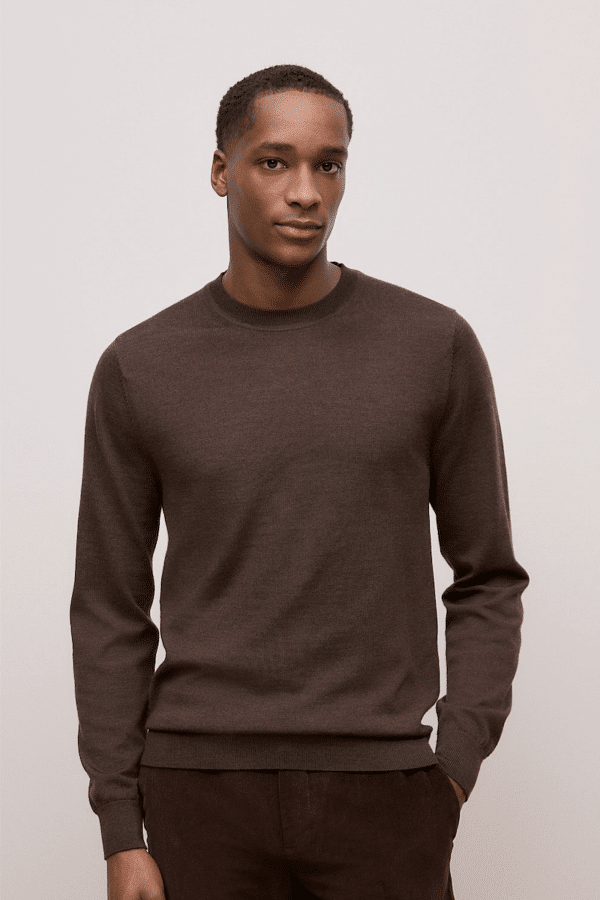
- Fine knits. A crew-neck merino in navy, grey, or camel is one of the most underrated pieces in a work wardrobe. It works over a collared shirt, under a blazer, or entirely on its own.
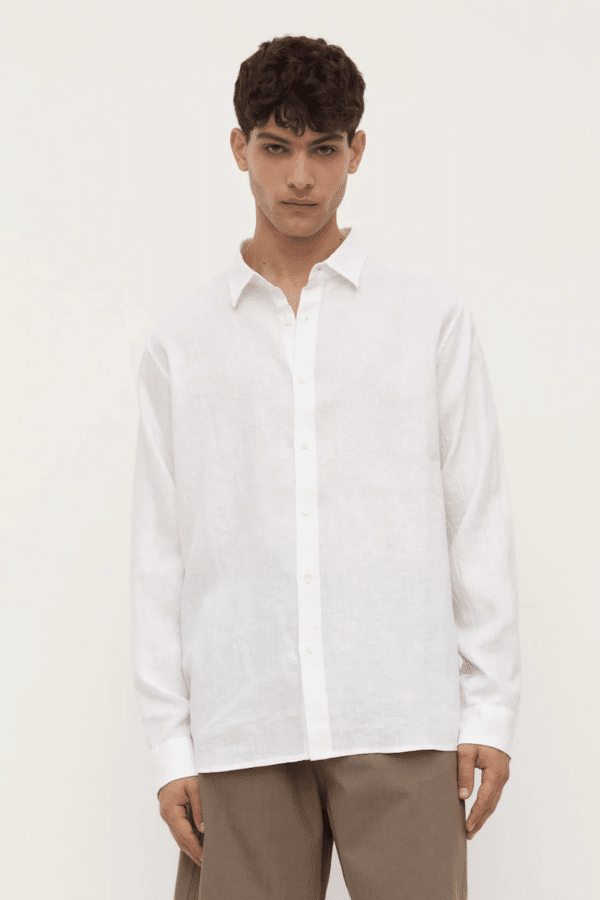
- A crisp white shirt. A well-fitted white or pale blue shirt is the most versatile piece in your office-wear wardrobe. It’s also the most frequently undermined by poor fit. Get it altered if you have to, it’s worth it.
Brands to Buy: The Work Wardrobe by Budget
| Tier | Brand | Price Range | Best For |
| Budget | Uniqlo | $30–$100+ | Smart-casual basics, everyday workwear |
| Budget | Van Heusen | $40–$120+ | Business shirts, workwear essentials |
| Budget | Tarocash | $50–$180+ | Smart casual, business attire |
| Budget | Oxford | $60–$150+ | Workwear pants, suit separates |
| Budget | Politix | $80–$200+ | Dress shoes, formal wear, business casual |
| Mid-range | Assembly Label | $80–$250+ | Smart-casual, office basics |
| Mid-range | Country Road | $90–$280+ | Smart workwear, business casual |
| Mid-range | SABA | $90–$280+ | Contemporary workwear, business casual |
| Mid-range | Trenery | $100–$300+ | Premium basics, quality knitwear |
| Mid-range | COS | $100–$300+ | Contemporary workwear, minimalist |
| Mid-range | Reiss | $120–$350+ | Smart business wear, tailored pieces |
| Mid-range | Rodd & Gunn | $150–$400+ | Premium casual workwear, smart wear |
| Luxury | M.J. Bale | $250–$800+ | Premium suits, tailored workwear |
| Luxury | RM Williams | $300–$1000+ | Premium boots, heritage workwear |
| Luxury | Kloke | $400–$1200+ | High-end tailoring, luxury workwear |
| Luxury | AMI | $350–$1000+ | Designer workwear, luxury tailoring |
Office Dress Code FAQs
Dark denim, yes (in most industries). Raw or dark wash, no distressing, plus a good fit. The further you are from finance and law, the more latitude you have. Do a quick gut-check: do they look more like trousers, or like something you’d wear to the pub on Saturday? If it’s the latter, leave them at home.
Yes, even if it rarely leaves the wardrobe. A well-fitting suit is still the clearest signal available for presentations, client meetings, and job interviews. One good suit in navy or charcoal covers everything.
Clean leather sneakers, yes. Chunky runners, mesh, anything that looks like you just came from the gym, no. If it could pass for a casual leather shoe at a quick glance, you’re fine.
Start with three anchors: one blazer, one pair of tailored trousers, one pair of quality shoes. Build everything else around those. Uniqlo and COS do the basics well at the budget end. And resist the urge to fill gaps with cheap pieces – five good items on rotation will always beat fifteen mediocre ones.
Gym gear. Anything visibly worn out (fraying, pilling, soles that have given up). Slogans or large graphics are also probably a no-go depending on where you work. Thongs. And perhaps most importantly, anything that doesn’t fit, which remains the most common mistake at every level of dress code, no matter how good everything else is.


















Comments
We love hearing from you. or to leave a comment.