


Updated:
Readtime: 9 min
Every product is carefully selected by our editors and experts. If you buy from a link, we may earn a commission. Learn more. For more information on how we test products, click here.
The ink is still fresh on Chanel’s complete takeover of Charvet, and there’s plenty to unpack. While 188 years of independent ownership for France’s oldest shirtmaker are now over, it has kick-started several discussions about the future of Chanel and whether menswear might be part of it. We could romanticise the deal and talk about it as an act of heritage preservation, but the reality is that it’s a highly calculated defensive manoeuvre by the Wertheimer family to lock up its tailoring talent, while also opening the door to gender-agnostic pieces.
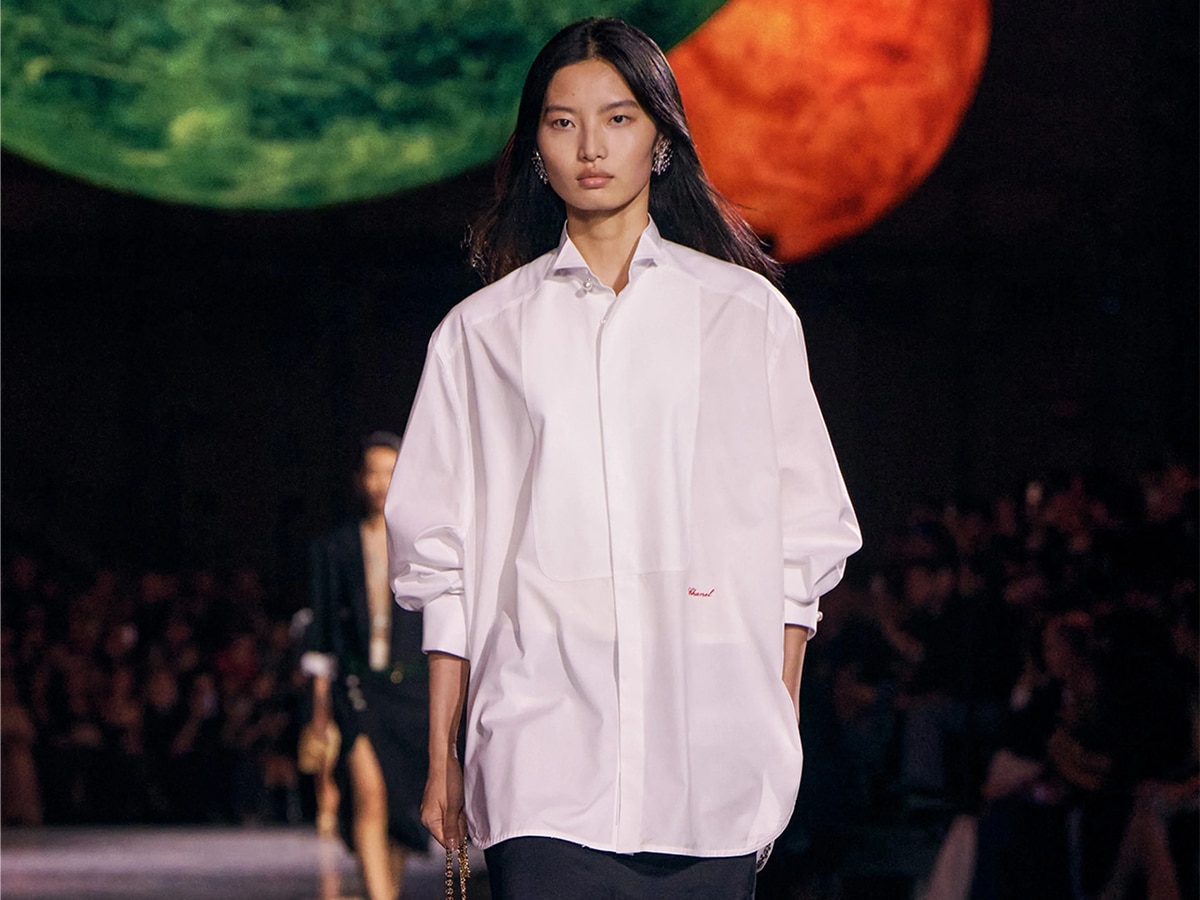
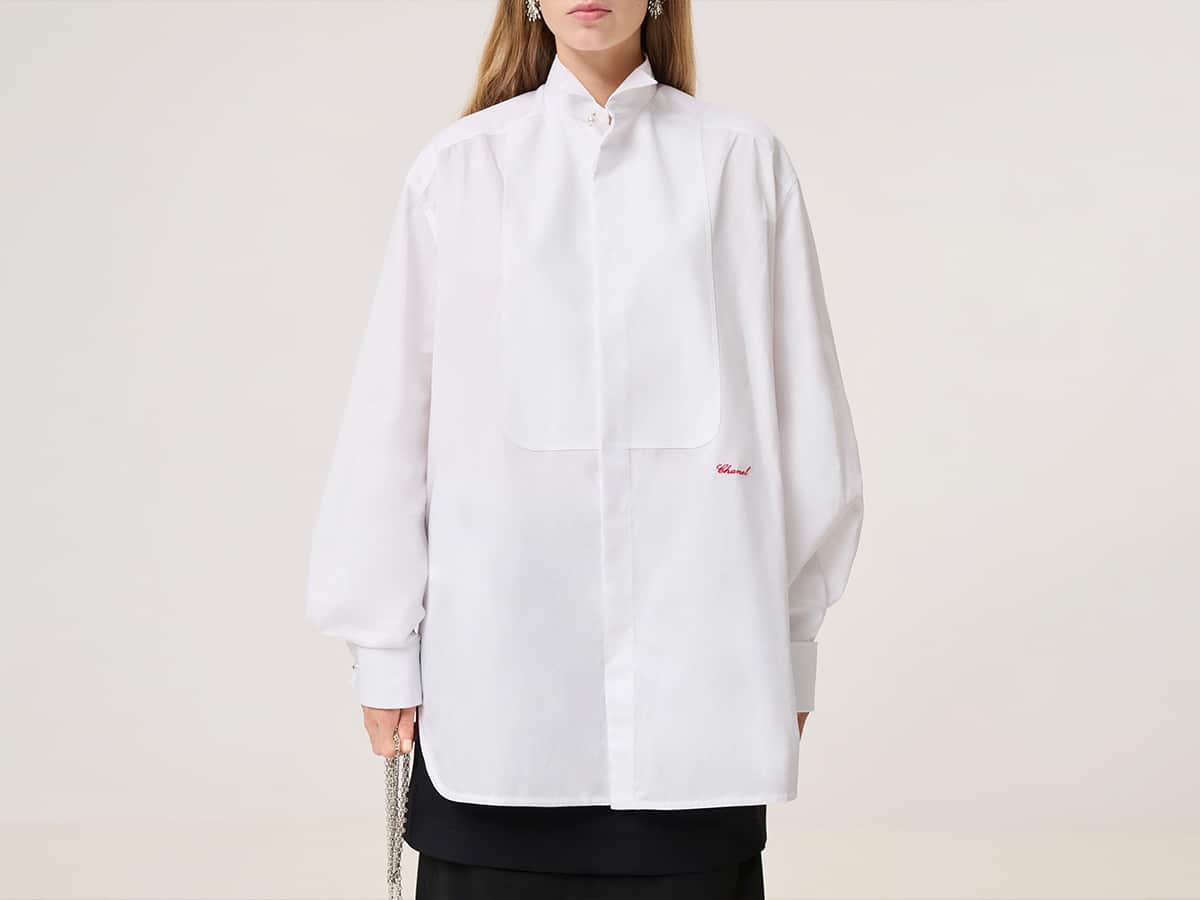
To understand the deal’s impact and what it could mean for Charvet’s future, we have to look closely at the timing. It reveals the commercial leverage now wielded by Chanel’s new Creative Director, Matthieu Blazy, who arrived from Bottega Veneta in April 2025. It also comes months after his debut Spring/Summer 2026 show last October, where he collaborated with Charvet on a series of garments, the resulting $7,130 co-branded tuxedo shirt sold out in boutiques within hours of hitting the shelves. It paved the way for executives, proving that ultra-high-net-worth consumers are experiencing severe fatigue from loud, logo-heavy branding, and paving the way for Chanel to leverage Blazy’s more structural design language.
Beyond the surface-level narrative of a family succession crisis within the Colban family, this deal represents a backdoor strategy into high-end menswear and a permanent real estate play on the Place Vendôme. With that said, lets breakdown some of the meaning behind Chanel’s latest supply chain purchase.
Upstream Supply Chain Defence
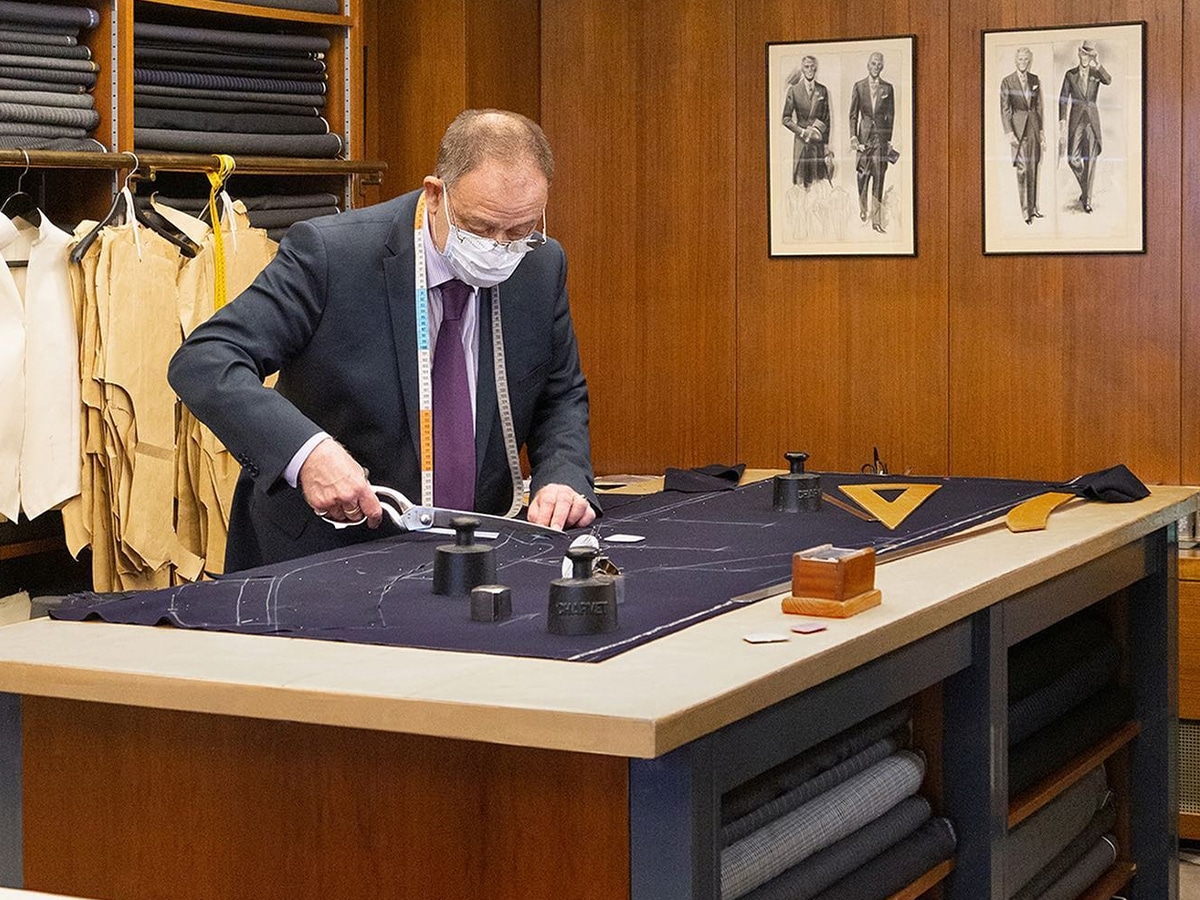
Let’s start with the supply chain. If we want a bleak blueprint of what happens when a global pioneer fails to insulate its proprietary techniques, we look no further than the automotive sector in China.
Volkswagen operated a highly lucrative joint venture inside the Chinese market for decades, effectively trading its advanced engineering blueprints and manufacturing methodologies for short-term retail access. The strategy has backfired catastrophically, as the very domestic players they worked with, like BYD, quietly absorbed that know-how, vertically integrated their own component supply chains, and systematically cannibalised VW’s market dominance. This has culminated in a crisis that has the German giant staring down the barrel of significant financial losses and up to 100,000 job cuts.
Chanel’s executive board understands this industrial trap inside out and knows how to protect the brand’s broader obsession with securing its supply chain. Rivals like LVMH and Kering continue to chase aggressive, outward-facing retail footprints. But on the flipside, Chanel has quietly spent years executing an upstream investment strategy to protect rare craft techniques from being open-sourced or poached. They realise that allowing third parties access to their manufacturing knowledge is a slow, painful death sentence.
When we look at the financial year ended December 31, 2025, the house poured more than USD 700 million into buying out its long-standing artisanal suppliers, ensuring that the rare hand-finishing skills required for haute couture don’t simply die out or fall into competitors’ hands.
The acquisition of Charvet is just the latest example of that, and Chanel’s history with independent labels (ranging from Scottish cashmere specialist Barrie to swimwear authority Eres) shows a pattern of calculated, protective stewardship of production talent, preventing the luxury equivalent of a Chinese automotive takeover.
Revenues and the Colban Family Succession Crisis
What doesn’t change in this transaction is the quality of the garments or their price. Ultra-wealthy clients who treat Charvet like a secular religion are far more concerned with the thread count of the poplin than corporate arbitrage, and Chanel will ensure that continues.
Financially, this is a David-and-Goliath situation. Chanel operates on an industrial scale, reporting revenue of USD$19.3 billion and an operating profit of USD$4.7 billion for 2025. Conversely, Bernstein luxury analyst Luca Solca confirmed to the press that Charvet operates on a much more modest tier, generating an estimated €10 million to €15 million in annual revenue with a tight staff of just 100 employees.
The exact transaction price remains closely guarded, but we do have a few experts weighing in. Reports from the Wall Street Journal indicate that the acquisition includes not only the shirtmaking business and its intellectual property but also the physical building that houses its iconic flagship boutique on Paris’s Place Vendôme.
As for the reason for the sale, it was driven by a complete lack of internal succession. The shirtmaker had been owned by the Colban family since 1965, when fabric supplier Denis Colban bought the company from the founding family’s heirs. It was subsequently passed down to his children, Jean-Claude and Anne-Marie Colban. But with the next generation pursuing careers entirely outside the fashion industry, a corporate sale became the only path forward. Chanel fashion president Bruno Pavlovsky spoke about the decision with WWD: “They don’t have any internal or family successors, and we had a super good feeling… so we have decided that the future of Charvet will be with Chanel,” said Pavlovsky.
Backdoor Menswear Strategy
While it’s easy to compare the two brands solely by market value, the internal structure highlights an interesting strategic pivot for Chanel. It seems the brand is making a stealth entry into ultra-premium menswear without diluting its namesake brand equity, even though Pavlovsky shot down the idea in his latest interview with WWD.
Blazy’s early collections have revitalised the brand, driving double-digit sales growth in early 2026. His partnership proved that Charvet’s typically rigid, masculine tailoring also works in Chanel’s feminine universe. It seems then that the acquisition signals a calculated, gender-agnostic approach to Chanel’s future customer base. The brand has historically avoided building a dedicated, standalone menswear line, but male clients have increasingly been entering its boutiques to seek accessories and fragrances. The inclusion of Charvet gives Chanel immediate credibility in classic tailoring without diluting its namesake brand identity, should they ever want to explore menswear.
Pavlovsky summarised the complementary nature of the deal clearly, stating: “Now we have a name, Chanel, for women, and a name for men, Charvet.” “Even if Chanel is about women, we see more men coming in.”
Material and Fabric Composition Built on Perfection
So what makes these shirts so sought-after and so expensive? To figure that out, we must look closely at the composition of the garments themselves. Like all ultra-luxury goods, it’s complicated, as while distributors like MR PORTER house ready-to-wear mainline models that command an AUD$1,200 baseline, Chanel’s co-branded Spring/Summer 2026 runway pieces retail for AUD$7,130. Like rapper Meek Mill once said, “There’s levels to this shit.”
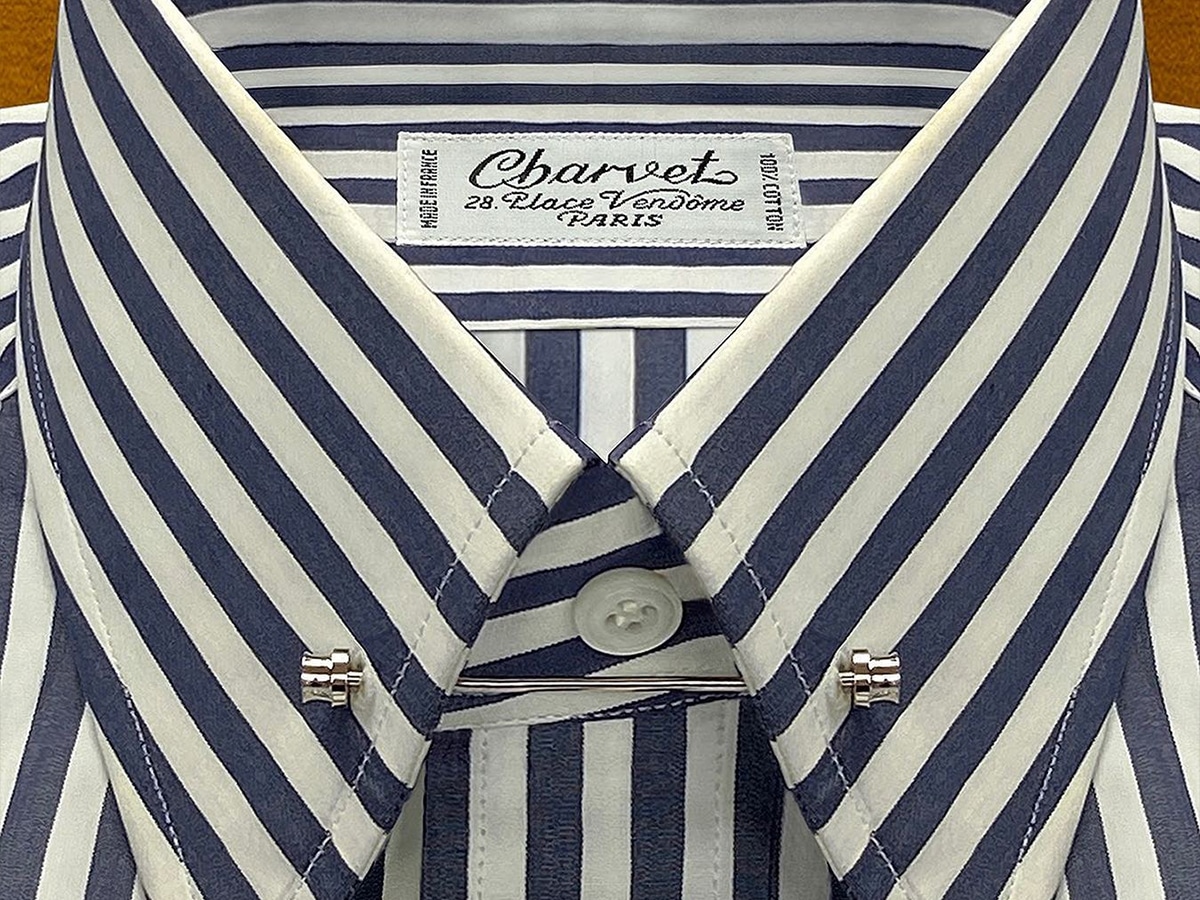
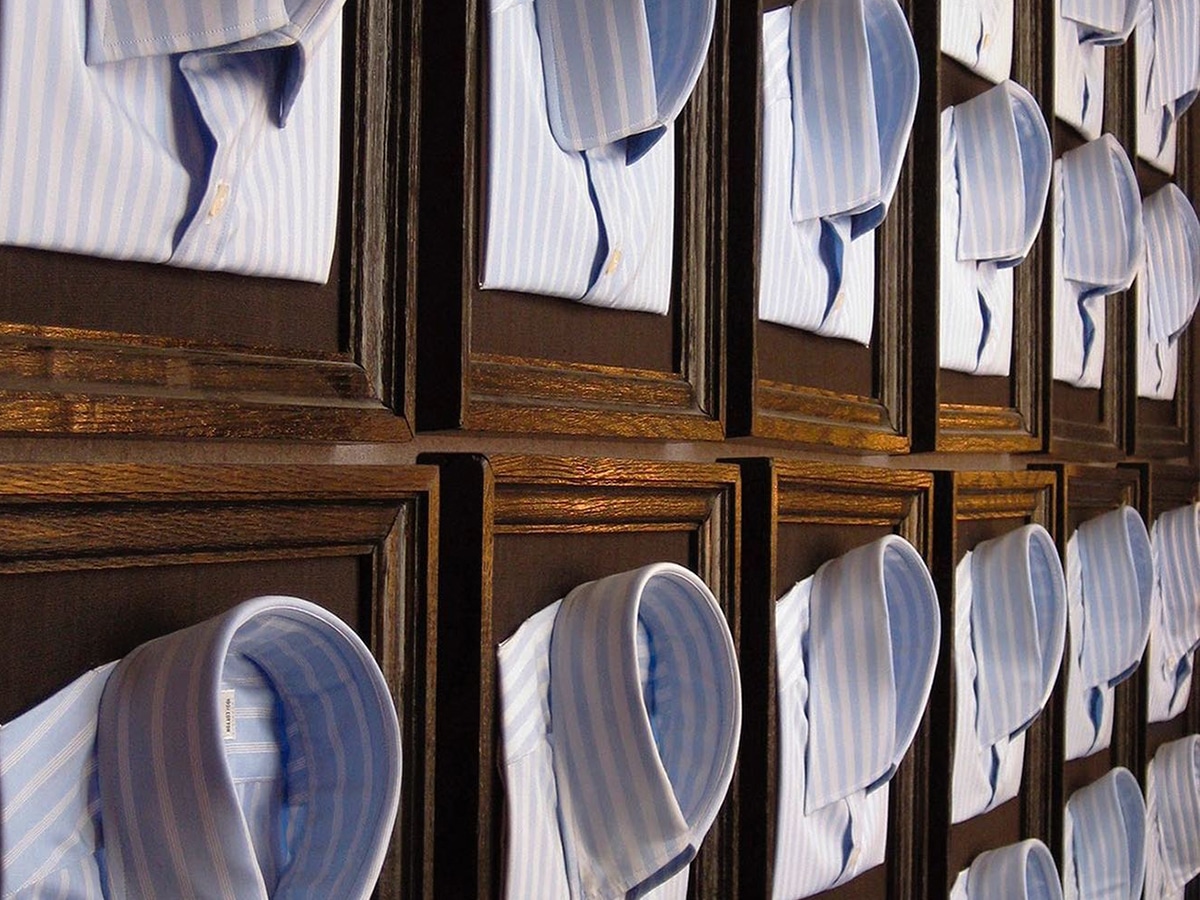
The core Charvet line relies on cotton poplin formal shirts and cotton herringbone options, milled from long-staple Egyptian cotton that yields an exceptionally uniform, high-density thread structure. Each shirt features a perfectly curved spread collar fitted with removable collar stays, hand-stitched armholes that allow very natural shoulder articulation, and premium non-blanched mother-of-pearl fastenings.
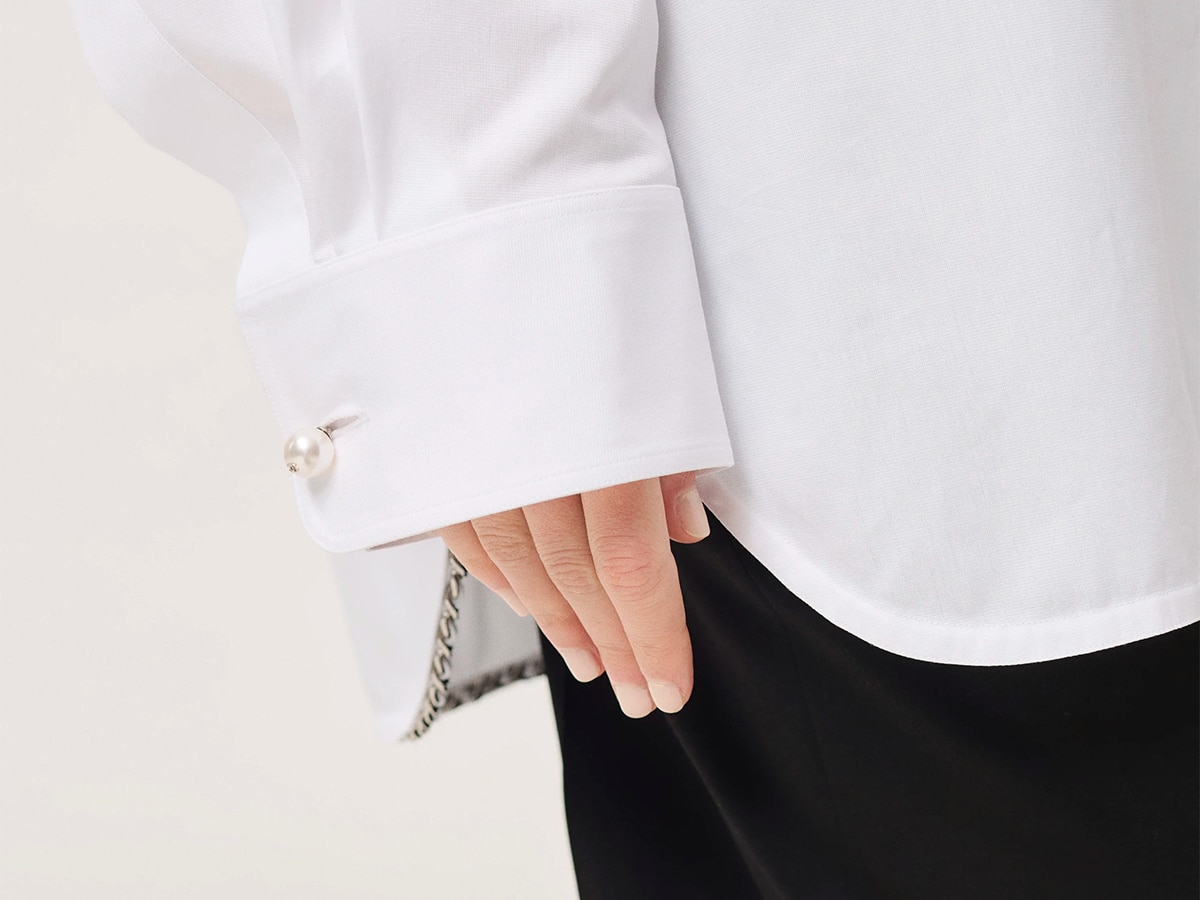
Then, at the high-end, our headline-grabbing $7,130 white cotton tuxedo shirt adds a Chanel touch by introducing the house’s signature metal chain accent, woven alongside a solitary signature pearl button. It continues the absolute perfect geometric continuity across the placket, chest pocket, and split-shoulder yoke, which requires cutting individual fabric panels entirely by hand. This technical constraint forces up to 25 per cent raw material waste per shirt just to ensure the pattern matrix lines up to the exact millimetre. It’s this specific textile discipline that makes Charvet, Charvet, and Chanel integrate this into their portfolio.
Operational Continuity inside the Saint-Gaultier Workshop
It’s good to know that a heavy-handed corporate overhaul won’t be happening, so it won’t alienate the purists who worship Charvet’s bespoke luxury.
Chanel has explicitly committed to preserving Charvet’s operational and creative independence. Unlike the network of specialised craft ateliers that Chanel clustered under its specialised 19M umbrella group, Charvet will be run as a completely autonomous, standalone enterprise. The production will remain locked inside Charvet’s single historic workshop in Saint-Gaultier, where artisans hand-cut collars and maintain an archive containing over 500 distinct shades of blue fabric.
The Colban family will also remain at the helm for at least another year. Managing director Jean-Claude Colban expressed his total confidence in the alignment, noting in a statement: “This relationship has developed quite naturally, marked by open and collaborative exchanges, and rooted in common values. The passing down of savoir-faire, the respect for craftsmanship, and the meticulous attention to quality down to the very last detail.”
It Closes a Historical Loophole for Chanel
Last but not least, the transaction closes a historical loop that stretches back over a century. Charvet was part of the personal mythology of one Gabrielle “Coco” Chanel.
During the early 1900s, Coco Chanel routinely borrowed the bespoke Charvet shirts belonging to her great love and early style catalyst, the British polo player and shipping merchant Arthur “Boy” Capel. The structural precision of Capel’s shirts directly inspired Chanel’s translation of menswear codes into early modern womenswear. Decades later, the late Karl Lagerfeld maintained the tradition, frequently gifting Charvet shirts to close colleagues and friends.
Pavlovsky directly acknowledged this in his interview with WWD: “We share the same approach to craftsmanship: exacting standards, respect and the conviction that these skills truly flourish only when they are part of a lasting legacy.” “We have always considered it our responsibility to support, preserve and perpetuate these rare artisanal skills, which embody both exceptional mastery and an essential part of our cultural heritage,” he said.
Chanel’s takeover of Charvet is many, many things. Firstly, it’s a hard circuit breaker against the kind of technical bleeding that dismantled Volkswagen’s operations in China. Second, it’s about Chanel anchoring a prime piece of Place Vendôme real estate onto its balance sheet while also securing a turnkey operation in high-end menswear.
Matthieu Blazy’s $7,130 shirt has already proven the market appetite for zero-logo luxury, and now the house has bought out the top tier of masculine tailoring without risking its own namesake brand equity.
















Comments
We love hearing from you. or to leave a comment.