

Updated:
Readtime: 15 min
The Lowdown:
Denim has survived every generation since the 1870s. The question is: are yours doing you justice?
Every product is carefully selected by our editors and experts. If you buy from a link, we may earn a commission. Learn more. For more information on how we test products, click here.
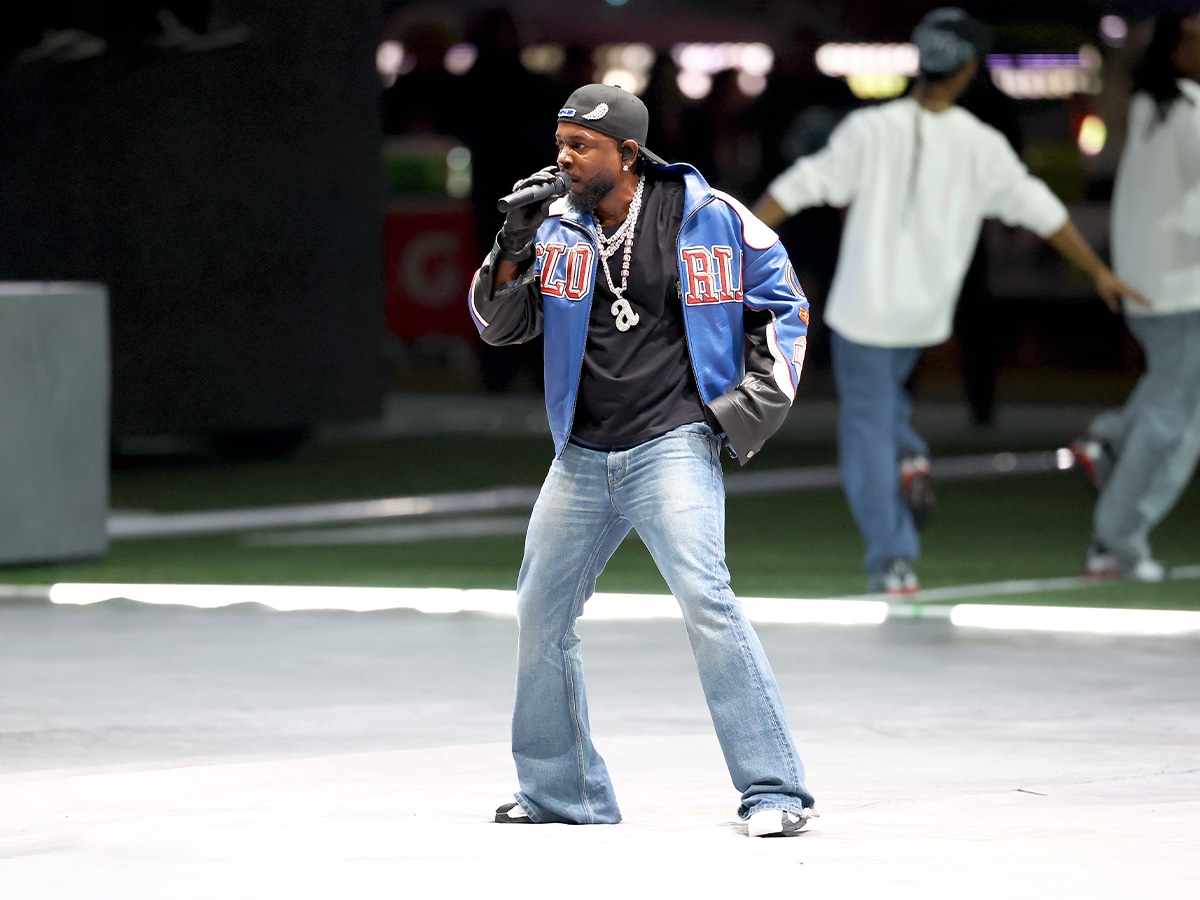
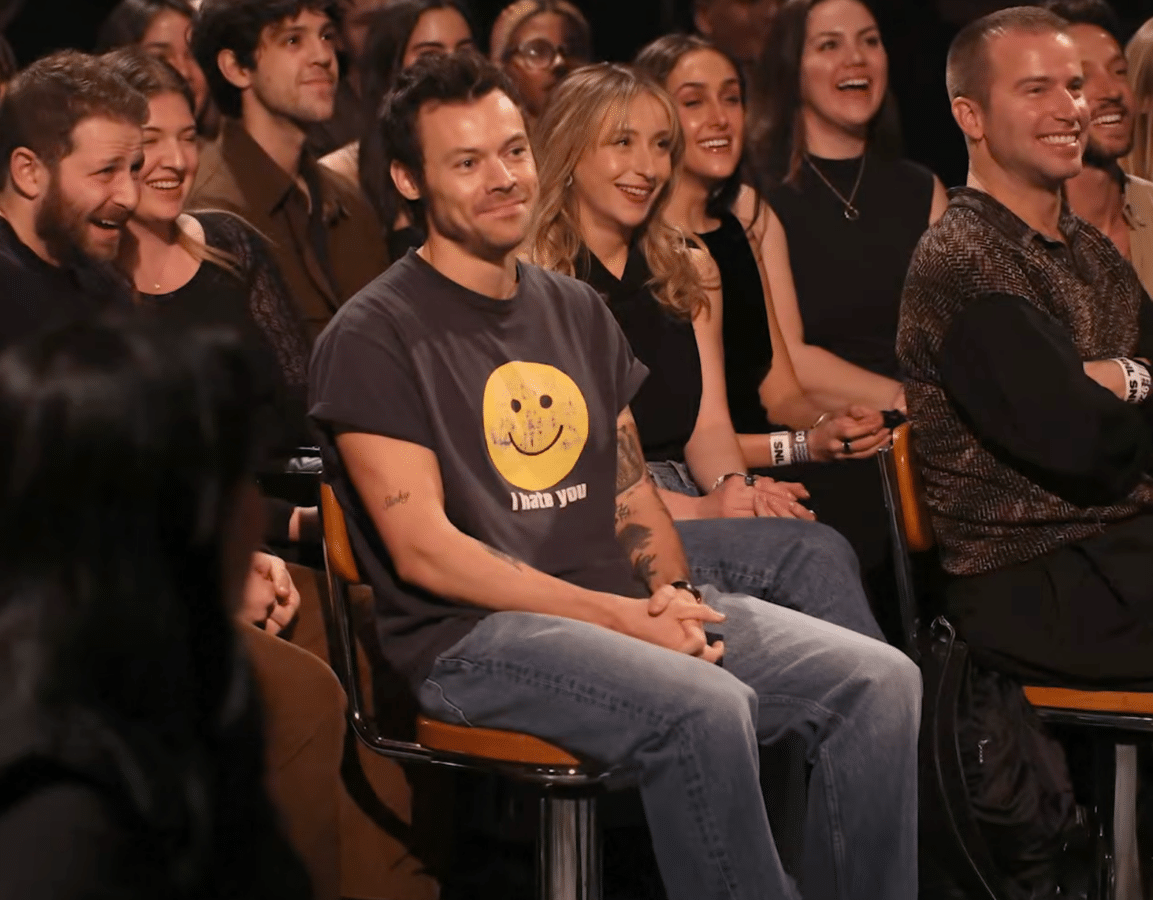
Few garments have had a better run than jeans. From the gold miners they were built for in the 1870s, to the rebels and rock stars like James Dean and Marlon Brando who made jeans a uniform, to modern style icons like Harry Styles and Kendrick Lamar, denim has been the through-line of every generation’s idea of cool, and somehow, almost impossibly, it still is.
The problem is that jeans have gone through a lot of evolutions to get here – skinny, slim, straight, wide-leg, distressed, raw denim, stretch – and navigating all of it means most men end up defaulting to what’s familiar rather than what fits. The waist gaps or the thighs pull, the hem pools somewhere between the shoe and the floor, and none of it is doing your style any favours.
You’ve been living with bad-fitting jeans long enough, and we’re here to help with the only men’s jeans guide you’ll ever need.
The Quick Jeans Fit Finder
If you don’t want to overthink it, here’s the short version:
- Most men will look best in a mid-rise, tapered or straight-leg jean in rigid or low-stretch denim, with the hem sitting just on top of the shoe.
- If you’re shorter, go for a mid-rise straight or tapered fit with little to no break.
- If you’re taller, a straight or slim-straight fit with a slightly longer inseam will usually feel the most balanced.
- If you have larger thighs or a more muscular build, look for an athletic or relaxed taper that gives you room in the top block without turning the lower leg into a tent.
- If you are slim and want something sharper, a tapered or slim-straight fit will keep the silhouette clean without the aggression of a true skinny jean.
The important point is that fit should follow your proportions and not the latest trends. You’re not trying to wear the most stylish jeans. You’re trying to wear a pair that makes your body look balanced.
Alright, now we’ve gone over the short version, here’s our longer guide to buying the perfect jeans for your body shape.
The Single Most Important Thing To Look For When Buying Men’s Jeans: Fit
The denim industry has spent decades convincing you that the most important thing about jeans is the brand, or the wash, or the fact that they are made from some rare Japanese selvedge woven on a loom that hasn’t been serviced since 1962.
And while those things may be interesting to a certain type of person who also owns a leather apron and a subscription to a newsletter about wax, they are secondary. Fit is primary. Fit is everything.
The reason fit is so difficult to get right is that jeans are deceptively complex garments. There are four distinct measurements that determine how a pair of jeans will look on your body:
- The leg shape
- The rise
- The inseam
- The fabric weight
Change any one of them, and you have a completely different garment. Change two of them, and you might as well be wearing a different species of trousers. This is why you can try on twenty pairs of jeans in the same size and have twenty completely different experiences.
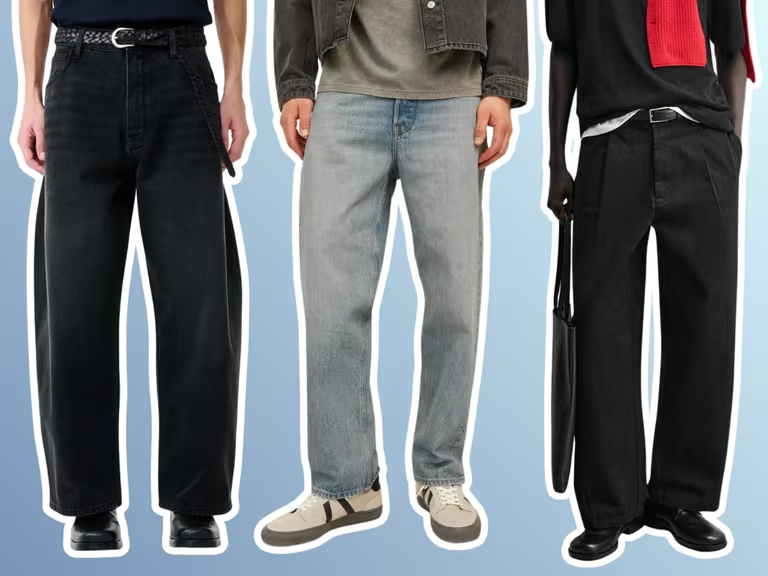
Leg Shape (Slim, Loose, Tapered)
The leg shape is defined by three measurements: the thigh, the knee, and the leg opening. The industry has helpfully given these shapes names – skinny, slim, regular, loose, relaxed, tapered, straight – and then helpfully refused to agree on what any of those names actually mean. You can’t trust the label. You have to try them on.
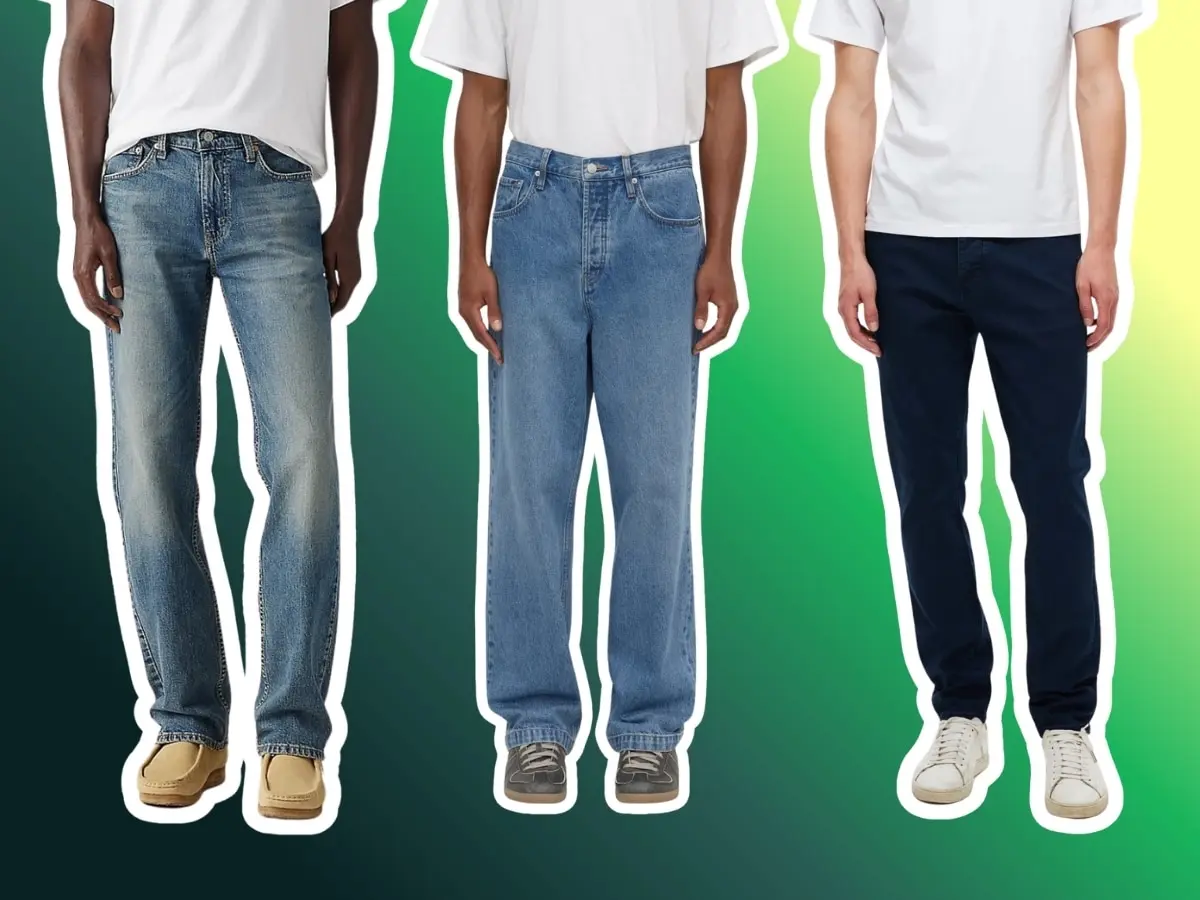
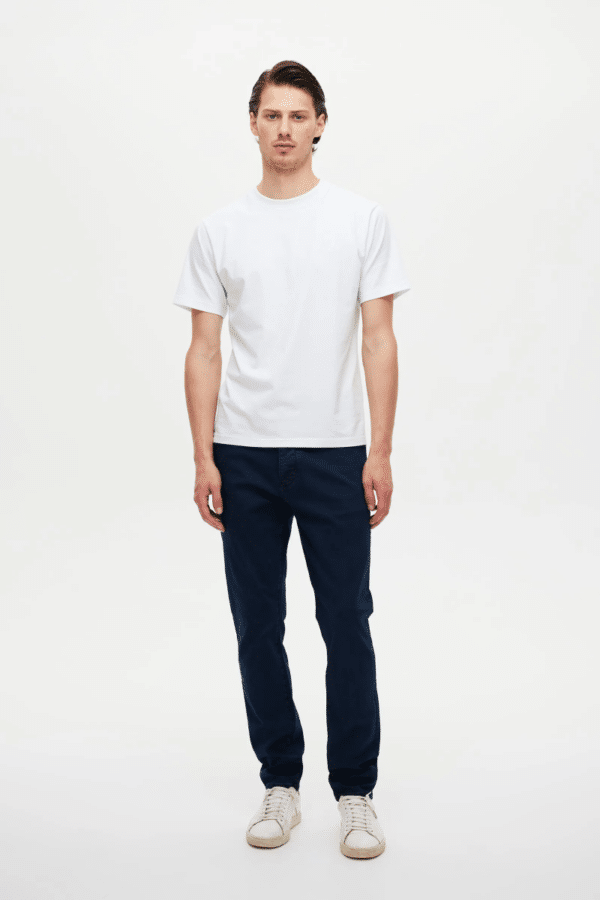
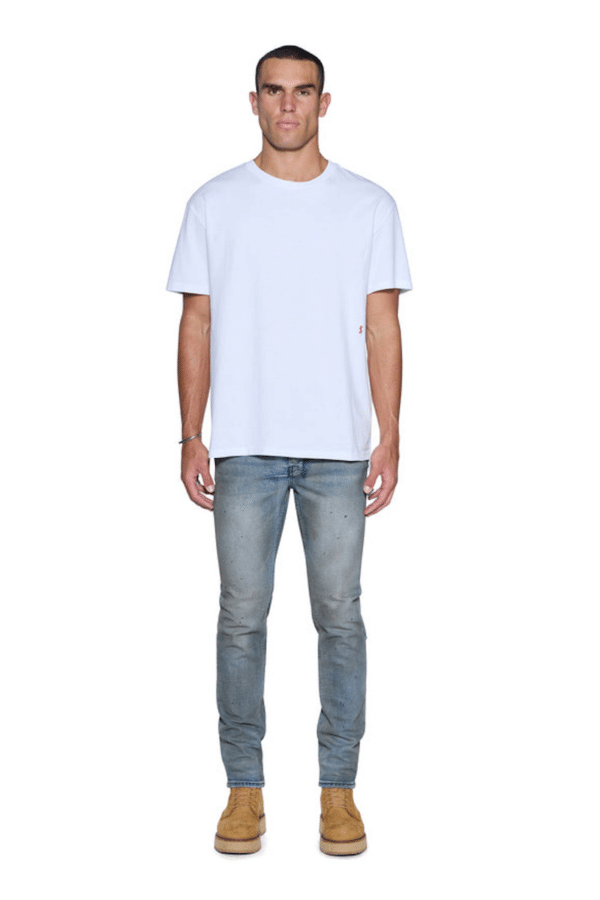
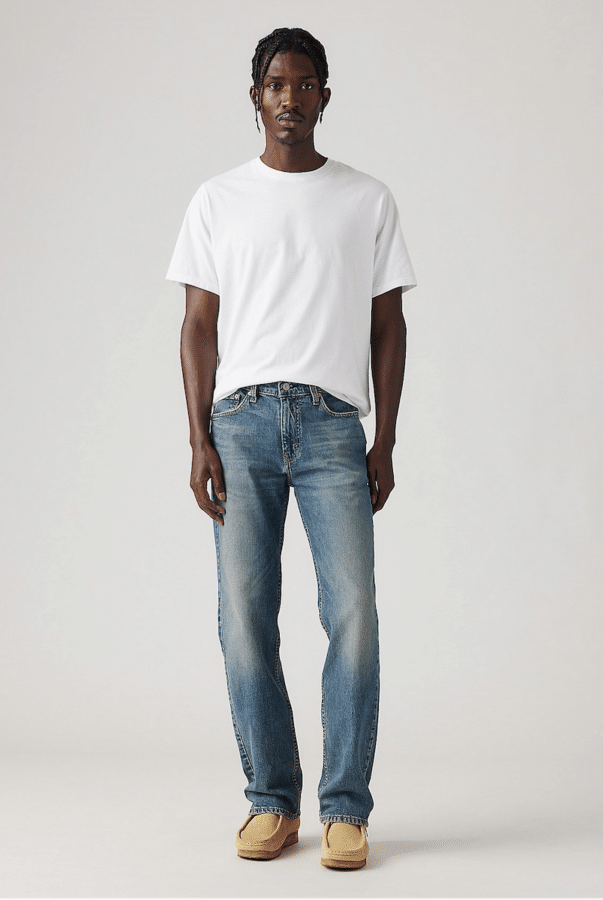
A straight leg means the width of the jeans from the knee to the ankle stays consistent, creating a clean, unbroken vertical line.
A tapered leg narrows from the knee down, following the natural shape of your leg and creating a more modern, intentional silhouette. For most men, a tapered fit is the most flattering option because it provides room where you actually need it – in the thigh and seat – while keeping things neat at the ankle.
As for skinny jeans, they deserve a brief mention, but only to say that the window for wearing them without irony has been closed for some time now. There are exceptions, but unless you know exactly what you’re doing and have the legs to prove it, this is one trend worth leaving in the past.
Here’s a simple comparison table to help you find the right shape for your body.
| Fit | What it looks like | Best for |
| Straight | Consistent width from knee to ankle | Almost everyone |
| Tapered | Room in the thigh, narrower through the lower leg | Most men, especially athletic builds |
| Slim | Close through thigh and calf without being skin-tight | Slim to average builds |
| Relaxed | More room through seat and thigh with an easier line | Taller men, broader builds, casual dressers |
The Rise (Low, Mid, High)
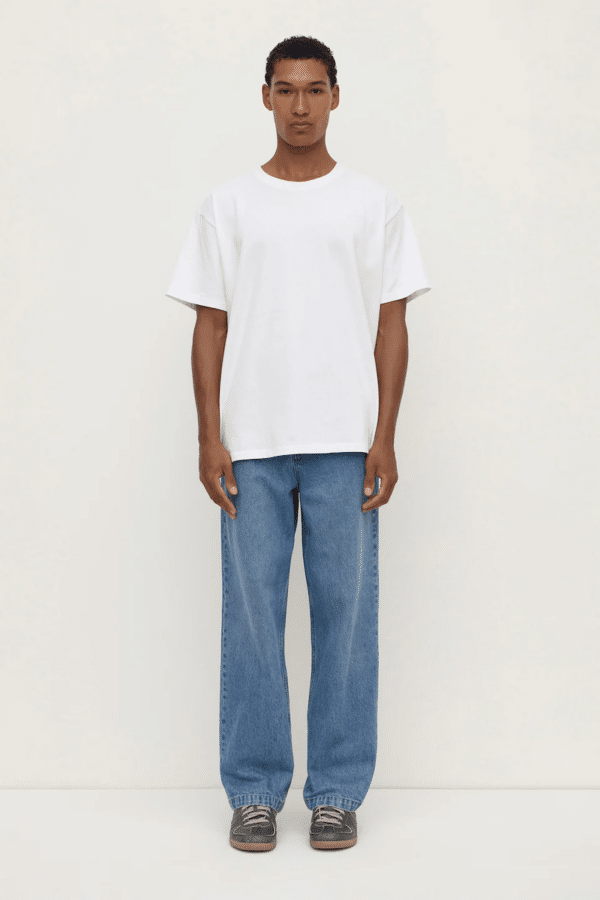
If the leg shape is the part of jeans that everyone argues about, the rise is the part that nobody talks about nearly enough, which is a shame because it’s arguably more important. The rise is the distance from the crotch seam to the top of the waistband, and it determines where the jeans sit on your body.
Low-rise jeans sit on the hips, below the natural waist. They were the defining silhouette of the early 2000s and they are currently staging a comeback that is either exciting or terrifying depending on your perspective and your hip-to-waist ratio. They can look genuinely good on men with long torsos and slim hips, but on most body types, they create a visual imbalance that makes the legs look shorter and the midsection look wider.
Mid-rise jeans are the default setting. They sit just below the belly button, they work with almost every body type, and they pair naturally with both tucked and untucked shirts. If you are unsure what rise to buy, buy mid-rise.
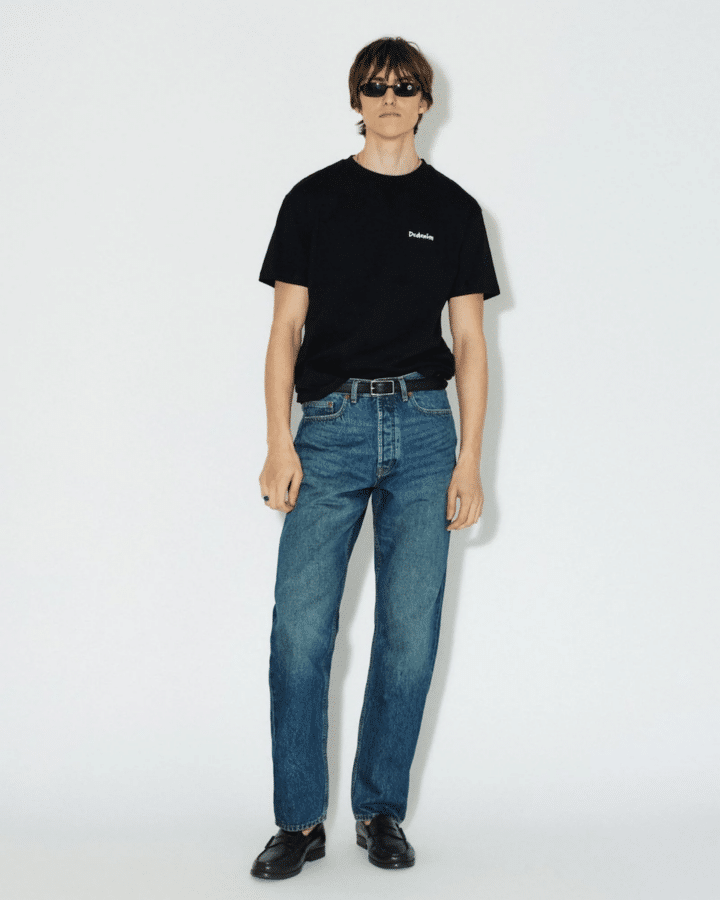
High-rise jeans are coming back in style, and on the right man, they look excellent – elongating the legs and creating a clean, tailored line from waist to ankle. On the wrong man, they look like something your grandfather wore to mow the lawn in 1977. The difference between those two outcomes is almost entirely about proportions, which is why it’s worth trying them on before committing.
The Inseam
The inseam is the inside leg measurement from the crotch to the hem. The most common mistake is buying jeans that are too long, which results in excess fabric pooling around the ankle and making the entire leg look shapeless and unintentional. The second most common mistake is buying jeans that are too short in an attempt to avoid the first mistake, which results in a look that is either deliberately cropped or accidentally capri-pant, depending on how much you have missed by.
The ideal inseam hits just at the top of your foot, creating a slight break over the shoe without any significant bunching. If you want to wear your jeans cropped – and there is nothing wrong with that, Paul Mescal has built an entire aesthetic around slightly cropped, slightly worn-in denim that makes him look like the most effortlessly stylish man in any room – then buy them with that intention and have them tailored accordingly. Don’t just buy the wrong length and hope for the best.
The Fabric (Rigid, Raw, Stretch)
Denim is cotton, but not all cotton is equal, and not all denim is the same. The two main variables are the fabric weight and the presence or absence of stretch.
Rigid denim – 100 per cent cotton, no stretch – is the traditional choice and, for most style-conscious men, the better one. It has more structure, it holds its shape better over time, and it develops a patina of fades and creases that is unique to the wearer. The trade-off is that it requires a break-in period.
Raw denim, which is rigid denim that has not been washed after dyeing, is the most extreme version of this: it is stiff, dark, and slightly uncomfortable for the first few months of wear, but it rewards patience with a pair of jeans that look like they belong to you. Harry Styles, who sources much of his denim from The Vintage Showroom in London, understands this instinctively – his jeans look lived-in because they are, which is why they look better than jeans that cost three times as much.
Related read: A Complete Guide To Raw Denim
Stretch denim incorporates a small percentage of elastane or a similar synthetic fiber, which gives it immediate comfort and flexibility. For men who spend a lot of time sitting, driving, or otherwise contorting themselves, stretch denim is a reasonable compromise. The downside is that it tends to bag out over time, particularly in the knees and seat, and it never quite develops the same character as rigid denim. If you are going to buy stretch, buy a small amount of stretch – two or three percent elastane.
Finding Jeans for Your Body Type
Understanding the four pillars of fit is useful in the abstract, but it becomes most useful when applied to your specific body. Here is a general guide to what works for whom.
| Body type | Best fit starting point | What to prioritise | What to avoid |
| Average build | Mid-rise, slim or tapered leg, slight break | Start here as your baseline, then adjust based on personal preference. This is the safest and most versatile fit combination for most men. | Extreme cuts in either direction, whether overly skinny or overly loose. |
| Shorter stature | Mid-rise, straight or tapered leg, clean hem | Create the illusion of length by keeping the silhouette clean and uninterrupted. Cropped jeans can also work well. | Low-rise jeans, overly loose fits, and any hem that pools heavily at the ankle. |
| Taller frame | Mid- or low-rise, slim-straight or regular straight leg | Use the extra height to carry a slightly longer, cleaner line without going too narrow. Keep the inseam balanced. | Skinny fits, excessive stacking, or hems that are so short they look like an accident. |
| Broader or more muscular | Athletic fit or tapered fit with room in the thigh | Prioritise room in the seat and thigh while keeping shape through the lower leg. The goal is balance, not extra bulk. | Slim fits that pull across the thighs and loose fits that add unnecessary volume. |
Once You Have the Fit, You Can Choose the Wash
The wash of your jeans is the easiest variable to get right, which is why it is slightly baffling that so many people get it wrong. Different jean washes are for different occasions, and the general rule of thumb is the lighter the jeans, the more casual the look.
Light Wash
Light wash jeans are strictly seasonal and strictly casual. They belong in spring or summer, at the beach, on holiday… you get the picture. They aren’t un-stylish, but they require more effort to style well than their darker counterparts.
Mid-Wash
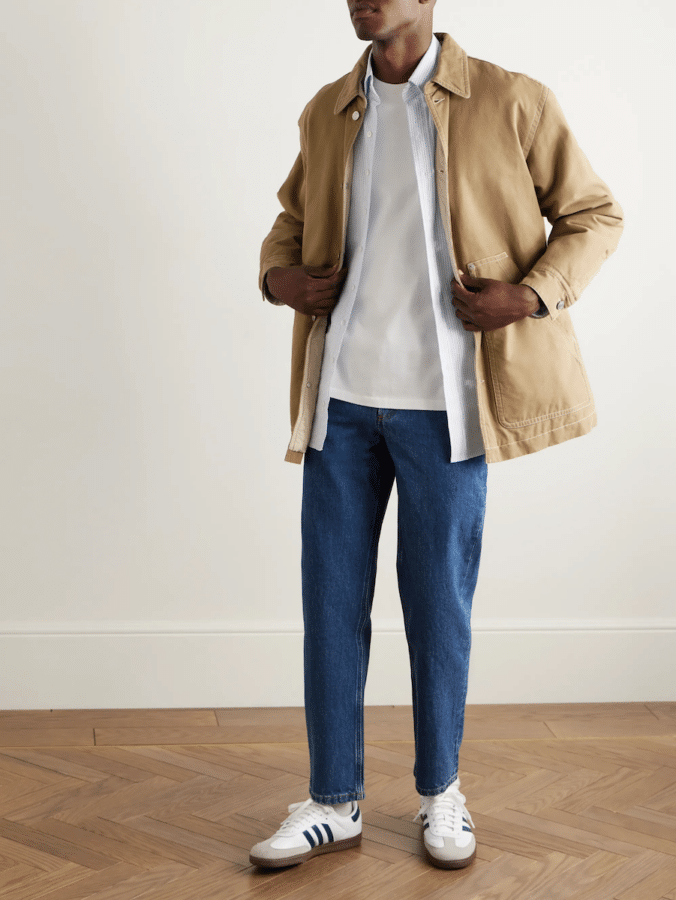
Mid-wash blue is casual, relaxed, and best paired with equally casual pieces – a simple T-shirt, a denim jacket in a contrasting wash, a pair of clean white sneakers. It’s the weekend wash, the coffee-run wash, the effortlessly cool wash.
Black Jeans
Black jeans are the other essential. They are the dark indigo of the evening, and the jeans you wear when you want to look like you made an effort. Pair them with a black turtleneck and you’ll look like you have opinions about architecture. Pair them with a leather jacket and Chelsea boots and you’ll look like you have opinions about music. Either way, you’ll look like a man with opinions, which is always a good thing.
Where to Shop for the Best-Fitting Men’s Jeans
With countless men’s jeans brands out there, where do you even begin? Here’s our recs, from budget to luxury denim.
Budget Jeans (Under $100 AUD)
Uniqlo – Consistently the best value denim on the market. Their slim and tapered fits are well-cut, the fabric is decent for the price, and they do a wide range of inseam lengths, which is rare at this price point.
Dr. Denim – Swedish brand you can buy in Australia. Good slim and straight cuts, affordable, and widely available at The Iconic.
Levi’s – The 501, 511, and 512 are the three you need to know. Available everywhere in Australia from their own stores to department stores. Not the most exciting brand in the room but they are reliable, they fit well, and they have earned their place.
Mid-Range Jeans ($100–$300 AUD)
Nudie Jeans – Swedish brand, 100% organic cotton, excellent fits. They have a repair shop in Sydney (The Galeries) and are stocked at David Jones and The Iconic. The Steady Eddie II and Lean Dean are the two standout men’s cuts.
Neuw Denim – Australian-founded brand, good quality for the price, solid range of fits from slim to relaxed. Widely available locally and online.
Ksubi – Sydney-born brand, now with serious global credibility. The Chitch and Slim Fit are their strongest men’s cuts. Stocked at their own Australian site, The Iconic, and David Jones.
Rolla’s – Another Australian brand, more relaxed and vintage-leaning in aesthetic. Good for wider leg and straight cuts. Available online and in select stores.
Premium Jeans ($300–$600 AUD)
A.P.C. – The New Standard and Petit New Standard are two of the best-fitting jeans you can buy at this price. Raw selvedge denim, clean minimal aesthetic, and they age beautifully. Available at Incu (Sydney/Melbourne), Mr Porter, and Farfetch.
Acne Studios – The 1996 and 2003 cuts are excellent. Acne has an Australian website with free shipping and returns. You’ll also find stores in Sydney and Melbourne.
Rag & Bone – American brand with a strong fit reputation, particularly for the Fit 2 slim and the Fit 3 straight. Available online and at David Jones.
Luxury ($600+ AUD)
AMI Paris – Known for its Parisian aesthetic, excellent straight-leg cuts, and elevated everyday denim. Available to buy online.
Brunello Cucinelli – If you are asking the price, you are not the target market, but they are extraordinary and ship to Australia via their own site, and Mr Porter.
Dior Homme – As seen on Harry Styles at the Grammys. Available via Dior’s Australian boutiques and online store. Custom cuts, exceptional denim quality.
Men’s Jeans FAQs
The waistband should sit securely without a belt and without digging in – the two-finger rule applies here, meaning you should be able to slip two fingers inside the waistband comfortably, but not your whole hand. The seat should follow the shape of your body without pulling or sagging. The thighs should have enough room to move without horizontal stress lines across the fabric. And the hem should hit at or just above your shoe with a slight break, not pool around your ankle.
No, and this is one of the most common mistakes men make. Sizing up to feel comfortable usually just means the jeans are too big everywhere – the waist gaps, the seat sags, and the thighs look shapeless. If a pair feels uncomfortably tight in the thighs but fits fine in the waist, the answer is a different cut, not a bigger size. Try an athletic or tapered fit with more room in the thigh before you go up a size.
Far less often than you probably do. Washing jeans too frequently breaks down the fabric, fades the colour prematurely, and shortens their lifespan. For most jeans, washing every ten to fifteen wears is plenty. For raw denim specifically, wait three to six months before the first wash to allow the fade patterns to set. When you do wash them, turn them inside out, use cold water, and hang them to dry rather than putting them in the dryer.
Almost everything. White sneakers are the universal answer and work with every wash and cut. Chelsea boots are the smarter option and pair particularly well with slim or tapered cuts in dark indigo or black. Loafers dress jeans up, while chunky boots – think Blundstones or similar – work well with straight or slightly relaxed cuts and a more casual wash.










Comments
We love hearing from you. or to leave a comment.