


Updated:
Readtime: 14 min
Every product is carefully selected by our editors and experts. If you buy from a link, we may earn a commission. Learn more. For more information on how we test products, click here.
Ever since DJI launched the original Osmo gimbal in 2015 and kicked off the Pocket era in 2018, these compact, gimbled cameras have evolved rapidly. The release of the Osmo Pocket 3 in 2023 set a benchmark with its 1-inch sensor and rotatable display, but recent developments have left us creators and tech journalists hungry for a true generational leap in the category. Rivals like the Insta360 Luna Ultra gave us a glimpse with a modular screen, but the DJI Osmo Pocket 4P that I’ve been testing for the last month focuses on putting high-end imaging engineering straight into your *ahem* pocket.
| Pros | Cons |
| LOFIC 1-inch sensor and D-Log 2 capture flawless highlight and shadow details with 17-stops of dynamic range. | Despite a workaround by holding the camera sideways, there’s still no true 4K vertical shooting mode. |
| Dedicated 60mm f/1.8 medium-tele lens delivers a natural portrait perspective and organic bokeh. | Zooming is disabled when Multi-Person Tracking is active and when using the telephoto lens in D-Log 2. |
| Cinema-grade 4K/240fps Slow Motion is usually reserved for $30,000 cinema cameras. | Weighing 230 grams, it’s slightly heavier than the 190.5-gram Pocket 4 model. |
| 130 GB of high-speed built-in storage supports up to 800 MB/s via wired USB 3.1, and is a blessing in the age of expensive storage. | Battery life leaves a little to be desired for those who plan to shoot longer VLOGs and sequences in max settings. |
| ActiveTrack 8.0 supports all focal lengths up to 12x zoom and multi-person group framing. |
But before I get stuck into the full DJI Pocket 4P review, I need to address the broader competitive landscape surrounding this release. While some brands have recently adopted modular architectures featuring detachable screens, DJI has chosen a simpler design that focuses on imaging capabilities.
The Osmo Pocket 4P introduces a physical dual-camera setup featuring a 1-inch CMOS wide-angle sensor with LOFIC technology, delivering 17 stops of dynamic range in D-Log 2. It pairs this with a dedicated 60mm f/1.8 medium-telephoto portrait lens, an industry-first 4K/240 fps slow-motion, 103GB of built-in storage, and ActiveTrack 8.0. Sadly, there’s still no vertical 4K shooting when the screen is vertical, but there’s a workaround I’ll explain in the article below.
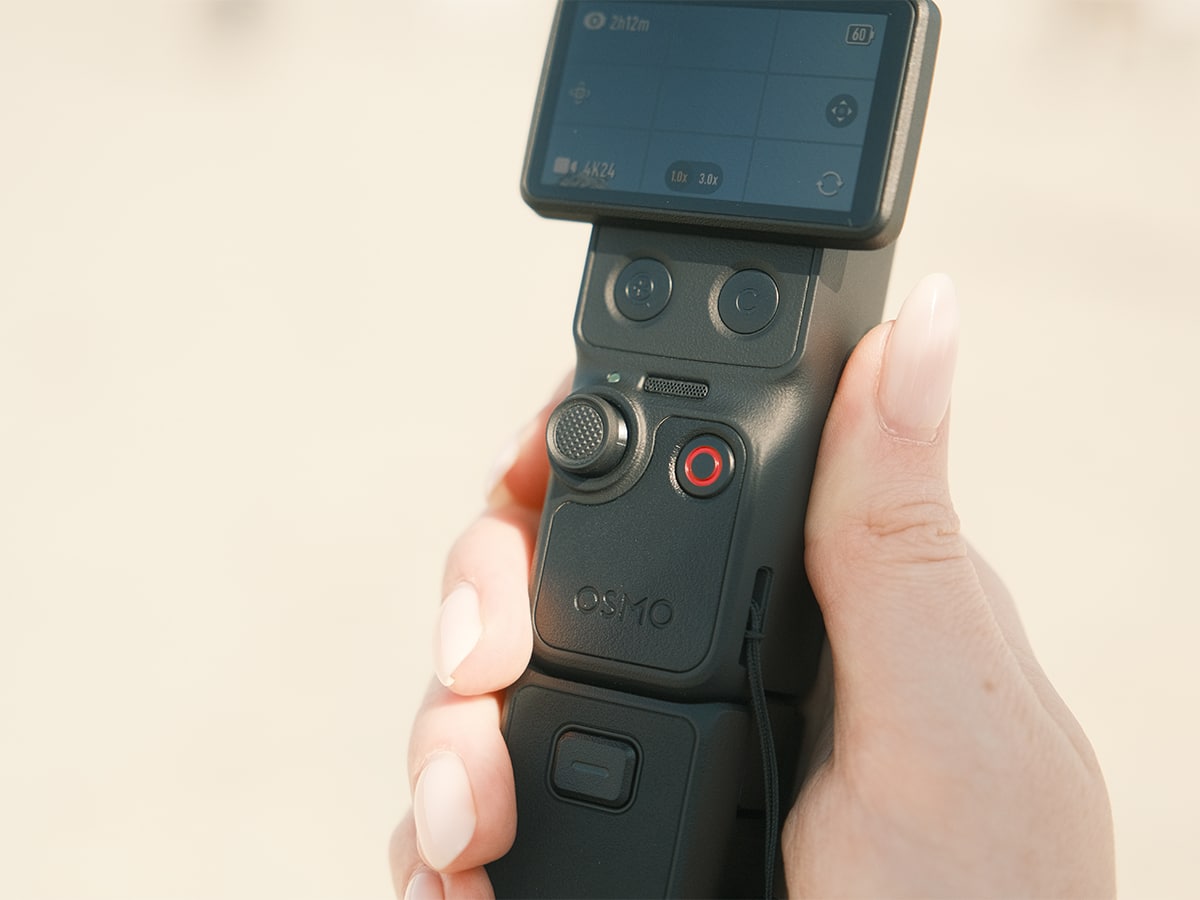
It’s also worth noting at the start of this review that DJI has nailed the ergonomics. The Pocket 4P has a 230-gram handheld form factor (13 grams lighter than the Luna Ultra) and pairs a 2.0-inch 1000-nit rotatable touchscreen with an integrated 3-axis mechanical gimbal, a tactile 5D analog joystick, and dedicated dual physical control buttons. Then, for those who need remote monitoring, they’ve introduced an optional Osmo FrameTap controller that delivers a wireless, live-view touchscreen up to 25 meters away. Now that we know what we’re working with, let’s take a closer look at our full hands-on review of the DJI Pocket 4P.
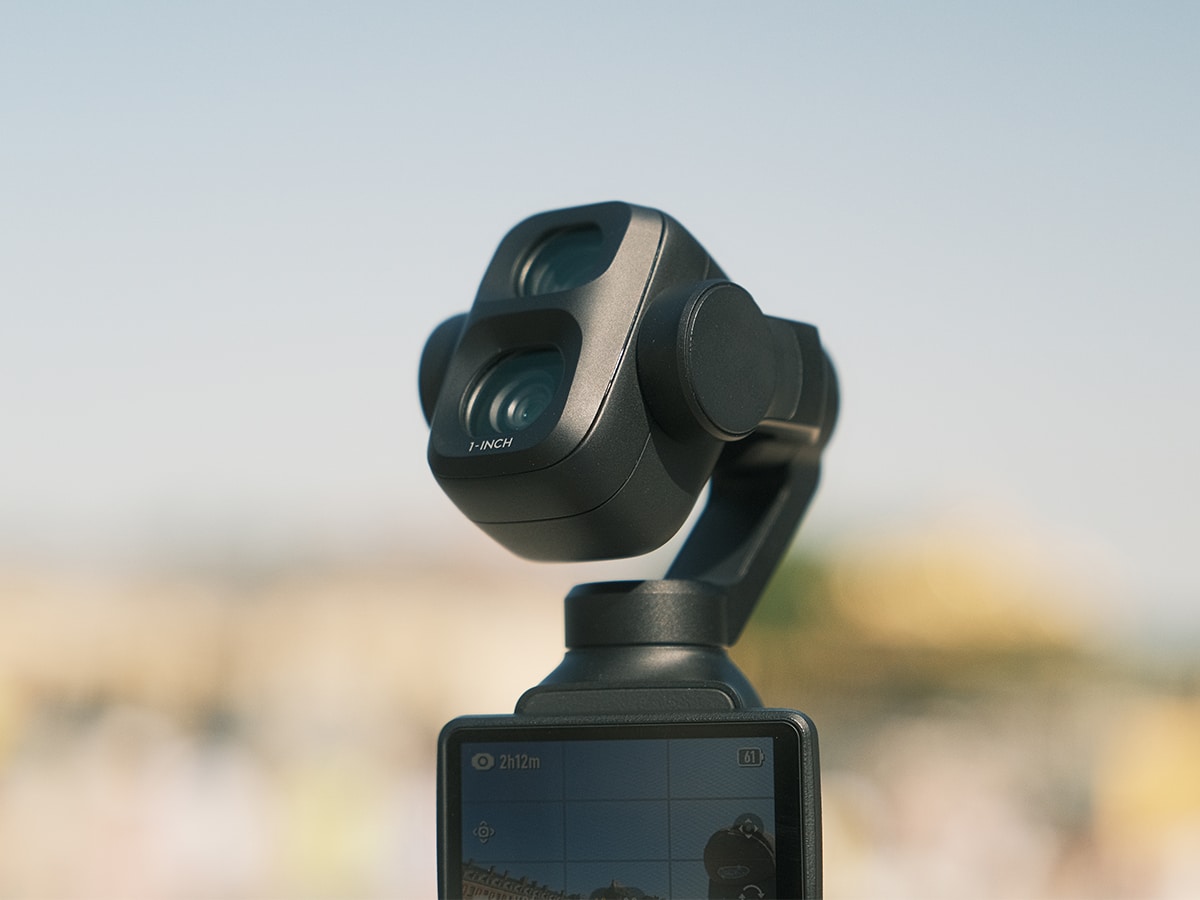
Technical Specifications Breakdown
| Technical specifications | |
| Wide-Angle Sensor | 1-Inch CMOS with LOFIC technology (Eqv. 20mm, f/2.0) |
| Med-Tele Sensor | 1/1.28-Inch CMOS (Eqv. 60mm, f/1.8 optical) |
| Dynamic Range | Up to 17 stops in 10-bit D-Log 2 colour profile |
| Max Slow Motion | 4K/240fps (Wide-Angle) / 4K/200fps (Med-Tele) |
| Display & Controls | 2.0-Inch Rotatable Touchscreen (1000 nits) + 5D Analog Joystick |
| Remote Monitoring | Osmo FrameTap touchscreen controller (Up to 25m range) |
| Internal Storage | Built-in 103GB (Up to 800 MB/s wired transfer) |
| Battery & Charging | 1545 mAh (80% charge in 18 minutes, 100% in 32 minutes) |
| Weight | 230 grams |
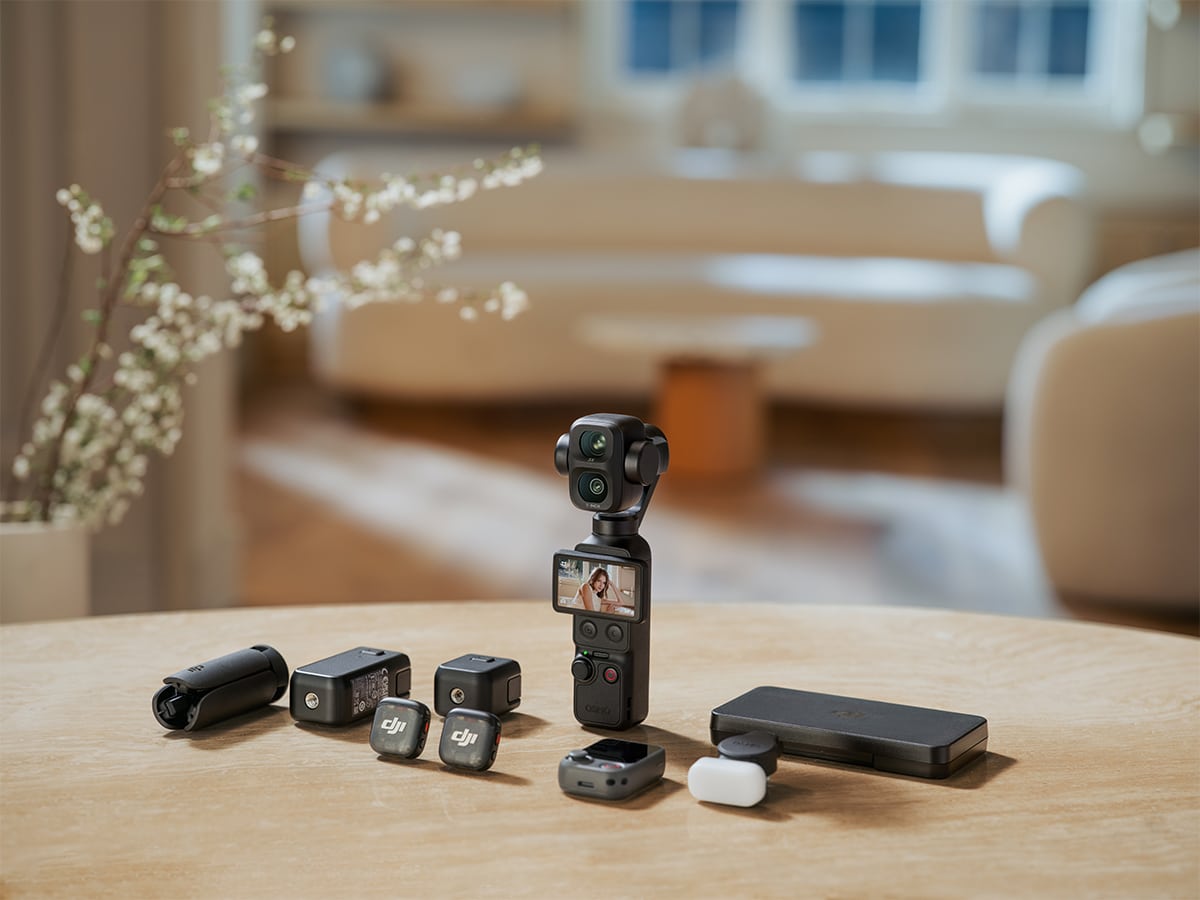
Price and Availability
DJI has launched the Osmo Pocket 4P with a starting price of AUD$959. However, if this is your first foray into the DJI ecosystem, it’s worth checking out the bundles and standalone accessories as they’re designed for specific workflows.
Standard Combo – AUD$959
- Core Osmo Pocket 4P camera system
- USB-C to USB-C PD Cable supporting USB 3.1 transfer rates
- Magnetic Osmo Pocket 4 Fill Light
- Osmo Pocket 4 Handle with 1/4″ Thread
- Osmo Pocket Pro Portable Carrying Pouch
- Wrist Strap, Quick Start Guide, and Safety Guidelines
Vlog Combo – AUD$1,099
- Includes everything from the Standard Combo
- Osmo FrameTap remote controller with custom magnetic charging cable
- DJI Mic Mini 2 Transmitter with windscreen, magnetic clips, and custom front covers
- Osmo Mini Tripod and expanded Osmo Pocket Pro Carrying Bag
Creators can also expand their setup with standalone accessories sold separately. Key highlights include the Osmo Pocket 4P Black Mist Filter, the Magnetic ND Filter Set with ND16, ND64, and ND256 glass, a custom Wide-Angle Lens, the flagship DJI Mic 3 Transmitter, the Osmo Pocket 3 Expansion Adapter, and the 65W Portable Charger.
When we look at the price AUD$959 for the Standard Combo and AUD$1,099 for the Vlog Combo, DJI positions the Pocket 4P aggressively against its key rival. By comparison, the Insta360 Luna Ultra demands a steeper investment, starting at AUD$1,229 for its base kit and climbing up to AUD$1,549 for the Creator Bundle. That leaves DJI with a substantial $270 price advantage at the entry level, delivering its 1-inch LOFIC sensor, dual-lens architecture, and 103GB of built-in storage at a far more accessible price point for creators.
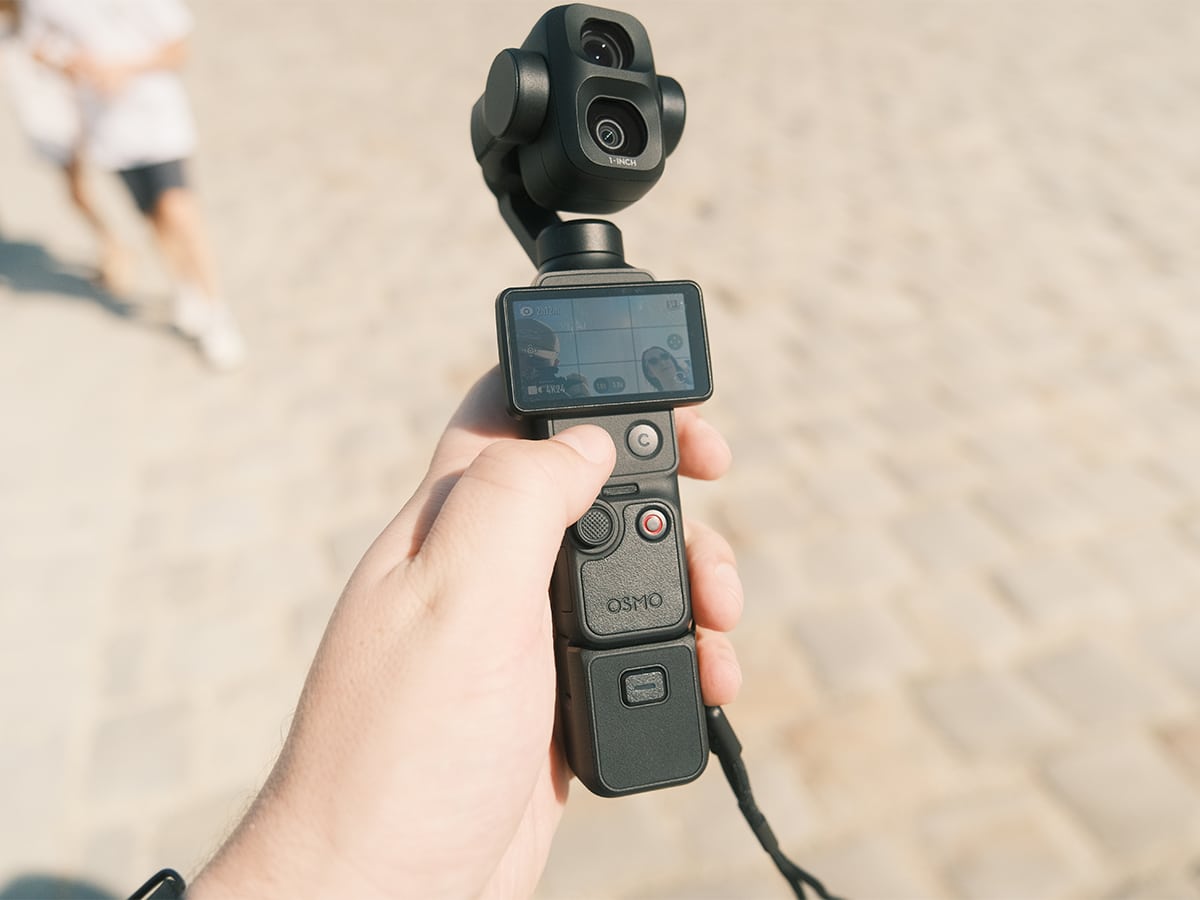
Design, Handling, and Storage
| Specifications | |
| Weight | 230 grams |
| Battery Capacity | 1545 mAh |
| Internal Storage | Built-in 103GB usable space |
| Expandable Storage | MicroSD card slot supported |
| Display Screen | 2.0-inch rotatable touchscreen (1000 nits brightness, 556×314 resolution) |
| Remote Monitoring | Osmo FrameTap touchscreen controller (Up to 25m range) |
| Stabilisation | 3-axis mechanical gimbal |
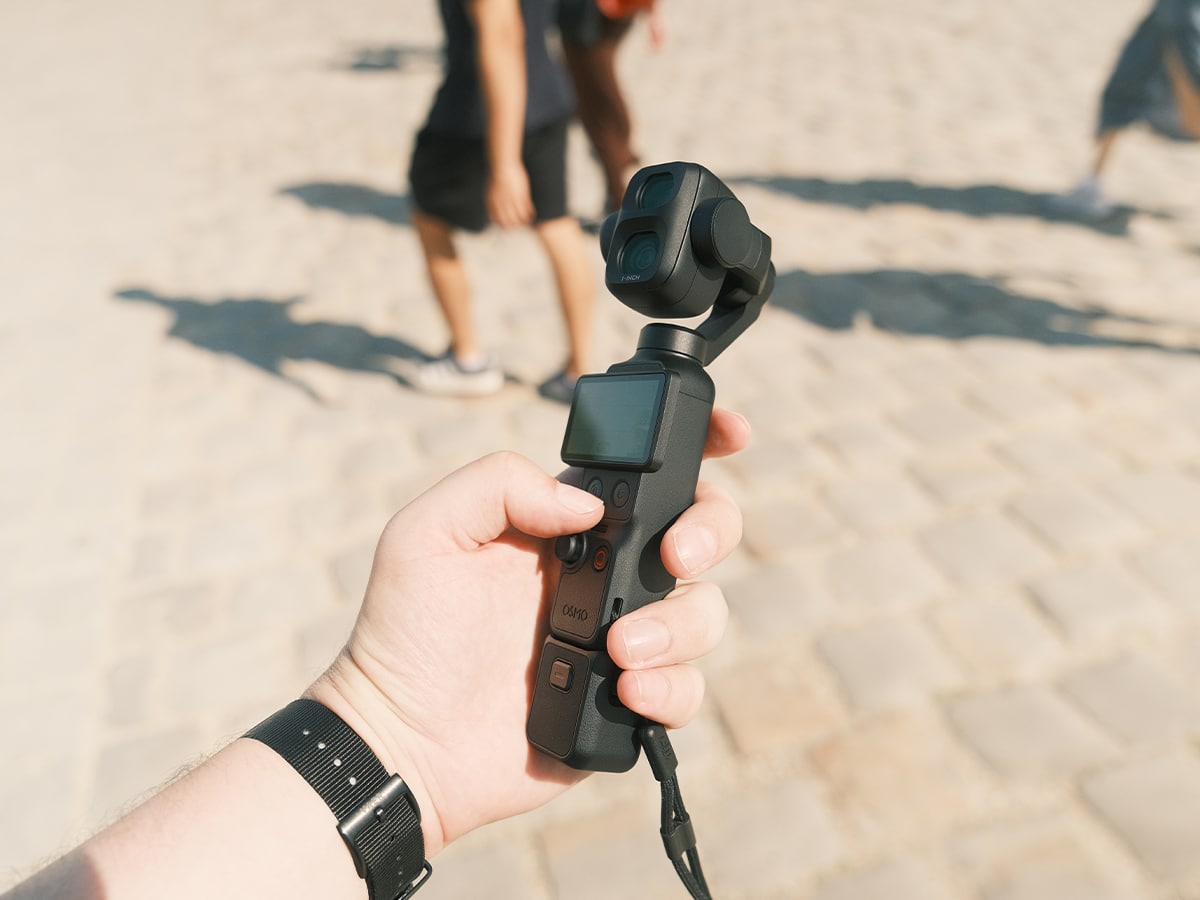
Despite the inclusion of an additional lens, the form factor of the Osmo Pocket 4P remains fairly compact. It tips the scales at 230 grams, which makes it lighter than the Luna Ultra, but you still feel the added weight when you throw it into a heavy camera bag.
DJI has refined its control layout once again with a 2.0-inch rotatable touchscreen that delivers 1,000-nit peak brightness. Rotating the display powers the camera on and off, and toggles between horizontal and vertical shooting orientations. Positioned directly beneath the screen (when it’s rotated) and two custom buttons and a tactile 5D analog joystick. Pushing the joystick further increases gimbal rotation speed for precise camera pans, and it feels just as good as it did during my test of the DJI Pocket 4. However, the Luna Ultra has a specific advantage here as its custom buttons can be used even when the screen is rotated vertically.
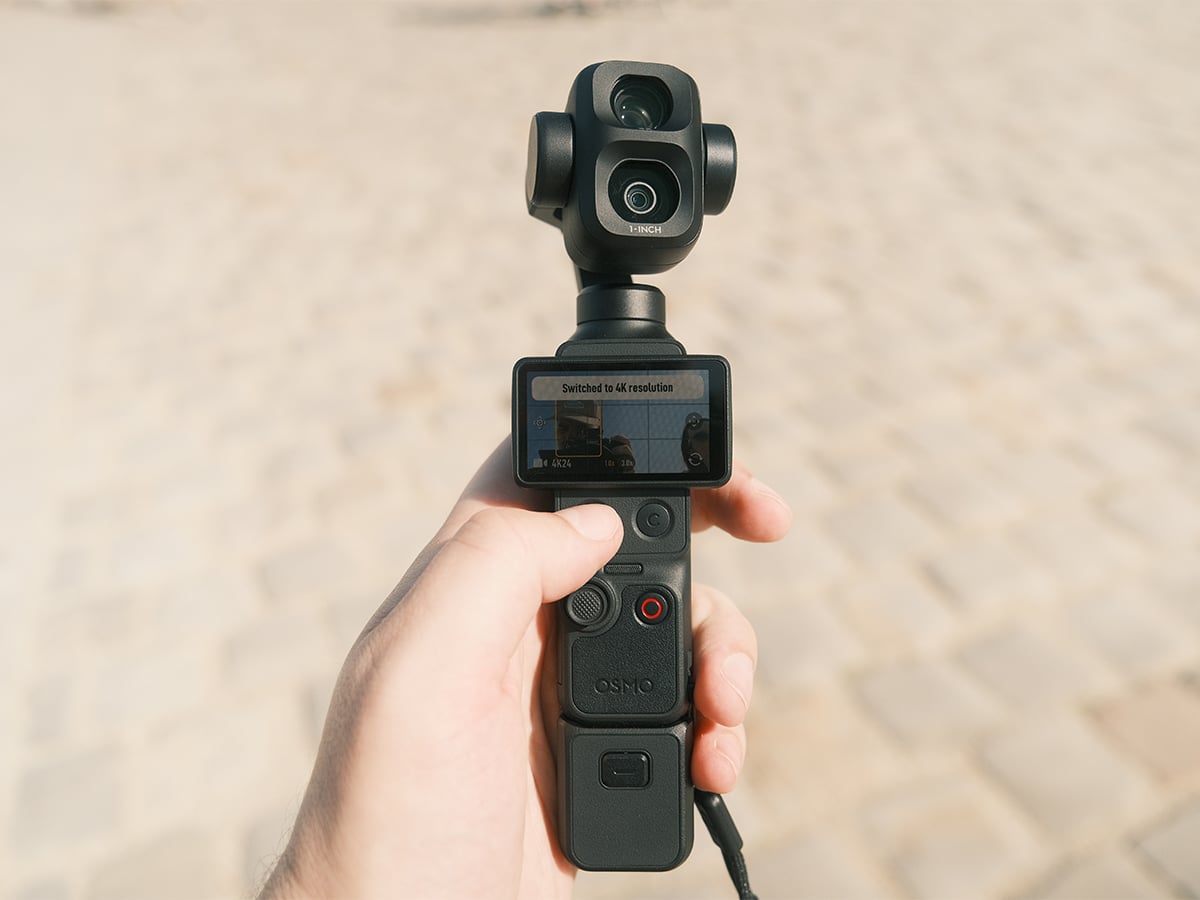
The physical button interactions operate as described during testing:
- Zoom Button (Left):
- Single press switches instantly between 1x and 3x optical zoom.
- Double-press jumps straight to 6x zoom.
- Pressing and holding zooms smoothly in at a constant, customisable speed.
- Custom Button (Right):
- Pressing and holding smoothly zooms out at a constant speed.
- Swiping down on the screen lets you map single, double, or triple presses:
- Switching Gimbal Mode
- Quick Capture
- Rotating Gimbal
- Recentering Gimbal
- Gimbal Lock
- Fill Light
- Follow and FPV modes
The Luna Ultra also has an advantage for those who want to use the screen remotely as a monitor and mic. However, DJI has created a solution with the Osmo FrameTap controller. It’s a remote touchscreen module that connects wirelessly from up to 25 meters away, displaying live footage and providing full access to gimbal panning, zooming, mode selection, and subject tracking. Still, it’s quite annoying to charge with a specific connector, and it takes up valuable space in the carry case, so you end up leaving it at home.
On the storage side, the built-in 103GB of high-speed memory is welcomed, as SD cards have become prohibitively expensive for many. When you shoot at standard bitrates, it can record up to 570 minutes of 1080p/24fps video or 210 minutes of 4K/60fps footage. Exporting files is also a highlight of the Pocket 4P, supporting wired USB 3.1 transfers up to 800 MB/s and Wi-Fi 6 wireless transfers up to 90 MB/s.
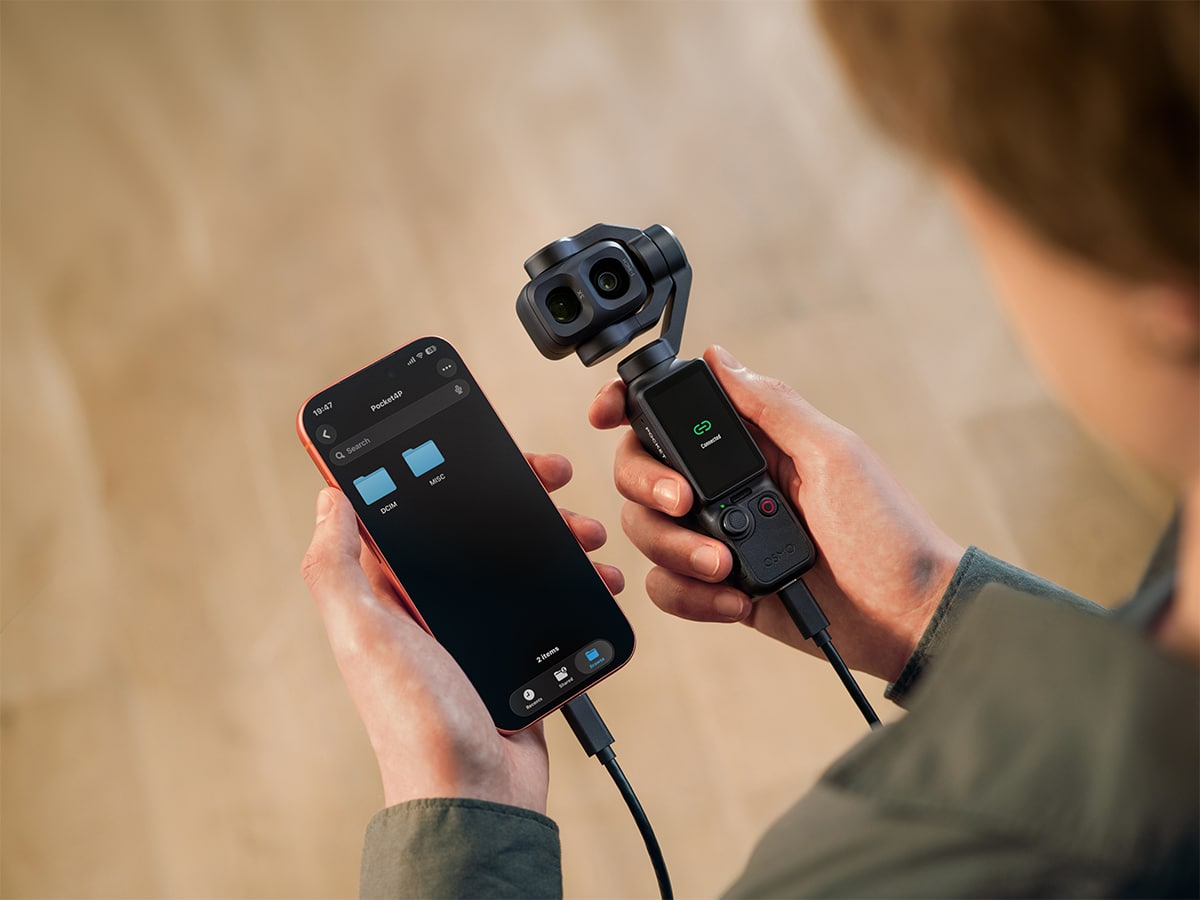
Finally, the Pocket 4P is powered by a 1,545 mAh battery that delivers up to 210 minutes of continuous 1080p/24 fps recording. It’s important to note that when you start shooting in high bitrates and at 4K24, this starts to decrease dramatically, and it’s an area where the Pocket 4P could be improved.
It’s a pro camera, you’ll shoot in pro modes, and the battery life leaves a little to be desired for those who plan to shoot longer VLOGs and sequences. You can attach the optional Battery Handle, which extends operating time by an additional 130 minutes, and it’s mandatory for those shooting in max settings. When you do run low, fast charging tops up the battery to 80 per cent in just 18 minutes and 100 per cent in 32 minutes.
 1/5
1/5Video Quality and Imagery
| Specifications | |
| Primary Sensor & Lens | 1-inch stacked CMOS with LOFIC tech (20mm eqv., f/2.0, 0.2m focus) |
| Secondary Sensor & Lens | 1/1.28-inch CMOS (60mm eqv., f/1.8, f/6.3 eqv. DOF, 0.3m focus) |
| Focal Range & Zoom | 20mm to 120mm range, 3x optical zoom, up to 12x digital zoom |
| Dynamic Range | Up to 17 stops in D-Log 2 colour profile |
| Color Profiles | 10-bit D-Log 2, D-Log, 6 built-in Film Tones |
| Max Video Specs | 4K/240fps (Wide-Angle) / 4K/200fps (Med-Tele) |
| Electronic Shutter | 1/16000s electronic shutter speed |
| Photo Specs | 37 MP photos, 4K Live Photo support |
The imaging system of the Osmo Pocket 4P is a major technical step forward for pocket gimbals. It introduces a physical dual-camera design covering wide-angle to medium-telephoto focal lengths.
You’ll spend most of your time shooting with the main wide-angle camera, an all-new 1-inch stacked CMOS sensor with a 20mm-equivalent f/2.0 lens. Equipped with LOFIC tech, this primary sensor delivers a whopping 17-stop dynamic range when shooting in 10-bit D-Log 2. It does a particularly good job in high-contrast or backlit scenes, preserving both bright skies and deep shadow details without blowing out highlights or crushing skin tones. Still, there’s a catch, as it’s not available on the telephoto lens, so there’s a clear compromise in image quality when swapping between the two, especially difficult to manage when shooting with manual exposure, etc.
Still, it’s extremely impressive, as the new D-Log 2 colour curve reaches a theoretical maximum dynamic range of 19.4 EV and offers 11.3 EV of highlight latitude, matching professional ARRI LogC4 cinema standards. Then, for high-end post-production, D-Log 2 integrates directly into ARRI Alexa 35 workflows using the provided LUT files.
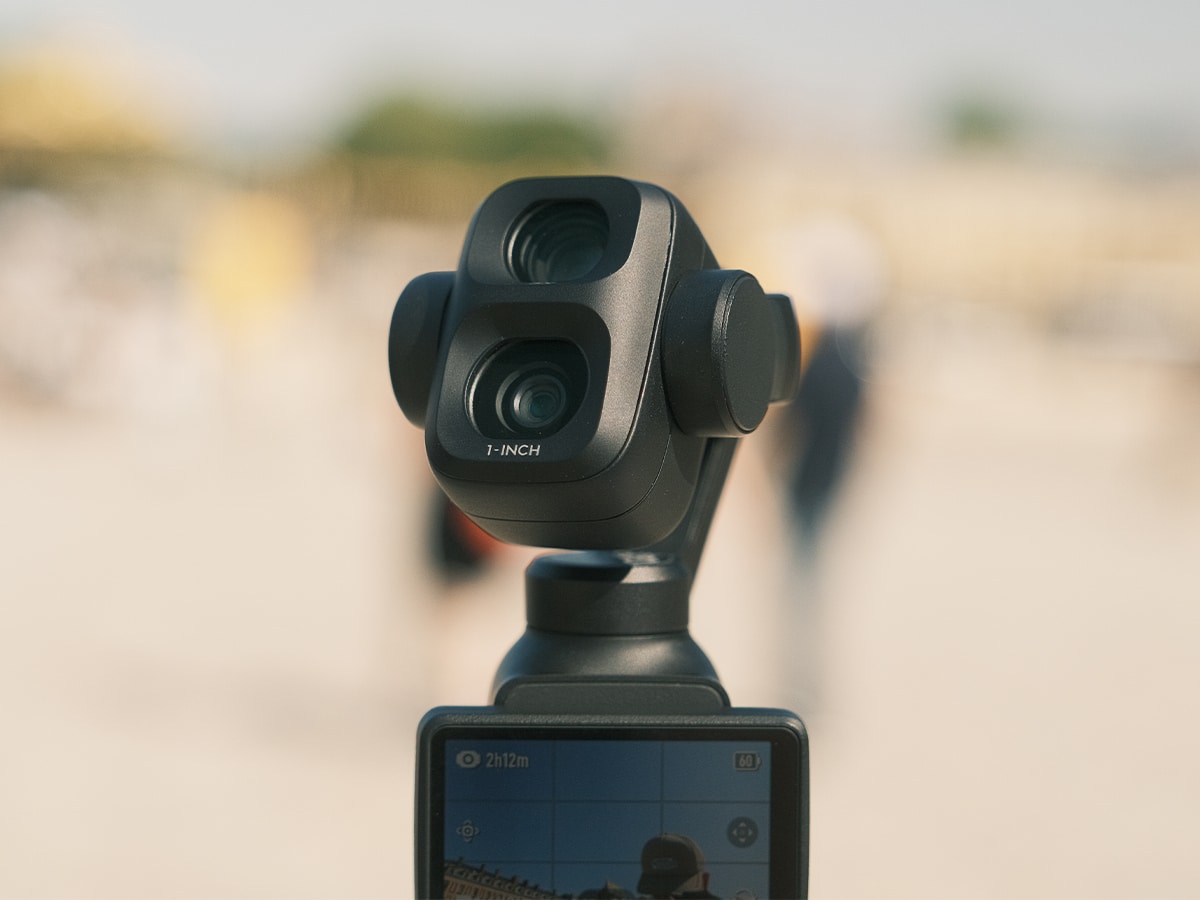
Positioned above the main camera is a dedicated 60mm-equivalent optical medium-telephoto lens featuring a 1/1.28-inch CMOS sensor and a fast f/1.8 aperture. This 60mm focal length acts as the classic portrait sweet spot, compressing backgrounds and matching natural human eye perception. The f/1.8 optic delivers genuine f/6.3 full-frame-equivalent depth of field, producing soft bokeh that makes subjects pop naturally.
High-frame-rate video performance is also a reason to consider the Pocket 4P. The wide-angle lens supports 8x slow-motion recording at 4K/240 fps, while the medium-telephoto lens supports 4K/200 fps. These cinema-grade slow-motion capabilities are supported by an upgraded electronic shutter speed of up to 1/16000s.
Colour tuning relies on DJI Portrait Consistency Engineering, utilising Face Priority Auto White Balance to maintain accurate skin tones in challenging light. Shooters looking for instant aesthetics can select from six built-in film tones, including CC Film, NC Film, Pastel, Warm Tone, Movie, and Retro, or enable in-camera skin softening. However, this isn’t something I typically play with on camera, so I can’t comment on these in my test. It’s also important to note that still photography capabilities include 37 MP image capture and 4K Live Photo outputs.
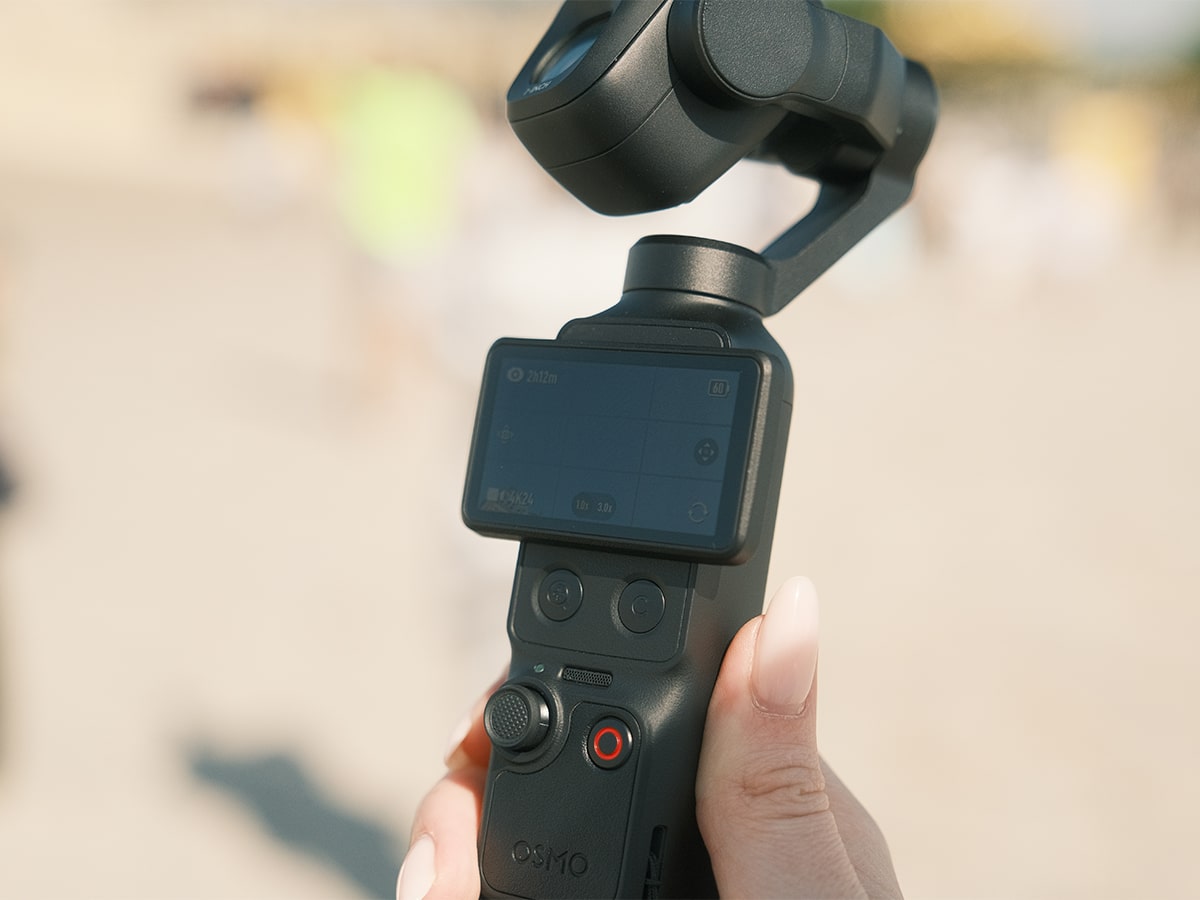
Like other new DJI projects, tracking performance is powered by ActiveTrack 8.0. The system supports all-focal-length tracking up to 12x zoom across people, vehicles, and pets. What I found particularly clever is the new Multi-Person Tracking mode that automatically centres groups of up to 8 people, while Subject Management lets users register up to 3 specific subjects for priority tracking and gesture control.
Finally, low-light shooting has improved dramatically thanks to the new lens, but you can also lean on the magnetic Gimbal Fill Light accessory that provides 3-level brightness adjustments up to 40 lux and 3 colour temperature settings ranging from warm 2800 K to cool 5500 K if you shoot VLOGs.
Audio Quality
Audio recording on the Osmo Pocket 4P utilises three built-in microphones positioned around the non-screen sides of the body. When operating in Pro mode, shooters can toggle directional audio pickup between Front, Front and Back, or All directions. The internal microphone array automatically engages Audio Zoom as you adjust focal lengths.
The camera also supports spatial audio recording, creating an immersive directional soundstage when monitored through headphones.
For professional audio workflows, the Osmo Pocket 4P features OsmoAudio four-channel output. The device links directly to two wireless transmitters, such as the DJI Mic 2, Mic 3, Mic Mini, or Mic Mini 2, without requiring external receivers. When two transmitters are linked, the video file records dual stereo audio tracks:
- Audio Track 1 (Transmitter Audio): Records left and right channels separately from the two wireless transmitters.
- Audio Track 2 (Built-in Stereo): Simultaneously captures ambient sound using the camera’s internal stereo microphone array.
Creators can also enable Built-in Mic Audio Backup, which saves ambient room audio as an embedded second track or as a separate AAC file.
Man of Many’s Verdict
Where It Wins
The DJI Osmo Pocket 4P retains its crown as the best pocket gimbal camera by bringing true cinema-grade optical performance into a pocketable 230-gram form factor. However, it’s clear that Insta360 is coming, and the Luna Ultra offers serious benefits to creators who haven’t locked themselves into an ecosystem yet.
By combining a 1-inch LOFIC sensor delivering 17 stops of dynamic range with a dedicated 60mm f/1.8 med-telephoto portrait optic, it eliminates the artificial computational look that sometimes plagues these cameras, particularly the Luna Ultra in certain challenging shooting conditions.
The addition of 103GB of built-in storage, 4K/240 fps slow motion, and 800 MB/s transfer speeds is the cherry on top of an unmatched workflow system for mobile creators.
Where It Compromises
The compromises are minor and mostly bound to hardware realities. The 230-gram mass makes it slightly heavier than its single-lens siblings, and you can feel this weight when it’s added to your camera bag, especially if travelling. There are also advanced functions, such as Multi-Person Tracking and D-Log 2, that are not available with manual zoom during recording. Finally, the internal audio recording relies on automatic gain adjustments unless paired with an external mic system.
The DJI Osmo Pocket 4P stands out as a triumph of miniaturised cinema engineering. By packing a 1-inch LOFIC sensor with 17 stops of dynamic range and a dedicated 60mm f/1.8 optical portrait lens into a 230g handheld gimbal, DJI has delivered an unmatched tool for mobile filmmakers.
Features like 103GB built-in storage, 800 MB/s transfer rates, 4K/240fps slow motion, D-Log 2 colour depth, and ActiveTrack 8.0 solidify its position at the absolute top of the handheld camera market. Whether you are shooting professional vlogs, commercial travel content, or high-frame-rate action, the Osmo Pocket 4P sets the definitive benchmark for what a pocket camera can achieve.
NOTE: The author of this article was provided a DJI Osmo Pocket 4P for the purposes of this review. All reviews remain independent and objective. DJI was not shown this review before publication, and we received no compensation for posting it. For more information on how we test products, view our editorial guidelines.




















Comments
We love hearing from you. or to leave a comment.