


Updated:
Readtime: 12 min
Every product is carefully selected by our editors and experts. If you buy from a link, we may earn a commission. Learn more. For more information on how we test products, click here.
- 12MP camera captures hands-free 3K video and crisp, dynamic photos.
- Meta AI powered by Muse Spark delivers intelligent voice prompt assistance.
- Open-ear speakers and six microphones block 90 per cent of ambient noise.
- The foldable charging case provides up to 40 hours of battery.
- Three new frame shapes offer 26 distinct style combinations across colours.
“Meta Glasses are everywhere.” That’s the only thought that crossed my mind when I spent a week in Boston for the FIFA World Cup only a few months ago. Like food trucks with AI posters, the Meta Glasses Gen 2 (AUD$469) have slowly infiltrated the consumer tech space as public perception shifts from seeing them as a niche pair of “spy glasses for creeps” to one of the best bang-for-buck content-creator tools money can buy.
But even with the introduction of real-time AI assistance and more stylish frames, my time with the Meta Glasses seems to point back to that original direction. Crafted in partnership with EssilorLuxottica, which makes designer sunglasses for some of the biggest brands on earth, these smart glasses push boundaries on weight and composition to pack a 12MP camera and open-ear audio into some pretty stylish frames. However, with impressive, but arguably useless AI assistance, their core premise is hands-free convenience, allowing users to capture memories and listen to audio without constantly reaching for a smartphone.
To put them to the test, I’ve worn the Meta Glasses for an entire month, taking them on a holiday to the United Kingdom and Paris. The trip included filming hands-free content at the Goodwood Festival of Speed, where I captured point-of-view footage inside a Defender Dakar D7XR during a high-speed ride off-road. These experiences revealed exactly where the smart glasses shine and where their limitations emerge. Ideally suited for casual creators, travellers, and tech enthusiasts who want effortless point-and-shoot vertical video, professionals seeking a primary camera for high-end video production (horizontal content) will quickly reach the hardware limit. Don’t expect to rely on Meta AI for quality restaurant or turn-by-turn navigation either, but more on that in a moment. Let’s check out the full review!
Technical Specifications
| Specification | |
| Price (AUD$) | from $469 |
| Camera Sensor | 100-degree ultra-wide 12MP camera |
| Video Capture | 3K Ultra HD at 30 FPS, Slow-Mo 720p at 120 FPS, Hyperlapse |
| Audio and Mics | 2 open-ear speakers, 6-microphone array with wind noise reduction |
| Battery and Case | 8+ hours of playback, up to 40 hours with a foldable charging case |
| Storage and Rating | 32GB internal storage, IP67 dust and water resistance |
Who Should Buy and Who Should Avoid
Who Should Buy:
- Travellers wanting easy, quick, no-fuss hands-free vertical point-and-shoot video.
- Casual users looking for stylish sunglasses with built-in audio.
- Early adopters who value basic voice assistance and real-time translation.
Who Should Avoid:
- Professional videographers who require horizontal video formats.
- Users who want to rely entirely on Meta AI for deep factual research and recommendations.
- Those who are uncomfortable with the social stigma of wearing a camera on their face.
 1/6
1/6Meta Glasses Gen 2 Design: High-Fashion Frames Built for Daily Wear
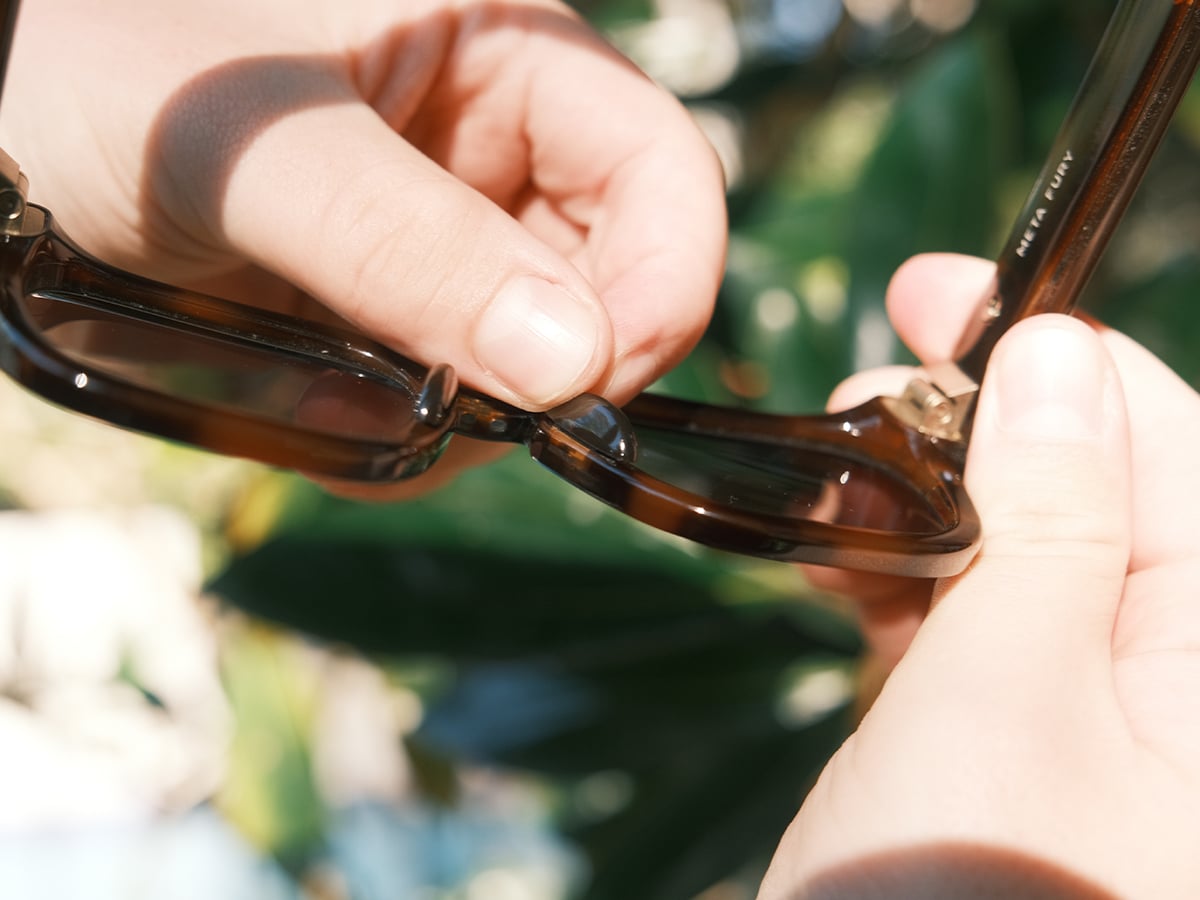
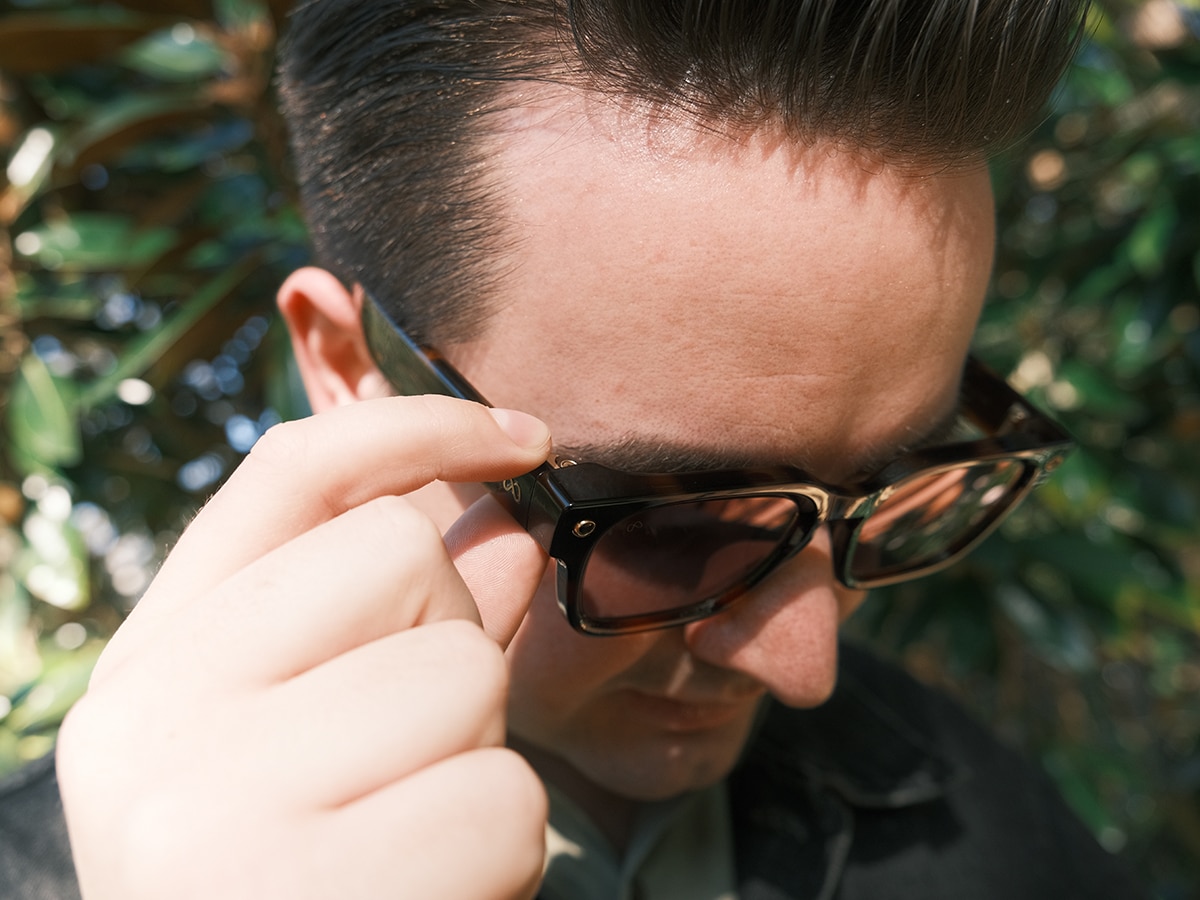
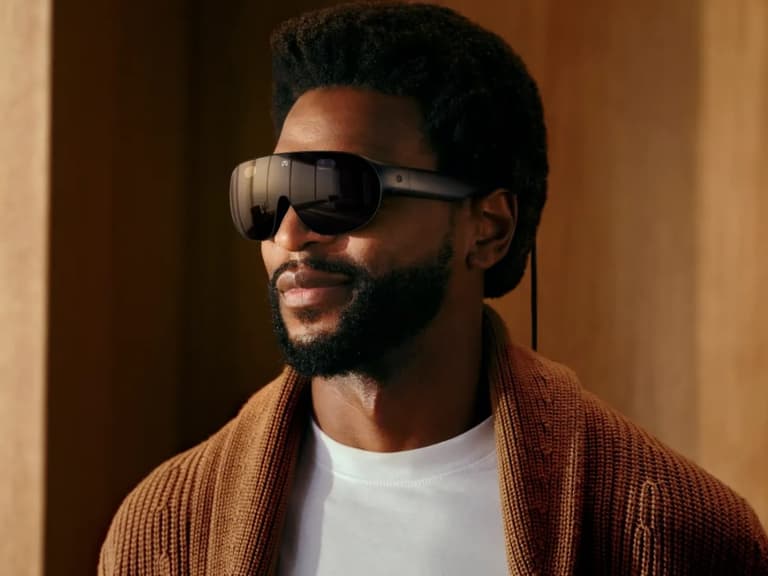
Designed with EssilorLuxottica, the collection offers 26 style combinations across three distinct frame silhouettes and eight colourways, including Classic Black, Classic Tortoise, Racing Green, Linen, Merlot, Mahogany, Sandstone, and Dark Tortoise.
Weighing very little for the tech inside, the frames feature durable, flexible overextension hinges, adjustable three-way nose pads with 15 degrees of movement, and co-wire temple tips for a secure fit. Frankly, they’re so well made that they’re worth their AUD$469 price before you even consider the cameras inside.
I explain the video quality further below, but it’s worth noting here that the wearable camera market is highly competitive right now, and that’s exactly where the Meta Glasses live. Sure, they have AI assistance and can play music, but everyone I speak to about the glasses is buying them for the camera. There’s serious competition in this space, mainly from the DJI Osmo Nano, which offers magnetic mounting and dedicated action camera durability. However, it struggles in a vertical format, and the camera is difficult to mount at eye level to achieve the “POV look” that the Meta Glasses so easily provide.
The glasses operate through a simple suite of physical controls:
- Power Switch: To turn the device on or off, simply slide the power switch located on the left inner arm near the hinge.
- Touch Controls: Touchpad built into the right temple allows users to tap to play or pause audio, swipe forward or back to adjust volume, or tap and hold to launch a favourite music app.
- Capture Button: Physical capture button sits on top of the right frame, allowing users to press once to snap a photo or hold down to start recording video.
NOTE: Users who need prescription lenses can choose from a total power range of -12 to +2.25.

12MP Camera Test: 3K Vertical Video Performance & POV Shooting
I was most excited to test the video capability of these Meta Glasses (Gen 2). The best place to do that was at the Goodwood Festival of Speed as a photographer and spectator, but also from the passenger seat of the Dakar-winning Defender D7XR.
Overall, I was surprised by the quality of the image, and while it feels like software is doing a bit of heavy lifting, the combination of a 100-degree ultra-wide field of view and a 12MP sensor capable of vertical 3K Ultra HD video at 30 FPS proved that the Meta Glasses are a must-have content creator tool.
But more impressive than the image was the convenience. They’re a run-and-gun dream for content creators. You don’t need to pair any wireless mics to the glasses, as they do a fantastic job of hearing your voice, even though the mics are right up at eye level. You’re a button press away from capturing content that is instantly shareable and from a unique perspective. Even with still images, the new Dynamic Photo mode automatically snaps multiple frames and recommends the best shot.
However, it’s not all impressive. Despite the image quality, the hardware has distinct workflow limitations compared to some of the best micro action cameras on the market. The Meta Glasses camera is designed for vertical point-and-shoot video, making it unsuitable for creators who need horizontal video or professional production integration, where you want to sync wireless mics and capture audio from multiple sources. Of course, this is a niche use case, and most people simply want to press the button and shoot quality video and photos. For that, it works very well.
When you’re recording in public, the front-facing capture LED illuminates to signal when recording is active. To address the growing privacy tension surrounding camera-equipped wearables, Meta recently launched a new marketing campaign and rolled out a crucial software fix. The update closes a privacy loophole that previously allowed users to continue recording after covering the LED indicator. Moving forward, the camera will automatically stop working if the privacy light is blocked, reinforcing the warning system designed to alert bystanders.
Storage stands at 32GB, which is enough to hold over 1,000 photos or 100 30-second clips. These sync seamlessly to the Meta AI app and then to my iPhone 17 Pro Max photo library. The IPX4 water resistance also provided great peace of mind when shooting in wet British weather.

Open-Ear Audio & Meta AI: Does the Hands-Free Assistant Actually Deliver?
The open-ear speakers deliver surprisingly rich sound for music streaming through Spotify, Apple Music, Amazon Music, or Audible, while six built-in microphones block up to 90 per cent of wind and street noise.
One clever feature, called “Match Your View,” lets you ask Meta AI to play music that matches the current visual surroundings, but the real question is how much someone would use this. I used the feature once while walking through Hyde Park, and I didn’t like the song choice, so I went right back to listening to music with my AirPods Pro 3s. I also preferred to wear my regular sunglasses as they were lighter, and I didn’t plan to take any photos or create any content on the walk.
Hands-free calling, voice messaging up to one minute, and live POV video call sharing on WhatsApp or Instagram work smoothly. However, the hands-free AI interaction relies on Meta AI powered by Muse Spark. While it offers voice capabilities, live translation across 20 languages, calendar management, and location sharing, the real-world reliance on Meta AI as a sole source of factual information reveals clear shortcomings.
When asking for local recommendations while travelling through the UK and Paris, the answers often fell short of expectations. Ultimately, I didn’t trust it. I immediately went back to basic research on a smartphone, using Gemini and Search, which proved far more reliable and accurate than trusting Meta AI. It’s certainly not a reason to buy the glasses, which is a shame.
To interact with the built-in assistant, the hardware utilises a few key systems:
- Waking the AI: Users can activate the assistant hands-free by saying “Hey Meta,” tapping and holding the right touchpad, or pressing the assignable action button.
- Conversational Follow-ups: After the assistant responds, a chime sounds and the microphone remains active, allowing users to ask follow-up questions naturally without needing to repeat the wake word.
- Visual Understanding: Users can physically point at objects and ask specific questions, prompting the AI to analyse the visual feed and provide highly contextual answers.
- App Synchronisation: All verbal questions and AI responses appear automatically in the Meta AI mobile app, allowing users to review answers or pick up the conversation later on their smartphone.
 1/7
1/7Meta Glasses Battery Life & Foldable Charging Case Tested
Longer travel days highlight the practical realities of power management and charging options. Meta claims over eight hours of battery life on a single charge, which held true during the lighter days of periodic audio listening and occasional photo capture. However, heavy vertical video recording at events like Goodwood rapidly drains the onboard battery, requiring a mid-day top-up.
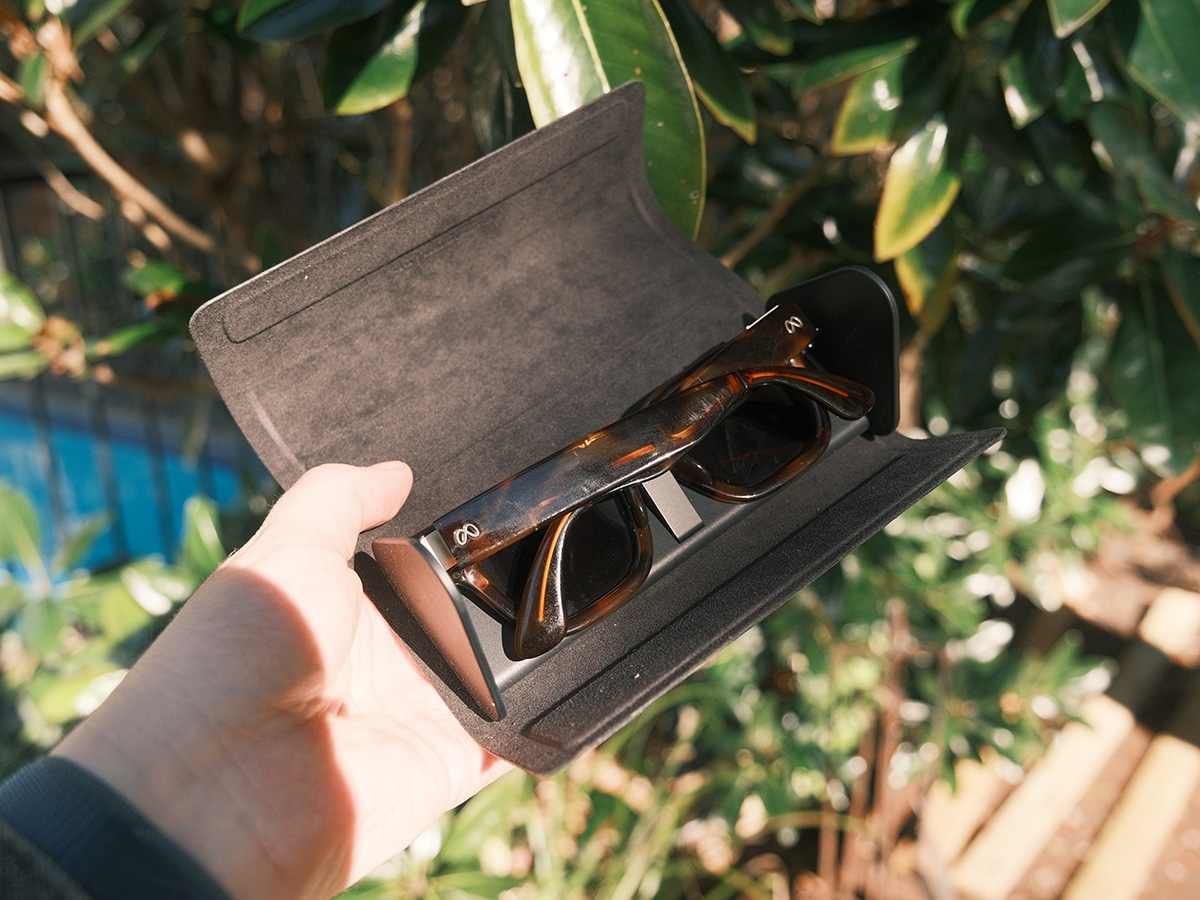
One feature that really impressed me was the foldable charging case, which solves carry constraints by flattening down for easy storage in a pocket or bag.
You can get the case in five colours, including Black, Mocha, Forest, Cream, and Midnight Black. The case provides up to 40 hours of additional operating time, and the physical charging contacts align easily when the glasses are slid into them, ensuring a solid connection. If you’re a prescription user, the optional charging stand has a clean docking set-up for desk use.

The Verdict: Should You Buy the Meta Glasses Gen 2?
Meta Glasses (Gen 2) establishes a high standard for casual, hands-free wearable technology. With an accessible AUD$469 price point as tested, the hardware delivers good design variety, surprisingly good image quality, and above-average audio isolation in a package that looks like traditional eyewear. It serves as an outstanding point-and-shoot tool for quickly capturing personal point-of-view moments without interrupting the experience.
However, prospective buyers must understand the product scope before committing to a purchase. They’re not built for professional video workflows or replacing a dedicated camera setup. Furthermore, relying on Meta AI for real-world queries remains frustrating compared to using, say, Gemini on a smartphone.
If you’re a user seeking an everyday, stylish wearable that captures great vertical memories on the fly, these glasses earn a strong recommendation.





















Comments
We love hearing from you. or to leave a comment.