


Updated:
Readtime: 15 min
Every product is carefully selected by our editors and experts. If you buy from a link, we may earn a commission. Learn more. For more information on how we test products, click here.
Modern home gyms keep getting smarter, but with all the latest tech and gadgets, are you actually using all of your gear? In my over two decades in the fitness industry, I’ve learned that most men don’t need an overly-packed garage or studio filled with exercise equipment to stay fit. That AI-powered bike or at-home bench-press will most likely become a very expensive clothes rack.
For most guys, less is more, and ‘more’ means getting better results. I personally have tested hundreds of products and brands over the years, from commercial box configurations to stripped down, apartment-friendly layouts, and I’ve seen which of these options my clients (and myself) work best with.
It all comes down to one rule: The key to staying consistent with your fitness goals is removing friction.
That means keeping only the equipment that helps you remain effective and consistent. Your goal should not be to replicate a commercial gym at home, but to build out an effective setup that fits your actual life, your living space, and the way you train. If you read our earlier piece on the realistic fitness kit most men can use to actually stick with goals, this one will go a little further, giving the reasoning behind the choices (plus, providing a few extra choices) giving you the case for what can stay and what can go.

What Makes a Good Minimalist Home Gym?
For starters, it doesn’t mean simply owning a few pieces of equipment. It’s about curating the right equipment for you. I always try to keep four things in mind:
1. Versatility
This doesn’t mean that you need a 21-in-1 power cage with pulley system. It means that each piece in its space should help to support various training goals: weight loss, strength training, cardiovascular health, mobility, etc. Choosing a piece of equipment with one basic purpose will end with that piece collecting more dust than sweat.
2. Sustainability
No, that doesn’t mean that everything you choose needs to have a positive impact on the environment (though that’s worth considering too), it means opting for gear you’ll love using on day one just as much as at the end of year one.
3. Lower Friction
The easier it is to use, the more you’ll likely end up using it – it’s that simple. Fitness tools that require setup, maintenance, or need additional accessories (or subscriptions) generally end up gathering dust sooner than expected.
4. Small Footprint
Starting small then building up is the smarter route for any space, but especially for apartments, home offices, or if you have roommates. If you can’t store it or easily stow it away, it’s likely to become clutter, and clutter kills motivation.
If you use these four principles when you’re choosing the proper gear, you’ll end up with a setup that you’ll actually use.
Now, onto the kit. Here’s what you need to build a minimalist home gym.
The Essential Minimalist At-Home Gym

1. Adjustable Dumbbells
- Best for: Functional strength training
- What you don’t need: A full dumbbell rack or even multiple one-off sets, or any machine that comes with a dumbbell attachment.
One thing every man should be doing consistently is lifting weights, and nothing makes this more feasible than a pair of dumbbells. The trick is making sure you have the optimal resistance range to ensure your goals are being achieved, whether it’s losing body fat, gaining strength, building lean muscle, or ageing well.
The beautiful thing is that a single set of adjustable dumbbells can replace an entire rack, while only occupying the space of a carry-on bag. The goal is to locate a set that can ensure you’re able to hit every body part and exercise you could dream of: rows, presses, lunges, carries, hinges, and even squats. The right quality adjustable set will allow just that.
But the imperative word here is quality. While you can definitely go for the cheaper models from the global superstores of the world, those cheap plastic selector sets will burn you in the long run. They generally feel loose and unbalanced, tend to wobble, and are usually easier to break. Not a good formula if you’re trying to stay committed, on-form and in the zone. Invest in a set that is well-built and made mostly of steel, and you’ll be heading in the right direction. Look for knurled handles, smooth adjusting mechanisms, and ones that are made to withstand moisture, sweat, and resist rust.
Nuobell Adjustable Dumbbells
- Price: Approx AUD $1100
- Weight Range: 2kg to 45kg (per dumbbell)
Powerblock Pro 100 EXP Adjustable Dumbbells
- Price: AUD $1680
- Weight Range: 2.3 to 45.4kg (per dumbbell)
2. Resistance Bands
- Best for: Mobility, warm-ups and cool downs, travel training, high rep training
- What you don’t need: A cable machine you’ll never end up using (most cheaper models require you to buy plates anyways).
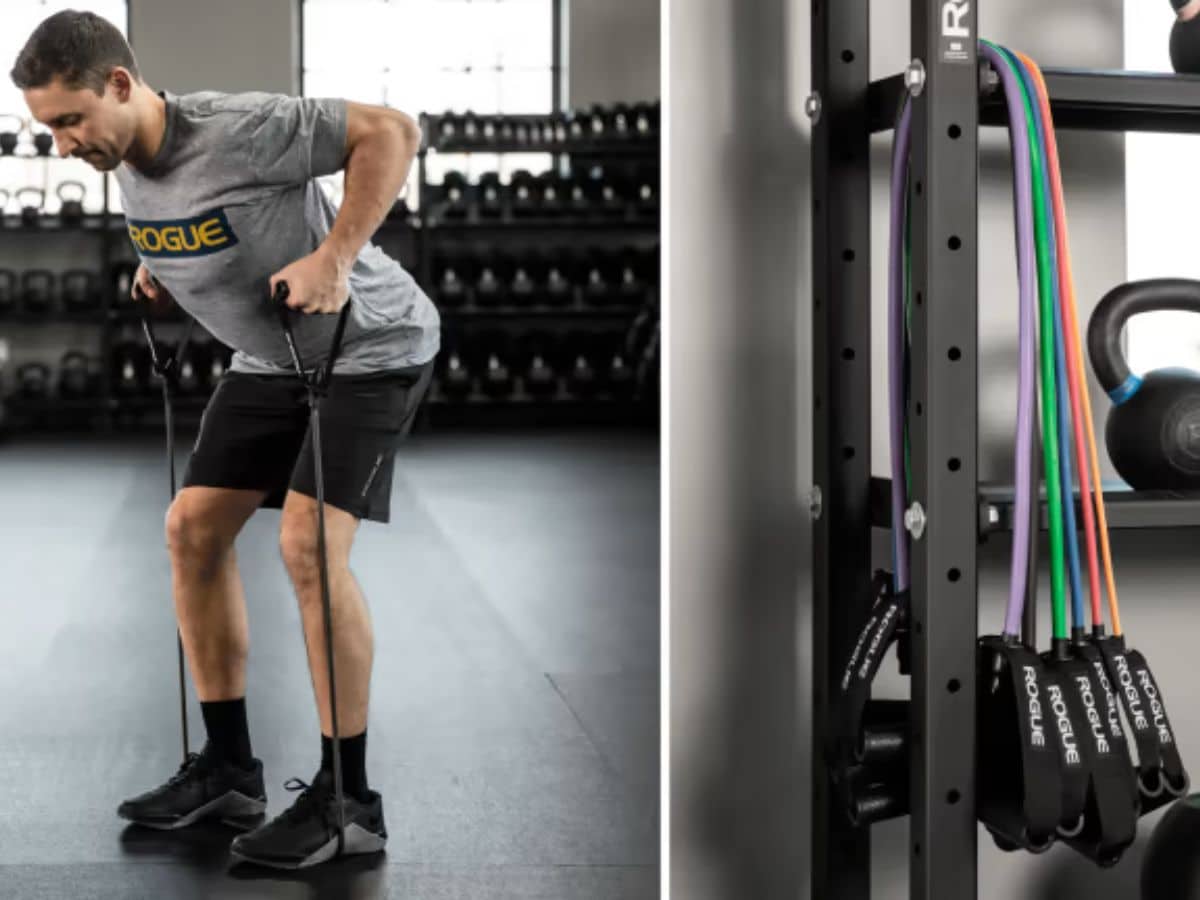
This is a tool that I always recommend. It doesn’t matter if you’re a complete beginner, an advanced lifter, or someone in their golden era, a solid set of resistance bands is irreplaceable. They can do it all, from helping you to prep and warm up for a workout, pre- or re-hab an injury, help you reach peak muscle pump for hypertrophy training, and really anything in between.
If you find a set that’s equipped with solid handles and a door anchor, they are the one tool that you can easily pack in a travel bag, load into your carry on, and bring with you literally anywhere in the world to ensure you have no excuse to get in a workout.
Amazon is chock-full of options, but look for solid quality materials (like natural latex) and if you’re not sure of brand reputation, always start with the reviews sections. The difference in durability from well-known brands and cheap alternatives is quite significant. Just remember, bands under significant tension and made with cheap materials can snap-back and cause damage.
Rogue Resistance Tube Bands
- Price: AUD $75
- Resistance: 6 levels ranging from 10 to 60lbs (4.5kg to 27kg)
PTP Total Resistance Gym Band Set
- Price: AUD $150
- Resistance: 5 levels ranging from 4.5kg (Violet) to 22.7kg (Gray)

3. Adjustable Bench
- Best for: Maximising your dumbbells
- What you don’t need: A multi-station, a preacher curl bench add on, a fixed flat bench.
This probably isn’t the first thing you’d buy for an at-home gym, but if you’re slowly building your at-home fitness routine, a solid bench will become a must-have pretty soon. Today’s adjustable benches put the Golden Era of bodybuilding’s versions to shame. These newer models can be set to various degrees of incline and decline, allowing you to hit all the pressing angles you could ever need. But, a solid model won’t just do that, it will provide you with a stable base that you can even use it for chest supported rows, and not worry about it toppling it over on you during heavier sets.
And while you may not think about it during the buying process, make sure the one you go with can be stored easily too. Some cheaper models may be foldable, but may have a lower overall load rating. Some of the bigger name brands can be stored vertically, which helps keep its footprint to a minimum for those tight on space.
Hammer Strength Home Multi-Adjustable Bench
- Price: Approx AUD $1050
- Adjustability: -10 to 75 degrees
BowFlex 5.1S Adjustable Weight Bench
- Price: Approx AUD $500
- Adjustability: -20 to 90 degrees

4. Walking Pad
- Best for: Hitting daily step and movement goals
- What you don’t need: The most expensive full-sized treadmill available. Unless you’re training for a race, marathon, or are a true runner, a treadmill’s size-to-performance ratio doesn’t hold water to a walking pad in most home settings.
Highly underrated among many guys to this day, walking is the most accessible form of fitness, but getting your 10,000 steps a day in isn’t always possible, and that’s where walking pads come in. A walking pad vs a full-sized treadmill will still provide all of the same benefits – especially when used consistently – which can help support cardiovascular health, offer great active recovery, and can help you get in more movement during a busy workday.
Walking pads are what I recommended to clients because they win in just about every category against a treadmill (with some slight differences). They are generally more affordable, are more compact (most can be stored upright or even under beds), most can provide decent jogging speeds, and some even offer a passable incline. While they may never be able to hit 24 km/h like their treadmill counterparts, these quieter running machines will help you stay active and up your daily step goals, while giving you a bump in metabolic health, too.
My recommendation is to look for a model that folds flat for ultimate storability, can handle repetitive daily use, and comes with a foldable handle bar for added stability, especially those who need help with balance.
V-Fold Treadmill with SmartStride
- Price: AUD $1230
- Speeds: 0 to 12 km/h (with handle up)
WalkingPad R1 Double-Fold Treadmill
- Price: Approx AUD $1050
- Adjustability: 0 to 10 km/h

5. Pull-Up Bar
- Best for: Posterior upper body strength
- What you don’t need: A squat power rack with pull up bar, let alone a lat pulldown machine.
All too often as a trainer, I would see clients only focusing on their “show muscles,” i.e. chest, biceps, abs, shoulders (the ones you see standing in front of a mirror). Trust me, there is absolutely nothing wrong with a little vanity training, but to move well on a regular day-to-day basis, minimise injuries, and live a pain-free life, you really need to put a priority on the backside, starting with upper body strength and good old-fashioned pull-ups. While its primary driver is the lats, you’ll still hit the biceps, shoulders, grip, and even core, so you’re still getting mirror-approved results. The best solution: a doorframe pull-up bar.
A solid unit requires no installation, drilling, or floor space, though you can find higher rated models that can be mounted if you so choose to. And while some may argue that it’s not the unit that’s the limiting factor but the lack of strength, you already have the solution. A simple chair allows you to control how much of your bodyweight you’re pulling up with each rep, allowing you to use less of the assistance the stronger you become. Eventually, you’re repping out your own weight.
Plus, another reason I love to program these for clients is that grip strength alone is one of the strongest predictors of overall health longevity. Nothing will build that faster than holding onto and pulling up your own weight, and it’s a fantastic marker for relative strength, too.
Ally Peaks Pull-up Bar
- Price: Approx AUD $70
- Weight capacity: 200kg
Sportneer Doorway Pull-up Bar
- Price: Approx AUD $90
- Weight capacity: 200kg
6. Foam Roller and Massage Gun
- Best for: Recovery, mobility, longevity, pain-free training
- What you don’t need: Vibrating foam rollers with Bluetooth tech, expensive compression boots, or other gadgets that require monthly subscriptions (at least, not yet).
No matter how hard you push yourself in the gym, if you aren’t maximising recovery (and sleep) all your hard work is less likely to pay off – and that will only become more true as you age.
As you begin to take on more responsibilities in life, you’ll undoubtedly look for ways to save time. With fitness, most men sacrifice proper warm up, cool downs, and especially recovery protocols. This leads to tight hips, locked up thoracic spines, and aching calves, which can likely result in compromised movement throughout our everyday lives and injuries.
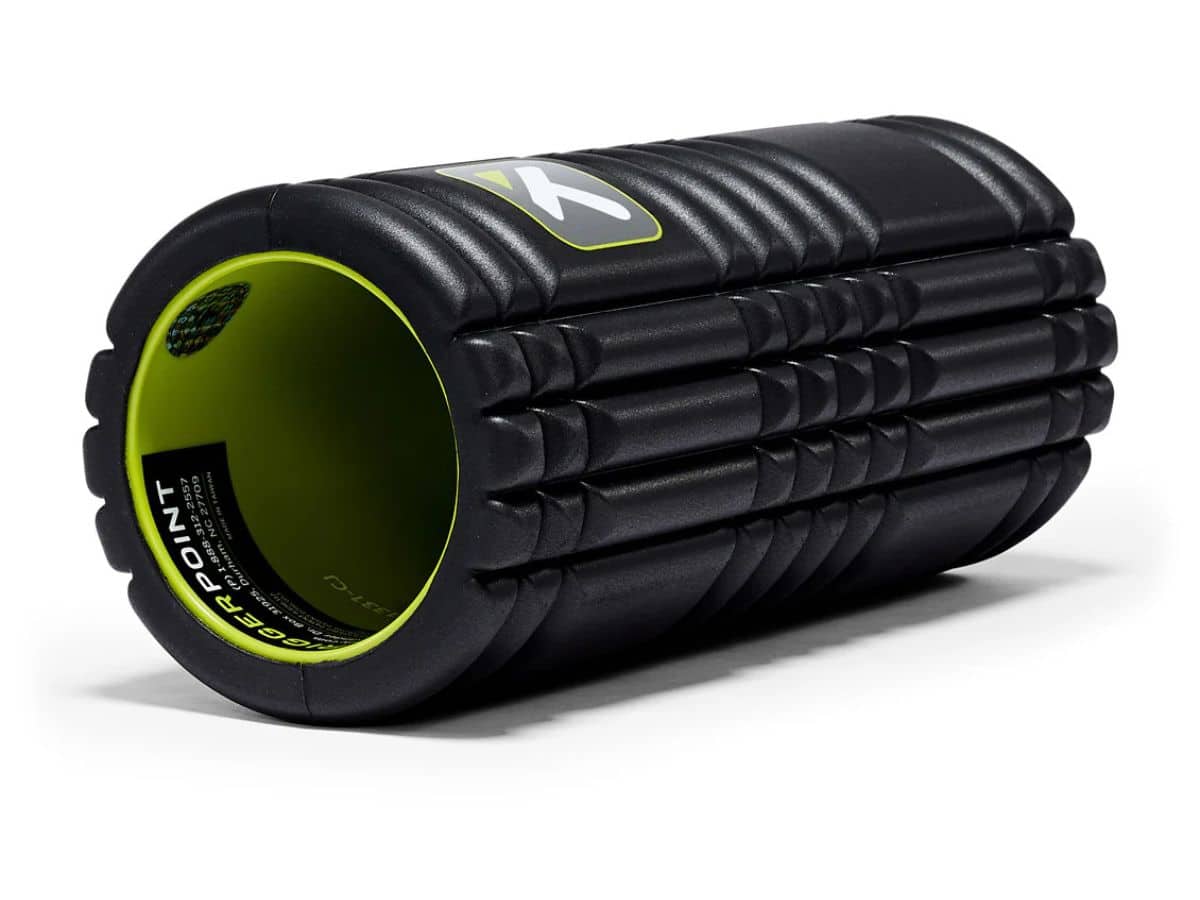
You don’t need a full cold plunge and infrared sauna to get the job done. The simple tools generally work best. A quality foam roller is perfect for addressing your entire posterior chain, which can lock up as you sit hunched over a keyboard all day long.
That’s the bare minimum you need, but if you can, investing in a compact percussion device like a massage gun is invaluable when it comes to maximizing fitness. The majority of them are super portable and compact too. Both tools will make up the foundation of recovery practice that will run you a fraction the cost of physiotherapy sessions will.
TriggerPoint Grid Foam Roller
- Price: AUD $95
- Weight capacity: 500kg
Amazon Basics Foam Roller
- Price: Approx AUD $12
- Weight capacity: Not listed
Renpho Mini Thermal Massage Gun
- Price: Approx AUD $85
- Speeds: 4 settings
Theragun Mini
- Price: AUD $344
- Speeds: 3 settings (1750, 2100, 2400 PPMs)

7. Tonal (Or Similar Minimalist Home Gym)
- Best for: Those wanting an all-in-one gym minus the footprint
- What you don’t need: A cable crossover tower, power rack, or any combo of floor-based machines.
There are very few total, all-in-one at-home gyms that can actually do it all: Total body training functionality, adequate resistance, minimal design, streamlined aesthetics, and a minimal footprint – the Tonal system is all of those. Tonal’s beautifully brilliant design mounts flush on any wall and it takes up roughly the same space as a large flat screen TV, while delivering up to 91 kilograms of digital resistance load.
The biggest difference between this one and other multi-gyms comes down to its space saving design. There’s no weight stacks, no cable systems, no bulk taking up half of your garage. When it’s not in use and folded up, it literally looks like it could pass for an aesthetic piece of art. When you are getting a workout in, its stout cable system arms allow you to hit every exercise you’ll need: squats, presses, flys, curls, rows, deadlifts, and more (plus, its AI system helps you track progress).
This one is definitely a significant investment and requires a monthly membership to truly crush your fitness goals. But, if you do love cable work and are a bit over the whole bands and dumbbell flow, this is the one to invest in.
Tonal 2 Home Gym
- Price: Approx USD $4295+ subscriptions (Australian availability will vary)
- Weight resistance: 91kg
Speediance Gym Monster 2
- Price: Approx AUD $5605
- Weight capacity: 100kg
3 Things People Waste Money On When Building A Home Gym
1. Oversized At-Home Multi-Gyms
While they certainly are eye-catching while you’re researching them, once you get them home, it can be an entirely different story. Assembly requires significant time and elbow grease, and then once it’s up and running, they can dominate an entire room. Based on what I’ve seen over the years, it’s not long after in which they become very expensive dust collectors.
2. Isolation Machines
Looking into single exercise machines is definitely not the way to go. Yes, that means things like leg curl/extension machines, preacher curl machines, and pec dec machines are best left to commercial gyms. Unless you’re setting up a warehouse to mimic Dwayne ‘The Rock’ Johnson’s workout regime, these are almost always overkill.
3. Cheap Smart Fitness Gadgets
Not all smart tech is the same, and when brands and products start introducing WiFi enabled capabilities on things like resistance bands, it’s almost never as good as they say they are. This doesn’t mean that all smart fitness gadgets are bad (like wearables) but things like AI-powered skipping ropes and training mirrors generally cost you more money than deliver results.
Minimalist Home Gym FAQs
You only need roughly two to three square metres of clear floor space. A quality minimalist setup relies on gear like adjustable dumbbells and folding walking pads that can be easily tucked under a bed or stored vertically in a closet when not in use.
Yes, over time. While upfront costs for premium adjustable dumbbells and a bench can range from AUD $1,500 to $2,000, it completely eliminates ongoing commercial gym fees, travel time, and hidden subscription costs, paying for itself within 12 to 18 months.
If you can only choose one, go with a high-quality set of adjustable dumbbells. Dumbbells offer superior versatility for precise, progressive muscle isolation, like chest presses and bicep curls, across a wider, customisable weight range. While kettlebells are unmatched for explosive, dynamic movements like swings and snatches, a single set of adjustable dumbbells ultimately takes up less floor space while unlocking a vastly larger library of traditional strength exercises.

















Comments
We love hearing from you. or to leave a comment.