

Updated:
Readtime: 8 min
Every product is carefully selected by our editors and experts. If you buy from a link, we may earn a commission. Learn more. For more information on how we test products, click here.
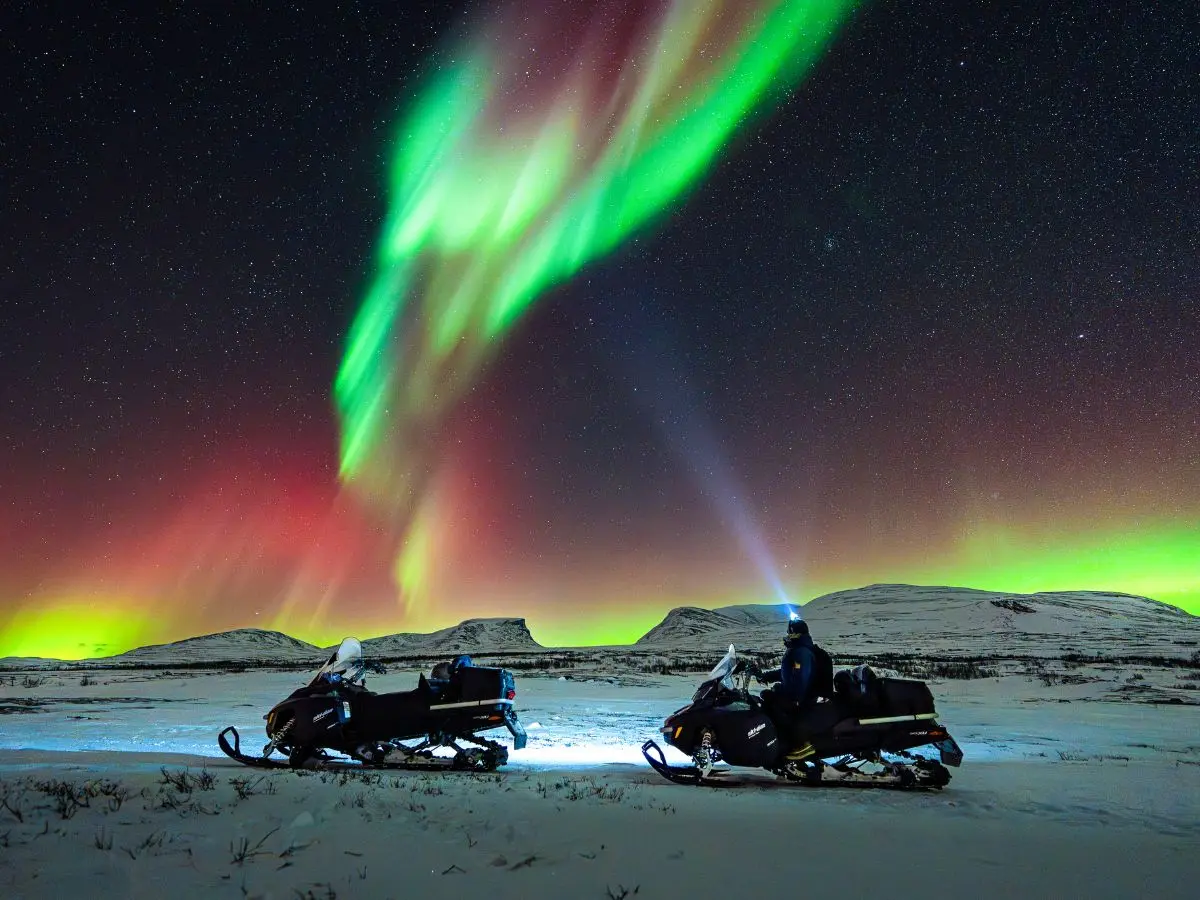
2026 to 2027 will mark one of the most powerful years of Aurora Borealis and Aurora Australis activity in the last 100 years, as the solar maximum cycle sends the sun’s plasma cascading towards our atmosphere. Man of Many’s intrepid Arctic reporter is there to tell what it feels like under the green goddess… and how to hunt them yourself.
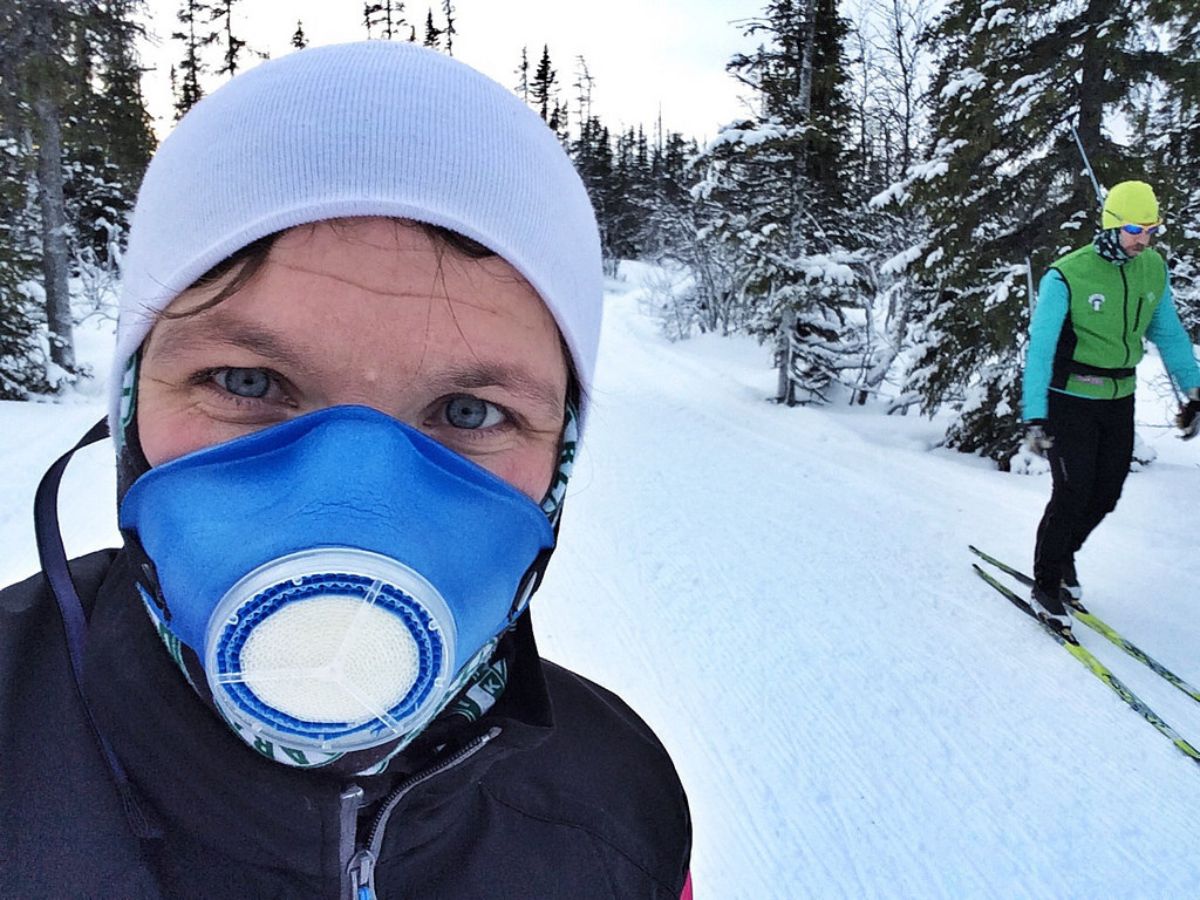
This far north, the air is so cold that breathing has a sharp bite to the lungs, nose hairs freeze and become needles in the nostrils, eyelashes get sealed in rime snow. I peer across the street and see someone pushing along on a sled with some kind of strange ventilator on their face. “What’s that for?” I ask my guide and he smiles and shrugs. “That’s a värmeväxlare,” he tells me nonchalantly, as if it’s the most self-evident thing in the world.
Noticing my confusion he gets slightly irritated and blurts out the use case. “You know, so your lungs don’t freeze up and you die!” He signals me to get on the dog sled that we’ll be taking and, for a split second, I consider asking for my värmeväxlare, my lung warmer, but he seems impatient and the huskies are baying at the dark, cold night in a moaning chorus. “Come on, she’s coming! We have to be on the mountain for the best views!” says the guide.
67.8558° N, 20.2253° E, 200km above the Arctic Circle. Kiruna, Sweden. Temperature -24 Celsius. Geographically, I know precisely where I am. So why do I keep saying, “where the f*** am I?”
‘Where’ is a very relevant question, because one would only find themselves on holiday in the very top of Arctic Europe in the dead of winter, when sunset is 1:30pm, when temperatures can drop to -40c, for a very specific reason. And that reason is often to see one of the greatest cosmic events our planet witnesses: the Aurora Borealis, aka the northern lights.
“This area, Abisko, is definitely one of the best places in the world to see northern lights. We have a special atmospheric condition called the Blue Hole which happens because of how the wind blows up the mountain Nuolja and creates this cloud free area. Norway and Finland don’t have that,” says Joel Svensson, one of the operators for Lights Over Lapland, the biggest tour operator for northern lights in Sweden.
“And winter tourism has been growing every year, and I think the reason we’re seeing this is because we have such a unique place. A lot of other tourists and destinations are just becoming bigger and bigger. Levi in Finland, for example, is purely a city for northern lights tourism. That’s not the Abisko philosophy,” Svensson says proudly of the small Swedish hamlet nestled against a giant massive national forest.
What causes Aurora Borealis and the Aurora Australis?
Now located, the timing is a very important aspect of this expedition. Aurora Australis and Aurora Borealis are a fairly common occurrence, this is a special time to say the least. Northern lights occur because of large eruptions on the sun that send out excited solar particles that interact with earth’s atmosphere and magnetic fields.
“Solar flares are sudden bursts of energetic light from active regions on the Sun. Sometimes they are followed by coronal mass ejections (CMEs). CMEs are clouds of plasma or energetic solar particles hurled into space at incredible speeds. However, CMEs have to be directed towards Earth to cause the northern lights. If Earth’s embedded magnetic field is south facing, then CMEs can lead to some epic auroras,” explains Icelandic astronomy expert Sævar Helgi.
CMEs are dictated by a solar cycle that runs on a roughly 11 year cycle. And, you guessed it, we’re right at the peak called the solar maximum. But not only are we in just such a cycle, but 2025–2026 is the peak phase of Solar Cycle 25, meaning a solar activity that is much higher than average, producing stronger and more frequent geomagnetic storms, and therefore aurora displays, than in typical years.
So for aurora hunters, wherever you reside, these are the key seasons to swaddle up and get out to see those lights as, after the next year, the predictability will start dropping exponentially.
Awaken your FOMO anxiety, this time you really do need to get to the party.
As we climb up the top ridge of the mountain and come to a glade in the ice cream cone like forest, we’re excited knowing that the we’re close, the two main indicators of aurora activity, KP and Bz, are trending strong.
“For beautiful lights to be seen, conditions have to be favourable. By that, I mean both solar wind and local cloud cover. We need clear or partly clear skies, as well as a solar wind with negative polarity, called Bz. When the solar wind has a negative Bz (points south), it links up with Earth’s magnetic field and beautiful magic happens. This can happen in the auroral oval even if activity is low, especially in the months closest to the equinoxes,” Helgi tells.
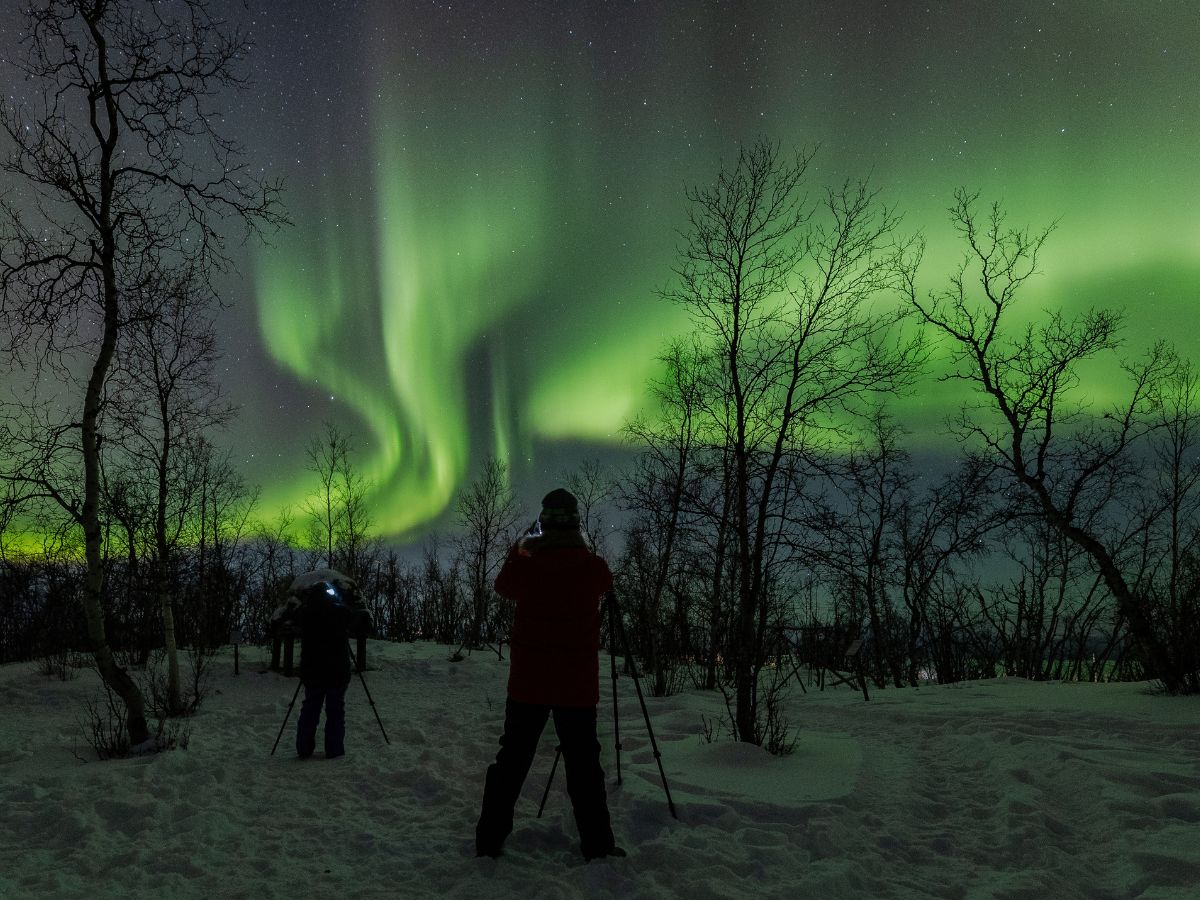
Our small group scans the stratosphere, looking for the faint green whisps that signal the beginnings of the Northern Light onslaught. The sky twinkles, the incredible clarity of sky without light pollution, some of the purest air on earth filling our lungs, we look with giddy smiles on our faces, ready to behold.
But then… nothing, we wait long minutes and there’s just… beautiful stars but nothing else. Some of our group starts to shuffle back to the dogsled to get another blanket, starting to accept the discouragement.
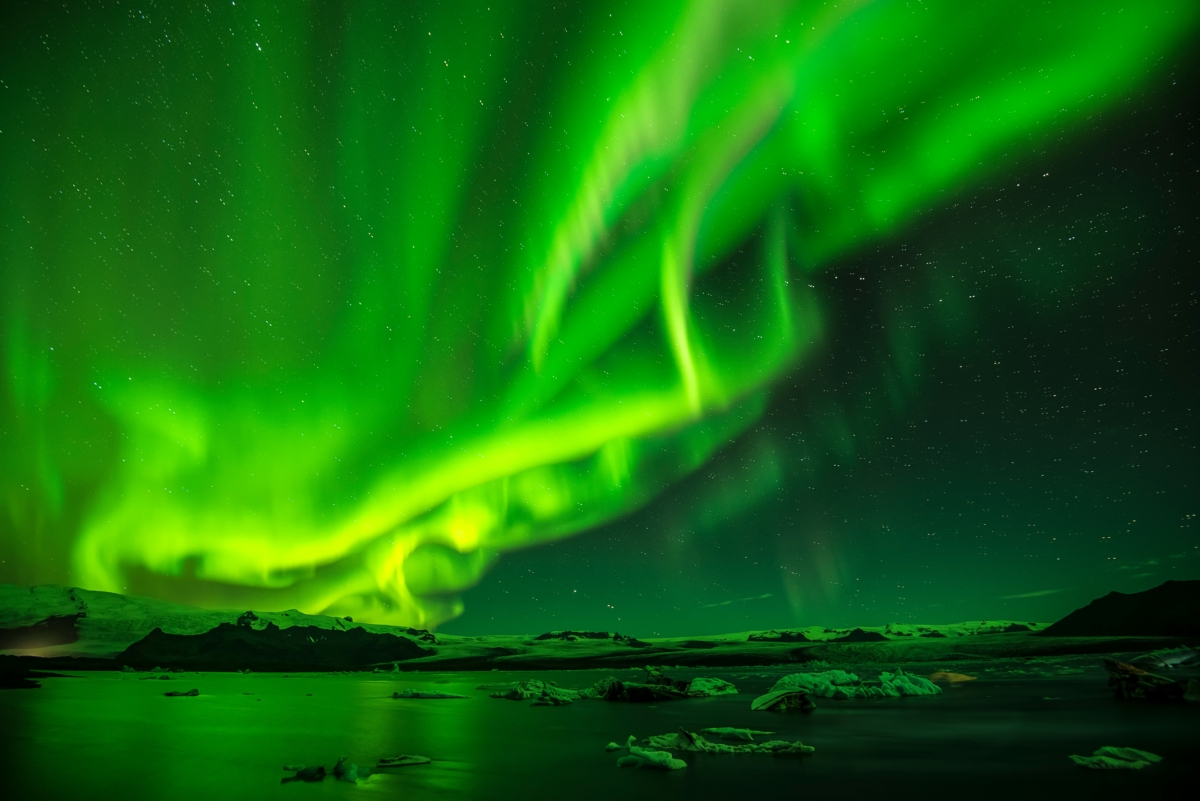
“Look!” someone shouts and we reel around. And sure enough, a pillar of green is forming, right before our eyes. It splinters and starts fanning; in fact it starts to flutter and dance. The colour becomes purple and red, the various elements of oxygen and nitrogen interacting at different altitudes and chemistries.
It grows and incredibly it fills the sky with mad, radiating columns of light like leaving Asgard on the Bitfröst. Our jaws drop, a litany of oohs and ahhs emitted in unison as we experience this celestial opera. It verges on a religious experience.
“I still remember so fondly that one of our guides, who has been, I think, probably 15 or 20 years on excursions, just stopped her snow mobile, got off, and she just looked at it and… I’m not gonna say burst out in tears, but she got utterly overwhelmed. That northern light got to her in some specific way, even a veteran hunter like her,” says Svensson of how the phenomenon can be one of the most overwhelming natural, existential experiences a person can have.
We stay awed, looking up at the emerald show, visitors from all over Europe and even a couple from Australia are speechless, almost breathless. Though the trip was long, the cold difficult, it truly becomes a phenomenal accomplishment to witness such majestic mysteries. And with the solar maximum upon us, more shall come and then, like tonight’s show, fade and disappear.
The winter months: May to September. Specifically around the equinoxes (March and September) when geomagnetic activity is often higher.
Favourite spots include Goat Bluff, Carlton Beach, Tinderbox, the summit of kunanyi / Mount Wellington, Highland Lakes and Dove Lake at Cradle Mountain.
For Sweden, tour operators like Lights over Lapland or Lights of Vikings offer a 90% chance of experiencing the northern lights
For Aurora Australis, you could easily spend $1500-$2000 on a trip to Tasmania or southern New Zealand. At the higher end, you could spend at least $15,000 on a the full antarctic expedition, and there are plenty of options in between.
For Aurora Borealis, a week in Alaska will cost you $USD1500-$2000, or at the other end of the spectrum, you could spend anywhere up to $USD 12,000 to stay in glass igloos and watch the Northern Lights all night long.
Technically, very little. Both are caused by solar wind (charged particles) hitting the Earth’s magnetic field. The only major difference is geography. The Aurora Borealis (Northern Lights) occurs near the North Pole, while the Aurora Australis (Southern Lights) occurs near the South Pole. They are often “conjugate” phenomena, meaning they can appear as mirror images of each other at both poles simultaneously.
The colours depend on which gas is being “excited” by solar particles and at what altitude:
Green: The most common color, caused by oxygen atoms at lower altitudes (approx. 100–150 km).
Red: Caused by oxygen at very high altitudes (above 200 km). This is rarer and often seen during intense solar storms.
Blue/Purple: Caused by nitrogen; these colors are typically seen at the lower edges of the auroral curtains.




















Comments
We love hearing from you. or to leave a comment.