

Updated:
Readtime: 8 min
Every product is carefully selected by our editors and experts. If you buy from a link, we may earn a commission. Learn more. For more information on how we test products, click here.
There was a time when being unreachable was normal. If you missed someone, you left a message and rang back later. If they didn’t answer, you assumed they were busy, driving, or out living their life. Silence didn’t mean anything. It just meant “not now”.
These days, silence feels heavier. A delayed reply can read as avoidance. A missed call needs explaining. Even a message left on “read” carries weight. Somewhere along the line, availability stopped being a courtesy and started feeling like a responsibility.
That shift didn’t happen because smartphones are evil. In plenty of ways, they made life better. Teachers used to tell us we wouldn’t always have a calculator in our pockets. Now we’ve got several, along with a map, a camera, a music library, and more information than any generation before us. Smartphones solved real problems. They still do. It’s about what changed once constant-contact became the default, and why so many of us are looking to switch off.
Why Your Phone Is So Hard To Ignore
For a long time, the conversation around smartphones lived in the realm of vibes. We feel distracted. We feel tired. We feel like our attention is thinner than it used to be. Over the past decade, research has started putting numbers and language around those feelings.
One of the more unsettling findings came out of a study from the University of Texas at Austin that looked at something deceptively simple: what happens when your phone is nearby, even if you’re not using it. Participants were asked to complete tasks that required concentration. Some had their phones on the desk. Others kept them in a bag or pocket. A third group left them in another room. All phones were silent.
The result was clear. The closer the phone was, the worse people performed. Not because it buzzed. Not because anyone checked it. Just because it was there.
The explanation is both obvious and uncomfortable. Part of your brain is quietly working to ignore the phone. You’re not thinking about it consciously, but you’re still spending mental energy keeping it out of focus. That effort comes from the same limited pool you use to think, reason, and stay on task.
In other words, attention isn’t just being distracted. It’s being taxed.
That matters because we’re already living in an era obsessed with optimisation. We’re told to do more in less time, stack habits, squeeze productivity out of the margins. Computers, smartphones, and now AI tools all promise to help us reclaim hours, cut busywork, and move faster. And yet, the mental load just keeps creeping up.
We’re expected to claw back time that doesn’t really exist, while still making time for everything else.
Downtime Doesn’t Feel Like Downtime Anymore
Most of us recognise this in small, familiar moments. You sit down to write, work, or read with your phone face down beside you. Nothing happens. No alerts. No messages. Still, your focus feels thinner than it should. You haven’t checked anything, but you already feel a step behind, like something might be waiting for you the moment you look away.
That’s the attention tax playing out in real life.
It also shows up in how we relax. “Second-screen viewing”, or watching TV while scrolling on your phone, has been around almost as long as smartphones themselves. You could argue we’ve always done this, with a book or newspaper competing with the TV or radio.
According to global data from YouGov, a majority of people now say they use their mobile phone while watching TV either very or fairly often, with Australia sitting at the higher end of the scale. What used to be downtime has quietly become another moment of divided focus, where even passive activities carry a background layer of checking, reacting, and half-engaging with something else.
Very little time is truly single-purpose anymore.
When Connection Starts To Feel Like Control
Focus, though, is only part of the story. The same research thread starts to look darker when you follow it into wellbeing. Research from Deakin University has linked problematic smartphone use with lower wellbeing, particularly when phones are used habitually to pass the time, escape boredom, or doomscroll.
People who fall into those patterns report feeling less in control and more emotionally flat in their day-to-day lives. It’s that creeping sense that we’re not entirely in control of how we spend our free time.
Constant connection doesn’t just mean messages from friends and family. It means a permanent drip-feed of news, outrage, and comparison. For some people, it also means harassment or social pressure that doesn’t switch off when they leave school or work. The phone stops being a tool you visit and starts to feel like a giant anchor in your pocket.
The Performance of Being Approachable
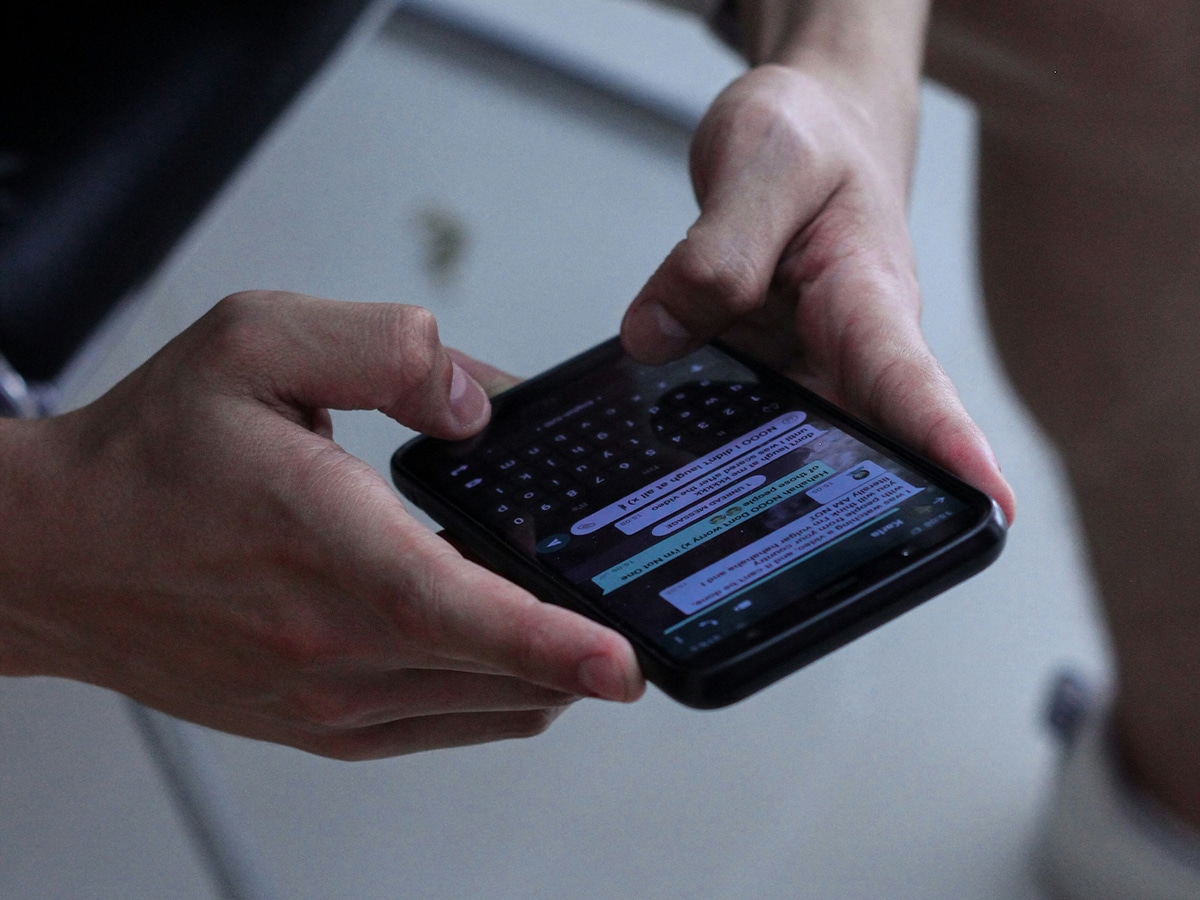
At the same time, smartphones have changed how we communicate in quieter, stranger ways. Messages aren’t just sent anymore; they’re calibrated. A full stop can sound angry. A “lol” or “haha” get added not because something is funny, but to soften tone and signal warmth.
We’re constantly performing emotional translation in text, editing messages to avoid sounding too blunt, too serious, or too distant. It’s subtle, but it’s another layer of cognitive and social labour sitting on top of everyday interaction.
All of this feeds into a bigger shift that’s easy to miss because it happened gradually. Mobile phones made constant contact possible. Smartphones made it expected.
Response time became a signal. Reply quickly and you’re attentive. Take too long and you’re rude, disinterested, or unprofessional. Or it flips the other way entirely, and suddenly you’re trying too hard.
It Doesn’t Stop at Work
When Australia introduced new “right to disconnect” laws in 2024, it wasn’t symbolic. Amendments to the Fair Work Act now give employees the right to refuse unreasonable after-hours contact, allowing them to leave work calls, texts and emails unanswered outside their ordinary hours unless there’s a genuine need.
The change followed growing evidence that many Australians felt pressured to stay available well beyond the workday, with after-hours communication linked to emotional exhaustion and poorer health. The laws don’t ban contact outright, but they do reset the default, making constant availability a choice rather than an expectation.
When Tools Stop Working in Our Favour
At this point, it’s tempting to treat everything we’ve described as accidental. A side effect of powerful tools used a little too often. But research from the Australian National University suggests that’s giving modern smartphones (and their manufacturers) too much benefit of the doubt.
The researchers argue that many apps are designed to compete aggressively for attention, often serving the interests of the companies behind them more faithfully than the goals of their users. Endless doomscrolling. Algorithmic feeds that keep you locked in. Outrage-driven content. They’re not bugs. They’re intended features that reward time spent, emotional reaction, and habitual engagement.
Some of that design is deliberate. Research from the Institute for Healthcare Policy & Innovation at the University of Michigan has warned that many social media platforms borrow techniques from gambling, using variable rewards and endless scrolling to create psychological cravings. The same research links these systems to phenomena like “phantom notifications”, where users feel their phone vibrate even when it hasn’t.
How Calm Tech Helps People Switch Off
The rise of minimalist phones, low-stimulus devices, and notification-resistant tools isn’t about rejecting technology or chasing some pre-digital ideal. It’s a response to a world where attention is constantly under negotiation. If presence costs focus, remove presence. If constant choice exhausts, reduce choice. If availability erodes control, reintroduce boundaries through hardware.
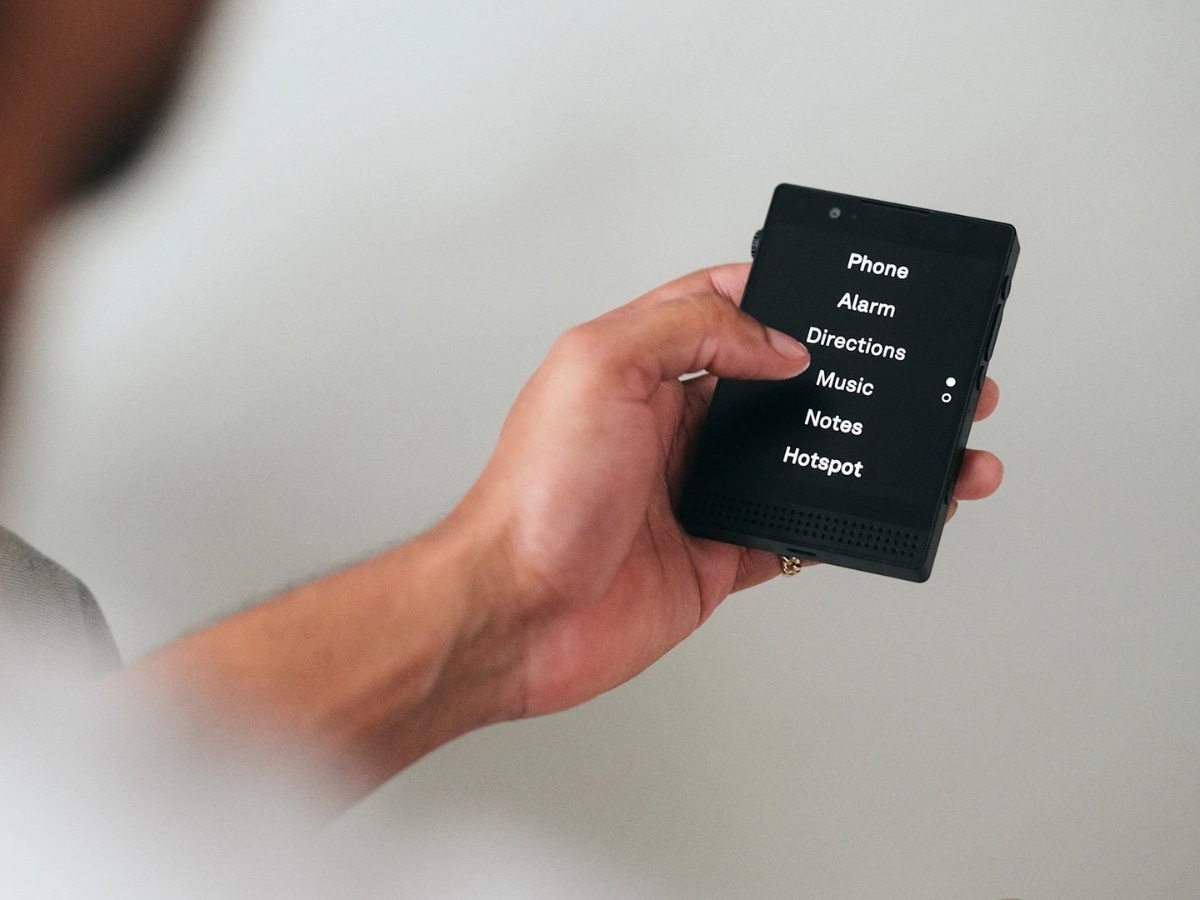
Take the Light Phone. It’s often described as a “dumb phone”, but that undersells the intent. The Light Phone isn’t about going backwards. It still handles calls, messages, maps, music, and a handful of essential tools. What it deliberately avoids is everything designed to keep you scrolling. No social feeds. No app store rabbit holes. No background noise competing for your attention. It’s a device built around the idea that technology should support a few clear functions, then get out of the way.
These products don’t promise discipline. They remove the need to exercise it constantly.
That doesn’t make them frictionless. In fact, the friction is often the point. Switching devices means losing ecosystem conveniences. Workflows change. Some things get harder. You might miss features you took for granted. But there’s a growing sense that not all friction is bad.
For a long time, friction meant inconvenience. Now, for some people, it means relief. Most people don’t want less technology. They want a better relationship with it. A relationship in which control flows in the right direction.
The most interesting thing about tech designed to help us disconnect isn’t what it removes. It’s what it gives back. A bit of quiet. A dash of agency. The freedom to be unreachable without having to explain why.




























Comments
We love hearing from you. or to leave a comment.