

Updated:
Readtime: 6 min
Every product is carefully selected by our editors and experts. If you buy from a link, we may earn a commission. Learn more. For more information on how we test products, click here.
- Googlebook arrives in Australia on 5 October, with prices starting at AUD$2,299 across models from HP, Lenovo, Dell and ASUS.
- The cheapest Googlebook costs AUD$1,250 more than the entry-level MacBook Neo and AUD$200 more than the 13-inch MacBook Air.
- Every launch model starts with at least 16GB of RAM, with Google positioning the range around premium hardware, Android integration and Gemini Intelligence.
When Google first announced Googlebook earlier this year, the bigger story wasn’t another laptop launch, but an attempt to leave behind the less-than-stellar reputation Chromebooks had earned and build something Android users might actually want to own. And now we know just how much that kind of ambition costs.
The first four Googlebooks from ASUS, Dell, HP and Lenovo will hit Australian shelves on 5 October, with prices starting at AUD$2,299. Acer will follow suit in a separate November launch with its own Googlebook 14.
That puts this new Google laptop category well above the more affordable Chromebook price bracket and the entry-level MacBook Air. With all the talk of Google taking on Apple following the release of the MacBook Neo, it seems Google may be setting its sights a little higher.
 1/9
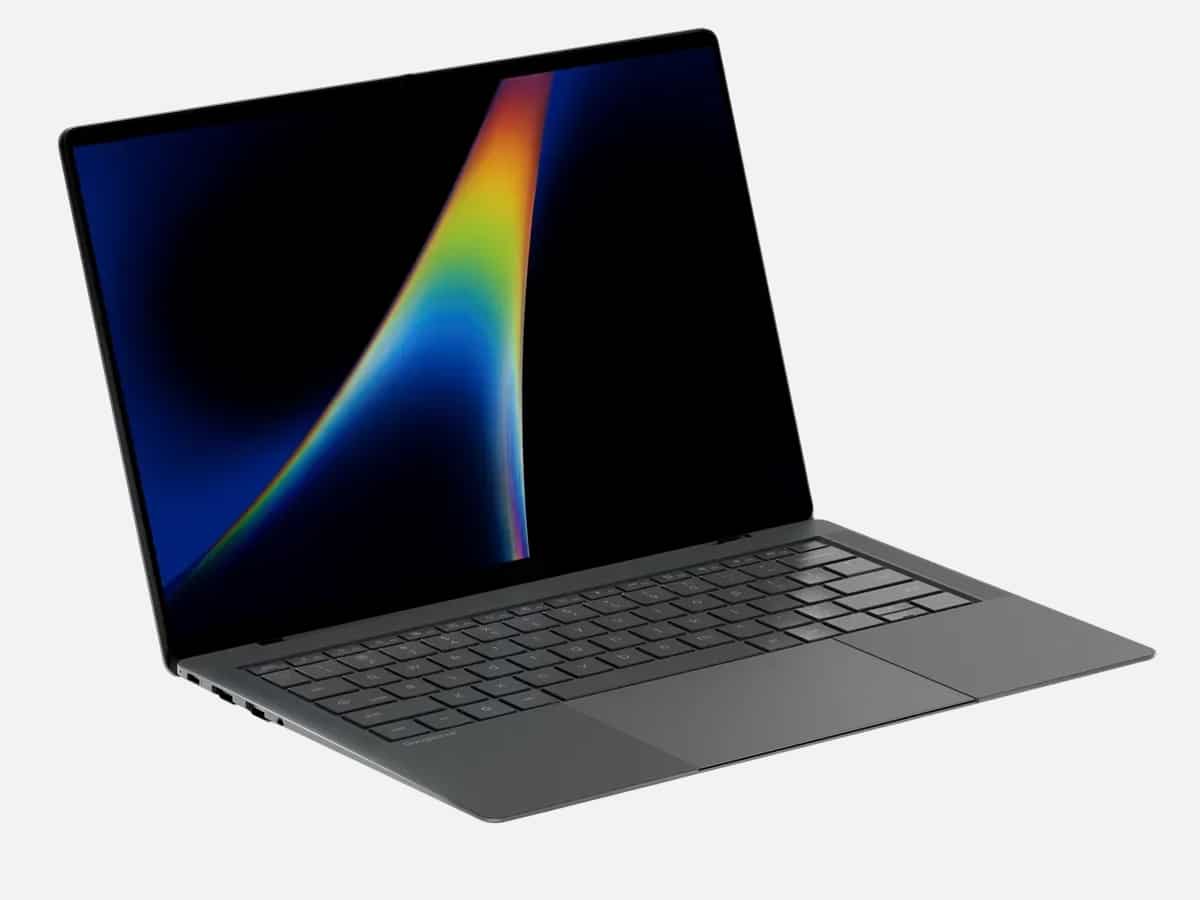
1/9Googlebook Australian Price and Specs Comparison
| Model | Starting Price | Processor | Display | RAM | Storage | Battery | Weight |
|---|---|---|---|---|---|---|---|
| HP Googlebook 14 | AUD$2,299 | Snapdragon X Elite | 14-inch 2.8K OLED touchscreen | 16GB or 32GB | 512GB | Up to 19 hours | 1.22kg |
| Lenovo Googlebook 15 | AUD$2,299 | Intel Core Ultra 5 | 15.3-inch 2.8K OLED touchscreen | 16GB | 256GB or 512GB | Up to 13 hours | 1.29kg |
| Dell XPS Googlebook | AUD$2,399 | Snapdragon X Elite | 13.4-inch 2.5K LCD touchscreen | 16GB or 32GB | 512GB | Up to 18 hours | 1.09kg |
| ASUS Googlebook 14 | AUD$2,799 | Intel Core Ultra 5 or Ultra 7 | 14-inch 3K OLED touchscreen | 16GB | 512GB | Up to 16 hours | 1.00kg |
The Australian Googlebook lineup at least has the hardware to justify its premium prices. HP’s 19-hour battery claim makes it the obvious choice if you spend most of the day away from a charger, while ASUS trades some endurance for the lightest chassis and a sharper 3K OLED display. Dell goes smaller again with the most compact footprint of the four, though it’s also the only model using an LCD panel instead of OLED. Lenovo sits at the other end of the scale, giving you the largest display for the same AUD$2,299 starting price as HP, but with the shortest battery life on paper. And if you don’t need the extra storage, you can choose a 256GB drive instead.
Across the board, though, these are much more serious machines than the Chromebook name might suggest. Every model starts with at least 16GB of RAM, most start with 512GB of storage, and you’re choosing between Snapdragon X Elite or Intel Core Ultra hardware rather than the lower-powered processors traditionally associated with cheaper Chromebooks.
Acer is the exception to the initial four-model Australian launch, with its convertible Googlebook 14 set to arrive down under in November, starting at AUD$2,599.
 1/3
1/3Googlebook Isn’t Cheap, Especially Next to a MacBook
If you’re looking purely at the cost of these new machines, then Googlebook has already lost the fight against Apple.
The Apple MacBook Neo starts at AUD$1,049 for the 256GB model, or AUD$1,249 for the 512GB version with Touch ID. And both are stuck at only 8GB of RAM. Even the 13-inch MacBook Air costs less than a brand-new Googlebook at AUD$2,099, while the larger 15-inch model comes in at AUD$2,499, which is only AUD$200 more.
That means the cheapest Googlebook costs AUD$1,250 more than an entry-level MacBook Neo and AUD$200 more than a 13-inch MacBook Air. Even with the recent price bumps to Apple Macs and iPads, both the MacBook Neo and 13-inch MacBook Air still undercut Google’s starting price.
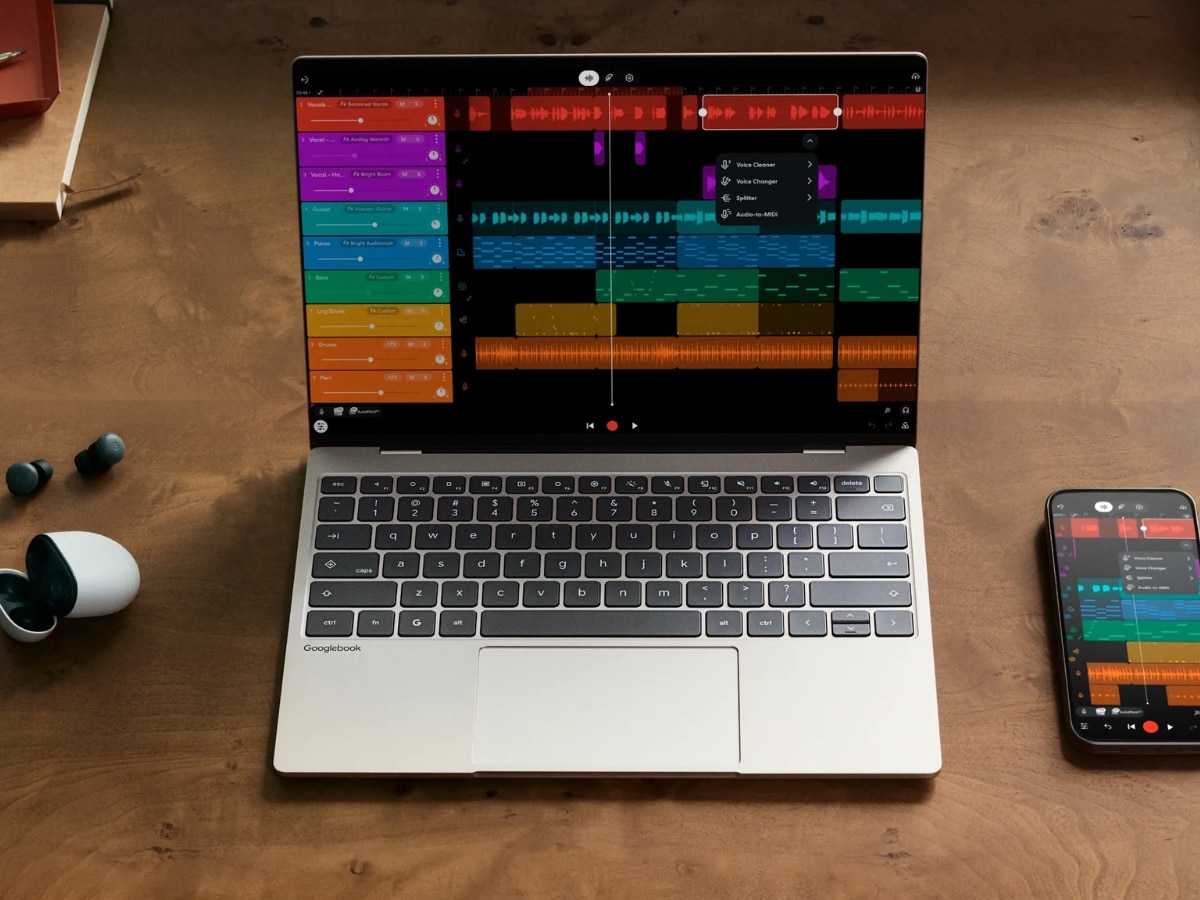
But it’s not exactly a one-to-one comparison. A Googlebook starts with 16GB of RAM across the range and, in most cases, 512GB of storage, while also leaning heavily on OLED touchscreens, Intel Core Ultra or Snapdragon X Elite processors and premium materials.
So these aren’t cheap Chromebooks with nicer lids. But convincing someone already looking at a MacBook Air to spend more and switch over to what Google’s version does differently is another question.
The Chromebook name carries baggage. For years, the category was associated with simple, affordable machines designed to get you online without asking much in return. Googlebook is now asking Australians to pay proper premium-laptop prices, which means the hardware and software experience needs to justify the jump.
What $2,299 Actually Gets You
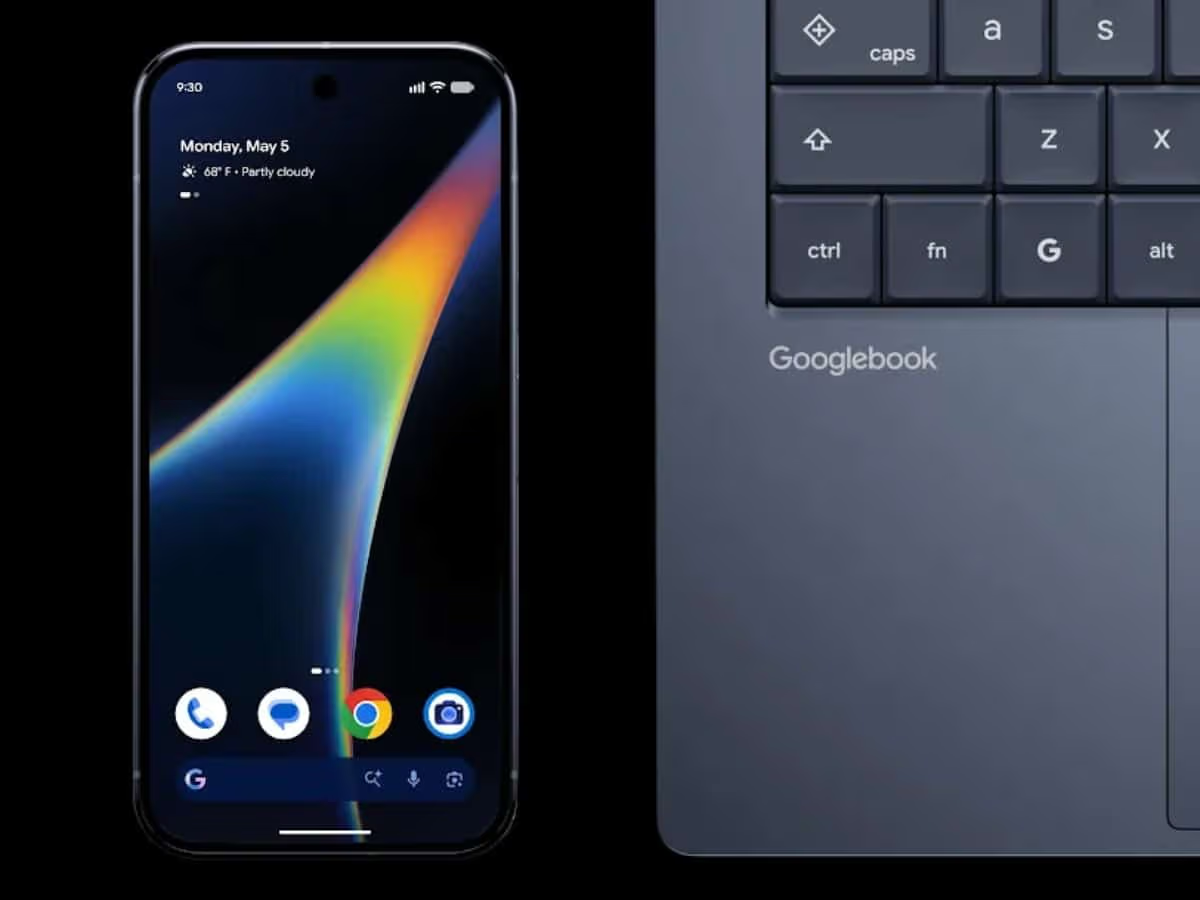
Visually, the glowbar makes identifying a Googlebook as quick as a glance, and those rainbow colours also tie the hardware into the software experience, lighting up for things like battery status and Gemini activity.
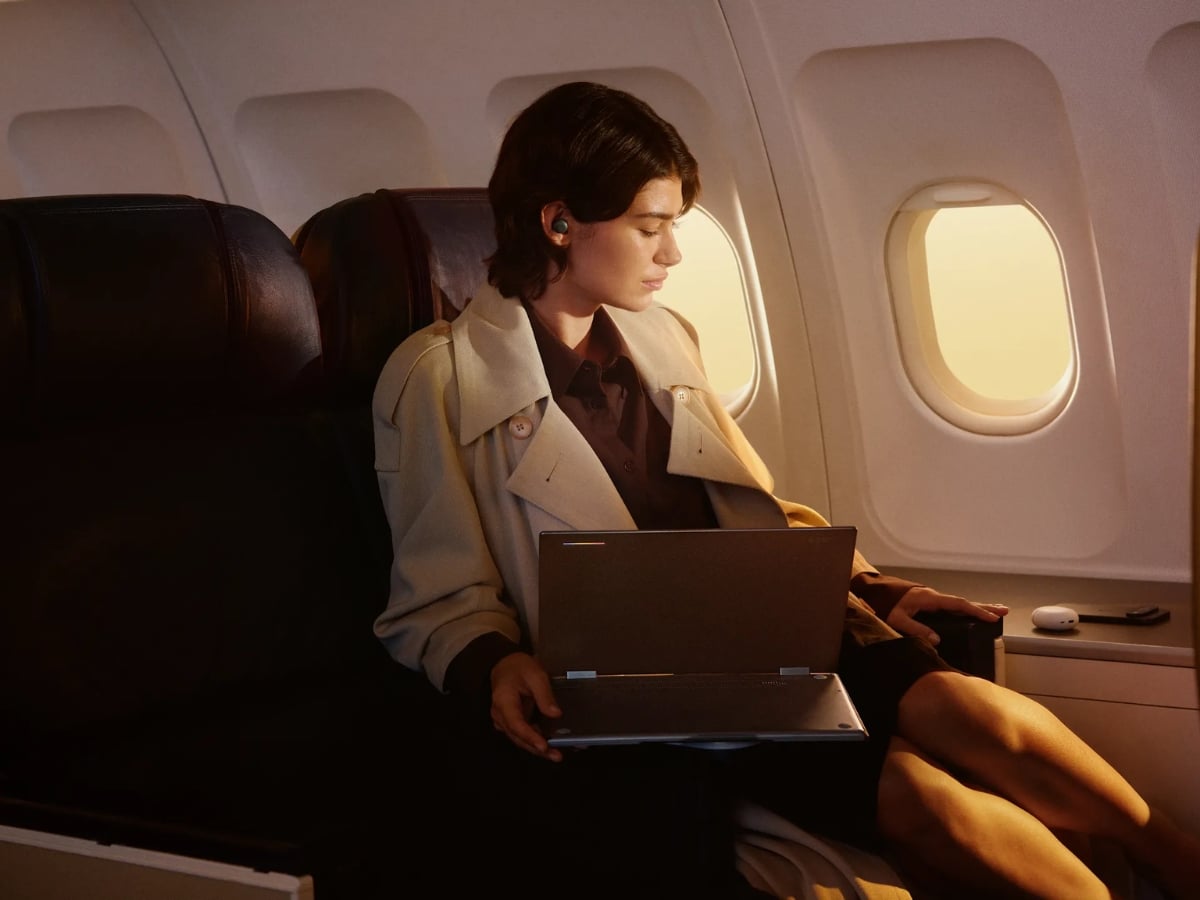
Underneath that, every Googlebook is built on Android technology with desktop foundations from ChromeOS, with features built around much tighter integration with Android phones. Gemini Intelligence is also baked into the experience rather than treated as a separate chatbot.
Eligible buyers also receive 12 months of Google AI Pro with 5TB of cloud storage, while Googlebook OS is promised regular feature drops and updates for up to 10 years from launch.
At AUD$2,299 and up, I don’t think Googlebook is trying to be the cheap laptop in the room anymore. The specs help explain why they cost this much, but Google now has to prove that Android integration and Gemini Intelligence are enough to make people forget what they used to expect a Google laptop to cost.























Comments
We love hearing from you. or to leave a comment.