


Updated:
Readtime: 7 min
Every product is carefully selected by our editors and experts. If you buy from a link, we may earn a commission. Learn more. For more information on how we test products, click here.
- Samsung unveiled its Gemini-powered intelligent eyewear at Galaxy Unpacked 2026 in London
- Developed with Google, Gentle Monster and Warby Parker, the glasses support live translation, navigation, message summaries, note capture and POV sharing
- Pricing and Australian availability remain unconfirmed, while the camera-led design raises unresolved questions around usefulness, consent and privacy
Convincing the population to put a giant screen in their pockets with the entirety of the world’s knowledge was an easy task. Some of us even like having them on our wrists.
It’s an ambitious leap – and while smart eyewear is still finding its mainstream footing, Samsung’s first move is a clever one: making the hardware practically invisible. By blending high-end frame design with discreet AI, the company is tackling the category’s biggest hurdle head-on.
Unveiled at Galaxy Unpacked 2026 in London alongside Samsung’s three new foldable smartphones, the company’s new intelligent eyewear was developed with Google, Gentle Monster and Warby Parker. The result is a pair of slim, conventional-looking frames powered by Android XR and Gemini, with none of the bulky headset heft that usually accompanies augmented-reality hardware.
The design is convincing. The hardware is impressive. The need is still an open question.

What Can Samsung’s Gemini AI Smart Glasses Actually Do?
Samsung says the glasses create a new point of interaction by bringing personalised AI assistance into everyday moments. A built-in camera provides Gemini with visual context, while the Snapdragon AR1 Gen 1 platform handles AI processing, connectivity and power management inside the frame.
The experience combines audio, camera context and connected interactions rather than a visual display across the lenses, like JARVIS from Iron Man. It does have gesture controls, but Samsung says those depend on connected devices such as a Galaxy Watch.
“As agentic AI reshapes mobile experiences, the next step is to make those experiences more intuitive and responsive to each user’s context,” said Won-Joon Choi, a Chief Operating Officer at Samsung.
The glasses can summarise long messages, read key information aloud, support live translation and provide navigation without forcing the wearer to stop and check another screen. They can also capture whiteboards or meeting discussions, saving you from awkwardly snapping a photo before you leave the presentation. The glasses can then organise the key points in Samsung Notes or share the wearer’s point of view during a call.
While questions around daily habits remain, the real-world application here is genuinely exciting. Live translation during overseas travel removes immediate friction, while hands-free POV sharing opens up huge potential for remote work and technical guidance.
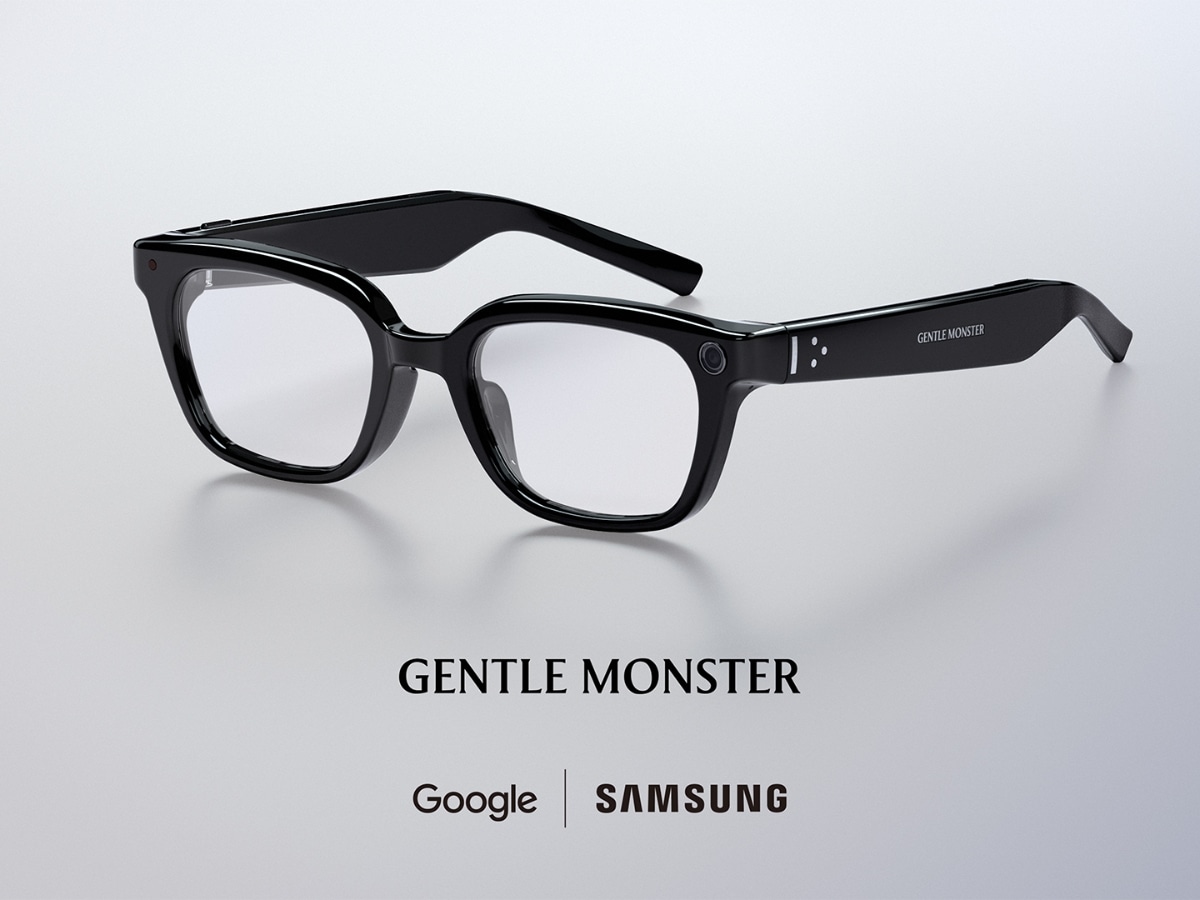
Stealth Tech: How Gentle Monster & Warby Parker Hid the Hardware
Historically, smart glasses have struggled with form factor – often looking more like bulky tech prototypes than everyday accessories.
Much like Meta did with Ray-Ban, Samsung has at least tried to avoid that by working with Gentle Monster and Warby Parker, giving each brand its own design rather than forcing the hardware into one generic frame.
The Gentle Monster edition comes in black, with a straight upper rim and softly rounded lower edges. It is the sharper and more fashion-led of the two designs. Warby Parker’s version uses a rich brown frame with a slightly upswept brow line, giving it a more conventional shape that should sit more comfortably in everyday settings.
But when you’re wearing that much tech, you do have to pay attention to how it sits. Samsung says the development process focused on where the frames make contact with the forehead and ears, with the fit adjusted separately for each model.
They do also mention “durability and reliable performance”, but we won’t know how tough these things are until they’re released.
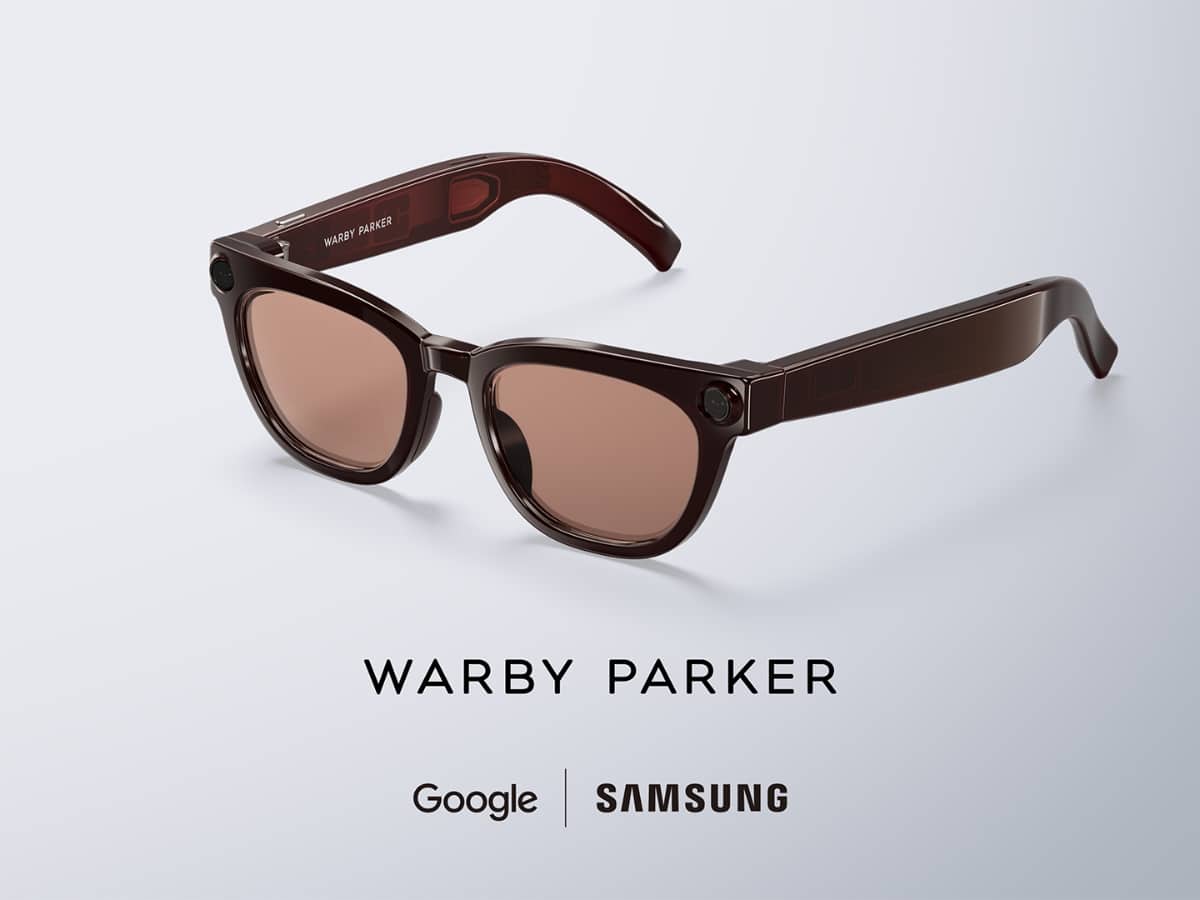
Samsung Intelligent Eyewear: Key Specs & Hardware Breakdown
- Platform & OS: Android XR with built-in Google Gemini
- Processor: Qualcomm Snapdragon AR1 Gen 1
- Battery Life: Up to 9 hours (charging case provides up to 7 additional full charges)
- Camera & Sensors: Eye-level camera for Gemini visual context, POV live-sharing & photo capture (with privacy LED tally light)
- Audio & Display: Directional open-ear speakers (No in-lens visual display)
- Controls: Voice commands, frame touch controls & connected Galaxy Watch gesture support
- Design Partners: Gentle Monster (statement black frame) & Warby Parker (classic brown frame)
- Australian Availability & Price: Pricing TBC (First rollout expected in US & South Korea)
Convenience vs Necessity: Do We Really Need AI Eyewear?
Just take a moment to think about what Samsung is packing into those frames. It’s technically impressive, even if the use-case for the average punter remains slightly opaque.
Which brings us to the larger question: what do these glasses solve better than the phone, watch and earbuds people already own?
“Google and Samsung have a shared vision to bring helpful and context-aware intelligence into everyday life,” said Sameer Samat, President of Android Ecosystem at Google. “Built on the Android XR platform, the intelligent eyewear blends world-class designs with Gemini’s advanced assistance that naturally responds to what you see, delivering all-day, hands-free help.”
Message summaries, navigation and voice assistance are hardly new. Long-pressing a pair of earbuds, flicking a wrist or saying “Hey, Google” already covers much of the same ground. Samsung’s eyewear may make those interactions more immediate, but convenience alone doesn’t automatically make another charged, connected device necessary.
Speaking of which, battery life is rated at up to nine hours, while the charging case provides up to seven additional full charges.
Nine hours may cover a working day, but it also means another device that needs to return to a charging case if it is expected to mediate the rest of your life. Samsung says the glasses will help users understand what’s around them while staying engaged in the moment.
The company isn’t alone in trying to pull AI out of the phone. OpenAI is reportedly developing a screen-free home speaker built around persistent context, while Samsung wants Gemini following users through work, travel and public life. Meta’s smart glasses are doing the same, with Kylie Jenner proudly showing them off on her Instagram. All three depend on AI knowing more about where people are, what they are doing and when it should intervene.
That might prove useful. It also asks for a lot of trust.
The Camera Dilemma: Privacy, Tally Lights, and Consent
The built-in camera is what separates these glasses from a pair of wireless earbuds with extra steps. Samsung says clear controls and safeguards will support responsible use, and early previews have revealed an LED recording indicator or tally light. Plus, the glasses will stop recording if they detect that they’re no longer being worn.
Samsung also notes that these functions may vary depending on the app, market, service and local laws. So how these localised privacy features roll out across different regions – including regulatory frameworks in Australia – will be key to building consumer trust.
The more context Gemini gains, the more useful Samsung wants the glasses to become. The trade-off is that the device may need greater access to what the wearer sees, hears and does throughout the day.
Samsung AI Smart Glasses Price & Australia Release Date
Samsung has not announced pricing or confirmed an Australian release, with the first launch markets expected to include the US and South Korea. Whether they land locally in the first wave or follow shortly after, watching how users integrate Gemini’s real-time context into daily life will be the true test of whether smart eyewear can finally cross into the mainstream.

























Comments
We love hearing from you. or to leave a comment.