


Updated:
Readtime: 12 min
Every product is carefully selected by our editors and experts. If you buy from a link, we may earn a commission. Learn more. For more information on how we test products, click here.
The history of the Rolex Cosmograph Daytona is a bit like that of Rolex itself. It blends desirability, precision, and mastery to create one of the most popular watches on the planet. That’s not to suggest the See more in watches isn’t worthy of hype. Rather, the hype is now part of its legacy. So, too, is an enduring connection to motorsport, a superlative design language, world-class engineering, and an evergreen shout-out from Paul Newman.
The “Paul Newman effect” is of particular importance as it’s arguably what took the Daytona from classic chronograph – ahem, Cosmograph – to horological juggernaut, the kind of which continues to fetch eye-watering prices on the secondhand market. In fact, one of Newman’s own vintage Daytonas became the most expensive Rolex ever auctioned, selling for $17.8 million in 2017 (a record it holds to this day).
Of course, there’s far more to the Rolex Daytona than a ringing celebrity endorsement that echoes through time. Let’s explore the legendary model from its proto-origins to its latest variations. Here’s a complete history of the mighty Rolex Daytona.
The Pre-Daytona Years
As early as the 1920s, Rolex founder Hans Wilsdorf was using cutting-edge mechanics, waterproof Oyster cases, and extreme endurance tests to build upon the story of his brand. These themes would continue over the following decades, leading to small-batch chronographs that pushed the boundaries of performance and publicity alike.
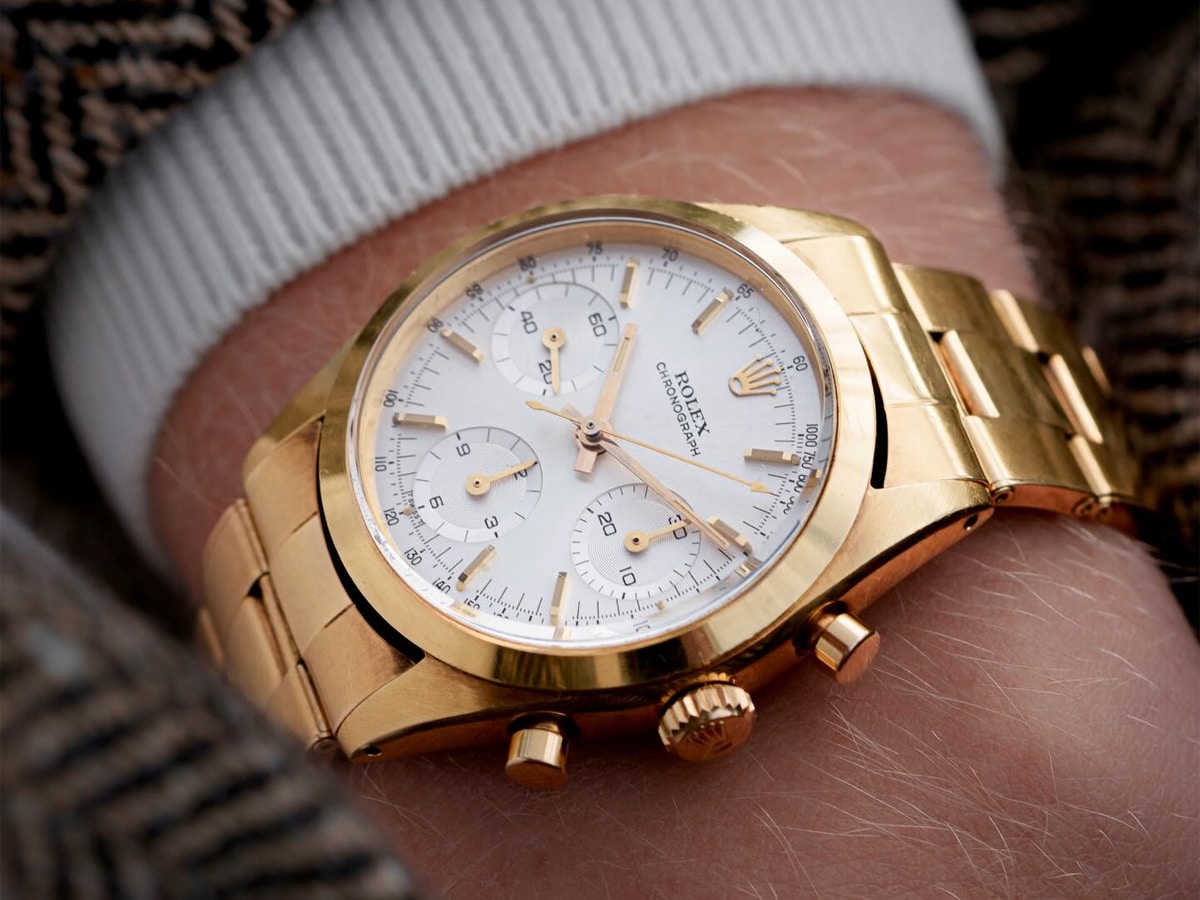
In the 1950s, Rolex laid the early groundwork for the Daytona by introducing the triple-register displays that would later become emblematic of the model’s design language. Subsequent releases blazed a trail to the early 1960s and the release of ref. 6238, a racing chronograph that featured a polished bezel, pump pushers, and an inner tachymeter scale. The tachymeter scale was especially important for professional drivers, as it could track average speeds over an elapsed time.
The ingredients were there, but the recipe wasn’t right just yet. With an update to the case design and a tweak to a single digit, the origins of a living legend were born.
Launch of the Rolex Cosmograph: Ref. 6239
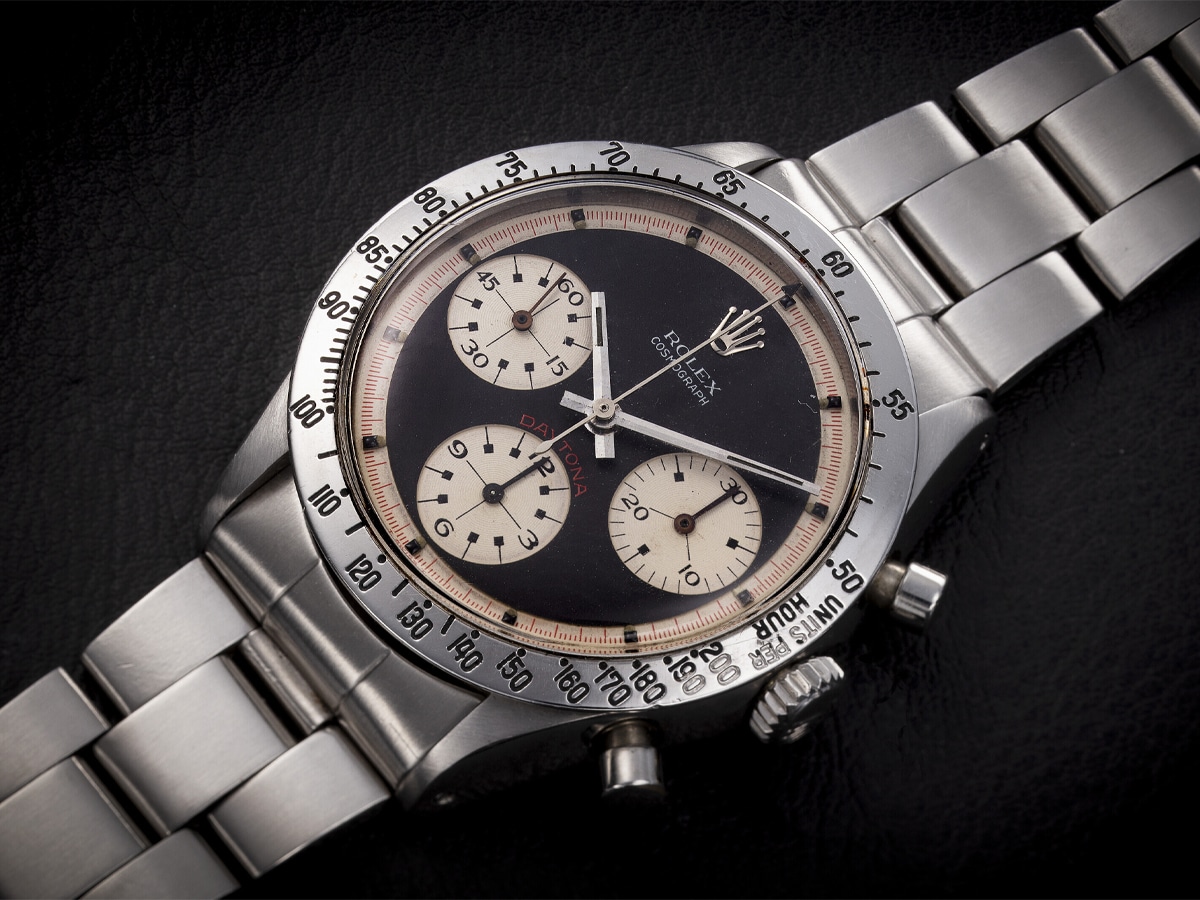
The true proto-history of the Rolex Daytona starts somewhere around 1963, with the release of ref. 6239. A racing tool watch, it improved upon ref. 6238 – still in production at the time – by placing the tachymeter scale on the bezel instead of the dial. With this design tweak came enhanced legibility and also a new name: the Cosmograph.
Why Cosmograph? Because, as mentioned from the get-go, Rolex is a master of self-made mythology. And what better way to introduce a new race watch than with a catchy name, one that bears resemblance to the word “chronograph” but with the added element of a unique brand identity?
One might also wonder: Is a Rolex Cosmograph the same thing as a Rolex Daytona? Eventually, the two names would be more or less interchangeable, but in 1963, there was only the Cosmograph (though it was also called Le Mans in an early advert, in reference to the famous motorsport event). It measured 37mm in diameter and ran on the same manual-winding Rolex calibre 722 as its precursor, the ref. 6238.
During the mid-1960s, Rolex became an official sponsor of the 24 Hours of Daytona, later known as the Rolex 24 at Daytona. In tandem, Rolex adorned certain Cosmograph models with the word “Daytona” on the dial face, whilst other models left it off. The text came in different sizes, leading to the retroactive names of “Big Daytona” and “Small Daytona.”
Originally, the brand intended to name it the Rolex Le Mans, but they quickly pivoted to printing “Daytona” on the dials to capture the American market as they deepened their official sponsorship of the Daytona International Speedway.
The Daytona Has Landed: Ref. 6240 and Beyond
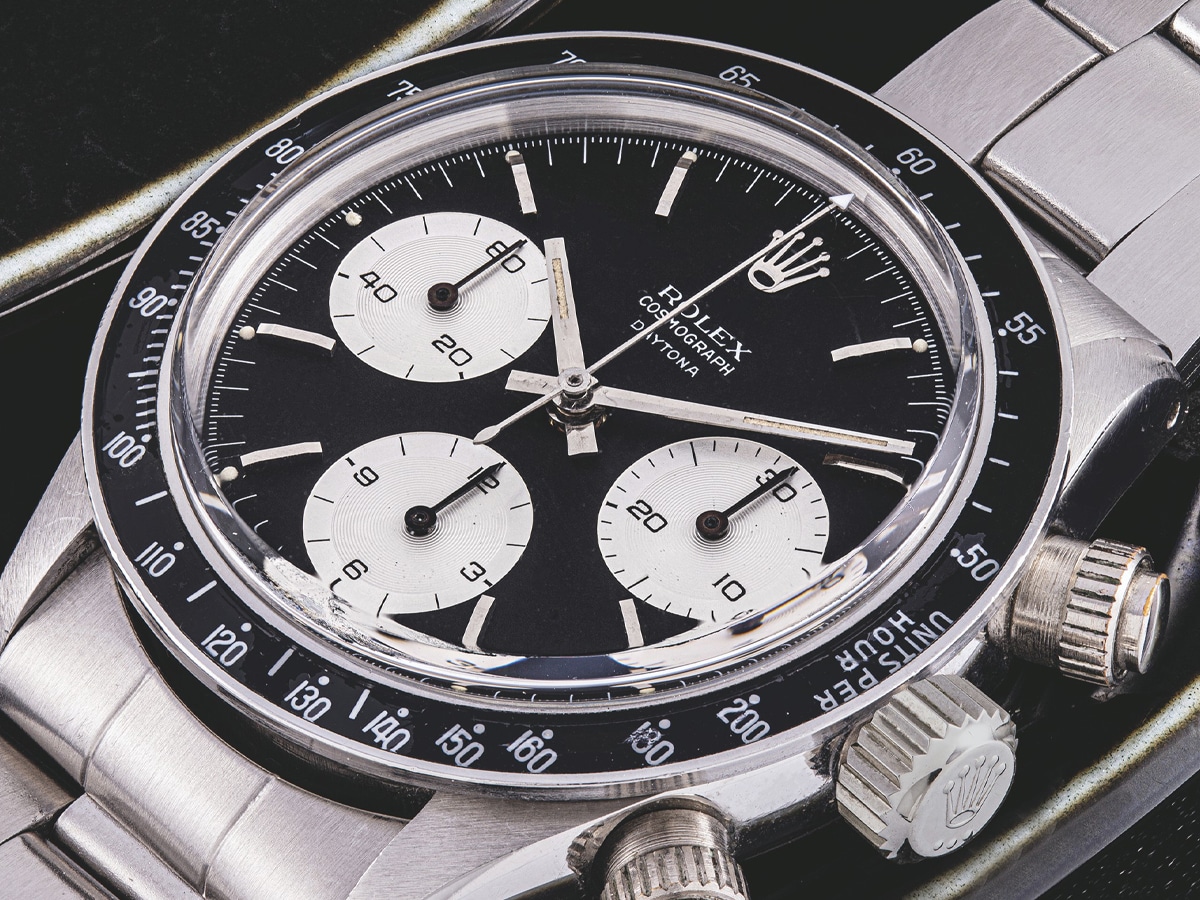
One might call 1965 the official launch year of the Rolex Daytona proper. This is when the brand presented the next generation of its racing watch, aka ref. 6240. The most notable update was the incorporation of screw-down pushers, allowing for increased water resistance to 100m in later models, making it a genuine Oyster chronograph. In addition, the model used black acrylic for the bezel.
Similar to the 6238 and 6239, the 6240 came powered by a Rolex 722 movement. The word “Daytona” primarily appeared in small text on the upper half of the dial, below the words “Cosmograph” and “Rolex,” though there are examples of “Big Daytona” models from around this time.
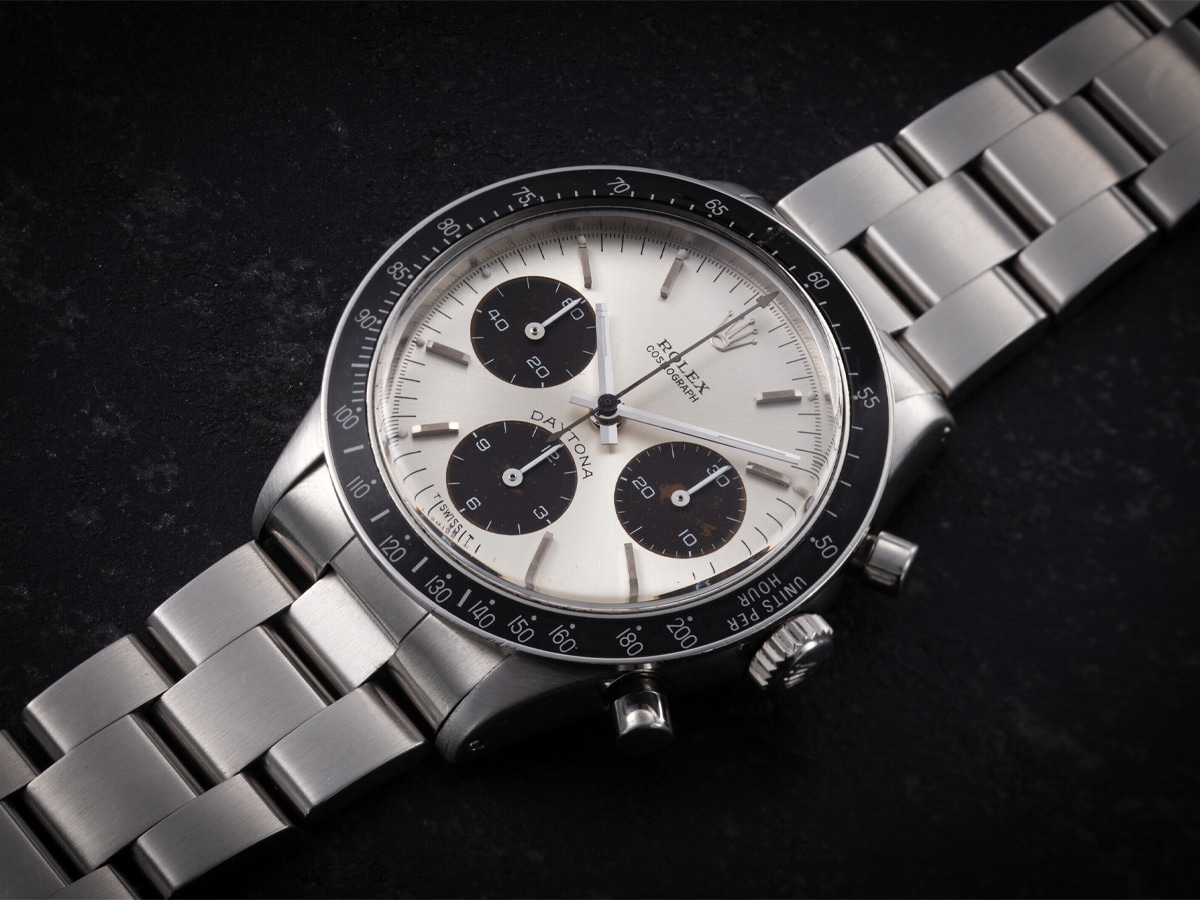
It should be noted that 6239 models were released simultaneously, featuring the word “Daytona” in light red on the dial. These variants are known as “Cherry Red” and appear in both the 6239 and 6241 ranges, but not in the 6240.
Following the 6240, Rolex released ref. 6241. It combined elements of its two immediate predecessors by featuring a black acrylic bezel and pump pushers. By the end of the 1960s, each of the aforementioned models – 6238, 6239, 6240, and 6241 – had been taken out of production.
At the turn of the 1970s, Rolex continued to tinker with the Daytona design language across the release of ref. 6262 and ref. 6264, the former of which updated the 6239, and the latter of which updated the 6240. Both new models were now powered by the Rolex calibre 727, and, importantly, the word “Daytona” was moved to just above 6 o’clock on the dial.
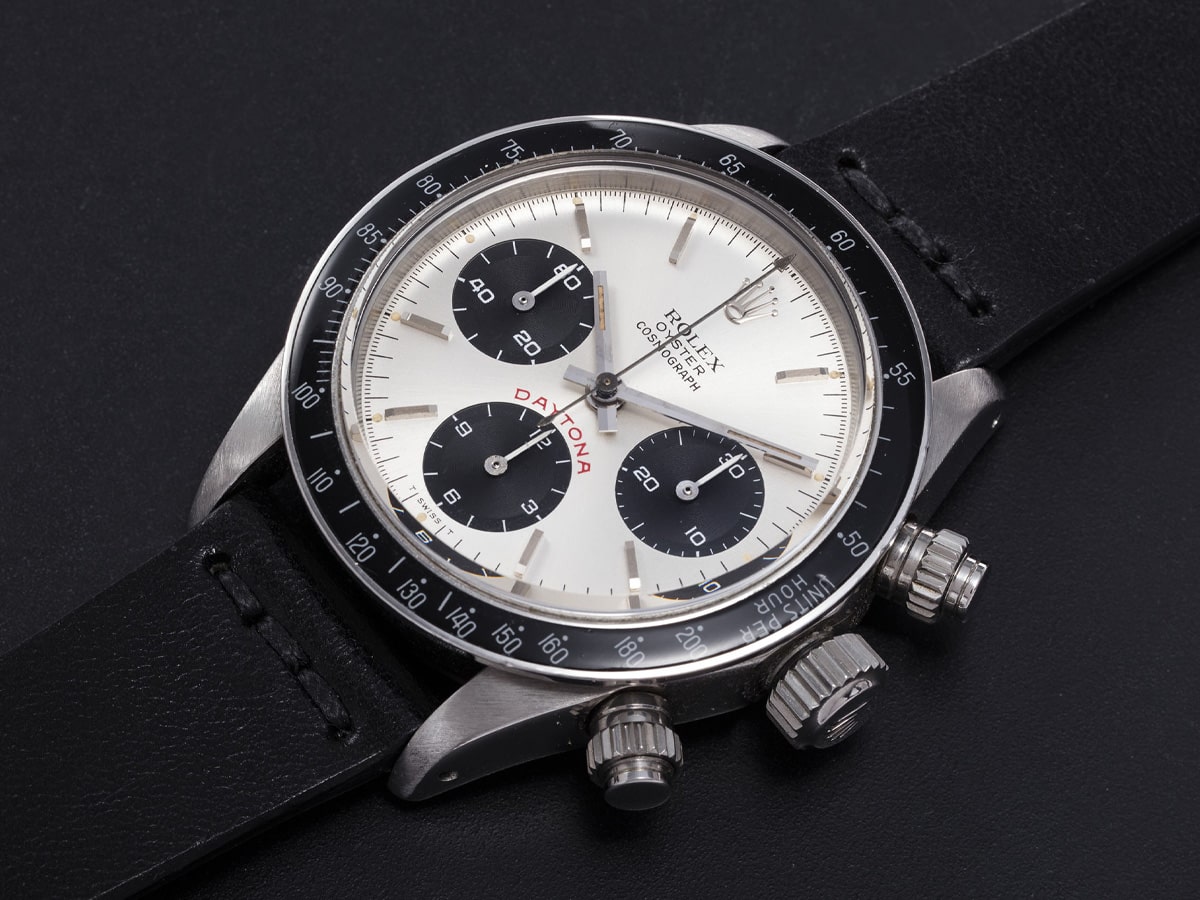
In 1971, Rolex introduced two new references that would effectively define the Daytona for decades to come: 6263 and 6265. Each one ran on a calibre 727 and featured the permanent inclusion of screw-down pushers and “Oyster” branding on the dial.
The main distinction between them was that the 6263 featured an acrylic black bezel, while the 6265 came with a steel bezel. So iconic were these models that they didn’t go out of production until 1988, representing a 17-year run.
Throughout the 1960s and 1970s, Cosmograph Daytonas would feature unique details within the same reference range. Some displays excluded the word “Daytona,” for example, while some cases incorporated gold, as indicated by the use of two Greek sigma symbols at the bottom of the dial (aka the Sigma dial). The result is a frenzy that’s going strong to this day, whereby collectors hunt for rare or exotic variations and spend a bundle in the process.
The “Paul Newman” Effect
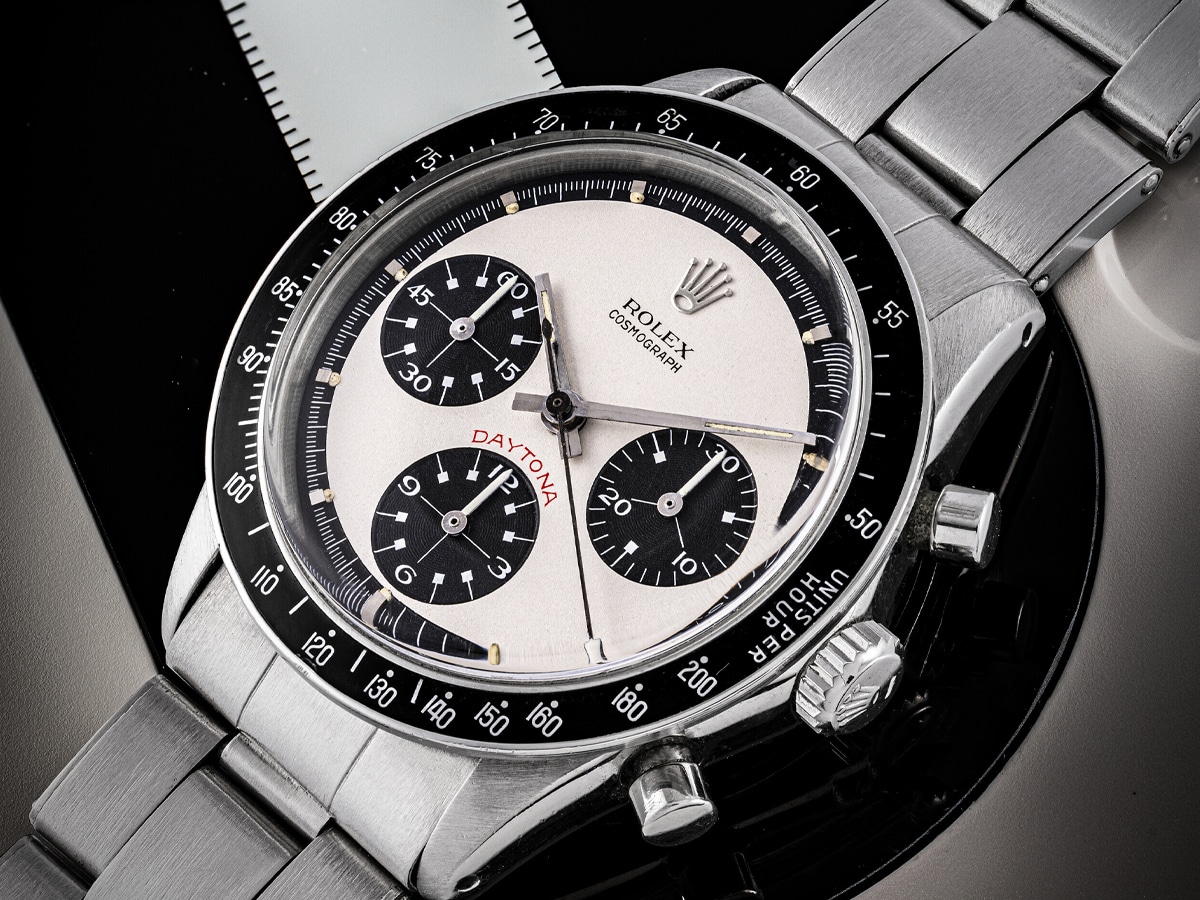
The Rolex Daytona has been worn by plenty of celebrities throughout history, but no one is more synonymous with the chronograph than actor Paul Newman. He was such an ardent fan that there is now a sub-range of “Paul Newman Daytonas” (aka PNDs), which tend to feature panda-style dial faces with red accents. It’s at least partly thanks to his devotion that the model has become so explosively popular.
According to legend, Newman was pursuing a career as a professional race car driver when his wife, Joanne Woodward, gifted him a 1968 Rolex Daytona 6239 in either the late 1960s or early 1970s. The watch featured an exotic dial face with black subdials on a cream-coloured backdrop, which didn’t sell well at its initial release, making it limited in supply. On the caseback was the signature engraving from Joanne: “DRIVE CAREFULLY ME.”
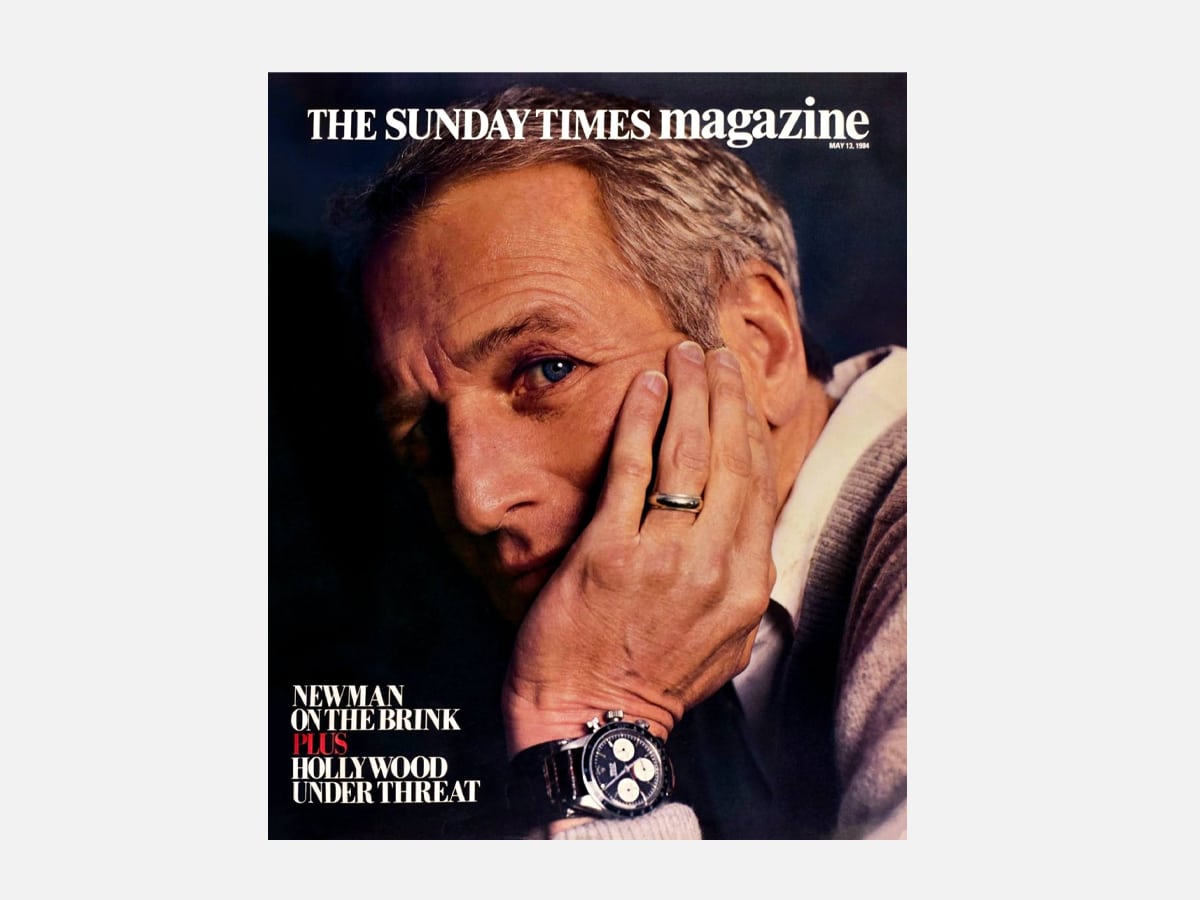
In the 1980s, Newman appeared on the cover of a popular Italian magazine with a Rolex Daytona around his wrist. The cover photo and the accompanying article are often cited as a turning point for the model itself.
That is to say, the Daytona’s popularity surged with a little help from Newman, and it has remained a coveted collectible ever since. Is there more to the story than a mere magazine article? Probably.
Various PNDs have hit the auction block over the years, but it’s the 6239 with the exotic dial that set a record when it fetched $17.8 million in 2017. The watch was presumed lost until it was found in the possession of James Cox, a former boyfriend of Newman’s daughter. Cha-ching!

From Manual to Automatic: The Zenith “El Primero” Years
Rolex became the foremost name in luxury wristwear in the 1970s, and fully capitalised on the hype in the 1980s. This was arguably the perfect decade for such a maneuver, as key global markets were placing greater emphasis on status and style.
Top-selling Rolexes like the Submariner underwent total makeovers, and the Cosmograph Daytona was likewise ushered into a new era.
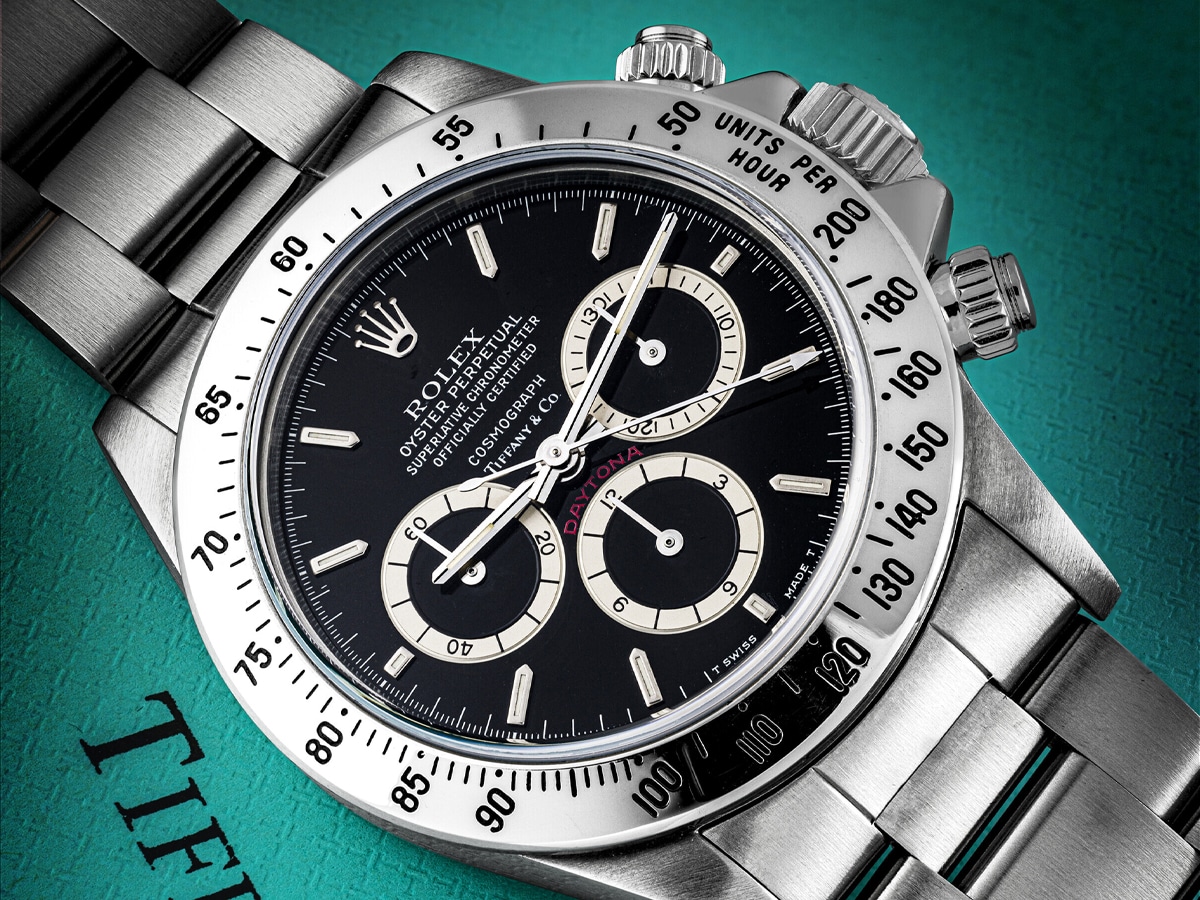
In 1988, Rolex officially released ref. 16520, a reimagined Daytona that tweaked a 1987 precursor of the same name (which is now highly sought after due to its brief emergence). With the official launch of this newly redesigned model, several key changes were introduced. For starters, it was the first Daytona to feature an automatic movement rather than a manual-winding one. The 16520 also increased the case size from 37mm to 40mm. It featured new crystal sapphire protection, a lacquered finish, arrow-tipped markers, a steel bezel (instead of black acrylic), and softened subdials with subtle metal borders. There was also more text on the dial face now, including “Oyster Perpetual” for the first time.
About that automatic movement – aka Calibre 4030 – Rolex hadn’t mastered this particular domain at the time of the 16520’s release. Hence, they sourced a Calibre 3019PHC from Swiss manufacturer Zenith, which had developed the self-winding movement powering its “El Primero” watch line.
While the El Primero movement was considered top of the line, Rolex wasn’t simply going to slap one into its Daytona. Instead, the watchmaker swapped out half the components and made over 200 modifications, resulting in Calibre 4030. Any Daytona model that runs on a modified Zenith movement is known as a “Zenith Daytona,” and for obvious reasons.
The “Zenith Daytona” era ran from the late 1980s to 2000 and made up the second series of Cosmograph Daytona watches. Several references and iterations were released during this time, including two-tone models, gold models, and a boatload of dial variants. The bracelets were updated to take on a more polished look and feel. The model was now as much a luxury item as it was a racing chronograph.
The Modern Era: From 2000 to the Present
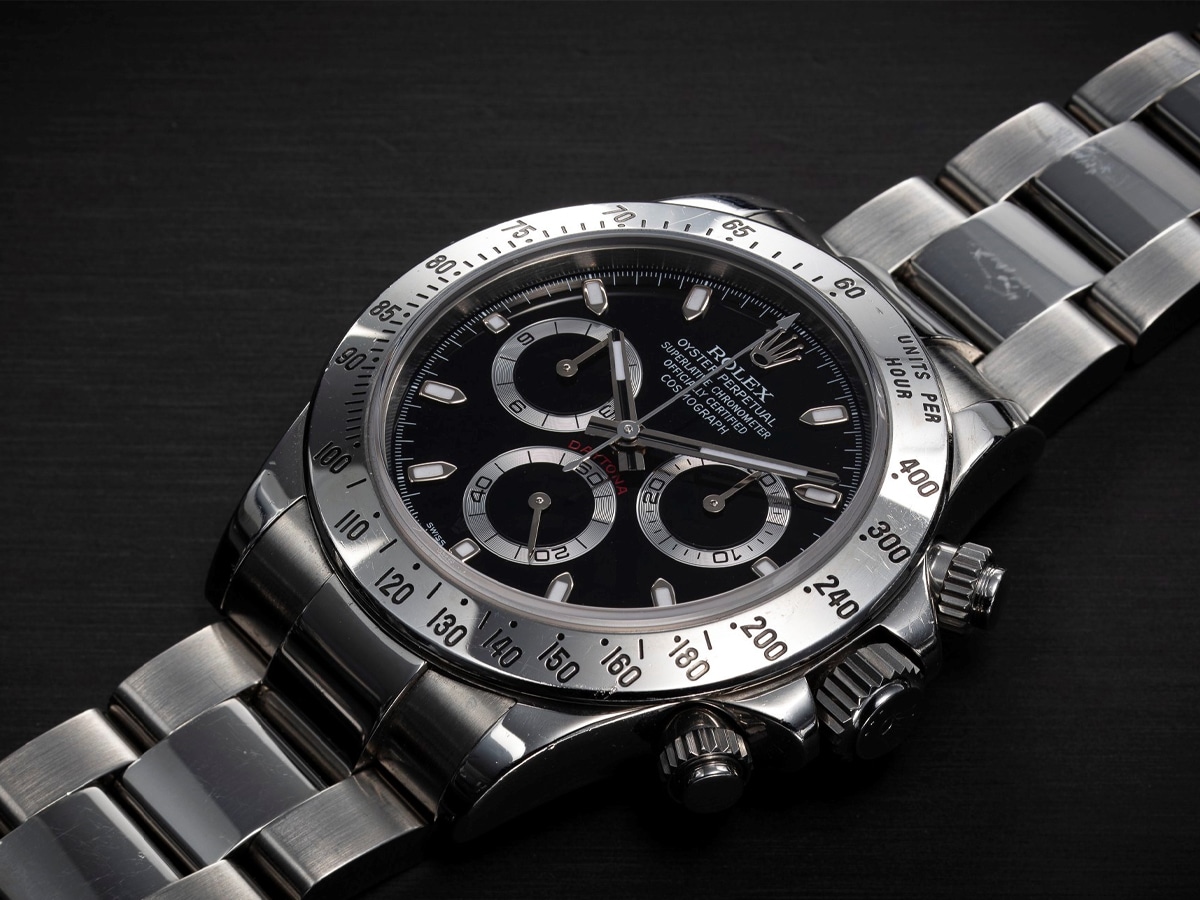
New millennium, who this? Rolex, that’s who, and we’re making our automatic movements from scratch now. So went Calibre 4130, a vertical-clutch movement that paved the way for another new era of Cosmograph Daytona watches, starting with ref. 116520. Welcome to the third series.
Visually, the 116520 bore a striking resemblance to the 16520. However, the model did employ slight dial modifications to accommodate its fresh innards. It also used Luminova to deliver brightness under dark conditions, with Rolex having retired the use of radioactive tritium in 1998.
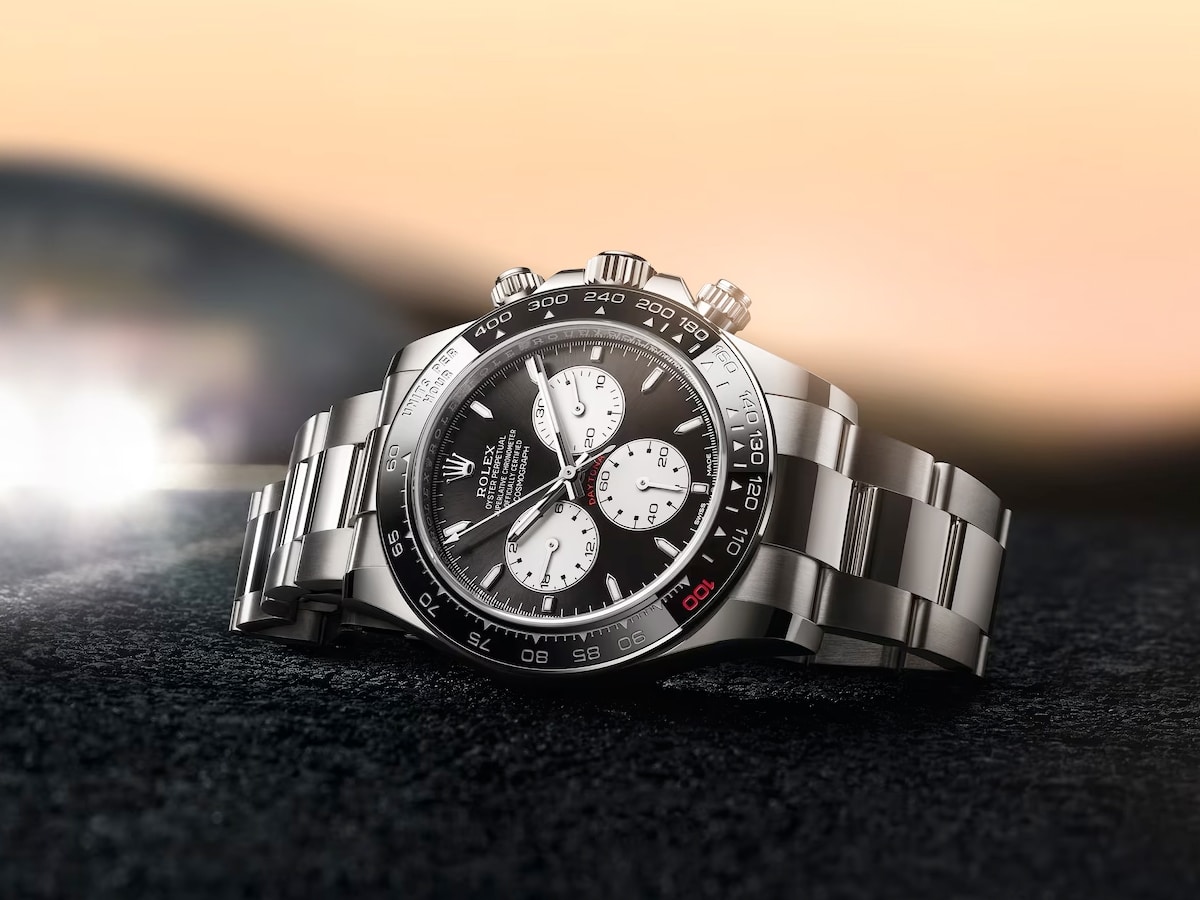
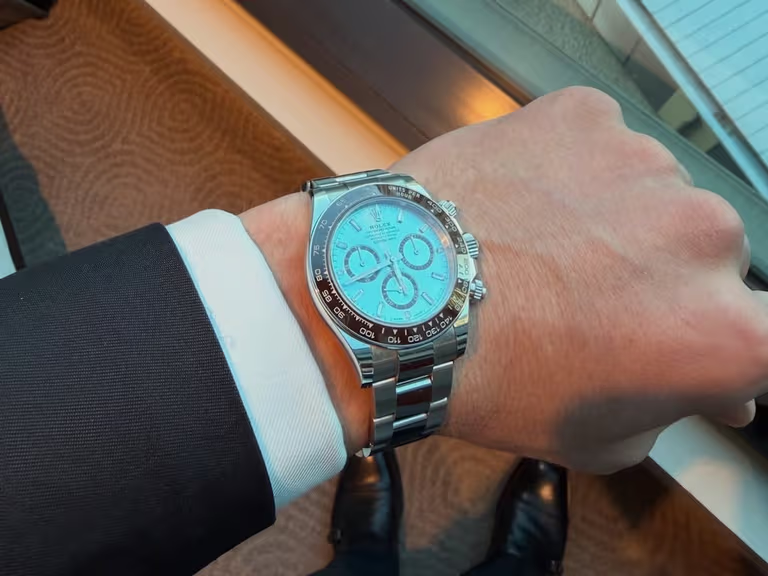
In 2011, Rolex debuted a special-edition gold Daytona with a Cerachrom (aka ceramic) bezel, marking the first time in 23 years it had departed from metal bezels. Two years later, there came ref. 116506, aka “Platona,” a 50th-anniversary model crafted entirely from platinum, with a ceramic bezel and a stunning blue dial.
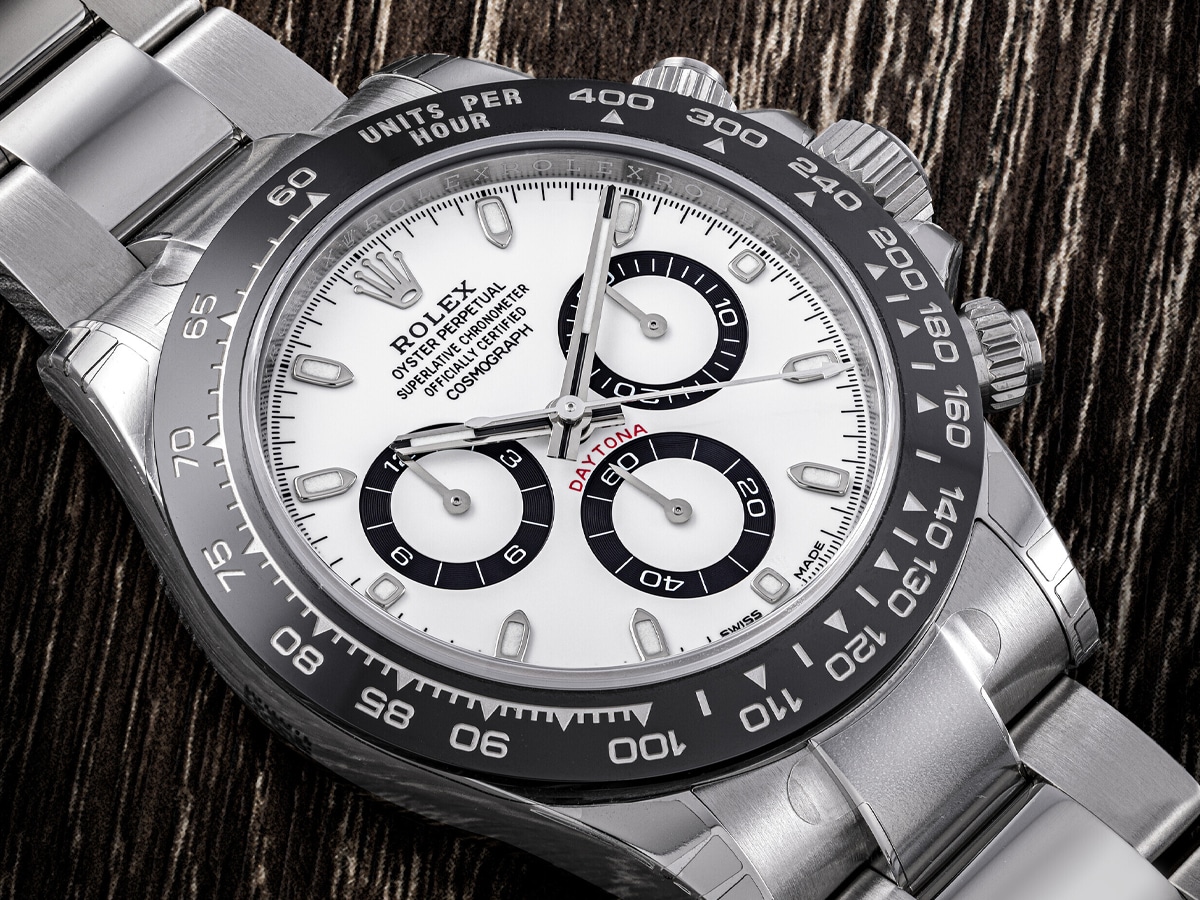
What was teased in 2011 became a reality in 2016, when Rolex released ref. 116500LN.
Offered in either black or white dials with a 40mm case size and black Cerachrom bezel, it made direct callbacks to the first series vintage Daytonas and even bore a resemblance to Paul Newman’s panda-style 6263.
Demand for this particular model went through the roof, and it’s stayed there ever since.
The Luxury Market Goes Boom: Tracking Global Demand
The luxury market boomed in the mid-2010s through to the early 2020s, yielding explosive demand for high-end watches (among other collectibles). Rolex benefited greatly from the feeding frenzy and continues to dominate its respective category. And while things have cooled off in recent years, The Big Crown is still king.
To this day, scoring even a newly manufactured Daytona can often mean waiting years or paying hand over fist on the secondhand market. Truly coveted models like the aforementioned 116500LN or a classic PND have become proverbial unicorns, being so hard to obtain that they might as well not exist. Some say the outrageous prices are driven by pure hype, but others would argue that hype is an essential part of Rolex’s history.
Meanwhile, some Cosmograph Daytonas are more desirable than others. For instance, any Daytona with a ceramic bezel is an instant collectible, as is any Paul Newman Daytona (PND) or a bespoke model crafted in limited supply for a high-profile client. The short-lived version of ref. 16520 from 1987 tends to fetch higher demand than the official production models that followed. And any manually-wound model from the 1960s or 1970s is bound to be worth a small – or large – fortune, depending on condition.
Should you score a vintage Rolex Daytona from the first series, it could end up being appraised for millions of dollars. More common models from the second and third series, meanwhile, can still fetch tens of thousands of dollars. May the basic laws of supply and demand be your guide.
A Timeless Legacy
Once a marginal racing chronograph, the Rolex Cosmograph Daytona is now one of the most iconic and valuable watches in all of history.
When you really think about it, the trajectory isn’t that hard to fathom. After all, the Daytona is everything a collector might want out of a classic wristwatch. It’s sporty, but sophisticated. It’s functional, but beautiful. It’s powerful. It’s precise. It’s luxurious. It comes from one of the best names in the game. It’s desired by celebrities, sultans, influencers, and athletes. It’s a story that unfolds in chapters across generations.
It’s a freaking Rolex Daytona.















Comments
We love hearing from you. or to leave a comment.