

Updated:
Readtime: 9 min
Every product is carefully selected by our editors and experts. If you buy from a link, we may earn a commission. Learn more. For more information on how we test products, click here.
The mood was sombre at Watches & Wonders 2025, but that changed dramatically at this year’s event. The very real threat of sweeping international luxury tariffs loomed over Palexpo last year, forcing brands to abandon creative risk-taking, and leaving them in a conservative holding pattern of “safe” releases and minor dial updates. However, the mood could not have been different at Watches and Wonders 2026. The atmosphere shifted dramatically from apprehension to innovation, with the mechanical watch industry striking back with groundbreaking engineering, radical design shifts, and a clear vision for the future. These are the biggest watch trends for 2026, according to our on-the-ground experts at Watches & Wonders.
2026 Watch Trends at a Glance
Highlights from our list include the following options:
- Biggest watch trend for 2026: Space is the Next Watchmaking Frontier
- Economic watch trend to watch: Gold is Out, Stone, Titanium, Ceramic and Platinum are In
- Watch trend that you’ll benefit from: Smaller, Thinner, Lighter Watches
Now you’ve read the highlights, let’s check out the complete list.
1. Space is the Next Watchmaking Frontier
No matter how hard we tried, we couldn’t avoid the idea of space travel at Watches & Wonders 2026. I’m no environmental warrior, but the irony is not lost on me that luxury watch brands previously concerned with protecting our planet are now seemingly obsessed with abandoning it in search of a much less beautiful planet light-years away.
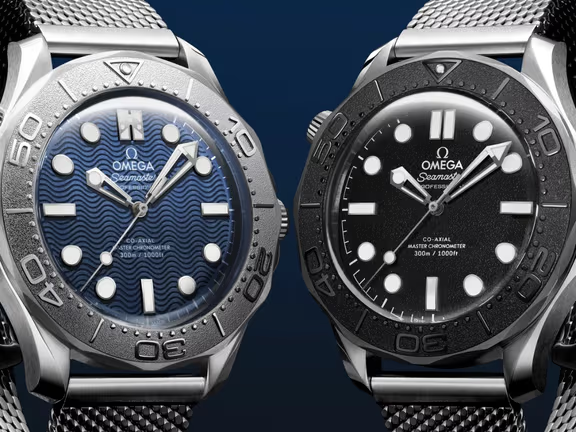
With billionaires like Elon Musk, Richard Branson, and Jeff Bezos having built rockets, commercial spaceflight has become a reality. It appears watchmakers are moving their gaze from the aviation stratosphere to outer space. Of course, any conversation about extraterrestrial horology must acknowledge the titan in the room, OMEGA, who conquered this frontier first when the Speedmaster became the official Moonwatch. However, the Swatch Group powerhouse notoriously doesn’t attend Watches and Wonders, so their legacy loomed large over this year’s trend as competitors raced to claim their own presence in outerspace watchmaking lore.
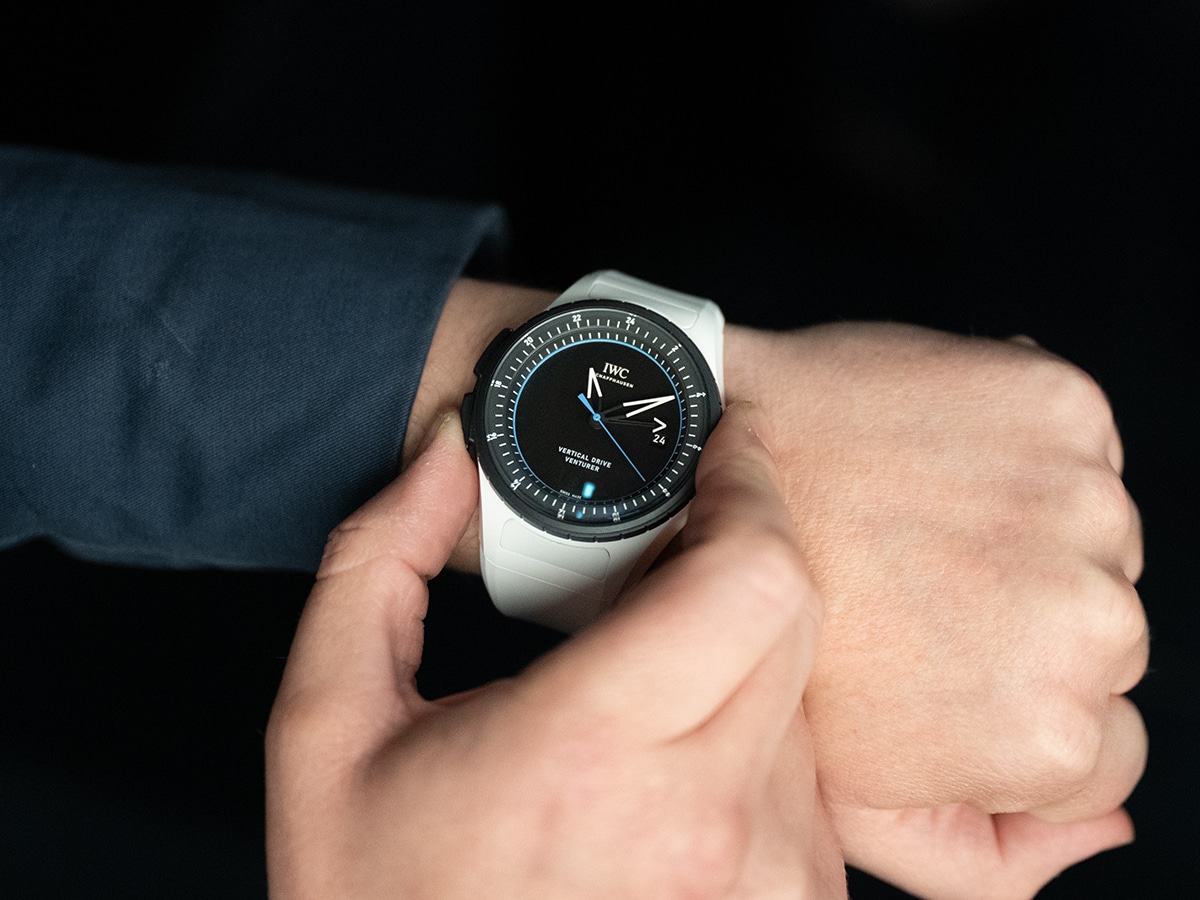
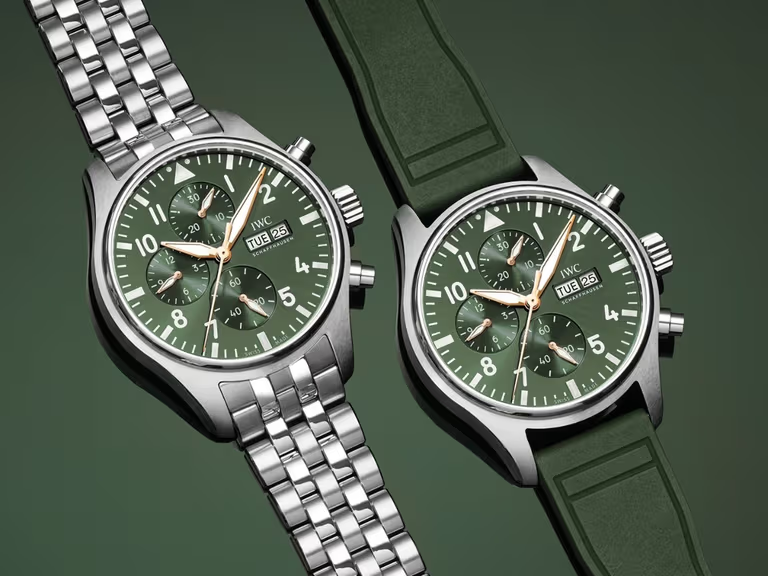
Technically speaking, escapements are being redesigned for microgravity, and cases are built to withstand intense launch vibrations. The IWC’s Pilot’s Venturer Vertical Drive is the best example of this, measuring a substantial 44.3mm across and 16.7mm thick, the ceramic and Ceratanium case is explicitly sized for manipulation with pressurised space gloves.
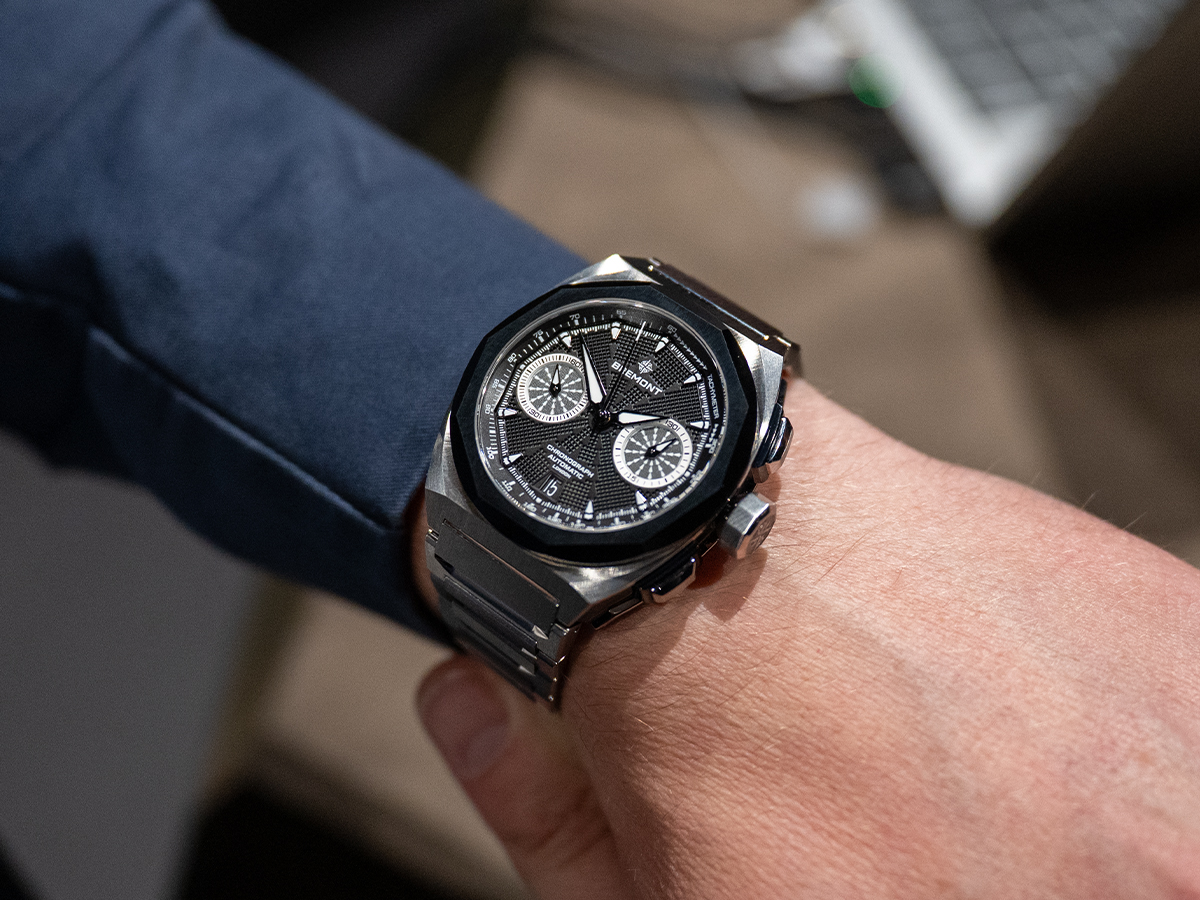
It removes the crown entirely, relying instead on a clutch-driven rotating bezel to set and wind the in-house automatic Calibre 32722, which offers 120 hours of power reserve. Similarly, Bremont’s Supernova Chronograph leans into aerospace-grade shock absorption and high-impact resilience, showing how a modern tool watch is designed to survive a departure from Earth’s atmosphere.
Even elite high-complication pieces are drawing inspiration from orbital modules. The Patek Philippe Celestial 6105G takes haute horlogerie to outer space through design, with a 47mm white gold case (12.39mm thick) decorated with an X-shaped motif directly inspired by the cross-braced tubular frameworks of space stations. Inside, the new automatic Calibre 240 C LU CL LCSO (powered by a 22K gold micro-rotor and delivering a 38-to-48-hour power reserve) tracks the cosmos and features a sapphire sky chart and an ingenious, patent-heavy sunrise and sunset mechanism.
2. Gold is Out, Stone, Titanium, Ceramic and Platinum are In
There was a noticeable shift away from traditional precious metals (particularly yellow gold) at Watches & Wonders 2026. The price of gold skyrocketed past $4,700 per troy ounce in April 2026, a monumental increase that altered the cost basis of manufacturing heavy, solid-gold cases, forcing the industry to pivot. To combat prohibitive sticker shock while still conveying a perception of high-end exclusivity, brands have shifted the definition of “luxury” away from raw bullion weight toward advanced materials.
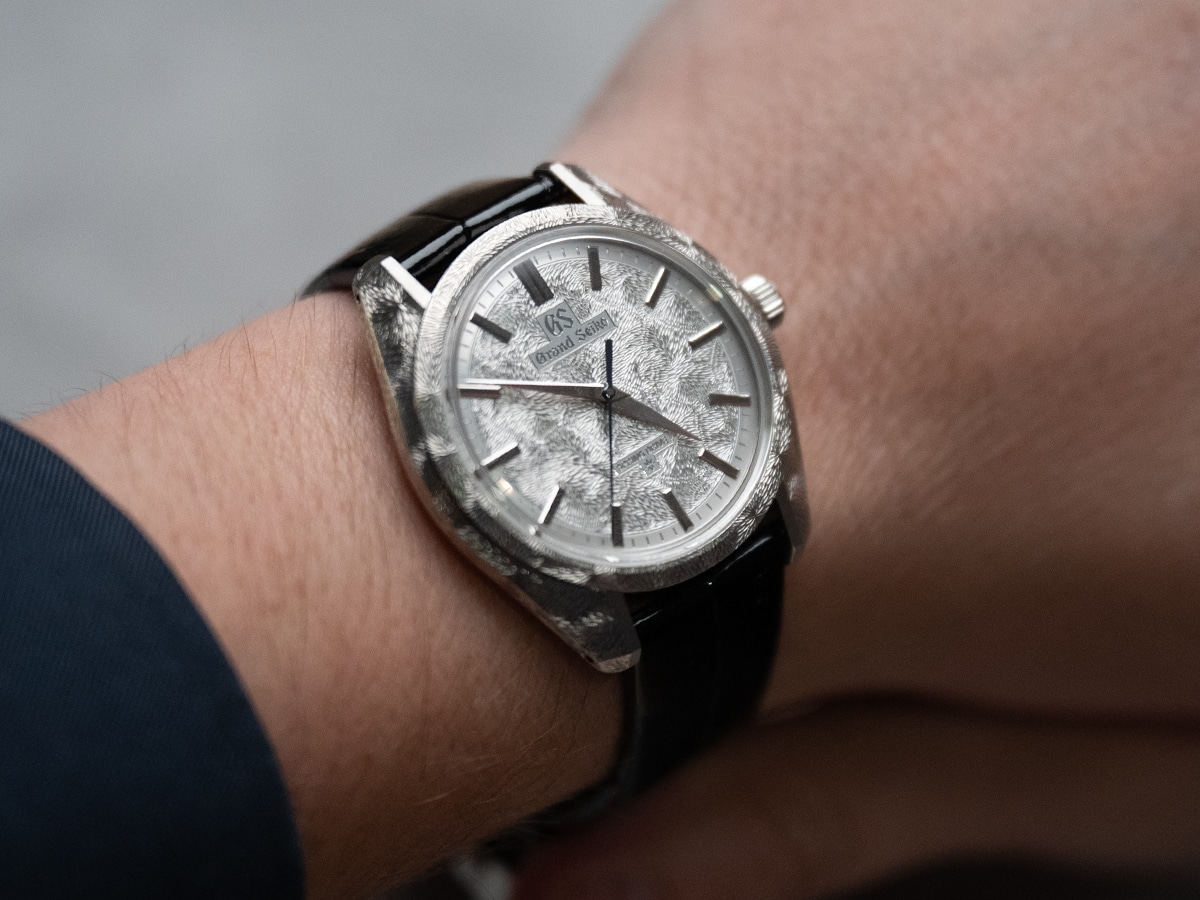
We saw a massive renaissance in exotic stone dials, with the Piaget Polo 79 ‘Sodalite’ merging 1970s design with a beautiful blue stone dial. On the high-complication end, brands seeking a heavier wrist feel are increasingly opting for platinum, as seen in the impossibly thin architecture of the Bulgari Octo Finissimo Ultra Tourbillon Platinum. Meanwhile, the Grand Seiko Masterpiece SBGZ011 uses proprietary hand-engraving techniques across its Platinum 950 case, which measures a perfectly proportioned 40.0mm by just 9.6mm thick. Inside beats the manual-winding Spring Drive Calibre 9R02, delivering an 84-hour power reserve thanks to an ingenious Torque Return System.
Finally, ceramic is also dominating the conversation, highlighted by the proprietary luminescence of the IWC Big Pilot’s Watch Perpetual Calendar Ceralume and the stealthy, scratch-resistant appeal of the Tudor Black Bay Ceramic.
3. Skeletonised Pieces are in High Demand
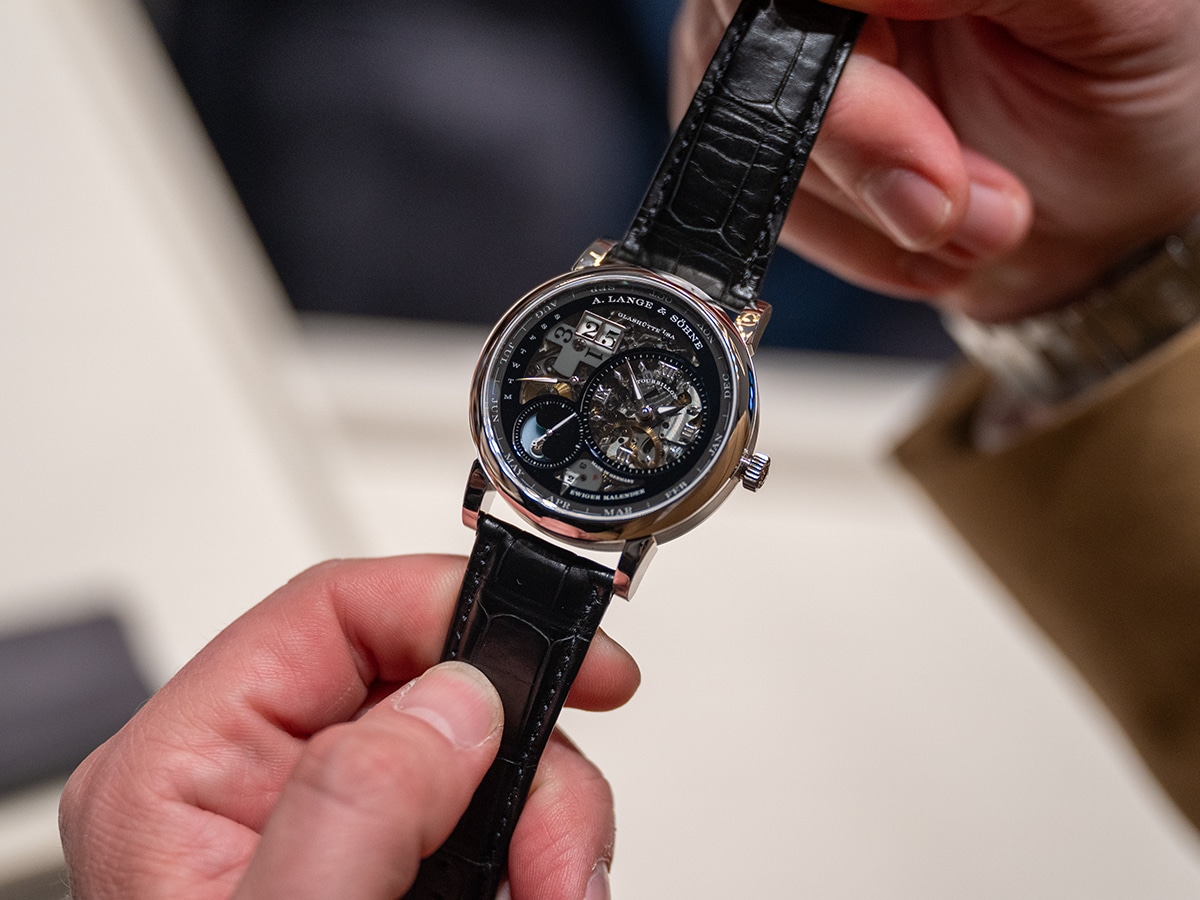
Historically, skeletonisation has been a delicate art reserved for fragile dress watches. But in 2026, the trend has been radically hijacked by aggressive, highly architectural, and robust designs from brands that might not be traditionally known for such expertise. We’ve already seen transparency make its way into tech, and now it’s become a horological flex, with brands utilising advanced CAD and 5-axis CNC machining to strip away the dial and baseplate.
The Ulysse Nardin Freak set a new benchmark for this “kinetic art” at this year’s convention. Housed in a 44mm white gold case, the groundbreaking Calibre UN-252 movement features two 10°-inclined flying tourbillons and is powered by a highly efficient Grinder winding system that delivers a robust 72-hour power reserve.
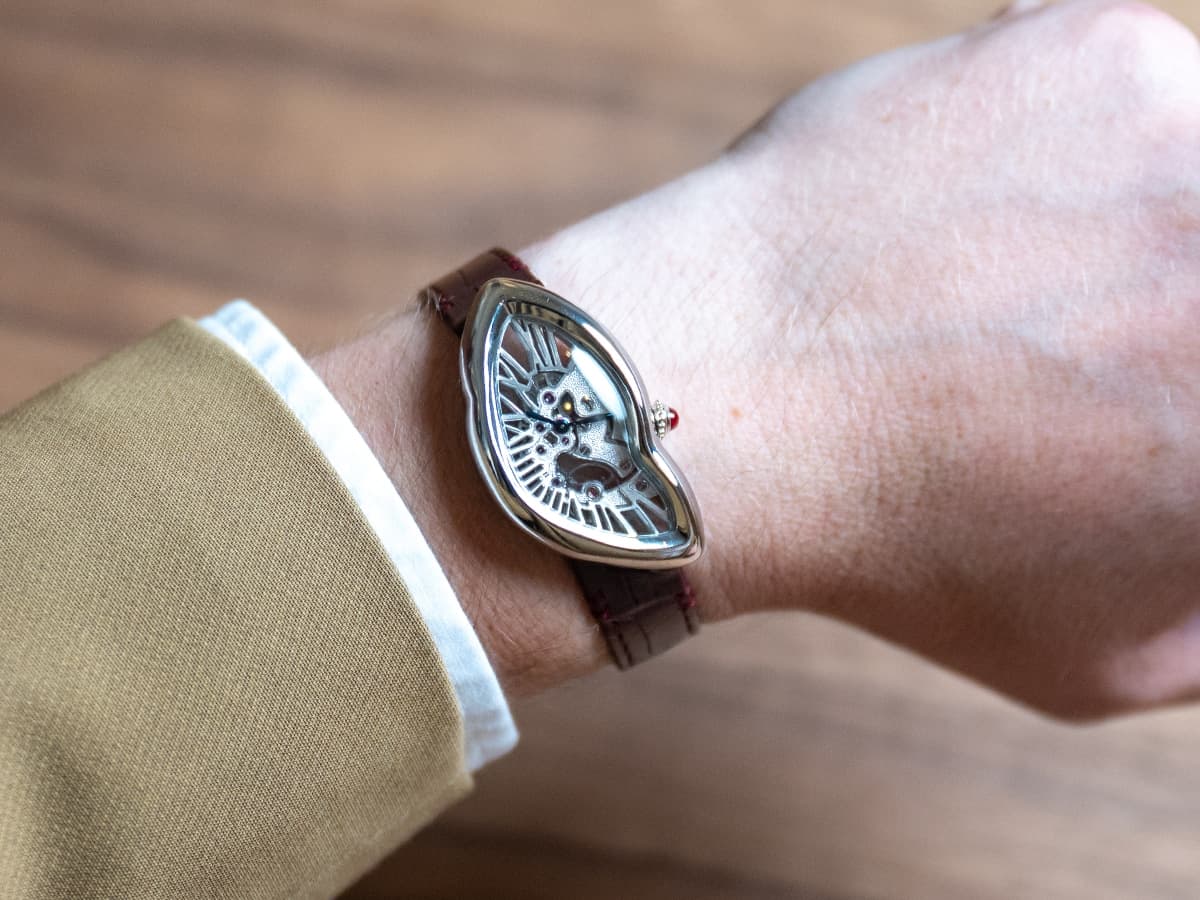
High-complication pieces are also joining the open-worked revolution, with the A. Lange & Söhne Lange 1 Tourbillon Perpetual Calendar “Lumen” offering a glowing look into its flawless German silver movement. The motorsport sector is fully embracing the aesthetic as well, vividly brought to life by the futuristic TAG Heuer Monaco Evergraph, the highly industrial Hublot Big Bang Reloaded, the lightning-fast, high-frequency Zenith Chronomaster Sport Skeleton, and, of course, the Cartier Privé Crash Skeleton in Platinum.
4. Smaller, Thinner, Lighter Watches
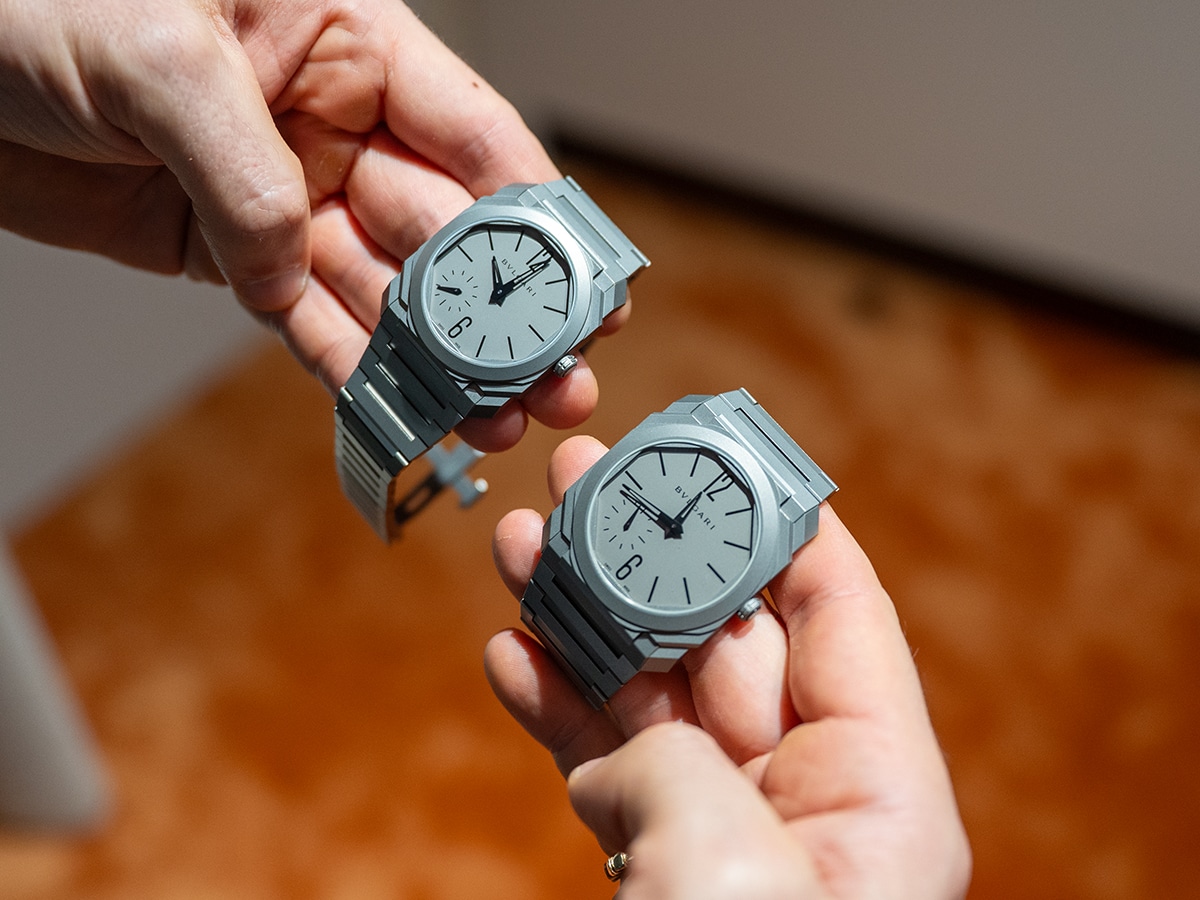
The era of the 44 mm+, dinner plate watch has been over for a while now, but Watches & Wonders 2026 officially put it to bed. Vintage proportions are back in a big way, but with a distinctly modern twist. Not only are the watches getting smaller, but they’re also getting thinner, a trend driven by a renewed focus on ergonomics, wearability, and a more gender-neutral approach to sizing.
It’s relatively easy to make a small time-only watch, but it’s incredibly difficult to miniaturise a complex automatic movement while maintaining its power reserve and shock resistance.
Look no further than the Bulgari Octo Finissimo Titanium, which continues to set the benchmark for featherweight design. However, hot on its heels was the elegantly sporty Vacheron Constantin Overseas Self-Winding Ultra-Thin, powered by the legendary ultra-thin Calibre 2550, which proves luxury steel sports watches don’t need bulk to make a statement. Even traditionally robust models are downsizing, including the Cartier Santos de Cartier Chronograph, which has been refined for a sleeker profile, and the TAG Heuer Monaco TH20-11, which updates its iconic square chassis into a much more compact, 39mm wrist-friendly package.
5. Accuracy, Certification, and Standard are Enhanced
Our smartphones might be able to synchronise to atomic clocks, but that didn’t stop the watch industry from doubling down on its pursuit of mechanical precision. Brands are heavily promoting their in-house testing protocols and hyper-accurate escapements, going beyond the standard COSC parameters.
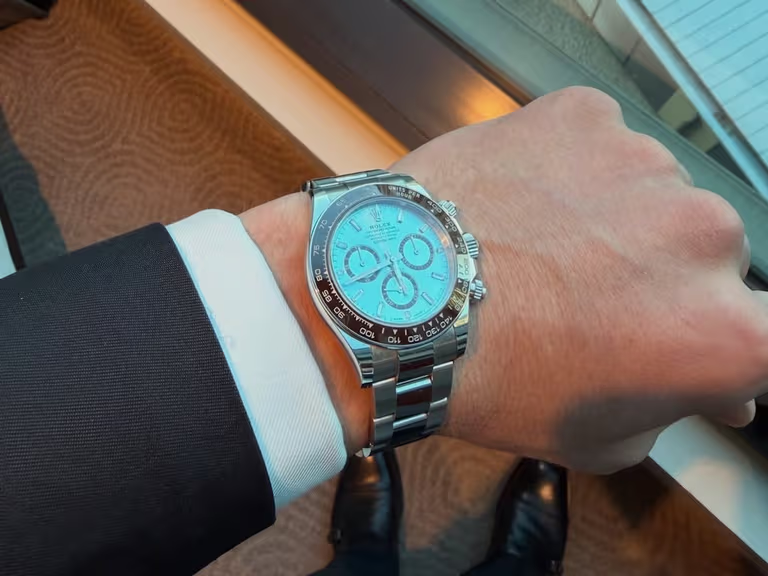
Rolex went back to the drawing board for 2026 by upgrading its Superlative Chronometer Certification. Controlled by independent Swiss entities, the brand has moved beyond simply measuring accuracy (-2/+2 seconds a day), waterproofness, self-winding efficiency, and power reserve on the finished watch by introducing three brand-new testing criteria: resistance to magnetism, long-term reliability, and sustainability. These are now rigorously enforced from the very design and manufacturing stages.
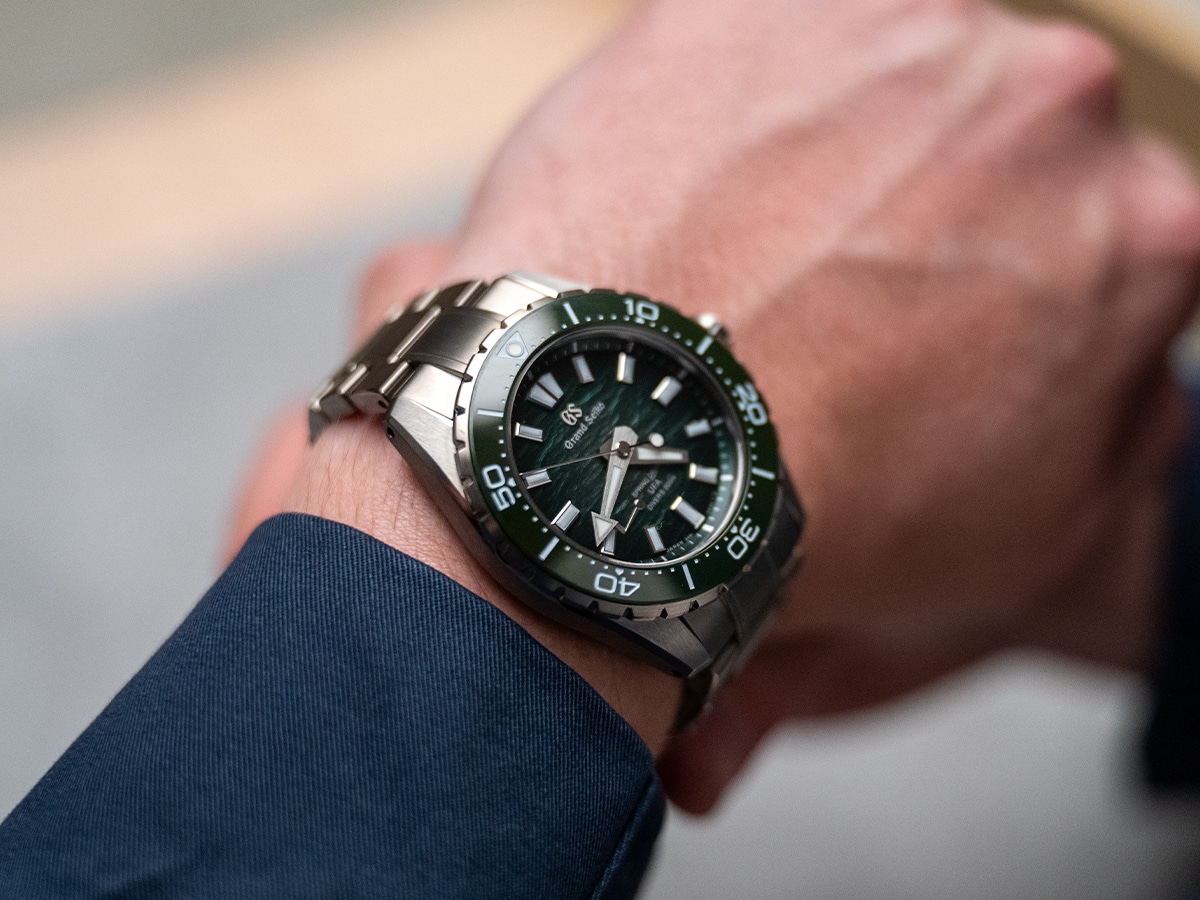
Next to Rolex, the Jaeger-LeCoultre Master Control Chronomètre undergoes rigorous 1,000-hour testing, while the Grand Seiko Evolution 9 Collection Spring Drive U.F.A. Ushio 300 Divers leverages hybrid technology for outstanding Spring Drive accuracy of (-20/+20 seconds per year).
Complex mechanisms are also getting the high-precision treatment. The TAG Heuer Monaco Evergraph features the revolutionary Calibre TH80-00, which utilises a compliant mechanism that replaces traditional pivots with flexible components to virtually eliminate friction. Beating at a high frequency of 5Hz (36,000 vph), it delivers a 70-hour power reserve inside its 40mm Grade 5 titanium case. Similarly, the IWC Perpetual Calendar Proset downsizes the iconic Big Pilot calendar to a highly wearable 42mm, while the new gear-based Calibre 82665 (boasting a 60-hour power reserve) allows the calendar to be adjusted forward or backward via the crown.
Future of Horology is Looking Up
If Watches and Wonders 2026 has proven anything, it’s that the mechanical watch industry refuses to rest on its laurels. While the shadow of global luxury tariffs loomed heavily over last year’s event and stifled creative risk-taking, 2026 marks a return to form. The days of relying solely on the romance of the past are giving way to an era of relentless, pragmatic innovation.
Driven by shifting economic realities like the surging price of gold, a cultural pivot toward ergonomic wearability, and a renewed fascination with the cosmos, watchmakers are re-engineering what a luxury timepiece can be. From the microgravity-ready escapements of the modern space race to the hyper-precise, ultra-thin calibres housed in advanced exotic materials, this year’s releases are as much about conquering physics and material science as they are about traditional aesthetics. For enthusiasts and collectors, the overarching message from Geneva is that the industry has shaken off the hesitancy of last year. The future of horology is lighter, stronger, more accurate, and fiercely transparent about the technical mastery required to get there.




















Comments
We love hearing from you. or to leave a comment.