


Updated:
Readtime: 8 min
Every product is carefully selected by our editors and experts. If you buy from a link, we may earn a commission. Learn more. For more information on how we test products, click here.
- Mitsubishi is reviving the flagship Pajero SUV for autumn 2026.
- The new model utilises the robust Triton ladder-frame chassis.
- It is expected to launch with a 150kW twin-turbo diesel engine, hybrid later.
- Mitsubishi is investing $681 million into electrified hybrid production.
- It directly targets rivals like the Toyota Prado and Denza B5.
Mitsubishi Motors has officially confirmed the return of its flagship Pajero cross-country SUV, scheduling the all-new model for a global premiere in autumn 2026. Launched in 1982, the nameplate will return to showrooms after a five-year hiatus, following its 2021 exit. Known as the Montero in North America, its comeback is significant for global buyers and Australian four-wheel drivers alike, reviving a halo vehicle that accumulated over 3.25 million sales across 170 countries and dominated the Dakar Rally with 12 overall victories.
Prototype mules have been spied conducting hot-weather testing on Australian roads, and now we have confirmation that the new model will abandon any “soft-roader” compromises in favour of the robust ladder-frame platform from the new Triton. While initial launch models are expected to feature the Triton’s 150kW and 470Nm 2.4-litre twin-turbo four-cylinder diesel engine, Mitsubishi Motors Chairman and CEO Takao Kato has confirmed a massive $681 million investment into Thai manufacturing facilities to turn them into electrified hubs. This means a more powerful hybrid powertrain could also be on the cards to take on heavy-hitting rivals from China, such as the Denza B5.
Don’t expect the Pajero to be a challenger for China, but instead fight against rivals in the Toyota LandCruiser Prado with serious off-road hardware, including Super-All Wheel Control (S-AWC) and a digital Multi Meter display, with bespoke suspension tuning designed for highway refinement. The new flagship will very likely replace the aged Pajero Sport, which shouldn’t be hard.
How a New Pajero Compares to the Competition
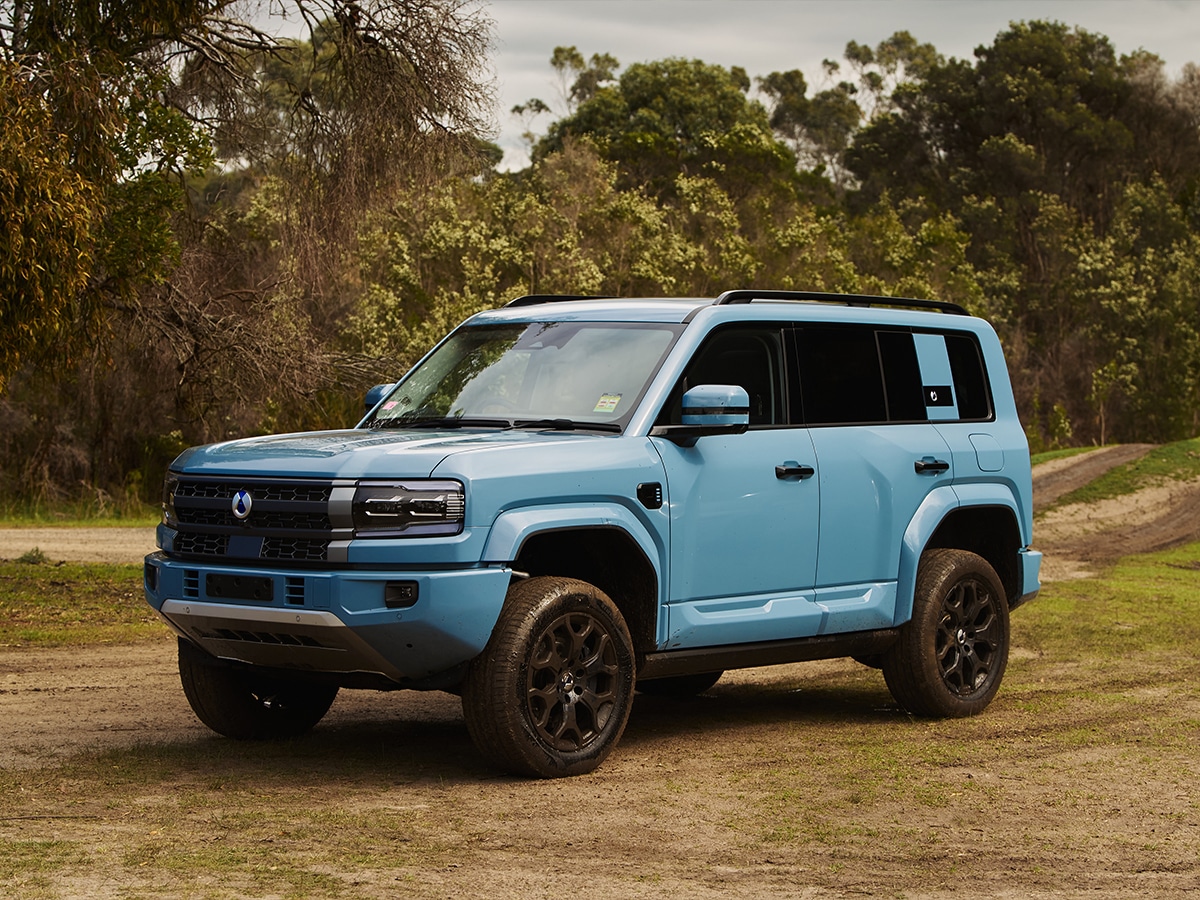
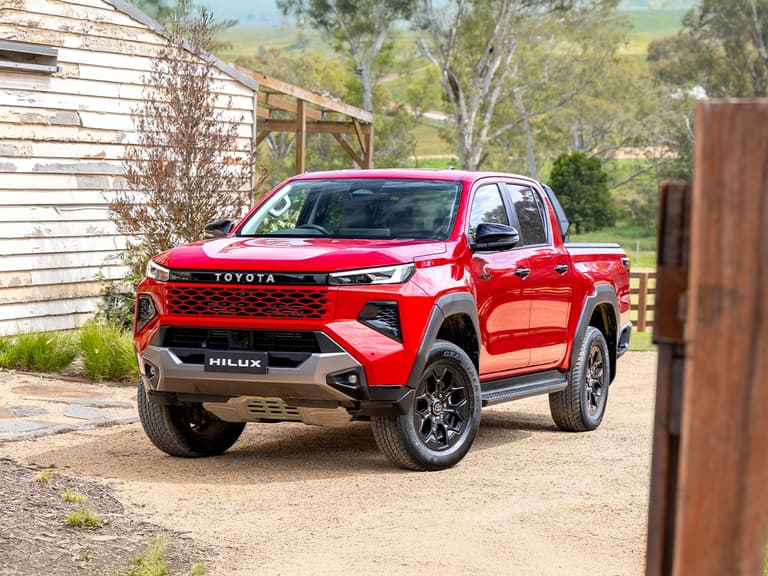
Rather than entering the $120,000-plus, full-size arena occupied by the LandCruiser 300 and forthcoming Nissan Patrol, the 2026 Pajero will likely sit directly in the $60,000 to $95,000 segment. This puts it head-to-head with Australia’s default touring choice, the Toyota LandCruiser Prado 250 Series, as well as high-tech Chinese electrified entrants such as BYD’s premium sub-brand, Denza B5.
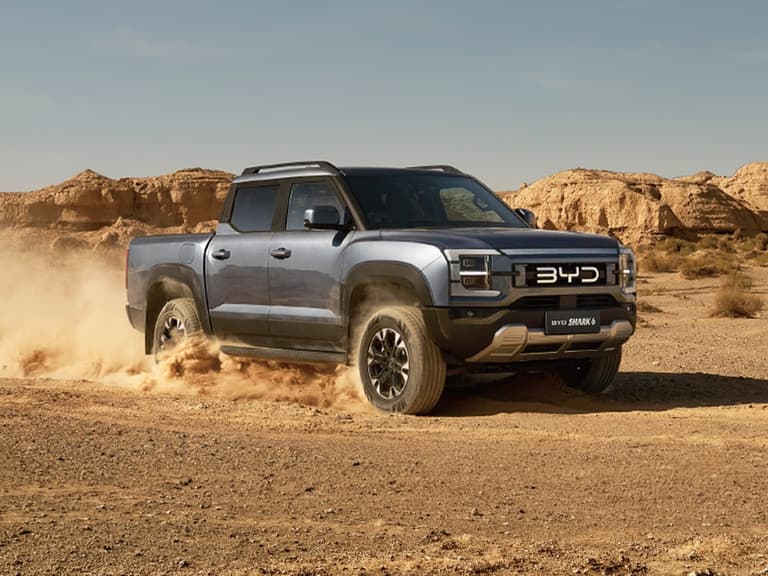
Toyota’s Prado 250 utilises a 2.8-litre four-cylinder turbo-diesel assisted by 48V mild-hybrid technology, delivering 150kW of power, 500Nm of torque, and a full 3,500kg braked towing rating. Meanwhile, the Denza B5 (known in China as the Fangchengbao Leopard 5) enters as a performance-heavy plug-in hybrid (PHEV), combining a 1.5-litre turbo petrol engine with dual electric motors to output a staggering 505kW and 760Nm. However, the Denza is limited by a lower 2,500kg towing capacity.
The 2026 Pajero will likely strike a deliberate balance between these two approaches. Its expected twin-turbo diesel matches the Prado’s 150kW power output and 3,500kg towing capability, while any future hybrid powertrain promises to challenge the Denza B5 on tech credentials and urban fuel efficiency.
| 2026 Mitsubishi Pajero (unconfirmed) | Toyota LandCruiser Prado | Denza B5 | |
| Powertrain | 2.4-litre Twin-Turbo Diesel | 2.8-litre Turbo Diesel (48V V-Active) | 1.5-litre Turbo Petrol + Dual Electric Motors |
| Power Output | 150kW | 150kW | 505kW |
| Torque Output | 470Nm | 500Nm | 760Nm |
| Architecture | Triton Ladder-Frame Chassis | TNGA-F Ladder-Frame Chassis | DMO Ladder-Frame Chassis |
| Braked Towing | 3,500kg | 3,500kg | 2,500kg |
| 4WD Hardware | Super-All Wheel Control (S-AWC) | Full-Time 4WD w/ Centre Lock | Dual-Motor Electric AWD |
While the new Mitsubishi Pajero will likely utilise the Triton’s proven 2.4-litre twin-turbo diesel engine, which outputs 150kW and 470Nm at launch, offering a diesel-only lineup long-term would leave a gap against tech-forward competitors.
To future-proof the badge, Mitsubishi CEO Takao Kato announced that the brand is investing $681 million to convert its Thai production hub into an electrified-vehicle facility dedicated to Triton and Pajero production. While smaller models like the XForce utilise a basic 1.6-litre hybrid setup, the Pajero requires a heavy-duty petrol-electric or diesel-electric system capable of sustained off-roading and high-payload towing. Developing this hybrid powertrain has become a priority, allowing Mitsubishi to offer traditional touring diesel efficiency at launch, then capture buyers seeking efficient urban driving and electric torque down the track.
Why the Pajero Sport Couldn’t Fill the Flagship Void
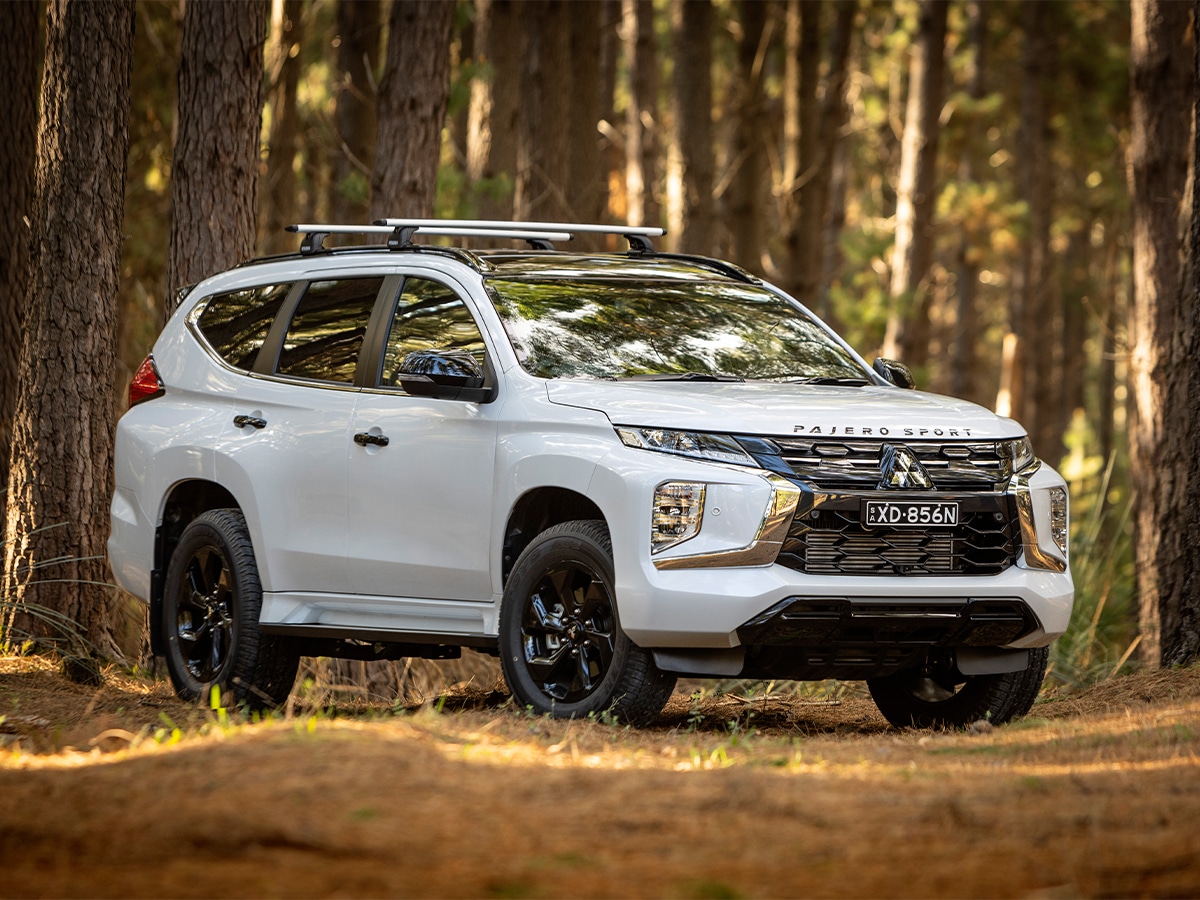
To understand why Mitsubishi is resurrecting the Pajero, one needs only look at the Pajero Sport’s market performance. With the retirement of the original Pajero in 2021 (which bowed out with an 800-unit Final Edition allocation in Australia, and pictured throughout this article), the ute-derived Pajero Sport was left to carry the mantle.
It remains a capable mid-tier 4×4, but it’s fundamentally built on commercial ute architecture. That means it’s narrower, less refined at highway speeds, and lacks the wider track, shoulder room, and towing stability of a dedicated full-size SUV.
Local Australian sales figures illustrate the cooling demand for the aging ute-based wagon against newer competition:
- 2024: 7,306 units
- 2025: 6,052 units
- 2026 (YTD April): 1,840 units
It’s clear that it was time for Mitsubishi to go back to the drawing board.
Triton Ladder Frame, S-AWC, and Bespoke Suspension
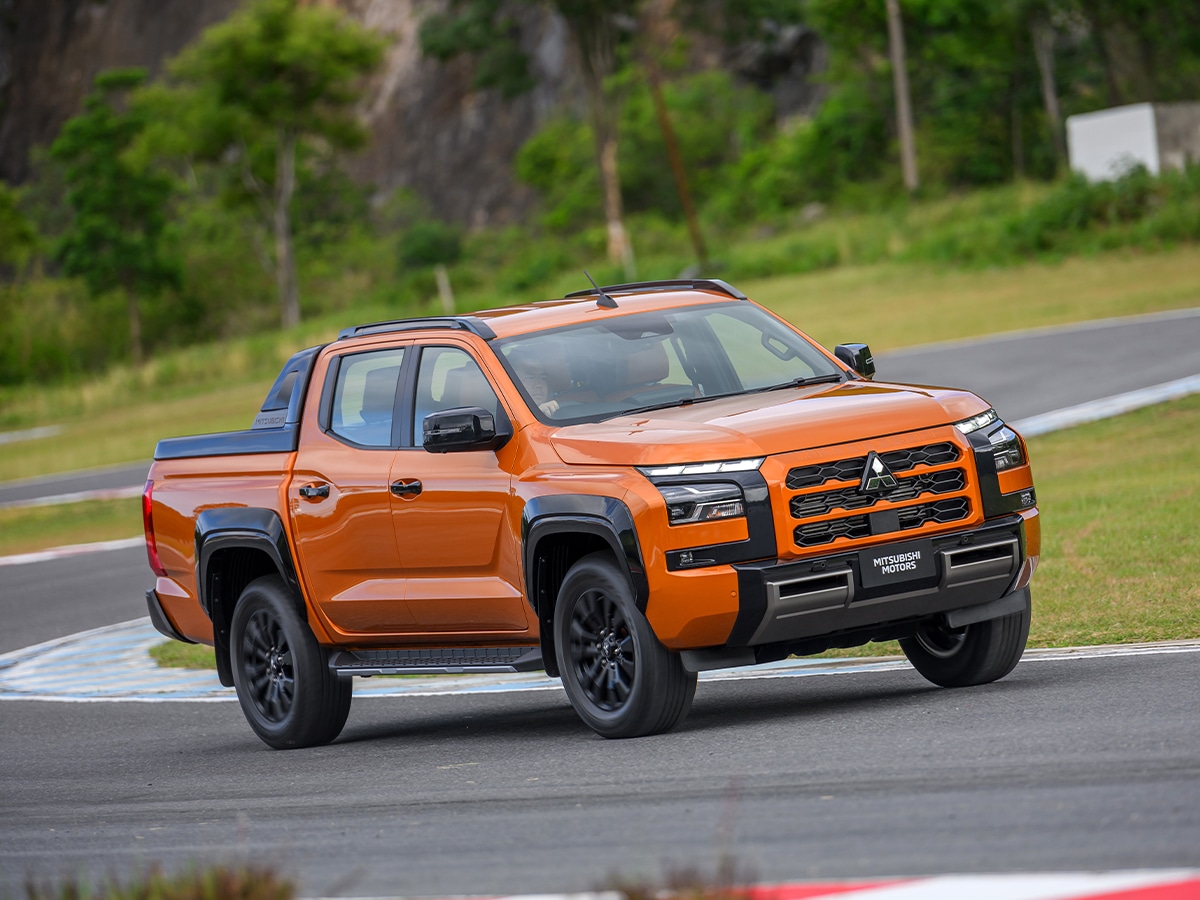
Mitsubishi has confirmed that the new “cross-country SUV” will adopt the robust and durable ladder-frame architecture of the new-generation Triton ute. However, company executives are aware that a flagship SUV cannot ride like a commercial workhorse. So, to distinguish the Pajero from its utility siblings that have solid-axle rear suspension set-ups for towing purposes, engineers have developed bespoke front and rear suspension setups.
The suspension is engineered to deliver high road-holding performance over severe off-road bumps while suppressing unwanted body movement and cabin vibration on corrugated dirt roads. However, what that really means, is that a Denza-like independent rear suspension set-up will likely be used. We’ve already seen it teased underneath the test vehicles spied in regional locations.
While still unconfirmed, a move to four-wheel independent suspension would pay homage to the previous-generation Pajero, which set the benchmark for large 4WDs in terms of ride quality. By pioneering independent suspension at all four corners when rigid live axles were still the industry norm, the old model earned legendary status among tourers. It possessed an uncanny ability to float across high-speed outback corrugations, eliminate rear-axle tramp, and deliver highway cornering composure that traditional live-axle rivals simply couldn’t match.
Elevating the new Pajero’s off-road performance is Mitsubishi’s Super-All-Wheel-Control (S-AWC) technology. S-AWC manages power delivery, braking force, and torque vectoring to maintain maximum traction across mud, sand, rocks, and slippery tarmac. More will be revealed about this specific implementation before launch.
“The all-new Pajero adopts a highly robust and durable ladder frame, together with a suspension system engineered to deliver high road-holding performance. This combination provides exceptional off-road capability while delivering refined on-road comfort by suppressing unwanted body movement,” confirmed a spokesperson for Mitsubishi Motors Corporation.
Unlike basic traction control, current iterations of the Mitsubishi S-AWC system continuously monitors throttle position, steering angle, wheel speed, and yaw sensors to dynamically adjust engine torque and braking force to individual wheels. On high-speed tarmac or corrugated gravel, it applies micro-braking force to inside wheels to remove understeer and keep the vehicle planted through sweeping corners. Meanwhile, off-road, it shifts power away from slipping wheels and routes drive to those with maximum grip, allowing the car to walk through deep sand, rutted mud, and steep rocky inclines without requiring excessive wheelspin.
Return of the Iconic Multi Meter
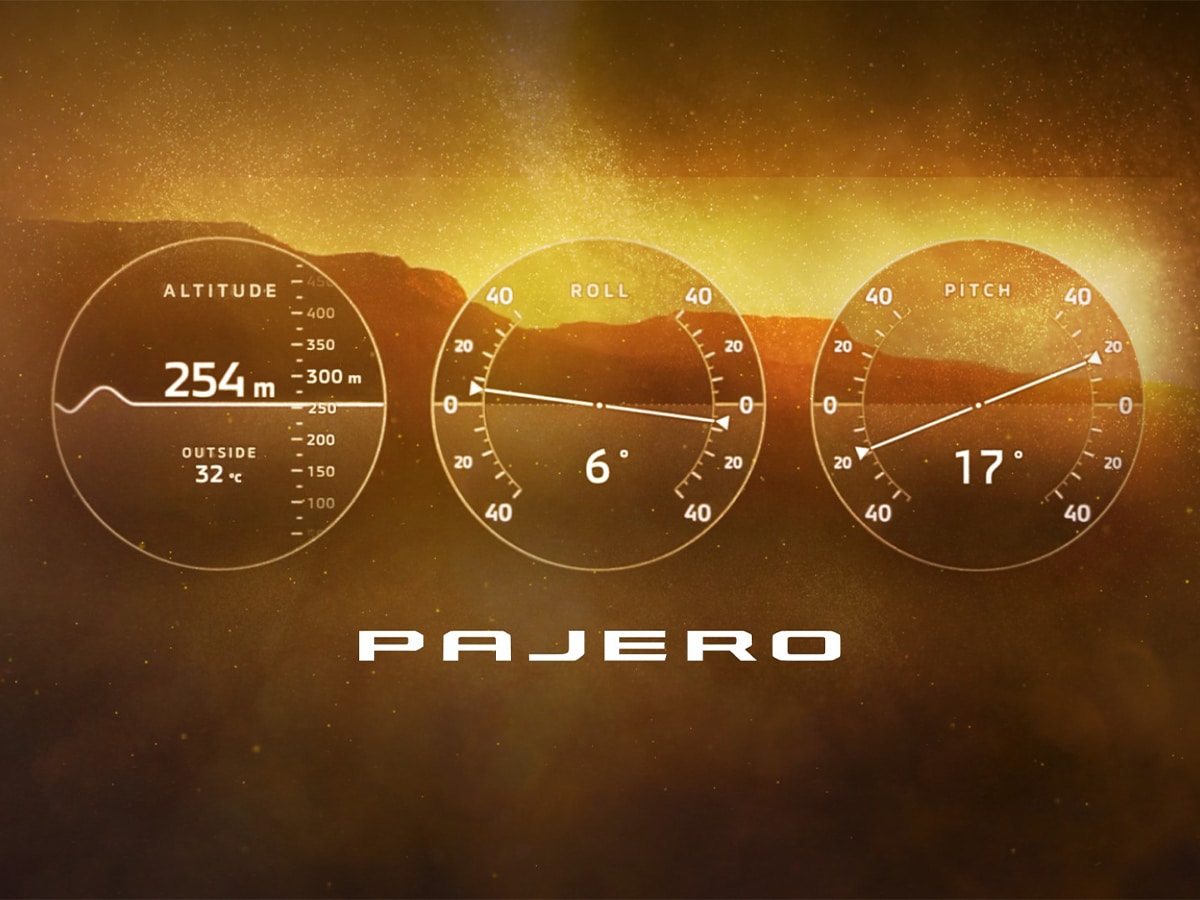
The return of the Pajero is all about nostalgia. So, as a direct tribute to its 4×4 heritage, Mitsubishi revealed that the 2026 model will reintroduce one of its most celebrated interior features: the Multi Meter. It was popularised among previous generations as an analogue dashboard triple-gauge pod, but the new model upgrades it to a digital triple-meter display.
Designed to give drivers critical telemetry during technical off-roading, the Multi Meter provides real-time readouts for:
- Altitude and barometric pressure
- Compass heading
- Ambient temperature
- Vehicle pitch and roll angles
- Left-right torque distribution across the S-AWC system
Next to the display reveal, Mitsubishi launched an official global teaser series titled “The Pajero is ready to write its next chapter,” showcasing the digital telemetry and chassis dynamics in action.
 1/5
1/5Reclaiming the Dakar Rally Legacy
If Mitsubishi intends to execute this revival properly, it must lean into the heritage that forged the badge. The Pajero didn’t become an icon by navigating suburban traffic.
It earned its stripes on the global motorsport stage, entering the Dakar Rally in 1983. It claimed 12 victories over the decades, cementing its legacy with seven consecutive wins. We believe (and, hopefully, Mitsubishi does too) that the most authentic way to validate the Pajero’s return to the dunes is to return to the dunes. Mitsubishi currently campaigns the Triton in the Asia Cross Country Rally. Elevating those motorsport efforts to a factory-backed Dakar program to coincide with the 2026 launch would be the ultimate statement of intent.
The Pajero badge carries a heavy historical weight. Mitsubishi must build it tough, build it big, and return it to the rally stage.
 1/9
1/9




















Comments
We love hearing from you. or to leave a comment.