


Updated:
Readtime: 5 min
Every product is carefully selected by our editors and experts. If you buy from a link, we may earn a commission. Learn more. For more information on how we test products, click here.
- Massive multicopter is designed for urban low-altitude commuting.
- Production happens in an automated, aviation-grade cleanroom facility.
- The brand aims to produce 100 aircraft annually.
- It meets strict AS9100D Aerospace Quality Management System standards.
- Initial units are reserved for regional corporate and tourism partners.
Chinese car brands have so successfully dominated new-car markets that they appear increasingly fatigued by the terrestrial limits of the tarmac. They’ve already beaten established brands with ground-based electric vehicles, and their next mission is to look into entirely new arenas for market dominance. Rather than rolling out another iteration of the ubiquitous crossover, GAC Group has officially inaugurated an aerospace facility to construct an entirely different type of commuter vehicle.
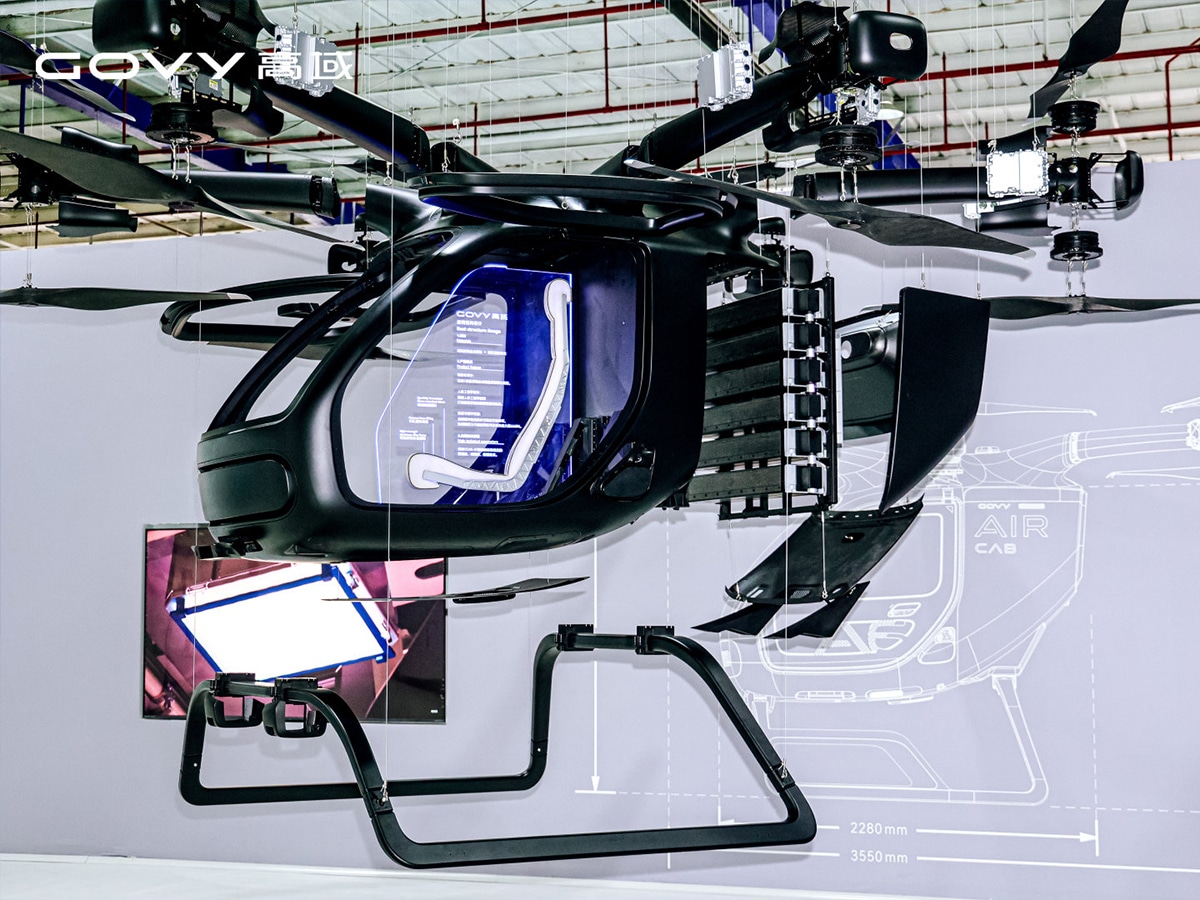
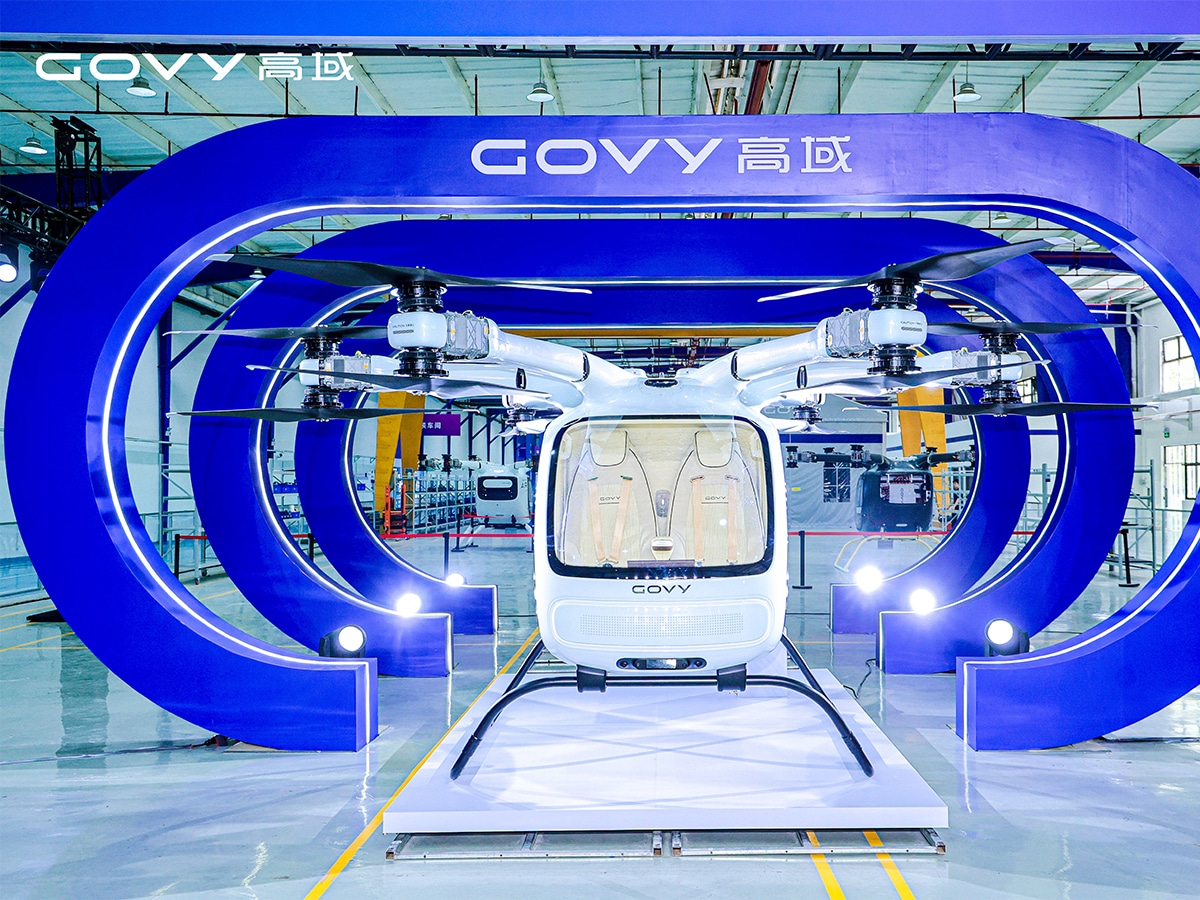
The vehicle in question is the GOVY AirCab, a massive multicopter that looks remarkably like a consumer drone scaled up to human-carrying proportions. With a projected annual capacity of 100 aircraft, GAC Group will begin manufacturing its new GOVY AirCab shortly after entering several strategic partnerships in the region. However, the rest of the world is left wondering whether a vehicle that looks like a giant remote-controlled drone can legitimately replace a premium luxury sedan for the morning commute (or a helicopter at that).
Speculation and regulations aren’t slowing China down, and GAC GOVY has already completed a successful maiden flight in Guangzhou’s Haixinsha CBD, demonstrating that it can indeed hover above real-world urban environments. Widespread adoption faces a brutal gauntlet of regulatory approvals, but the industrial foundation is in place, meaning the line between automotive novelty and aviation reality is ready to be blurred. Let’s take a closer look!
Key Features for the GOVY AirCab
To shift this oversized quadcopter from a design study into reality, the production framework is built around a flexible manufacturing architecture with an “innovative pulse line.” This automated setup achieves many things, but most importantly, a strict positioning accuracy of up to ±0.1 mm during final assembly, working in tandem with a specialised composites workshop. Built entirely to aviation-grade Class 100,000 cleanroom standards, this facility handles the precision manufacturing of the vehicle’s carbon-fibre components to ensure structural integrity.
Strict aerospace compliance dictates the vehicle’s entire operational footprint, and the production processes adhere to the internationally recognised AS9100D Aerospace Quality Management System certification, which covers everything from research and development to manufacturing, testing, and product iteration. GAC Groups intends to trickle down this level of attention to detail into its cars as well.
Before earning its validation for the skies, the production-spec aircraft cleared a gauntlet of airworthiness-related evaluations. These trials subjected the framework to full-aircraft static load testing, system endurance testing, and electromagnetic compatibility (EMC) testing, ticking off the regulatory requirements to transition what looks like a giant drone into a legitimate commuter aircraft.

Why’s an Automotive Giant Building an Oversized Drone?
The design philosophy of the GOVY AirCab raises immediate questions about the boundaries of modern automotive. By opting for a pure multicopter design rather than a traditional car with folding wings, GAC Group has effectively created a colossal drone. Strategy hinges on the company’s definition of an “Aviation + Automotive” commercial model.
Traditional aerospace manufacturing suffers from astronomical production costs and low output volumes, while typical car factories are ill-equipped to handle rigorous flight-safety certifications.
By applying automotive-style mass-production supply chains to an aircraft certified by aerospace standards, the brand intends to overcome the historical efficiency limitations that have plagued previous flying-car experiments.
Can a Drone Really Replace Short-Distance Business Travel?
The primary operational uses for this vehicle are urban low-altitude commuting and short-distance business travel connections. Rather than navigating roads, the aircraft aims to address the core industry dilemma of creating a flying vehicle that’s actually scalable for public use. Real-world validation took place in March 2026, when the AirCab completed a series of flight demonstrations within Guangzhou.
Still, the vehicle’s commercial roadmap relies heavily on more than flight demonstrations and consumer sales. They have to sell these things to corporations, and in China, GOVY has entered strategic partnerships with Beijing Hengkuan Low-Altitude Technology Development Co., Ltd., Guangzhou Zhidu Cultural Tourism Development Co., Ltd., and Shenzhen Zhongke Tianyu Low-Altitude Digital Technology Co., Ltd., among others. These partners will provide the market demand necessary to support the manufacturing facility’s planned production ramp-up.
Despite investor scepticism regarding the commercial viability of low-altitude transport, the brand is forging ahead by securing intention orders from cultural, tourism, and digital technology firms to establish initial demonstration bases.
Price and Future Availability
Despite GAC’s local presence in Australia, it’s unlikely we’ll ever see a GOVY AirCab arrive here. Even in China, the first production units rolling out of the Guangzhou facility are strictly designated for regional corporate partnerships within the region.
Entities such as Guangzhou Zhidu Cultural Tourism and Shenzhen Zhongke Tianyu have already signed off on initial intent orders to validate passenger transport and tourism scenarios.
With traditional internal combustion car manufacturing suffocated by regulations and heavy battery architectures, mainstream car development is becoming increasingly homogeneous, and the tech sectors of the automotive world are looking towards the sky. Whether the general public will ever embrace an oversized consumer electronics clone as a legitimate premium transit alternative remains unproven, but the skies are literally the limit.

























Comments
We love hearing from you. or to leave a comment.