


Updated:
Readtime: 5 min
Every product is carefully selected by our editors and experts. If you buy from a link, we may earn a commission. Learn more. For more information on how we test products, click here.
- DJI announced the Osmo Pocket 4P at the Cannes Film Festival.
- The device shoots 10-bit D-Log2 for professional colour grading workflows.
- Upgraded imaging sensors drastically improve low-light performance and dynamic range.
- Enhanced zoom and portrait features are aimed at serious mobile filmmakers and vloggers.
- Exact pricing and technical specifications remain undisclosed at this time.
We’ve followed the miniaturisation of cinema-grade equipment for years as it continues to blur the line between consumer tech and professional rigs. Since we first picked up the DJI Pocket, we’ve never had to choose between the agility of a smartphone and the dynamic range of a dedicated mirrorless setup, as these cameras can now do both. However, as prosumers become more comfortable with film-grade cameras, they want more, a camera that goes beyond the capability of the latest DJI Osmo Pocket 4.
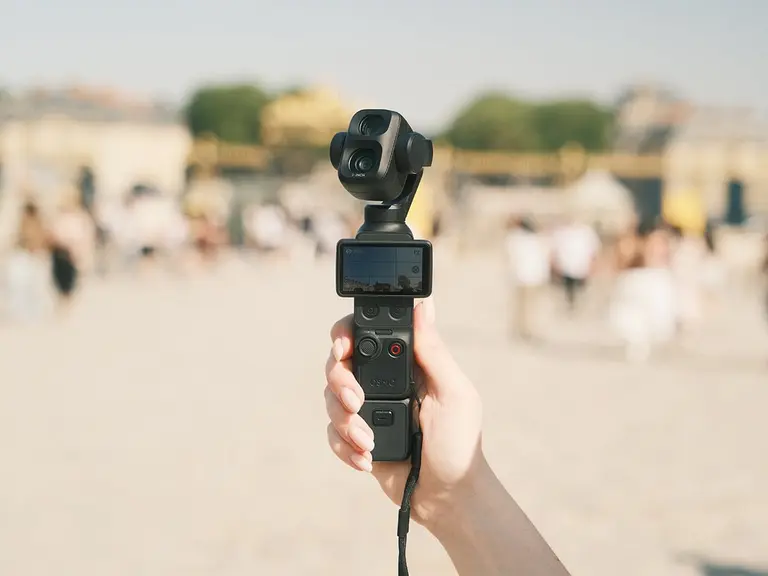
Unveiled against the backdrop of Cannes, the DJI Osmo Pocket 4P introduces 10-bit D-Log2 colour performance into a chassis small enough to slide into a jacket. The most impressive feature from first impressions is that DJI hasn’t drastically increased the Pocket 4’s body size, despite adding a secondary telephoto lens. Packing cinematic-level dynamic range, an advanced 1-inch main sensor, and a 1/1.5-inch telephoto sensor into such a compact footprint is a serious engineering feat. While creators often default to the iPhone for quick B-roll, this new dedicated gimbal once again challenges the notion that serious storytelling requires a bulky payload, and it has its sights firmly set on medium-format cameras.
Bringing pro-tier 10-bit colour depth to a highly portable form factor, it promises a workflow where lightweight gear no longer compromises in your post-production. It’s time to see whether the industry is ready to squeeze out how much production value a handheld device can truly deliver.
| Specification | |
| Brand | DJI |
| Model | Osmo Pocket 4P |
| Processor/Silicon | Next-generation imaging engine with ActiveTrack 7.0 |
| Display/Sensors | 2.5-inch Rotating OLED (1,000 nits) Dual System: 1-inch CMOS Main + 1/1.5-inch CMOS Telephoto |
| Memory/Storage | 107GB Internal + microSD expansion |
| Battery | ~2,000 mAh (Compatible with DJI Power ecosystem) |
| Weight | Slightly heavier than standard Pocket 4 |
| Max Resolution | 4K/240fps (Slow Motion); up to 6K/30fps |
| Price | Est. starting at $1,125 AUD (Creator Combo ~$1,350 AUD) |

Design, Build, and the Cinematic Handheld
It’s clear that DJI chose Cannes to reveal the Osmo Pocket 4P as a signal of the device’s cinematic aspirations.
The physical chassis maintains the pocketable ethos that defined its predecessors but brings crucial interface upgrades. The new 2.5-inch rotating OLED display pushes 1,000 nits of brightness, making outdoor framing in harsh sunlight effortless. It is built to address real-world creator needs by offering a form factor that makes production easier without attracting the unwanted attention a full camera rig often draws.
We can speak from experience that documentary creators and visual storytellers on YouTube rely on this low-profile footprint when shooting in populated areas, and the design helps the device function as a companion camera that slips seamlessly into a broader creative ecosystem.

Optics, Silicon, and Professional Colour
What separates a consumer toy from a professional tool is data capture and optical versatility. The inclusion of a dual-camera system and 10-bit D-Log2 colour performance is a massive leap for the Pocket series. This flat colour profile retains extensive highlight and shadow information, allowing you (or your editor) to match the footage with primary A-cam files from Sony FX series or Ronin 4D rigs in professional grading suites like DaVinci Resolve.
The silicon and sensor algorithms have also been overhauled to excel in challenging environments. Upgraded low-light sensor technology ensures clear footage when navigating nighttime cityscapes or dimly lit indoor scenes.
Key Upgrades to note:
- Dual-Lens System: 1-inch main sensor and 70mm-equivalent telephoto without digital degradation.
- 10-bit D-Log2: Enables professional-grade colour correction and high-end grading workflows.
- Cinematic Dynamic Range: Captures rich tonal depth (up to 14 stops) across lighting conditions.
- Advanced Low-Light Algorithms: Delivers clean, noise-free footage in dimly lit environments.
- Improved Zoom Functionality: True 3x optical zoom maintains image integrity when punching in.
Enhanced portrait capabilities (including 4K vertical filming) now prioritise natural skin tones and cinematic depth. This specific tuning is designed for narrative content, interviews, and high-end vlogging.

The Editor’s Take
When we went hands-on with the standard DJI Osmo Pocket 4 only a few weeks ago, we praised its stability but noted that serious colourists might still find the profile slightly limiting for more complex post-production tasks.
The 4P addresses that exact critique directly (at least, it does on paper). By integrating D-Log2 and a 10-bit pipeline, DJI has forced the people who turned their nose up at the Pocket for its shortcomings to take this seriously, and it could become a legitimate B-cam for independent film productions on a budget. The smartphone industry routinely boasts about cinematic video, but computational blur still struggles against dedicated optical stabilisation. The 4P should fix that performance gap with professional colour depth that outmuscles clever smartphone software.

Price, Configurations, and Availability
Following the initial Cannes announcement, industry expectations place the standard Osmo Pocket 4P package at an estimated AUD$1,125, with the fully kitted Creator Combo expected to sit around AUD$1,350.
The Osmo Pocket 4P will soon be available through the brand’s official online channels and authorised retail partners. It’s slated to launch first in Europe and Asia-Pacific, with a North American release pending further regulatory authorisations.
The pace of the tech industry often forces creators into a cycle of constant hardware updates. Yet, when a pocket-sized device achieves true 10-bit colour, dual-lens optics, and professional dynamic range, the hardware simply gets out of the way.



















Comments
We love hearing from you. or to leave a comment.