
Updated:
Readtime: 25 min
The Lowdown:
From understated business-in-the-front styles to full neck-grazing lengths, a professional barber shares the best subtle mullet hairstyles redefining men's hair in 2026.
Every product is carefully selected by our editors and experts. If you buy from a link, we may earn a commission. Learn more. For more information on how we test products, click here.
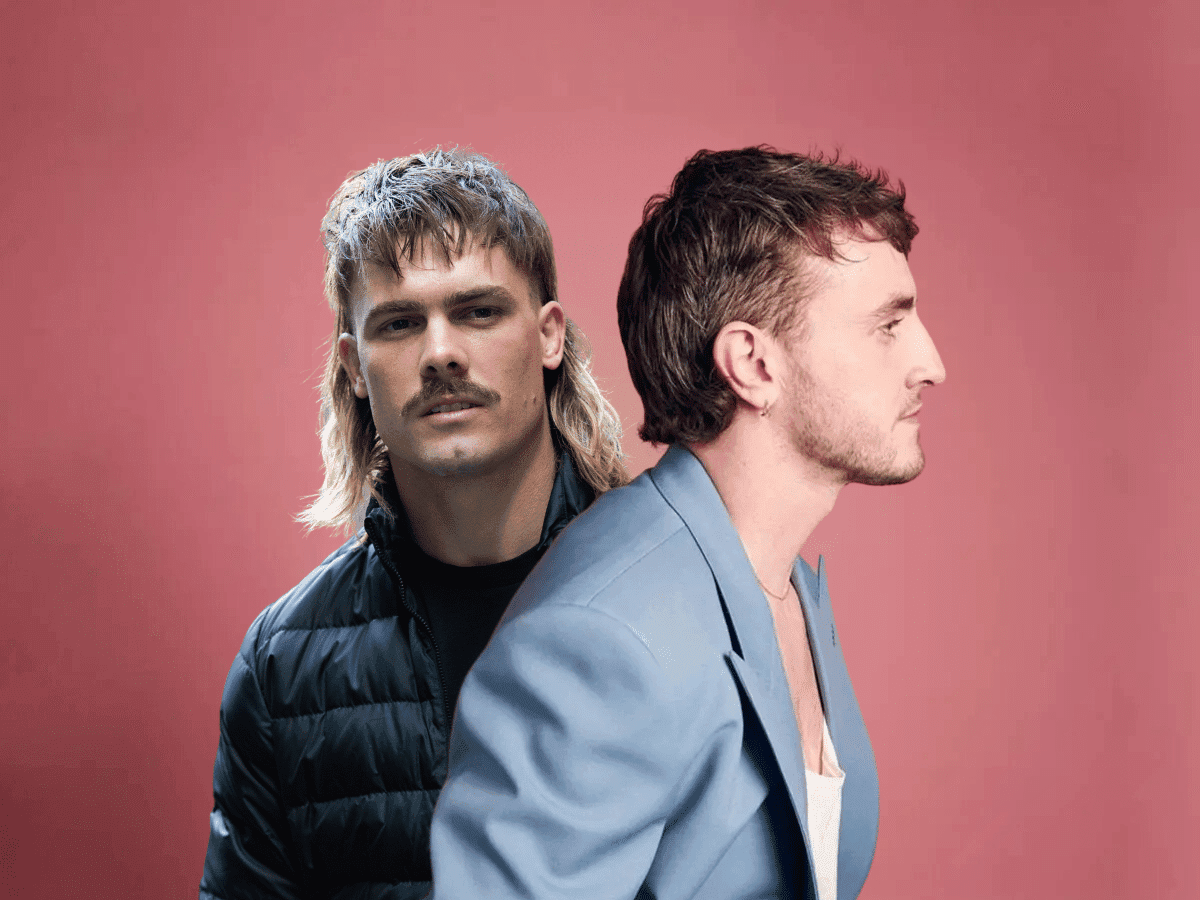
Whether you like it or not, the subtle mullet hairstyle is back in a big way. The signature cut, which involves a little business in the front and a whole lot of party at the back, spent a good 30 years in the hairdressing wilderness, reserved for VK Commodore drivers and those with an above-average affinity for AC/DC, but the times are changing. The iconic men’s hairstyle is arguably the most fashionable cut of the modern era.
As a barber, I’ve seen the mullet hairstyle undergo a series of evolutions. These days, the modern mullet is versatile, rebellious and entirely on-trend. So, I’ve pulled together a handy guide to the best subtle mullet hairstyle for men, explaining the differences between them, the ideal face shapes for each and how best to manage the evolving style.
The Best Types of Mullets for Men: From Subtle to Bold
1. Classic Mullet
Best for: Men who want a simple, low‑maintenance mullet that still looks obviously “business in front, party at the back”.
Classic Mullet Characteristics
- Longer Length on at Nape: The classic mullet is all about keeping the sideburns short and the nape long.
- Messy Styling: With the hair short and spiky, styling for this cut should be messy, so look for a matte product that highlights the texture.
Best Face Shapes for Classic Mullet
- Oval
- Round
- Square
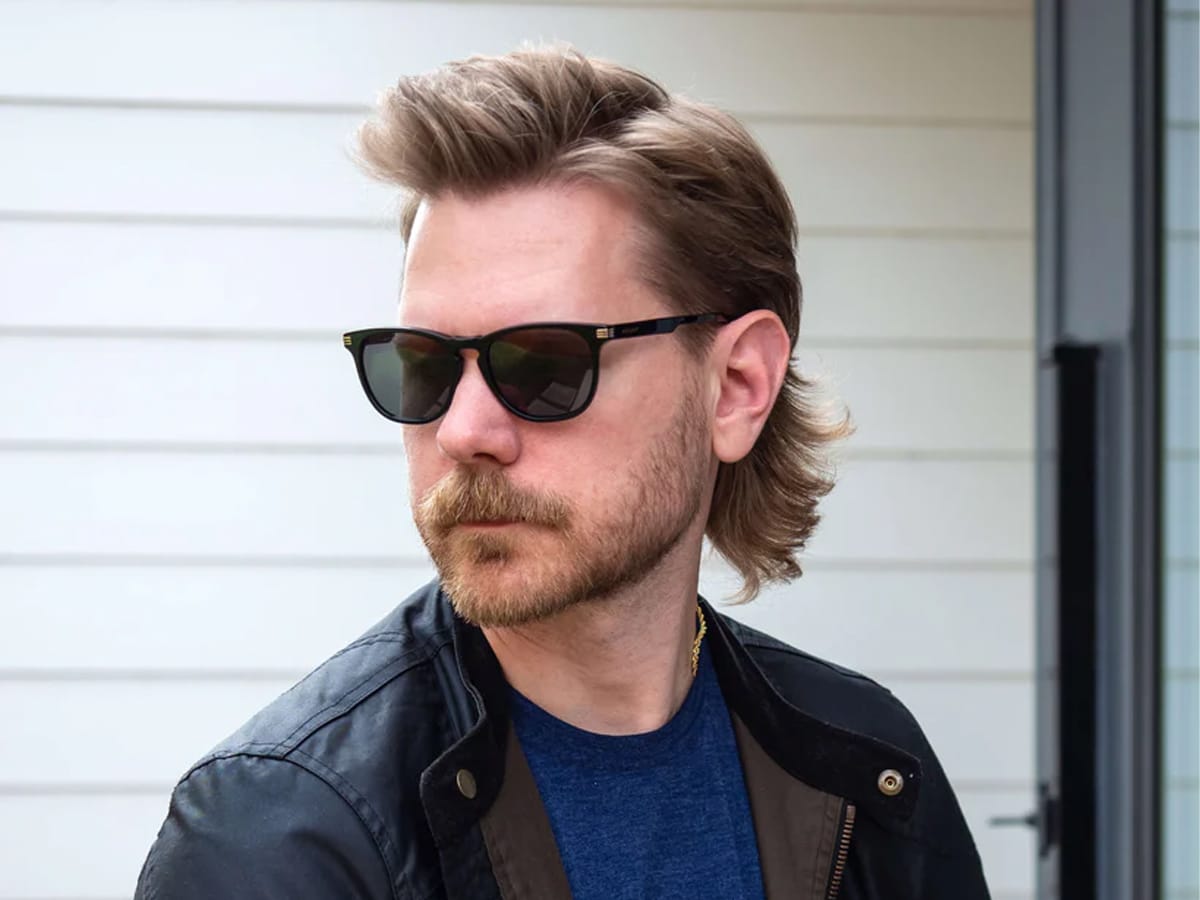
The most basic variation of the mullet, the classic option combines shorter side and top sections with an elongated nape area at the back. Think of this as the most typical of all mullet styles: simple and straightforward, with enough length to create an obvious contrast between the top and back.
In most cases, the hair is blended in from the sideburns to the top, with the longer sections falling naturally at the base of the neck. You could opt for a harsh disconnect, where the hair is not blended between sections of length, but this can often make you look like Jean Claude Van Damme from the ‘80s. And as much as I love Bloodsport, it’s certainly not a look for everyone. Variations such as this are rife with the classic mullet, however, I always recommend keeping the hair long enough to sit comfortably behind the ears without too much styling or product.
In order to achieve the classic mullet, you will need significant growth at the back to create the contrast in length, while the top and sides can essentially remain as a stock-standard short, back and sides. In essence, this haircut will stand out in a crowd, but it is far from the most extreme iteration of the mullet.
2. Modern Mullet
Best for: Men with straight or wavy hair who want a cleaner, blended mullet that feels on‑trend but still wearable day‑to‑day.
Modern Mullet Characteristics
- Natural Flow: The hair on top and at the back will flow naturally, embracing waves and curls.
- Seamless Blending: The hair on the sideburns will be blended seamlessly with the hair on top and back to create a natural, polished look.
Best Face Shapes for Modern Mullet
- Oval
- Round
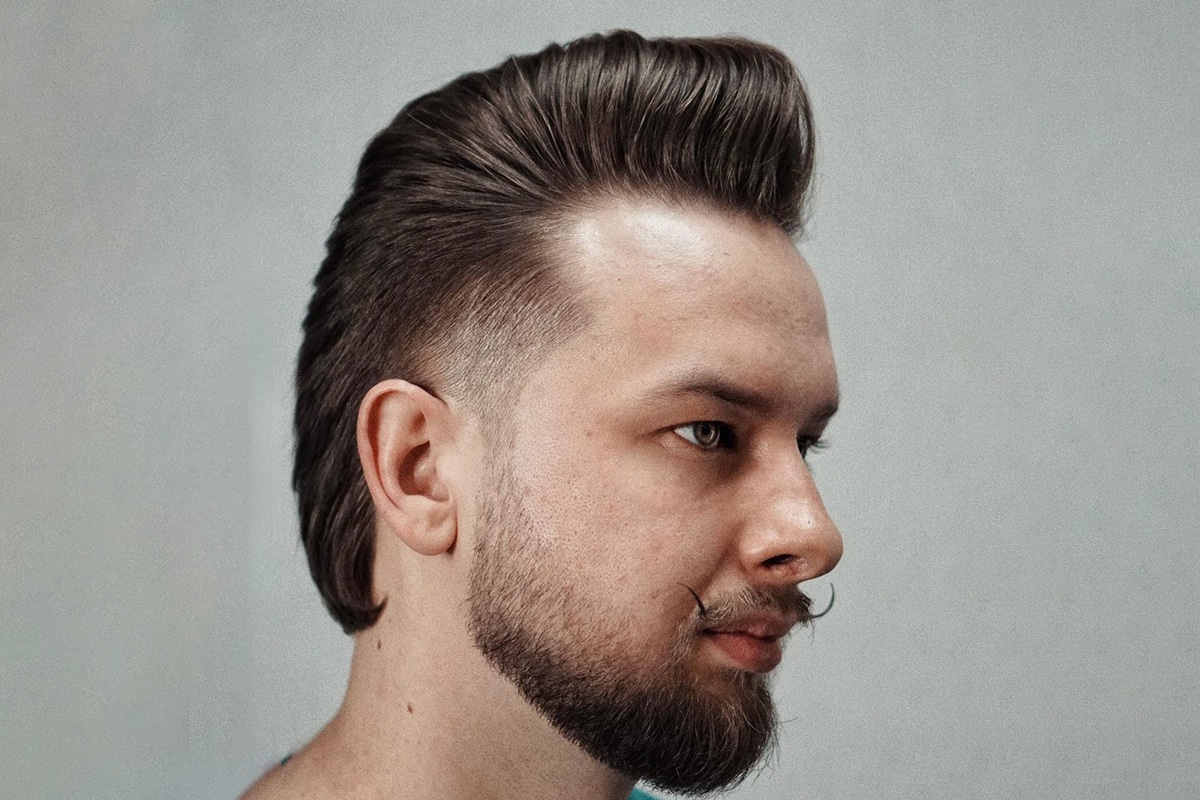
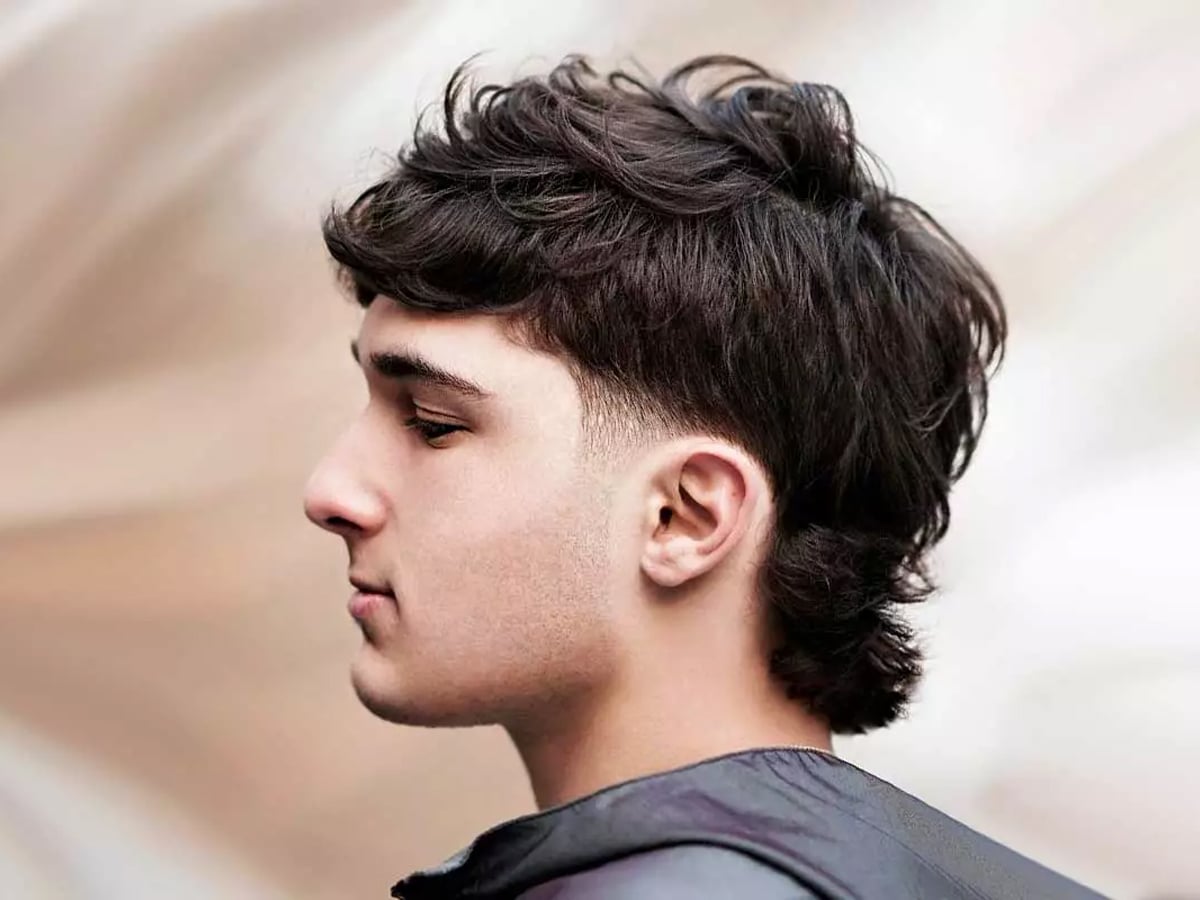
A contemporary take on the classic cut, the modern mullet is a more stylised version of the famed hairstyle. With this iteration, the hair on the sideburns is blended smoothly with the hair on top and back, creating a deliberate uniform look. This noticeably shorter section can employ a variety of different approaches, from high skin fades to more subtle mullet taper options.
“The mullet is here to stay but with some slight changes,” senior stylist and American Crew style ambassador, Andrew Zumbo tells me. “We can expect some exciting variations, particularly with the emergence of the micro mullet. This new take features shorter lengths in the front and top, with just a hint of length in the back. It’s less dramatic than traditional mullets, making it easier to style while still retaining that edgy vibe.”
The key difference here is texture and flow, so I definitely recommend this cut for men with wavy or slightly curly hair, as this adds an element of dynamism to the style. Alternatively, a few minutes with a blow-dryer and diffuser, alongside some texture power and product will help to give you the desired look. As with most contemporary mullet styles, tightly curled hair can be tricky as it doesn’t necessarily allow for the visual contrast between lengths.
For inspiration, I would look at NFL player Sam Hartman, who has perhaps the best example of a modern mullet around. He has significant length at the top and nape, styled uniformly back, and sideburns taken extremely short. This cut has all the hallmarks of a contemporary mullet, with additional length thrown in.
3. Undercut Mullet
Best for: Men who like bold, high‑contrast haircuts and don’t mind a harsher, more rebellious mullet.
Undercut Mullet Characteristics
- Disconnected Lengths: With this cut, there is no clean blend between short and long sections, accentuating the contrast.
- Fades: With many undercut mullets, a faded sideburns section will be employed to add a touch of flair and personal style.
Best Face Shapes for Undercut
- Oval
- Round
- Triangular
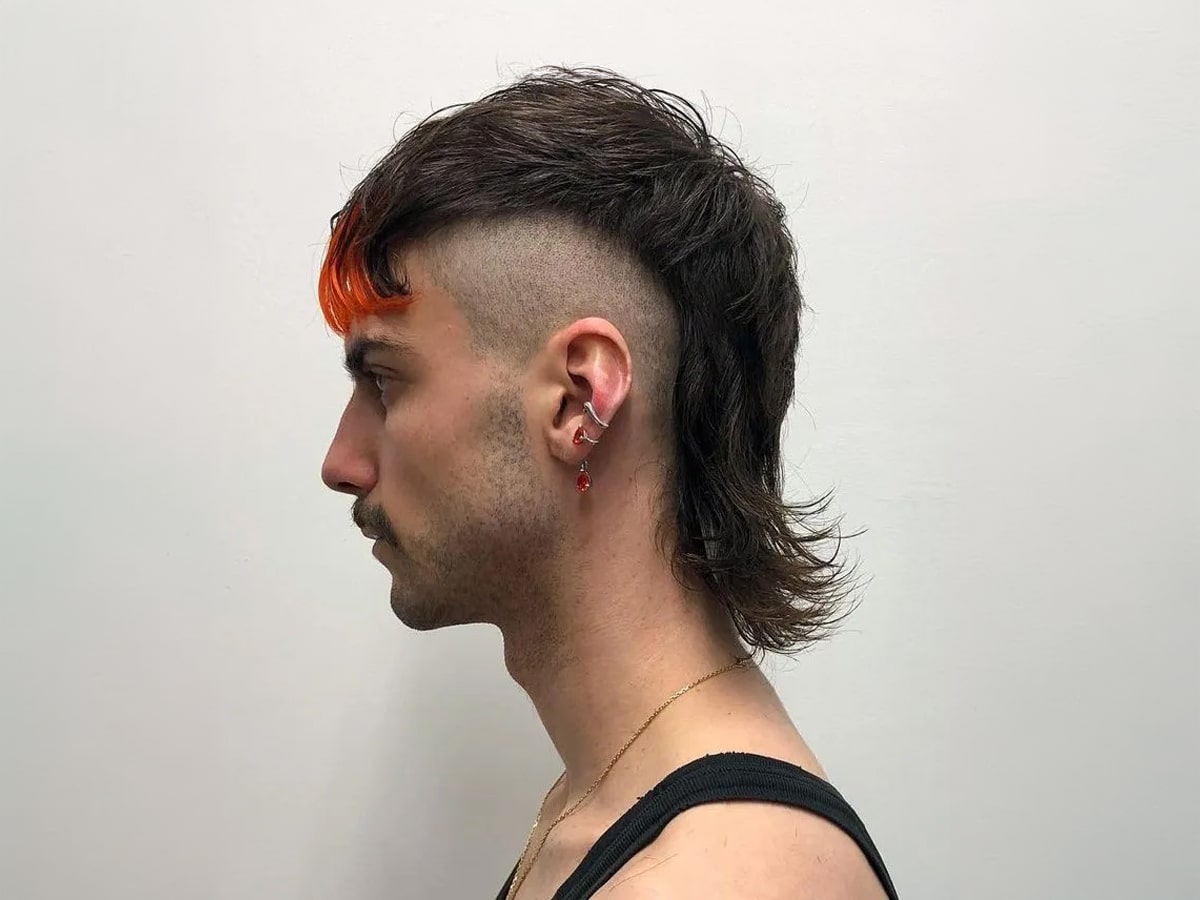
When it comes to more extreme variations of the men’s mullet hairstyle, the undercut option is hard to miss. Taking the short sideburns approach, this style typically shaves the sideburns very tight, under a clipper blade 1 and features no blending whatsoever. This will ultimately create a harsh disconnection line that accentuates the contrast in lengths and textures.
Importantly, the lack of blending means the hair on top and at the back is entirely up to you. The style is predicated on extreme contrast, so medium to longer lengths work best when coupled with texturising components through the fringe and top. For this style, I would definitely recommend incorporating a fade element to the sideburns as it adds a level of refinement to an otherwise blunt aesthetic. As a general rule, I wouldn’t necessarily advocate for this cut, particularly if you work in any sort of corporate role, however, the right person can certainly pull it off.
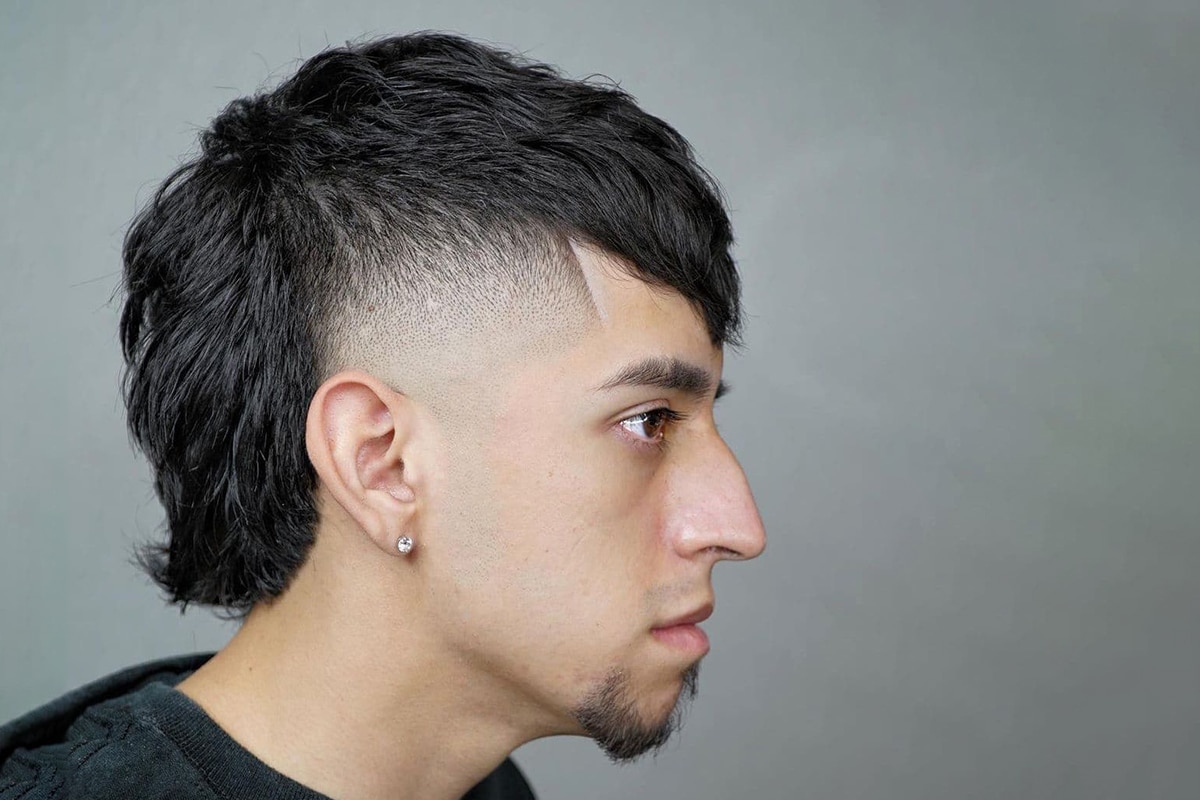
4. Mullet Fade
Best for: Men who want a sharp, modern mullet with clean faded sides.
Mullet Fade Characteristics
- Faded Sides: This cut’s defining characteristic is the gradually shortened sideburns that fade upwards toward the top section, creating a smooth transition from the hair on top to the skin.
Best Face Shapes for Mullet Fade
- Oval
- Oblong
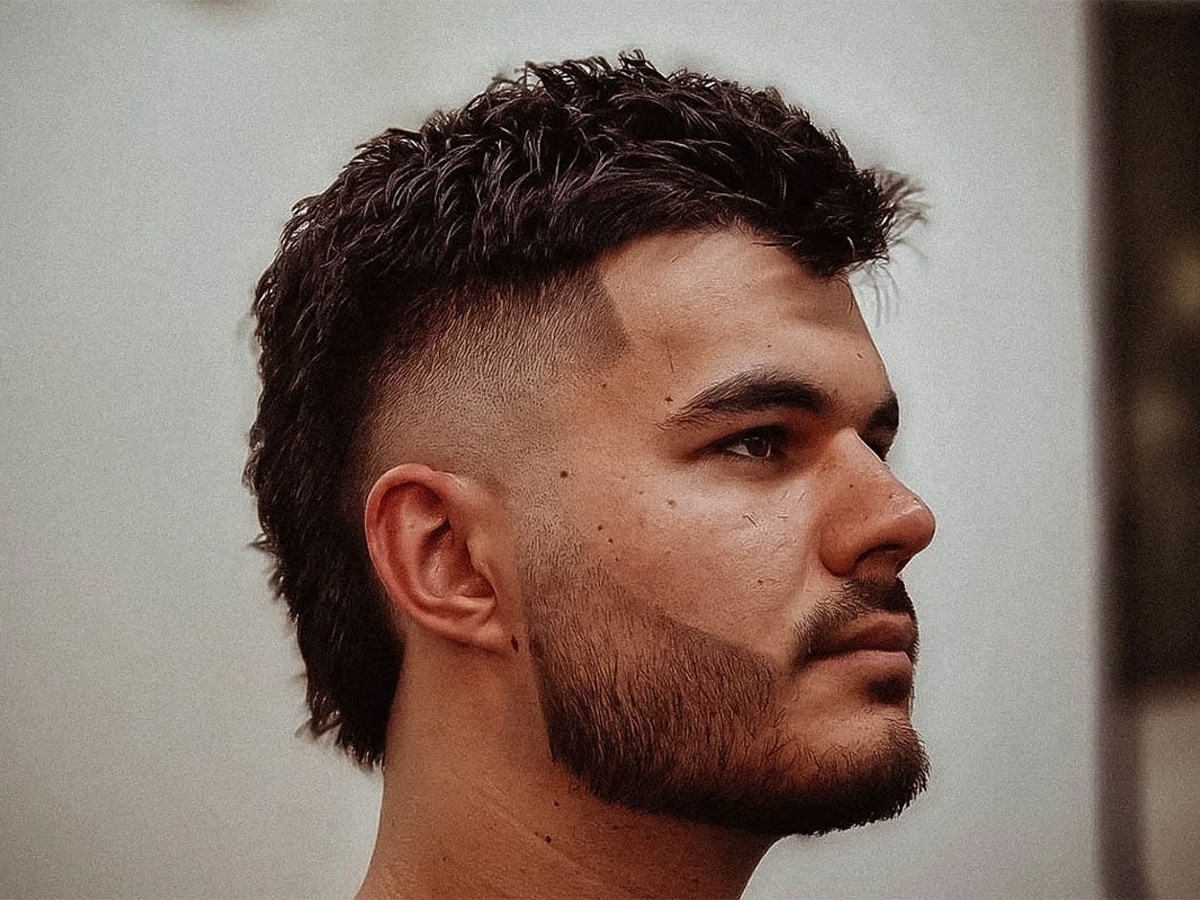
A very modern twist on the mullet hairstyle, the fade takes it to a new level of trend and style. The defining characteristic of this style is the gradually faded sideburns, which generally start at skin and increase in length as they go up the head. The soft fade can be made at any height according to your preferences and face shape but will undoubtedly add a fresh, modern edge to your mullet. The fade style can vary, with high fades giving a more dramatic look, while low fades make for a subtle mullet and balanced aesthetic.
Unlike other mullet styles, this option does work well with tight-curled hair, as this hair type can be faded effectively. Additionally, faded sideburns give a more polished look and tend to suit most face shapes. If you have a rounder face, a higher fade with more volume on top can help elongate your face, while more oblong face shapes can employ a low fade for added structure and refinement.
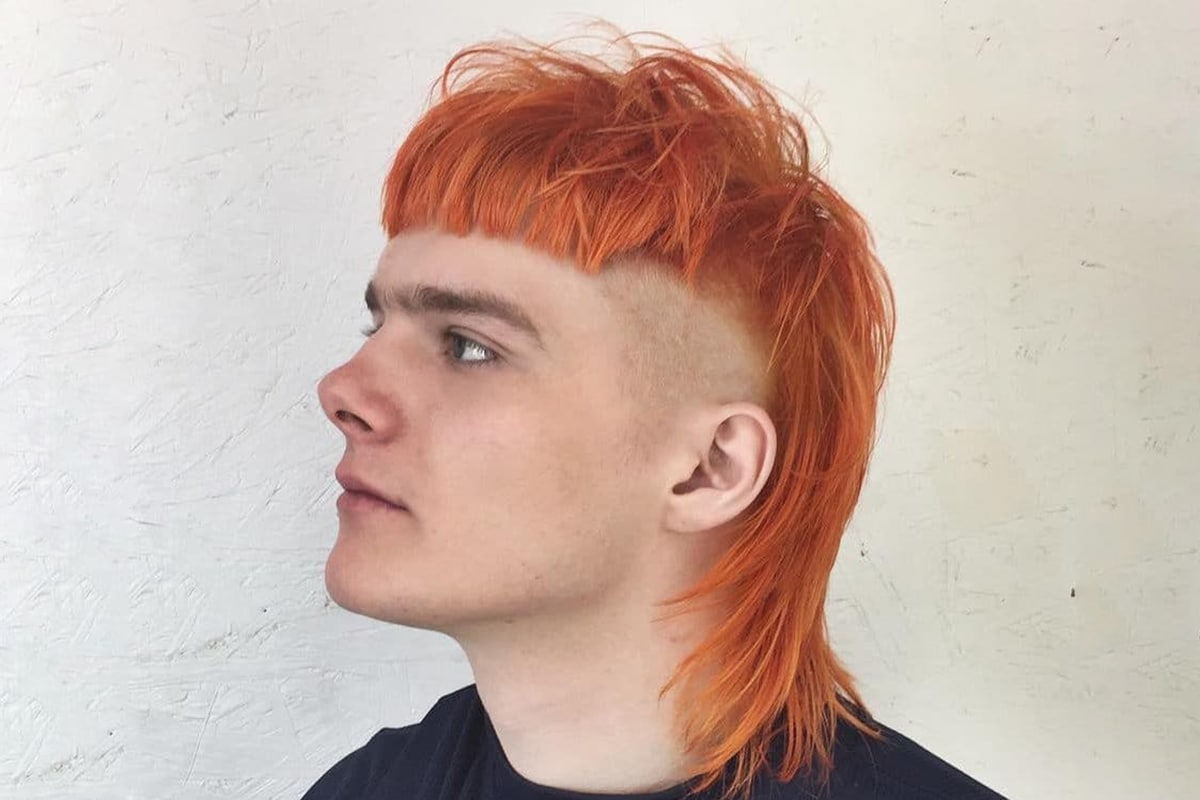
5. French Crop Mullet
Best for: Men who like a strong fringe and want a fashion‑forward mullet that frames the face and hides a larger forehead.
French Crop Mullet Characteristics
- Blunt Textured Fringe: The key characteristic of the French crop is the blunt, point-cut fringe.
- Forward Styling: To make this haircut work, you will need to style the hair forward and down, covering the top section of your forehead.
Best Face Shapes for French Crop Mullet
- Oval
- Square
- Round
A daring haircut, to say the least, the French crop mullet is an interesting take on the traditional hairstyle. The key characteristic of this cut is the blunt fringe section at the front, which is achieved through sectioning of the top and point cutting. This will ultimately add greater texture and can also help to draw attention away from a wider forehead if you have a heart or triangle-shaped face.
According to Zumbo, this style of mullet perfectly blends opposing worlds, giving you an opportunity to keep both the fringe and nape flowing long. This adaptation plays into recent men’s hairdressing trends, as more and more guys choose to mix and match elements.
“Today, men are increasingly interested in styles that reflect their personalities rather than sticking to traditional norms. Both hairstyles are adaptable to various hair types and lengths. For example, mullets can range from subtle mullet to bold, and messy fringes can complement different cuts, making them accessible to a broader audience,” Zumbo says. “The messy fringe, in particular, captures a relaxed, carefree vibe that aligns with contemporary fashion trends favouring casual and unkempt looks. As more people showcase their unique interpretations of mullets and fringes, they gain momentum and inspire others to experiment.”
As with most French crop styles, the messy textured silhouette is extremely versatile, working well with most face shapes, especially oval, oblong, and square faces. This is because the textured fringe can help soften a strong jawline for rounder faces and help add a level of balance to uneven features. Additionally, I’ve often found that this style works best with wavy or slightly curly hair, as it helps to accentuate the natural texture and flow of the hair. Conversely, achieving the textured fringe with very curly hair is tough without regular styling.

6. Short Mullet (Guppy Mullet)
Best for: Men who want to try a mullet without going all‑in, keeping the mullet length subtle and easy to manage.
Short Mullet Characteristics
- Short Mullet Section: The mullet section of the hair at the back should be kept very short, just visible, flicking out behind the ears.
Best Face Shapes for Short Mullet
- Oval
- Oblong
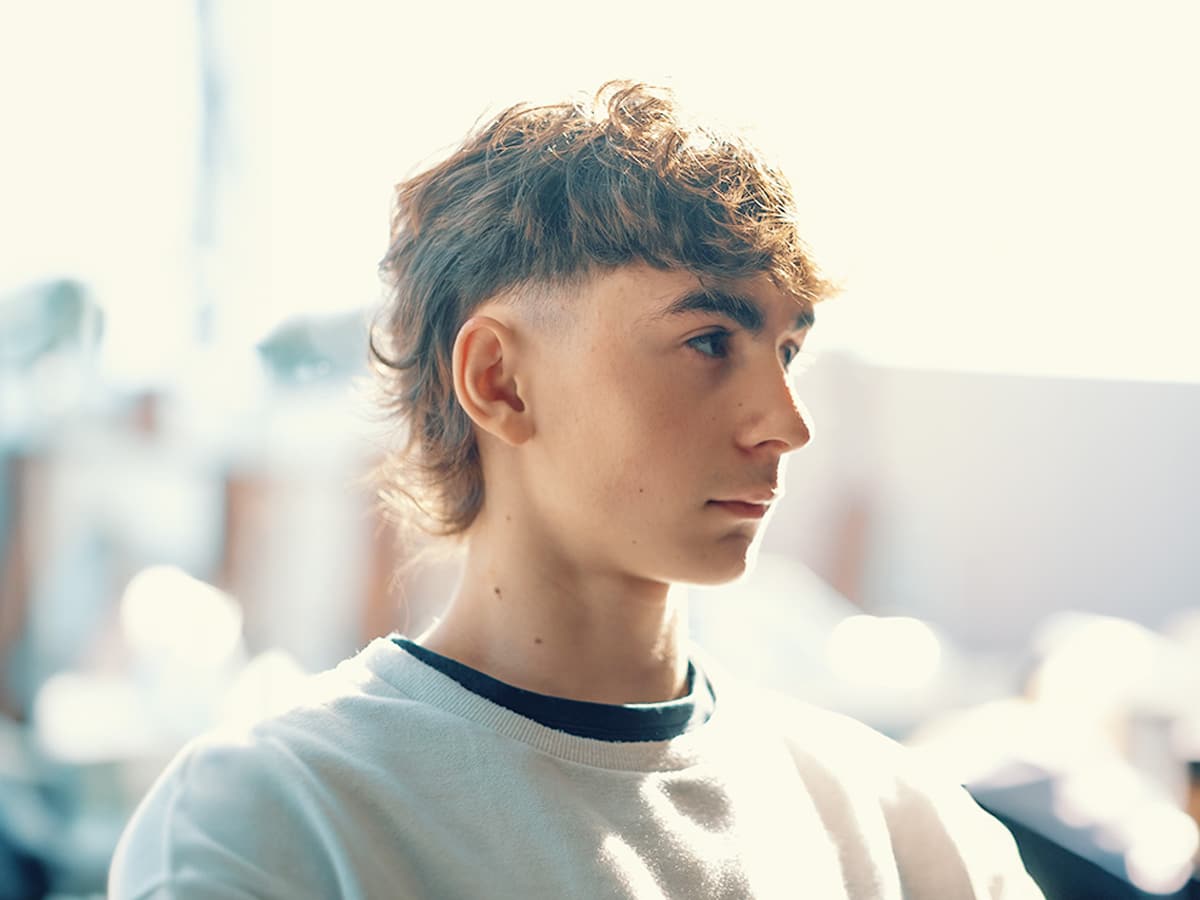
The short mullet (otherwise known as a Guppy mullet) is the shortest and most simple variation of the classic cut. With this style, the hair on top and sides is kept relatively short, with the mullet section only slightly longer than this. The nape will be cut naturally to create a more feathered look that tends to flick up the sides. Best of all, this cut is one of the easiest and best mullet styles to pull off, as it doesn’t require much maintenance.
If you are wondering, the term ‘guppy’ was coined by Laura Johnson, founder and CEO of Mulletfest. In an interview with ABC, she described them as “guppy” or “first-haircut” mullets, with the main giveaway being the little swish behind the ears.
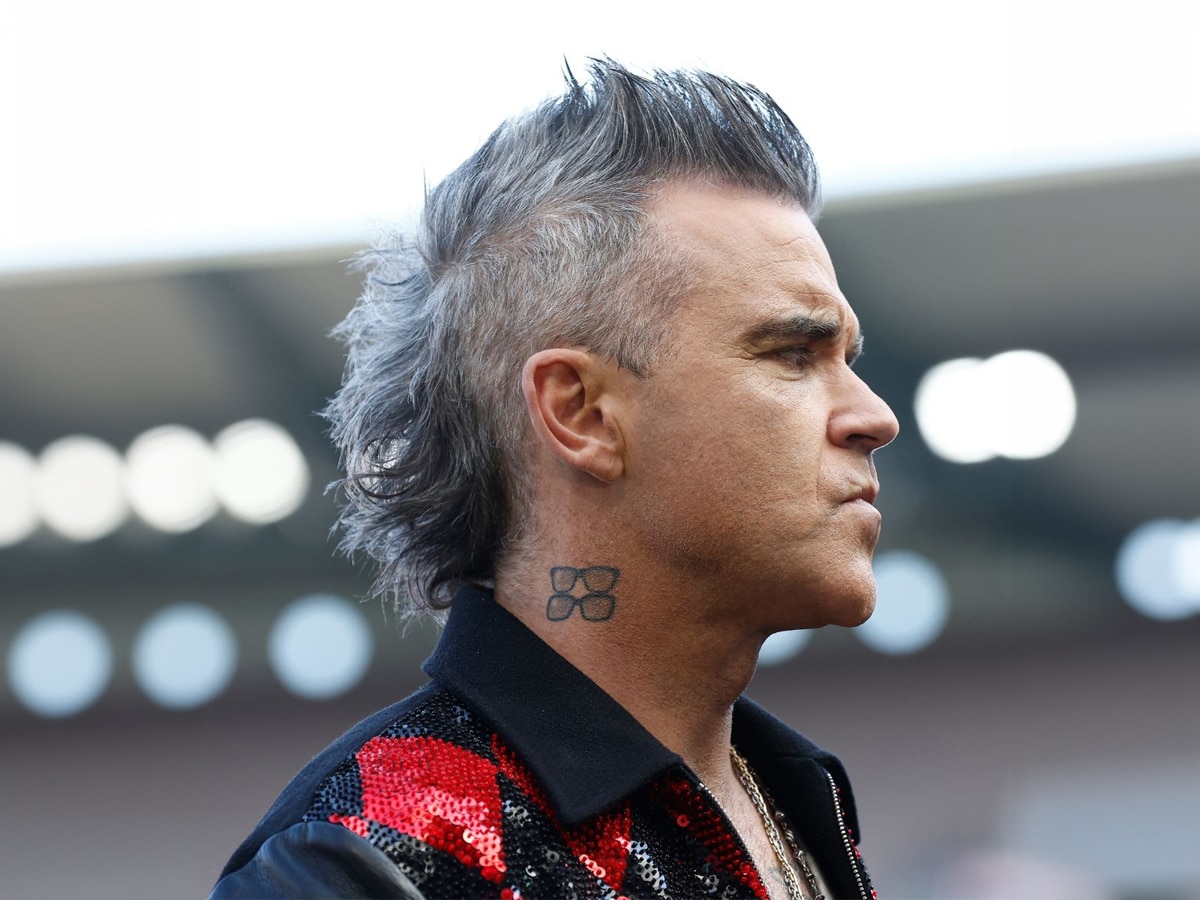
7. Mohawk Mullet
Best for: Men who want an aggressive, spiked look that mixes punk mohawk energy with extra length at the back.
Mohawk Mullet Characteristics
- Spiked Mohawk Section: With this mullet hairstyle, the hair on top is styled to stand up in a defined mohawk section.
- Gradual Transition: Due to the dramatically shortened sides and added length on top, the mullet section at the back should be blended gradually so as to not appear to extreme.
Best Face Shapes for Mohawk Mullet
- Square
- Round
- Triangular
One of the more popular options I’ve seen in recent years, the mohawk mullet essentially takes the traditional mohawk or faux-hawk style and combines it with additional length at the nape. With this cut, it’s quite common to see a gradual transition between the top and back, with the sideburns taken extremely short. You may even choose to point the hairline at the back to accentuate the mohawk component of the hairstyle, but it’s really up to you.
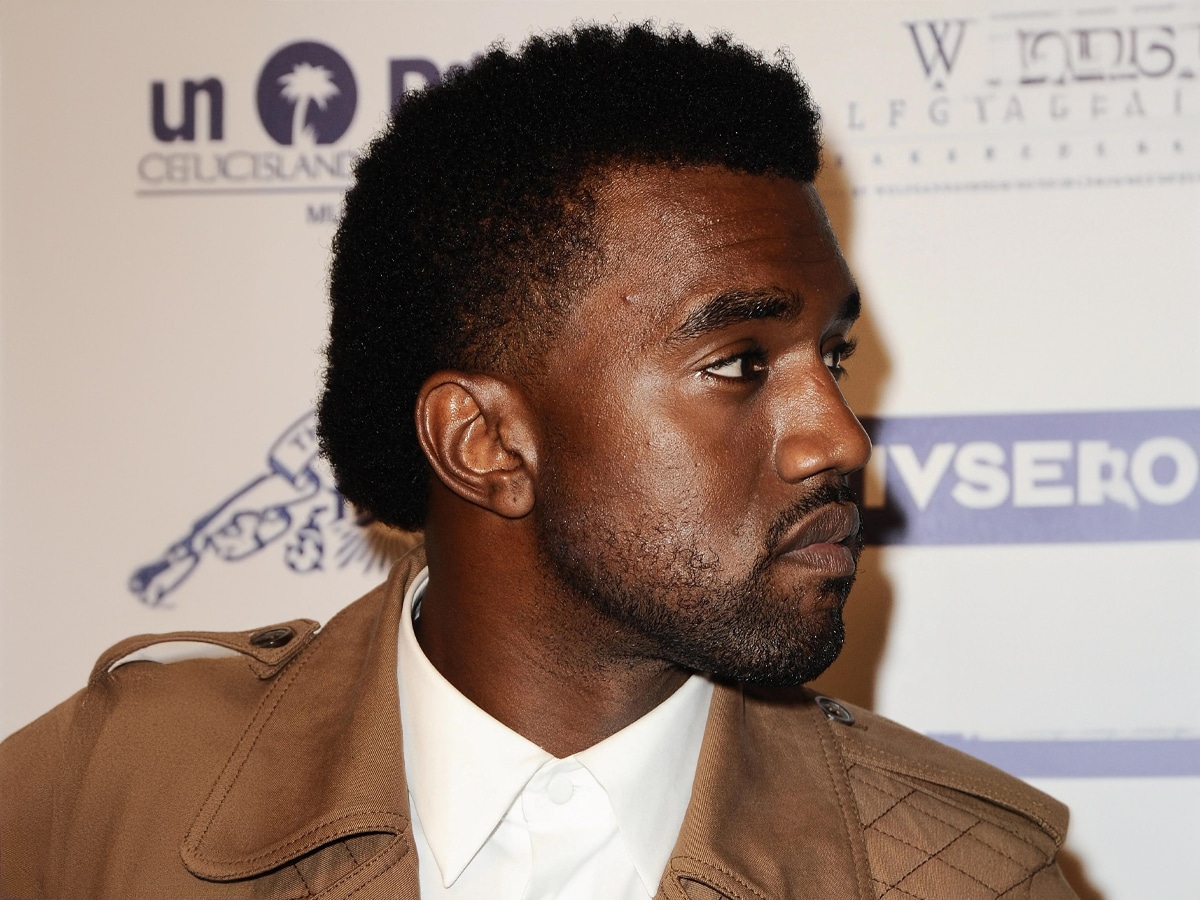
8. Afro Mullet
Best for: Men with Afro‑textured hair who want to show off volume and texture while keeping the back neat and controlled.
Afro Mullet Characteristics
- Afro Hair: This mullet style highlights tightly wound curls, embracing the natural volume and texture of Afro hair.
- Shorter Nape Lengths: As Afro hair does not fall with added length, it’s better to keep the mullet section at the back shorter and more manageable.
Best Face Shapes for Afro Mullet
- Oval
- Oblong
As the name would suggest, the Afro mullet combines the classic mullet with the natural volume and texture of Afro hair. With this style, you want to highlight the hair type’s unique density and texture characteristics, so avoid shaping and layering where possible. Instead, I would recommend keeping a light taper on the sideburns, graduating up to a decent length on top. The back section should be kept slightly longer than the sides, however, it’s important not to add too much length here.
By having an excessively long nape section, the natural texture of the hair can throw off the weight and balance of the style. Instead, the back section should transition gradually into a mullet that is only slightly longer than your standard taper.
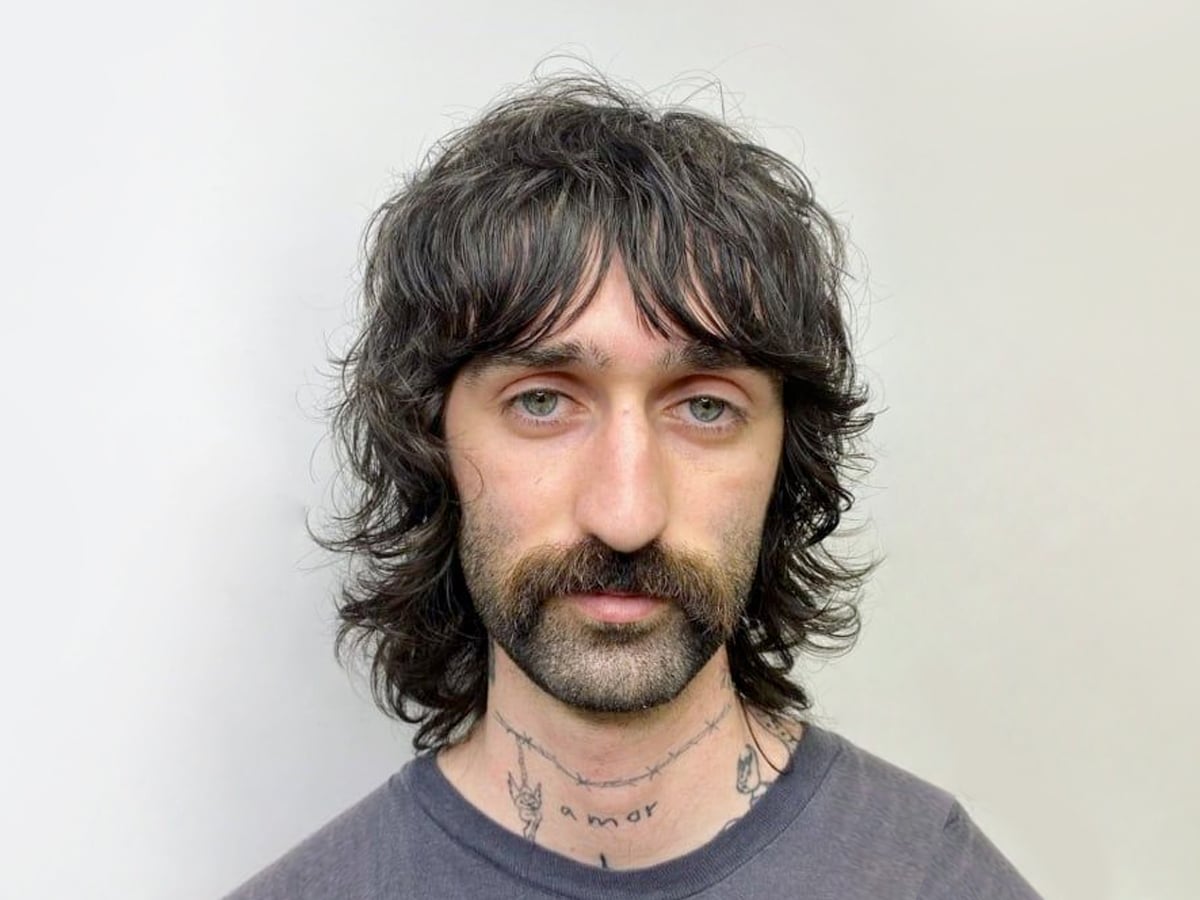
9. ’70s Shag Mullet
Best for: Men with medium to long hair who like a softer, rock‑inspired mullet with lots of layers and movement.
‘70s Shag Mullet Characteristics
- Layers: The hair throughout, from the top to the back, will be heavily layered to create movement and a shaggy, feathered texture. Think of rock legends like David Bowie or Mick Jagger.
- Blunt Ends: Unlike other mullet hairstyles for men, the shaggy look employs a more gradual length change, smoothly transitioning between wispy areas and longer lengths.
Best Face Shapes for ‘70s Shag Mullet
- Oval
- Oblong
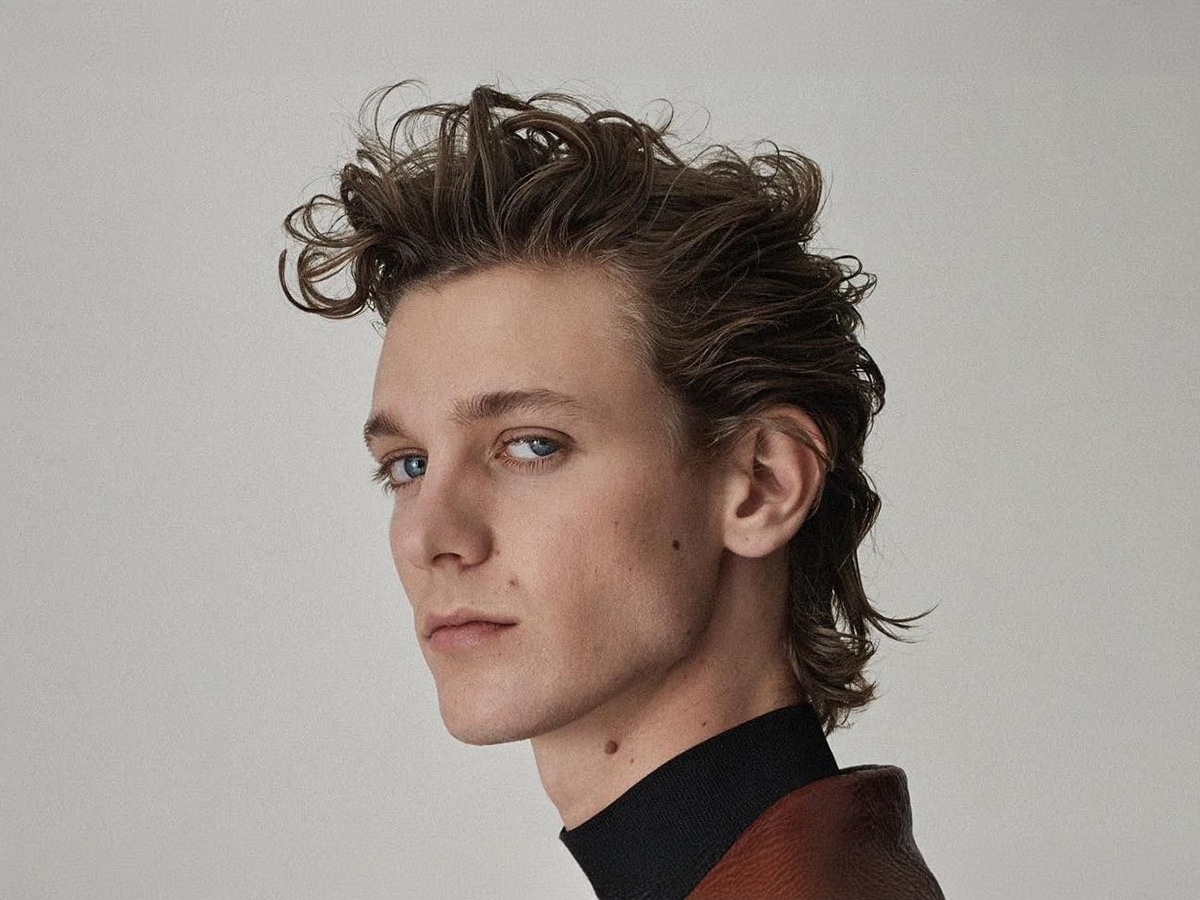
Over the past five or so years, the ’70s shag mullet has become one of the most popular variations of the style. This iteration is best characterised by its wispy fringe, which helps to frame the face naturally, and the use of layered elements. As with Mick Jagger and David Bowie in the ’70s, the hair on the top and back is heavily layered to create movement and a feathered texture, a technique that requires significant length.
As a result, this style of mullet works best with medium to long hair. The top section should sit naturally just above the eyebrows, while the back transitions into a mullet, reaching shoulder length or even longer. Importantly, this style of cut is achieved through a lot of sectioning and traditional hairdressing techniques, so you are better off skipping the barber and going to a salon for this one.
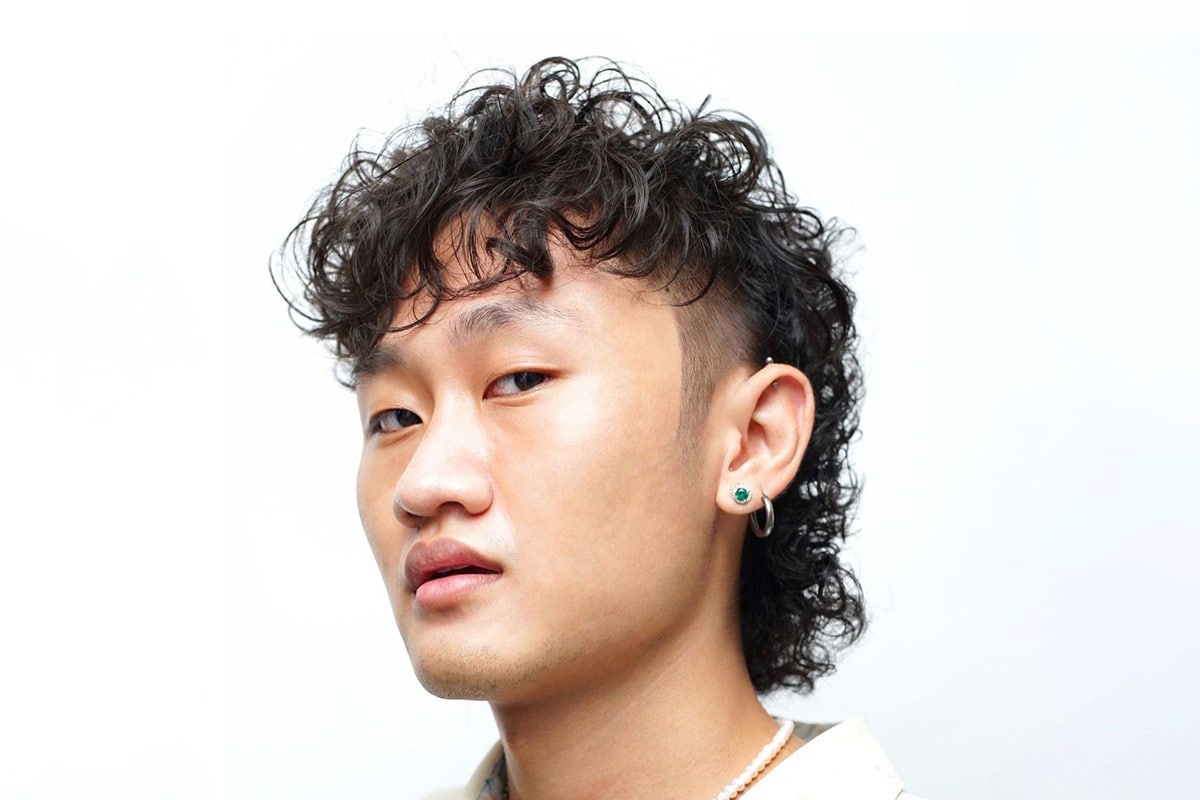
10. Wolfcut
Best for: Men who want a TikTok‑era, shag‑meets‑mullet look with big texture and a softer fringe around the face.
Wolfcut Characteristics
- Soft Fringe: The fringe should hang softly around your brows, helping to frame your face.
- Layers: The key characteristics of this cut are volume and layers.
Best Face Shapes for Wolfcut
- Round
- Square
- Oval
A style born out of the TikTok age, the wolfcut blends vintage style and cutting techniques to create a contemporary look that helps to frame the face. According to Tim Hui from New York City barbershop 12Pell, the look originated in post-lockdown in Korea, before rising to fame on TikTok due to how easy it is to DIY.
“The hairstyle is essentially a cross between an ‘80s mullet and a shag. It originated from K-pop in the ’80-90s, but has been making its rounds back today from TikTok. With longer hair becoming a thing and the rise of K-pop, it’s not a shock as to why the wolfcut became a hot topic.”
The wolf cut hairstyle is characterised by choppy layers on top, and longer layers on the side, with some volume up top and a taper towards the ends. The fringe should hang softly around your brows, which is great for framing your face. If you have a rounder face shape, this style of cut can help draw attention away from the wide forehead and lower jaw, giving the illusion of balance.
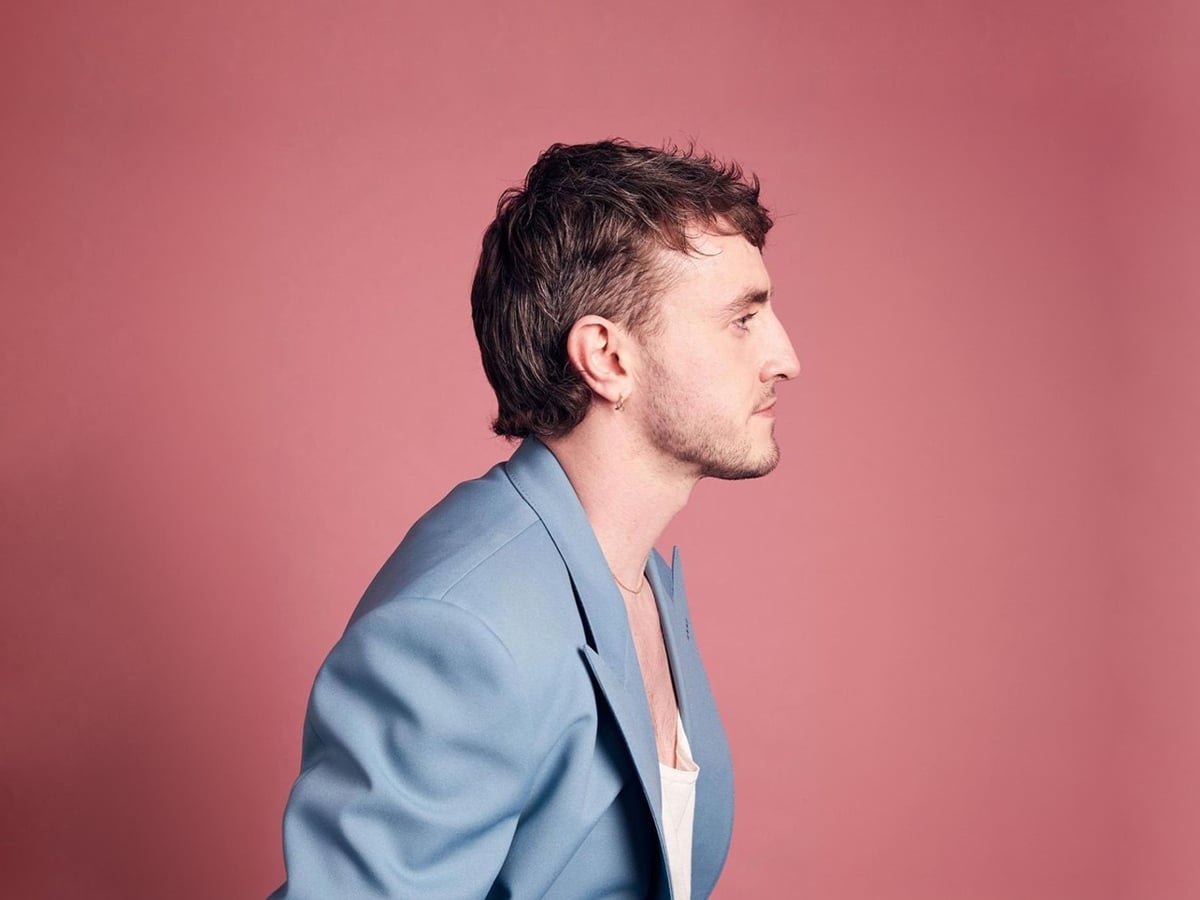
What is a Mullet?
The traditional mullet haircut is defined by shorter hair at the front and sides of the head, with a much longer section of hair at the back of the head. Today, however, you will see various mullet hairstyles, each with its unique touch. Mullets today can come in the form of a perm, an afro, with bangs, and even with a fade. Due to its versatility, it’s become a popular, timeless haircut that has survived the test of time.
Where Did the Mullet Originate?
The mullet haircut has had a long and colourful history. If you go way back, the first documentation of a mullet was in the sixth century. During this time, men donned a haircut called the ‘Hunnic’, which denoted very similar features to what we know as today’s mullet. The 1970s was the beginning of the modern mullet, when stars like David Bowie and Rod Stewart started rocking the business at the front, party at the back hairstyle. This is when the mullet truly took off and was popularised in the 1980s. However, the term mullet wasn’t coined until later on when the Beastie Boys released their single ‘Mullet Head’ in 1994.
Is the Mullet Coming Back?
Unless you’ve been hiding under a rock, it’s pretty apparent that the mullet is well and truly making a comeback. Although they may not be as widespread as in the 80s, they are versatile haircuts that work for most hair types and are timeless. Mullets are also a unisex haircut, which is why they have made a comeback in modern times.
“I definitely think that has come from the sports stars,” Lino D’Addario, owner of Gold Coast-based Luigi & Sons Barbershop explains. “In Australia, we’ve got the AFL and Rugby League, but on an international level, soccer and the NBA are huge influences for men. That cropped look is certainly evident in soccer, whereas the loose mullets are firmly an Australian style choice.”
In recent years, the mullet has seen an enormous resurgence, spurred by both the post-COVID growth and a healthy dose of irony. A number of young people used lockdown to grow their hair long and the relaxed approach to dress and attire has seen more and more Aussie embrace the party at the back. Throw in the heightened popularity of the cut in sporting circles and you start to get a picture of why the mullet is making a comeback.
A recent investigation conducted by ABC found that roughly 19 per cent of all AFL players on a current team roster sported a mullet of some description, led primarily by the younger age demographic. Thirty-eight per cent of players aged 19-years-old opted for the iconic haircut, while remarkably, not a single player over the age of 31 had a mullet this season. In Hollywood, the trend is very much the same.
A number of the world’s most popular youth actors are fans of the unique hairstyle, with Academy Award-nominated star of Aftersun, Paul Mescal one of the most vocal proponents. For the past few years, the Irish star has sported a variation of the ‘guppy mullet’, an interaction that combines a blunt fringe with a small amount of length at the nape, just enough to flick out at the sides. Similarly, Austin Butler, Jacob Elordi and Joe Keery have all been lauded for their mullet stylings, taking the men’s hairstyle from the outskirts of pop culture to the mainstream.
“The hairstyle evokes nostalgia, connecting to trends from past decades while allowing for personal expression,” senior stylist and American Crew style ambassador, Andrew Zumbo says. “The revival of ’80s and ’90s styles in fashion and pop culture has made these looks appealing to a new generation, as well as resonating with those who remember them fondly. The mullet features a striking contrast between a short front and a long back, while messy fringes can be styled in numerous ways, promoting creativity and individuality.”
“Overall, the blend of nostalgia, individuality, versatility, and cultural influence has made mullets and messy fringe hairstyles exciting choices for men today,” Zumbo concludes.
Things to Consider for Mullet Hairstyles
The mullet, much like any hairstyle, will invariably suit some men more than others. In my years as a qualified hairdresser, I had to talk a number of guys out of the cut purely due to the fact that it would do nothing for them. If you are considering a mullet hairstyle, keep these considerations in mind and don’t be afraid to ask your barbers some tough questions.
1. Face Shape
Most face shapes can pull off a mullet as long as the front and nape work together to create a clean silhouette rather than two separate haircuts.
If you have a rounder face, ask for:
- A little extra height on top to add the illusion of length.
- A medium‑length mullet section at the back to elongate the profile and take attention away from the cheeks
If you have sharper features (strong jawline, prominent nose or cheekbones), ask your barber:
- “Which mullet variation will balance my face shape?”
- “Can we use the fringe and nape length to highlight my best features rather than fight them?”
2. Hair Type
Your natural hair texture will decide if you’re destined for a subtle mullet or dramatic mullet.
- Straight hair works well for classic, modern and undercut mullets where the contrast between short and long is the main feature.
- Wavy or slightly curly hair is perfect for modern, shag and wolfcut styles because the texture adds movement through the top and nape without much effort.
- Tight curls or Afro hair look best with shorter, more controlled mullet lengths at the back so the shape doesn’t blow out and lose structure.
3. Lifestyle and Maintenance
A mullet can be as subtle or extreme as you like, but your day‑to‑day life should dictate where you land.
Work and dress code
- More conservative or corporate environments suit shorter, blended mullets and mullet fades that still look sharp with a shirt and blazer.
- Creative, sporting and more relaxed jobs allow for undercut, mohawk or heavily layered shags without raising too many eyebrows.
Time and upkeep
- A good rule of thumb: be honest about how you actually wear your hair during the week and let your barber tailor the mullet to that, not the other way around.
How to Style a Mullet
When it comes to styling a mullet, length at the nape is the main variable; the longer it is, the more options you have. Below is an easy routine that will work for most variations, with slight tweaks depending on your hair type.
1. Prep the Hair
- Start with clean hair and gently towel‑dry it so it’s damp rather than dripping.
- Avoid aggressive rubbing with the towel, especially if your hair is wavy or curly, as this can cause frizz and kill the natural texture.
- If you’re planning to air‑dry, now is the time to decide where you want your part (or if you want everything brushed back).
2. Set the Shape on Top
- Using a wide‑bristle comb, direct the hair from the fringe back towards the crown in the direction you want it to sit.
- For modern and classic mullets, think “easy flow” rather than rigid spikes; the top should blend into the back without a visible step.
- If you prefer a more relaxed finish, ditch the comb and use your fingers to push the hair into place instead.
3. Add Product for Texture
Pick your product based on the cut and your hair type.
For classic/modern mullets on straight or wavy hair:
- Work a small amount of matte paste, clay or cream between your palms.
- Apply through the mid‑lengths and ends on top and at the sides, then use your fingers to create soft separation and texture.
For shag and wolfcut styles with more length:
- Use a sea‑salt spray or texture spray on damp hair, focusing on the fringe and crown.
- Scrunch sections lightly to encourage movement and a lived‑in finish.
For Afro or tightly curled mullets:
- Apply a light curl cream or leave‑in conditioner to define curls and control volume.
- Comb through once, then let the curls spring back naturally.
4. Dry the Nape Properly
- If your mullet is longer, spend five to ten minutes blow‑drying the back from the crown downwards so the hair falls in one consistent direction.
- Keep the dryer on a medium heat setting and move it continuously to avoid hot spots and frizz.
- The aim is to get rid of moisture and kinks without flattening the natural volume or making the ends look fried.
5. Refine and Finish
- Once the hair is dry, pinch small sections at the fringe and crown to create a few deliberate, messy pieces rather than one solid block.
- If you have a fade or tighter sides, use just the residue of product on your hands to lightly smooth over the transition so you don’t crush the shape.
- Check your profile in the mirror: the front and back should be connected, with the mullet section extending the haircut rather than hanging off it.
Why Trust Our Men’s Hairstyle Advice?
As a qualified hairdresser and barber with an SHB30516 Certificate III in Barbering from The Queensland Hairdressing Academy, Nick Hall is an expert on men’s haircuts and styles. Prior to joining Man of Many as Editor-in-Chief, he spent five years as a senior stylist at Brisbane salon The Chopspot and two years at Sydney-based barbershop Kings Domain.
The men’s hairstyle expert has personally chosen every haircut on this list, providing extensive first-hand details and insights related to each style. Additionally, the article features insights from Andrew Zumbo, American Crew style ambassador and Lino D’Adderio – American Crew educator/owner of Luigi & Sons Barbershop.
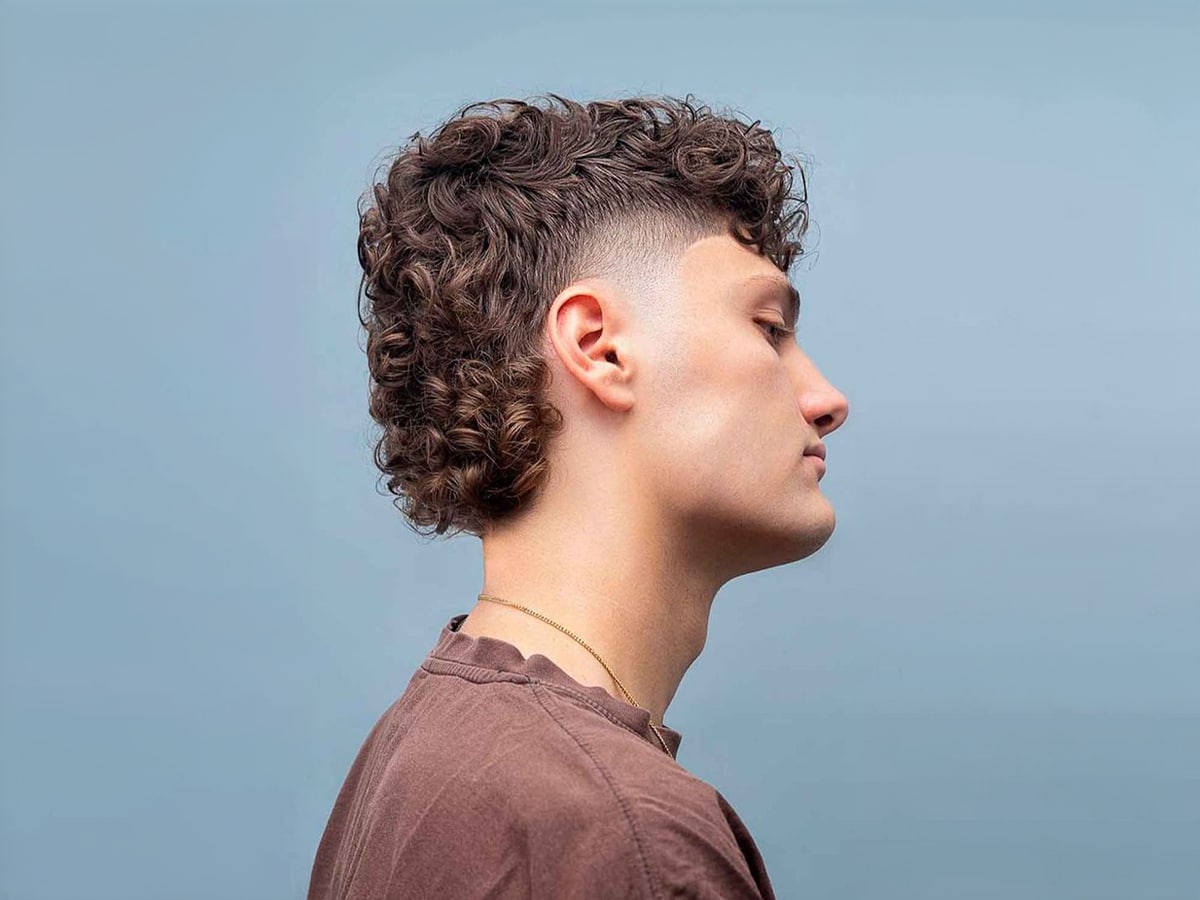
Mullet Hairstyles for Men Inspiration

Alternatives to Mullet Hairstyles
Mullet not quite your vibe? Here are some more articles to help you find your signature look.
- Short Hairstyles for Men
- Medium-Length Hairstyles for Men
- Long Hairstyles for Men
- Curly Hairstyles for Men
- Straight Hairstyles for Men
Best Hair Products for Men
Need some products to maintain your lucsiou mullet? These articles will sort you out:
- What Grooming Products Should Every Man Own?
- Best Shampoos For Men
- Best Men’s Hair Products For Styling
Mullets for Men FAQs
Most face shapes pull off a mullet if the lengths are balanced properly. Oval and oblong faces suit almost any mullet, while round faces benefit from more height on top and a medium‑length nape to elongate the silhouette.
Straight hair works well with classic and modern mullets that rely on clean lines and blending. Wavy and slightly curly hair suits shag, wolfcut and modern mullets that lean into natural texture, while Afro hair looks best with shorter, controlled mullet lengths to keep the shape manageable.
Short and modern mullets are relatively low‑maintenance and only need light product and a trim every 4–6 weeks to keep the shape. More layered styles like the ’70s shag, wolfcut or Afro mullet require regular styling and more frequent clean‑ups to stop the back from looking messy.
Yes, but stick to subtler versions like the short, modern or mullet fade with softer blending and less length at the nape. Extreme undercut or mohawk mullets are best for creative fields, hospitality, or more relaxed workplaces.
Bring a photo of the style you like and explain how extreme you want the length difference between the front and back. Mention your job, how you usually style your hair and how often you’re willing to get it cut so your barber can tailor the mullet to your lifestyle
Ideally, you’ll want at least 3–4 cm of length on top and more at the crown and nape so your barber can create a visible contrast. If your hair is shorter, you can start growing the back out first and shape it into a mullet over a few cuts.
Most mullets look best with matte pastes, clays or texture powders that enhance movement without making the hair look greasy. If you’ve got longer lengths or curls, a light cream or sea‑salt spray can help define the back while keeping the front under control.








Comments
We love hearing from you. or to leave a comment.