


Updated:
Readtime: 12 min
Every product is carefully selected by our editors and experts. If you buy from a link, we may earn a commission. Learn more. For more information on how we test products, click here.
The GoPro MISSION 1 Pro takes the traditional action camera and turns it up into the closest we’ve seen to a pocket cinema camera. Powered by a 1-inch sensor, it ticks all the boxes for quality with 8K Open Gate recording, 32-bit float audio, and a large 2,150mAh battery. The brand has also solved earlier problems it had with low-light noise and thermal shutdowns. While heavier at 207 grams and expensive at AUD$949.95 for subscribers, its GP-Log2 colour grading and robust build justify the cost for prosumers matching footage with dedicated cinema setups.
| Who Should Buy | Who Should Avoid |
| You should buy the GoPro MISSION 1 Pro if you need 8K Open Gate resolution and GP-Log2 profiles to match and colour grade footage alongside dedicated cinema cameras. | You should avoid the MISSION 1 Pro if you want a lightweight camera strictly for mounting on helmets or bicycle handlebars, where every gram counts. It’s also a miss for those who rely heavily on third-party Bluetooth microphones for wireless audio, or those who only record casual weekend VLOGs on a tight budget. |
Technical Specifications Breakdown
| Specifications | |
| Sensor | 1-Inch (1.0-Type) CMOS |
| Max Resolution | 8K30 Open Gate (4 by 3 aspect ratio) |
| Colour Profile | 10-bit GP-Log2 |
| Dynamic Range | Simultaneous Dual-Gain Readout HDR |
| Internal Audio | 32-Bit Float via 4-microphone array |
| Battery & Charging | 2,150mAh Enduro 2 (80 per cent in 27 minutes) |
| Native Waterproofing | Submersible to 20 metres (66 ft) |
| Weight | 207 grams |
Narrative and Design
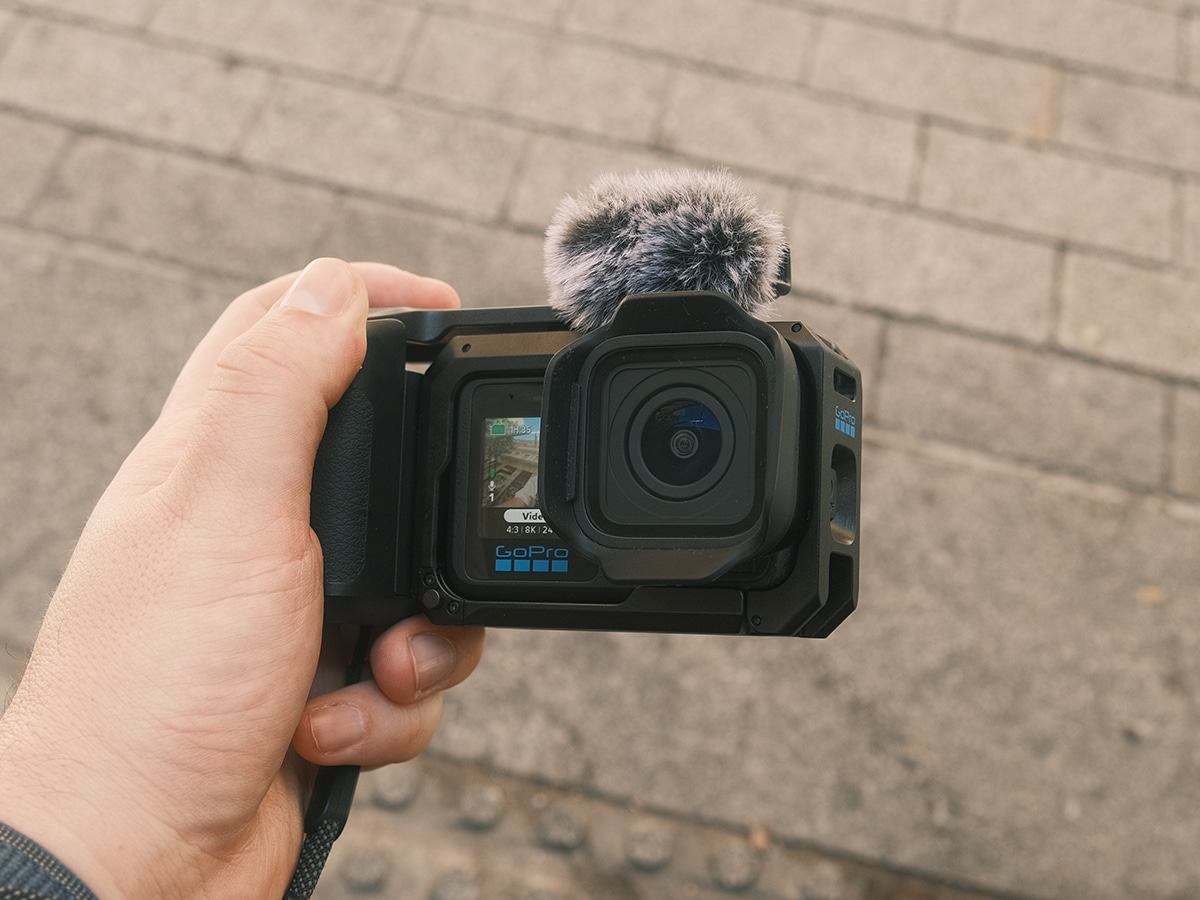
The tech and film worlds want to see GoPro succeed. But the brand hasn’t helped itself in recent times, with layers of software and hardware-based “friction” that made the cameras difficult (and expensive) to use. GoPro buyers were eventually drawn to Chinese competitors that offered better products for less, and even as a measly content creator who shoots cars in their spare time, it wasn’t hard to see why consumers shifted away from the company that started it all. Cameras like the DJI Osmo Action 6, Nano, and Pocket 4 P are very, very good. But the new GoPro MISSION 1 Pro might be even better.
That’s what GoPro promised when they announced the new MISSION 1 series, which includes a fixed-lens “ILS” variant and a 1-inch-type sensor. Now that the GoPro MISSION 1 Pro has lived in my camera bag for a few months, I can confirm that the most important release in the brand’s history is the best action camera on the market. However, that’s not what GoPro promised when it released the MISSION 1. They promised a “cinematic camera system,” so now that I have my hands on a set of ND Filters, a GoPro MISSION 1 Pro Media Mod, and some of GoPro’s fancy Wireless Mics, we’re going to put it to the test and find out.
While the 207-gram chassis feels noticeably heavier than previous models, the build quality remains rugged and ready for demanding environments. The body is fully waterproof down to 20 metres without a secondary housing, and it retains the classic mounting fingers, ensuring your existing collection of suction mounts, chest harnesses, and tripod adapters will work perfectly without requiring new ones.
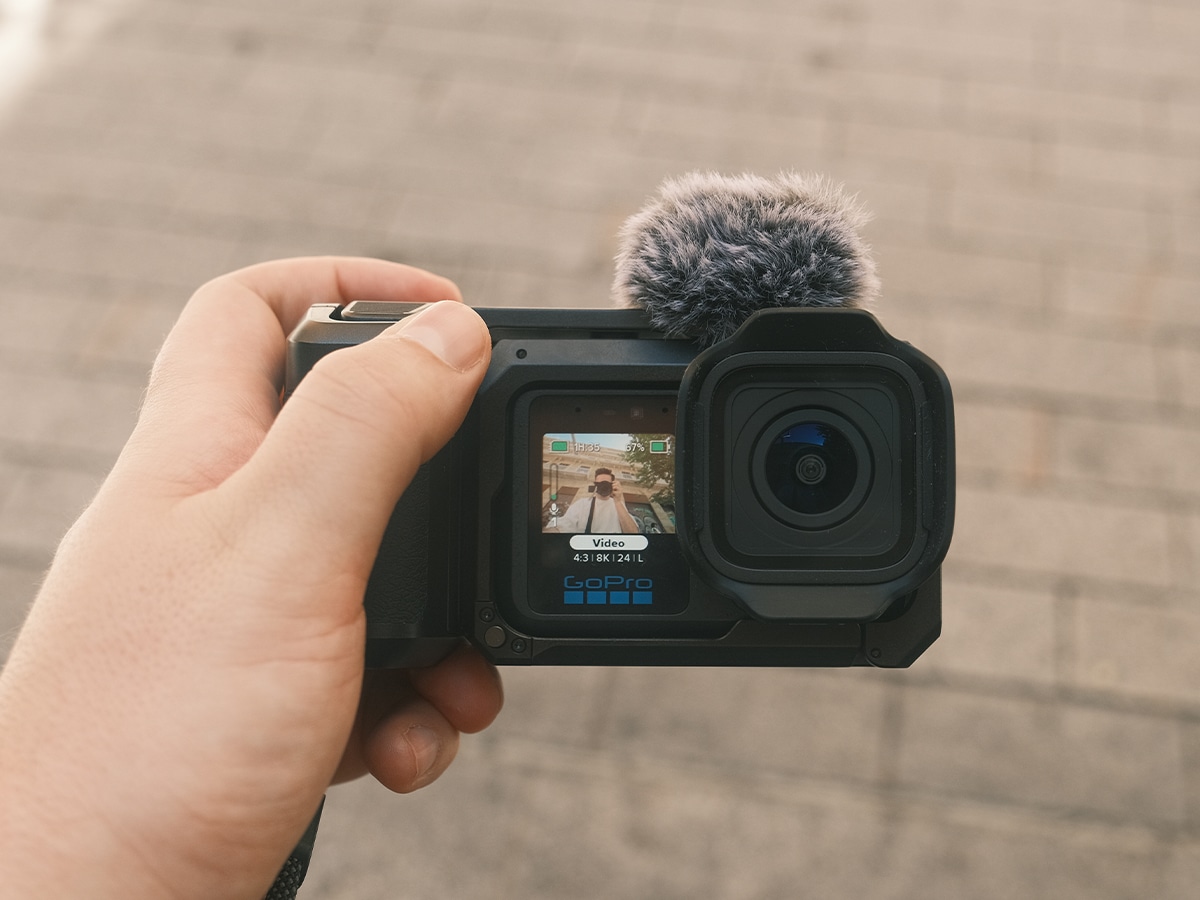
The user interface also receives an upgrade with a 2.59-inch rear OLED touchscreen and a 1.4-inch front display. Compared to key competitors, the touch response is faster and more precise, allowing quick adjustments to shooting modes and frame rates when wearing gloves or operating in wet conditions.


Price and Availability
GoPro launched the MISSION 1 Pro with a starting price of AUD$1,099.95. This drops to AUD$949.95 for existing GoPro subscribers, which is an annual cost of AUD$99.99. However, if this is your first foray into the GoPro ecosystem, it’s worth checking out the bundled editions as they are tailored for specific creator workflows. Here’s how they stack up price-wise, and what they include:
Standard Pack – AUD$1,099.95 (AUD$949.95 Subscriber)
- Core MISSION 1 Pro camera system
- Rechargeable Enduro 2 Battery
- Protective Camera Case, Mounting Buckle, and USB-C Cable
Grip Edition – AUD$1,229.95 (AUD$1,079.95 Subscriber)
- Includes everything from the Standard Pack
- Ergonomic Point and Shoot Grip
Mountain Bike Bundle – AUD$1,219.95 (AUD$1,069.95 Subscriber)
- Includes everything from the Standard Pack
- Handlebar, Seatpost, and Pole Mount
- Chest Harness Mount for action capture
Creator Edition – AUD$1,699.95
- Includes everything from the Standard Pack
- Volta 2 battery grip and tripod system
- GoPro Wireless Mic Complete Kit
- Dedicated Media Mod for MISSION 1 Series
- Magnetic Latch Mount
Ultimate Creator Edition – AUD$1,849.95
- Includes everything from the Standard Pack
- Fluid Pro AI Multi-Device Gimbal Stabiliser with AI tracking
- GoPro Wireless Mic Complete Kit
- Dedicated Media Mod for MISSION 1 Series
- Light Mod 2 LED fill light
- Magnetic Latch 1/4-20 Mount adapter
Creators can also expand their setup with standalone accessories sold separately. Key highlights include the Point and Shoot Grip (AUD$154.95), the 60-metre Protective Housing (AUD$94.95), the 3-Way 2.0 Tripod Grip (AUD$124.95), additional Enduro 2 Batteries (AUD$54.95), the Fluid Pro AI Gimbal for (AUD$329.95), and Magnetic Latch Mounts (AUD$46.95).
When we look at the pricing compared to the competition, GoPro positions the MISSION 1 Pro at the premium end of the market. Key rivals demand a much lower investment, with the DJI Action 6 Standard Combo starting at AUD$669 and the Insta360 Ace Pro sitting at AUD$567.99. That leaves competitors with a substantial price advantage at the entry level, and that’s something to consider for newcomers to the world of action cameras. If GoPro wants to succeed, it will also have to launch a new consumer-priced camera in the future, but we’ll save that conversation for another day.
Video and Image Performance
The primary hardware shift in the MISSION 1 Pro is the new 1-inch sensor, which is larger than any other action camera sensor on the market. Recently, the action camera market has been scraping the ceiling of what smaller sensors can do, and to put this in perspective, the DJI Osmo Action 6 uses a 1/1.15-inch sensor, making it 25.4 per cent smaller than the MISSION 1 Series.
8K Open Gate and Low-Light Testing
When shooting in 8K, the pixel size is 1.6 micrometres. However, the most practical application of this sensor is the 4K Open Gate mode. Here, the sensor utilises Quad Bayer 12MP technology, increasing the pixel pitch to 3.2 micrometres. That means, in practical terms, the noisy low-light footage typical of older action cameras is significantly reduced. To achieve this, it leverages Simultaneous Dual-Gain Readout HDR, sampling pixels at multiple conversion gains to process shadows and highlights simultaneously in a single exposure. However, I have to be completely honest and say that I don’t specifically look for low-light performance in an action camera.
What I do look for is image quality, which is also improved thanks to this sensor and is particularly noticeable in the 8K30 Open Gate mode. Shot in a full-frame 4:3 aspect ratio, it offers significant post-production flexibility. You can punch in, reframe for vertical social video, or apply aggressive post-stabilisation without degrading your final 4K export.
Paired with 10-bit colour and the new GP-Log2 encoding with included LUTs, you have the necessary headroom for professional colour grading. This is something that has really impressed me with the MISSION 1 Pro so far.
HyperSmooth Stabilisation
HyperSmooth stabilisation continues to set the standard for the action camera market. When subjected to high-vibration activities like cycling or mounting the camera externally on a moving car, the footage remains flawlessly stable. The camera manages these demanding environments effortlessly while maintaining perfectly level horizons.

Pro Rig and Accessories
Since the MISSION 1 Pro hit the market, a knowledge gap has formed online around accessory compatibility and hardware variations. Having spent months rigging the GoPro MISSION 1 to cars, and now having got my hands on the key accessories, I wanted to address these core usability questions directly.
Compatibility Guide
It’s important to note the accessory differences between the standard MISSION 1 Pro and the interchangeable lens ILS model. The official Media Mod, Point-and-Shoot Grip, and Protective Housing fit the standard Pro model perfectly. The GoPro ND filters attach via a secure mechanism that will not vibrate loose when mounted to a car exterior. However, the ILS model features a specialised Micro Four Thirds mount that alters the camera’s physical dimensions, so it requires dedicated cages and accessories.
Because the ILS variant also lacks autofocus, shooters will need external accessories like the SmallRig Support with Cold Shoe Mount to mount a smartphone to accurately pull and monitor focus while shooting.
Direct USB-C Audio and 32-Bit Float
For run-and-gun creators, the audio upgrade is arguably as important as the video specs. The MISSION 1 Pro supports 32-Bit Float audio recording, which captures a wide dynamic range and makes it highly resistant to clipping or distortion, even in the presence of sudden spikes in environmental volume.
One of the most requested changes is direct USB-C audio support. Unlike older GoPros that strictly required an adapter dongle or the bulky Media Mod to use an external mic, the MISSION 1 Pro allows many microphones to plug straight into the USB-C port. Still, I recommend investing in the Media Mod as it provides an additional cold shoe mount for the microphone and any other accessories you might attach, such as fill lights.
Out of the box, the audio hardware is still pretty strong, so it’s not like a microphone is completely necessary for hobbyists, with a 4-microphone array with a rear-facing mic, two front-facing stereo mics, and a self-draining mic for wind noise reduction. However, with more professional setups, the built-in Bluetooth 5.3 lets you pair the GoPro Wireless Mic Complete Kit directly with the camera. But this brings me on to my first real negative with the MISSION 1 Pro: its inability to record high-quality audio from third-party microphones. I used the GoPro MISSION 1 Pro with a brand-new Insta360 Mic Pro 2 set, and the audio quality was severely lacking. That forced me to use the Insta360’s internal recording and synchronise in post, which adds an unnecessary layer of friction you won’t find with competitors.

Battery Life and Thermals
GoPro cameras have historically struggled with thermal limits in stagnant environments. It’s something I experienced constantly when using the GoPro mounted on the inside of a car’s windscreen. However, the MISSION 1 Pro addresses this with a new 5nm GP3 processor that improves power efficiency and a physically larger 2,150mAh Enduro 2 battery.
The brand claims the camera can achieve over 5 hours of runtime at 1080p30 (a >70% increase over the HERO13) and over 3 hours at 4K30 (a >80% increase). During my real-world testing, the camera reliably recorded continuous 4K video for hours without triggering a thermal shutdown. When the battery does deplete, the PD2.0 fast charging with PPS technology recharges the unit from 0% to 80% in 27 minutes.
Comparative Analysis
Mission 1 Pro vs Mission 1 Pro ILS
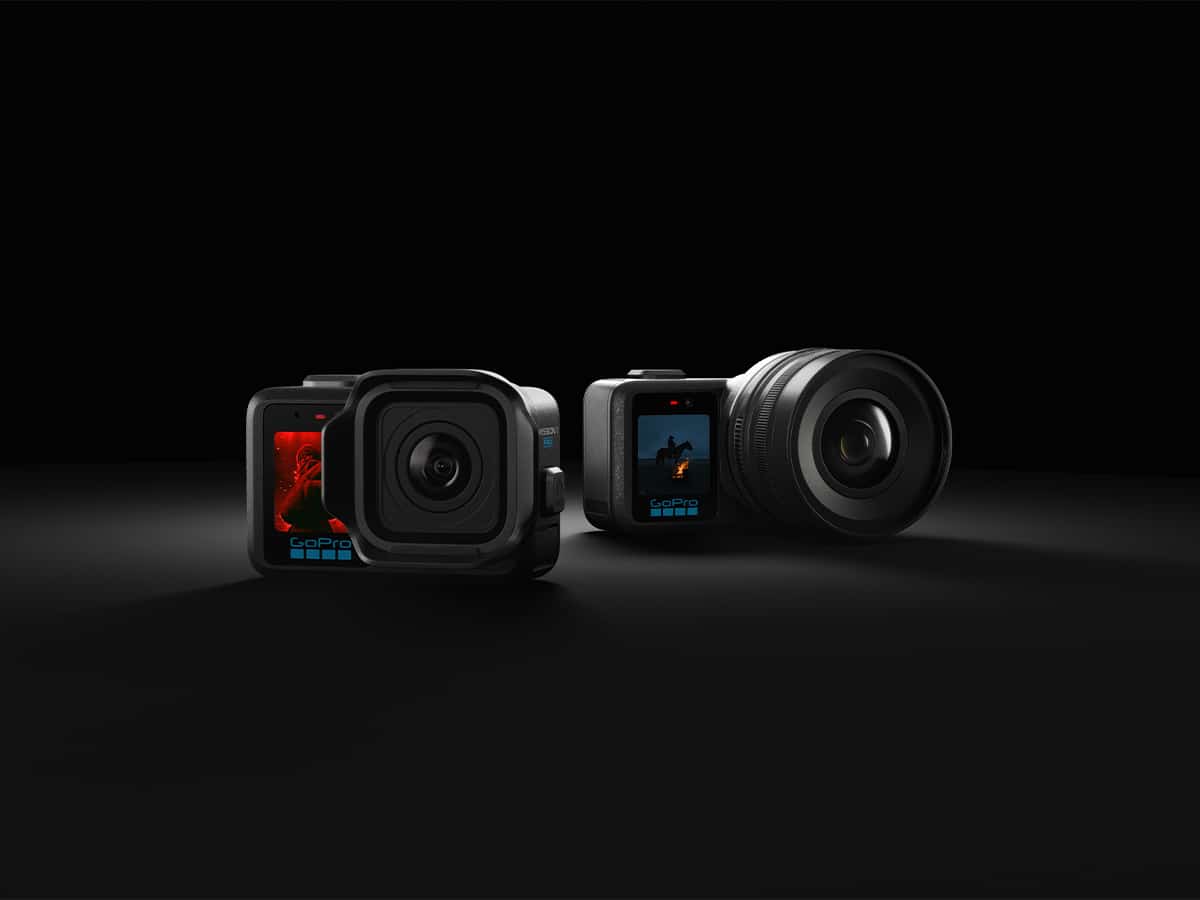
For filmmakers debating between models, the decision comes down to lens flexibility. GoPro has introduced the specialised MISSION 1 PRO ILS model and MISSION 1 PRO for AUD$1,099.95.
The main difference between the two models centres entirely on lens flexibility. While the standard MISSION 1 Pro that I’ve tested for this review features a built-in fixed lens, the ILS variant offers an interchangeable Micro Four Thirds mount. This hardware change lets professional filmmakers attach a wide variety of existing lenses directly to the camera body. There’s NO autofocus on the ILS, which makes it a poor choice for VLOGS, but the flexibility, specialised focal lengths and depth-of-field control give you the ability to create more cinematic shots.
| MISSION 1 Pro | MISSION 1 Pro ILS | |
| Price | AUD$1,099.95 | AUD$1,099.95 |
| Lens System | Fixed 15-27mm equivalent | Interchangeable MFT mount |
| Primary Use Case | Rugged action and vlogging | Controlled cinema environments |
| Form Factor | Standard action camera | Larger body to support lenses |
Mission 1 Pro vs Hero 13
If you currently own a HERO13 Black, upgrading to the MISSION 1 Pro makes sense only if your workflow demands professional features. The HERO13 remains the better choice for helmet mounting due to its lighter 159-gram weight compared to the 207-gram MISSION 1 Pro. However, if you need 10-bit GP-Log2 colour grading, 32-bit float audio, and multi-hour recording without thermal shutdowns, the MISSION 1 Pro justifies the upgrade.

The Verdict
Priced at AUD$1,099.95 for new customers, the MISSION 1 Pro is significantly more expensive than the current competition. For comparison, the brand-new DJI Action 6 Standard Combo is $669, while last year’s DJI Action 5 Pro is $599. Over in the Insta360 camp, the Ace Pro sits at $567.99. Even if you already have a GoPro subscription, which brings the price of the MISSION 1 Pro down to $949.95 (a savings of $150), it’s still a massive premium over the competition.
If your primary use case is recording casual weekend activities, a lighter, more affordable option would be more suitable. However, as the prosumer content creator landscape evolves, and if you are a professional creator who needs to match footage with mirrorless cinema cameras, colour grade GP-Log2 files, and crop from an 8K sensor, the MISSION 1 Pro successfully bridges the gap between an action camera and a dedicated cinema tool.




















Comments
We love hearing from you. or to leave a comment.