

Updated:
Readtime: 12 min
Every product is carefully selected by our editors and experts. If you buy from a link, we may earn a commission. Learn more. For more information on how we test products, click here.
I have spent the last six weeks playing the Chessnut Evo every day. In that time, my Chess.com rating has crept from 380 to 470, my fiancée Jemma has played her first three real games (and won one of them), and I have gone from “phone in hand on the couch” to “actual board on the dining table” without losing access to the online chess community I had spent the last few months falling into. The Evo did not turn me into a 1500-rated player. I am still very much that bloke who blunders his queen in a three-minute speed game. But it has done something far more valuable. It has dragged my chess off the screen and into the room.
If you are someone who has been grinding Chess.com on your phone, suspecting that the next 100 rating points might come from slowing down on a real board, this review covers what six weeks with an AI-powered chess board actually feels like, where the Evo earns its US$629.99 price tag, and how it stacks up against the GoChess Wizard Lite I have also been testing.
Chessnut Evo Review: The TL;DR
- What it is: A full-size electronic chess board with a built-in colour display, real piece recognition, automatic move detection, and direct sync to Chess.com, Lichess, and Chessnut’s own AI engine.
- What I tested: Six weeks of daily play. Roughly 60 hours on the board across speed games against the AI, online matches synced to Chess.com, and slow games at home with Jemma.
- What moved: Chess.com rating up roughly 90 points. Phone-time during evenings down noticeably. Three new players in the household.
- Best for: Casual to intermediate players who already use Chess.com and want a tactile board that gives them training feedback without needing a separate engine running on a laptop.
- Not for: Serious tournament players who want an unassisted board, or absolute beginners who would be better served by a US$30 wooden set and the free Chess.com lessons.
- Verdict: The most useful chess gadget I have owned. Not perfect, but the kind of thing that genuinely changes how often you play and how quickly you improve.
Why I Got Into Chess in the First Place
I’ll put my cards on the table. I am not a lifelong chess player. I am the textbook lockdown-late convert. A few months back I downloaded Chess.com on a whim, lost about thirty games in a row, and somehow could not stop playing. The rating bracket I have been hovering in is an honest 350 to 400. That is, for the uninitiated, the part of the chess world where you regularly hang pieces, miss mate-in-ones, and occasionally win games purely because your opponent has done the same thing slightly worse.
What kept me coming back is something I did not see coming. Chess turned out to be the only thing in my evening routine that genuinely stopped me thinking about work. F45 sessions help. Reading helps. But chess is the only one that demands a complete cognitive switch. You cannot draft a Slack message in your head while trying to spot a fork. The trade-off, of course, is that you do it on your phone. So I had basically swapped one board game screen for another.
That was the itch. I wanted the focus without the phone. When the team at Chessnut reached out about reviewing the Move, then quietly let me know it was out of stock and offered the Evo instead, the timing could not have been better.
Setting Up the Chessnut Evo: First Impressions
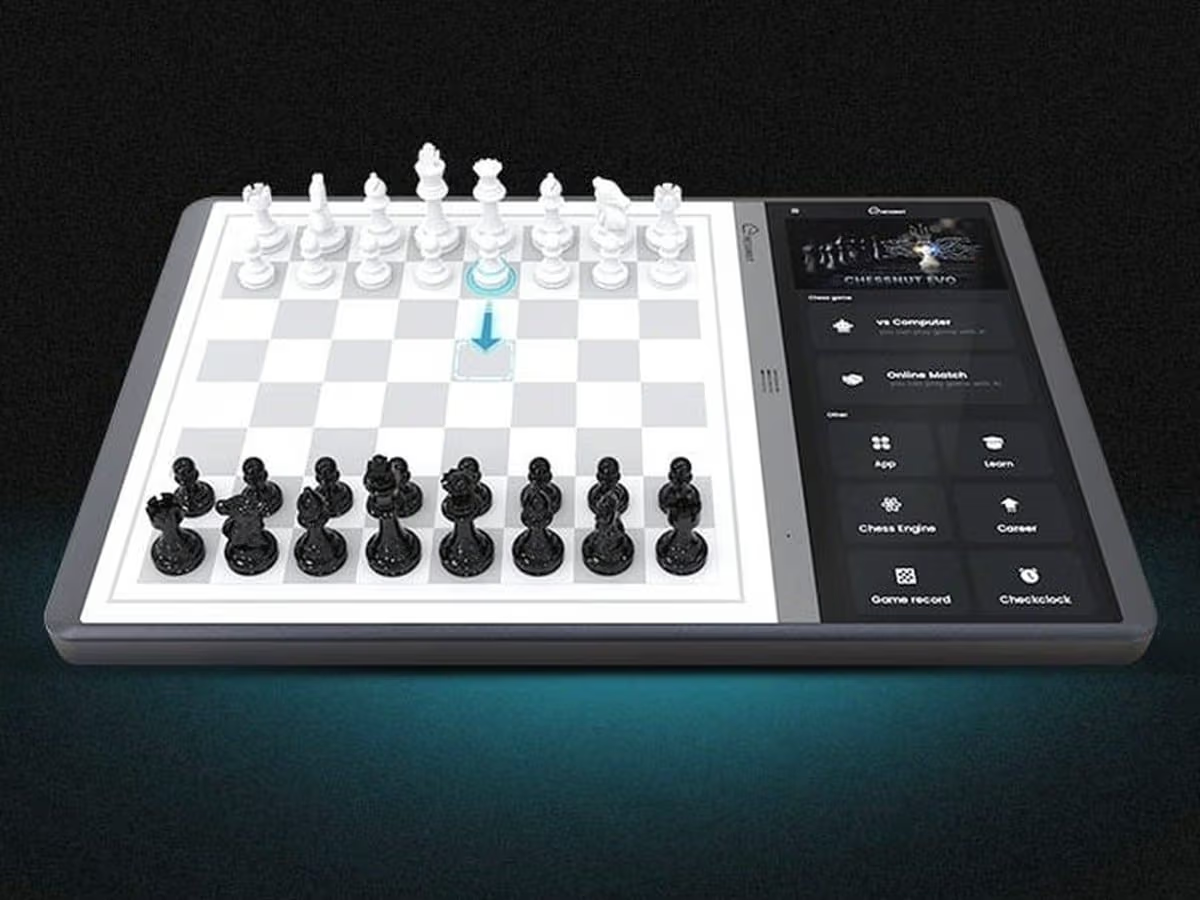
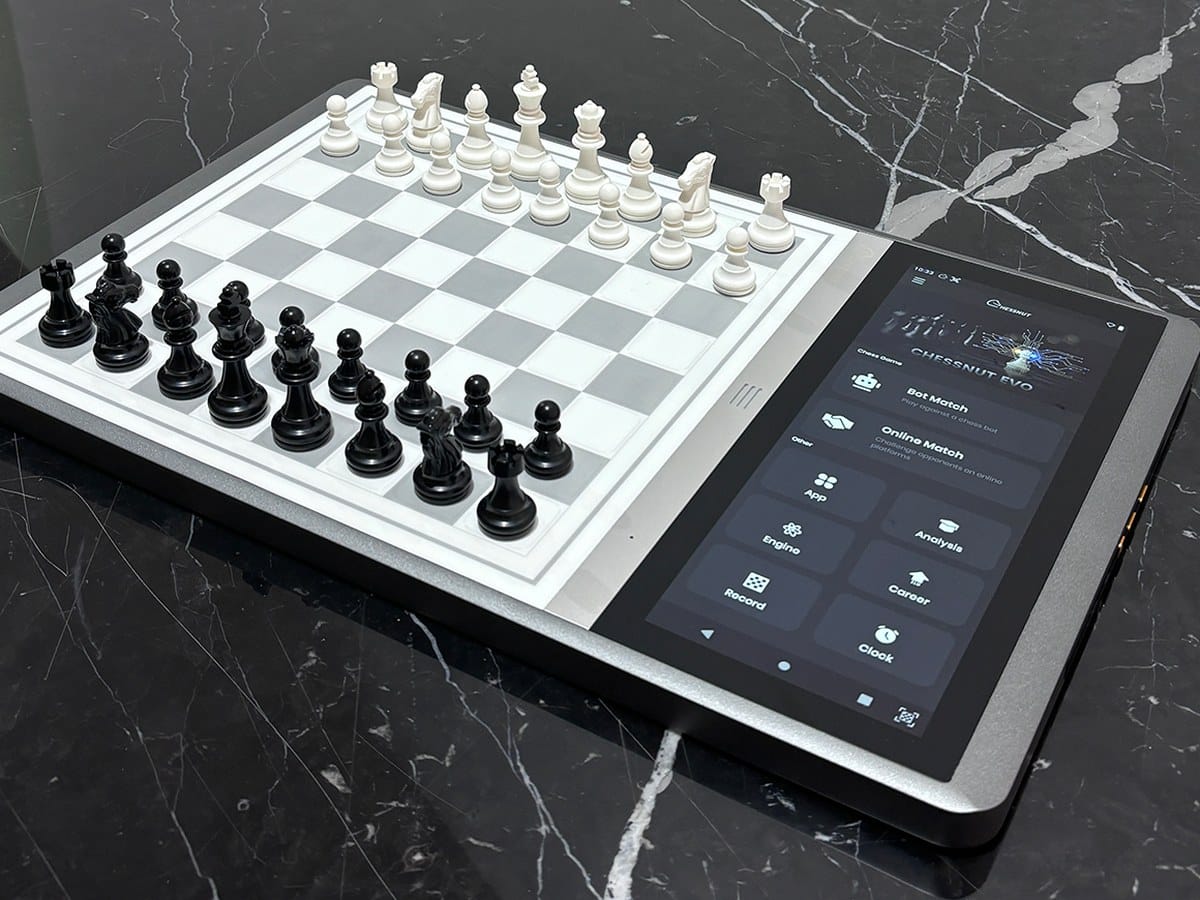
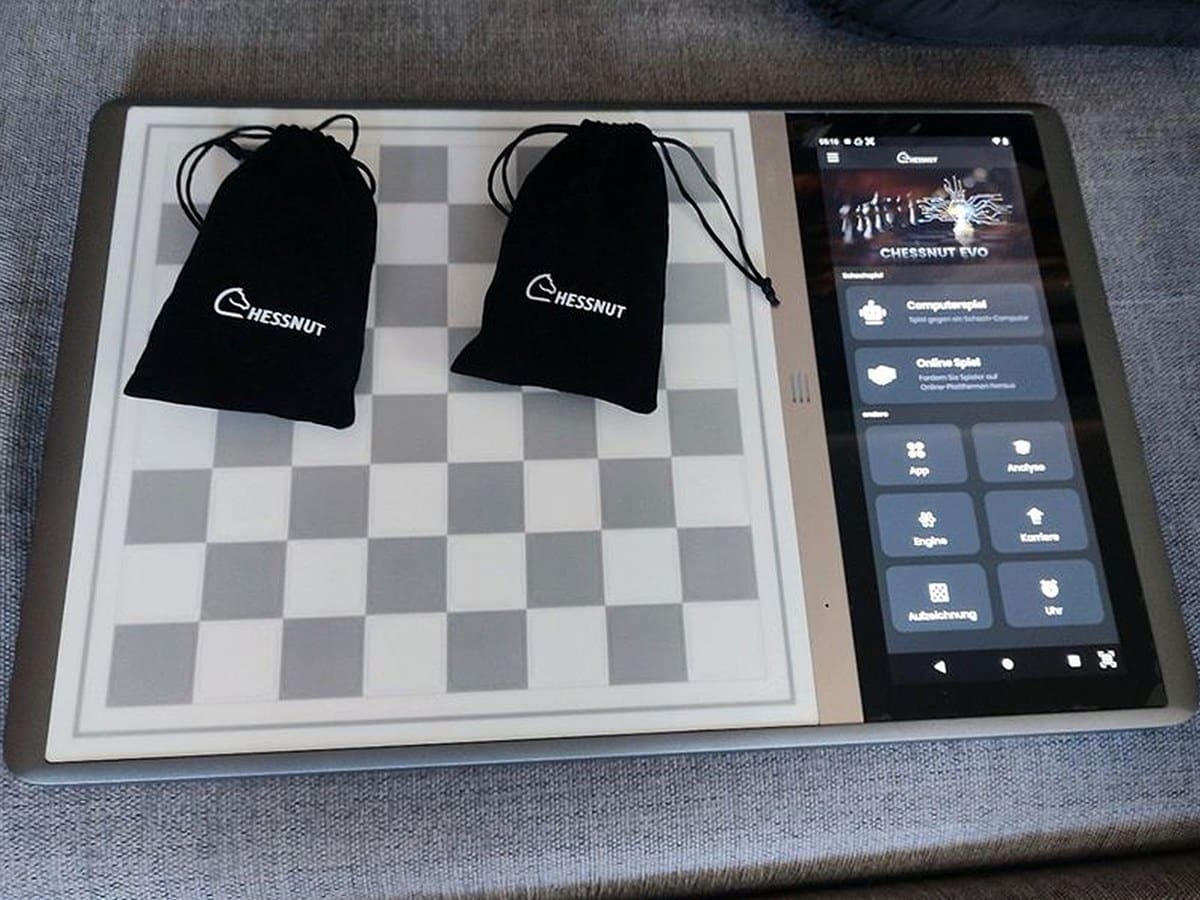
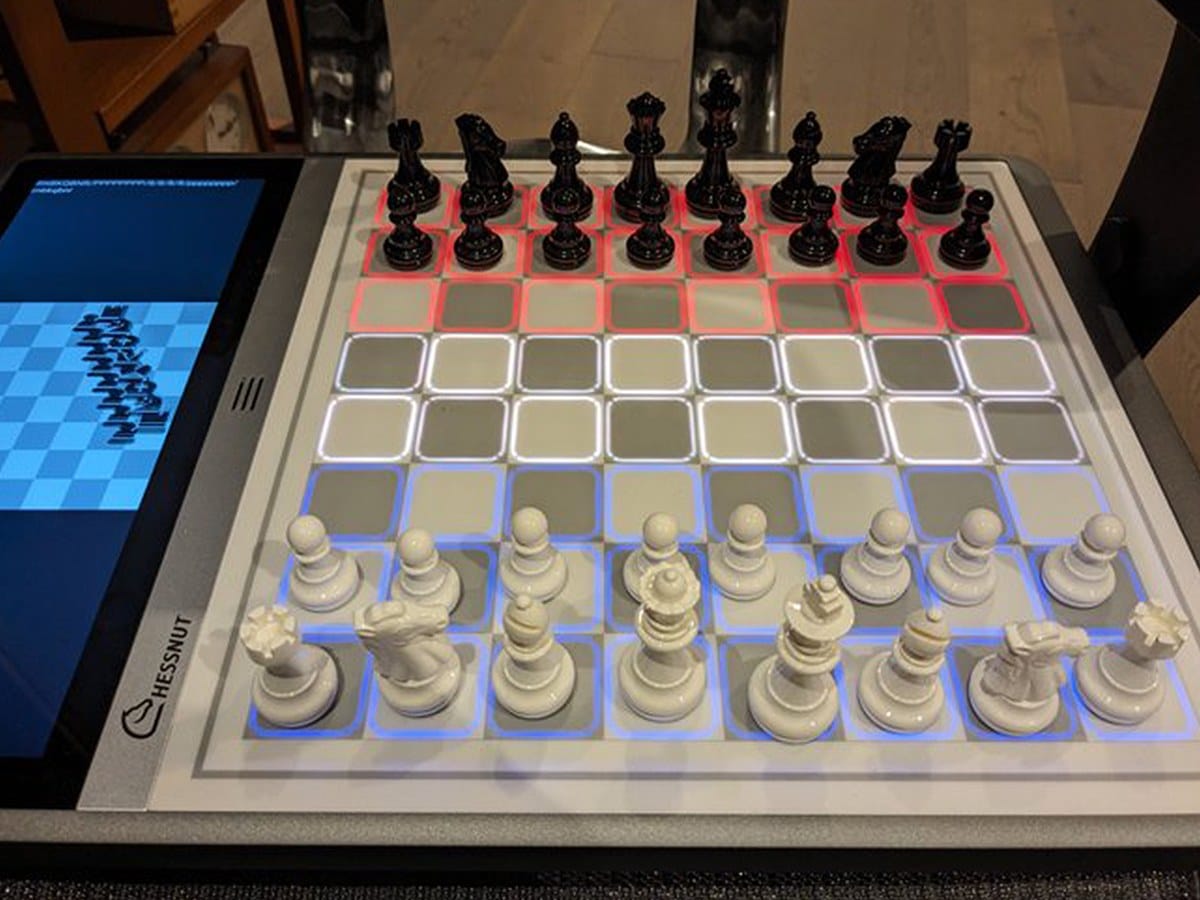
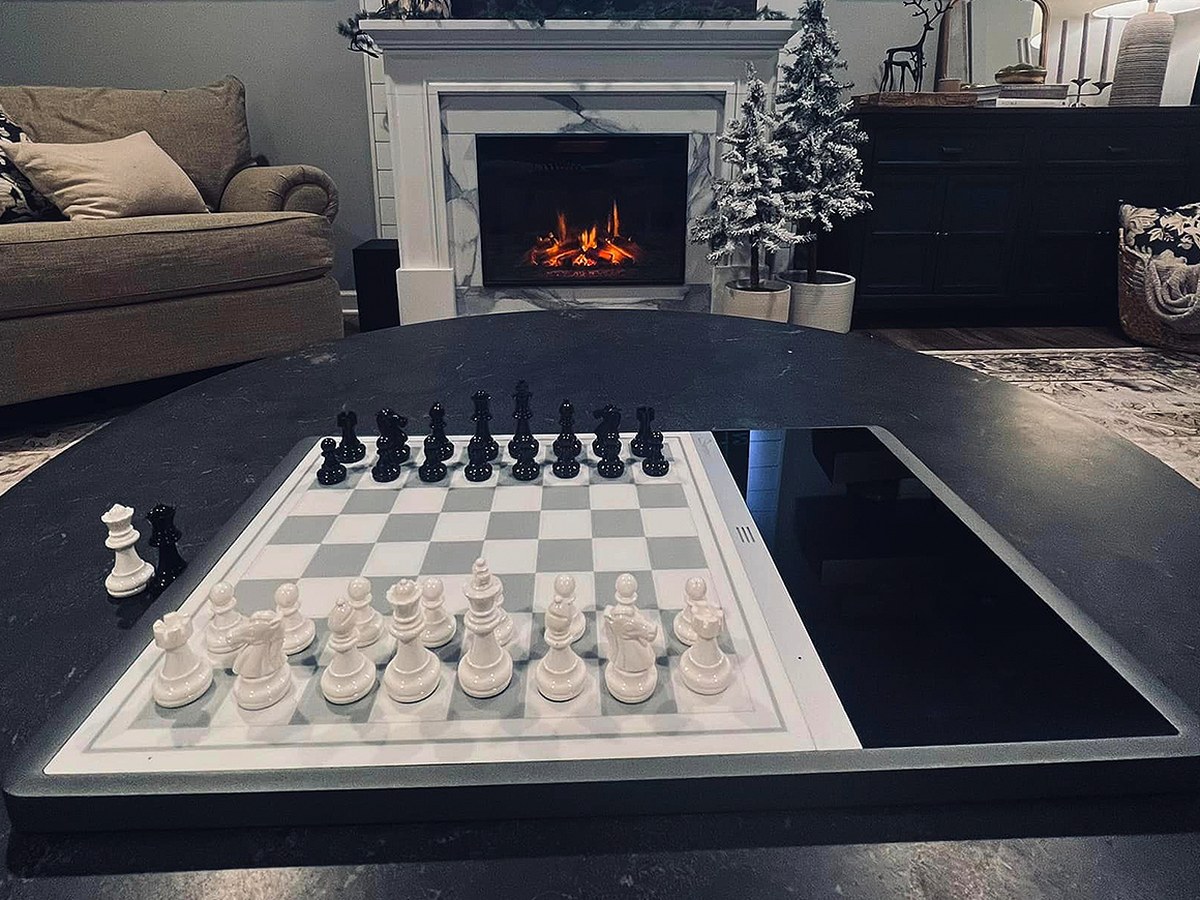
The unboxing is a step up from where I expected this category to land. The board itself feels solid, with weighted pieces that have a decent magnetic pull and don’t feel like the toy-shop chess sets you’d remember from childhood. Where the Evo earns its name is the strip of full-colour display sitting above the playing surface. The display is the trick that no other smart board in this price bracket has quite worked out. Most of the boards I had looked at, including the GoChess Wizard Lite that I am also reviewing, rely entirely on LED lights underneath the squares. The Evo has lights too, but it also has an actual screen that walks you through everything.
The setup is genuinely under five minutes. Plug it in, connect it to your phone via Bluetooth or Wi-Fi, sign into Chess.com, and you are away. The Evo recognises which pieces are on which squares automatically using its sensor grid. No manual setup, no calibration, no fiddly app pairing dance. For a piece of hardware that is supposed to be the bridge between a tactile board and an online community, this matters more than it sounds. Friction is the enemy of new habits. The Evo has almost none.
The Features That Actually Earn Their Keep
The Built-in Display Is the Killer Feature
Other boards lean on your phone for everything beyond the LED grid. The Evo doesn’t. The colour strip across the top of the board shows the move history, your opponent’s clock, the engine evaluation, and post-move feedback right there in your eyeline. It sounds small. In practice, it is the single biggest reason I reach for the Evo on a weeknight instead of opening Chess.com on my phone. The phone stays in the other room, and the experience is still complete.
Chess.com Sync That Actually Works
If you’ve used Chess.com seriously, you’ll know the feeling of finishing a 90-rapid game and wanting to play through the moves on a real board. The Evo flips that around. You play your Chess.com game on the physical board, with real pieces, against real online opponents, and your moves register on the platform automatically. No phone in hand. No screen. The opponent on the other end has no idea you are sitting in front of a chess set in Surry Hills with a glass of red wine. It is the closest thing to a “real” chess experience I’ve had at home, and it is the feature I’d point to if anyone asked me why a smart board exists.
AI Difficulty From Beginner to Grandmaster
The Evo’s onboard engines cover the full spectrum, from “I will let you mate me in four moves” to “what just happened to my queen”. Chessnut ships the board with Stockfish, the strongest open-source engine in the world, alongside Maia, which its creators at the University of Toronto’s CSSLab describe as “a human-like chess engine, designed to play like a human instead of playing the strongest moves”. That is exactly how it feels to lose to. Between them the difficulty spans roughly 600 to 3190 ELO. I’ve been training in the 800 to 1000 band, which is high enough to punish my blunders but low enough that I still win occasionally. The transition between levels is smooth, and unlike grinding the Chess.com bot tree, you don’t get the feeling the AI is sandbagging on purpose.
Post-Game Analysis Without the Laptop
Each game ends with a move-by-move accuracy graph and the now-familiar “your best move was…” overlay, all readable on the board’s display without picking up your phone. I have used this more than I expected. The instant feedback after a blunder, while the position is still in front of you on a physical board, sticks in a way that running the same game through the engine on a laptop the next morning never did.
Chessnut Evo Specifications
The headline numbers, per Chessnut’s official spec sheet. The battery figure matched my testing almost exactly: I averaged eight to ten hours of play between charges.
| Spec | Chessnut Evo |
| Display | 12.3-inch built-in colour touchscreen |
| Engines | Stockfish (ELO 600 to 3190) and Maia (ELO 1100 to 1900) |
| Piece recognition | Full piece recognition via sensor grid |
| Online platforms | Chess.com, Lichess, ChessKid (Chessable planned) |
| Board dimensions | 520 x 340 x 21mm |
| Board weight | 2.84kg |
| King height | 67mm |
| Battery life | Rated 10 hours (8 to 10 in my testing) |
| Charging | USB-C |
| Price | US$629.99 (RRP US$899.99) |
What’s in the Box
- Chessnut Evo smart chessboard with built-in display
- Full set of weighted chess pieces with recognition chips
- USB-C charging cable and power accessory
- Quick start guide
Chessnut Evo Limitations: What It Doesn’t Get Right
It needs charging. The Evo runs on a built-in battery that gives you roughly eight to ten hours of play, which is plenty for a session, but you do have to remember to plug it in. The first time I sat down for a Sunday afternoon game and got “low battery” after the first thirty minutes, I learned to leave it on the charger between sessions.
The plastic finish is fine, not premium. The pieces are weighted and feel acceptable in the hand, but they don’t have the tactile satisfaction of a well-made wooden set. If you are coming to this expecting to be wowed by the materials, you’ll be slightly underwhelmed. The Evo is a tool. The Chessnut Pro and the GoChess Wizard Lite are the showpieces.

The display can be a crutch. The same instant feedback that helps you learn at 350 ELO becomes an obstacle if you ever want to play a “proper” game without engine help. The board has a “no hints” mode for exactly this reason, and you’ll need to get into the habit of using it the moment your rating starts climbing.
The companion app is fine, not great. It does the job, but it lacks the polish of the Chess.com app it sits alongside. If Chessnut spent the next twelve months making the app feel as considered as the hardware, this whole product moves up a tier.
Chessnut Evo vs GoChess Wizard Lite vs the Move
One correction worth making plain: the Evo is the dearer of the two boards I have been testing, not the cheaper one. What you get for the extra US$200 over the GoChess Wizard Lite is the built-in display and the stronger engine ecosystem. What you give up is the theatre of the licensed pieces.
| Board | Best for | Display | Price |
| Chessnut Evo | The all-rounder. The full experience with the least fuss | 12.3-inch built-in touchscreen | US$629.99 |
| GoChess Wizard Lite | The showpiece. Licensed Harry Potter pieces, LED coaching | None (companion app only) | US$429.95 |
| Chessnut Move | The travel option, currently out of stock. Smaller and foldable | None | TBC on restock |
Who Should Buy the Chessnut Evo
- Anyone who is already grinding Chess.com on their phone and wants their evenings off the screen.
- Couples or households where one person plays online and another is curious. The instant move suggestions on the LEDs make it easy to teach an absolute beginner without anyone losing patience.
- Players in the 200 to 1200 ELO range who would benefit from real-time feedback without spinning up an engine on a laptop.
- Anyone who likes the idea of a “smart” object on the dining table that does not glow, ping, or demand attention when it is not being used.
Who Should Skip It
- Serious club or tournament players. The whole point of competition chess is that you don’t have an engine in your eyeline. The Evo is the wrong tool for that job.
- Absolute beginners. The Evo will help, but a US$30 wooden set and the free Chess.com lessons will get you to 600 ELO faster, with less to set up.
- Anyone who wants showpiece materials or a smaller spend. The GoChess Wizard Lite is US$200 cheaper and far more charming to look at, or look at the higher-end Chessnut Pro.
Chessnut Evo Review Verdict
Six weeks in, the Chessnut Evo has earned its place on my dining table. It is the gadget that finally got my chess off my phone without breaking the link to the online world that made the game stick in the first place. It is not perfect. The materials are utilitarian, the app needs work, and at US$629.99 it asks a real question of a casual player’s wallet. But the combination of an integrated display, real Chess.com sync, and friction-free setup makes it the easiest recommendation I can make for anyone in the 200 to 1200 ELO bracket who wants to play more often, on a real board, with feedback that actually helps.
For me, the test of any review unit is whether I keep using it after the article goes live. The Evo is staying out. That is about the highest bar I have for a piece of hardware in my house.
Transparency note: Chessnut provided an Evo review unit for this piece. I was not paid to write this review, and Chessnut had no editorial input. All numbers and opinions are my own; supplementary product photography is courtesy of Chessnut.
Chessnut Evo FAQs
For anyone in the 200 to 1200 ELO range who already plays Chess.com and wants a real-board experience without losing online play, yes. The integrated display and real-time feedback make it the easiest smart board to recommend to a casual player.
Yes. You sign in once via the companion app and your physical moves register on Chess.com automatically. You can play live online opponents on the physical board.
Chessnut rates the battery at 10 hours. In my testing it delivered roughly eight to ten hours of active play between charges, and charging takes about three hours from flat.
The Evo is the full-size, dining-table board with a built-in display. The Move is a smaller, more portable board without the display, designed for travel. The Move was out of stock when I requested a unit, which is how I ended up with the Evo.

























Comments
We love hearing from you. or to leave a comment.