

Updated:
Readtime: 8 min
Every product is carefully selected by our editors and experts. If you buy from a link, we may earn a commission. Learn more. For more information on how we test products, click here.
Based off of a successful series of regency-romance novels set in 1800s London, Bridgerton is surely one of the major success stories of modern television. In a world dominated by gritty, prestige drama, post-apocalyptic sci-fi, and lightweight reality tv junkfood, a long-form, historical romance series about the trials and tribulations of an aristocratic family wasn’t a sure fire hit: and yet, here we are.
After three seasons, we’re staring down the barrel of a new dip into Bridgerton’s world: this time centred on lothario Benedict Bridgerton, played masterfully by one Luke Thompson. Only, Benedict is in for some character development this season, moving from someone obsessed with his own freedom, deciding at the end of season three that he’s simply not ready to settle down, to someone actively chasing companionship.
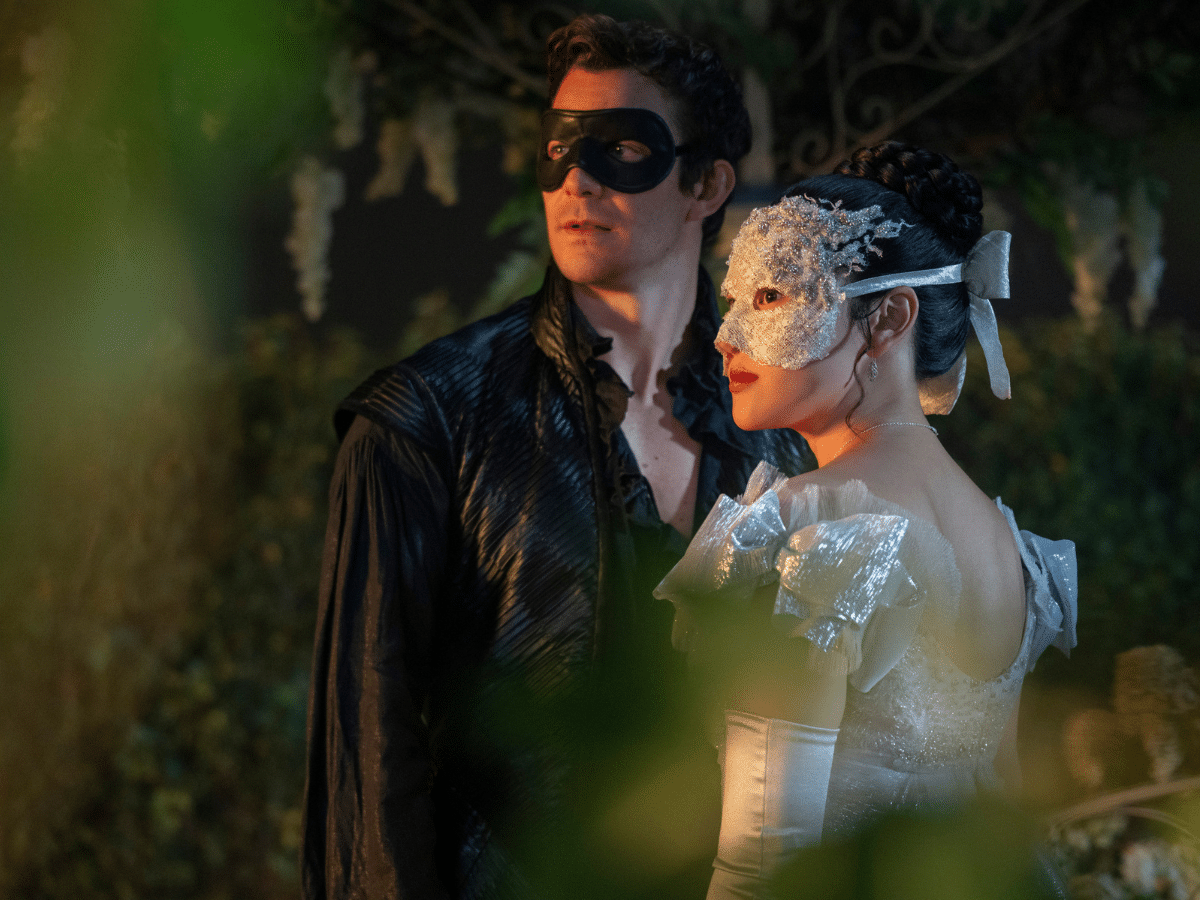
After a masquerade ball puts him in contact with a mysterious woman (hidden behind a mask, of course), who figuratively sweeps him off his feet, Benedict begins his search for the woman of his dreams.
It’s something of a reverse Cinderella story, as I told Thompson during an intimate talk about what it’s like to play a prince charming chasing the woman of his dreams, unsure of what he’ll do when he finds her.
Thompson also chatted about the experience of watching Benedict’s character change over the five years he’s played him, as well as what initially drew him to Bridgerton before it was a household name.
Can you tell me a bit about what Benedict is up to this season? Where does he start, and where is he heading?
Benedict is someone we’ve grown to know a certain side of for the past three seasons. He’s quite laid back, values his freedom very highly, is sort of charming, and as we discovered at the end of season three, he says to Lady Tilly, “I don’t think I’m ready for anything serious, yet”.
We’ve had a lot of Benedict so far, but a very specific version of him.
I think he’s found, just generally, a very successful way to navigate the world on his own terms, without having to give too much of himself, while sort of love-bombing his way through. But the question is if you’re love bombing everyone, how can you love anyone specifically?
And so, I think the big challenge, and the excitement in putting him in the centre of a Bridgerton storyline, is that…he’s someone who is not quite in the centre of his own life yet. It could be because his dad died quite young and his parental example is something quite terrifying: he probably saw his mother mourn all those years, so you could see why he might be a character that would resist really falling for and committing to someone.
It’s sort of putting him right where he’s least comfortable, which is a (good) place to put someone, because that’s where they start acting in more interesting ways.
What I’ve seen so far feels a bit like a Cinderella story, but backwards, like it’s from the point of view of the prince – is that something you guys talked about?
It’s interesting, not in a deliberate way. But the thing that’s amazing about being in a story that has very clearly heavy Cinderella elements is the knowledge of what that that means (to people). The reason the Cinderella story has been around for all these years is because it’s clearly evocative. It has meaning for all of us, everyone knows what Cinderella is, and what it’s about.
I think the great thing about a myth like Cinderella is that it can be retold, and has been retold, in all sorts of ways. There are all sorts of different versions of it, and this is just another permutation of it.
I think it really focuses on the whole thing of ‘fantasy versus reality’. How you can meet someone in the realm of romance, but then how do you tie that with being in a relationship with someone in the real world?
There’s a line in the book, where he says something like ‘let’s cram a lifetime into this night’, and there’s something very romantic about that. There’s the honeymoon period, but then you have to actually be in the real world. That’s a challenge that we all face, and I think it’s a struggle for everyone, and for a lot of people that’s difficult.
Benedict values his freedom very highly, and is probably a bit scared and blind to the idea of committing to someone and being with someone. Maybe, not to become morbid, because it gets you one step closer to death. You’re putting down your roots, you’re determining the next phase of your life, rather than constantly (being free).
It’s quite interesting – you keep talking about how we’ve seen Benedict as one thing, and now we’re getting to see a new side of him: maybe he’s growing up a bit, or moving into the next stage of his life. You’ve been playing this character for a number of years now, how does it feel to be able to deep dive into this character and see them change over time?
It’s wonderful. It’s what’s great about doing long-form television, you get to really stretch out a character’s portrait over years, and the most interesting stuff is how a character can surprise you. I’m really glad that when they looked at it, and they looked at the book, they didn’t try to soften his big messy cock-up that he makes. I think it’s really important that that stays in, because it’s quite a striking moment, and could feel like a very out-of-character thing for Benedict to do but actually, if you think about how he’s so desperate to have his cake and eat it it somehow, that he doesn’t see that it wouldn’t be an appealing offer, it really is a good offer, from his point of view, and in strange way it’s quite funny.
I was thinking about it the other day, he is in some ways a traditional man turned inside out.
The soft centre is kind of around the sides for him, and you see him as this very free and relaxed person, but actually inside he is just as controlling (as anyone else). I never thought about that, when I embarked on playing Benedict: the quest for freedom has its own limitations, and choosing to commit to someone also releases you in other ways. It’s not settling down, it’s something else.
The pleasure of being with a character for that long is that you get to do things that are out of character, which, let’s face it, are the most interesting moments in life. It shows a different side of us.
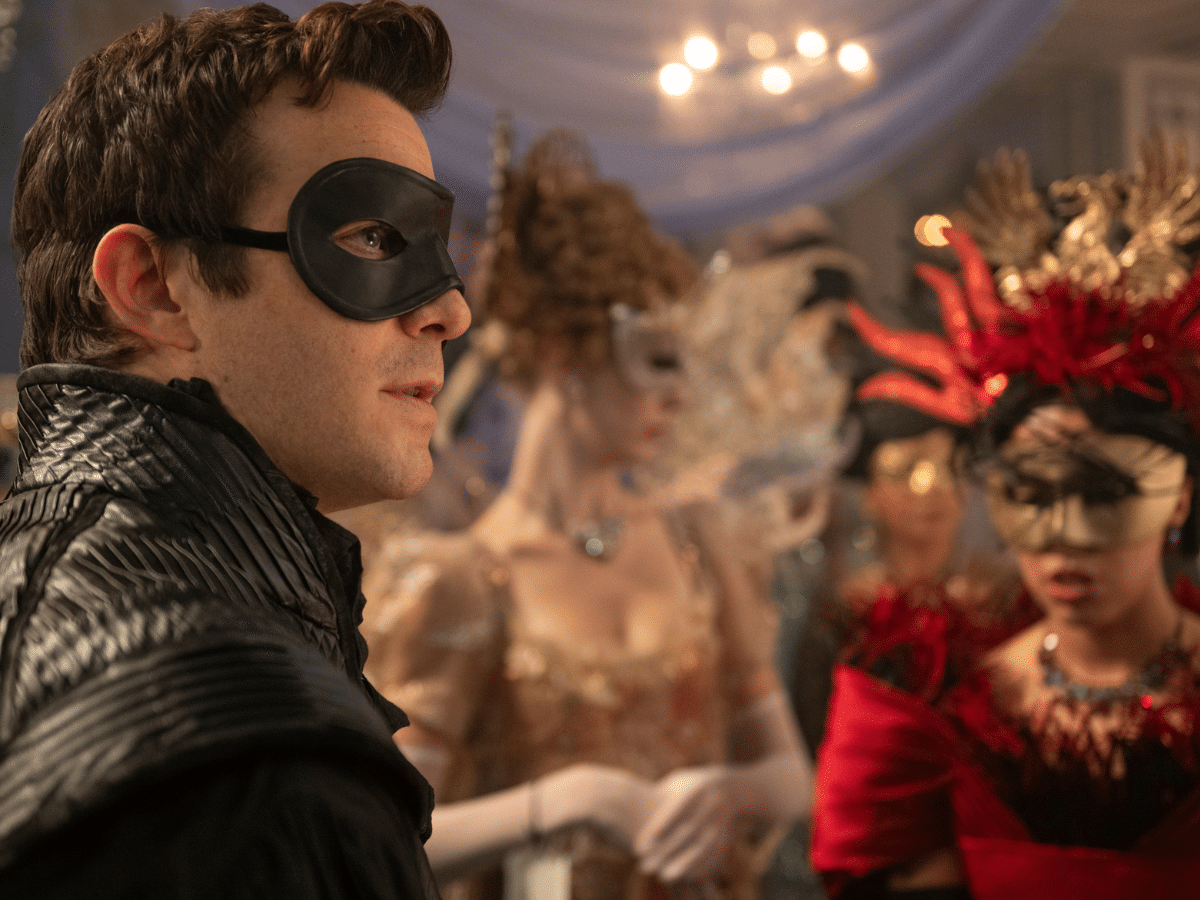
You say that when you took on this role you didn’t know where the character was going necessarily. What drew you to Bridgerton, and to Benedict?
It’s so funny, because at the stage where the audition came through for me, there was no such thing as Bridgerton. It’s such a world now, and an aesthetic, people know what Bridgerton is now, but when the scene first came through, it was a scene between Benedict and Eloise on the swing, I was intrigued.
I thought, this is interesting, because it’s regency-ish, it’s very much in that world, but with some modern sensibilities, and it’s a bit like a romance novel: it’s spinning so many plates, and it’s such a specific thing. I think it’s probably why I’m interested in Shakespeare, and in trying to do his plays today.
I’m only interested in history, as an actor, in as much as it’s about how the human soul never really changes.
I think Bridgerton appealed to me somewhat because that’s true of this story. I think the exercise of Bridgerton says “yes, there are the trappings of history, and there are things that were different, but also the anxieties and worries and thoughts aren’t so different today”. I think that’s nice, and brings the past closer to us and makes it more accessible. I really like that challenge, of making something feel closer and human.
Part One of Season 4 of Bridgerton launches exclusively on Netflix on 29 January 2026, while Part Two launches on 26 February 2026.




























Comments
We love hearing from you. or to leave a comment.